Interview: Adam Bambrough, Four Thieves’ Vinegar

Four Thieves’ Vinegar is a character driven piece of new writing, set in London during the plague of 1665, which explores the behaviour of ordinary people in times of disaster,” says Adam Bambrough, Artistic Director of The 42nd Theatre Company. The play, written by Christine Foster, opens next month at the Barons Court Theatre and is the company’s debut production.

I set up The 42nd Theatre Company as I wanted to be involved in the creative process from the ground up,” explains Adam. “I was a theatre actor for years and grew tired of working for companies who used their actors as pawns, rather than assistant story-tellers, so moved into directing with the aim of being more creative. This company was meant to be a side project in-between directing published plays elsewhere, but it has evolved into so much more.

“Our underlying ambition is to become the leading theatre company for unproduced writers and emerging artists in the UK. We’re a long, long way from achieving that, but hopefully, this production will be the first step along that path.”

four-thieves-vinegar-flyer-front-cover-social-media-version

Since being established in 2013, Adam and the team have received over 2,000 plays, but Christine Foster’s first professional full-length play stood out from the crowd. “We work with writers who’ve never had their work produced before, so most plays that we receive are a long way from being ready for the stage – but we read every submission that we receive in full, looking for signs of an interesting story, told with relatable characters and memorable moments. 

“Even in the first draft, Four Thieves’ Vinegar had those qualities, more so than any of the other submissions that we read. There was a story that immediately interested me, characters who I connected with and moments that I could imagine audiences going to bed at night thinking about. If there’s one word I’d like people to use after seeing this show, it’s ‘relatable’.”

Four Thieves’ Vinegar follows alchemist Matthias, who’s been thrown in jail and must enlist the dubious help of his cellmates Hannah and Jennet to make a cure for the Black Death. But even though it’s set in 1665, the story is still very relevant to our lives today. “The play examines the human spirit, the most connectable theme of all,” says Adam. “Every one of us is faced with circumstances at some point in our lives that we do not know how we will react to until we are faced by them, whatever the scale – and the parallels to modern life can be found all over the world, be it in the current migration crisis or the outbreak of Ebola in West Africa a few years ago.”

As well as their passion for supporting new writers, The 42nd Theatre Company are also committed to fair wages for the artists they work with, and to equal representation for women. “Starting a new theatre company is the perfect opportunity to remodel the way things are done and a lot of our core principles came from my experiences as an actor – and, to a lesser extent, as a director for hire,” explains Adam. “I am a firm believer that artists should be treated with respect from the outset and paid for their work, which is why we are a proud supporter of Equity’s Professionally Made Professionally Paid campaign. There should be opportunities for new voices to be heard in theatre, as there is so much potential out there, it just needs to be nurtured. 

“There are also some principles that stem from my personal life. I have a three-year-old daughter and I often wonder what the theatre landscape will look like for her when she is older. I want her to be treated as fairly and equally as any man, which led me to commit to ensuring that at least half of the cast and creative team on our every production, including Four Thieves’ Vinegar, will be women. There really should be equally representation and opportunity for all in theatre, regardless of gender, race or social background.”

Four Thieves’ Vinegar is at the Barons Court Theatre from 8th-26th March.

Review: La Ronde at The Bunker Theatre

Max Gill’s adaptation of La Ronde by Arthur Schnitzler launches the second season at The Bunker, and it’s already causing quite a stir. Partly this is down to the star cast, but it’s fair to say the major draw of this production is its unique and fascinating format.

Four actors – Lauren Samuels, Amanda Wilkin, Alex Vlahos and Leemore Marrett Jr – play between them ten gender-neutral characters. There are ten scenes, each featuring two of the actors. But who appears in which scene is entirely down to fate, and decided by the slow, deadly spin of a roulette wheel. Altogether, there are over 3,000 possible different versions of the show, so it’s no surprise that it cries out for multiple viewings. Fortunately, it’s also entertaining enough to ensure that wouldn’t be a chore.

Photo credit: Ray Burmiston
The use of a roulette wheel is appropriate, because La Ronde is a risky enterprise in more ways than one. Firstly, there’s the danger that one of the actors might find themselves repeatedly out of the loop; I saw very little of Amanda Wilkin until the comparatively short final two scenes, which she appeared in by default. (On the other hand, the mounting suspense of waiting to see if she would finally get her moment meant we never got bored of watching the wheel spin every few minutes.)

The format is also incredibly demanding for the actors, who have to learn every part and really think on their feet – but this outstanding cast have more than risen to the challenge. Every individual performance is confident and believable, as are the relationships between the different pairings, regardless of gender combination.

The overarching theme of the play is sex, and there’s some form of sexual encounter in every scene, whether consummated or not (which prompts the interesting question, what even counts as a sexual encounter; where do we draw the line?). Some are illicit, many unsatisfying, others quite poignant… And all of them are unseen, because the stage is plunged into darkness at the critical moment – an interesting choice that suggests the deed itself may not be quite as critical as what leads up to it, or what happens afterwards.

The script is necessarily gender-neutral, which creates a few awkward moments and rather excessive use of the characters’ (unisex) names, but on the whole flows more naturally than I expected. The different combinations of male and female force us to examine our own expectations about gender roles within sexual relationships and society as a whole. Questions of power, vulnerability, even career stereotypes (why should a female bus driver or a male cleaner be any more unusual than the opposite?) are all eloquently addressed, without labouring the point; the scenarios are unfolded before us and we’re left to consider our own response.

Photo credit: Ray Burmiston
The modern setting and individual scenes are the work of writer/director Max Gill, inspired by stories he collected over several months from Londoners – snippets of which we hear during the transitions between scenes. But the structure of the play comes from Schnitzler, and is just as enthralling. Each character appears in only two consecutive scenes, with the first actor selected by the wheel returning at the play’s conclusion to close the circle. So within this big loop are lots of little ones, all linked both directly to their neighbours, and also indirectly, with events and characters referenced from earlier scenes. (Weirdly, the pattern reminded me a bit of that magic roundabout in Hemel Hempstead – which is not something I ever thought I’d write in a theatre review, and is honestly a lot more flattering than it sounds.)

The biggest disappointment of La Ronde, for me, is that I probably won’t have time to see it again and compare last night’s version with another – and so in a way, I feel like I can only half appreciate how clever the show is. But that’s really a compliment; this is an original and endlessly fascinating idea, brilliantly executed by both cast and creatives. It’s not without its risks… but I’d say this particular spin of the wheel is a winner.

Additional note on 7th March:

As it happens, I did get a chance to see La Ronde again, a few days ago, and it was just as interesting as I suspected it would be. With the exception of one scene, every pairing was different to the last time, and in one case involved the same people but in opposite roles. And though the script was familiar, the different combinations – not only of gender but of personality and style, too – made it into a brand new story. Some scenes were funnier than before; others much more emotional. Some characters were more likeable; others harder to relate to. And though the sexual encounters were the same in location and circumstance, the responses to them were different – not because, for instance, it was between a man and a woman instead of two men, but because it was between two unique human beings.

There’s something slightly addictive about La Ronde; having been twice I now want to go again (and again). It’s a show of – almost – infinite possibilities, and one that you sense will remain constantly fresh and exciting, for audience and actors alike.


Can’t see the map on iPhone? Try turning your phone to landscape and that should sort it. I don’t know why but I’m working on it… 😉

Review: The Full Monty at the Orchard Theatre

Incredibly, this year it’s two decades since The Full Monty first hit the big screen. Now it’s arrived on stage, and is being greeted with all the hysterical screaming you might expect. But Bums of Steel and dodgy thongs aside, the adapted stage version also retains all the heart and humour of the classic British movie, and the final reveal (so to speak) is well worth the wait.

Set in Sheffield in the 80s, this is the story of Gaz, Dave and their mates, who find themselves out of work and down on their luck – until the Chippendales come to town, and give Gaz a brainwave… With all the Dad dancing, classic tunes and inappropriate behaviour you could wish for, the play, like the movie before it, also brings its brusque Northern sense of humour to some pretty weighty issues including politics, mental health, family, body image and sexuality.

Photo credit: Matt Crockett

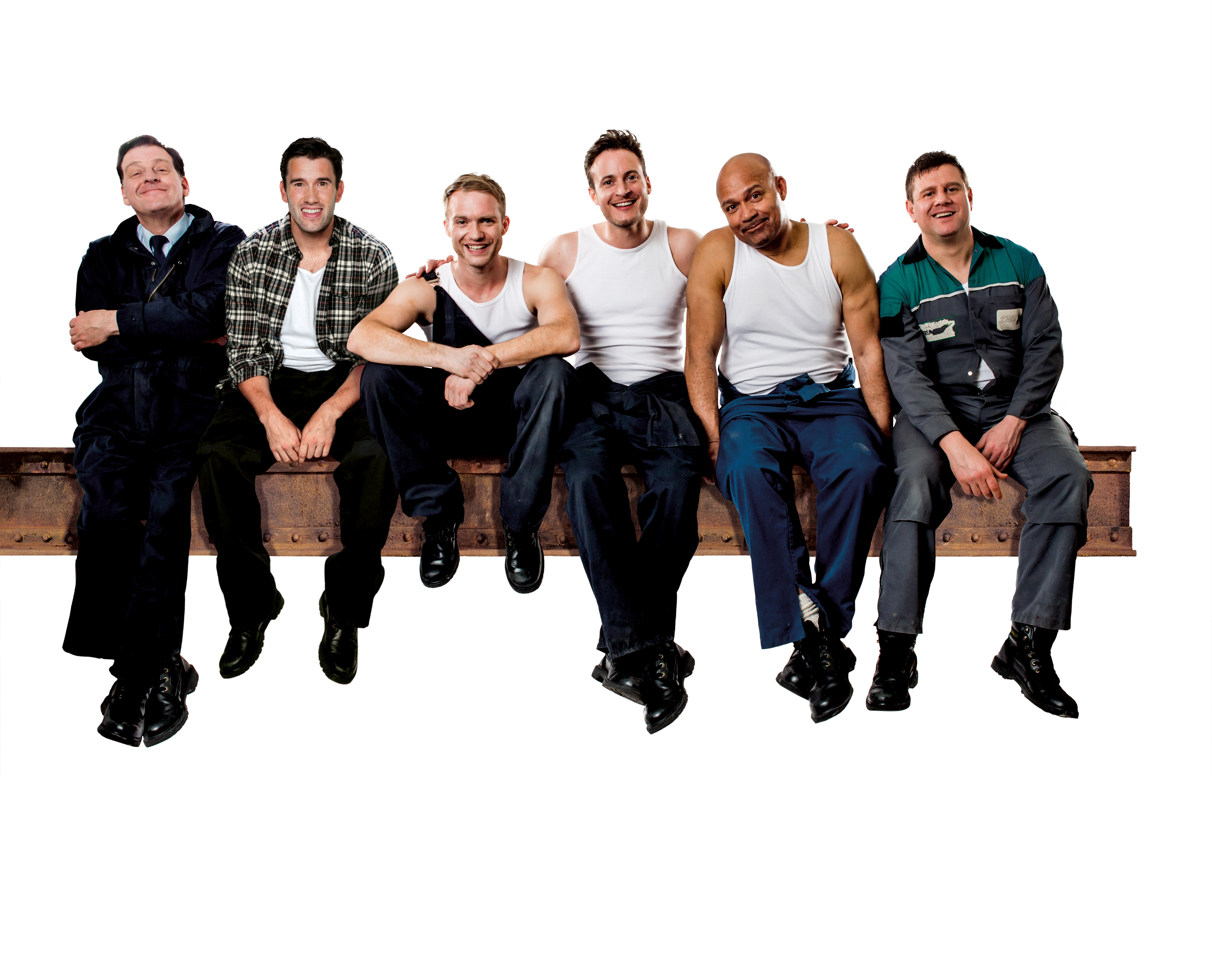
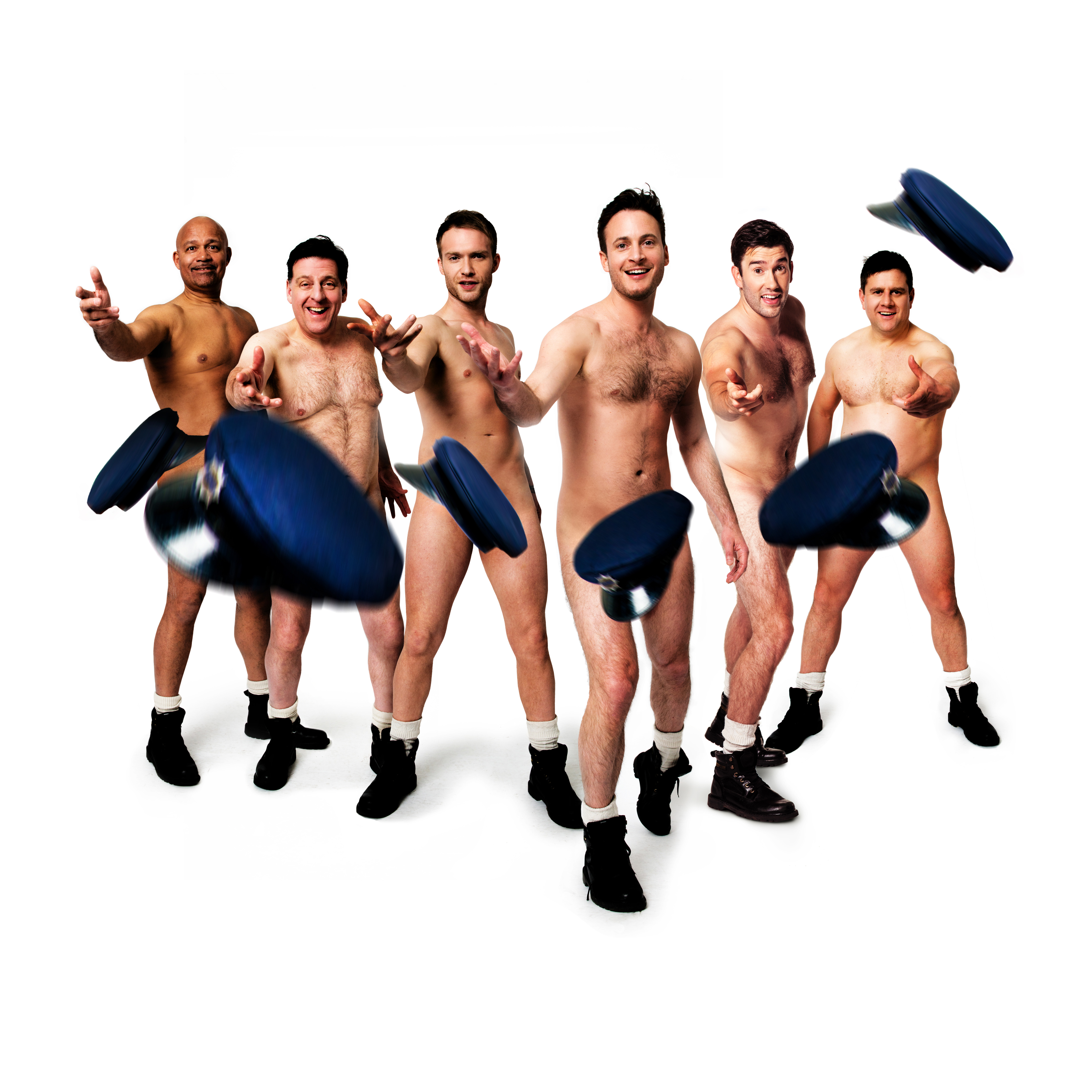
Now, with all due respect to Robert Carlyle et al, the cast for the stage version of The Full Monty is considerably better looking than I remember from the movie. But former soap hunks Gary Lucy, Chris Fountain and Anthony Lewis aren’t just here for eye candy, (though they certainly tick that particular box) and deliver some sensitive performances, along with their fellow troupe members Andrew Dunn, Louis Emerick and Kai Owen. In fact in amongst the mayhem there are some really touching scenes, particularly between Gaz (Gary Lucy) and his son Nathan (Reiss Ward), and between the depressed Lomper (Anthony Lewis) and happy-go-lucky Guy (Chris Fountain). Despite everything they’re going through, what makes this story so enjoyable is the relationships between the characters, and this cast have great chemistry throughout. Just one minor gripe: it might have been the angle or the accents, but I found it sometimes quite hard to catch all the dialogue, and judging by the lively audience response, missed a few of the best lines.

Photo credit: Matt Crockett

Adapted by original screenwriter Simon Beaufoy, the show includes all the classic scenes (queue dancing, anyone?), which adapt really well for the stage and help to whip the audience up into a frenzy of expectation. And we’re still able to travel all over Sheffield thanks to Robert Jones’ multi-functional set, which with a quick change of props, lighting and backdrop becomes derelict factory, working men’s club, job centre and more.

The Full Monty is a fun night out, whether you’ve seen the movie before or you’re a first-timer. Expect plenty of bawdy humour alongside some more introspective moments, and of course the explosive finale, which is everything we wanted it to be. This is hen party theatre at its finest – but there’s substance as well as style here, and the resulting show is satisfying in more ways than one.

The Full Monty is at the Orchard Theatre until 18th February.

Review: Three Unrelated Short Plays at Theatre N16

Three Unrelated Short Plays is the debut production from Blank Tin Productions, and does exactly what it says on the… er, tin: three 20-minute plays, none of which bears any relation to the others – or indeed to reality as we know it. The press release promises weird and unexpected, and that’s exactly what we get.

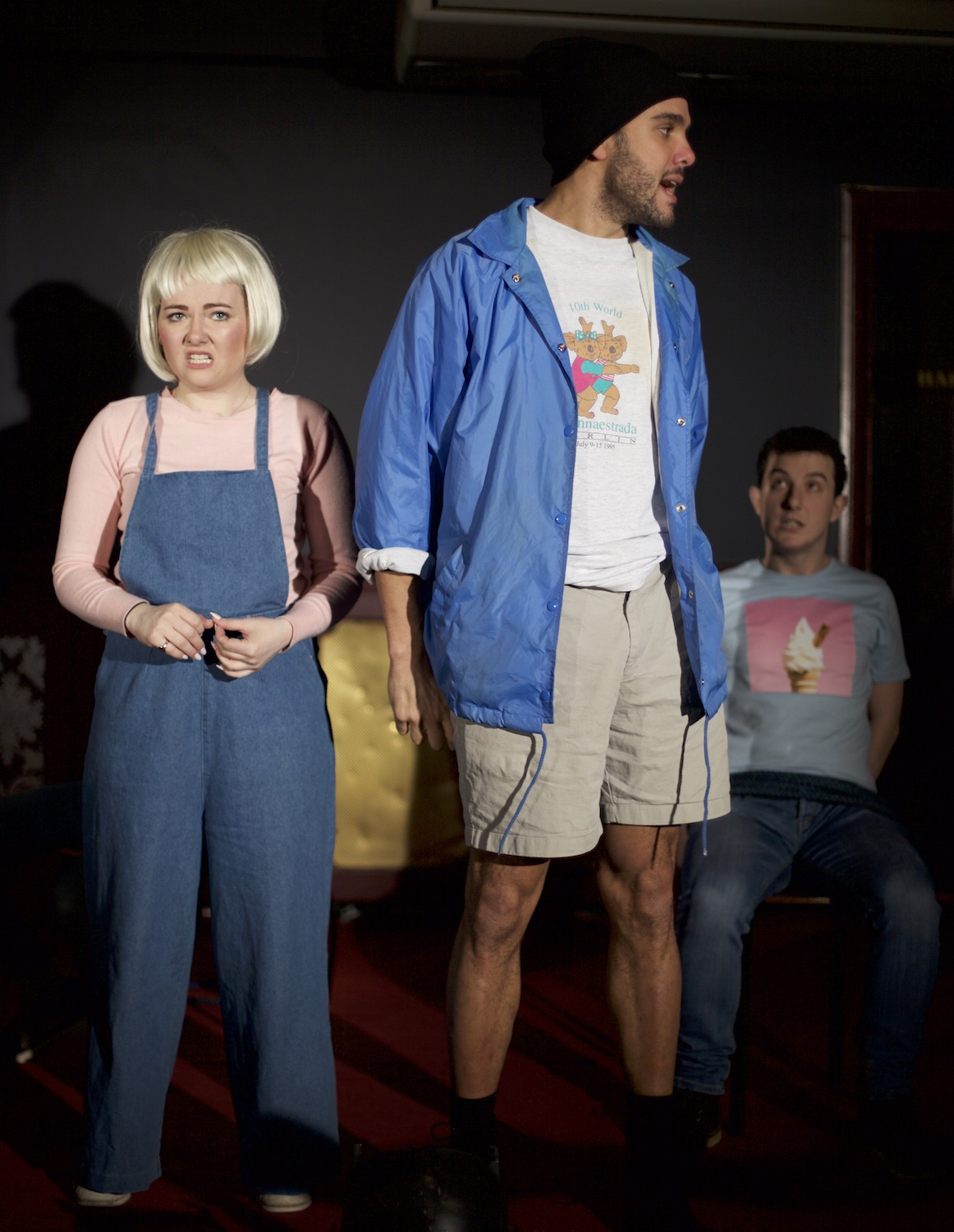
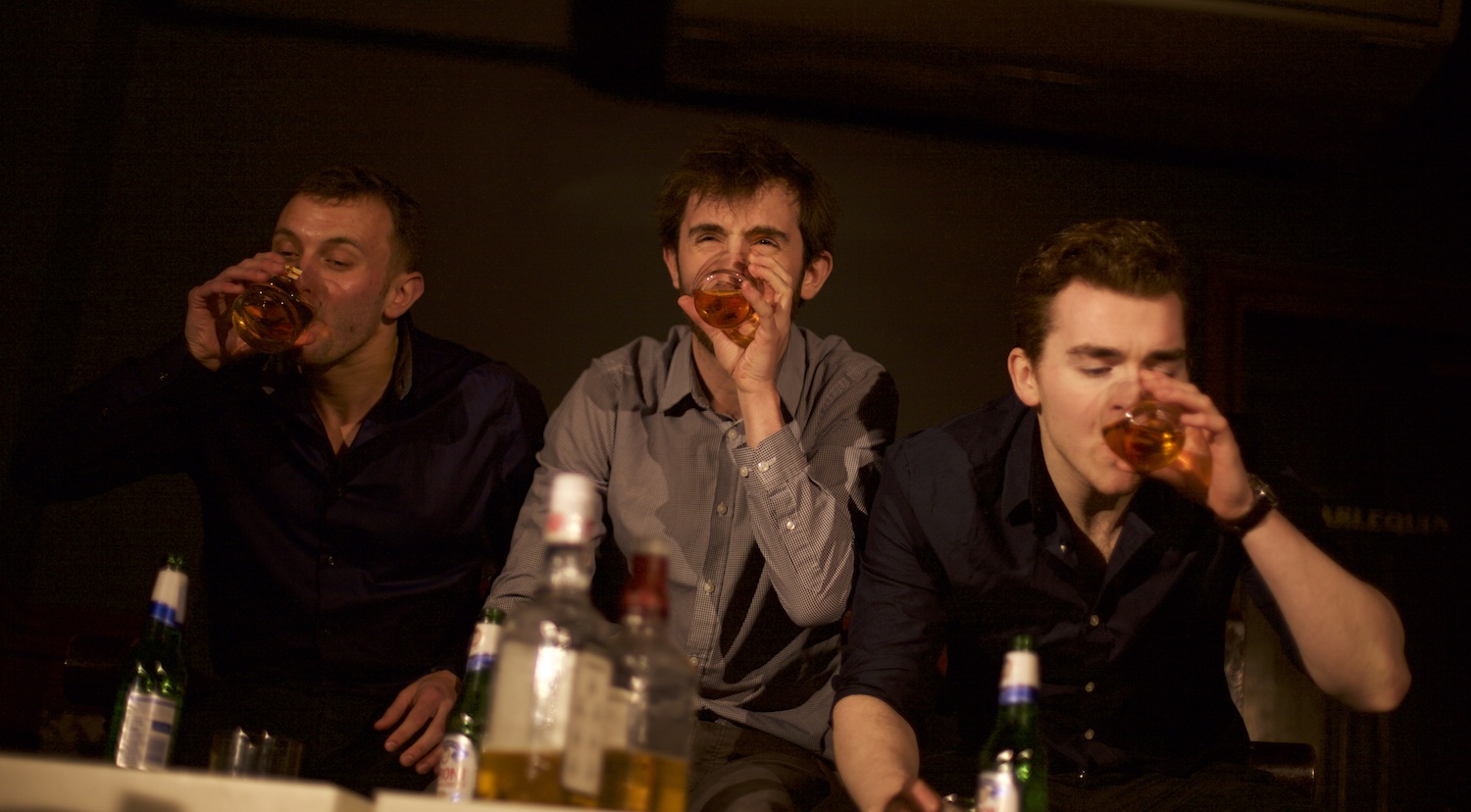
In The Stuttgart Syndrome, John (James Messer) wakes up tied to a chair in a basement, next to Mickey (Dan Thorn), who seems worryingly chilled about the whole situation – possibly because his grandfather was an escapologist, or maybe just because he doesn’t actually know what kidnapping means. One Scotch sees friends Tony, Danny and Jack (James McClelland, Abe Buckoke and Will Jeffs) play a drinking game that will supposedly allow them to meet God, but it turns out (s)he isn’t quite what they were expecting… and that’s not the only surprise of the night. And in Who the Fuck is Dr Deathzo? mild-mannered Kevin (Jimmy Roye Dunne) learns that he’s got an evil alter-ego who only comes out on Saturday nights – and as if that’s not bad enough, now superhero Assorted Props Girl (Elle Banstead-Salim) and her sidekick Tape Boy are out to vanquish him.

three-unrelated-short-plays-5
Photo credit: Oliver Malam
So. You get the idea. Nothing here makes any sense, but then it’s not really supposed to. Writer James Messer has let his imagination run off pretty much wherever it wants to go, resulting in a show that’s entirely bonkers and very very silly – but hey, who doesn’t enjoy a bit of silliness every now and then?

Each play has a different director (Will Jeffs, Oliver Malam and James Messer each taking a turn) and cast to keep things fresh, and as promised in the title each is a completely separate, self-contained story. Personally, I found the middle piece, One Scotch, to be the strongest, possibly because despite being quite as mad as the others, the plot felt just a touch more coherent, and I loved the twist in the tale. But there’s something here for everyone (unless you’re not a fan of random), and it’s likely everyone will have their own favourite, for different reasons.

The show has a charming, homemade feel, with frequent references to the limitations imposed by a fringe theatre budget. And far from making excuses, it revels in its own chaos; the transitions between plays are part of the fun, with cardboard signs imploring us to look at the guy juggling, or dancing, rather than the frantic scene changing going on behind him.

three-unrelated-short-plays-4
Photo credit: Oliver Malam
The cast display a similar exuberance, throwing themselves into their assorted roles with an enthusiasm that borders at times on the hyperactive. Most appear in more than one play, with Blank Tin co-founder Elle Banstead-Salim popping up in all three as a selection of increasingly feisty women; as the only female cast member it’s down to her to bring all the girl power, and she doesn’t hesitate to accept the challenge.

As a reviewer, I often feel I have to find the meaning in every play I see, so it’s a rare pleasure to see a show that isn’t trying to tell us anything. Blank Tin just want to have a good time, and to make sure the audience have fun too. And in that they definitely succeed. It’s a surreal night out, don’t get me wrong – but it’s also a thoroughly entertaining escape from reality, and that’s something we could all do with these days.


Can’t see the map on iPhone? Try turning your phone to landscape and that should sort it. I don’t know why but I’m working on it… 😉

Interview: Sean Brosnan, Beau Brummell – An Elegant Madness

Written by Ron Hutchinson back in 2001, Beau Brummell – An Elegant Madness is a black comedy about the downfall of George Bryan Brummell, known as The Beau. This week the play returns to London for the first time in 15 years, opening tomorrow at Jermyn Street Theatre, just a couple of blocks away from Brummell’s commemorative statue.

Photo credit: Emily Hyland

So who was Beau Brummell? “The play is a fascinating and amusing insight into the world of ‘celebrities’, featuring the original dandy, wit and revolutionary Beau Brummell,” explains Sean Brosnan, who plays him. “Brummell was in many ways a self made man. He seized opportunities where he could and without concern for the consequences. In fact the more he could pique someone with a barbed comment, the happier he was.

“He bucked the trend in fashion and his influence reigns today in the tailored suit. Without him we may all be flouncing around in overly flamboyant colours and fabrics. Imagine a world of Grayson Perry. Today’s equivalent I would say is a cross between David Beckham for style, Kim Kardashian for fame for fame’s sake, and Stephen Fry for biting wit. Imagine that if you will!”

Set in the winter of 1819, the play finds Brummell living in exile in a madhouse in Calais. He’s convinced his old friend King George IV will come and see him on his visit to Calais – but his valet has other plans. “Beau Brummell has so many facets to his character; joy at his past glory, despair at his current situation and a fascinating, complex relationship with his valet, played with great skill and panache by Richard Latham,” says Sean. “Brummell was unique and playing him at this stage of his life, when he is facing desperate reality but also believing his former glory will be restored, is a challenge and a delight.”

Jermyn Street Theatre, in the fashionable St James’s district, is an appropriate home for the production: “Jermyn Street was at the heart of Brummell’s world. He lived close by and bought his wine at Berry Brothers in St. James Street. With his statue at the end of Piccadilly Arcade he must surely be looking down on us with pride. He has not been forgotten. Playing him here is very special.”

Photo credit: Emily Hyland

Although the play’s set nearly 200 years ago, the story of Beau Brummell remains hugely relevant in today’s celebrity-obsessed world. “Brummell was the most famous man of his day and yet is now largely forgotten. Like Oscar Wilde, he had a spectacular fall from grace,” says Sean. “Even today, one mistake in the public eye, be it ever so small, can bring the media’s wrath and vilification. If you’re famous, watch out. They’re out to get you!”

Sean hopes the play will help bring Brummell’s story to audiences who may never have heard of him. “It’s a play that manages to balance the regency farce of Blackadder III with the grandeur of King Lear and has been called ‘Waiting for Godot for the fashion conscious!’ If our audiences leave feeling they understand a little more about the madness and brilliance of Beau and have had a good chuckle along the way, then I will be delighted.”

Beau Brummell – An Elegant Madness is at Jermyn Street Theatre from 13th February to 11th March.