Interview: Cath Mattos, Wandsworth Fringe 2017

Cath Mattos is producer of the Wandsworth Fringe, which launched last week in South West London and continues until 21st May. Now in its eighth year, and four years old as a standalone festival, the Wandsworth Fringe came out of the Wandsworth Arts Festival, which originally started in response to Black History Month. “The festival is a spotlight on creativity in Wandsworth, as well as being a testing ground for new work,” explains Cath. “We moved toward a Fringe model as there was so much grass roots support and the creative companies in the area wanted to be a part of the festival in May.

“I started working on the 2014 festival for exactly this reason, to bring more knowledge and experience of Fringe Festivals and to work with the Enable LC Arts Team and the WAF steering group to help carve a model that would work for the area and its cultural economy.”

As always, the festival offers a varied programme of events and entertainment. “There is so much on offer – we’ll be shaking up South West London with an eclectic programme of arts and culture that will thrill, move and inspire audiences from across the city,” promises Cath. “We have many talented local artists and producers but also performers who are bringing their talent from around the UK, Europe, North America and beyond to entertain and bring excitement to the streets and venues across the Borough.

“The festival is emphatically inclusive and welcomes participation from artists across all art forms – including outdoor arts, theatre, music, dance, comedy and everything in between. WAF provides the opportunity and support to try something new, take creative risks, test new ideas and reach new audiences.

“As a non-curated festival, the themes that have emerged reflect the world in 2017. Identity and difference plays a large part in the line up, as do environmental and current political concerns. There is a significant amount of work being presented by inclusive arts companies about disability issues, as well as work that explores gender and feminism.

“We also try and bring the arts to people, by literally leaving our own comfort zone and going into those hard to reach places. For example, during WAF you can see quite a few performances that focus on issues of mental health or disability, and certain shows will be supported by British sign language as a way to make the festival relevant and accessible to all.”

Unsurprisingly, preparations for the festival start early, and go on for most of the year: “We start the planning for the Fringe year during the evaluation of the previous festival in June,” explains Cath. “Then we start our first networking events in September and open an expression of interest phase, which we use to encourage as many interesting and unusual artists and producers as possible to come and find out about the festival and think about taking part.

“We advise artists and emerging producers on suitable venues and potential funding avenues. WAF has a dedicated grants funding scheme and we advise artists with their applications to this. It’s an open access festival, so anyone can register to take part as long as they have a venue sorted. Once all the artists are registered we then put a brochure together and the listings on our website, and start to sell tickets to the shows and promote the free events.

“We aim to make the festival as accessible as possible to both artists and audiences by having affordable options and many free events.”
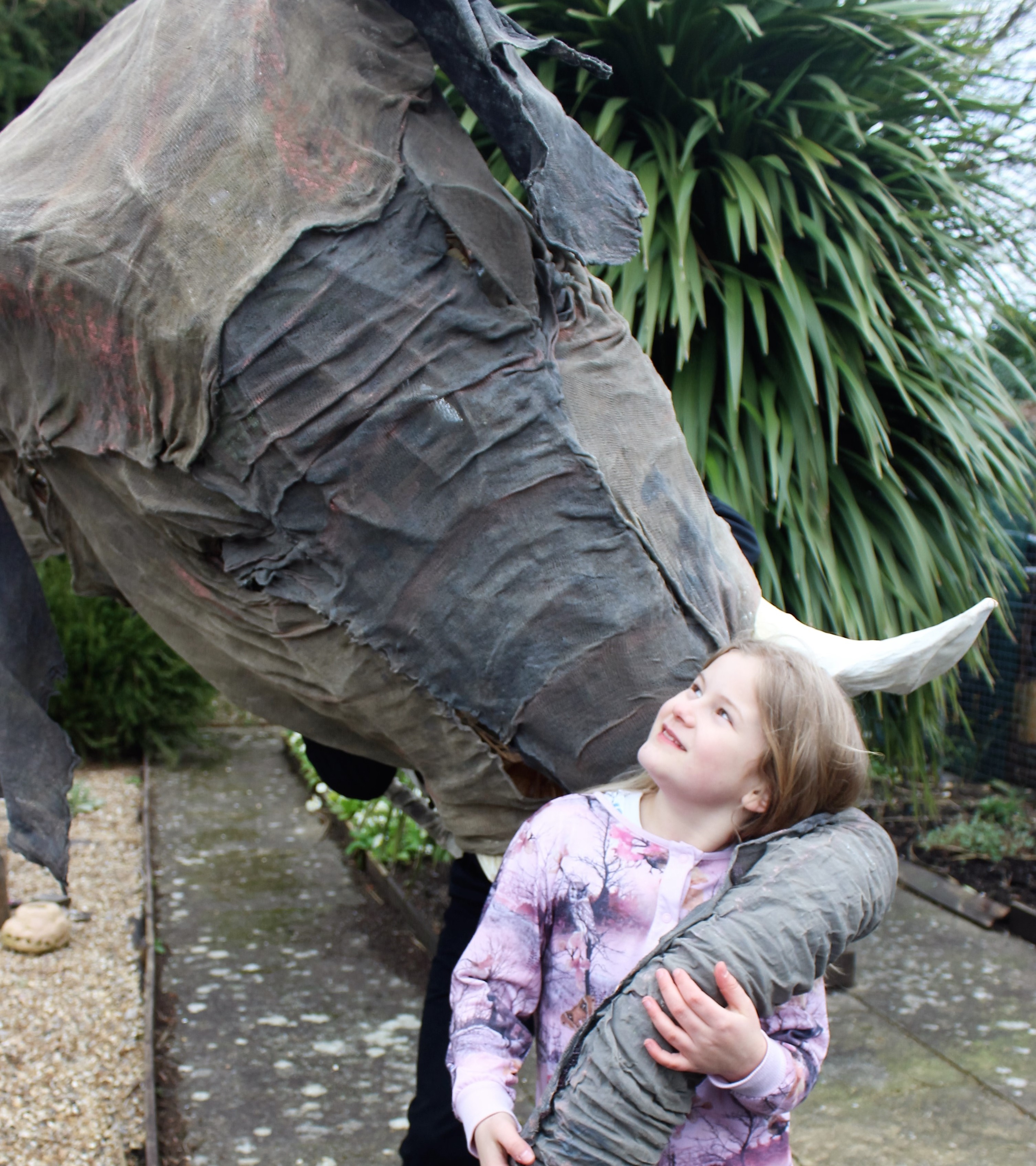
So what are some of the many highlights to look forward to at the Wandsworth Fringe 2017? “Fragility Takeover The Arches at St. Mary’s Church under Putney Bridge and The Cat’s Back Pub in Wandsworth Town, and are hosting some cutting edge theatre and quirky Edinburgh previews,” suggests Cath.

“There’s also Super Hamlet 64: Parody DLC – armed with an ocarina, a ukulele and a thirst for revenge, Lecoq-trained Edward Day battles four decades of video game nostalgia, in an explosion of Shakespeare, live music, video projection and 16 bit mayhem. Odjo – King of the Ocean is a new show from The Comedy Cats, about a reporter who spent three months living at sea with an idiot fisherman named Odjo, witnessing bizarre martial arts practices, unruly animal impressions and unhealthy absurdities that reduced him to tears of laughter.

“Hidden Heathbrook is a weekend of outdoor arts in Heathbrook Park; we have leading large scale puppet makers Puppets With Guts, orchestrating the largest giant rampaging rhinoceros stampede in South London, and Hikapee’s brand new show Home weaves together slapstick comedy with breathtaking aerial acrobatics, to create a ‘house’ for you to explore. This weekend is one not to miss!

“And An Elemental Cycle of Life and Death in Four Acts is an intense and intimate experience encircling art, theatre, ritual and shamanic story weaving of the Fabulous and the Magickal, and of all that lies Betwixt and Between. The Transience create doorways to worlds which may or may not exist and are inviting you into an initiation where you are likely to lose or find yourself, for there is never any telling which. Sssh, secret locations!”

Interview: Caroline Byrne, Blocked

Playwright Caroline Byrne returns to the Brighton Fringe this month with her new play, Blocked, which uses comedy to challenge society’s unspoken rules against talking about infertility. “A famous stand-up’s successful routine – sending up love, marriage and babies – falls apart as she melts down. It’s fast paced and delivered as a stand up routine throughout.”

Caroline explains that Blocked was inspired by her own experience of failed fertility treatment: “There’s a taboo around discussing infertility that society imposes on you and you get crap advice from people. I wanted to explore this and use dark humour to engage the audience, so that’s why I made the character a comedian.”

The show’s performed by Laura Curnick, and reunites Caroline with acclaimed director Scott Le Crass, following a previous collaboration at the Brighton Fringe 2015. “Scott directed my play In A Better Place, which was set in a hotel room, in the rock n roll themed Hotel Pelirocco,” she explains. “He is extremely creative and also very tactful and calm, so I was relieved when he agreed to direct Blocked because traditionally writers aren’t allowed in rehearsal – so you have to trust your director completely or you’d go mad. Scott has been nominated for many awards, and recently had a West End Transfer with Sid, a fabulous show.”

Blocked promises something of a mixed experience for Brighton audiences: “I want them to laugh out loud at the stand up, and then slap them in the face with the final dramatic act,” says Caroline. “You should come and see it because it’s a provocative standup routine within a piece of theatre. Two genres for the price of one!”

As the Brighton Fringe gets underway for another year, Caroline has plenty to look forward to. “I can’t wait to watch Laura Curnick perform the show for the first time!” she says. “But I’ll also be catching up with other theatre buddies and seeing their shows. In particular I’m looking forward to Nick Myles’ Trouble with Men, three great shorts. Also Goddess by Serena Haywood and Purged starring Orla Sanders.”

After Brighton, Caroline has several exciting projects lined up with her company Pure Fluke Theatre. “We write daring, comic roles for women over 35,” she explains. “I’ve just finished a new sitcom about working in fringe, with my co-writer Rachel Goth. The material writes itself. I’m also planning to tour my farce How To Make Money From Art in Ireland.”

Catch Blocked at Duke Box from 18th-24th May.

Review: Becoming Mohammed at The Pleasance

Becoming Mohammed by Claudia Marinaro packs an unexpected punch. On the surface a relatively straightforward family drama, on another, deeper level, it forces us to question our own assumptions and what’s led us to form these opinions in the first place.

The story’s based on director Annemiek van Elst’s real-life family experience, and sees Sarah (Philippa Carson) return home after living abroad for two years, looking forward to indulging in a bit of nostalgia with her brother Thomas (Jack Hammett). But when she learns he’s become a Muslim in her absence, a horrified Sarah does all she can to talk him out of it, assuming he’s been brainwashed by new best friend Musa (Jonah Fazel) and his sister – now Thomas’ fiancée – Aminah (Nadia Lamin).

Photo credit: And Many Others

With time and understanding, Sarah and Thomas set out on the road to resolving their family drama. But there’s a bigger conflict brewing, as an enthusiastic Thomas attempts to bridge the gap between Muslims and non-Muslims within the local community, not realising he’s fighting a losing battle against the ignorance and fear that’s become such a natural part of our society we barely notice it any more. Musa and Aminah, on the other hand, exude a weary resignation to the prejudice against them and it’s perhaps this that hits hardest – the fact that an entire section of society feels there’s no point standing up for themselves because nothing will ever change.

In trying to shed a little light on what Islam is really all about, Marinaro has been careful to create well-rounded characters and a realistic portrayal of Muslim culture. So Aminah can’t be alone with Thomas without a chaperone until they’re married, and won’t let Sarah wear heels to visit the mosque because they “make you walk a certain way” – but all three Muslim characters also frequently swear like troopers and listen to the likes of Beyonce and Coolio. It’s interesting too to see Aminah go from shy bride-to-be in Act 1 to by far the strongest personality in Act 2, with Nadia Lamin revelling in her character’s transformation and delivering some brilliant one-liners as she figuratively bangs everyone else’s heads together. In direct contrast, Jonah Fazel’s Musa shifts from being a bit of a joker early on to take a more confrontational position when he sees his position as spokesman for the Muslim community threatened by his own protege.

Photo credit: And Many Others

While there’s a surprising amount of humour in the play (yet another assumption shattered – why should we be surprised that a play about Islam is funny?), there are also some really touching scenes between Jack Hammett and Philippa Carson as the estranged siblings. Sarah’s visit has been prompted by Thomas’ plans to sell their family home; they’re surrounded throughout by plastic boxes filled with childhood memories. It soon becomes clear that Sarah’s main concern isn’t really that her brother’s being radicalised; it’s a basic human fear of losing him to a world that she doesn’t understand. The problem is, he’s so excited about his new life that he’s blind to her vulnerability – and so the distance between them grows ever greater.

Becoming Mohammed may be based on one family’s story, but it’s representative of many more. The play shows how far we still have to go, not only in our understanding of Muslim culture, but in breaking down the stereotypes associated with it. Only by challenging the idea of “us and them” can society – and we as individuals – move forward together.


Can’t see the map on iPhone? Try turning your phone to landscape and that should sort it. I don’t know why but I’m working on it… 😉

Review: All Our Children, Jermyn Street Theatre

It was never going to be an easy play to watch. Stephen Unwin makes his debut as a playwright with All Our Children, a chilling expose of the brutal programme that saw Nazi Germany send thousands of disabled children to their deaths, ostensibly to ease the financial burden on the state. Over the course of one day, we see the situation through the eyes of five characters, each with a different perspective – and leave disturbed and shaken by the horrors human beings are capable of inflicting on each other.

The subject matter sounds grim, and it is – not for what we see but rather what we don’t. There are no children in the play; we never leave the comfortable office of Dr Victor Franz (Colin Tierney), chief paediatrician at a children’s clinic near Cologne. But we come to know them, through the pain of a mother who’s lost her son, the remorse of another who’s realised the patients in the clinic are, after all, “just children”, and through the cowardly attempts of a man who once swore to do no harm to justify sending his innocent charges to be murdered.

Photo credit: Camilla Greenwell

It’s this, more than anything, that really sends a chill down the spine. Franz is an experienced and compassionate doctor; he’s often funny, has an obvious affection for his devoted maid Martha (Rebecca Johnson), and dislikes the odious SS man Eric Schmidt (Edward Franklin) who’s there to make sure he toes the line and meets his grotesque quotas. Franz could be quite a likeable guy, in fact, but for the cold, clinical way he reels off the official justifications for his actions. Unlike the fanatical Schmidt, who simply hates the clinic’s patients and everything they represent, it’s obvious from the doctor’s hangdog expression, late night drinking and constant efforts to hide the truth from Martha that he knows full well what he’s doing is wrong. The arrival of David Yelland’s Bishop von Galen (a real historical figure, whose public opposition to the programme was key to its eventual abolition) could hardly be more timely, and his dignified rage in the face of Franz’s cowardice speaks for all of us.

The play is a very personal project for Stephen Unwin, who also directs, and there’s no doubting the passion or anger behind every word – but he resists the urge to preach his views, instead presenting a sensitive and balanced debate from which ultimately it’s the compassionate voices that cry out the loudest. While the men each get their turn to argue the intellectual and moral points of the debate, the two women – both mothers – represent the emotional heart of the play, and it’s their scenes that really drive home the horror of what’s happening. Lucy Speed’s Frau Pabst breaks our hearts as she describes her son with none of the eloquence of the men but a great deal more feeling; she knows Stefan will never have a job or pay tax – but he’s her son and she can’t bring herself to share the view that his is a life not worth living. And Martha’s softly spoken realisation that the patients she used to feel so sorry for are no different to her own three “normal” children has just as much impact as the bishop’s outrage.

Photo credit: Camilla Greenwell

A few slightly artificial sound effects aside, All Our Children is an incredibly effective and thought-provoking piece of theatre, a warning from history that reminds us of our continuing duty to look out for those who need our help, particularly at a time of government cuts and growing intolerance. We may not be in Nazi Germany, and it may not be 1941 – but that doesn’t mean there aren’t still lessons to be learnt, or battles to be fought.


Can’t see the map on iPhone? Try turning your phone to landscape and that should sort it. I don’t know why but I’m working on it… 😉

Review: This Beautiful Future at the Yard Theatre

Guest review by Lucrezia Pollice

“If I could do it again I would…”

Funny, witty and effective. A story about war, love, youth, confusion and choices. A youthful romance arises in the mist of WWII. Two teenagers from diverse paths of life are brought to face intricate questions as they experience love for the first time. The performance is lively, charismatic and charming, with a modernised setting making it evermore relatable and the past more tangible.

The stage is minimal, a round bed, a bowl, water tap, clothes and two karaoke booths. The story episodically shifts slightly forward and backward, but is made very clear to follow. Elodie is a French girl, Otto is a German soldier. They are fighting on opposite sides of the battle. She is 17-years-old and he is 15-years-old. He sees her bathing in a lake, she lets him watch for a while before introducing herself. She’s curious, excited by his gun and asks to touch it, and after some convincing he finally gives in.

Photo credit: Richard Lakos

In an abandoned house they find out about each other after overcoming first embarrassments. The writing is witty and light, but constantly acknowledging the underlining backdrop of the war which has become the norm to them. Their time together is what is most important. They are trying to figure it out and nervously break into pillow and water fights, to then awkwardly start kissing again. Meanwhile, two older counter figures Alwyne Taylor and Paul Haley accompany their telling by singing in the karaoke booths.

It seems like a beautiful coincidence they met… until their beliefs and views come into play. The war seemed to be distant, present in the destruction of bombs. Its consequences are present in the room as Elodie brings back an egg she’s rescued, which it becomes their mission to keep warm. The conflict is far away though, it has nothing to do with them, although it still affects them. Otto is constantly scared, pointing his gun at the floor with extreme terror that someone might find them. Elodie has an epileptic attack on stage; she looks happy and strong but there is something lurking behind them. Soon they discover the war is actually between them.

Photo credit: Richard Lakos

Otto, played by Bradley Hall, interprets the Nazi SS stereotype, with oil-slick blonde hair, a youthful face and grey uniform, boasting his adoration for Hitler. Elodie, played by Hannah Millward, does not agree with Otto’s views, but she is torn as to what to do. She knows the war is over, but Otto is still parading his leader and dreams. The performances are acted with such conviction it makes the choices and actions hard to watch. Can the power of love be so irrational? How could it? But then again, don’t we all do irrational things for the people we love?

Artistic Director Jay Miller does an incredibly brilliant job at finding the right aesthetics; a delicate beauty surrounds the stage. The set is minimal, with a stunning backdrop by Cécile Trémolières, which together with the simplistic but effective lighting and music, creates a powerful aesthetic, all elements perfectly in harmony. Spectators were very engaged around me, perhaps partially for the limited participatory moments or for the slightly bizarre non-binary elements in the representation. An extremely enjoyable evening, I highly recommend it.


Can’t see the map on iPhone? Try turning your phone to landscape and that should sort it. I don’t know why but I’m working on it… 😉