Interview: Cornelia Baumann and Beatrice Vincent, Dracula

Their last production met with widespread acclaim, five star reviews and an Offie award nomination for Best Production. And now with Halloween fast approaching, Arrows & Traps have something suitably scary planned – a chilling new adaptation of Bram Stoker’s Dracula, written and directed by Ross McGregor.

“It’s definitely not a show for the faint-hearted!” warns Beatrice Vincent, who plays Mina. “I think we cover a lot of classic horror bases – there are a few jump scares in there, as well as what feels like gallons of blood – but ultimately it’s a play about the darker side of humanity, and things the characters don’t want to admit they want.”

“A lot of people, once they find out that we’re currently working on Dracula, assume that it is a spoof and ask if it’s funny,” adds Cornelia Baumann, who’ll be appearing in her tenth Arrows production as Renfield. “It definitely isn’t a spoof. While there are certainly some jokes in the play, we are aiming to create a real story that should be scary because of what the characters go through.

“There’s definitely an Arrows feel to the show in terms of quick overlapping scenes, swift changes and interwoven timelines. After the success of the real story of the White Rose, Dracula is very different and much more focused on entertainment, aiming to thrill and be eerie and scary to serve fans of the original and the genre.”

The show opens next week at the Brockley Jack Studio Theatre, where Arrows & Traps were recently announced as the official associate company. “Ross will never compromise on the scale of the story he wants to tell, and the result feels almost cinematic,” says Beatrice. “The great thing about the Jack as a venue is that it’s big enough to tell a story like this, but it’s still very intimate, which means that the smaller moments aren’t lost, and of course the audience are closer to the action!”

Over the last few years, the Arrows have built a formidable reputation with their adaptations of literary classics, from Shakespeare to Dostoevsky. Following the success of Frankenstein last year, they’re returning to horror with their take on Stoker’s novel. “Ross has made some decisions that are unique to this version and hopefully will make it exciting and bring out certain elements of the familiar story as well as create a very specific feel,” says Cornelia. “We don’t want to give everything away – you have to come and watch it – but some changes are obvious. For example, Renfield, the character that I’m playing, has been turned into a woman.

“Apart from following the Arrows’ ethos to create more exciting roles for women, this change creates some interesting new dynamics, but also gives some different insights into the story, the themes and the characters. Dracula usually preys on women, so it makes sense that Renfield perhaps originally was going to be turned into a vampire as well, but then Dracula abandons her. She completely succumbs to his powers and is a contrast to the other women in the play, particularly Mina.”

There’s also a significant – and welcome – change in the characters of Mina and Lucy: “As iconic as the novel is, it does contain some really insidious ideas about gender and what makes a ‘good’ woman, which led the original Mina and Lucy – as well as many of their stage and screen counterparts – to be a lot less fleshed out than the male characters in the novel,” Beatrice explains. “There’s a tendency to portray them as the angel and the whore, both of whom are victims that require saving by Van Helsing and their respective love interests, but Ross was very keen to distance his adaptation from those tropes, and what he’s ended up writing is a female-led piece.

“I’m incredibly excited to be playing Mina; she’s a real joy and a challenge to play. I’ve read the book and watched a few film adaptations, but Ross’s Mina is so different from previous ones that I actually found the experience very freeing. She’s referred to in the book and in Ross’s adaptation as ‘one of the brightest’ lights in the world, but the story we’re telling depends on bringing the darkness out of her as well, so finding that balance has been key for me.”

For Cornelia, playing the “zoophagous maniac” Renfield, an inmate at the lunatic asylum overseen by Dr John Seward, is an equally exciting challenge. “There’s so much freedom and scope in playing this kind of character. I think more than usual the physicality of the character was a way in for me. The connection to animals is very apparent, so from the beginning we were talking about how much Renfield’s physicality is affected by the flies and the spiders and the cats etc. But there is also the general physicality of someone who has been in an asylum for a while and who has been put into straitjackets and through various treatments. I worked with our movement director Will Pinchin on finding some of those elements, which was very helpful.”
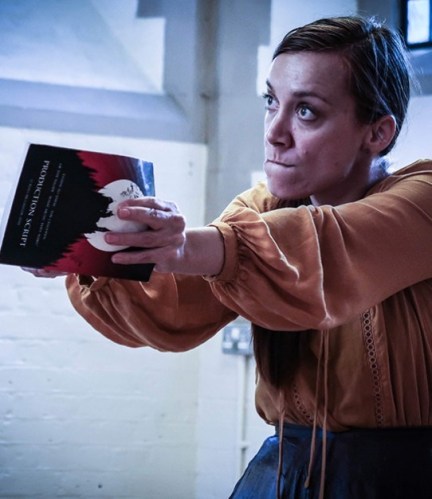
Both Cornelia and Beatrice appeared in the Arrows’ last production, The White Rose, which told the true story of anti-Nazi political activist Sophie Scholl – and both list it among their highlights with the company. “It was so rewarding to see the company and Ross get so much recognition for all the hard work that has led to that production,” says Cornelia. “Finding out about the Best Production Offie nomination was very special and one of my favourite backstage memories.

“Personally, it is difficult to pick highlights as I have been very lucky to play lots of exciting characters with A&T, but I would have to say that playing Lady Macbeth in 2016 and Mary Shelley in last year’s Frankenstein were probably my favourites. Lady Macbeth is obviously any actress’ dream but I think I particularly liked exploring the relationship between her and Macbeth, and finding the humanity and trauma behind the horrible things that they do. Similarly I loved finding out about Mary Shelley’s incredible life and it was an honour to portray her.

“Saying that, I am having an absolute blast playing Renfield in rehearsals… so I think that will definitely be added to my highlights, if not top the other two.”

Beatrice also has special memories of The White Rose. “There was just something about that show. I think we as a company were all very aware of the importance of the story we were telling, and we never stopped being moved by the bravery of the people we were playing every night.

Three Sisters would also have to go up there, as it was a completely different experience to any I’ve had in theatre before. I was pretty nervous when Ross asked me to assistant direct, but I found the process really fascinating, and although there were moments during rehearsals when I was more stressed than I’ve ever been as an actor, watching from the lighting box on opening night made it all worthwhile – I think I cried a little bit!

“Although we’re still in the midst of rehearsals for Dracula, there’s already been so much laughter and fun in this production. I think we’re all enjoying playing stuff that we wouldn’t normally get to do, as well as having gritty emotional conflicts to sink our teeth into – pun absolutely intended.”

Dracula brings together a cast of familiar Arrows faces, all of whom have appeared in previous productions with the repertory theatre company: “Rep theatre is simply the best way to work,” says Cornelia. “It is so nice to enter a rehearsal room from the first day and be comfortable and ready to explore, take risks and have fun. It cuts through all the awkwardness of having to prove yourself to the director or even other actors. You can hit the ground running. It is about working together and creating the best you possibly can. Ross knows how we work and how he can get the most out of us. Similarly we know his style and vision and there is a shorthand to get to the end result quicker. We have so many references from previous plays that it is very easy to be on the same page.

“For any play you have to be very open and vulnerable to get to the core of the characters and the story. It is easier when you’ve worked with people before. There is more trust there. This is particularly true for playing roles outside of your comfort zone, and of course intimate scenes or in fighting and movement where you are very reliant on your fellow cast members.”

“It’s great to be able to find new dynamics within the group for each show as well,” adds Beatrice. “Lucy (Ioannou) and Chris (Tester) for example, are worlds away from Sophie and Mohr as Lucy and Dracula! It never gets boring, even though it’s a similar cast each time – this is actually my first time doing significant scenes with Chris, even though it’s our third show together. Every show has an incredibly different atmosphere, and it’s so lovely to get to share all of it with an amazing group of people.”

Beatrice joined the company last year, making her first appearance as Mary Shelley’s half-sister, Fanny Imlay, in Frankenstein. “I feel incredibly spoiled,” she says. “Frankenstein was my first professional job, and I got to give an emotional death speech while wearing a gorgeous dress, which is the dream, honestly.

“But in all seriousness I’ve learnt so much this year; as someone who is still fresh out of drama school I never would have dreamed that I’d get to play such a range of complex and interesting female characters at this point in my career. And on top of that, I’ve been able to play them against actors who really force me to raise my game, in productions I am truly proud to be a part of. We’re all very dedicated to the work we do – Ross puts his heart and soul into every production, and as actors we all want to support him in that, and give our all as well.”

Cornelia was first cast in 2015 as Baptista in Taming of the Shrew, and has been a regular cast member ever since: “Honestly I can’t put into words how much I have enjoyed working with Ross and the company. It has been a real blessing and I am very grateful to have been part of so many wonderful productions and work with so many lovely, creative and talented people. Ross always picks exciting material and it has been great to see the company grow and find its style and identity.

“And as an actor I think I would never have learned as much as I have over the last three years working on these productions. It has been an honour to be recast and have a director trust you to explore different roles. It is a real chance to be stretched and be put out of your comfort zone. Renfield is certainly a very different role to what I have done before.

“But most of all it feels a bit like a family and a home. I am always happiest when working on an A&T production.”

Review: La Tragédie de Carmen at Asylum Chapel

As operas go, Bizet’s Carmen is a good choice for anyone in search of an entry-level option, because chances are most of us know more of the music than we think. In La Tragédie de Carmen, Peter Brook, in collaboration with composer Marius Constant and writer Jean-Claude Carrière, takes this a step further, condensing Bizet’s four-act original – and all its greatest hits – into just 80 minutes. This means we lose all but four of the characters, and instead focus solely on the tragic “love rectangle” between the protagonists.

Photo credit: Ugo Soffientini

Micäela (Alice Privett) arrives from the country looking for her childhood friend Don José (Satriya Krisna), a corporal in the Nationalist army, with whom she’s in love. He, however, has fallen for the seductive Carmen (Chloe Latchmore), who leaves him after a brief romance for Escamillo (James Corrigan), an officer. After trying and failing to win her back, Don José murders his former lover in a fit of passion.

Directed by John Wilkie, Pop-Up Opera’s production of La Tragédie de Carmen is exquisitely performed by the four singers and musical director Berrak Dyer; watching and listening to her perform the opera’s entire score on piano is worth the ticket price all by itself. Though it may be much smaller in scale than a traditional performance of Carmen, there’s nothing half-hearted about this production, which brims over throughout with passion, intensity and obvious talent. As the tragic love story unfolds, a video screen shows images from the Spanish Civil War – which, in this updated version of the story, has just ended – as well as Pop-Up Opera’s trademark minimalist surtitles, which provide us with just enough of a translation to understand the context of each scene, but don’t distract from the action.

Cutting back the story so dramatically has both advantages and drawbacks. On the plus side, it’s much shorter and more accessible than the original, with a more straightforward storyline, which makes this an ideal ticket for an opera first-timer. On the other hand, it’s all over so quickly that there’s a risk of the audience not becoming fully invested in Don José’s relationship with Carmen, or appreciating why he reacts so violently to her rejection. This is dealt with, to some extent, by setting the action at the end of the Civil War, and portraying both Don José and his love rival Escamillo as having suffered some trauma as a result of what they’ve seen and experienced during the conflict. In light of his obvious fragility, perfectly captured in Satriya Krisna’s performance, the apparent ease with which Don José is driven to madness doesn’t seem quite so hard to accept.

Peter Brook’s aim in writing La Tragédie de Carmen was “to focus on the intense interaction, the tragedy of four people” that lies at the heart of the story. Pop-Up Opera have stayed true to that purpose, and while some may take issue with Brook’s extreme edits, it’s hard to find fault with this particular production of his work. (That said, I do recommend sitting at the front if you can – depending on the venue, some audience members further back may struggle to see what’s happening during the final climactic scene.) Whether you think you like opera or not, this one is certainly worth a visit.

La Tragédie de Carmen continues on tour – for full details visit www.popupopera.co.uk.

Review: Lifeboat at the Brockley Jack Studio Theatre

In September 1940, a ship carrying evacuee children from Britain to Canada was sunk by a torpedo attack, with the loss of an estimated 258 lives. For nineteen hours, two schoolgirls, Bess Walder and Beth Cummings, clung to an overturned lifeboat in the middle of the Atlantic, dressed only in their pyjamas and dressing gowns. As the hours passed, they willed each other to hang on, until they were finally rescued and brought home to Britain. Their terrifying ordeal and the friendship and courage that helped them both survive it, are the subject of Nicola McCartney’s two-hander Lifeboat, and under the direction of the consistently brilliant Kate Bannister, they make for an enthralling 70 minutes.

Photo credit: Tim Stubbs Hughes

The play covers the hours following the attack, when we find Beth (Lindsey Scott) and Bess (Claire Bowman) floating, alone and terrified, in the freezing Atlantic. But it also flashes back to the months leading up to their departure, and the impact of the war on their lives in Liverpool and London respectively, as well as their four days travelling on The City of Benares, where they’re brought together by a shared love of The Wizard of Oz. There’s a playfulness and humour to these flashbacks – in which Claire Bowman and Lindsey Scott also play all the other characters, from annoying little brothers to the ship’s Indian crew members – that draws us in, and which contrasts sharply with the intensity of the lifeboat scenes placed intermittently throughout the play. The more we know about the two friends’ lives and their dreams for the future, the more we want them to survive.

The Brockley Jack has a well-deserved reputation for its excellent in-house productions. Lifeboat is no exception, rising magnificently to the challenges presented by the play’s structure and themes, and ticking every box in terms of design, direction and performance. Karl Swinyard’s set transforms the small studio space into the deck of the doomed ship, while the sound and lighting design from Jack Elliot Barton and Tom Kitney recreates with stunning accuracy not only the sights and sounds of the 1940s but also the horror of the attack and its aftermath.

Throughout the play, Claire Bowman and Lindsey Scott show their versatility as they slip seamlessly from one character to another. But it’s as the central characters that they’re most compelling – whether they’re cheerfully singing rude songs about Hitler, gazing in awestruck wonder at the cinema screen, giggling over a handsome sailor, or fighting for survival in icy waters. In just 70 minutes we come to know and care about both girls, and as their ordeal continues, we can feel their fear and growing exhaustion.

Photo credit: Tim Stubbs Hughes

Although Lifeboat focuses on one specific incident of World War II, it’s difficult to watch it and not think more broadly about the horrors of war, and the millions of innocent lives lost around the world to conflicts past and present. Bess and Beth’s story ends well – the two women would go on to be lifelong friends – and Lifeboat pays tribute to their incredible courage and resilience. But the play’s sombre conclusion also ensures we don’t forget the 258 people, among them 77 children, who weren’t so lucky.

It’s tragic that stories like this one still need to be told, but if they must then it’s at least some comfort to see them told as well as this. A sensitive portrayal of devastating real events, Lifeboat is undoubtedly another triumph for the Brockley Jack team. Go and see it while you can.


Can’t see the map on iPhone? Try turning your phone to landscape and that should sort it. I don’t know why but I’m working on it… 😉

Review: Hear Me Howl at the Old Red Lion Theatre

If you ask most children what being a grown-up looks like, chances are most would say at least some of the following: job, marriage, family, house, car, dog/cat/goldfish… That’s what society trains us to believe from a young age, so it’s no surprise that if we don’t fit into that box, we’re deemed – by both others and ourselves – to have somehow failed.

This seems particularly true in relation to the marriage and babies part, and because of the idea of a “biological clock”, it’s almost always women who take the brunt of the judgment. At my friend’s wedding a couple of years ago, as the only single member of the wedding party, I fielded questions from no less than three people (all of whom I’d only just met) as to why I was there alone – and as a bonus, a helpful reminder from the bride’s mum that I should probably get a move on.

Photo credit: Will Lepper

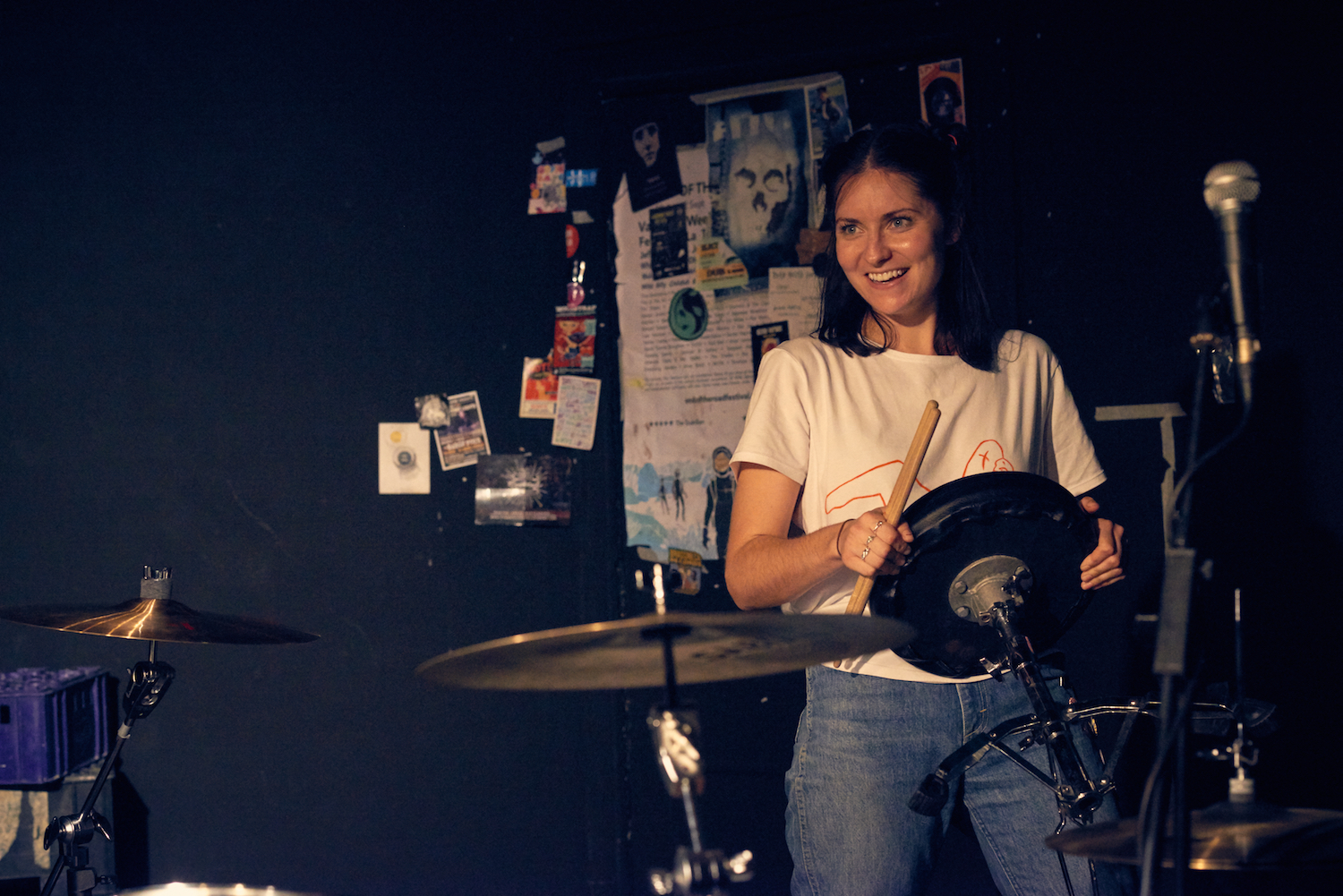
I feel like Jess, the character in Lydia Rynne’s Hear Me Howl, would sympathise with that experience. She’s about to turn 30, and has been in a relationship for years with a very lovable guy. So naturally she faces frequent pressure from family and friends to take the next step, whether that’s marriage or babies, because after all, she’s “not getting any younger”. The only problem is that Jess doesn’t really want to take that step, so it’s no surprise that when she discovers she’s pregnant, she freaks out quite dramatically. A week later, she’s joined a post-punk band, thrown out most of her clothes, attended her first protest and even appeared on the news – and all the while, she knows she has a huge, life-changing decision to make.

There’s plenty of humour in the one-woman show, which is beautifully performed with energy and unflinching conviction by Alice Pitt-Carter, but we’re also very aware that what we’re watching is much more than simply a woman having a meltdown. What we’re seeing is the dawning, liberating realisation not only that Jess doesn’t want to be a mother, but that she doesn’t need to be. She’s spent the last twelve years conforming to what society expects – boring job, nice boyfriend, rented flat, hair-free armpits – and is only now beginning to understand those are just a few of the options open to her.

This produces a conflicting set of emotions for the audience; it’s exhilarating to see Jess take her first steps towards figuring out who she really wants to be, but also depressing because it took a crisis – not to mention twelve years – for her to realise she even had that option. We see her grappling with the idea that not wanting a baby makes her selfish, or that she’s somehow failing in her womanly duty to continue the human race, even though she knows it wouldn’t make her happy – and to see another woman go through that turmoil is infuriating.

Photo credit: Will Lepper

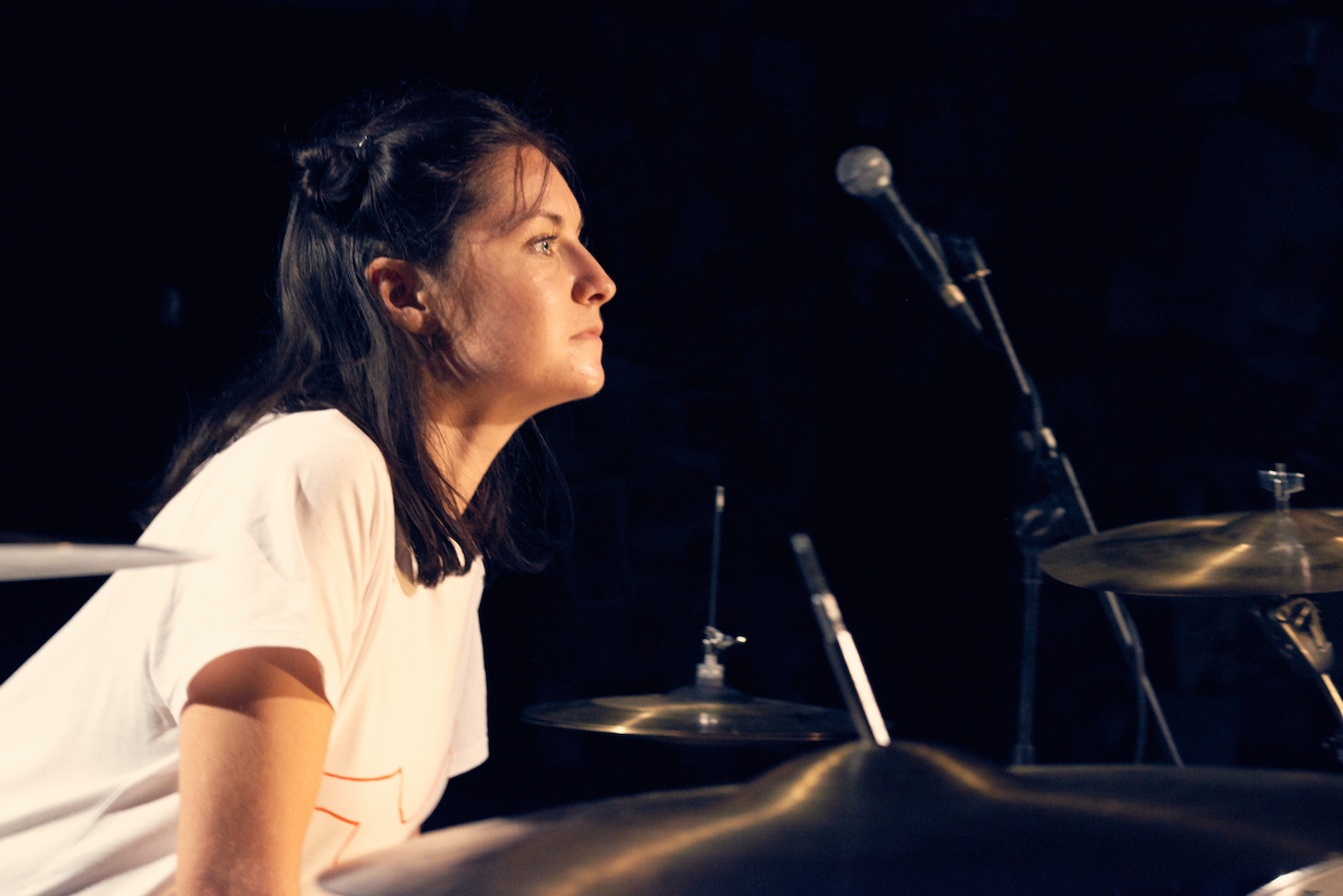
Throughout the 70-minute show, director Kay Michael ensures we’re always aware of the drum kit that sits centre stage, as Jess hovers around it, her hands never far from the drumsticks she’s clearly itching to use. And when she finally takes her place behind the kit at the end of the show, she’s drumming not only for herself, but for every woman who’s ever felt unable to live the life she wants for fear of judgment. You may at this point want to use the earplugs provided at the box office; personally I wanted to experience every beat of her performance.

Can’t see the map on iPhone? Try turning your phone to landscape and that should sort it. I don’t know why but I’m working on it… 😉

Review: Arabian Nights at Hoxton Hall

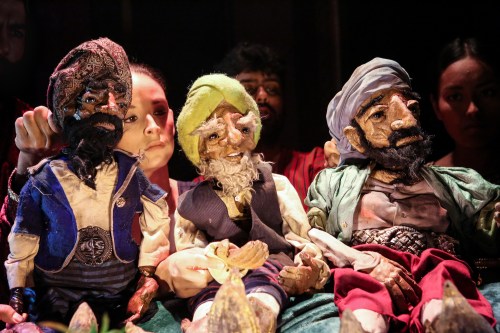
When it comes to storytelling, they don’t come much more epic than Arabian Nights – not only a story about stories, but stories with the power to save lives. And in the capable hands of Iris Theatre, this classic tale makes for a fun, family-friendly (for the most part) show that looks fantastic and, as with the company’s previous production The Three Musketeers, places a strong female role model at centre stage. Also – puppets. Many, many puppets.

Photo credit: Ali Wright

Although Nessah Muthy’s adaptation changes a few details, the basic plot of Arabian Nights is one that will be familiar to most. The tyrannical King Shahryar (Pravessh Rana) once had his heart broken, so now he marries a new woman every day, only to have her executed the next morning. As you do. When his eye falls on slave girl Dunzayad (Izzy Jones), her older sister Sharazad (Sharon Singh) begs to take her place, before enchanting the king so completely with stories that he can’t bring himself to kill her the next day – or the day after that…

As always seems to be the case with Iris Theatre, the show’s impressive cast – which also includes Hemi Yeroham, Ikky Elyas and Maya Britto, making her professional debut – seems impossibly small given the scale of the production. This is even more true in Arabian Nights, where the roles listed for each actor in the programme are far from exhaustive; it’s something of a shock to see only six people step up for the curtain call, and even more surprising that they’re all still standing.

Together this seamless ensemble bring vividly to life not only Sharazad’s own story but also those she tells the king, transporting the audience to far-off lands and introducing us to a multitude of colourful characters through music, dance and puppetry. The latter comes in a number of forms: puppet designer Jonny Dixon has created towering monsters, hand-held figures, and an array of face masks that render the actors temporarily unrecognisable. All come together to create a captivating world of magic and mystery; King Shahryar isn’t the only one who’s charmed.

Sharon Singh easily commands our attention as Sharazad, a timeless heroine who in this version of the story is not only fighting for her own life but also that of her sister. She may have a much cooler head in a crisis than Izzy Jones’ impulsive Dunzayad – but we still see flashes of fire as Sharazad defiantly stands, armed only with her wits, against the king’s crazed misogyny and violent temper. In this role, Pravessh Rana is frighteningly convincing, and while the show is certainly great entertainment for all ages, there are a few moments that younger children may find a bit scary.

Following two outdoor promenade shows at St Paul’s Church this summer, director Daniel Winder continues to involve the audience, this time by having the cast share light-hearted interactions with those sitting closest to the stage. The show also explores every inch of its venue, which has been transformed for the occasion into an Arabian palace by set designer Amber Scarlett – the only downside being that from certain seats it’s difficult or even impossible to see everything that goes on.

Photo credit: Ali Wright

Though it certainly speaks to a modern audience in its calling-out of misogyny, Arabian Nights proves above all that no matter how old we get, there’s nothing we love better than a great story well told. Highly recommended for an evening of high-quality escapism and entertainment, presented by a talented and incredibly hard-working cast – with a little help from some seriously cool puppets.


Can’t see the map on iPhone? Try turning your phone to landscape and that should sort it. I don’t know why but I’m working on it… 😉