Review: He(art) at Theatre N16

Andrew Maddock has already established himself as a writer to watch with his previous work, including In/Out (A Feeling) and more recently, The We Plays. In particular, he really knows how to create characters that we care about, so that when the story suddenly takes a darker turn, we’re caught totally off guard. He(art), Maddock’s latest play, follows a similar trajectory, setting up two separate but equally compelling stories before smashing them together in an explosive final scene.

Alice is looking for a painting to buy with her boyfriend Rhys. But he’s reluctant to commit – to a piece of art or anything else, including seeing a doctor about his congenital heart condition. Meanwhile Kev’s just got out of prison and is hatching a plan with his sister Sam to get the money they need for their dying Mum’s medical treatment – by stealing the very painting Alice and Rhys have their eye on…

Photo credit: Jesse Night

At first glance, there’s a lot in this story that doesn’t quite make sense. How did posh gallery curator Alice get together with “Wembley Warrior” window cleaner Rhys? Why do Kev and Sam have to steal that particular painting (and why any painting, come to that)? What happened to their dad? And what does die Maus Head Man have to do with anything?

We don’t get all the answers, but that’s sort of the whole point – Maddock gives us a sketchy snapshot of events, and how we fill in the blanks is up to us. If a few of those events are slightly random, well it just makes the overall impression more interesting – like a mouse head that triples a painting’s value. The opening scene, in which Alice tries unsuccessfully to teach Rhys about art, is actually as much for the audience as it is for him, letting us know that just because we don’t have all the info it doesn’t mean we can’t flesh out the story in our own way. The stage in director Niall Phillips’ production is a roped-off gallery space; the props are exhibits hanging from the ceiling, as is the painting at the heart of it all. This play is a piece of art in itself, to be examined, discussed and interpreted, not simply accepted at face value.

But as the title suggests, there’s more than just art here – there’s also a huge amount of heart. This manifests itself in small ways, like Rhys’ pride in the fact his are the only streak-free windows on the high street, or in Sam’s eclectic music collection and the affection for Johnny Cash that she shares with her brother. But it’s also built into the relationships of the characters; this is a story that’s absolutely driven by the heart instead of the head. On paper, Rhys and Alice’s relationship should never work. Sam and Kev’s planned heist is doomed to failure. And yet we find ourselves willing both to succeed, because both are motivated by that most fundamental of human emotions: love.

Photo credit: Jesse Night

This love comes through powerfully in the four actors’ performances. Jack Gogarty and Alex Reynolds are very natural together as Rhys and Alice, revelling in their light-hearted banter about the value (or not) of Banksy and a recent scandal in the porn industry. But their relationship is just as convincing in its more intense moments; her anxiety about his health and his longing for a normal life both feel entirely genuine. Similarly, the close sibling relationship between Kev and Sam, played beautifully by Shane Noone and Flora Dawson, feels completely authentic, precisely because it isn’t picture perfect – his concern for her welfare is frequently tinged with impatience and even violence, while her childlike emotional vulnerability and desperate desire to please him put everything at risk more than once.

In He(art), Andrew Maddock has another hit on his hands; it’s a poignant and at times very funny story of two halves – and if this time the twist in the tale isn’t entirely unexpected, that doesn’t make it any less compelling to watch. (One of the great things about theatre in the round is you can see how other audience members are reacting, and it’s safe to say I wasn’t the only one on the edge of my seat there at the end.) Most importantly, it reminds us that whether we’re talking about painting, music or even window cleaning, there’s no such thing as “just art”.


Can’t see the map on iPhone? Try turning your phone to landscape and that should sort it. I don’t know why but I’m working on it… 😉

Review: Torn Apart (Dissolution) at Theatre N16

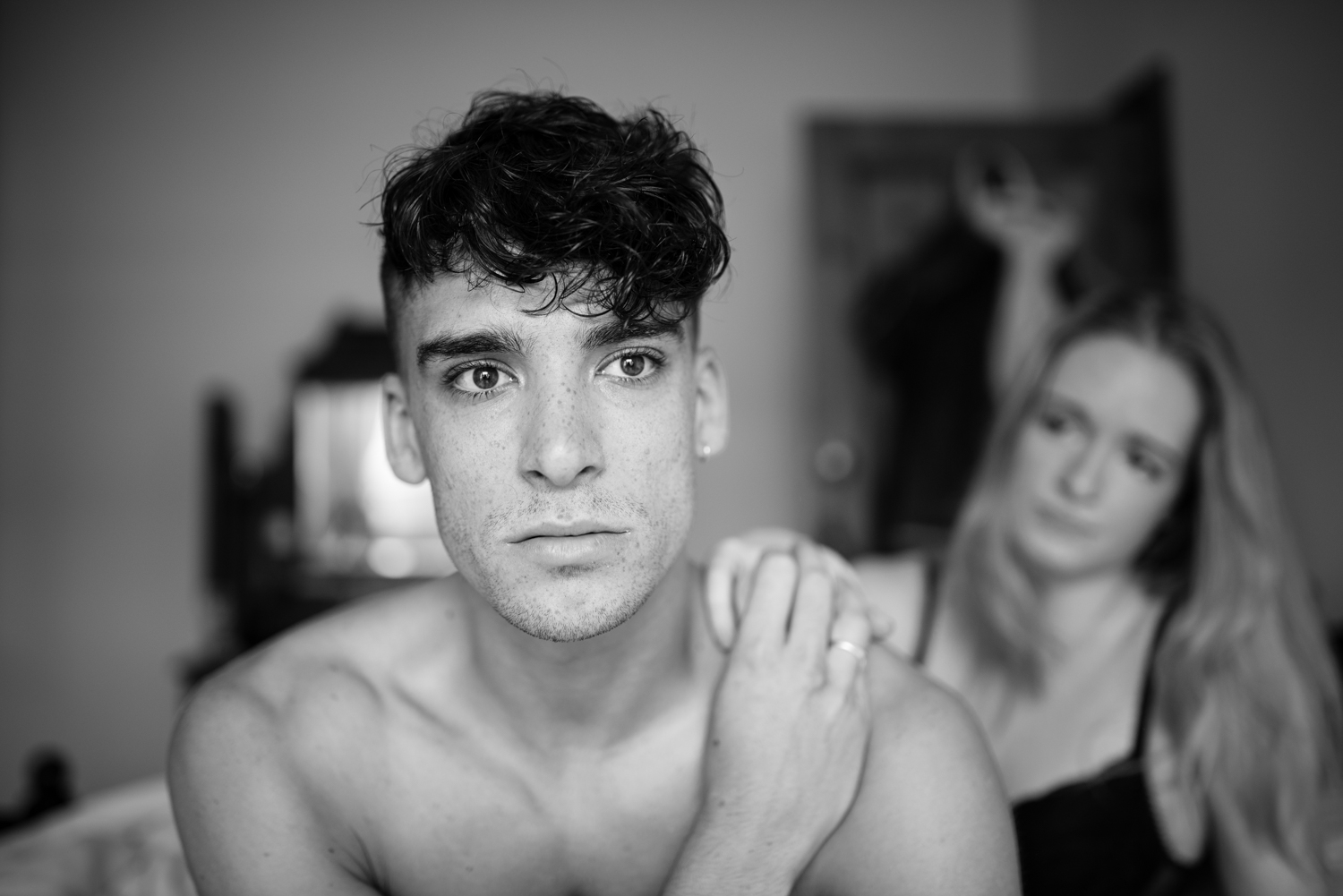
Torn Apart (Dissolution), written and directed by Bj McNeill, is an intense and compelling drama about three couples. Though their stories take place years and miles apart, there’s a common theme of love and loss – not only of partners but of family, home and history – as well as an actual connection between the three that’s revealed a little at a time, with the final piece falling into place just moments before the end.

In 1980s West Germany, young Polish student Alina (Nastazja Somers) falls for an American soldier (Simon Donohue), even though she knows that sooner or later he’ll have to follow his duty and leave her behind. In 1999, Elliott (Elliott Rogers), a chef from London, and Casey (Christina Baston), a backpacker from Melbourne, try to come to terms with the fact their relationship has an expiry date dictated by the Home Office. And in present day Britain, Holly (Sarah Hastings) finally plucks up the courage to leave her perfect husband for Erika (Monty Leigh), but their new-found happiness is threatened by devastating news.

dsc_9462
Photo credit: Yuebi Yang

Szymon Ruszczewski’s set is visually striking: the stage, at the centre of which is a double bed, is enclosed within a large cage made of string. This creates a space that is at once intimate and claustrophobic – inside it the lovers make plans, laugh, dance, argue, have sex, and share the complex family histories that ultimately bind them together. At times they play with and caress the strings that surround them, while at others they reach out through them in a desperate attempt to be free.

The play holds nothing back, in emotional or physical terms, and the audience is placed in the sometimes quite uncomfortable position of the voyeur, watching a series of deeply private encounters unfold. This effect is heightened by the absence of a curtain call; as we leave the theatre, two of the actors remain on stage in a final embrace, seemingly unaware that we’ve ever been there (similarly, the action is already underway as we enter, with the same two actors enjoying a night of passion that leaves little to the imagination).

The play is gripping throughout, with some powerful performances from its excellent cast. Elliott Rogers and Monty Leigh are particularly impressive as two of the most damaged characters, Elliott and Erika, who simultaneously can’t believe their luck and are terrified of losing the person they love to forces beyond their control. It’s only at the end that the play seems to suddenly run out of energy. A crucial closing scene is unnecessarily repetitive and takes rather too long to make its point, which means we lose momentum in the run-up to the big final revelation, and it doesn’t have quite the dramatic impact that it should.

dsc_97671
Photo credit: Yuebi Yang

Torn Apart (Dissolution) is a love story, but not in the traditional sense; nobody’s riding off into the sunset in this tale. It makes us pause and consider what love means to us – is it something to be desired, or feared? And yet, surprisingly, this is not as bleak a story as it might sound. Each of the characters gains something from their relationship, even if it’s just the memory of what it feels like to be loved, perhaps for the first time in their life. So while it’s not a happy ending, it’s not without an element of hope as well.

Full of drama, passion and emotion, Torn Apart is a heartfelt and ambitious play that speaks to us all in some way. If it could maintain its pace and energy right to the end, there’s a powerful piece of theatre here.

Torn Apart (Dissolution) is at Theatre N16 until 30th September.


Can’t see the map on iPhone? Try turning your phone to landscape and that should sort it. I don’t know why but I’m working on it… 😉

Review: The Gospel According to Philip, Theatre N16

For Arrows & Traps, known for their popular adaptations of Shakespeare and other classic works of literature, The Gospel According to Philip is unfamiliar territory. A brand new comedy written by Richard Melchior and Heidi Svoboda, the play couldn’t be more different to the company’s last two shows: a bloody and politically charged Macbeth, preceded by a gripping adaptation of Tolstoy’s epic novel, Anna Karenina.

So, a bit of a gamble perhaps for Arrows director Ross McGregor, but did it pay off? Absolutely.

Photo credit: Davor Tovarlaza
To be more exact, The Gospel According to Philip left me wondering why it took Arrows & Traps so long to tackle their first outright comedy. Not to mention giggling all the way home over the brilliantly bonkers dance routines. (If you need only one reason to see this show, make it the unforgettable sight of Jesus Irish dancing. You’re welcome.)

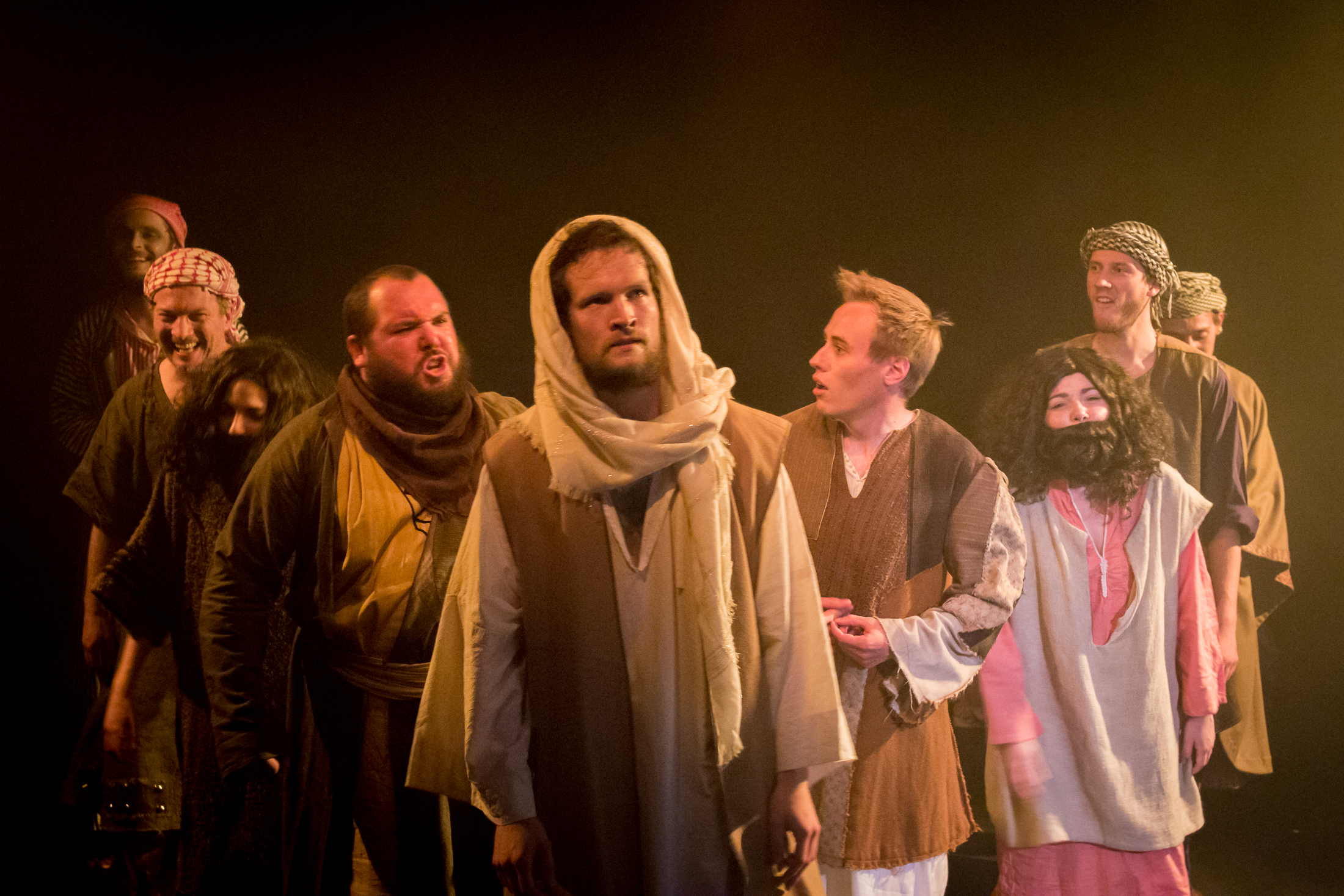
The play is an irreverent re-imagining of the story of Jesus and his disciples, leading up to the crucifixion, all set down in often quite unnecessary amounts of detail by Philip, the newest member of the gang. Will Mytum, who plays the eager apostle, is irresistible from the moment he steps on stage – even before he opens his mouth, he has us laughing with his earnest expression and childlike excitement… and he only gets more adorable as the play goes on.

As in previous Arrows productions, every member of the cast excels, with most of them taking on multiple roles, and all proving themselves to be gifted comedians. Adam Elliott is full of charisma as bad boy Judas, while Elle Banstead Salim is a whirlwind of energy as feisty chatterbox Mary Magdalene (and also puts in a couple of fantastic cameos as a bride upstaged by Jesus at her own wedding, and Pontius Pilate’s Catherine Tate-inspired receptionist). Alex Stevens has perhaps the most challenging role as Paul, whose wildly homophobic language only thinly veils his private confusion and vulnerability. And then there’s Jesus, played by Pearce Sampson, master of the beatific smile, albeit often through gritted teeth, who grows increasingly frustrated as the disciples persist in asking awkward questions he can’t answer.

Photo credit: Davor Tovarlaza
Which brings us to the message at the heart of a play that’s undoubtedly very funny, but has a serious point to make as well. In a scene that even the script acknowledges is a bit preachy and makes everyone uncomfortable, a smiley, likeable Devil (Olivia Hanrahan-Barnes) paints a vivid picture for Jesus of the bleak future ahead, in which human beings will commit acts of horrifying violence in the name of their faith – but even this can’t deter him from the path laid out for him. Later, Jesus asks Matthew Harrison-James’ Geordie-accented God (who has a few issues of his own to work out) why he has to die in such a horrific way, and – while clearly dissatisfied with the response – goes ahead and does it anyway, because that’s The Plan.

Perhaps it sounds like Melchior and Svoboda’s play is anti-religion, or out to cause offence. It’s true that it plays fast and loose with the Bible as we know it – although I must admit I quite enjoy the idea that the Last Supper might have consisted of crisps and rum instead of bread and wine. But ultimately, the unexpectedly sombre final speech of an older, wiser Philip is one of acceptance. Some people have faith; some don’t, and ultimately it doesn’t really matter – as long as we exercise caution. Believing something just because “it is written”, without question, is just as dangerous as believing nothing at all – and that’s a rule that could be applied to all kinds of things, not just religion.

The Gospel According to Philip is witty, cheeky, sometimes very silly and ultimately pretty challenging. And it’s been brought to life for the very first time by a company who, it seems, can turn their hand to just about anything. Including Irish dancing, apparently.


Can’t see the map on iPhone? Try turning your phone to landscape and that should sort it. I don’t know why but I’m working on it… 😉

Interview: Arrows & Traps, The Gospel According to Philip

“It’s a modern Life Of Brian, but with sharper knives,” explains Ross McGregor, Director of Arrows & Traps. Following their recent critically acclaimed production of Macbeth at New Wimbledon Studio, the company are turning their attention to something very different for their next project.

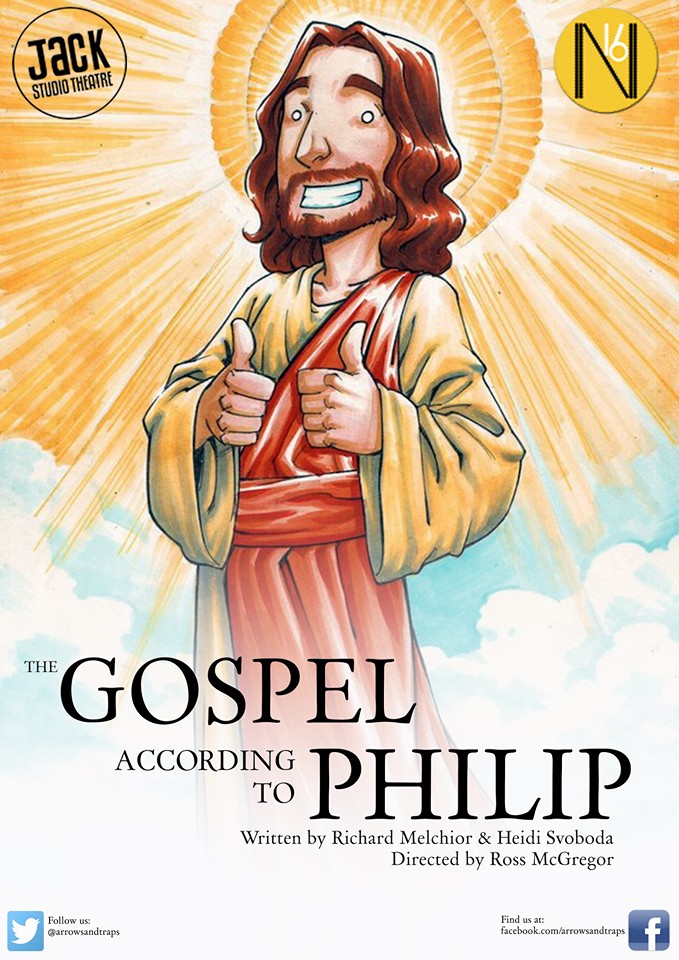
“The Gospel According To Philip is the story of a young man, Philip, who decides to join the Apostles, a secret club of men, and follow a new messiah called Jesus. The story is told from his perspective as it charts Jesus’s final weeks on earth, running to his crucifixion.”

The production began with an approach from one of the writers, Richard Melchior. “I’ve known Richard for about 10 years; we worked together early in our careers doing regional tours in East Anglia. He brought this script to me just after his co-writer, Heidi Svoboda, tragically passed away, and asked me if there was any way to get this performed, as he was really proud of it. Initially I was just interested in it from a personal level, as I’ve always been a fan of Richard’s work, but when I started to actually read it, I was blown away. The satire is wonderfully drawn and subtle enough to make you think, and these iconic, almost mythical people are so recognisable but also feel completely fresh.

“You have the different character dynamics at work in terms of the apostles, and what Richard and Heidi have done, in a stroke of genius, is to transform Jesus and his disciples into a weary primary school teacher trope trying to control a group of unruly children, which gives it so much life. You have Peter as the teacher’s pet, the smart alec filled with impossible questions in Matthew, Judas as the cool kid smoking at the back of the classroom, the remedial dunce in James, the closeted gay man in Paul, and Philip as the new kid at school. It’s a fantastic re-imagining of how the Bible should have gone.

“I was so impressed with the quality of the writing and the machine-gun-like frequency of the punchlines. It’s one of the best comedies I’ve read in quite a while – but then when the ending comes, the poignancy and sense of loss is devastating. When I realised this ending reflected Richard’s loss of Heidi after she died, and that this might be the only chance of her work being performed now – I knew I had to take it on myself.”

13891873_1141616572586829_2518341558948586424_n

Offie-nominated Arrows & Traps are known for their productions of classics, particularly Shakespeare, so the new show marks quite a departure from tradition. “This isn’t an Arrows show in the expected sense – it isn’t Shakespeare, there are no extended movement pieces, we’re not subverting a classic or switching genders – but hopefully we will retain enough of what has made the last six shows so successful and bring you a recognisable Arrows-shaped piece of entertainment – which I think means that I want to take characters that you think you know, and show you their humanity and vulnerability in a new way, whilst entertaining you senseless.

“In Arrows shows we normally try to take an old story and tell it in a new way, but with this, that exact action has already been performed by the writers before we got our hands on it. They took the Bible, spun it on its head and created The Gospel According To Philip. So the Arrows spin is done without an Arrow having to lift a finger. All we have to do now is bring it to life in the most fair and honest way possible. And make sure it’s funny, of course. Has to be funny.”

Staging a piece of new writing for the first time brings with it a new kind of pressure: “I’m wary of doing this one justice, as it’s the first time the script has ever been performed, and whilst we don’t have the shadows of hundreds of other past productions looming over us like we usually do with Shakespeare, this one seems even more important to get right because I really want this little show to have a great future, and go from strength to strength in years to come, whatever shape that might take. It’s a great piece, and deserves a long life.

“On the other hand, there might be less pressure in terms of reviews and audiences, because with Shakespeare that’s always massive. On our last show, Macbeth, the vision and direction that the witches would take absolutely plagued me in the preparation stages, because they’re so iconic, everyone has their version of what they should be like… it was very hard to try to honour those views, honour the world of our play, serve the narratives that the text has, and also show something new with them. Lots of pressure. So Philip doesn’t have that. Or perhaps it does! I mean, doesn’t everyone kind of have a preconceived notion of what Jesus looks like? In the west, he’s a Brad Pitt-esque, blue-eyed, golden-haired white man. So I guess there’s always pressure.”

Arrows & Traps’ fanbase of “devoted trappers” will, as always, spot some familiar faces in the cast. “A massive part of what makes an Arrows & Traps show so special is the people in it. We are a repertory company in the sense that there’s a core base of people involved, but we always try to mix it up with new actors, so it stays fresh.

“We have Pearce Sampson playing Jesus, a very talented funny actor whom people may recognise as our Porter and Lennox from Macbeth, and bright young star Alex Stevens playing Paul – he was our Malcolm in Macbeth and our Demetrius in Titus Andronicus. The deliciously watchable Adam Elliott plays Judas; audiences at the Jack will remember him as Karenin, the husband in our Anna Karenina, and in the title role of Philip we have Will Mytum, a great actor renowned on the Off West End circuit, who previously played Vronsky in our Anna Karenina, and Chiron in Titus Andronicus. We have Elle Banstead-Salim playing Mary Magdalene, coming hot off of finishing her brilliant turn as Lady Macduff and Witch in Macbeth, and Gareth Kearns playing Matthew. Gareth has been involved in every Arrows show so far, and recently it was my honour to watch his 100th performance with us. There’s no-one I’d rather have on this project than Gareth, as he’s perfectly suited for it.

“And then lastly we have three new actors, Tom Telford, Matthew Harrison-James, and Olivia Hanrahan-Barnes, all of whom I’ve auditioned in the past and was impressed by – it was just about getting the right role at the right time, which we’ve now found. I guess that’s a lesson in perseverance for any actor out there feeling like it’s too tough in the industry right now. We do listen, and we do remember, and we always come back to you when the time is right. So really, this amalgamation of both old and new faces is perhaps the thing about the show that I’m most looking forward to, because there is literally no weak link in these guys.”

Why should audiences come and see The Gospel According to Philip? “A brilliant tagline a friend used when I told her about the show was Passion Of The Christ With Jokes. If that doesn’t make you want to buy a ticket, then you’re dead inside. Also, supporting brilliant and passionate fringe venues like the Brockley Jack and Theatre N16 is so important if we want places like this to keep offering their communities such diverse and arresting art on their doorsteps.

“The play might make you think, but it will definitely make you laugh. It’s a great night out at the theatre. And the themes that it raises are exactly the things that we should be talking about right now. The world is a scary place, and terrible machinations are threatening to pull us apart as a human race. Faith is often held up as a banner or scapegoat for cruelty and hatred, and really, for things as old as religion, we need to go back to the start and look at what happened and learn from it. There’s something terrifying about the way that all the different religions have become so ingrained in our culture, our faiths, and yet really – every single one of them started as a flawed, wobbly cult, a series of men meeting in dark rooms telling stories and writing down rules for life. I think this play has a lot to say about our modern world, about those of us who are lost, and about where we should draw our strength from.

“Don’t get me wrong, it isn’t a night of theological debate – there’s too many cock jokes in it for that. But as with the best of our satire, and I think Terry Pratchett may hold that crown for me, beneath the jokes and laughter there’s always a question, a poke in the ribs, something to argue about on the way home.”

Looking ahead, the rest of the season marks a return to more traditional fare, with the unique Arrows flavour that audiences have come to know and love. “The Broken Crown Season is epic. It’s massive. And it’s going to be the best work we’ve ever done. For me, the Broken Crown symbolises not just the fall of a king, but the breakdown and hollowness of responsibility, power and promise. It’s about ambition and the price that comes with it. It’s about kings, and gods, and leaders, but also relationships and trust. We’ve started things off with Macbeth, an obvious choice to get things rolling, now we’re tackling Jesus and the birth of Christianity, and after that we open our first true repertory double bill with Twelfth Night and Othello, performed simultaneously at Upstairs at the Gatehouse, on alternate nights over three weeks in November by the same cast. It’s going to be amazing fun, particularly on double show days where we do both texts.

“In the new year, we bring a modern horror-story vision of Frankenstein set in two different time periods, flicking in and out of a pair of narratives, and we finish with a thriller award-winning adaptation of Crime & Punishment, which has been boiled down into an action-packed, edge of your seat, 90-minute, three-hander, which I cannot wait to do, personally, as the script is electric. After that… watch this space.  The Arrows have plenty more stories to tell.”

Catch The Gospel According to Philip at Brockley Jack Studio Theatre from 30th August-3rd September, and Theatre N16 from 4th-8th September.