Review: The Castle at The Space

In Howard Barker’s rarely performed 1985 play The Castle, Stucley and his men return home from the Crusades to find the women have taken over and established their own tribal regime. Far from the hero’s welcome he was expecting, Stucley is horrified to discover his own wife in a relationship with a witch, and with no interest to returning to his bed – or giving him a child, despite having become famous in his absence for her abundant fertility.

Rather than try and work things out, Stucley decides to build a castle designed by Arab “genius” architect Krak, who’s returned home with him from the Holy Land. As construction gets underway, Stucley grows increasingly obsessed with making his castle bigger and more impressive than anybody else’s – but his plan to win back control ultimately only creates more chaos.
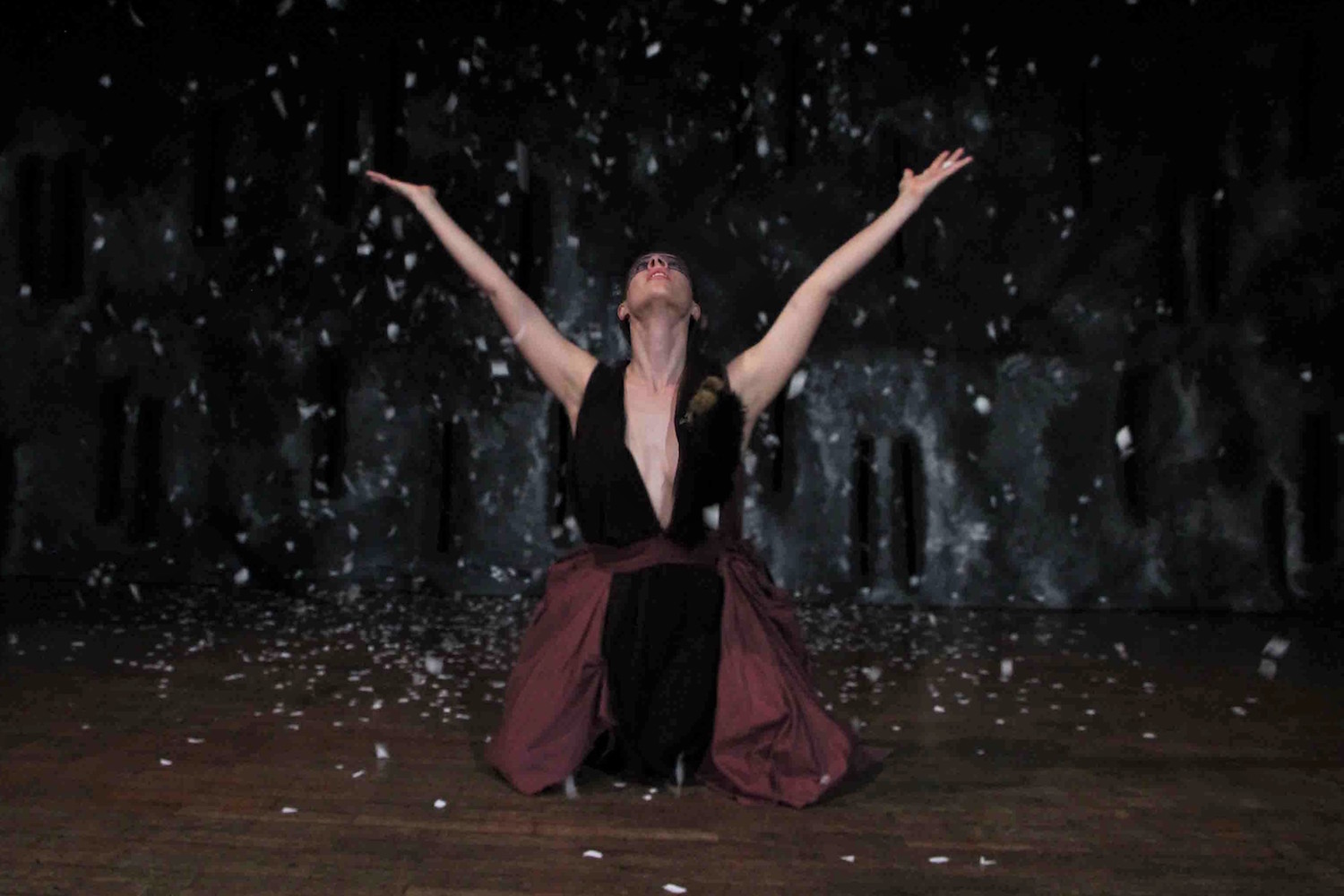
Photo credit: Ellamae Cieslik

It’s quite a strange play in many ways: a lot happens, not all of it very easy to understand and much of it entirely unexpected; it delves into everything from religion to gender politics; and though overwhelmingly dark in tone, there are several moments of surreal humour (at one point Stucley attempts to found a new church, anointing his chosen priest by putting a toolbag on his head in lieu of a hat; at another the witch Skinner, having confessed to murdering the castle’s chief builder, is sentenced to carry his corpse around wherever she goes, only to end up getting rather too attached). The language is also an odd blend of semi-classical and modern, which takes a good few minutes to get used to, particularly as the dialogue is very fast-moving from the start.

Having said all that, Adam Hemming’s new production at The Space is excellent and incredibly atmospheric, with a set from Jo Jones that makes great use of the converted church building to create a show that feels epic in scale. Andy Straw’s lighting design recreates the gloom of rainy middle England, giving us at times only just enough light to see what’s going on, while sound effects from Keri Chesser fill in – on one occasion in rather distressing detail – events unfolding off stage.

The cast of ten give passionate performances, particularly Anthony Cozens as Stucley and Kate Tulloch as Skinner, each driven to the brink of madness by their desire to win. Chris Kyriacou’s Krak looks quietly – and comically – dismayed at first by the chaos he’s stumbled into, but ultimately reveals his own hidden demons, and the same goes for Shelley Davenport’s Ann, whose firm resolve as the play opens soon begins to fall away.

Photo credit: Ellamae Cieslik

With all these strong personalities fighting for supremacy, the play does get a bit shouty (not to mention sweary) at times – but there’s welcome light relief from the likes of Holiday (Matthew Lyon), who’s spent so much time constructing tall buildings he can’t stop looking up and who, ironically, is petrified of heights, and Hush (John Sears), an old man who’s been making himself useful over the last seven years by obligingly getting all the women pregnant.

Despite the quality of the production, I’m not sure enjoyable is the right word for The Castle – which would probably quite please its writer, who in 2012 was quoted as saying, “A good play puts the audience through a certain ordeal. I’m not interested in entertainment.” All in all, this is the kind of play that leaves you feeling a bit bewildered and more than a little uncomfortable. Those who like to come away from the theatre understanding everything that just happened might want to steer clear; Barker doesn’t give us any easy answers, instead leaving it to the individual to interpret what we’ve seen in our own way. On the other hand, if you enjoy watching committed, compelling performances in a play that’s dramatic and darkly humorous, and which provides more than enough food for thought to keep you going for a good long while, this might just be the show for you.


Can’t see the map on iPhone? Try turning your phone to landscape and that should sort it. I don’t know why but I’m working on it… 😉
Review: A Womb of One’s Own at The Space

Apparently 1 in 3 women in the UK will have an abortion at some point in their life. I had no idea of this statistic, largely because it’s not a subject many people like to talk about. Especially if, like Baby Girl – the central character in A Womb of One’s Own – they’re the product of a strict Catholic upbringing, have no mother or close friends to turn to, and just accidentally got pregnant in their first week at uni.

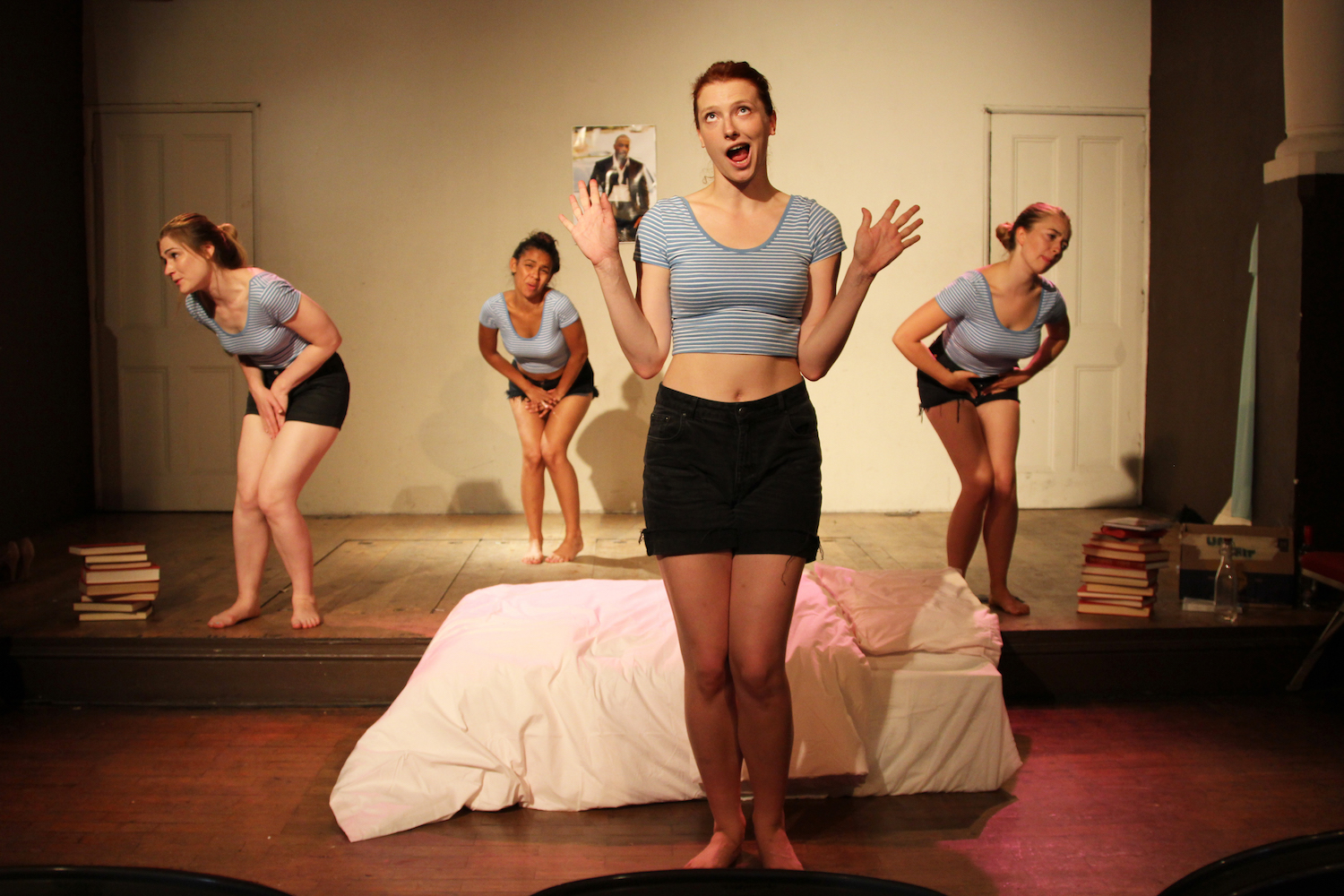
Photo credit: Olivia Early

Inspired by writer and performer Claire Rammelkamp’s own experience, A Womb of One’s Own tells Baby Girl’s story as she heads off to university, ostensibly to become an “independent woman”, in reality because she wants to have lots of sex without her elderly relatives (or God) watching her every move. Baby Girl’s experiences as she revels in her new freedom are hilariously disaster-strewn, but also everyday enough that pretty much anyone in the room will be able to nod at least once and say, “Yep, that happened to me once.” (Even if it’s just having a huge crush on Idris Elba, because – well, who doesn’t?) Consequently, we’re already totally invested in Baby Girl and her story long before we get to the serious part of the evening.

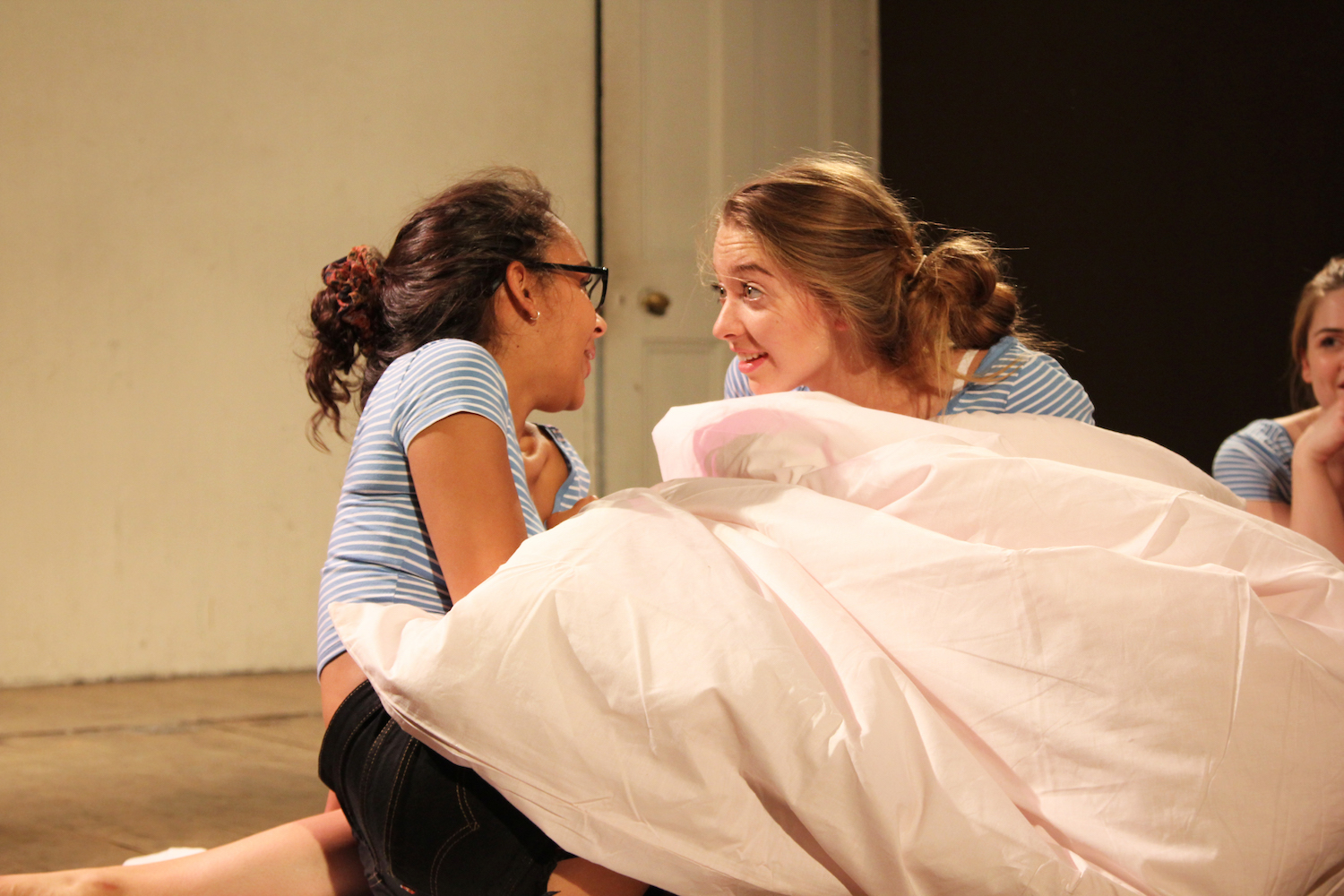
Which is important, as it turns out – because the primary focus of this play isn’t a political or ethical debate about the pros and cons of abortion; though these are briefly touched on, Baby Girl is never in any doubt that at this point in her life, ending the unwanted pregnancy is absolutely the right decision. Instead, the show’s aim is to explore what it’s like, having made up your mind to have an abortion, to then go through that difficult experience, particularly if you don’t have anyone around to offer support. The agonising three-week wait between initial assessment and the actual clinic date; the temptation to do internet research into the baby’s development; and the physical and emotional impact of the procedure itself, are all explored sensitively by Danica Corns, Carla Garratt, Larissa Pinkham and writer Claire Rammelkamp. In a seamless ensemble performance directed by Holly Bond, each of the four plays a different aspect of Baby Girl’s personality, as well as enthusiastically bringing to life the various larger than life characters she encounters along the way.

Photo credit: Olivia Early

It’s an interesting decision to tackle such a sensitive subject with humour, but the show knows its limits, and approaches the second part of the story with appropriate sobriety – the aim at this point to educate more than entertain. And it’s obvious from the comprehensive support and information in the show’s programme, described in its introductory notes as a “zine”, that the ladies of newly-formed all-female collective Wonderbox have a bigger goal in mind than simply making us laugh.

Though not always an easy watch, A Womb of One’s Own is an honest, courageous and entertaining attempt to break down the walls of silence preventing people from openly discussing what it’s like to have an abortion. By sharing her experience, Claire Rammelkamp helps many of us understand a subject we may previously have given little thought to, while at the same time letting other women who’ve been through a similar experience know they’re not alone, and that it’s okay – and perhaps even helpful – to talk about it.


Can’t see the map on iPhone? Try turning your phone to landscape and that should sort it. I don’t know why but I’m working on it… 😉

Interview: Claire Rammelkamp and Danica Corns, A Womb of One’s Own

The founding members of emerging all-female theatre company Wonderbox – who include Danica Corns, Carla Garratt, Claire Rammelkamp, Holly Bond, Larissa Pinkham and Olivia Early – met as members of the National Youth Theatre. “We got so comfortable with each other that we started oversharing about sex, periods, emotions, mental health, politics, relationships, wanking… the list goes on,” admits Claire. “So we decided to carry on doing that as a theatre company, and turn it into art. We want to explode taboos and share unheard stories with some filthy, fabulous feminism.”

They’re turning their attention first to the issue of abortion in their debut production A Womb of One’s Own, which runs at The Space from 15th-19th August.  “The play follows the story of Babygirl, an eighteen-year-old fresher who was raised Catholic by two strict elderly women and ends up getting pregnant the first time she has sex,” says Claire, who wrote and performs in the play, as she and fellow cast members Danica, Larissa and Carla bring Babygirl to life, revealing different aspects of her personality and an absurd cast of characters. “It starts off as a coming of age comedy; she’s learning how to flirt and get drunk, she’s exploring her sexuality, she’s trying not to embarrass herself on a date. Then all of a sudden she’s facing much bigger challenges.”

A Womb of One’s Own was inspired by Claire’s own personal experience: “I had an abortion at university, and I had no idea how to handle it because no one had ever spoken to me about abortions. Fortunately, I have a very supportive Mum and friends. Babygirl doesn’t have a mother, and she’s only been at uni a few weeks, so the play explores what it would be like to go through an abortion feeling totally alone.”

One of Wonderbox’s aims is to break the taboos surrounding abortion and get people talking about what’s traditionally been a difficult subject. “We’re still oddly hung up on old-fashioned notions of propriety when it comes to discussing abortion,” says Claire. “It used to be the same for divorce and homosexuality. Even periods. One in three women in the UK will have an abortion at some point, and yet people are largely silent about it. If we all spoke about it more then women wouldn’t feel scared or ashamed. We’ve still got a lot of education work to do to give women control over their own bodies and we need to make sure we don’t go backwards – like with Trump’s abortion gag order.”

Despite the heavy topic, Claire and her co-founders are quick to point out that the show is at times irreverent and laugh-out-loud funny: “I’m a firm believer in laughing at essentially everything, especially myself. We didn’t want to be didactic – an audience will pay much more attention to a comedy full of sex jokes than a lecture. It also helps to humanise a character; once the audience have shared a joke with Babygirl they’ll have more empathy when she starts having a hard time.”

And it seems to be working; they’ve been thrilled with early responses to the show, which include an endorsement in February from actor Paul McGann. “Our first performance was to a bunch of queer, feminist, theatre-lovers, so we were really preaching to the choir,” says Claire. “But then our second audience had middle-aged people, older people, Tories, and a vicar. The vicar was especially fond of it.”

Of course, starting a theatre company isn’t always easy, and co-founder Danica has no hesitation in identifying their biggest challenge: “Money! We’re a young, unfunded theatre company so this is of course the first and biggest obstacle we are having to overcome – but we are getting creative with how we do this. Finding rehearsal space free of charge has been and remains one of the biggest challenges we face, and so far we have been getting round this by using gardens, living rooms and empty classrooms at our universities/previous places of study. We even once did a voice warm-up on Clapham Common. Social media has also been a great alternative to a website for us in the first instance to help build our online presence while funding is scarce.

“Around 90% of the work we put into the company and the show is not in the rehearsal room,” she adds. “We’ve all had to turn our hands to other things and use our skills and knowledge effectively and efficiently. We’re lucky enough to have a photographer, a designer, a marketer and members with lighting technician knowledge within our company, so we haven’t had to hire anyone in yet – which would come with a cost. However, while we’re all working hard on this to get things off the ground, we have found it difficult balancing being creative and making the art with the admin and running the business side of the company – it’s a bit of a juggling act at the moment, and we’re still figuring this out. One of the things we are finding so important is timetabling separate rehearsals for creativity and meetings about important business stuff.”

Claire’s hoping that the show will speak to everyone, whether or not they have personal experience with abortion: “I hope if they’ve had an abortion, they’ll feel a sense of community, and that anyone who needs an abortion in future won’t feel so alone. I hope it encourages people to share their own experiences, and I hope it will make other people more understanding. I also hope everyone will wet themselves laughing.”

A Womb of One’s Own is at The Space from 15th-19th August.

Interview: Bric à Brac, Just Lose It

Following the success of their first production, Ash, international ensemble Bric à Brac have begun developing their next project, Just Lose It, an immersive show about weight loss and body image. “Our audience is introduced to different members of our fictional weight loss programme, The Bin the Belly Weightless Corporation. By poking fun at our society’s obsession with body image we hope to shed light on the ridiculousness of this subject whilst instilling confidence in everyone that we are all lovely just the way we are!

“It’s a fairly young idea. We started talking about it half a year ago, and had a couple of workshops playing around with the theme. But the actual creation of the show is happening right now. We’re doing a research and development showing at The Space on 10th May, to learn and get feedback. If all goes to plan, we’ll continue developing after summer.”

Bric à Brac’s aim is to tackle difficult and relevant subject matter with clever, dynamic, and humorous storytelling. “Our collaborative process allows for a more diversified and unique take on these issues. We want our audiences to have fun, leaving them with questions and not necessarily all of them answered. If we can provoke laughter and meaningful discussion through our work then I’d say we’ve done a good job.”

The idea for the show came initially from director Anna Marshall’s own experience. “We’d been touring and working on Ash for nearly two years and as a group we were looking for our next challenge,” she explains. “Two years of Ash also meant two years out of Lecoq; I noticed that my body had changed from stopping the everyday exercise we were doing whilst training and I started becoming quite self conscious – I’d be nervous about going back to Yorkshire in case my family commented on whether or not I’d gained weight, and I realised that it was just stupid.

“After that I began thinking why I felt unhappy about it – I wasn’t clinically overweight or unhealthy, but I just didn’t feel like I looked great and I started noticing how magazines, adverts, Instagram etc were showing me images of how I wanted to look. Once I started looking for it I realised how mixed the messages I was being told were – ‘be healthy’, ‘be happy with yourself no matter what’, ‘do this three-day detox to be beach ready’ – and I thought this could be an incredibly rich topic to explore.”

Just Lose It is an immersive promenade experience, in which the audience is split into five teams, each led by a different cast member. “Bric à Brac company members’ individual talents in comedy and improvisation come into their own here, allowing each audience member to have a slightly different experience depending on who their leader is.

“The structure of the piece allows for a more engaging way of addressing the subject matter for the audience. In order to achieve this bold and immersive presentation, we’re using the R&D time at The Space to research further the insecurities of calorie-counters and the competition these pyramid structures of weight loss can create. The aim is to create the feel of a ‘night out’ whilst we delve into the grotesque greed of this weight loss group and their hunger to win big, by losing large.

“We believe the style we’ve chosen is the perfect way to present this subject, as it takes the form which is used commercially to market against a healthy body image through a Weight Watchers slimmers programme. This show is not intended to mock these groups, as slimming programmes encourage people to achieve their ideal weight through togetherness, and provide a great support structure to do so. The aim is to challenge the presentation of a negative body image that goes hand in hand with these slimming programmes.”

The company believe the show has something to say to everyone, regardless of age, gender, size or shape. “Weight loss, and more specifically body image, is something we all think about, whether we’re aware of it or not. Our society is crammed full of pressures on what you eat, how you exercise and what you wear for your shape. Popcorn instead of crisps, sold out boot camps and vertical stripes over horizontal. Adverts for health foods and gyms are purposely cross-generational, and often feature young adults to pensioners, proving that anyone can be fit. This show should investigate just how universal a topic body image is, hence how important it is for us to understand it better.

“We’re hoping audiences go away thinking ‘yeah, I’m happy with the way I am’. Or at least happy to discuss their body issues and find a better solution to feeling more comfortable in their own skin than resorting to programmes, crazy diet plans and hardcore fitness regimes because society ‘tells’ them to change the way they look. It’s about being healthy mentally and physically. That’s different for everyone.”

The members of Bric à Brac, who are from Britain, Jersey, America and Norway, founded the company on their graduation in 2015. “We all met and trained together at Jacques Lecoq in France. In a nutshell, Lecoq is about using movement to explore a huge range of theatrical styles, from clown and bouffon to tragedy and melodrama, whilst always placing an emphasis on a collaborative process. I guess there is quite a strong preconception that Lecoq ensembles solely produce ‘physical theatre’ – which is not completely untrue – but I also think there is so much more to it than that.

Just Lose It, an immersive, promenade show, might not seem at first sight to be in a distinctively Lecoq style, but it nonetheless gives us an amazing opportunity as a company to draw on our shared background. There are absurd characters aplenty, undertones of cabaret, and hopefully a healthy amount of silliness to keep our audience-cum-participants laughing along!”

Check out Bric à Brac’s Just Lose It on 10th May at The Space.

Review: The Mutant Man at The Space

On the surface, Christopher’s Bryant’s The Mutant Man is a crime drama; we open in a courtroom, as two identically dressed actors – one male, one female – unpack an assortment of items in evidence bags. But it doesn’t take long to understand there’s a lot more going on here than a straightforward murder trial. The defendant, Harry Leo Crawford, was born Eugenia Falleni and has been living as a man for years, and when his gender identity is made public, it becomes the key piece of evidence leading to his conviction.

Photo credit: Greg Veit

The timeline of the play jumps back and forward in time, sometimes quite rapidly, piecing together Harry’s life story as he struggles to live in a body that doesn’t represent who he really is. Bryant’s language is often poetic, but holds nothing back – we get a detailed description of how Harry was able to convince not one but two wives of his anatomical masculinity, and there’s a brutally explicit account of his rape and subsequent pregnancy by a sea captain who discovered his secret. Simultaneously the court case unfolds, with characters from Harry’s past reappearing to speak against him, and both gripping stories build to a climax as we learn what really happened to Annie, and the inevitable conclusion of the trial.

The central character is played beautifully by two actors – Clementine Mills as Harry and Matthew Coulton as Eugenia – a simple yet highly effective way of separating the two personas. Eugenia is submissive, anxious and seems constantly uncomfortable in her own skin, while Harry, though played by an actor who’s physically shorter, seems far larger in stature and confidence. At one point they deliver overlapping monologues that sum up the distinction: “I’m terribly afraid,” says Eugenia, while Harry states defiantly, “I’m not afraid.” The one phrase they have in common: “I did not kill this woman.”

The two actors also play all the other characters, and herein lies one of my few gripes about the production: though some attempt is made to physically differentiate, with the actors adopting different postures and ways of speaking, it’s not always easy to tell who we’re looking at – often we’re halfway through a character’s testimony in court before we realise who they are and what relevance they have to the case.

Photo credit: Greg Veit

Though the set appears simple, the production is actually incredibly complex and rich in detail. Director Heather Fairbairn equips her actors with a range of props, which gradually emerge from those evidence bags we saw earlier and show how every detail of Harry’s past has come to be used against him. In addition, the production makes highly effective use of lamps, microphones and cameras, often projecting close-ups of evidence on to the large video screen at the back of the stage, and culminating in a powerful image that represents Harry’s confusion and disdain for his own body. There are occasional sound issues; the actors have so much to do with props to unpack and countless small costume changes as they slip from one character to the next, that at times the acoustics work against them and their words are lost – but the most important moments are delivered direct to the audience with clarity and passion.

The play doesn’t try to tell us everything, but instead gives us just enough to send us away disturbed and sufficiently intrigued to read up on Harry’s story for ourselves. Though we may comfort ourselves with the knowledge that such a travesty of justice couldn’t happen today, The Mutant Man does force us to confront the question of how gender diversity is still viewed and (mis)understood a century on from the events depicted. A gripping and thought-provoking 70 minutes, and well worth a visit.


Can’t see the map on iPhone? Try turning your phone to landscape and that should sort it. I don’t know why but I’m working on it… 😉