Review: In Other Words at The Hope Theatre

Off the Middle’s Matthew Seager was inspired to write his debut play, In Other Words, by 10 weeks facilitating sensory stimulation workshops in a dementia care home during his last year of uni. A residency with the Lyric Hammersmith’s Emerging Artists Programme followed, and now In Other Words finds its way to the Hope Theatre, directed by Paul Brotherston.

The story follows Arthur and Jane throughout 50 years of their relationship, charting the devastating impact of Alzheimer’s disease on their marriage and life together. It’s an undoubtedly harrowing play to watch – don’t expect to leave without shedding a tear or several – but also contains a glimmer of hope. Because this is also a story about music and its incredible ability to anchor people in reality, even when little else remains of the person they once were.
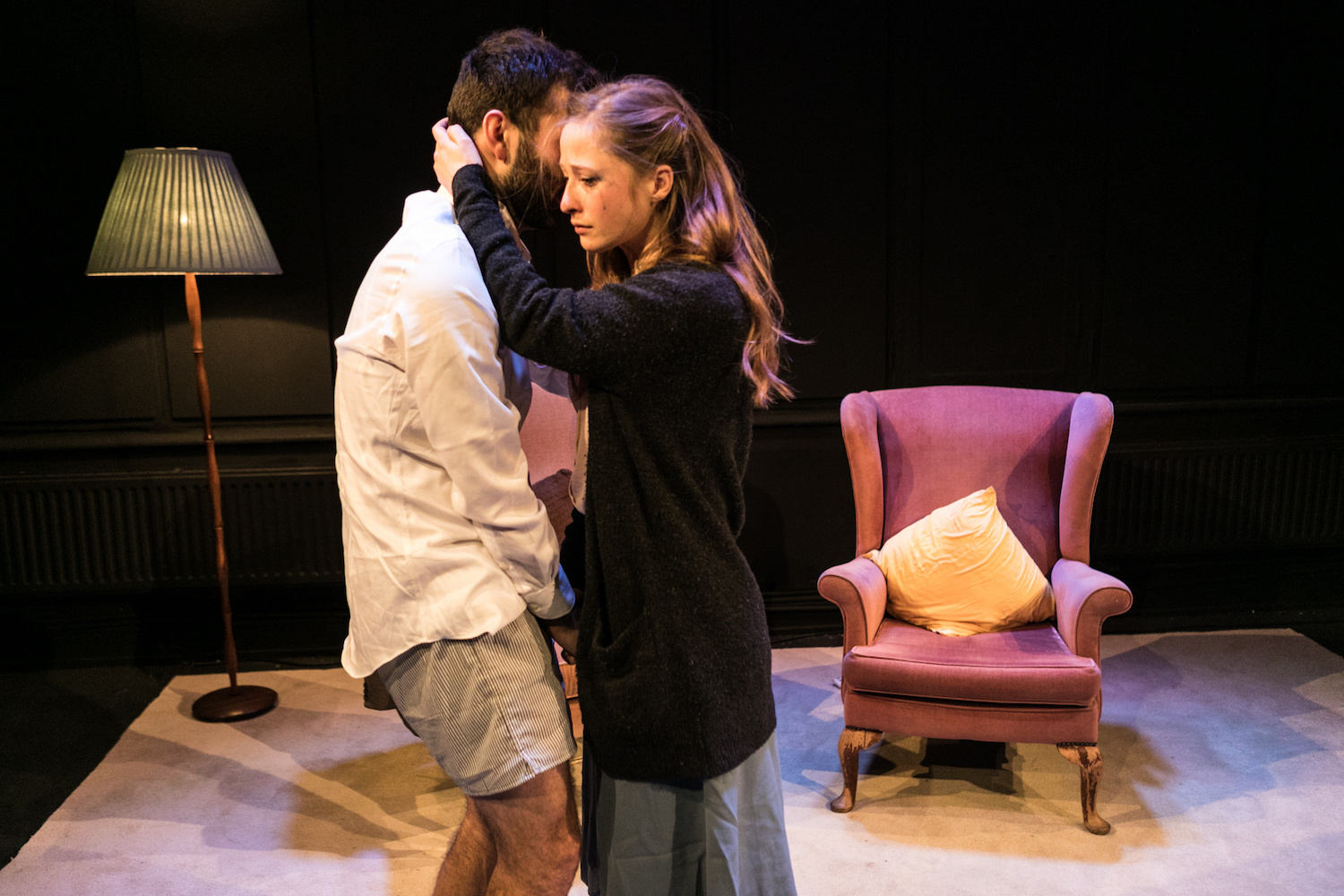
Photo credit: Alex Fine

Much of the play’s impact is felt in the performances of Matthew Seager and Celeste Dodwell, who are both devastatingly good in their roles as Arthur and Jane. In good times and bad, their relationship is 100% believable – as is Seager’s careful portrayal of dementia as Arthur gradually slips away, and Dodwell’s of Jane’s gut-wrenching grief. The whole play is unflinchingly, brutally honest about the experience of living with Alzheimer’s – not just for Arthur, but for Jane too, who stays at her husband’s side as he descends into a spiral of denial, confusion and rage, but not without privately confessing feelings of resentment, anger, and guilt at having failed to spot the signs and do something sooner.

Apart from one passing reference to middle age, it’s not totally clear how old the couple are meant to be or how quickly the disease is progressing, the only real hint of context in the Sinatra-led soundtrack. Even so, the two actors are clearly younger than their characters – a harsh reminder that dementia sufferers aren’t just “old people”, but people who were once young and full of life: dancing, falling in love, laughing, arguing, singing badly – just like the rest of us. The couple tell us their story together, looking back with tenderness on their happy times as well as the harder years, the love between them as alive as it was in the beginning. And through it all, one song – Fly Me To The Moon – has the power to reach out and heal any wounds, however deep they may be.

Photo credit: Alex Fine

In a space too small for set changes (or indeed much of a set at all), lighting and sound design from Will Alder and Iida Aino combine to situate the action: in a busy pub with music playing in the background; in a living room so silent and full of pain that a ticking clock becomes the only sound; in the doctor’s office as Arthur struggles to remember three simple words… Each detail is spot on and beautifully observed, as are the scenes in which Arthur’s thoughts are drowned out by a wave of white noise and blue light that fills the space in moments when it all gets too much.

In Other Words makes no excuses and covers up none of the harsh details of living with dementia. But it also paints a picture of a love that endures – and will continue to endure – even beyond the cruellest of circumstances. Funny and heartbreaking, charming and brutal, this is a powerful debut that’s not to be missed… but remember to take tissues.


Can’t see the map on iPhone? Try turning your phone to landscape and that should sort it. I don’t know why but I’m working on it… 😉
Review: Her Aching Heart at the Hope Theatre

Her Aching Heart is the Hope Theatre’s third and final in-house production of 2016, billed as “a bodice-ripping musical full of gothic silliness and sapphic tomfoolery!” Who could say no to that?

Well not me, as it turns out, because I loved it. Bryony Lavery’s lively comedy, in the expert hands of the Hope’s Artistic Director Matthew Parker, transports us into the pages of a gothic romance novel – with all the flowery language, heaving bosoms and melodramatic sighs you might expect.

Photo credit: Roy Tan

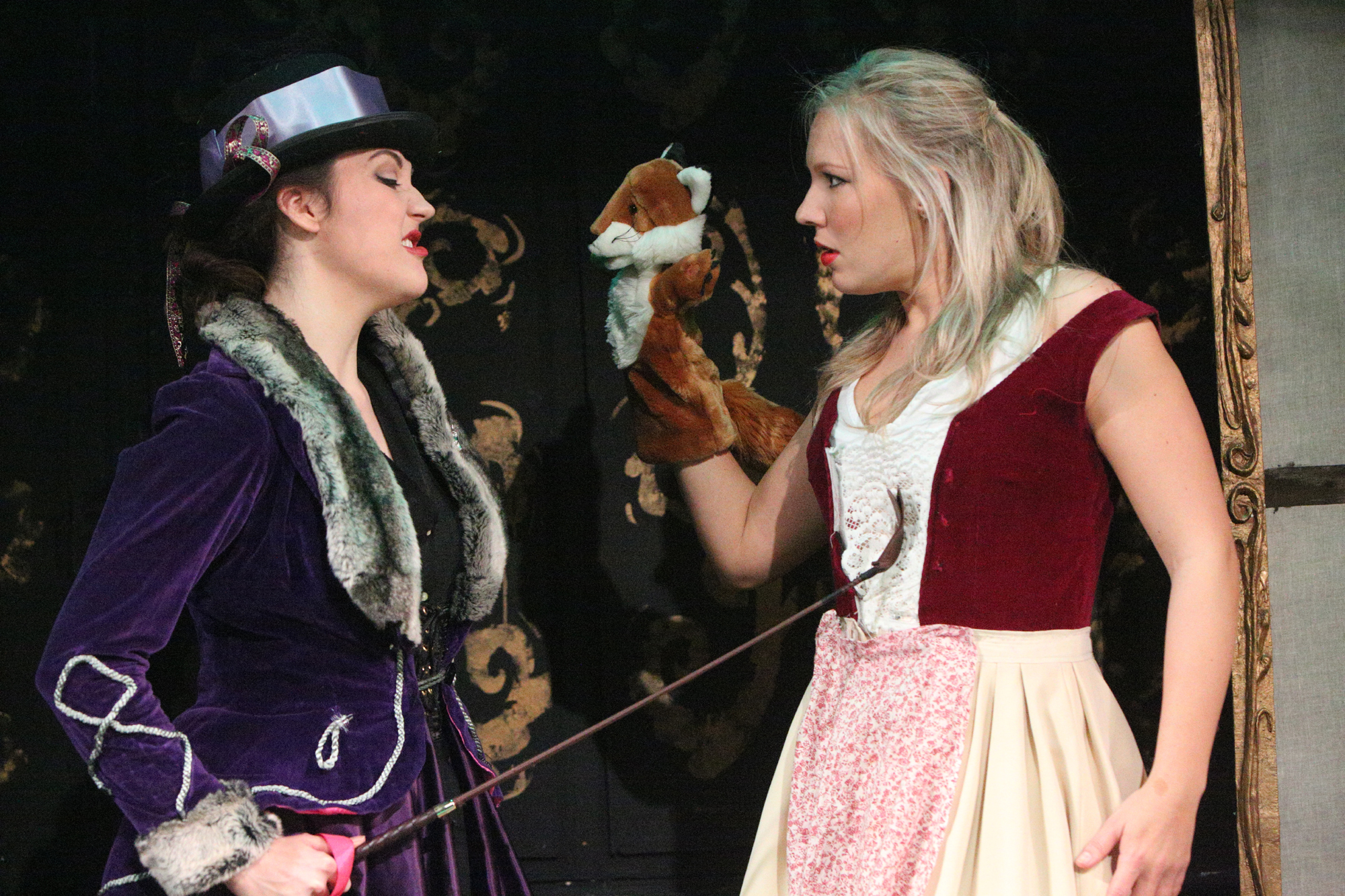
In modern day London, Harriet and Molly are taking their first tentative, awkward steps into a relationship, while simultaneously in 18th century Cornwall, the fictional Lady Harriet Helstone, an aristocrat with an unfortunate habit of killing innocent wildlife, meets Molly Penhallow, a kind-hearted country girl who wouldn’t look out of place in a Disney movie. Despite having nothing in common, not to mention clashing on their first encounter over the grisly fate of one of Molly’s fox friends, the two women find themselves unexpectedly drawn together, in an irresistible love story guaranteed to warm the cockles of your heart.

From the moment the first chapter, “A Nun has a Nightmare”, is introduced, we know we’re in for a fun evening. Collette Eaton and Naomi Todd throw themselves into their roles with infectious enthusiasm, not only playing both versions of Harriet and Molly but an assortment of other characters too, and doing it all to perfection. Making creative use of a cramped space that offers barely enough room to swing a – er – fox, the two performers manage to wring every last drop of comic potential out of the most unlikely scenes – who would have thought a roe deer being trampled by a horse could result in such howls of laughter?

That said, there’s also a genuine chemistry between the two that makes the fledgling relationship of their modern counterparts both moving and believable. The present day story of Harriet and Molly, to which we return at various points throughout the evening, marks a clear and occasionally jarring change in tone that takes a bit of getting used to. Each time the red velvet curtain swishes closed and the actors break into one of Ian Brandon’s musical numbers, we’re thrown into an altogether more contemplative mood, and reminded that love is far more complex than cheesy romance novels would have us believe. These scenes, though they may seem like an afterthought to the comedy action, we ultimately realise are the true emotional heart of the show. Real life can be painful and difficult – but it can also at times be infinitely more rewarding than fiction.

Photo credit: Roy Tan

Her Aching Heart is a laugh out loud comedy and touching romance, which simultaneously pays tribute to and affectionately pokes fun at the Mills and Boon genre by which it’s inspired. An unexpected delight, in which all the elements – great writing, fantastic performances and quality production – come together to produce a magnificent whole, it’s impossible not to fall in love with this show.


Can’t see the map on iPhone? Try turning your phone to landscape and that should sort it. I don’t know why but I’m working on it… 😉

Review: The House of Usher at The Hope Theatre

With Halloween just around the corner, The Hope Theatre’s kicking off its gothic season with a new musical thriller written by Luke Adamson and Dan Bottomley. Inspired by Edgar Allan Poe, The House of Usher is creepy without being terrifying, at times darkly humorous and always faithful to Poe’s descriptive writing style.

The story begins with the Narrator (Richard Lounds) being summoned by old school friend Roderick Usher (Cameron Harle) to visit him at his ancient family home. But the House of Usher holds dark secrets, and with Roderick descending into madness and his sister Madeline (Eloise Kay) suffering from a mysterious affliction, will any of them make it out alive?

Photo credit: Elisha Adamson

Anyone familiar with gothic literature will recognise the minutely descriptive style, which is faithfully recreated in every monologue, dialogue and musical number. This attention to detail means the story takes quite a while to get going, and the pace in Act 1 feels at times a bit on the slow side. Act 2, in contrast, is a whirlwind of drama and madness – catching us off guard after a first act whose tone is decidedly tongue-in-cheek, and which includes several unexpected laugh out loud moments.

Dan Bottomley’s music is equally varied in style, with a score that includes folk, rock and classical, performed by the cast of three actor-musicians, accompanied by musical director Rob Gathercole on piano. The mournful tones of clarinet and cello make for a suitably chilling soundtrack at times, although there are also moments when the instruments and other sound effects build to a dramatic climax and render the vocals hard to catch.

This isn’t helped by the fact that the show’s performed in the round(ish), and the cast can’t be facing everyone at once. On top of that, a lot of the action takes place in three of the four corners, which means, depending on the choice of seat, audience members spend a good deal of the evening craning backwards over our shoulders to try and see what’s going on. (For the same reason, it’s difficult to appreciate all the finer details of Verity Johnson’s set.)

That said, this arrangement does help to build the atmosphere, which is oppressive and unnerving from the start. With the actors retiring frequently to their corners, it’s hard to shake the lingering knowledge that there’s someone behind you who may jump out at any moment (call me a wuss, but I find that unsettling). Add to the mix some fantastic light and sound effects from Tom Kitney and Matthew Williams, and a climactic scene that’s genuinely quite frightening – and you’ve got the recipe for, if nothing else, some pretty messed up dreams.

Photo credit: Elisha Adamson

The cast of three give it their all: Richard Lounds revels in his role as storyteller, interacting directly with the audience and reacting to all the horror he uncovers with a suitably British stiff upper lip. Eloise Kay is sympathetic as the beautiful damsel in distress who veers back and forth from playful to hysterical, and Cameron Harle falls somewhere between Heathcliff and Russell Brand as the sharp-tongued, wild-eyed, leather-trousered and increasingly deranged Roderick.

Once it gets going, The House of Usher is an enjoyably creepy story that takes pleasure in catching its audience unawares, in a variety of ways. It’s not all-out terrifying (for which I’m grateful, by the way), but it’s certainly unsettling and atmospheric enough to get the Halloween season started.


Can’t see the map on iPhone? Try turning your phone to landscape and that should sort it. I don’t know why but I’m working on it… 😉

Review: The We Plays at The Hope Theatre

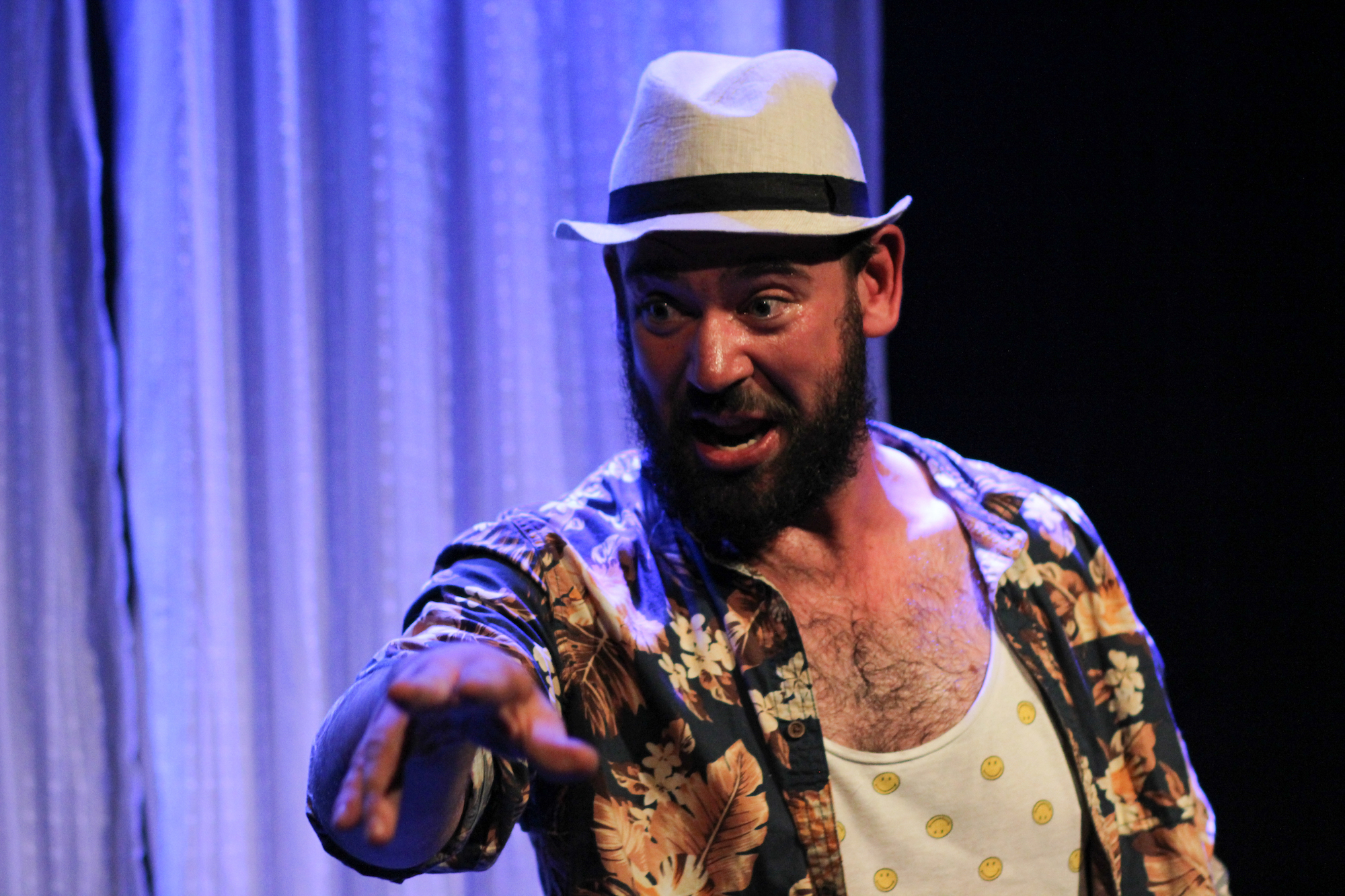
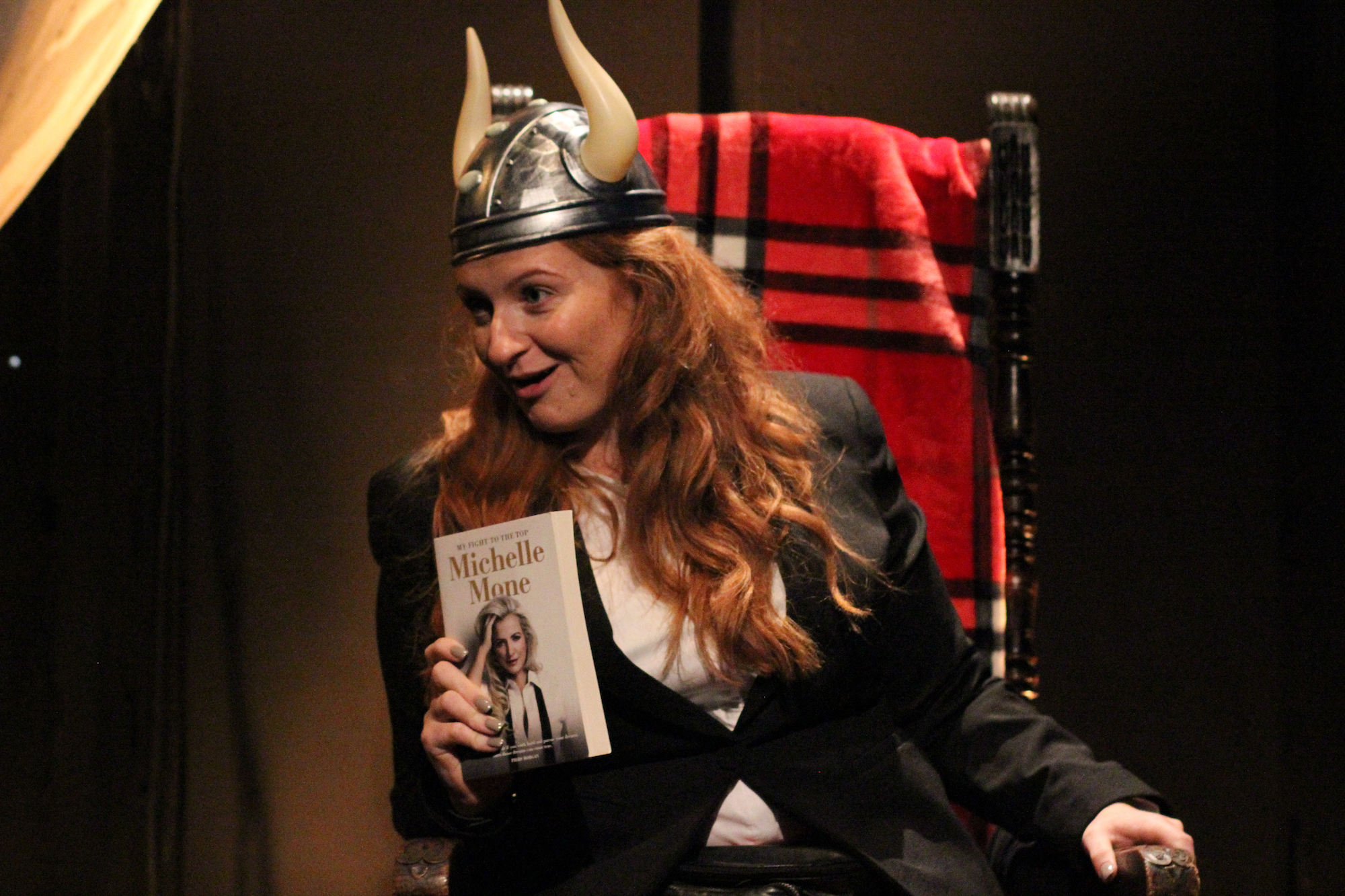
The two pieces that make up Andrew Maddock’s The We Plays tell quite different stories. In one, a young tourist desperately chases the perfect Cyprus sunset, despite the best efforts of the airline, the weather and the annoying family next door to foil him. In the other, a feisty Scottish redhead takes on the Glasgow job market armed with her well-written CV, several gallons of Irn Bru and… a Viking helmet (obviously).

cyprus-sunsets-the-we-plays
Photo credit: @headshottoby

Different stories they may be, staged by different directors (Phil Croft and Ashley Winter respectively), but these two monologues have a common trajectory: they both creep up on us, drawing us into the characters’ lives and experiences, and making us laugh with their spot-on observations about their fellow human beings. And then each suddenly takes a dark and disorienting turn, so that before we know it we’re hearing quite a different story than the one we expected.

Now, I must admit I’ve seen the first piece, Cyprus Sunsets, before, so I wasn’t as taken aback this time by the twist in the tale – but that didn’t ruin it for me. In a way, knowing what’s coming actually makes the piece more powerful; there are hints scattered throughout that give the words new significance, and force us to consider how what’s really happening could have gone unnoticed for so long. And John Seaward’s performance as frustrated tourist Me is certainly no less mesmerising, entertaining or emotionally shattering second time around. To hold a roomful of people spellbound for 50 minutes whilst armed only with a suitcase and a pair of sunglasses is no mean feat, yet Seaward commands our attention with ease.

Irn Pru is, on the surface, the funnier of the two (although Cyprus Sunsets‘ biting commentary on the horror that is Brits abroad shouldn’t go unmentioned). Jennifer O’Neill swaggers around the stage, unafraid to stare down – and at one point openly rebuke – audience members, as Pru channels the voice of her idol Michelle Mone (of bra fame) and demands that we line up to pay our respects. But there’s a softer side to the character, which first comes across in her evident love for her country; “my Glasgow, my Scotland” is a frequent tender refrain, and we’ve fallen for Pru long before we learn the devastating secret that turns out to be the real point of the story.

irn-pru-the-we-plays-1
Photo credit: @headshottoby

Andrew Maddock’s rhyming verse is surprisingly easy on the ear, laced with fun surprises (I particularly enjoyed “trapped in / this crap tin”) and a regular return to key words and passages of the text, which gradually gain new meaning as we learn more about the characters. And as hard-hitting as both pieces undoubtedly are, exploring with unflinching honesty some troubling and hugely relevant topics, there’s an element of hope to each. This means the audience walks out feeling, yes, a bit emotionally battered, but still far from defeated by what we’ve seen. Life does go on, after all, and – like Maddock’s characters – we have to go on with it.

Powerful writing, captivating performances and creative staging (who knew there were so many uses for a suitcase?) make The We Plays a must see double bill.


Can’t see the map on iPhone? Try turning your phone to landscape and that should sort it. I don’t know why but I’m working on it… 😉