Starved: Q&A with Michael Black

Following a short run at the Bread and Roses in May, Michael Black’s award-nominated play, Starved, transfers to the Hope Theatre next month. A grimly realistic portrayal of life below the poverty line, the third production from new writing company Faded Ink is directed by Matt Strachan, with Michael reprising his role as Lad alongside Alana Connaughton’s Lass.

The Starved team will be hoping to repeat the success of the show’s previous run, which earned several five-star reviews and a nomination for London Pub Theatre’s Standing Ovation Award. Michael chatted to Theatre Things about introducing Lass and Lad to new audiences, and why it’s so important for people to hear their story.

Can you sum up briefly what Starved is all about?

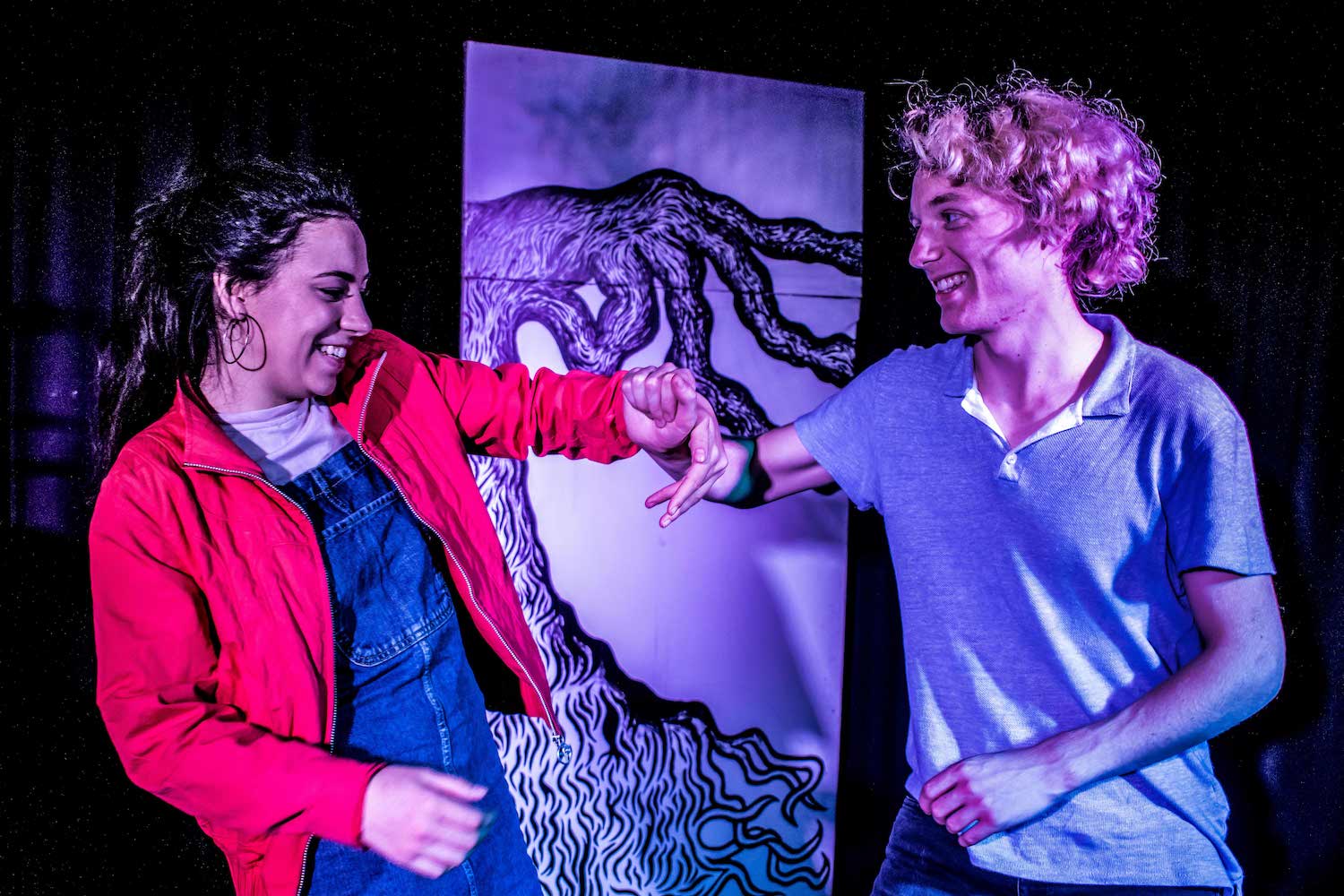
Starved is a two-hander set in a scruffy bedsit on a council estate in Hull. It’s a character driven story about a couple on the run, with hard hitting themes such as mental health, poverty, addiction, toxic relationships. Starved also has a lot of comedy, fast paced and witty Yorkshire humour.

Where did the inspiration for the story come from?

The play is semi-autobiographical and based on my life growing up in Hull. I wanted to really turn the heat up on these characters and look at what people can be driven to when they feel isolated. When they feel like they have no meaningful purpose or place in society. Starved is based on things I’ve heard, seen, been through, but taken to that extreme.

Why do you feel is this story an important one for you to tell, and for a London audience to hear? And why is now the right time to tell it?

I wanted to put a Northern working class story on a London stage. The North of England feels under represented in Theatre, which is a shame because the people I’ve met and stories I’ve heard would make for really gripping and exciting new work. People I’ve spoken to are feeling scared, alone, pissed off, not listened to, ignored etc, especially in areas like where I grew up. I feel a story such as Starved can help break that London bubble slightly and show that there is a whole other way that people are forced to live, which might go some way in explaining the current divide.

What do you hope that audiences will take away from seeing the play?

I hope a sense of understanding that there are people out there that are having a really shit time of it. If we can be more compassionate towards those that have fallen under then hopefully we can start a conversation about how we can work together to see eye to eye. Also, I hope it’s refreshing to see a play set in Hull.

What are you most looking forward to about reviving the play at the Hope?

Really excited to work with a new group of people, we’ve got new designers and stage manager etc so looking forward to collaborating with them. Also, for new audiences to see the show and to just get back out there and see where it takes us.

Did you always want to be a playwright, and if not what was it that first sparked your interest in theatre?

I always had an interest in writing as a kid, I’d write episodes of The Simpsons and short stories. But it wasn’t until I moved to London to train as an actor that I really started to combine the two and realised that I had some stories in me that were worth telling.

On a related note, how did Faded Ink get started as a company, and how would you describe your mission?

Faded Ink was founded with the aim of producing high quality work that reflects working class backgrounds. We want to perform stories which represent communities that are not regularly touched upon in the theatre. Bringing something raw, passionate and based on personal experience to our work.

Book now for Starved at The Hope Theatre, 16th July to 3rd August.

Director: Matt Strachan

Cast: Michael Black and Alana Connaughton

Review: Cuttings at The Hope Theatre

The publicist’s office in which Ollie George Clark’s Cuttings is set has a sign prominently displayed that reads, “It’s PR, not ER.” Which is true, obviously – but you could still be forgiven for thinking the crisis Gracelyn (Joan Potter), Ruchi (Natasha Patel) and Danica (Maisie Preston) are facing this Monday morning is one of life and death. Their client, YouTuber turned actor Arthur Moses, caused outrage at last night’s Olivier Awards with an expletive-strewn acceptance speech, and now his PR team are left to pick up the pieces in any way they can.

Photo credit: Cam Harle 

And so they do, with ruthless, cold-blooded efficiency, not caring what angle they have to use or who they have to throw under the bus to protect their client’s – and by extension, their own – reputation. Cuttings goes behind the scenes of a scenario we’ve seen play out in the media countless times, exposing some very questionable morals and reminding us all over again how superficial a world showbiz can be. Arthur himself, meanwhile, plays zero part in his own salvation, only rocking up right at the end to record the “heartfelt” apology video his publicists have spent the last hour meticulously scripting for him – and to be fair to him, he’s very convincing.

The play is a pretty brutal takedown of the world of 21st century PR, and there are a lot of laughs to be had at the expense of the three central characters as they scrabble desperately for the best strategy in a world where social media now rules all. At the same time, though, you do have to admire the skill with which they build their case, like a team of defence lawyers looking for that one piece of evidence that will mean their client goes free. And then of course, there’s the inconvenient truth that these characters wouldn’t be able to use such morally dubious means if we the public weren’t quite so gullible…

Not surprisingly given the state of crisis, Rob Ellis’ production starts at a run – the phones are already ringing off the hook before the play even begins – and rarely pauses for breath during the 75 minutes that follow. The same goes for the actors, and Joan Potter, Natasha Patel and Maisie Preston never miss a beat as the three women hilariously brainstorm and bicker their way in real time through a hectic Monday morning. Each character has their specific role within the story – Danica the naïve new girl, Ruchi the ambitious protegée, and Gracelyn the hardened veteran – but they’re all well-rounded, interesting and, dare I say it, likeable enough that we can’t simply write them off as terrible people. They all know their chosen strategy is a moral minefield, but they also have a job to do – and as Danica quickly learns, in this business there’s no time or space for consciences.

Photo credit: Cam Harle

Not all the jokes completely stick the landing – there’s a running gag about Gracelyn’s interrupted smoking habit, for instance, that starts promisingly but then doesn’t really go anywhere – and others get a bit lost in the unstoppable whirlwind of one-liners and put-downs. But Cuttings is still a sharp, witty and hugely enjoyable play about an industry we all know exists, but somehow seem to forget every time we watch an emotional YouTube apology or read a remorseful statement from a disgraced celebrity. Let’s hear it for the unsung heroes of PR: if nothing else, they’re great entertainment.

Review: Gilded Butterflies at The Hope Theatre

Debates about the death penalty tend to focus, unsurprisingly, on the moral rights and wrongs of taking a life for a life. Less, perhaps, is known about the dehumanising conditions in which condemned prisoners must await their fate – often for years, or even decades. Tormented Casserole’s two-hander Gilded Butterflies, devised by the company and directed by Kathryn Papworth-Smith, sets out to remedy that. Based on the true account of death row survivor Sunny Jacobs, the play paints a brutal picture of what everyday life is like in solitary confinement, and in doing so it also offers us a poignant glimpse at the lengths to which the human spirit will go to survive, even in unimaginably bleak circumstances.

Photo credit: Rebecca Rayne

Maggie (Francesca McCrohon) is a young woman who spends her days alone in her prison cell in Florida. It’s been a year since she saw or spoke to anyone besides her guards and her lawyer, but she keeps herself upbeat by painting, writing daily letters to her husband, and dreaming of what she’ll do when her lawyer gets her out. Then one day she gets a new neighbour (Samantha Pain) – but having company may not be quite the blessing she expected, and Maggie soon finds herself forced to face up to some devastating truths about what she’s done, and where she might be headed.

Samantha Pain plays three roles: the nameless prisoner next door, Maggie’s lawyer and her sister Lauren. Each of these is not so much a character in their own right as a vehicle to shed a little new light on Maggie’s situation, and it’s Francesca McCrohon who steals the show throughout. Smiley, chatty, kind: in any other circumstances Maggie’s the kind of person you can imagine yourself getting along with. Both the script and McCrohon’s performance draw us in, and for at least the first half of the play we even find ourselves sharing a little of her bright-eyed optimism about the state of her appeals.

And then we find out what brought Maggie to death row, and the tone of the play shifts in a much darker direction. Her dreams for the future are exposed as just that – dreams – and we realise what we’re seeing is a woman desperately battling to hold on to who she is against a system that’s determined to steal every last scrap of humanity from her, before finally ending her life. The lack of human contact; the refusal to allow her the most basic of items; the fact that she’s not even allowed to attend her own court hearings to plead her case; each new detail is one more reminder of how the American justice system views prisoners as less than human, a problem to be eradicated rather than addressed in any constructive way. Maggie is not innocent of the terrible crime for which she’s been convicted, but based on what we later learn of her circumstances, she’s not wholly guilty either – a subtle difference that a black and white system like the death penalty completely fails to take into account.

Photo credit: Rebecca Rayne

The play is simply staged; given the nature of the story, visually there’s not a lot to look at except a static set – consisting of two cells outlined on the ground, each with a metal bed and not much else – which helps to emphasise the monotony of Maggie’s daily existence. At each scene transition, white noise sound effects and abrupt lighting changes from Naomi Baldwin create an oppressive atmosphere that no amount of chatter can quite dissipate.

Gilded Butterflies is a thought-provoking and moving piece that highlights the urgent need for a change in policy and attitudes. The story may be set on death row, but the talking points it raises – specifically around mental health and the importance of rehabilitation rather than punishment – can be just as easily applied to justice systems around the world, including that of the UK. And if the play happens to also make you angry about the insanity of the death penalty – well, that’s an added bonus.


Can’t see the map on iPhone? Try turning your phone to landscape and that should sort it. I don’t know why but I’m working on it… 😉

Review: Testament at The Hope Theatre

Following a warm reception in Edinburgh, Chalk Line Theatre bring their show Testament to The Hope Theatre for a limited run, and one thing is instantly clear: this is not a company who believe in doing things by halves. Written and directed (with William Harrison) by Sam Edmunds, Testament comes at us like the head-on collision that begins the story, sweeping us up in a strobe-lit whirl of panic and confusion, punctuated by just the right amount of darkly comic relief.

Photo credit: Tongchai O. Hansen

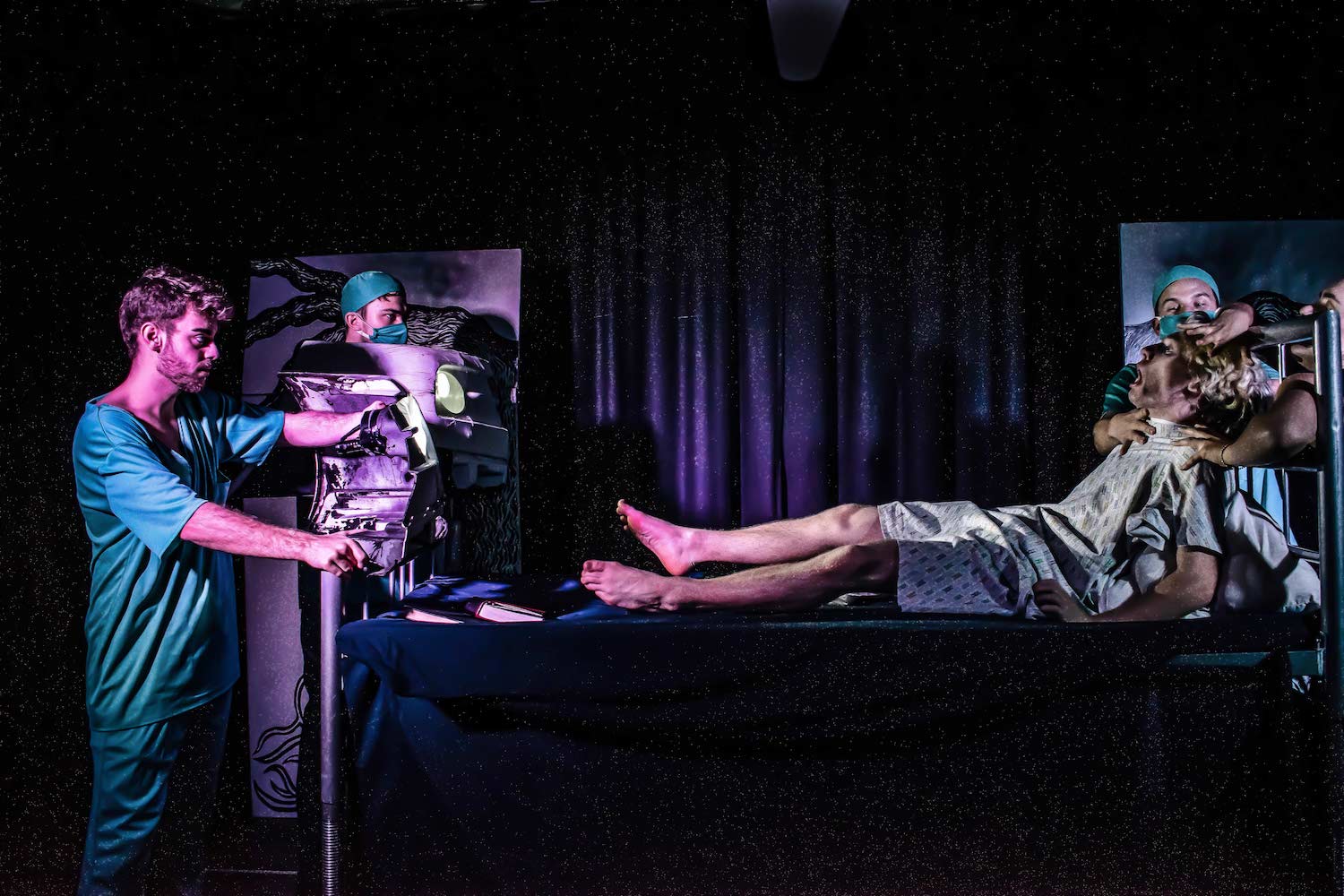
At the centre of it all is Max (Nick Young), who’s just woken up in hospital after jumping off a building – a suicide attempt prompted by the recent death of his girlfriend Tess (Hannah Benson) in a car accident. There’s just one problem; Max doesn’t remember that Tess is gone, and he can’t understand why his brother Chris (William Shackleton) and his doctor (Jensen Gray) are keeping her from him. As his medical condition worsens, Max has a decision to make – with a little bit of “help” from a visiting Jesus (David Angland) and Lucifer (Daniel Leadbitter) – to accept treatment for his injuries and risk losing Tess all over again, or refuse it and keep hold of her for a little longer.

As Max struggles to choose a path, remembering funny moments with Tess one minute and wrestling with sinister masked surgeons the next, we get a glimpse of the chaos inside his traumatised mind. The pre-show warning about strobe effects is not to be taken lightly; there are several scenes in which these feature prominently and for prolonged periods, intensifying the nightmarish quality of Max’s visions. These include reliving more than once the car crash that started it all, which leads to a surprising twist revelation about what really happened that night.

Set in counterpoint to these dramatic scenes are moments of stark reality, where Chris and the doctor discuss Max’s treatment. These scenes are played convincingly by Jensen Gray and William Shackleton, bringing us back to the real world and the growing urgency to take action. The obvious concern they both feel contrasts sharply with Max’s view that the medical staff are out to harm him, and once the truth about the accident is revealed, their conversations and the decision they need to make take on an interesting new direction.

Though the play deals with some difficult themes – bereavement, suicide, survivor’s guilt – there’s also plenty of humour, buckets of energy, and the faintest glimmer of light at the end of the tunnel, all of which keep Testament from becoming too traumatic even in its darkest moments. Nick Young leads a strong cast, skilfully juggling the pre-accident Max – exuberant, charismatic, a bit immature – with the fragile, tormented figure we find curled up in a hospital bed, discussing the meaning of life with biblical figures, each of whom has their own agenda.

Photo credit: Tongchai O. Hansen

If the play’s conclusion feels a little flat compared with the unstoppable energy and unsettling oddness of what’s gone before, it’s a minor complaint. The themes of Testament have been written about many times before, in many different ways, so to find an approach that still feels fresh and unique is quite an achievement. This high quality production will stress you out, make you laugh and send you home with plenty to think about. With only two dates left at The Hope, grab a ticket while you have the chance.


Can’t see the map on iPhone? Try turning your phone to landscape and that should sort it. I don’t know why but I’m working on it… 😉

Review: Jericho’s Rose at The Hope Theatre

“Where do you live?” It seems like such a simple question – but the enquiry takes on new significance with each repetition in Jericho’s Rose from Althea Theatre. Written by Lilac Yosiphon, who also directs along with Mike Cole and Annie-Lunnette Deakin-Foster, it’s a moving and intriguing exploration of the true meaning of “home”, seen through the eyes of two characters. Jasmine is a writer fighting for the right to stay in London, and her grandfather, back in Tel Aviv, has been diagnosed with Alzheimer’s. For each of them, and for different reasons, answering the straightforward question “Where do you live?” becomes an increasingly difficult – and sometimes impossible – task.

Photo credit: Lidia Crisafulli

The structure of the show is based around repetition: the frustrations of having the same conversations over and over with someone who doesn’t remember; the endless meetings with doctors who can never say anything new; the constant disappointment of being rejected – again – for a visa. All that really changes in Jasmine’s life over the course of the 75-minute show is her location, as she moves from one city to the next in search of… something. Even then, in each city her experience is much the same – drinking too much, having disappointing romantic encounters in nightclubs, and ultimately ending up back in Tel Aviv with Grandpa.

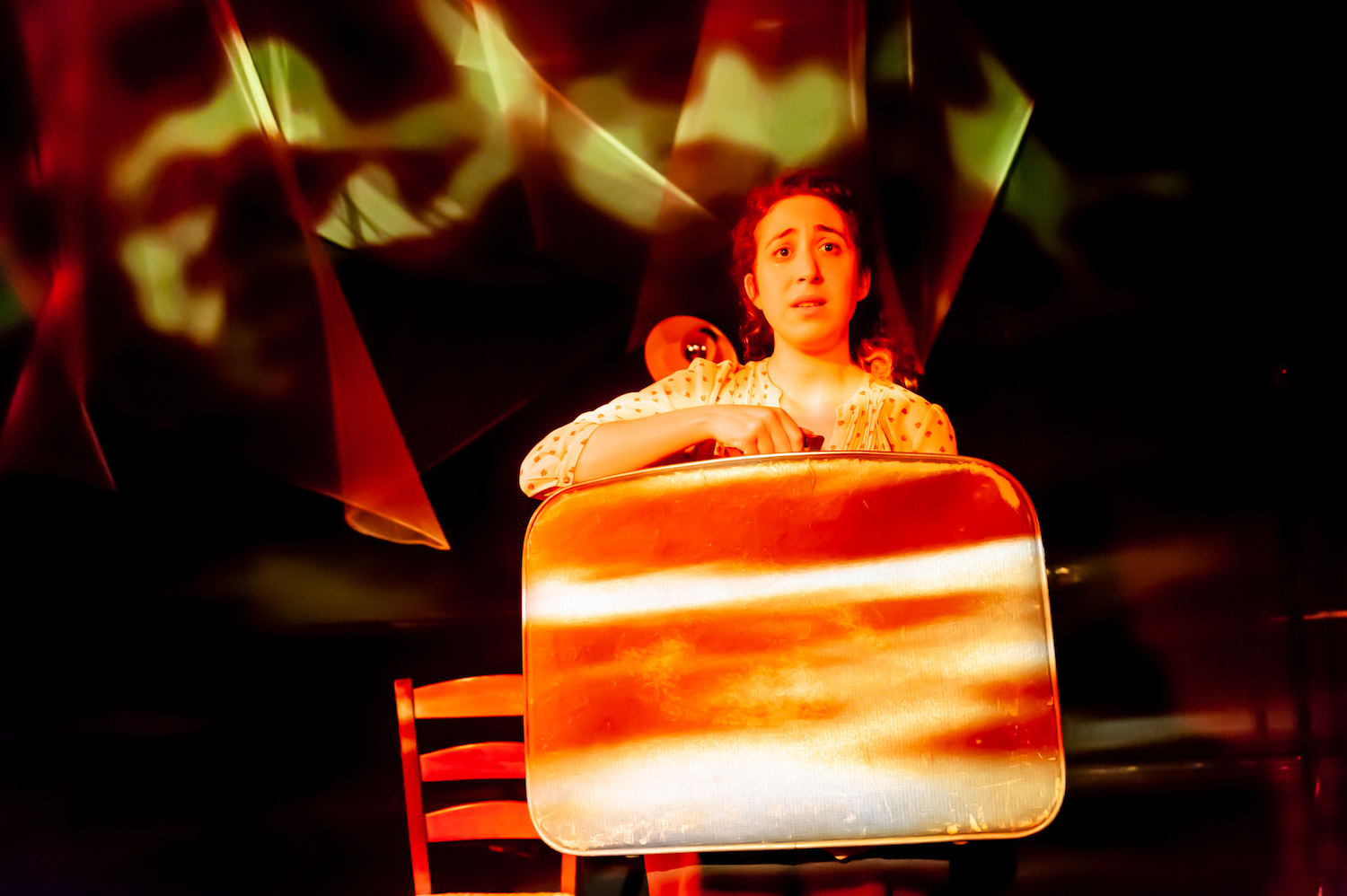
In other hands, this cyclical structure could easily teeter on the brink of tedium, and it’s credit to Lilac Yosiphon’s engaging, almost mesmerising performance as both Jasmine and Grandpa that this doesn’t happen. Slipping seamlessly from one character to the other – at times conversing with her other persona on stage, at others with her own recorded voice – she holds our attention throughout with ease.

This is fortunate, because the fragmented narrative of the piece, which hops around in time, location and style, does demand the audience’s constant focus in order to piece it all together. We’re aided in this, to some extent, by the use of music and loop pedalled sound, composed and performed live from the corner of the stage by Sam Elwin, and by Will Monks’ projections, both of which provide us with certain audiovisual signposts as we make our way through the show’s deliberately disorienting landscape.

Photo credit: Lidia Crisafulli

For those of us privileged enough to have never questioned where we belong, this unique multi-sensory production paints a powerful picture of the trauma of displacement – whether physical or emotional – through the sharing of a very personal and poignant story. The eclectic nature of the show may not be everyone’s cup of tea, but Jericho’s Rose is bold, original and invites us to consider themes we may think we understand in a whole new light.


Can’t see the map on iPhone? Try turning your phone to landscape and that should sort it. I don’t know why but I’m working on it… 😉