Interview: Ross McGregor, Frankenstein

Arrows & Traps were last seen at the Brockley Jack Studio Theatre in February with their acclaimed production of Dostoevsky’s Crime and Punishment. Now they’ve turned their attention to another classic novel: Mary Shelley’s Frankenstein.

“It’s the 200 year anniversary of Mary Shelley’s original novel, so it seemed a great time to tackle the piece,” says director and writer Ross McGregor. “Frankenstein is so iconic as well, it’s ingrained in our literary and cinematic history, and there’s been over 100 different adaptations both on stage and screen. It’s such a flexible and deep piece of literature – I found the ideas that Shelley talks about in the novel to be fascinating and worthy of dramatic exploration. Plus, it’s just so much fun to do. There’s literally a scene when a monster made of dead people comes to life. You don’t get that in Alan Ayckbourn.”

Frankenstein is the eleventh show from Arrows & Traps, known for their innovative adaptations of literary classics – and it could be their most ambitious project yet. “In many ways, it has all the hallmarks of an Arrows show: the tight ensemble work, the physical pieces, the fluid staging and the excitement of seeing a classic story told in a new, and hopefully interesting, way,” says Ross. “What makes Frankenstein different from anything we’ve done before is that we’re telling three stories at once. Victor’s, The Creature’s, but also Mary Shelley’s. It’s a triple narrative all being told simultaneously, which makes for some exciting viewing.

“Also, this is the first production that I’ve actually written myself, as well as directing it, so rehearsals have been a voyage of discovery in terms of staging the piece, finding what works, what needs clarifying, and how best to tell the stories we want to tell. It’s been a fascinating and gruelling process of vision and revision. I’m slowly learning the importance of being able to kill your darlings.

“There are moments when it is as though the ghosts in my head are literally manifesting in front of me, which is very moving and humbling, and there is always a great relief when a particular bit or a specific scene is rehearsed and it ‘works’. So often what might look acceptable on paper doesn’t then work in performance, so it’s always lovely to see something that translates and makes the leap. The cast is bringing an awful lot to the roles though, and I’m constantly surprised by all the new layers they’re discovering. It’s been a joy to be involved in.”

Ross explains that in his research for the show, he became fascinated by the story of Mary Shelley: “Her world was filled with characters such as Lord Byron, Percy Shelley, her father William Godwin, her mother Mary Wollstonecraft, her sisters Jane and Fanny, Shelley’s wife Harriet – all of these people would have made a great play in their own right – but what principally struck me was the notion of all the strange parallels in her own life to Frankenstein. Now Mary Shelley wrote Frankenstein when she was nineteen, and although there were definitely things in her childhood that inspired her to write the book, her subsequent life after the novel’s publication shared many strange links to the book, almost as though she cursed herself by writing it. The more I delved into the real story around Frankenstein, the more I wanted to include it in the play.

“So yes, Mary is a main character in the show. And not just as a narrator, she has a part to play in it. She’s older now, suffering from a terminal brain tumour in fact, and is tormented by something that happened in her youth. Something that ties directly into Frankenstein. And so as we see the story of Victor and his Creature unfold, we also see Mary relive her past, with the cast playing roles in both worlds, leaping from one timeline to the other. It’s something of a rollercoaster to watch. I’m very excited about it.”

In adapting the novel, Ross encountered various challenges – one of which was sidestepping the traditional Hollywood image of Frankenstein’s monster. “Initially, I was very faithful,” he explains. “I had always seen the Creature as this lumbering, bolts in the neck, flat-headed lummox that groaned at people, but in the novel, he’s very graceful and agile. The Creature in the novel is very eloquent and possibly as smart as his creator. I wanted to try and mimic that, because I hadn’t found a version where that had ever been attempted.

“In the novel also, there’s no motivation for Victor’s need to create this monster – he just does it because he can. So I knew I wanted to humanise Victor and make him more sympathetic, more flawed, more human, more understandably motivated. So it’s been about balancing those two things. Also, the novel itself isn’t very dramatic and doesn’t lend itself easily to being dramatised. The iconic bits that you probably think of when you think of ‘Frankenstein’ are not from the novel. There’s no ‘IT’S ALIVE!’, there’s no character called Igor, there’s not even any mention of the Creature being scarred or covered in stitches or bolts. All of that is from the films.

“The novel concerns itself with ideas of nature versus nurture, of the perils of parenthood and the isolation caused by abandonment. The hubris of genius. So in adapting it, I have tried to stay true to Mary Shelley’s vision, whilst constructing something that stands on its own two feet as a piece of theatre. And from being in rehearsal, I can certainly tell you we’re making something inherently theatrical.”
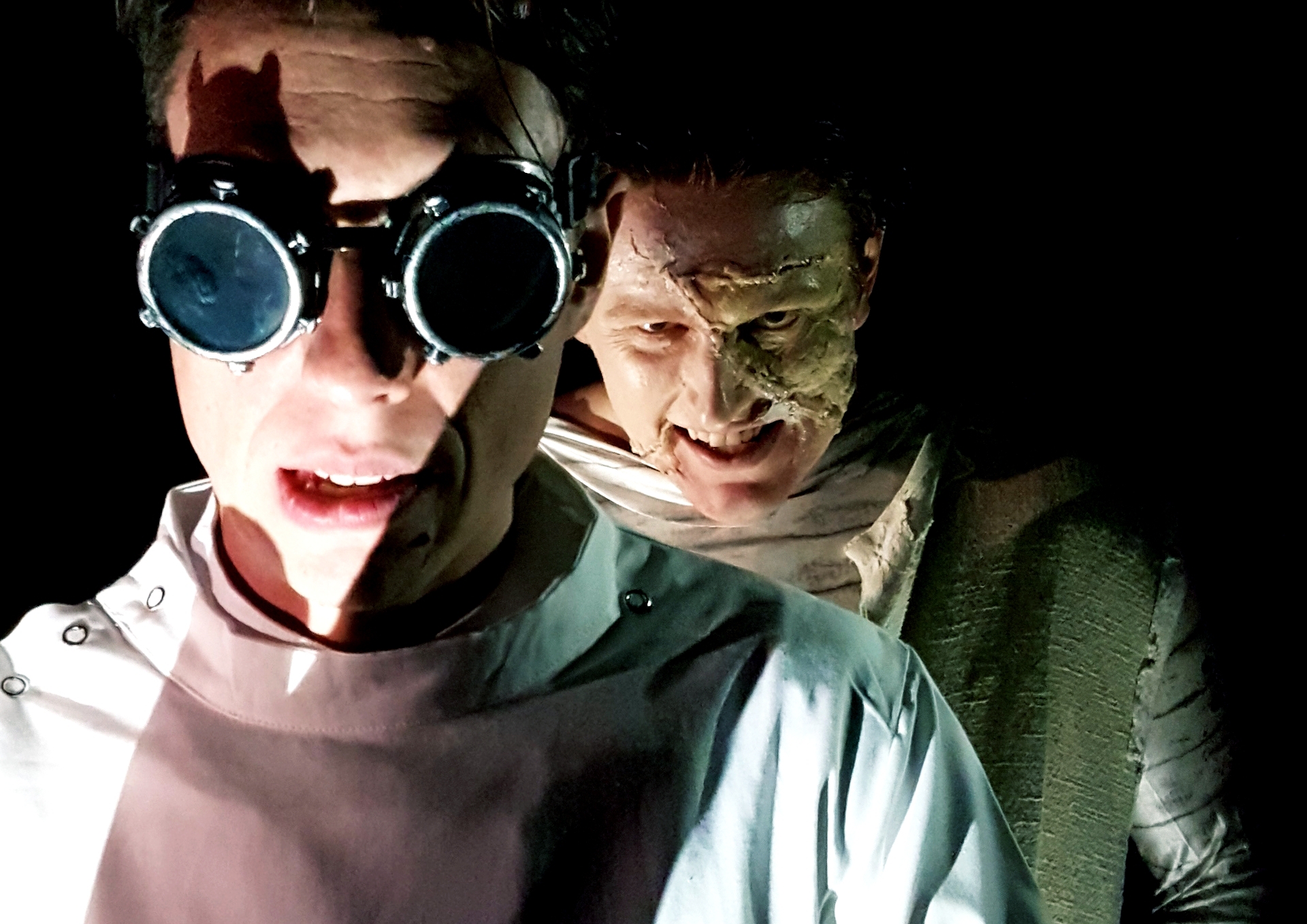
The show’s cast includes a mix of Arrows veterans and new recruits: “The brilliant Christopher Tester plays Victor Frankenstein; Arrows fans may recall his recent performance as Raskolnikov in our last production Crime and Punishment, for which he was nominated for an Off West End Award for Best Male. We have the incredibly talented Cornelia Baumann returning to play Mary Shelley, after her recent turn as Olivia and Emilia in our repertory Shakespeare season of Twelfth Night and Othello last year, and we are honoured to have our resident movement director genius Will Pinchin playing the Creature, which I’m so excited about as I’ve wanted to get Will on stage in one of our shows for years. 

“We have Philip Ridout, of this year’s festival circuit hit Dogged fame, playing William Godwin, and recent Oxford School of Drama graduate Victoria Llewellyn playing Elizabeth Lavenza. I recently had the honour of directing for Fourth Monkey Theatre Company as part of their One Year Actor Training program so we’ve got three of their very talented graduates involved: Zoe Dales playing Agatha, Beatrice Vincent playing Fanny Imlay and Oliver Brassell playing Henry Clerval. It is an honour to have all these guys involved and the benefit of knowing who the cast were when the script was still under construction was that I could write it with them in mind and tailor it to them.”

With Halloween just around the corner, theatregoers in search of something a bit scary are likely to have plenty of options – so why should we book to see Frankenstein? Over to the writer: “It’s a gothic steampunk horror set in two different timelines, playing just before Halloween, in one of London’s most iconic and welcoming fringe venues, by a company that cares greatly for the source material and has spent the last three years working to hone their skills and push fringe theatre to the limit of what it can do in terms of ensemble, spectacle and excitement. Frankenstein is quite scary, quite funny, quite sad, and very very exciting. I’d definitely go, and I’m rubbish with scary things.”

Frankenstein opens at the Brockley Jack on 26th September, continuing until 21st October, followed by a brief run at Yvonne Arnaud Theatre in Guildford from 2nd-4th November.

Review: One Was Nude and One Wore Tails at the Hen and Chickens

Guest review by Ross McGregor

Dario Fo’s lesser known one act play One Was Nude and One Wore Tails bears all the trademark satirical prods and nods that you would expect from the mind that wrote Accidental Death of An Anarchist.  There’s some plot, some characterisation, and a few set pieces but it thankfully never really attempts naturalism or a cohesive narrative, and you can take what you want from it. Do you fancy a cutting social commentary on how the wealthy (personified here by a nude man in a bin) rely on the assistance of the working class (personified here by a roadsweeper and also caretaker of aforementioned bin) to get them out of messes of their own making (being stuck naked in this same bin)? This play has that for you. Fancy some Brechtian working class singalongs with comedy horns and innuendo? Job done. Do you desire Beckettian dialogues on the nature of existence? Yup, got that too. Dissection of religion’s intrinsic value and man’s relationship with the deity itself in reference to our own nothingness? Job’s a good’un. Copious nob gags and funny carrot-based prop moments? Consider it done. Find people being hit over the head repeatedly with bin lids absolutely hilarious? This play has you covered.

I don’t think it’s necessary to understand every moment of the play, and to be honest it goes at such a lick that it would be almost impossible to do so without studying it heavily first. But it’s not really important. Fo is throwaway, he’s anarchic, he revels in breaking fourth walls and sending up authority. He doesn’t so much care about making coherent and empathetic narratives as giving you a laugh and a social message. It’s fun, its clever and it’s filled with invention and absurdity. Is this production well-made with love and energy? Yes, clearly – the actors are having a wonderful time up there onstage and their enthusiasm is infectious. Am I glad it was only an hour long? Yes indeed.

This production was made by Theatre of Heaven & Hell, so let’s deal with their “heavenly” points first. Their Programme Notes state the company “began in a living room in Southend-on-Sea”, and the production honours this humble origin with a charming and roughshod design. Newspapers and other street detritus litter the floor with such prolific abandon that it doesn’t so much feel like a normal city street at night but the morning after a newspaper-based apocalypse. The rest of the set is simple and does the job. The acting is enthusiastic with special mention going to Darren Ruston as the Naked Man in the bin, as he completely stole the show and chewed the scenery, sometimes literally. He had a slightly unfair advantage over his cast-mates as his role was a country mile better than the others, to the extent that when he wasn’t visible onstage the action noticeably dipped in interest, but considering he was static (in a bin) and often only a talking head (in a bin), he worked moments of utter stage magic.

Nicholas Bright and Jake Francis do well as the Roadsweeper and Man in Evening Dress respectively, and their grasp of Commedia acting style is clearly apparent and deserving of praise. Bright leads the piece as an ingénue of sorts, or an idiot savant, and somehow that comes across as the clown-like love-child of Goofy and Rodney Trotter, but it’s endearing and those type of parts are always very hard to pitch right, so Bright deserves much praise for aiming his little roadsweeper dunce with such innocence and sparkle that I only wanted to kill him a little bit. Elena Clements plays Woman with a vice-like command of punchlines and timing, and Brian Eastty multi-roles as a philosophical lascivious roadsweeper and a nosy patrolman. The cast are good on the whole, their energy is always at the apex of what is needed for the piece, and they clearly relished playing archetypes of sex workers, and policemen and ambassadors – this is not Pinter, or Shakespeare, or Chekhov – there are no three-dimensional characters here, and you can see the cast are loving living life large.

Now to deal with the “hellish” elements, as unfortunately this production could do with some honing.  The set-pieces and clowning elements were a little off in their timing and are in need of some more practice. There were multiple line fluffs which would be fixed by the actors taking a breath and some time during the performance to just “sit” in their roles and get comfortable. Only Ruston allowed the scenes to truly breathe, and it is something the rest of the cast could benefit from.

Second, the actors were all over-dressed in terms of their heat management. Many of the actors were sweating so much that it became a distraction for me, as I couldn’t get past how uncomfortable they looked. Turn the lights down, and turn the air conditioning up higher. Let them lose the hats and gloves. Make them comfortable, and they’ll be more at ease onstage. And if you’re going to have a naked man run across the stage at the end, then, let him be actually naked. Don’t fudge it with white loincloths. If he doesn’t want to, or if you don’t want to, then cut it. It’s one of those things you either do properly or don’t do at all, and to have it as the last image of the play meant that the whole production ended on a whimper as opposed to the explosion that presumably was intended.

One Was Nude and One Wore Tails is a quintessential London Fringe story. It’s a forgotten gem brought back to life, with a talented and energised cast that produce some moments of utter brilliance, but is let down slightly by a lack of precision in rehearsal in terms of movement direction. With some time and work – it could be divine.

One Was Nude and One Wore Tails is at the Hen and Chickens until 18th March.


Can’t see the map on iPhone? Try turning your phone to landscape and that should sort it. I don’t know why but I’m working on it… 😉

Review: Four Thieves Vinegar at Barons Court Theatre

Guest review by Ross McGregor

Four Thieves Vinegar is a new play by Christine Foster, directed by Adam Bambrough for The 42nd Theatre Company at Barons Court Theatre. At times with the Fringe Theatre industry, grand ideas take place in tiny cramped arenas, but here we have a perfect unison of play and venue in that the subterranean vault-like gloom of the Baron’s Court Theatre is transformed into a 17th century prison cell and this genius venue choice complements the aesthetic of the tale perfectly. The most striking element of this production is its design. Sally Hardcastle and Will Alder deserve the highest of praise for their work on this production, as they have elevated it to something worthy of the West End. The lighting, props, costume and set decoration are simply flawless, creating a perfect, captivating world in which the actors can play in. From tiny details of amber window effects, to the dirt underneath the actors’ fingernails, it’s all done with an attention to detail that is staggering.

The plot revolves around three inmates of Newgate prison and their kindly jailer, in the time of the Black Death. The possibility of a cure is understandably on everyone’s minds, and fearful superstition of God’s wrath is heavy in the air, thicker than vinegar fumes and hot brick ash. Matthias Richards, played with grace and sincerity by Nick Howard-Brown, is an impoverished alchemist trying to cure the plague before time runs out. Kate Huntsman is a fiery ball of energy and pathos as Jennet Flyte, Richards’ romantic interest, an innocent young maid who is awaiting the noose once her baby is delivered. Hannah Jeakes is the third prisoner – a world-weary nurse, played with gravel-voiced anarchic glee by Pip Henderson. Simon Holt is their keeper, with Bruce Kitchener as the slow plodding but well-meaning jailer, the lesser of the four roles but one he absolutely nails the timing for, and gets the most laughs out of an understandably grim subject matter.

The plot is packed full of different strands, but without spoiling anything too badly, no one is quite who they say they are, and as the play goes on, and the Black Death closes in around them, each character must make their peace with their own personal inconvenient truth.

This production has the makings of something truly outstanding, but unfortunately the ratio of gold to liquid in the alchemy of the show’s different elements is off, and as it stands, they are failing to fully dissolve together. The biggest culprit is unfortunately the writing. There are simply too many storylines for a 90-minute play, and it’s down to the director and writer to now work out which to keep and which to cut, if the show is to have a future revival. The plague plot is present throughout but it’s often side-lined by bickering and innuendo that tire after a while. Huntsman and Howard-Brown have the most to do in terms of characterisation and arcs, and they’re the glue that hold the production together. Huntsman is perhaps the most watchable and fully-formed in terms of her performance, claiming the stage like a little tear-stained imp, whilst giving a clear intention with every single line she’s given, whilst Howard-Brown gives his best Hamlet The Science Nerd, injecting much-needed wide-eyed mania bordering deliciously on obsession. You’re never quite sure if Richards is telling the truth about claiming to have discovered a cure, and Howard-Brown plays this with mastery and a delicate toying with the text. Kitchener has a paternal heaviness that is kindly, genial and reassuring – a lighter moment in amongst the darkness, and much needed.

Four Thieves Vinegar is an interesting idea, that could do with being longer, slower, and more precise in its plotting and pacing. The director needs to be clearer about the placing of the different narrative elements, and the cast need a script that matches their abilities, and one that isn’t so overwritten. And somebody at the Almeida needs to hire the show’s designers immediately.


Can’t see the map on iPhone? Try turning your phone to landscape and that should sort it. I don’t know why but I’m working on it… 😉

Interview: Ross McGregor, Crime and Punishment

Next month, the Brockley Jack Studio will play host once again to Offie-nominated Arrows and Traps for their tenth production. Following the company’s critically acclaimed Anna Karenina in 2016, director Ross McGregor is taking on another Russian classic in Dostoyevsky’s Crime and Punishment, adapted by Marilyn Campbell and Curt Columbus.

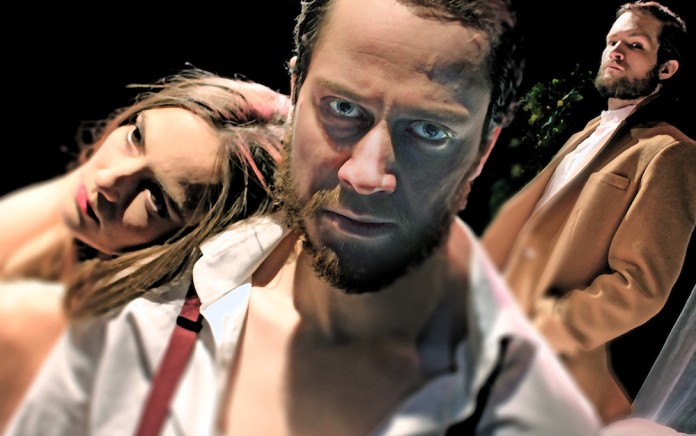
Crime and Punishment is the story of Raskolnikov, a young law student who commits a double murder, and the effect that this act has on him,” explains Ross. “But it’s also the story of the police detective trying to catch him, and the woman trying to save him. It’s very psychological, and in modern terms comes across as a crime thriller. What makes it different is that we see almost everything from the perspective of the murderer, as opposed to the policeman. So a nice inversion on the Agatha Christie formula. It’s not really a whodunnit’, but a ‘willhegetawaywithit’.

“To sum up, it’s an engrossing psychological journey into the mind of a killer, adapted from a book that you’ve heard of but never read, thus enabling you to sound clever afterwards with your friends whilst still being done and dusted by 9:15pm.”

crime-and-punishment-696x436

The fact that the Arrows’ first show of 2017 is based on a Russian novel isn’t a coincidence: “This year is the centenary of the Russian Revolution, so Russian literature and drama is going to be big this year. We thought we’d get in early before you’re all drowning in Sisters, Seagulls and Orchards. I had such immense joy doing another Russian adaptation last year, with our Anna Karenina, and this is very much in a similar style, to suit the space and aid with telling a massive story in a short space of time.

“There’s something wonderfully captivating about Russian literature. It’s so passionate and tense, everyone’s got these huge sweeping emotions, men fight duels and go to war rather than apologise, it’s all hubris and unrequited loves, and illicit passions, outbreaks of sudden war, and wounded egos, and lost fortunes, it all makes for wonderful drama. You open a Russian novel, and you can almost immediately taste the snowflakes and vodka.”

Marilyn Campbell and Curt Columbus’ award-winning adaptation condenses Dostoyevsky’s 600-page novel into a 90-minute three-hander. “This adaptation is impeccably strong, and was very striking back at the first read, so that’s really why I wanted to do it,” says Ross. “It’s an incredible take on an iconic piece of literature. It’s won various new writing awards in New York, and been performed all over the world. With so many play adaptations of famous novels – and I’ve read a lot – they try to cram the novel into a play format, writing countless little quick scenes that do little more than capture the plot, but rarely the nuance of the authorial voice or even the characters themselves. This adaptation, similar to the Anna Karenina we did last year, takes the novel as a starting point but constructs something new that is inherently theatrical. It uses devices that wouldn’t work in a novel, and stands on its own two feet. You don’t need to have read the book to enjoy this. In fact, it manages to capture the main character Raskolnikov, at times, dare I say it, better than Dostoyevsky did.”

This production has plenty to look forward to for the Arrows’ devoted fanbase – and it also has a few surprises in store: “It’s an entirely new cast, primarily,” reveals Ross. “They’re all stunning additions to the Arrows team. I still adore the established Arrows team, they feel like my family, but I thought it was important to keep things fresh – and particularly since last year was so busy for our core members, it’s good to change things up from time to time.

“Returning audience members will be greeted with some familiar touches, however. It’s still an Arrows show, so I like to include some Easter eggs for the fans of previous productions. Ten shows in, and I think we have a certain in-house style when it comes to theatre, that will still be there, of course.”

Working with a cast that’s not only much smaller than on previous productions, but also entirely new, presents Ross with an exciting challenge – but it’s not without its risks. “It’s incredibly scary. And exciting. I think those are very symbiotic sensations,” he admits. “After the rep season at the end of last year, I felt I’d painted myself into a bit of an artistic corner. We’d done two massive Shakespeare shows (Othello and Twelfth Night) in rep with the same cast on alternate nights and received a lot of critical success for the project, and so for me the answer to ‘What next?’ didn’t come easily.

“In some ways, we’d grown too big, or were in danger of being ‘that company known for the spectacle Shakespeares’. Which is lovely, and fine, but I realised that I had to change tack quickly if I was going to keep things interesting for audiences and for myself. I had to step away from my Shakespeare comfort blanket, I had to strip away all the history and artifice and just have three actors in a room with a table for 90 minutes – and see if I could still make it interesting, could I still make the old Arrows magic without all my usual tricks. I wanted to get back to a theatre that was more raw, more honest.

“So what a challenge it’s going to be. It’s one of the most famous books of all time. It’s a massive story. The adaptation is blisteringly unforgiving on its performers. As an actor there’s nowhere to hide. As a director there’s no safety net. This is our tenth production in three years, and I think it’s going to be the hardest one yet. I’m honoured to be a part of it.”

Book now for Crime and Punishment at the Brockley Jack Studio Theatre from 7th-25th February.

Interview: Arrows & Traps, The Gospel According to Philip

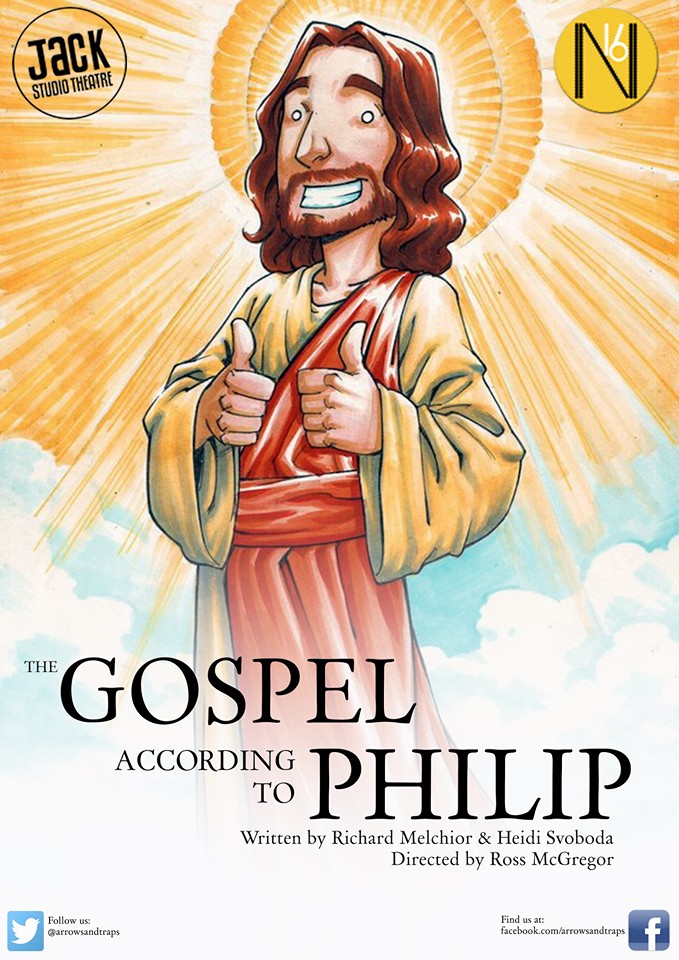
“It’s a modern Life Of Brian, but with sharper knives,” explains Ross McGregor, Director of Arrows & Traps. Following their recent critically acclaimed production of Macbeth at New Wimbledon Studio, the company are turning their attention to something very different for their next project.

“The Gospel According To Philip is the story of a young man, Philip, who decides to join the Apostles, a secret club of men, and follow a new messiah called Jesus. The story is told from his perspective as it charts Jesus’s final weeks on earth, running to his crucifixion.”

The production began with an approach from one of the writers, Richard Melchior. “I’ve known Richard for about 10 years; we worked together early in our careers doing regional tours in East Anglia. He brought this script to me just after his co-writer, Heidi Svoboda, tragically passed away, and asked me if there was any way to get this performed, as he was really proud of it. Initially I was just interested in it from a personal level, as I’ve always been a fan of Richard’s work, but when I started to actually read it, I was blown away. The satire is wonderfully drawn and subtle enough to make you think, and these iconic, almost mythical people are so recognisable but also feel completely fresh.

“You have the different character dynamics at work in terms of the apostles, and what Richard and Heidi have done, in a stroke of genius, is to transform Jesus and his disciples into a weary primary school teacher trope trying to control a group of unruly children, which gives it so much life. You have Peter as the teacher’s pet, the smart alec filled with impossible questions in Matthew, Judas as the cool kid smoking at the back of the classroom, the remedial dunce in James, the closeted gay man in Paul, and Philip as the new kid at school. It’s a fantastic re-imagining of how the Bible should have gone.

“I was so impressed with the quality of the writing and the machine-gun-like frequency of the punchlines. It’s one of the best comedies I’ve read in quite a while – but then when the ending comes, the poignancy and sense of loss is devastating. When I realised this ending reflected Richard’s loss of Heidi after she died, and that this might be the only chance of her work being performed now – I knew I had to take it on myself.”

13891873_1141616572586829_2518341558948586424_n

Offie-nominated Arrows & Traps are known for their productions of classics, particularly Shakespeare, so the new show marks quite a departure from tradition. “This isn’t an Arrows show in the expected sense – it isn’t Shakespeare, there are no extended movement pieces, we’re not subverting a classic or switching genders – but hopefully we will retain enough of what has made the last six shows so successful and bring you a recognisable Arrows-shaped piece of entertainment – which I think means that I want to take characters that you think you know, and show you their humanity and vulnerability in a new way, whilst entertaining you senseless.

“In Arrows shows we normally try to take an old story and tell it in a new way, but with this, that exact action has already been performed by the writers before we got our hands on it. They took the Bible, spun it on its head and created The Gospel According To Philip. So the Arrows spin is done without an Arrow having to lift a finger. All we have to do now is bring it to life in the most fair and honest way possible. And make sure it’s funny, of course. Has to be funny.”

Staging a piece of new writing for the first time brings with it a new kind of pressure: “I’m wary of doing this one justice, as it’s the first time the script has ever been performed, and whilst we don’t have the shadows of hundreds of other past productions looming over us like we usually do with Shakespeare, this one seems even more important to get right because I really want this little show to have a great future, and go from strength to strength in years to come, whatever shape that might take. It’s a great piece, and deserves a long life.

“On the other hand, there might be less pressure in terms of reviews and audiences, because with Shakespeare that’s always massive. On our last show, Macbeth, the vision and direction that the witches would take absolutely plagued me in the preparation stages, because they’re so iconic, everyone has their version of what they should be like… it was very hard to try to honour those views, honour the world of our play, serve the narratives that the text has, and also show something new with them. Lots of pressure. So Philip doesn’t have that. Or perhaps it does! I mean, doesn’t everyone kind of have a preconceived notion of what Jesus looks like? In the west, he’s a Brad Pitt-esque, blue-eyed, golden-haired white man. So I guess there’s always pressure.”

Arrows & Traps’ fanbase of “devoted trappers” will, as always, spot some familiar faces in the cast. “A massive part of what makes an Arrows & Traps show so special is the people in it. We are a repertory company in the sense that there’s a core base of people involved, but we always try to mix it up with new actors, so it stays fresh.

“We have Pearce Sampson playing Jesus, a very talented funny actor whom people may recognise as our Porter and Lennox from Macbeth, and bright young star Alex Stevens playing Paul – he was our Malcolm in Macbeth and our Demetrius in Titus Andronicus. The deliciously watchable Adam Elliott plays Judas; audiences at the Jack will remember him as Karenin, the husband in our Anna Karenina, and in the title role of Philip we have Will Mytum, a great actor renowned on the Off West End circuit, who previously played Vronsky in our Anna Karenina, and Chiron in Titus Andronicus. We have Elle Banstead-Salim playing Mary Magdalene, coming hot off of finishing her brilliant turn as Lady Macduff and Witch in Macbeth, and Gareth Kearns playing Matthew. Gareth has been involved in every Arrows show so far, and recently it was my honour to watch his 100th performance with us. There’s no-one I’d rather have on this project than Gareth, as he’s perfectly suited for it.

“And then lastly we have three new actors, Tom Telford, Matthew Harrison-James, and Olivia Hanrahan-Barnes, all of whom I’ve auditioned in the past and was impressed by – it was just about getting the right role at the right time, which we’ve now found. I guess that’s a lesson in perseverance for any actor out there feeling like it’s too tough in the industry right now. We do listen, and we do remember, and we always come back to you when the time is right. So really, this amalgamation of both old and new faces is perhaps the thing about the show that I’m most looking forward to, because there is literally no weak link in these guys.”

Why should audiences come and see The Gospel According to Philip? “A brilliant tagline a friend used when I told her about the show was Passion Of The Christ With Jokes. If that doesn’t make you want to buy a ticket, then you’re dead inside. Also, supporting brilliant and passionate fringe venues like the Brockley Jack and Theatre N16 is so important if we want places like this to keep offering their communities such diverse and arresting art on their doorsteps.

“The play might make you think, but it will definitely make you laugh. It’s a great night out at the theatre. And the themes that it raises are exactly the things that we should be talking about right now. The world is a scary place, and terrible machinations are threatening to pull us apart as a human race. Faith is often held up as a banner or scapegoat for cruelty and hatred, and really, for things as old as religion, we need to go back to the start and look at what happened and learn from it. There’s something terrifying about the way that all the different religions have become so ingrained in our culture, our faiths, and yet really – every single one of them started as a flawed, wobbly cult, a series of men meeting in dark rooms telling stories and writing down rules for life. I think this play has a lot to say about our modern world, about those of us who are lost, and about where we should draw our strength from.

“Don’t get me wrong, it isn’t a night of theological debate – there’s too many cock jokes in it for that. But as with the best of our satire, and I think Terry Pratchett may hold that crown for me, beneath the jokes and laughter there’s always a question, a poke in the ribs, something to argue about on the way home.”

Looking ahead, the rest of the season marks a return to more traditional fare, with the unique Arrows flavour that audiences have come to know and love. “The Broken Crown Season is epic. It’s massive. And it’s going to be the best work we’ve ever done. For me, the Broken Crown symbolises not just the fall of a king, but the breakdown and hollowness of responsibility, power and promise. It’s about ambition and the price that comes with it. It’s about kings, and gods, and leaders, but also relationships and trust. We’ve started things off with Macbeth, an obvious choice to get things rolling, now we’re tackling Jesus and the birth of Christianity, and after that we open our first true repertory double bill with Twelfth Night and Othello, performed simultaneously at Upstairs at the Gatehouse, on alternate nights over three weeks in November by the same cast. It’s going to be amazing fun, particularly on double show days where we do both texts.

“In the new year, we bring a modern horror-story vision of Frankenstein set in two different time periods, flicking in and out of a pair of narratives, and we finish with a thriller award-winning adaptation of Crime & Punishment, which has been boiled down into an action-packed, edge of your seat, 90-minute, three-hander, which I cannot wait to do, personally, as the script is electric. After that… watch this space.  The Arrows have plenty more stories to tell.”

Catch The Gospel According to Philip at Brockley Jack Studio Theatre from 30th August-3rd September, and Theatre N16 from 4th-8th September.