Review: Screwed at Theatre503

For a lot of people, 30 is the milestone age when we start to think about our ‘life plan’: to consider who we are, who we want to be, and how we’re going to get there. But what if you don’t have a life plan, and you don’t even know where you’ll end up tomorrow, let alone in five years’ time?

Kathryn O’Reilly’s debut play, Screwed, introduces us to Charlene and Luce, two friends in their early 30s whose only goal is to lurch from one drunken night out to the next, filling the hours in between at their mind-numbingly boring factory job and popping caffeine pills to get through the day. Shrugging off the attempts of friends and family to set them straight, the two girls stumble down the path to self-destruction – but then one night things go too far, putting their dysfunctional friendship to the test, and changing several lives forever.

Photo credit: Sophie Mutevelian

Samantha Robinson and Eloise Joseph are a perfect team as eternal teenagers Charlene and Luce. O’Reilly’s produced a choppy, off-beat script that allows the friends to fall into a familiar routine and bounce off each other in a way that’s both funny and oddly touching; you get the feeling they’ve had the same conversation many times before, and know each other back to front. And yet there’s a bitchiness underlying almost all their banter that establishes the power balance early on in the play: the brash, confident Luce (Eloise Joseph) calls the shots, while vulnerable, self-loathing Charlene (Samantha Robinson) falls in line, often at the expense of her own happiness. Consequently the friendship becomes both uncomfortable and frustrating to watch, as we not only see both girls wasting the potential they undoubtedly possess, but also find ourselves willing Charlene to break free of Luce’s damaging influence.

If the girls are often difficult for us to like, the other two characters in the play fall at the opposite end of the spectrum; in fact, if anything, they’re a bit too good. The girls’ work colleague – and Charlene’s love interest – Paulo (Stephen Myott-Meadows) is endlessly patient and idealistic, while Luce’s trans parent, Doris (Derek Elroy), is a shining example of someone who saw what they wanted from life and made it happen, against the odds and whilst single-handedly raising a difficult and ungrateful daughter. Both the male characters are admirable and likeable enough, but next to the complexities of the central characters, they do feel just a little one-dimensional.

Photo credit: Sophie Mutevelian

Sarah Meadows’ production is slick and energetic, and leaves plenty to the audience’s imagination. Much like a drunken night out, some of the most significant events are blacked out, and we (and others) are forced to rely on the girls’ memories – which are unreliable at best, downright dishonest at worst – to piece the story together. The set, designed by Catherine Morgan, is simple yet multifunctional, adapting easily to become everything from factory to hospital, nightclub to kebab van. The concealed mirrors are a nice touch too, allowing for an increasing amount of self-examination from the characters as the play goes on… though whether it does anyone any good is questionable.

Screwed is a hard-hitting play, and not always that enjoyable to watch, though it certainly has its moments. Underneath the bawdy humour lies a cautionary tale about wasted opportunities – in love, work, and life in general – and the party culture that, much like Luce and Charlene’s friendship, does far more harm than good. Kathryn O’Reilly’s decision to explore this social trend with a focus on female characters is refreshing, if a little bit depressing, and while the play doesn’t offer a lot in the way of answers, it certainly paints a vivid picture.


Can’t see the map on iPhone? Try turning your phone to landscape and that should sort it. I don’t know why but I’m working on it… 😉
Review: Ross and Rachel at Battersea Arts Centre

You know how we’ve all been demanding a Friends movie for years? Well, I changed my mind. In Ross and Rachel, James Fritz gives us a glimpse into the future of arguably one of TV’s most iconic couples – and it’s not pretty.

Presented as a rapid-fire duologue by solo performer Molly Vevers, and directed by Thomas Martin, the show explores what happens to the on-again, off-again couple after they finally get together, as doubts begin to creep in and an unexpected (and decidedly unfunny) crisis threatens the perfect future we all envisioned for them. Delicately constructed, with enough hints for any self-respecting Friends fan to feel at home, yet sufficiently vague that we could be listening to any couple, anywhere, Ross and Rachel is both a treat and a trauma for devotees of the TV show, taking us on a harsh reality trip outside the comfortable world of sitcom, and far beyond the happy ever after moment.

Photo credit: Alex Brenner
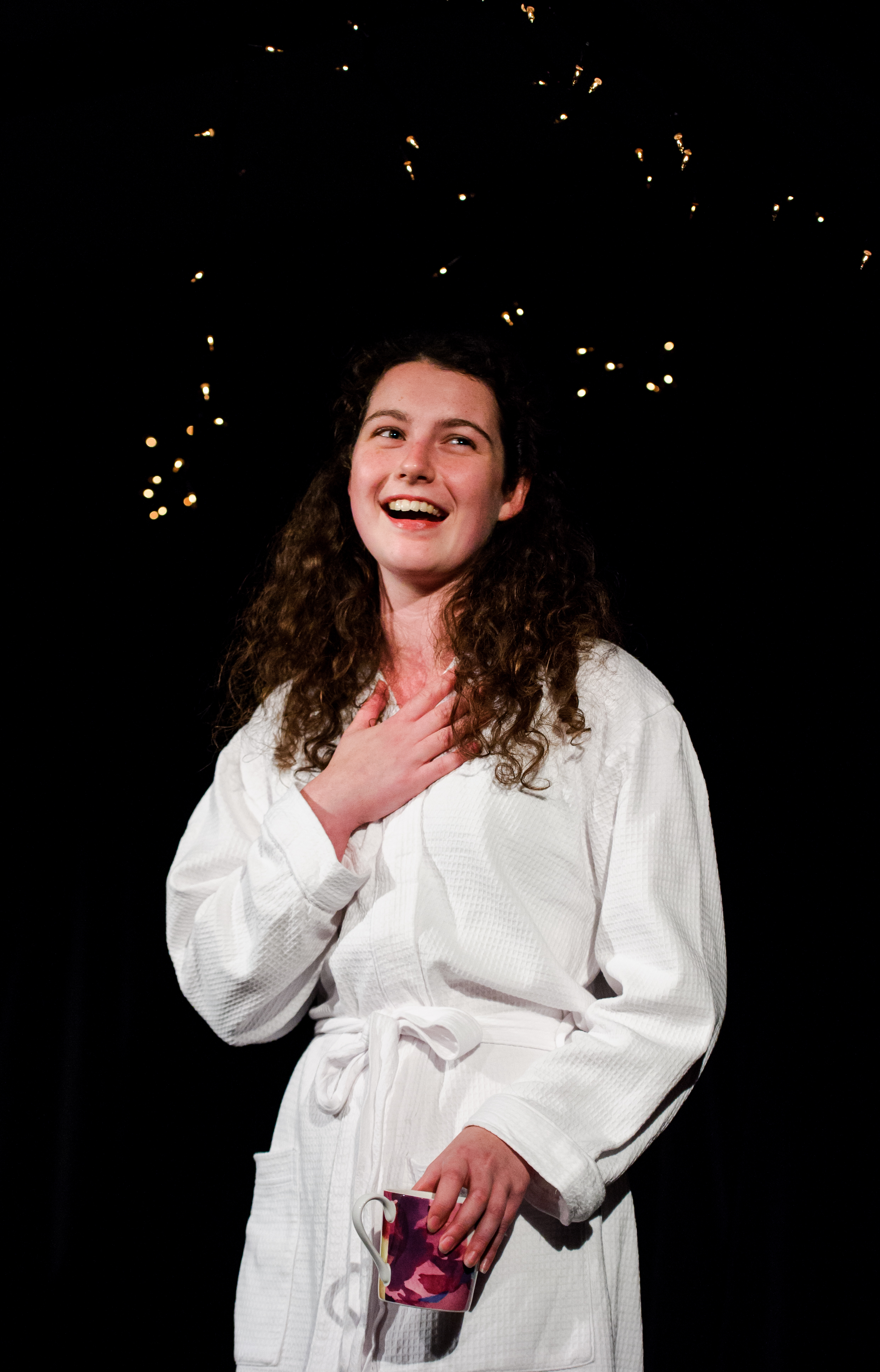
The ‘duologue for one person’ format takes a little while to get used to – like its characters, the two players in the drama blend into one unit, so it’s not initially obvious who’s saying what. Fortunately, through a combination of Fritz’s skilful writing and Molly Vevers’ spell-binding (and award-winning) performance, it takes a surprisingly short time to unravel the two voices from each other – and by the end of the play, it’s with a feeling of mild surprise you realise there’s only ever been one performer on stage.

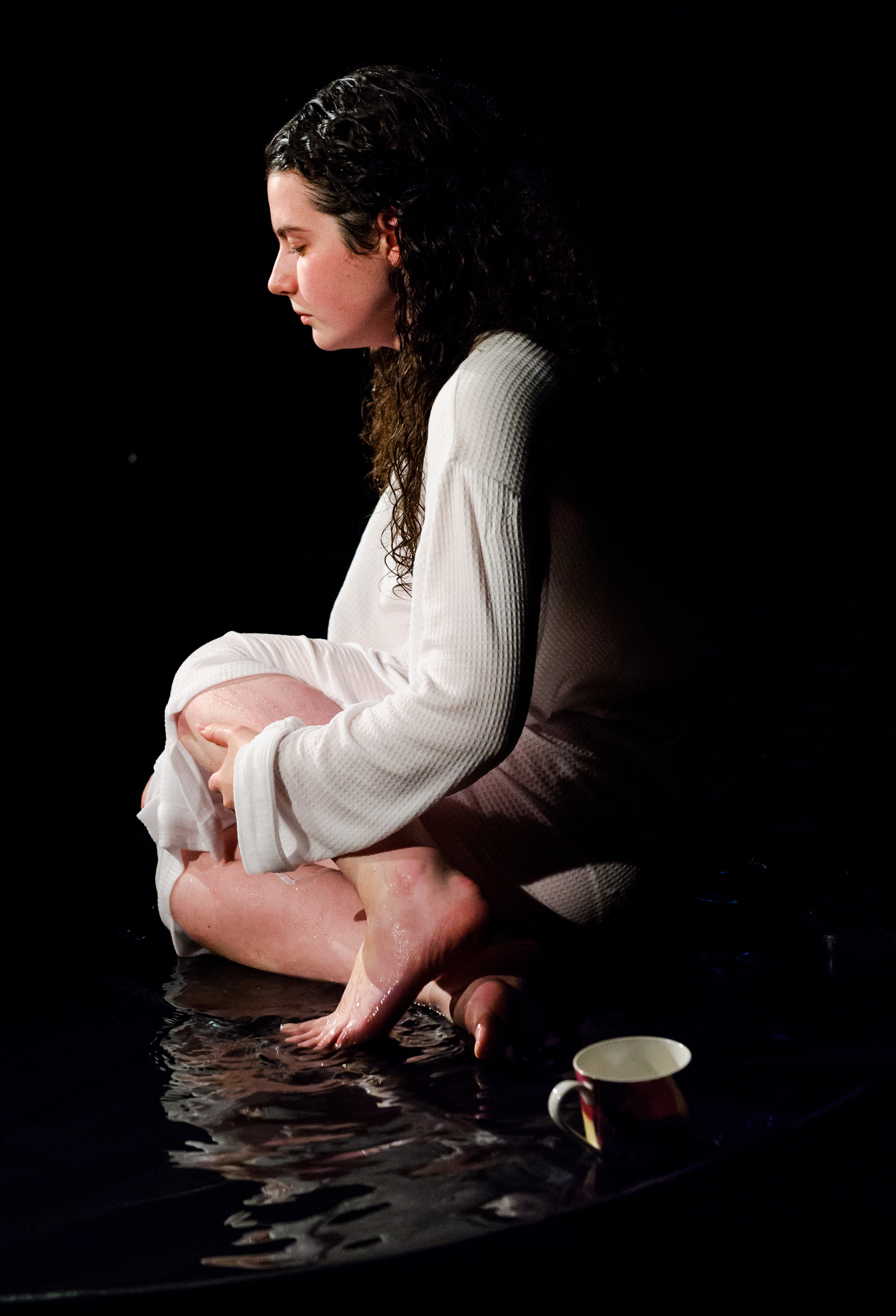
The fact that most audience members already know the characters inside out is a double-edged sword; on the one hand, no introduction is needed, and it doesn’t take much for us to invest emotionally in their story. On the other, taking apart this golden couple and revealing them to be two real, flawed human beings just like the rest of us is a huge challenge – but one to which Vevers rises magnificently. She has the audience’s undivided attention from the moment she appears on the dimly lit stage, perched on the edge of a shallow pool and nursing a cup of coffee (what else?). Effortlessly embodying both roles, she delivers Fritz’s lines with passion, emotion and boundless energy, making us laugh and cry almost in the same breath.

Photo credit: Alex Brenner
Ross and Rachel isn’t really about Ross and Rachel, of course – it’s about the idea of relationships that popular culture sells us. We’re raised on a diet of romcoms and happy endings to believe that meeting ‘The One’ should be our goal in life, and that once we’ve found them, our lives will somehow freeze forever in that beautiful moment. This play exposes the sad reality – that sometimes a perfect ending is just the start of an imperfect next chapter. And if you think that sounds depressing… well, it is a bit. But sometimes the truth hurts.

There’s no doubt Ross and Rachel is a brilliantly written and impeccably performed play. I’m glad I saw it – but unlike every episode of Friends, I’m not sure I’d want to watch it again (or indeed 10, 20, 30 times… I lost count a long time ago). There’s nothing wrong with a dose of reality from time to time – but nobody looks to sitcoms, fairy tales or romantic movies for reality. They provide us with an escape from the challenges and mundanities of everyday life, and exposing their flaws – however affectionately – feels just a little bit cruel and unnecessary.

But hey, it’s nothing a Friends binge won’t fix…


Can’t see the map on iPhone? Try turning your phone to landscape and that should sort it. I don’t know why but I’m working on it… 😉
Review: Happy to Help at Park Theatre

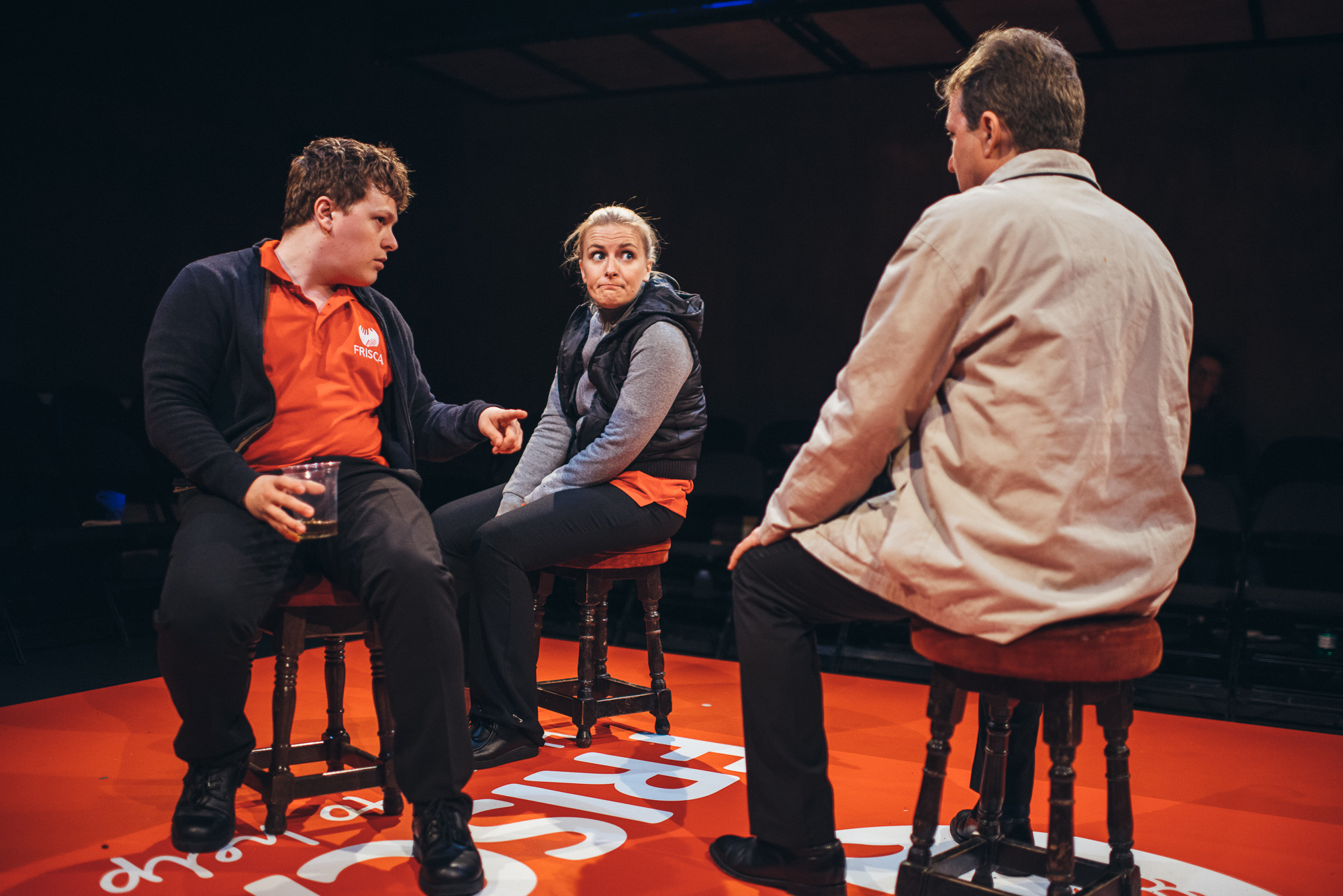
If you thought a supermarket was nothing more than a place to pick up a pint of milk, think again. Happy To Help by Michael Ross opens the door to Frisca, the UK’s biggest supermarket chain, and takes us behind the scenes for one dramatic week, to reveal the internal politics and daily power struggles hidden behind the brand’s cheerful public face. It’s a sharp, clever comedy but with a serious message, in which the huge corporation is likened to an autocratic state, where speaking out against the regime can have dire consequences.

UK managing director Tony (Charles Armstrong) is doing his Secret Millionaire bit, on the advice of American boss Huck (David Bauckham), going behind the scenes at a Frisca branch to mingle with the workers. But little does he know that store manager Vicky (Katherine Kotz) has her own agenda… Meanwhile disgruntled employees Elliott (Jonny Weldon) and Myra (Rachel Marwood) are whispering about unions, and wannabe rockstar Josh (Ben Mann) has no intention of sticking around for long, even if he is everyone’s favourite shelf-stacker. For Frisca’s customers, it’ll be just another week, but behind the scenes everything’s about to change as a hilarious, shocking and unsettling chain of events is set in motion.

Photo credit: David Monteith-Hodge

In a fantastic cast, Katherine Kotz gives a stand-out performance as the manipulative Vicky; with a sunny smile that never reaches her eyes, she prowls the stage, a figure of absolute authority and control – but with a slightly manic air that suggests she could lose it at any moment. Ben Mann also shines as the brashly confident Josh, who thinks he’s got it made by being teacher’s pet. The confrontation between Vicky and Josh at the end of Act 1 is masterfully constructed and performed; much like Josh, we don’t realise what’s happening until it’s too late.

Perhaps the biggest personality on stage, though – both literally (the brand name is emblazoned across Emma Tompkins’ set) and figuratively – is Frisca itself, a business so wildly successful that it’s come to dominate every area of our lives, without ever pausing to consider who might be suffering as a result. Directed by Roxy Cook, the play skilfully contrasts Frisca’s shiny public image with the less than glamorous reality, in which employees are devalued, dissatisfied, and anything but ‘happy to help’. Each scene change is punctuated by a soundtrack of till beeps and monotonous store announcements, and there’s even a perky (and frustratingly catchy) Frisca song. It’s a world governed by ridiculous rules and regulations, whose absurdity is hammered home by Tony – the man who wrote them – now having to abide by them.

Photo credit: David Monteith-Hodge

But Happy To Help, which was shortlisted for the Liverpool Hope Playwriting Prize in 2015, is also a stark warning about the power that big businesses are allowed to wield over both us as consumers and the smaller firms that get in their way. As much as we may laugh watching the play, it actually paints a pretty bleak picture, and though the twist in the tale isn’t difficult to see coming, it still makes a powerful point. And it may make you think twice about ever setting foot in a supermarket again… at least until the next time you run out of milk, anyway.


Can’t see the map on iPhone? Try turning your phone to landscape and that should sort it. I don’t know why but I’m working on it… 😉
Review: The Return of the Marionettes at Bridewell Theatre

Welcome to the 1960s, where girl group The Marionettes are taking to the stage at the height of their fame. But as they come to the end of their final number, one of the girls runs from the stage in tears. And that, we learn from their manager George Ellis, is the end of the Marionettes.

Until now (well – 1984, anyway): 20 years later, the girls are back together for a one-off reunion show that could see their career picking up where they left off. But with so much history to work through – personal and professional – can they put the past behind them and deliver the show their adoring fans have been waiting for?

13412175_10154979027938289_5124830498646302303_o

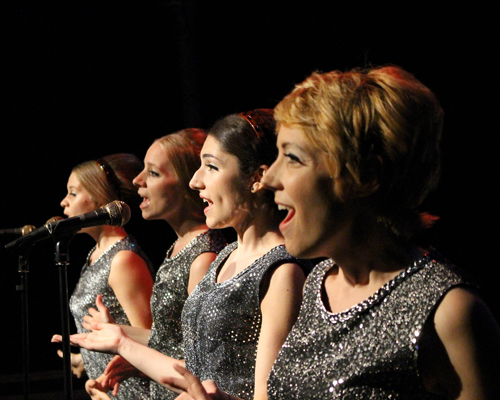
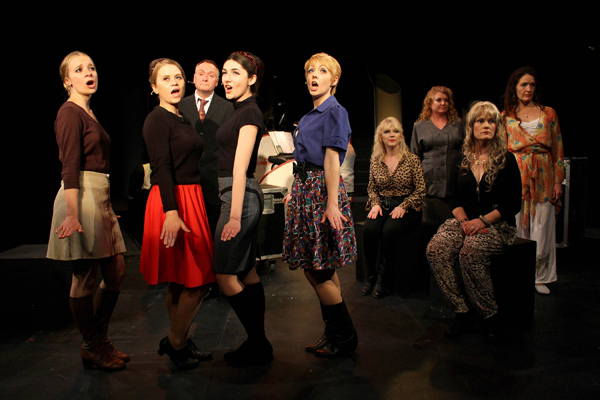
Writers Peter and Phillip Ley of Tower Theatre Company take us back to the start of the story, introducing us to four giggling schoolgirls who call themselves the Moonbeams, and charting their progress to the top. Along the way, we’re treated to 18 original songs that capture the spirit of the 60s and – like all the best songs from that period – are easy to pick up and totally infectious. (Two days later, I’m still singing the Marionettes’ first big hit, Dynamite.) Polished performances from the cast, along with Ruth Sullivan’s choreography and costumes from Lynda Twidale, mean the musical numbers do a great job of transporting us back in time.

Photo credit: Robert Piwko

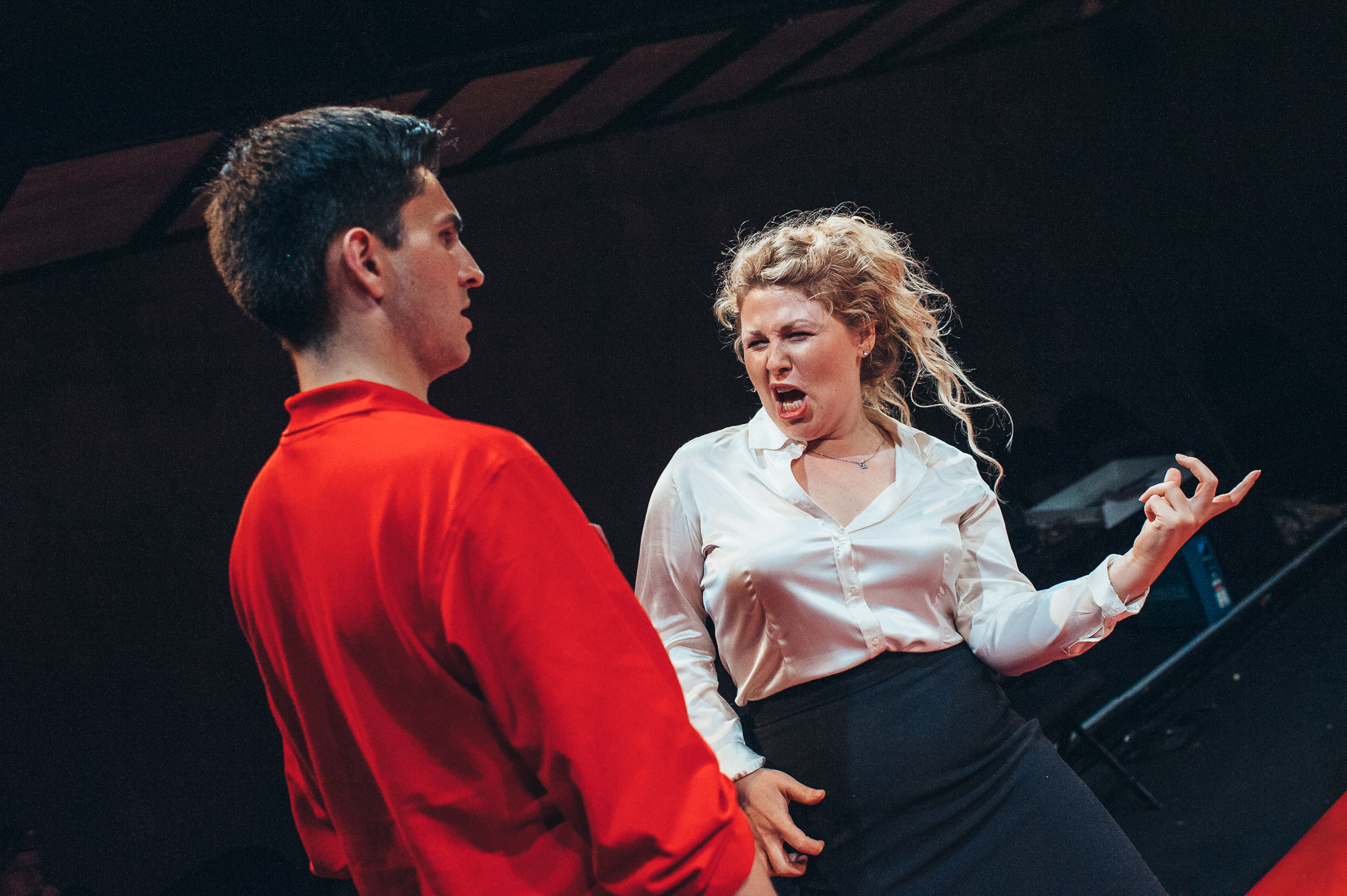
A dual cast of actresses play the Marionettes then and now, which enables the two groups to share the stage, with the older women often observing their younger selves and providing commentary on events as they unfold. Angharad Ormond and Stella Henney earn their place as lead vocalist Cathy with some impressive performances, but both also reveal a touching vulnerability hidden beneath a veneer of false confidence. Meanwhile Fiorella Osborne and Annette Ross show the fiery passion and determination that have always made Mary the true leader of the Marionettes.

What works really well is the way the dynamic of the group picks up where it left off 20 years ago – the professional tension between Mary and Cathy continues, there’s tension of a whole other kind between Mary and George, and the Meltzer sisters (Olivia Barton-Fisher and Jessica O’Toole as the younger, Deborah Ley and Annemarie Fearnley as the older) are enjoying the moment and providing light relief with their banter. The transition is aided by the constant, reassuring presence of Brad Johnson as both the older and younger George, along with Julian Farrance as heartless record boss Allan Tyrell.

Photo credit: Robert Piwko

Despite a few small stumbles in the spoken scenes, and some sound issues – the live band, led by musical director Colin Guthrie, are fabulous but occasionally drown out the actors – there are a lot of great things about this show, and opening with the break-up of the band creates an enjoyable suspense as we wait to see not only what eventually proved to be the last straw, but whether the women can now overcome their differences. It would have been nice to see more of the simmering romance between Mary and George; considering their feelings for each other are still present and obvious to everyone 20 years later, there are very few references to it in the flashbacks. And while it’s a challenge to recreate the sensation of a huge sell-out gig in an intimate fringe setting, there’s a lovely moment with some crazy fans, which helps demonstrate just how big the group were at the height of their fame.

The Return of the Marionettes is a thoroughly enjoyable take on the familiar ‘rags to riches to ruin to redemption’ story we’ve come to know and love from shows like Jersey Boys and Dreamgirls. With a soundtrack of irresistible songs, some strong vocal performances and a rousing finale, this is a show with great potential, which is pretty much guaranteed to send audiences out with a smile on their face and a skip in their step.


Can’t see the map on iPhone? Try turning your phone to landscape and that should sort it. I don’t know why but I’m working on it… 😉

Review: A Subject of Scandal and Concern at Finborough Theatre

John Osborne’s A Subject of Scandal and Concern was written in 1960 as a TV drama starring Richard Burton. Now adapted by Jimmy Walters of Proud Haddock, the play gets its long-awaited London debut in the intimate setting of the Finborough Theatre.

Based on true events, A Subject of Scandal and Concern tells the story of George Jacob Holyoake, the last man to stand trial for blasphemy in England. On his way from Birmingham to Bristol in 1842, the young teacher stops in Cheltenham to give a lecture, where his determination to speak his mind will prove to be his downfall. Despite the efforts of a parade of lawyers, journalists and churchmen to break him, however, Holyoake maintains a steadfast resistance, even when it ends up costing him everything.

Photo credit: Samuel Taylor

Jamie Muscato gives a riveting performance as the unfortunate Holyoake, an unassuming figure who overcomes a severe stammer to make his case with passion and conviction. It’s a testament to Muscato’s presence and performance that even during his lengthy courtroom speech, we still hang on his every word. He’s joined by a versatile cast of five, who take on a multitude of roles; Edmund Digby-Jones impresses with an astonishingly fast and fluent delivery of the indictment against Holyoake, while Doron Davidson plays no less than five characters, each with a different accent and personality.

In addition to playing multiple roles within the story, the cast also constantly rearrange the simple wooden frames that make up Philip Lindley’s set, to become a jail cell, a courtroom, a kitchen and, most memorably, the ever-changing road from Birmingham to Bristol. There’s something almost mesmerising about the graceful movement of the actors as they move the pieces around, and it gives the play a dynamic feel, as if it’s taking place on a much larger stage.

Photo credit: Samuel Taylor
 Much like its title, A Subject of Scandal and Concern is a very wordy play; it’s worth getting hold of a copy of the play text to read through afterwards if you can. But what could have been a pretty heavy hour is broken up by moments of humour, and a vein of quiet sarcasm runs throughout the play. The authority figures ranged against Holyoake are all faintly ridiculous, but there’s a note of censure against the protagonist too, particularly towards the end of the play. As explained by the narrator in his closing lines, the play doesn’t seek to provide answers; this is not a story with a moral, and we must draw our own conclusions. Nonetheless, this is a fascinating tale, which still resonates today in its references to freedom of speech and the influence of religion in everyday life. This buried treasure has finally seen the light of day, and it was well worth the wait.


Can’t see the map on iPhone? Try turning your phone to landscape and that should sort it. I don’t know why but I’m working on it… 😉