Review: Hairspray at the Orchard Theatre

If you want a show that’s guaranteed to entertain, you need look no further than Hairspray. Flying the flag for anyone who’s ever felt they don’t quite fit in, it’s the story of an American teenager with a heart of gold, who refuses to believe she can’t live her dreams just because she doesn’t look like all the pretty girls on TV. Dancing her way into the nation’s hearts, Tracy Turnblad inadvertently becomes the leader of a civil rights movement, campaigning for racial integration – because the alternative simply doesn’t make sense to her.
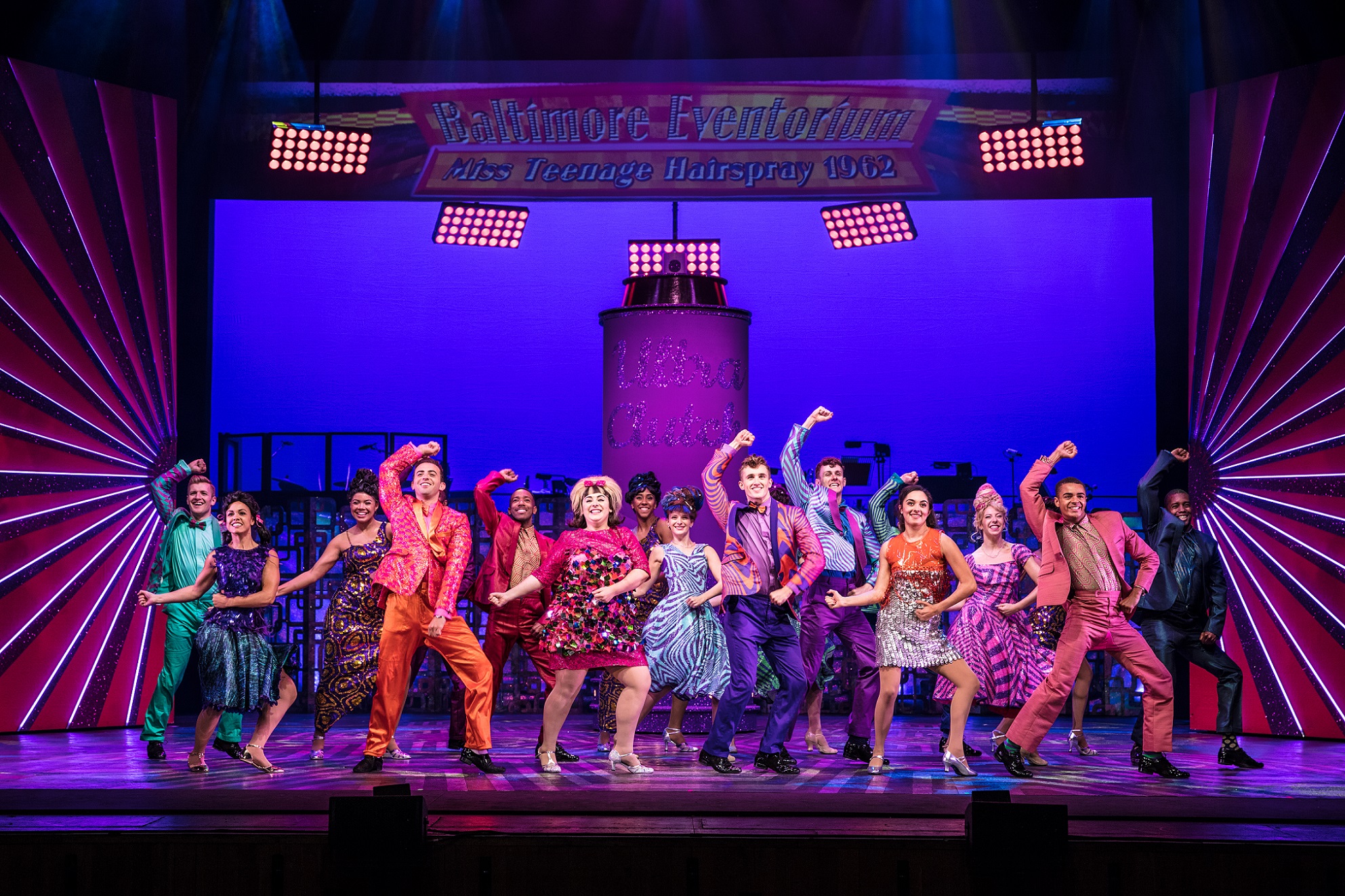
Photo credit: Darren Bell

In a weird way, it’s almost depressing that we still need shows like Hairspray. It would be great if we could sit back and enjoy the feel-good story, safe in the smug knowledge that these are yesterday’s problems. Unfortunately, as recent events have demonstrated, the two big issues addressed by the show – body shaming and racism – are still just as topical today as they were in the 60s (when the story’s set) or the 80s (when it was written).

Perhaps that’s why two of this production’s most memorable moments both come from Motormouth Maybelle – Act 1 finale Big, Blonde and Beautiful, and the electrifying I Know Where I’ve Been. Then again, it could just be because Brenda Edwards, who plays Maybelle, is vocally incredible. Either way, her solos certainly stand out in a musical that’s full of show-stopping moments – among them the sweet comedy duet between Matt Rixon and Norman Pace; it’s a number known for improvisation and innuendos, and this partnership don’t disappoint. And let’s not forget the fabulous finale, which wraps everything up in a neat, glittery bow, and does so with such energy and joy that you can easily put aside how utterly unrealistic it all is.

Newcomer Rebecca Mendoza, making her professional debut as Tracy, proves herself not only a talented singer and dancer but also a gifted comedian; her adoration of Link (a suitably charming Edward Chitticks) is particularly fun to watch. At the other extreme is the villain of the piece, unashamedly racist TV producer Velma, who’s played with great relish by Gina Murray; it’s only a shame we don’t get to hear more of her amazing vocals.
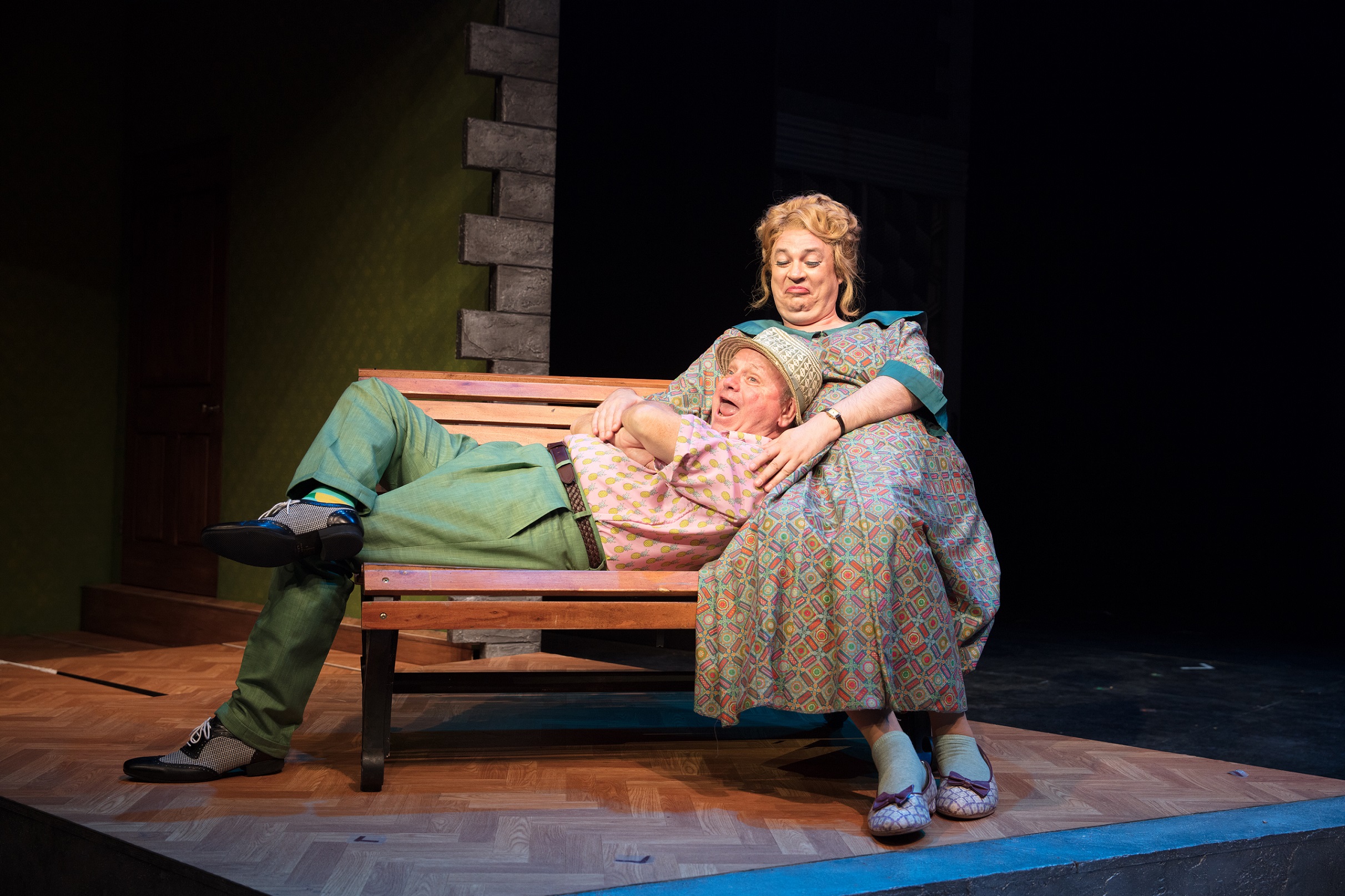
Photo credit: Darren Bell

As well as a great cast who are all worthy of mention, Hairspray also boasts a toe-tapping 60s-inspired score by Marc Shaiman and Scott Wittman, brilliant choreography from Drew McOnie and dazzling set and costume design by Takis (not to mention impressively huge hair). The whole show is a riot of colour and vivacity, with plenty to enjoy for younger audience members but a healthy scattering of naughty jokes for the grownups too.

And at the heart of all this fun and froth is that serious message, summed up so succinctly by Tracy herself: “I just think it’s stupid we can’t all dance together.” It might sound like a massive simplification of a huge and complex problem – and it’s true that the show doesn’t exactly offer an in-depth debate of the issues – but in a world that increasingly feels like it’s going backwards, every little helps.

Hairspray is at the Orchard Theatre until 9th September.

Review: Richard III at Temple Church

Antic Disposition certainly know how to make a good first impression. Temple Church, their home for the next two weeks, is another majestic, beautiful and powerfully historic setting for the company’s production of Shakespeare’s Richard III – and brings to an end their most recent tour of some of the UK’s most stunning cathedrals.

Fortunately, the awe-inspiring venue is more than matched by the quality of the show, which is utterly absorbing from start to finish. Based on the probably completely untrue history of Richard, Duke of Gloucester, the play recounts his bloody path to the throne as he gradually eliminates every other heir in his way, before being defeated at Bosworth Field by the future King Henry VII.

This modern interpretation reimagines the royal family and their entourage as well-heeled city types, and even without the little topical details – which include a comedy mayor called Boris, and a competitive handshake Donald Trump would be proud of – the point being made is clear. Our leaders may no longer send each other to the executioner’s block, but the ruthlessness of those who seek power for their own ends is just as dangerous today as it was 500 years ago.

At the head of a fantastic cast is Toby Manley as the murderous monarch, in a performance so charming that it’s easy to see how he keeps getting his way. Watching him, I couldn’t help but be reminded of Andrew Scott’s Moriarty in Sherlock; he plays his part so well that you can forget how evil he actually is – if not for the occasional furious outbursts that expose the crazed ambition lurking within. And in case that doesn’t do the job, a glance down the aisle reveals a silent army of vengeful ghosts, as each of Richard’s victims rises from the grave to take his or her place and wait for an opportunity to have their revenge.

This simple yet powerfully effective device from directors Ben Horslen and John Risebero not only helps keep track of the rising body count, but also contributes to the play’s sense of impending doom as we build towards a spine-tingling climax. And they’re not alone, as Louise Templeton’s Queen Margaret, draped in the flag of her dead husband and son’s royal house, appears regularly on stage like Hamlet’s ghost to ensure justice is done.

Perhaps surprisingly in a play so full of violence, there’s also a lot of humour, in the dramatic, semi-hysterical posturing of Joe Eyre’s Buckingham, who could be mistaken for a radical religious preacher as he makes the speech that secures Richard’s place on the throne. And Robert Nairne’s Catesby, who’s transformed for this production into a no-nonsense security man, enjoys some fun interaction with the audience as he hands out flags for the young princes’ arrival, before smugly presenting the two moody teenagers with an XBox to keep them quiet.

It’s clear from both the production and the directors’ programme notes that there’s a topical subtext to be found in Antic Disposition’s interpretation of Richard III. But this message is applied subtly enough – for the most part – that anyone who simply wants to see an excellent and very accessible production of Shakespeare’s historical play will find themselves more than satisfied. It takes some doing to put together a performance so gripping that it can distract from such an amazing venue – but while the setting certainly adds atmosphere, the true star of this show is the show itself.


Can’t see the map on iPhone? Try turning your phone to landscape and that should sort it. I don’t know why but I’m working on it… 😉

Review: Helen at the Hen and Chickens

If today we’re all too familiar with the concept of fake news, Euripides was a few centuries ahead of his time when he wrote Helen in 412 BC. An alternative view on the Trojan War, the play argues that Helen – whose seduction by Paris was the cause of the decade-long conflict – was actually in hiding in Egypt the whole time, while the Helen taken to Troy was no more than a copy created by the goddess Hera to punish Paris. Unfortunately, nobody knows about this, so they all blame Helen for the devastation waged in her name, leaving her desperate to expose the lie and save her reputation.

The story’s picked up in Egypt following the fall of Troy, when who should arrive shipwrecked and scantily clad on their shores but Helen’s husband Menelaus. His phantom wife conveniently vanishes into thin air just as he re-encounters the real one, and together they trick the Egyptian king Theoclymenus – who wants to marry Helen himself – into letting them go.

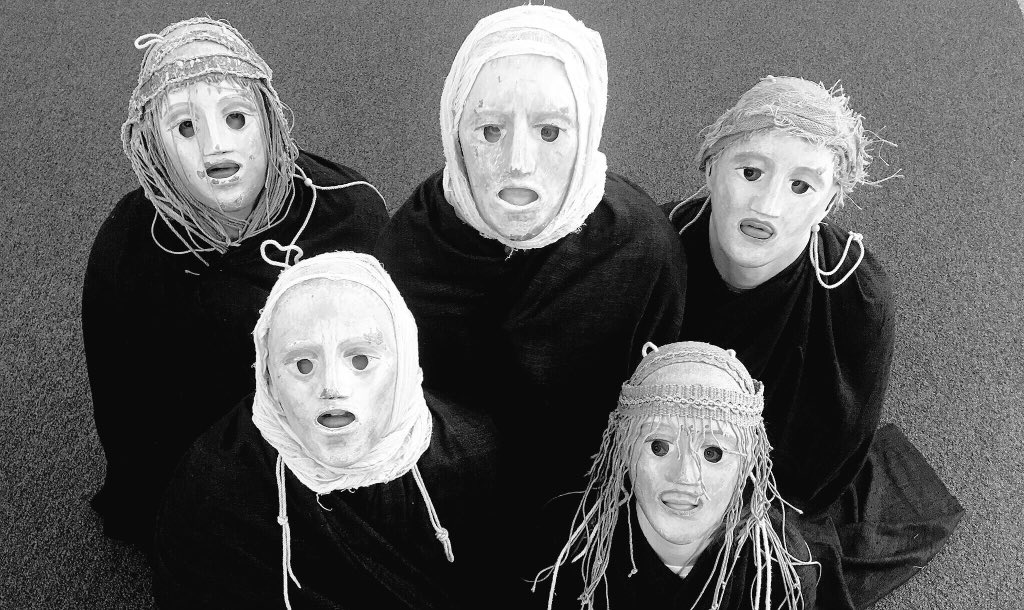
This new version of Euripides’ play comes from Theatre of Heaven and Hell, a company dedicated to producing absurdist plays and reviving forgotten gems. Helen is a bit of both; a little more comedy than tragedy, it moves through the story at a brisk pace, and doesn’t shy away from exposing its more farcical aspects. There are moments in Michael Ward’s production that feel a bit like Monty Python does Ancient Greece, contrasting sharply with the play’s slightly sinister opening and closing sequences, in which the masked and robed Chorus set the scene to a dramatic soundtrack.

As difficult as it is to categorise, Helen nonetheless makes for an entertaining hour of theatre. The women come out on top – Helen herself and the prophetess Theonoe, played by Elena Clements and Sarah Day-Smith respectively – emerge not only with the most dignity but also all the moral fibre, while the men are made to look like fools. Nicholas Bright and Darren Ruston play the famous leaders Menelaus and Theoclymenus as comically simple souls who are nothing without women to tell them what to do, and Brian Eastty and Marius Clements have two of the funniest scenes as messengers who patiently expose their rulers’ mistakes.

A surprising twist on an old story, Helen touches on some very modern themes, from feminism and victim blaming to fake news and the pointlessness of war. The scene in which one of Menelaus’ men questions their reasons for going to war in the first place is funny but painfully topical, and the responsibility placed on Helen’s shoulders for the actions of men invites us to ponder gloomily how much attitudes have really changed several centuries later.

It’s an odd little play, which is nothing like you might expect (let’s be honest: you hear Euripides, you don’t expect lines like, “We went to war for a cloud?”) but Helen is undeniably good – if slightly surreal – fun.


Can’t see the map on iPhone? Try turning your phone to landscape and that should sort it. I don’t know why but I’m working on it… 😉

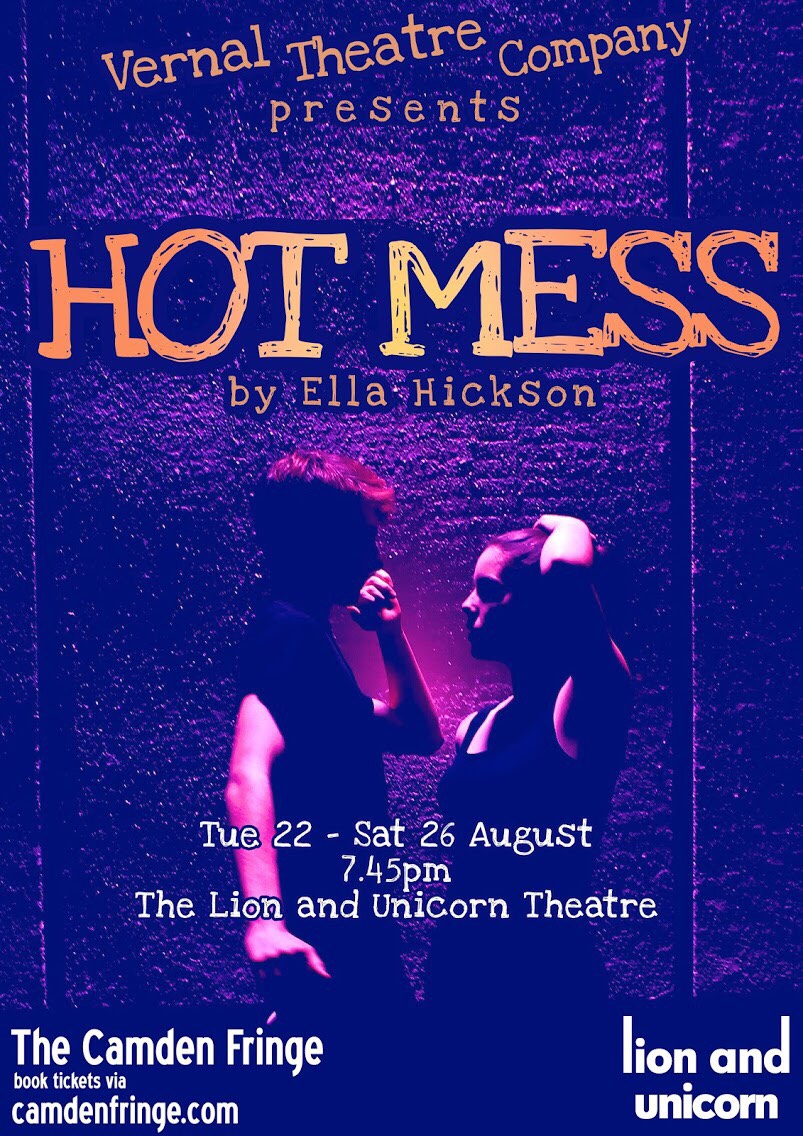
Review: Hot Mess at the Lion and Unicorn Theatre

What is love? This age-old question has been asked by everyone from Shakespeare to Haddaway, and in Hot Mess, Ella Hickson adds her voice to the debate. To each of her characters, love means something different: for Twitch (Katrina Allen), it means becoming indelible, leaving a mark on the other person to ensure she can never be forgotten. To her twin brother Polo (Timothy Renouf), it’s a concept so alien he can’t even say the word. For their friend Jacks (Natalia Titcomb), it’s a brief moment of physical connection – the briefer the better. And for American tourist Billy (Gareth Balai), it may prove to be a lot more than he bargained for…

Like an old married couple who’ve told their “how we met” story so many times it’s become a choreographed performance, Twitch and Polo open proceedings by explaining how they came into the world: Polo first – clean, quiet and pale – followed by Twitch – messy and loud, her appearance a surprise that nobody counted on. Then it gets a little weird, as we learn they had only one heart between them, which was bestowed on Twitch. As a result, she loves often and devotedly, while Polo (so named because he has a hole where his heart should be) can’t bring himself to feel anything for anyone.

The events of the story take place over one night, as the twins celebrate their 25th birthday on a raucous night out, and simultaneous encounters allow a direct, poetic exploration of the two girls’ contrasting attitudes to sex. At the same time, Polo outlines his sister’s unfortunate history with boys, who have a habit of meeting nasty accidents when they don’t reciprocate her feelings. Her brother shares this information casually, almost with amusement (much as he talks about almost everything else) – yet his concern when Twitch falls hard and fast for Billy seems genuine, if only because he knows long before the rest of us what the end result might be.

Originally staged in a nightclub, the play moves to a more traditional setting under the direction of Vernal Theatre’s Julian Bruton and Kieran Rogers. The cast – much like the play – is one of two halves, though all four are equally impressive. As Polo and Jacks, Timothy Renouf and Natalia Titcomb are loud, brash and very funny; above all they want to be seen and admired, and will do literally anything to achieve that attention. In contrast, Katrina Allen and Gareth Balai (who plays all Twitch’s unfortunate former boyfriends as well as Billy) are sweetly likeable, each with their own kind of innocence about what lies ahead. Ultimately, you get the feeling Polo isn’t the only one lacking something fundamental – but he might just be the only one who’s aware of what’s missing.

Like the twins’ birthday celebration, Hot Mess is something of an emotional rollercoaster, and concludes with a striking final image that’s not easy to shake off. The play asks some deep questions, and certainly doesn’t offer much in the way of answers – but getting to the bottom of it all is an enjoyable challenge.


Can’t see the map on iPhone? Try turning your phone to landscape and that should sort it. I don’t know why but I’m working on it… 😉

Review: Sophie at the Lion and Unicorn Theatre

Written and performed by Julia Pagett, Sophie is a story about mental illness and its lasting and wide-reaching impact. At just 20 minutes, the play’s over almost before we know it, but nonetheless provides plenty of food for thought.

Though Sophie is the central character, it’s not she who tells her story; that duty falls to her twin sister, who we first encounter looking through old photos and smiling fondly, while a stereo at her feet plays Puff the Magic Dragon all the way to its sad final verse. Although she’s surrounded by these memories (the set also contains an old bike, which later prompts her to reminisce about the one time she saw her sister truly happy), when she speaks, she reveals a far more complex cocktail of feelings towards Sophie: love, anger, grief, remorse and confusion all make an appearance in this short, heartfelt monologue.

Though it’s never specifically named, the implication is that Sophie was suffering from an eating disorder, and the play focuses predominantly on the ideas of perception and reality: how we see ourselves compared to how others view us. We’re told more than once that Sophie was beautiful, and it’s her failure to see this, more than anything, that her sister can’t understand.

The fact that Sophie’s a twin helps to explore this theme of distorted perceptions in more depth. We hear so much about their mysterious, unbreakable bond that it’s easy to think of twins as two halves of one whole, mirror images of each other – emotionally, even if not physically. The fact that despite this, Sophie still fails to see her true self reflected back at her reveals the undiscriminating power of mental illness, and heightens the tragedy of one twin being left behind.

Under the direction of Keir Mills, there’s a confrontational, defiant tone to Julia Pagett’s delivery that suggests Sophie’s sister knows what she’s saying will be considered shocking and controversial, as she admits to believing her twin was being ungrateful, and to refusing to admit Sophie had a problem or to help even when she begged her to. Even now, as she struggles with her feelings of guilt and grief, that powerful rage still simmers beneath the surface, ready to explode. As distressing as this is to see, it’s a brave, sincere and very moving approach to talking about mental illness that forces us to consider how damaging it can also be for those not directly affected.

I wish the play had been longer – largely because it clearly had a huge amount to say, and felt like it was only just getting going when it ended. It would be great to see Sophie developed into a longer piece that builds on this strong foundation and really digs into the important issues raised.


Can’t see the map on iPhone? Try turning your phone to landscape and that should sort it. I don’t know why but I’m working on it… 😉