Review: Our Big Love Story at The Hope Theatre

In June 2017, Theresa May concluded her response to the UK’s third terrorist attack in as many months with these defiant words: “We must come together, we must pull together, and united we will take on and defeat our enemies.”

The call for unity and defiance is a common refrain at times like these, and rightly so; faced with such mindless horror and violence, it’s important that we look out for each other, and of course we should present a united front against those who want to harm us. But what happens when that determination to protect our way of life at all costs goes a step too far?
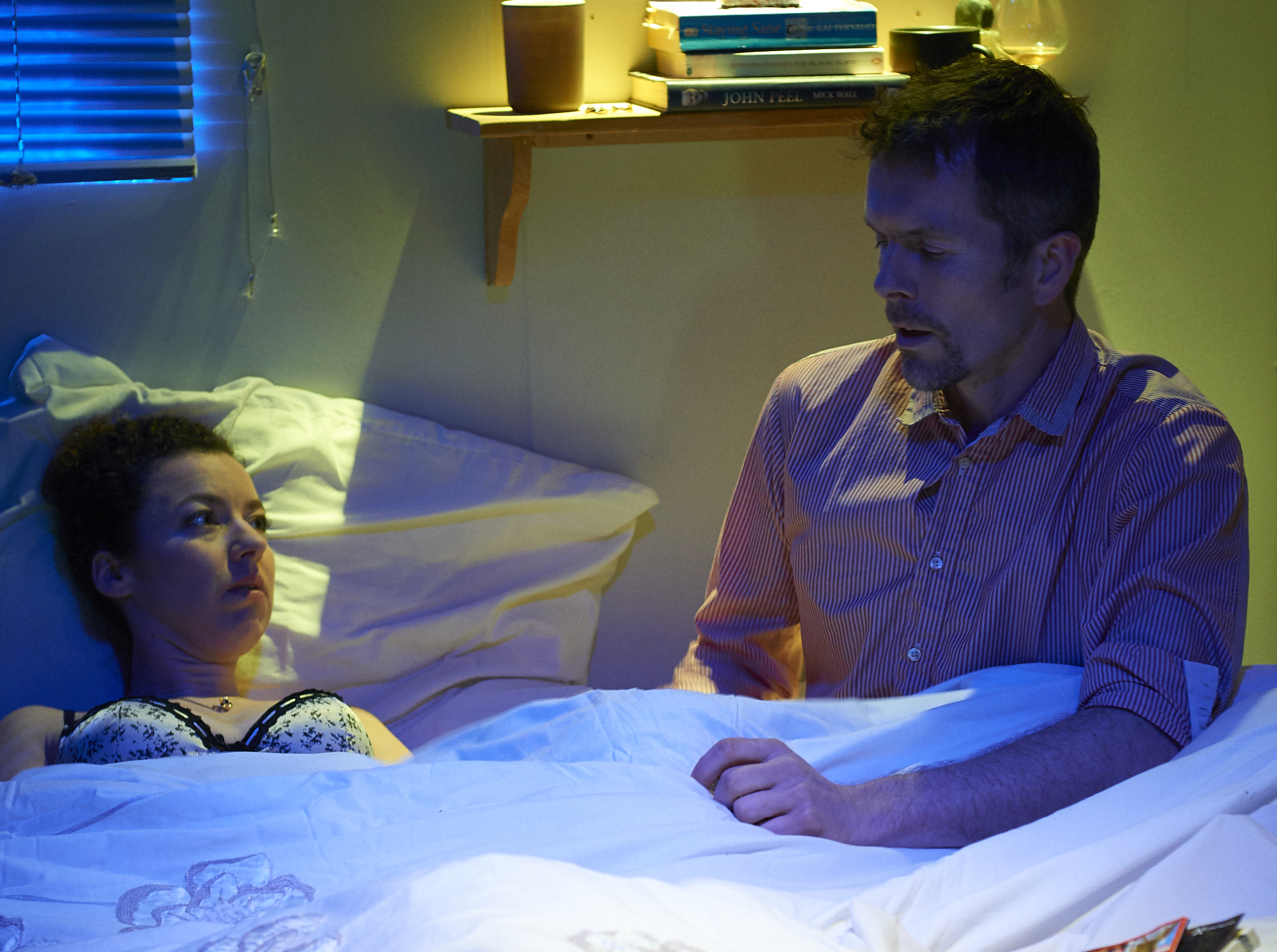
In Our Big Love Story, Stephanie Silver explores the idea of radicalisation of teenagers – only not, as one might expect, that of young Muslims. Instead it’s a young white girl, Destiny (Holly Ashman), who’s drawn in by the racist rhetoric of her dad’s EDL group following the July 7 bombings in 2005. Her anger at the devastation and loss of life is both understandable and relatable, but it’s also wildly misplaced – having finally convinced herself that her classmate and secret crush Anjum (Naina Kohli) isn’t a terrorist because she’s not a Muslim, she moves on to a new and equally innocent target, with horrifying consequences.

Though the story takes place on and immediately after the 2005 attack, it could just as easily be happening today, at a time when the threat of terror attacks remains high, and far right groups in the UK and overseas gain ever more ground, both socially and politically. That said, July 7 feels like a particularly significant landmark to choose: the first example of radical Islamist terror most of us – and certainly the four teenage characters in the play – can remember on home soil, and the moment at which attitudes towards Muslims began to shift rapidly in an uncomfortable direction.

The play begins as two separate love stories, neither of which has any obvious connection to terrorism; it’s not until it’s almost over that all the threads finally link together. While Destiny and Anjum discuss their mutual attraction and Destiny worries what her dad will think, Katie (Emelia Marshall Lovsey) and Jack (Alex Britt) are more coy about their own budding romance, recalling with some embarrassment their parents’ attempts to educate them on the birds and bees. It’s instantly clear that although they’re on the brink of adulthood, these young people are still of an age where their parents have an influence on them – a fact that will take on darker significance as the play goes on.

Into the midst of all this youthful exuberance steps The Teacher (Osman Baig), a religious Muslim man injured in the attack, with an account that’s harrowing in its graphic detail. He’s traumatised by what he saw that day, but even more so by not knowing the fate of a fellow passenger and his little girl, and over the course of the play describes how this trauma affected his life in the days and weeks afterwards. At the same time, he gives us an insight into the judgment and suspicion faced by Muslims in the wake of this and other attacks – a judgment he eventually begins to turn on himself as his precious faith slips away.

The Teacher’s appearances slow the tempo of Calum Robshaw’s otherwise fast-paced production, with Osman Baig’s direct and personal delivery ensuring that we hang on his every word. The play’s conclusion brings all five characters together and is performed with genuine and heartfelt emotion by the young cast, but it’s reassuring to see that while in some ways their lives have been irrevocably changed, we can still catch glimpses of those giddy teenagers we met earlier, still falling in love and convinced they can conquer the world.

I saw an extract from the opening of Our Big Love Story at an Actor Awareness scratch night last year, and was intrigued by the multiple different themes that the play seemed to be dealing with: love, sex, religion, racism, porn… It’s satisfying therefore to see how the full-length play successfully weaves these themes together, forming a coherent narrative that’s thought-provoking, moving and, at times, quite unsettling. There’s still a lot going on, and the play could be longer to allow it to delve into each issue in more depth – but as it stands, the story already provides more than enough food for thought to keep us going for quite some time.

Can’t see the map on iPhone? Try turning your phone to landscape and that should sort it. I don’t know why but I’m working on it… 😉
Review: Three Sisters at the Brockley Jack Studio Theatre

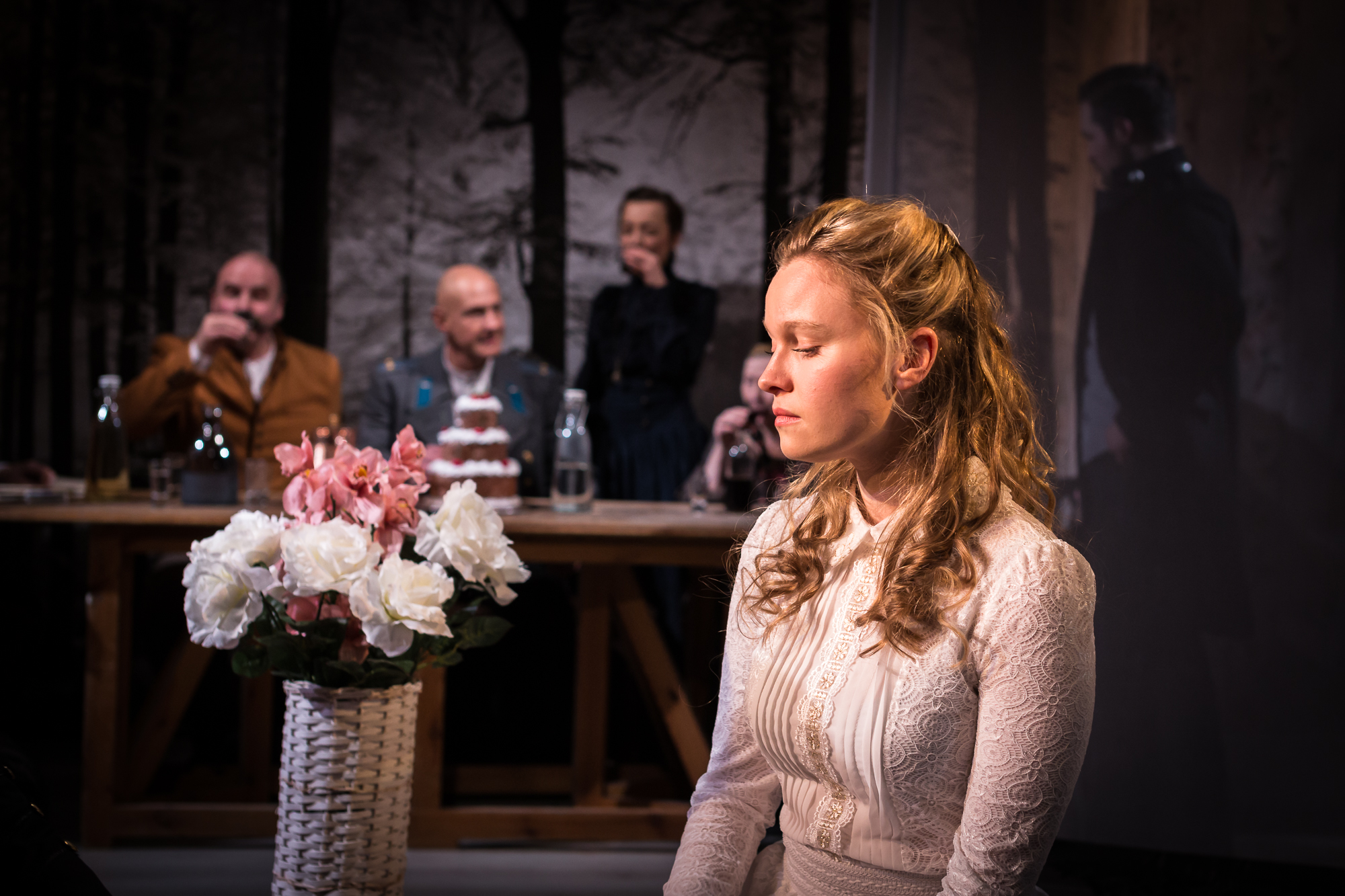
It only takes one look at Odin Corie’s set – a light, sophisticated and immaculately decorated family room, which makes the intimate Brockley Jack Studio look far bigger than it is – to understand that with their third foray into the Russian classics, Arrows and Traps mean business. Following the success of their Anna Karenina and Crime and Punishment in 2016 and ’17 respectively, the multi-Offie nominated company has now turned its attention to Chekhov, with a new adaptation of Three Sisters written and directed by Ross McGregor.

Photo credit: Davor Tovarlaza

Set in a Russian garrison town, the play immediately introduces the eponymous three sisters: Olga (the responsible one), Masha (the passionate one) and Irina (the romantic one). One year on from the death of their father, all three yearn to find some joy and purpose in a life that’s become relentlessly dull and ordinary. They believe the answer lies in their long-held dream of returning to Moscow – and yet, four years later, we find them exactly where they began, having moved precisely nowhere. This inertia means that not only have they not found happiness; they’re also significantly worse off, thanks to their brother Andrei (Spencer Lee Osborne). He’s led them into ruin with his gambling habit and disastrous marriage to Natasha (Hannah Victory) – a local girl they all once looked down on, but who now rules the roost with an iron fist and has, little by little, driven them out of their own home.

The substantial cast of fourteen is uniformly excellent. Cornelia Baumann never disappoints, and she hits the target again with her fragile and lonely Olga, trapped in a public service job she never wanted because she’s too nice to say no. At the other end of the scale, Claire Bowman is full of uncompromising fire as the sharp-tongued Masha; her disdain for her comically ridiculous husband Fyodor (Stephen MacNeice, whose plaintive insistence that he’s a happy man becomes harder and harder to believe) is matched only by her passion for the equally unhappily married Colonel Vershinin (Toby Wynn-Davies). Somewhere in the middle, Victoria Llewellyn balances the two out as the youngest sister Irina, soaring from ecstatic highs to desperate lows in her search for an idealistic true love that seems doomed to end in tragedy.

Photo credit: Davor Tovarlaza

The production also makes interesting use of music, with musical director Elliot Clay combining sweeping orchestral tracks with a more modern twist provided by guitar-toting soldiers Vladimir and Alexei (Freddie Cambanakis and Ashley Cavender), and – in a rare moment of joyful abandon – a traditional Russian singalong that might just have you reaching for the vodka, and will almost certainly get stuck in your head, possibly forever. (Just to make sure, they sing it twice.)

At 2 hours and 45 minutes it’s not a short play, but we easily become invested enough in the characters that the story remains compelling, and under Ross McGregor’s direction it never feels like the pace is too slow – all the more impressive when you consider this is, by its very nature, a play where the characters talk a lot but don’t do much. Five years of consistent excellence from Arrows and Traps have set the bar incredibly high – but while Three Sisters perhaps lacks a little of the cinematic grandeur we’ve seen in the company’s earlier work, this is still without doubt a stylish and beautifully acted piece of storytelling.


Can’t see the map on iPhone? Try turning your phone to landscape and that should sort it. I don’t know why but I’m working on it… 😉
Review: Don’t Stop Thinking About Tomorrow at Chickenshed

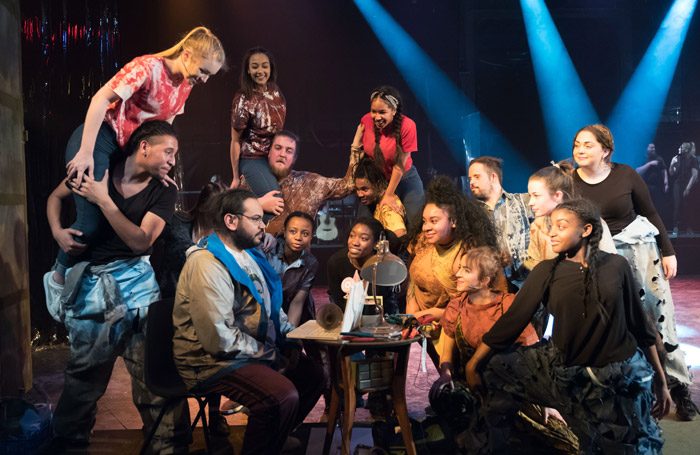
As the narrator of Chickenshed’s Don’t Stop Thinking About Tomorrow – a fictional climate change artist called Oscar Buhari – points out, here in the UK we’ve become largely desensitised to the topic of saving the planet. Living as we do in our privileged first world environment, it’s difficult for us to really appreciate the damage that’s already being done, and which will only get worse, as a result of our own irresponsible actions.

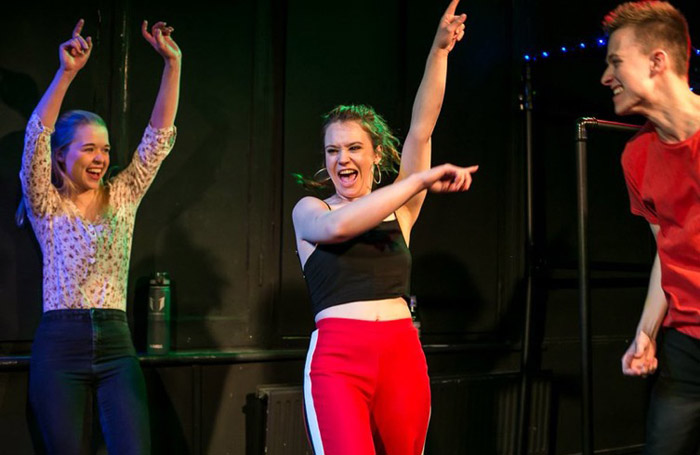
The show aims to tackle this by discussing climate change not in terms of the theoretical science (though there is a little of that), but through showing us the real world implications for both our fellow citizens of the world, and ultimately for ourselves. The result is a show that is big, bold and visually stunning, but also terrifying and humbling – not least because it’s performed by a young cast who understand that they’ll be left to deal with the chaos previous generations have created.

Photo credit: Daniel Beacock

Lou Stein’s production is made up of several short pieces blending dance, song and spoken word, each introduced by a short monologue from the affable Oscar Buhari, played by Ashley Driver. These performances take us from the depths of the sea, where marine life is destroyed by an army of discarded plastic, to the lively streets of New Orleans as Hurricane Katrina approaches, to an imagined future world whose limited water supply is rationed by a little more each day. The theme of refugees also recurs several times, with stark reminders that it’s not only war that can drive people from their homes.

It’s not all bad news, though, and the show does conclude on a positive note, first by introducing us to two resourceful communities who brought their villages back from the brink of disaster, and finally with a word of gentle advice from Oscar: he’s shown us the picture as he sees it, and now it’s up to us to decide what to do about it.

Musical director Dave Carey’s score features original music, as well as excellent live renditions of popular tracks including Joni Mitchell’s Big Yellow Taxi, Johnny Cash’s Hurt and Fleetwood Mac’s Don’t Stop Thinking About Tomorrow, all imbued with new significance by the context of the show. There’s also a reworded version of The Star-Spangled Banner, reflecting the inadequate political response to Katrina, which packs quite a punch – especially when accompanied by a photo of George W. Bush looking down on the devastation from the safety of Air Force One.

Photo credit: Daniel Beacock

Although each piece was devised by a different team and therefore has its own unique style, they’re all united by a creative incorporation of recycled everyday materials, and a use of colour and light that really brings each performance to life. And as always, it’s a pleasure to see the inclusivity that is Chickenshed’s driving force reflected on stage, both in the show’s large and diverse cast and in the collaborative, mutually supportive spirit of the performance. The young ensemble shows a real understanding of the show’s important message, and their energy and commitment is infectious.

Don’t Stop Thinking About Tomorrow is a powerful call to arms that looks and sounds great, and also makes you stop and think about the careless way we treat our planet, and what the impact of that might be. A fascinating watch, this show is well worth the long trip to the end of the Piccadilly Line.


Can’t see the map on iPhone? Try turning your phone to landscape and that should sort it. I don’t know why but I’m working on it… 😉

Review: Faces in the Crowd at the White Bear Theatre

Ten years after it premiered at the Royal Court, Leo Butler’s fast and furious two-hander Faces in the Crowd returns to London – which coincidentally is where one of its characters, Dave, ran off to after he abandoned his wife Joanne (and all their debts) in Sheffield, to pursue a new life of sex, drugs and financial freedom in the capital. A decade later, and Joanne’s just arrived in town for a very particular reason; she wants what Dave was never willing to give her before, and she’s not prepared to leave without it.

Unsurprisingly, their first encounter in ten years is not without a considerable amount of tension, and it takes us a while to get to the bottom of why Joanne’s actually here. She certainly doesn’t seem pleased to see Dave, poking around his rented Old Street studio apartment with an expression of bitter, sneering disdain, and resolutely refusing to be impressed despite all his bragging about plasma TVs and Sabatier knives. Dave in turn seems uncomfortable from the outset, filling every pause in the conversation with restless activity and irrelevant chatter, in a frantic effort to prove he’s made a success of his new life. It isn’t long before the simmering atmosphere – fuelled by ten years’ unresolved feelings of hurt, resentment, inadequacy and guilt – boils over, but while this threatens to derail the evening’s carefully laid plans, it also feels like a confrontation that’s long overdue, and that they both needed to have in order to move forward.

Butler’s script is fascinating to listen to: a rapid-fire, back and forth dialogue between the two characters, which feels often more like two monologues running side by side. Both Joanne and Dave want to have their say, and it takes a long time for the two of them – and therefore also the audience – to really listen to and understand where the other is coming from. Actors Bonnie Adair and Adam Bone maintain this pace well, but also know when to slow things down and offer us glimpses of the vulnerability and lingering fondness that lurks behind each of the characters’ hardened defences. These two individuals have been damaged – perhaps beyond repair – not only by each other, but by a world that fooled their younger selves into believing they could have it all. It’s a very relatable story for a 21st century audience.

Michael Leopold’s set is exceptional, recreating in minute detail the entirety of Dave’s apartment, right down to the light switches, kitchen equipment, and a bathroom door that leaves rather too little to the imagination. Sound effects from Vittorio Verta add a further touch of authenticity to proceedings, and bring Dave’s unseen noisy neighbour into the story as yet another impediment to the evening’s plans.

Simultaneously funny, devastating and at times toe-curlingly awkward to watch, Faces in the Crowd makes for an intense 80 minutes that will resonate with anyone who’s ever had their heart broken or dreamed that the grass may be greener on the other side (or in this case, down south). But there’s also a cautionary note about the perils of putting material needs ahead of emotional ones, and of being lulled into the false security of living beyond our means. Such is the pace of Law Ballard’s production (necessarily so) that it’s not always possible to catch every word the characters are saying to and over each other; I’d love to now read the script and find out what I missed. But that quibble aside, this is a well executed revival of a powerful and thought-provoking play.

Review: One Last Waltz at Greenwich Theatre

Inspired by and performed in memory of writer and director Luke Adamson’s grandad Ernest, One Last Waltz from Black Coffee Theatre is a poignant and deeply personal portrayal of Alzheimer’s and the impact it can have on people’s lives and relationships.

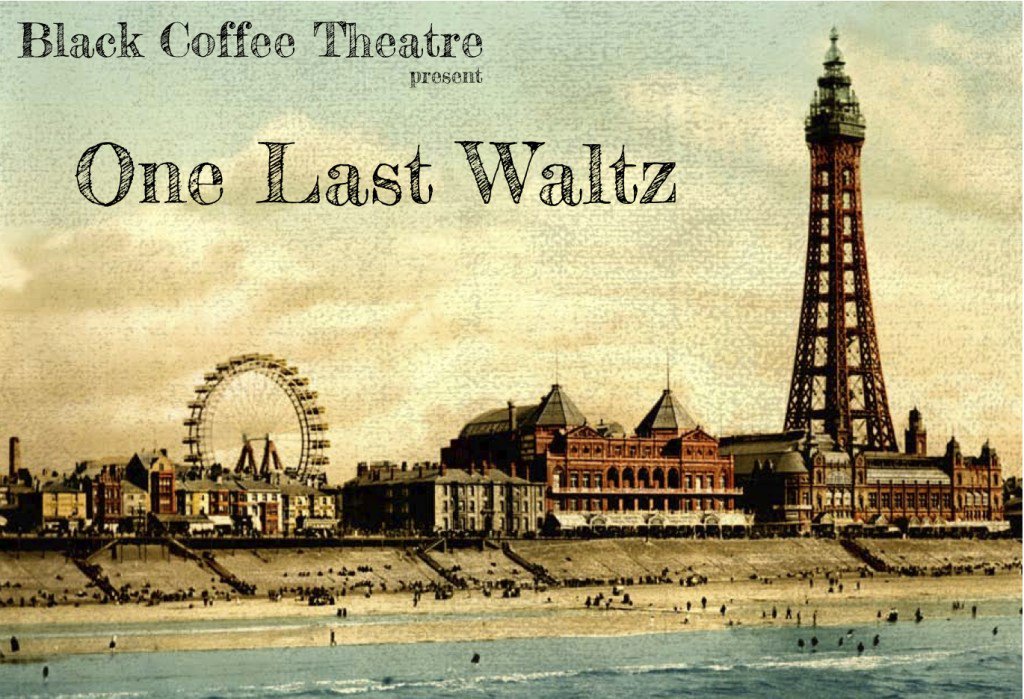
The play was written with the aim of raising awareness of the disease, particularly in the early stages when symptoms can be easily dismissed as signs of old age or just “getting a bit forgetful”. This is the point at which we meet recently widowed Alice, who’s come into the room looking for something – if only she could remember what. What she does find are her old dancing shoes, which spark long ago memories of waltzing in Blackpool with her husband George.

Alice’s daughter Mandy, who’s becoming more and more concerned about her mum’s memory lapses, suggests the two of them take a trip to the Blackpool hotel her parents stayed in, and go for one last waltz at the Tower. The only problem is that the hotel’s in decline, the Tower’s closed down, and nothing about the town is quite as Alice remembers it. As she becomes increasingly confused and distressed, Mandy – with a bit of help from hotel manager Georgette – begins to understand the difficult road that lies ahead.

Unsurprisingly, the writing shows a real understanding of the nature of Alzheimer’s: that it doesn’t happen all at once but begins with small, barely noticeable lapses that slowly build up to form a bigger picture. As the play opens, Alice – played with touching vulnerability by Amanda Reed – seems quite lucid; the only clue that something might be wrong is that she’s wearing her top inside out and keeps getting distracted from her search for photo albums. Her memories of 1958 are clear as day (including a nice reference to Ken Dodd, the inclusion of which may or may not be a coincidence), and yet she doesn’t remember having breakfast that morning, and as the play goes on she finds herself forgetting more and more – including, most tragically, that her husband passed away two months ago.

At the same time, the play also examines the strain that looking after someone with Alzheimer’s can place on family and friends. As single mum Mandy, Julie Binysh strikes a perfect balance between exasperation, anxiety and tenderness – but the biggest surprise is Julia Faulkner’s deceptively humorous Georgette, who unexpectedly reveals that she understands all too well what Mandy’s going through, and that she sees in Alice an opportunity to atone for a decision that’s haunted her for years.

There’s never any attempt to deny the fact that Alzheimer’s is a desperately cruel way to lose someone, and the play certainly succeeds in its aim to inform audiences about what to look out for, and the difficulties of living with the condition. But although we’re all too aware that this ultimately won’t be a story with a happy ending, the play contains lots of moments of humour, and concludes on a heartwarming note as Alice finally gets to waltz again in Blackpool. And as Luke Adamson writes of his grandad in the show programme (originally written for his funeral, after he passed away in December 2017), “although he faded away somewhat over the last few years, that cannot take away a lifetime of memories that can’t help but bring a smile to your face”. The image of Mandy and Alice embracing on the dance floor, ready to face up to the uncertain future that lies ahead, is exactly the right note on which to end this moving and heartfelt tribute.

One Last Waltz has now concluded its run at Greenwich Theatre, but for news about future productions from Black Coffee Theatre, visit blackcoffeetheatre.co.uk or follow @BlackCoffeeUK.


Can’t see the map on iPhone? Try turning your phone to landscape and that should sort it. I don’t know why but I’m working on it… 😉