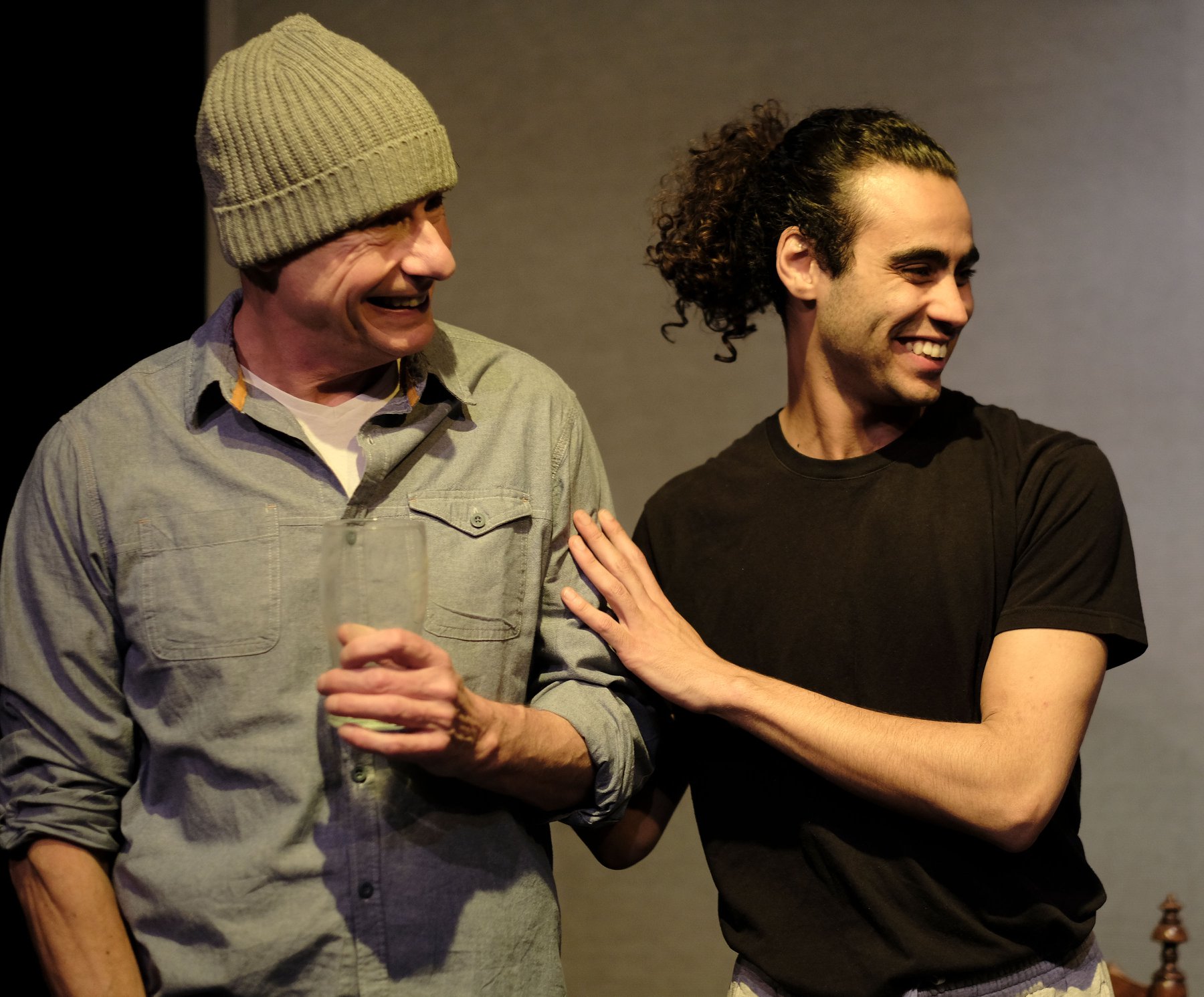
Review: Country Music at Omnibus Theatre

This Dartford resident felt very much at home last night watching Simon Stephens’ Country Music, in a new production directed by Scott Le Crass. Set against the symbolic backdrop of the QEII bridge connecting Essex and Kent, the play follows central character Jamie across two decades and four significant encounters, exploring along the way the lasting impact of one bad decision on his life and relationships.
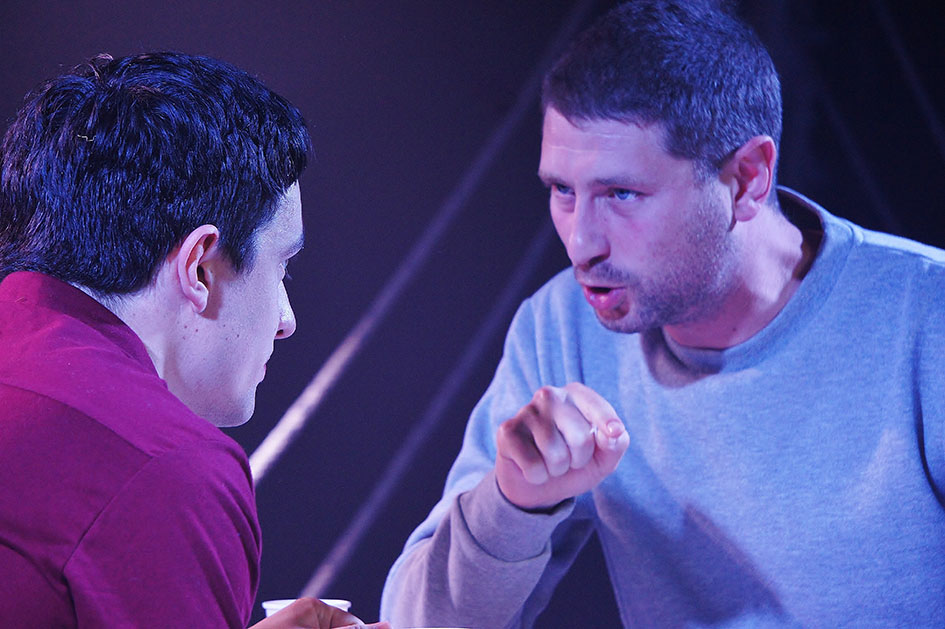
Country Music at Omnibus Theatre
Photo credit: Bonnie Britain

We first meet Jamie (Cary Crankson) in 1983 as a troubled eighteen-year-old, on the run after committing a vicious assault back home in Gravesend. With him is his almost-girlfriend Lynsey (Rebecca Stone), who’s torn between excitement and anxiety over what lies ahead. Ten years later, Jamie’s doing time for an even more serious crime, and receives a tense visit from his younger brother Matty (Dario Coates). And another decade after that, he’s travelled up north to visit his teenage daughter Emma (Frances Knight) – but it’s not quite the joyous reunion he’d hoped for.

The play’s biggest weakness lies in its failure to make the exact timeline and details of Jamie’s misdemeanours completely clear, but what is very apparent is that the split-second choice he made just prior to his escape across the river with Lynsey has gone on to direct the disappointing course of the rest of his life. A short but powerful final scene brings us back to the start of the story, offering a glimpse of what could have been that also feels like a long overdue opportunity for redemption.

Given the subject matter, it’s to be expected that the play makes for a fairly intense 80 minutes, but director Scott Le Crass and a really excellent cast succeed in wringing every last drop of tension and significance out of both Stephens’ words and, just as importantly, the silences between them. Such is the quality of all four actors’ performances that these – often quite lengthy – pauses in the dialogue are enthralling to watch; I don’t think I’ve ever been so fascinated by two people sitting and eating crisps in complete silence. Cary Crankson in particular gives an outstanding performance as Jamie, his every gesture and expression conveying what the character’s immaturity and intellectual limitations often prevent him being able to put into words.

Though little of the action actually takes place there, Jamie’s home town of Gravesend is crucial to the story; even two decades later, he still speaks of it with a kind of pride, despite the fact it’s the place where his life took such a dramatically wrong turn. He seems particularly fascinated by the QEII bridge, and mentions it often – though when his story begins, it’s little more than an idea (it was built during the 1980s, and didn’t open until 1991). Liam Shea’s striking set also takes inspiration from the bridge’s towering and architecturally impressive structure, with ropes that converge on a simple raised platform in the centre where the action unfolds.
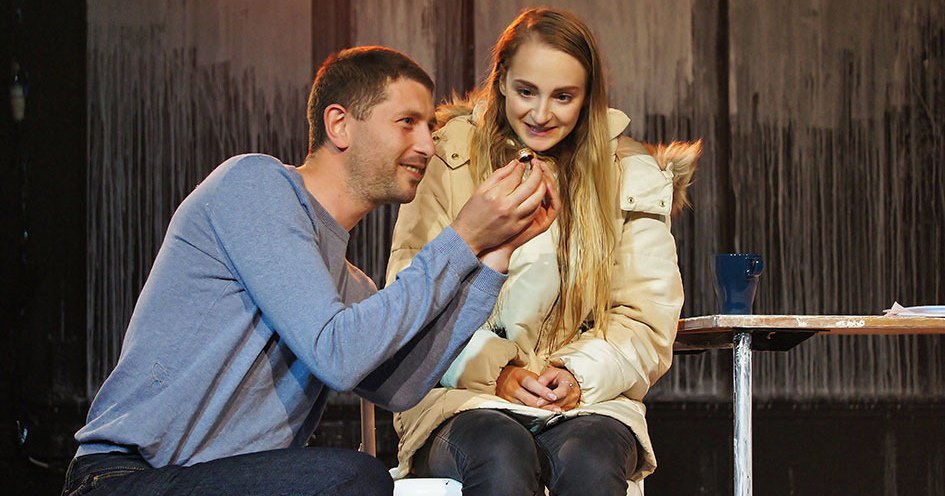
Country Music at Omnibus Theatre
Photo credit: Bonnie Britain

The tragedy of Country Music is that while it’s all too easy for a life to go off course, getting it back on track can be an impossible struggle. The Jamie who meets his seventeen-year-old daughter is an entirely different man to the volatile teenager who went on the run all those years before – yet he’s still forced to live with the consequences of that boy’s mistakes, however desperately he wishes he could undo them. The plot may at times be slightly muddled, but the sense of waste and irretrievable loss at its heart comes through powerfully in this excellent revival.

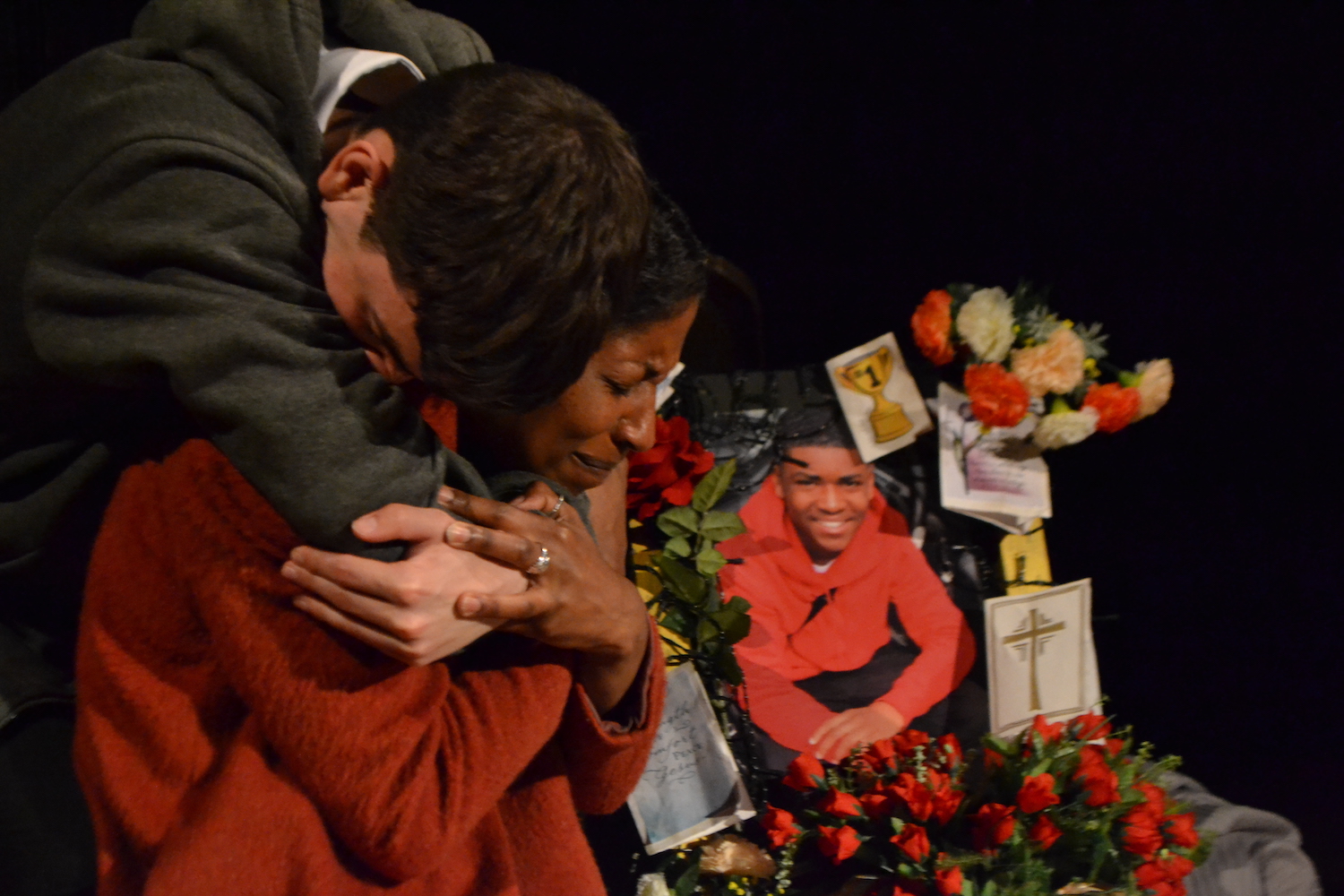
Review: Four O’Clock Flowers at The Space

There could be few more topical subjects for a play in London just now than knife crime, an issue that’s been dominating the headlines more and more in recent months. In Louise Breckon-Richards’ Four O’Clock Flowers, we don’t see the crime itself – instead the play’s focus is very much on the aftermath and those left behind. Two mothers thrown together in the worst possible circumstances find unlikely solace in their encounter, as each struggles to come to terms with her own grief and guilt.

Unlike some other plays on this topic, Four O’Clock Flowers doesn’t approach the subject matter with a strongly political agenda. There’s no explicit commentary on the issue of race, for instance; no mention of police cuts, and only one brief reference to gang culture. What it does do very well, however, is to expose the tragic waste of not one but two young lives, and to tackle the preconception that anyone who commits such a crime must be an inherently bad person. It’s obvious that neither mother saw the tragedy coming, and even for the audience – who meet one of the boys very briefly in the play’s opening and closing scenes – it’s hard to understand how this considerate, level-headed young man could have ended up where he is.

There’s no doubt that the play does make you think about the impact and the underlying causes of knife crime, and that it challenges one or two automatic assumptions that tend to accompany any discussion on the subject – but much more than that, it makes you feel. The fragile connection between Maya and Anna is very poignantly played out by Sophie Cartman and Caroline Trowbridge, each of them revealing their vulnerability and pain, but also their strength, at different moments. Leon Finnan also impresses as teenager Joshua, who only appears in two scenes but in between is a constant presence on and around the stage, a haunting reminder to both women of what could have been.

The story takes place over 24 hours, following Maya’s vigil for her son at the spot where he died. The action moves at a steady pace for the majority of the 70-minute running time, but then comes to a rather abrupt end after skipping from 7am to 4pm. The final image of the two women standing together is nonetheless very striking, and the scene that follows certainly packs an emotional punch. There’s also a lovely moment early on in Kesia Guillery’s production where audience members are invited to lay flowers at the shrine that sits at centre stage. One small complaint from the third row: there are important details that are referred to in the script, but very easily missed by audience members without a clear sightline, due to their being very low down or even on the floor.

Knife crime is a hugely complex and distressing subject, and Four O’Clock Flowers doesn’t set out to offer solutions, but it does paint a very insightful and moving picture of the devastation this violence can leave behind.  Sensitively written and poignantly performed, this debut play brings The Space’s annual Foreword Festival to a powerful conclusion.


Can’t see the map on iPhone? Try turning your phone to landscape and that should sort it. I don’t know why but I’m working on it… 😉

Review: Harper Regan at Tabard Theatre

A complex, surprising and very wordy play, Harper Regan by Simon Stephens certainly fulfils the remit for newly formed theatre company Contentment Productions, whose aim is to champion exciting female leads, and who bring the play back to London for the first time since its debut at the National Theatre in 2008. Harper (Emmy Happisburgh) has spent her life being defined by others: she’s a wife, a mother, a daughter, an employee… Then she receives news that her father’s dying and, having been refused compassionate leave by her creepy boss (Philip Gill), decides it’s about time to start making her own decisions for once.

Harper Regan at Tabard Theatre
Photo credit: Rob Youngson

Some of those decisions – like the moment she crushes her wine glass into the neck of Mickey (Marcus McManus), an anti-Semitic journalist who hits on her in the pub, or when she arranges to meet a total stranger in a hotel for sex – seem at first glance random and more than a little questionable. As we learn more about Harper’s history and life back home, however, we begin at least to understand why she needs to make them. The big reveal of the dark secret festering at the heart of her family happens early in Act 2, which places less emphasis on random encounters and instead sees Harper reunited first with her mother (Alma Reising) and later with the husband (Cameron Robertson) and daughter (Bea Watson) she walked out on two days earlier.

The play is split very deliberately into eleven separate scenes, all of which involve a lot of talking on a lot of different topics, covering everything from the Internet to immigration. But amidst all these words, moments of real connection are rare, and feel more precious as a result. Harper herself is an intriguing character, and very well played by Emmy Happisburgh – she’s sympathetic because of her situation, but in a lot of ways her blind refusal to constructively engage with her problems (however relatable it might be) is infuriating. As the play ends, it’s hard to define exactly what journey she’s been on over the past two days, or to tell if anything in her life is really going to change.

With Happisburgh appearing in every scene, the other six members of the impressive cast play ten characters between them. Cameron Robertson neatly encapsulates in his performance the differences between Harper’s husband Seth and her one-off lover James, while Joseph Langdon turns the millennial stereotype on its head as two of the youngest and most insightful characters, both of them played with charisma and humour. A special mention also to Bea Watson, who makes a confident professional debut in this production, standing out particularly as Harper’s confused and isolated teenage daughter Sarah.

Harper Regan at Tabard Theatre
Photo credit: Rob Youngson

Pollyanna Newcombe’s production keeps the staging relatively simple, with well-chosen props and use of ambient sound and lighting effects to bring each location believably to life. The play is also notable for its carefully choreographed scene changes, which are not only enjoyable to watch but also allow the audience a little bit of processing time – something that we don’t get a lot of during the dialogue-heavy scenes.

Though the content of the play occasionally shows its age, the themes it explores continue to resonate, and it’s refreshing to experience a story that’s so definitively led by a female character and cast member. This is an accomplished debut production with some great performances, and though Harper’s final destination doesn’t entirely satisfy, her journey is still well worth a watch.


Can’t see the map on iPhone? Try turning your phone to landscape and that should sort it. I don’t know why but I’m working on it… 😉

Review: Summer Street at Waterloo East Theatre

The idea for Summer Street: The Hilarious Aussie Soap Opera Musical (to give it its full title) dates back to 2004, when writer and director Andrew Norris was inspired to pay homage to the Australian soaps of his youth, and the stars who dominated UK pop charts and panto line-ups for much of the 80s and 90s. The result is a well-meaning, nostalgic and unashamedly ridiculous comedy musical that’s probably best appreciated after a glass of wine or two.

Photo credit: Simon Snashall

The plot revolves around Bruce (Simon Snashall), Angie (Sarah-Louise Young), Paul (Myke Cotton) and Steph (Julie Clare), four former stars of popular musical “soapy”, Summer Street. All but one have failed to have any kind of acting career following their dramatic exits from the show, so they jump at the chance to reunite for an anniversary special – but all is not as it seems… While on camera one of the characters has to be rescued from an abandoned mine just before her wedding, life behind the scenes has its own share of drama as each of the four actors reflects on life post-Summer Street.

The show obviously takes great delight in sending up all the well-worn soapy tropes, from dramatic deaths to product placement. The on-screen characters are recognisable stereotypes – the doctor with an alcohol problem, the in-the-closet lesbian in love with her best friend, the nosey neighbour – and anyone who knows anything about Neighbours or Home and Away (or, to be fair, any of the UK soaps) will never fail to get the joke. It’s all enjoyably silly and there are some quite funny bits, often at the most unexpected moments – one character’s account of his wife’s tragic demise and the heroic actions of Pogo the neighbourhood dog are highlights.

The problem is that in trying to poke fun at the banality of the soap format, Summer Street ends up suffering a similar fate; the characters are under-developed, the story makes little sense, and several of the familiar jokes are repeated so often that they start to feel a bit tired. The same, unfortunately, goes for the musical numbers, which are for the most part catchy enough but tend to go on just a bit longer than seems necessary. (In Brighton only half of the songs were performed, which says quite a lot about their value within the production.)

The show may have its flaws but the cast enthusiastically make the best of it, and there are some strong vocal performances – particularly from Sarah-Louise Young, who steals the show in Act 2 with pop ballad Chains Around My Heart. The nature of the production calls for larger than life performances, and all four cast members seem more than happy to oblige, adopting suitably flamboyant Aussie accents, cheerfully reeling off lines of expositional dialogue – often at high speed – and throwing themselves without hesitation into Lauren Chinery’s comically stagey dance routines.

Photo credit: Simon Snashall

To give credit where it’s due, Summer Street never pretends to be anything other than what it is: a spoof comedy musical that takes an already over-the-top TV format and takes it up another notch or three. In that sense, it does exactly what it says on the tin. Could it have been done with a bit more finesse? Yes, probably. But as it stands the show is harmless fun, and you can’t say fairer than that.

Review: Hair at the Orchard Theatre

When it was first performed 50 years ago, Hair caused quite a stir with its profanity, depictions of drug use and full frontal nudity. These days it’s far less shocking, but still raises an eyebrow or two with its extensive list of pre-show warnings (it’s the first – and quite possibly last – time I’ve ever seen a notice on the door alerting me to “a 20-minute UV sequence”) and even in these more liberal times, it’s still not a show I’d recommend if you’re easily offended. But there’s no question that this 50th anniversary tour is a very strong production, which explodes on to the Orchard stage in a psychedelic showcase of spectacular vocal and visual talent. And songs. A lot of songs.

Hair at the Orchard Theatre
Photo credit: Johan Persson

Written by Gerome Ragni and James Rado with music by Galt MacDermot, Hair is set in 1960s New York and invites us into the world of “the tribe”, a group of long-haired, peace-loving hippies who take a lot of drugs, have a lot of sex, and ultimately take to the streets in protest against the war in Vietnam. One of their number, Claude (Paul Wilkins), becomes torn between staying true to the pacifist views he shares with his friends and burning his draft card in protest, and the expectation of society and his conservative parents that he go and fight for his country.

A large proportion of Act 1 is taken up by introducing the characters and their way of life; it’s not so much a plot as a picture, which forms piece by piece as each member of the group has their moment in the spotlight. Among them are Berger (Jake Quickenden), who within minutes is running around in the audience wearing a very skimpy loin cloth and not a lot else; Sheila (Daisy Wood Davis), the group’s most outspoken political protester; Jeanie (Alison Arnopp), who’s pregnant and in love with Claude; Woof (Bradley Judge), who’s in love with Mick Jagger… Everyone has their part to play – and although in Act 2 Claude emerges as the story’s central character, the show is performed throughout by a well-honed and seamless ensemble.

While the almost total absence of a coherent plot won’t be to everyone’s taste, one thing that can’t be denied is the quality of the performances. The vocally demanding score – which features an unusually large number of songs, including timeless favourites I Got Life, Aquarius and Let The Sunshine In – proves no match for either Gareth Bretherton’s on-stage band or the fourteen-strong cast. The latter in particular seem utterly unfazed by the high notes, the tongue-twisting lyrics or the fact that they often have to tackle both whilst jumping up and down, lying on the floor, or stark naked (although in fairness, that only happens once and you don’t really see anything).

Hair at the Orchard Theatre
Photo credit: Johan Persson

As we were leaving, my friend said that she thought Hair was “of its time” – but I’m not sure I agree. While the set, costumes and characters are very obviously from the 60s and the story speaks about a specific moment in American history and culture, the idea of a nation divided and the responsibility we all have to speak out against injustice and toxic nationalism is, depressingly, as topical now as it’s ever been. So maybe what’s most shocking about Hair isn’t the nudity or the drugs, but the fact that 50 years have passed and nothing’s really changed.

Hair is at the Orchard Theatre until 18th May, then continues on tour.