Review: Brexit at the King’s Head Theatre

Robert Khan and Tom Salinsky could have come up with a more creative title for their acclaimed political comedy Brexit – but they didn’t really need to, given that actual Brexit has been a massive satire in and of itself for some time now. Nor did the writers have to stray very far from the facts; the play that was topical during its previous run at the King’s Head a few months ago is now, in the week that the horror show known as the Tory leadership contest officially gets underway, basically just mirroring reality.

Photo credit: Steve Ullathorne

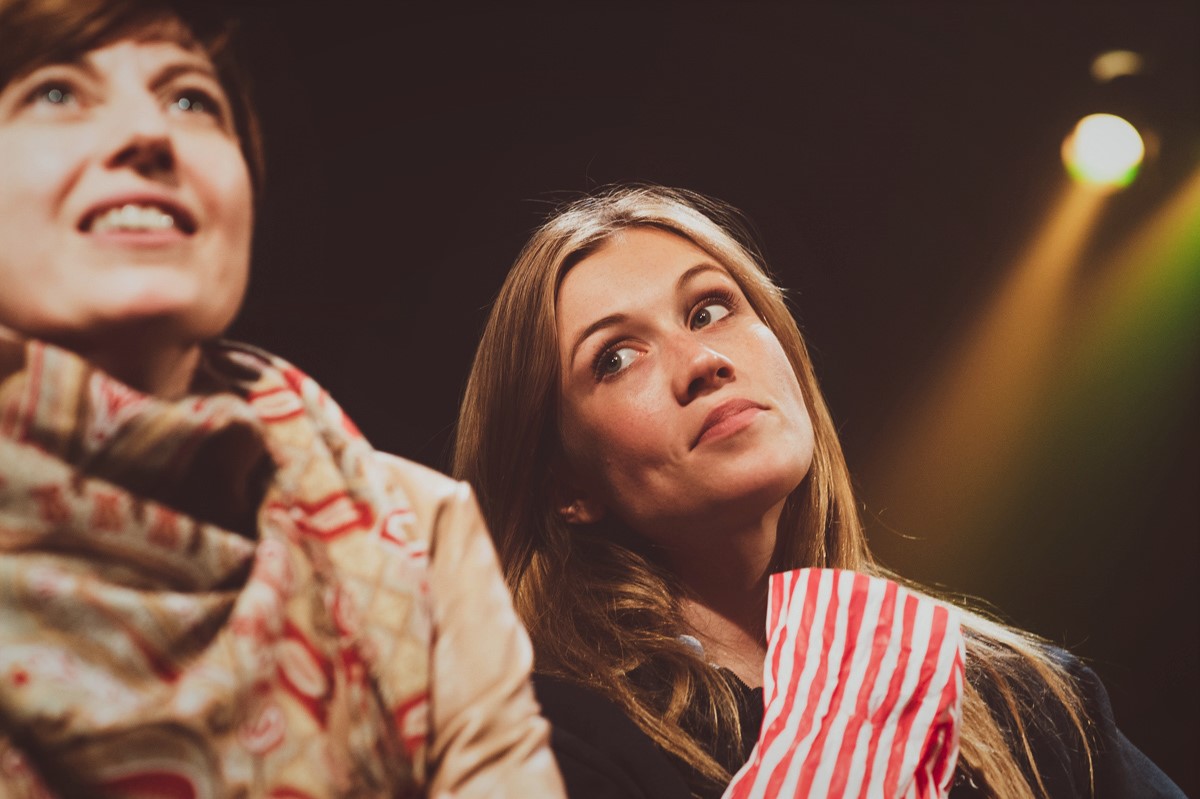
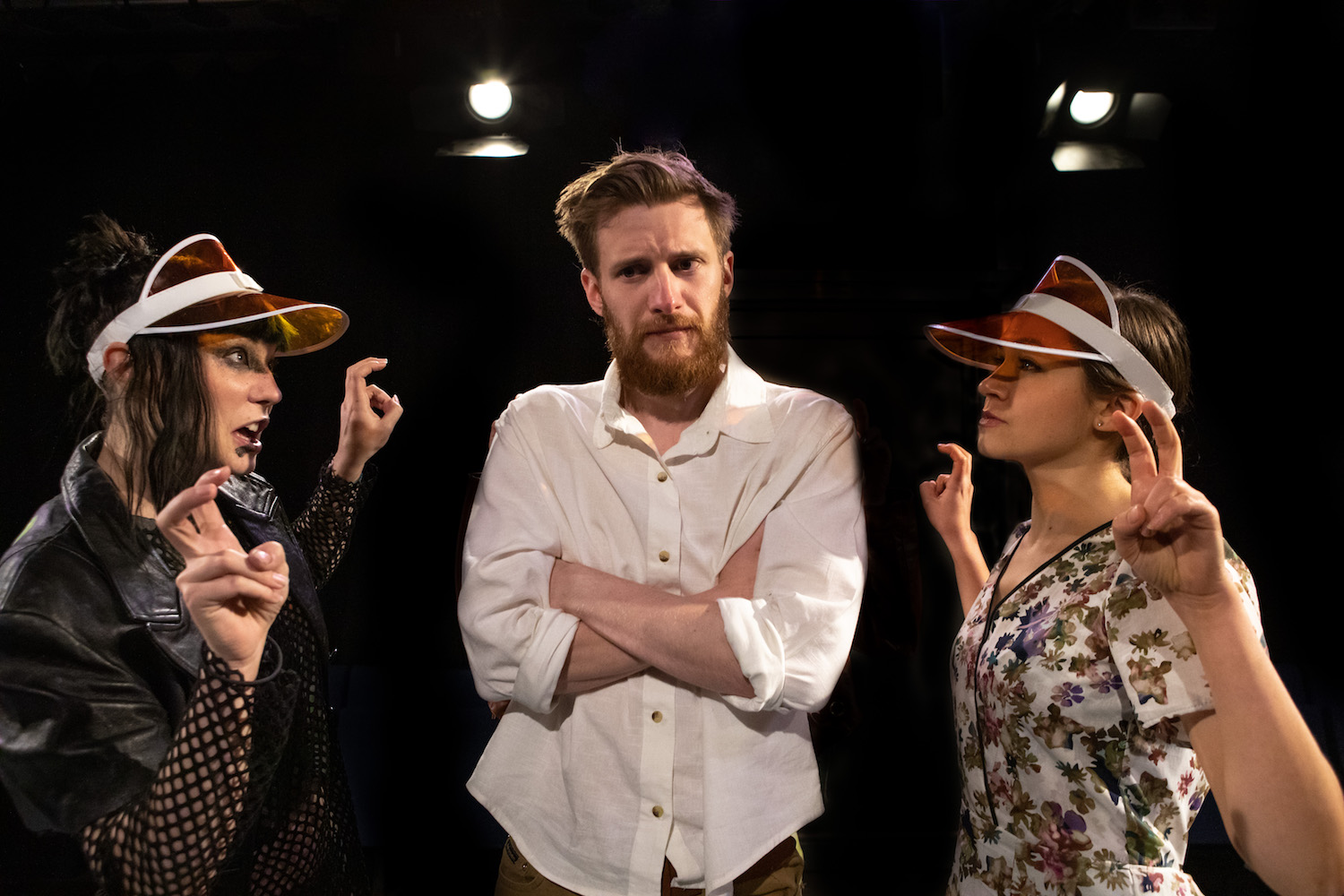
It’s 2020, and Britain has a new prime minister – who’s somehow managed to get elected by Conservative party members despite having no policies, no backbone and, naturally, no clue how he’s supposed to deliver the impossible dream that is Brexit. Fully aware that whatever he does he’ll be crucified by one side or the other, Adam Masters (David Benson) opts for what he deems a foolproof strategy: do nothing, and hope it all goes away – much to the dismay of his campaign manager turned unofficial policy advisor Paul Connell (Adam Astill). It never occurs to the new PM, as he plays rival ministers Diana Purdy (Jessica Fostekew) and Simon Cavendish (Thom Tuck) off against each other, that they might just have plans of their own…

Much like its central character, the play doesn’t attempt to rehash the referendum, focusing instead on the thing we can all agree on: that British attempts to implement the Will of the People have, so far, been less than successful. Khan and Salinsky – who also directs – expose Leavers and Remainers alike as power-hungry and manipulative, and more than willing to cheerfully prioritise their own ambitions above the needs of the country they claim to serve. Meanwhile the EU’s Chief Negotiator Helena Brandt (Margaret Cabourn-Smith) is sitting back with a glass of wine and a (metaphorical) bucket of popcorn, waiting for the Brits to stop in-fighting and realise it’s all been a terrible mistake. It would be hilarious if it wasn’t so depressingly on the money.

And this is where Brexit hits a bit of a snag; when truth is even more ridiculous than fiction, it takes a bit of the joy out of laughing at it. The priggish new Trade Secretary Simon Cavendish is a brilliant piece of comedy acting from Thom Tuck – but somehow, stunningly, this character still ends up feeling like a watered down version of real-life caricature Jacob Rees Mogg. And while it’s fun to watch David Benson’s Adam scurry back and forth trying to keep all his plates spinning, we’ve been watching Theresa May do the same with increasing desperation for two years now, so it’s no particular surprise when it doesn’t end well.
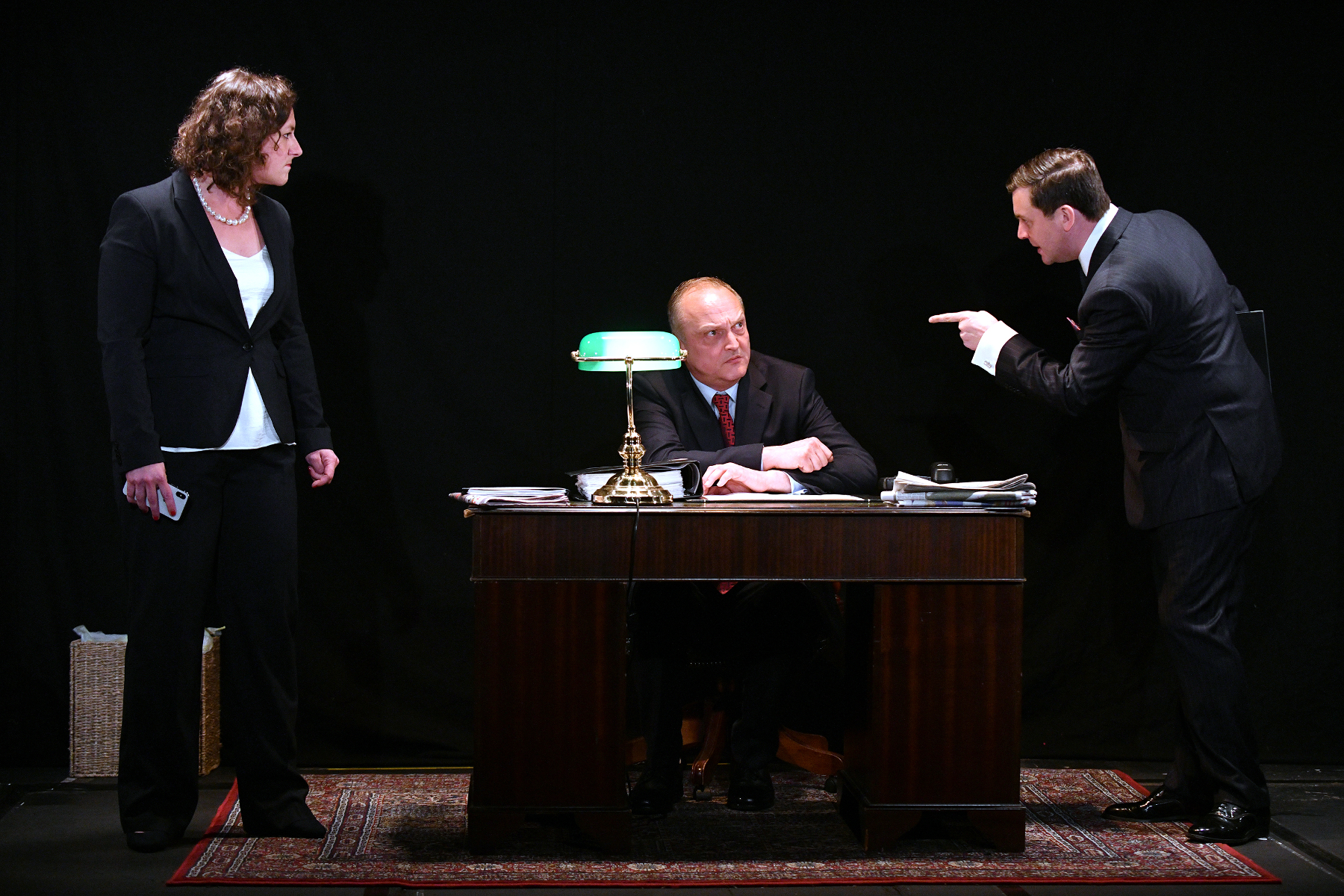
Photo credit: Steve Ullathorne

But maybe I’m being a misery (thinking about Brexit does tend to have that effect, after all). For all that it can’t live up to the absurdity of real life, the play is very funny, with a polished cast expertly delivering such zingers as “You can’t continue to govern over Schrodinger’s Britain”, and the particularly well received “that bearded Labour Gandalf driving his motor-home up Downing Street”. For fans of political satire, Brexit (the event – if you can call something that never actually happens an event) has already provided countless hours of entertainment, and Brexit (the play) continues to prove that sometimes, there really is nothing left to do but laugh.

Review: Cuttings at The Hope Theatre

The publicist’s office in which Ollie George Clark’s Cuttings is set has a sign prominently displayed that reads, “It’s PR, not ER.” Which is true, obviously – but you could still be forgiven for thinking the crisis Gracelyn (Joan Potter), Ruchi (Natasha Patel) and Danica (Maisie Preston) are facing this Monday morning is one of life and death. Their client, YouTuber turned actor Arthur Moses, caused outrage at last night’s Olivier Awards with an expletive-strewn acceptance speech, and now his PR team are left to pick up the pieces in any way they can.

Photo credit: Cam Harle 

And so they do, with ruthless, cold-blooded efficiency, not caring what angle they have to use or who they have to throw under the bus to protect their client’s – and by extension, their own – reputation. Cuttings goes behind the scenes of a scenario we’ve seen play out in the media countless times, exposing some very questionable morals and reminding us all over again how superficial a world showbiz can be. Arthur himself, meanwhile, plays zero part in his own salvation, only rocking up right at the end to record the “heartfelt” apology video his publicists have spent the last hour meticulously scripting for him – and to be fair to him, he’s very convincing.

The play is a pretty brutal takedown of the world of 21st century PR, and there are a lot of laughs to be had at the expense of the three central characters as they scrabble desperately for the best strategy in a world where social media now rules all. At the same time, though, you do have to admire the skill with which they build their case, like a team of defence lawyers looking for that one piece of evidence that will mean their client goes free. And then of course, there’s the inconvenient truth that these characters wouldn’t be able to use such morally dubious means if we the public weren’t quite so gullible…

Not surprisingly given the state of crisis, Rob Ellis’ production starts at a run – the phones are already ringing off the hook before the play even begins – and rarely pauses for breath during the 75 minutes that follow. The same goes for the actors, and Joan Potter, Natasha Patel and Maisie Preston never miss a beat as the three women hilariously brainstorm and bicker their way in real time through a hectic Monday morning. Each character has their specific role within the story – Danica the naïve new girl, Ruchi the ambitious protegée, and Gracelyn the hardened veteran – but they’re all well-rounded, interesting and, dare I say it, likeable enough that we can’t simply write them off as terrible people. They all know their chosen strategy is a moral minefield, but they also have a job to do – and as Danica quickly learns, in this business there’s no time or space for consciences.

Photo credit: Cam Harle

Not all the jokes completely stick the landing – there’s a running gag about Gracelyn’s interrupted smoking habit, for instance, that starts promisingly but then doesn’t really go anywhere – and others get a bit lost in the unstoppable whirlwind of one-liners and put-downs. But Cuttings is still a sharp, witty and hugely enjoyable play about an industry we all know exists, but somehow seem to forget every time we watch an emotional YouTube apology or read a remorseful statement from a disgraced celebrity. Let’s hear it for the unsung heroes of PR: if nothing else, they’re great entertainment.

Review: Precious Little at Brockley Jack Theatre

A short play with a lot to talk about, Madeleine George’s Precious Little places language and communication under the microscope. Brodie (Jenny Delisle) is a linguistics researcher who’s expecting her first child, but when the amniocentesis test reveals there might be a problem, she’s faced with a difficult choice. Her much younger girlfriend Dre (Jessica Kinsey) – who can’t understand why Brodie, now 42, wants a baby in the first place – offers little comfort, so Brodie looks for answers from two unlikely sources: Cleva, an elderly research subject whose language is on the verge of dying out, and the Ape, a famous talking gorilla at the local zoo (both Deborah Maclaren).

Photo credit: Tim Stubbs Hughes

The various elements of the story at first don’t seem to quite knit together and the end comes as a bit of a surprise, offering the audience little in the way of closure. But when you look back on it, language is the constant in every encounter within the play – whether it’s the gabbling tourists from whom 100 words carry less value than the Ape’s dignified silence, or the unfortunate choice of language from Brodie’s well-meaning doctor, which immediately put her on the defensive. Cleva’s revival of a language she hasn’t spoken for years brings back memories of another life, to the alarm of her overprotective daughter, and Brodie’s choice boils down to a simple question: can she live with a child who might not have the ability to communicate?

Under the direction of Kate Bannister, all three actors give excellent performances. As Brodie, Jenny Delisle succeeds in the difficult job of turning a woman who often seems cold, scientific and verging on arrogant into a sympathetic character whose dilemma the audience can sympathise with. Jessica Kinsey gives a masterclass in multi-roling, playing no less than five characters (many more if you count each of the zoogoers separately), each of them with a lot of lines – if not always a huge amount to say. This abundance of roles means she’s on stage for pretty much the whole play, with little time for significant costume changes, and yet every character she plays is completely distinct from the rest. Deborah Maclaren, in contrast, has relatively few lines, but makes every single one of them count. As the Ape she gives a meticulously observed physical performance; it really is like watching a gorilla at the zoo. Hearing her inner monologue means we can’t help but feel sympathy for this dignified, intelligent creature who’s expected to perform day in day out for the entertainment of impatient and insensitive humans.

Photo credit: Tim Stubbs Hughes

The production’s set and lighting design (Karl Swinyard and Ben Jacobs) skilfully contrast the clinical surroundings of Brodie’s office and various medical appointments with the artificial natural environment of the Ape’s zoo enclosure. Despite frequently involving a change of costume and setting the scene changes never feel overly long, due largely to Julian Starr’s increasingly urgent music, which helps maintain the pace and atmosphere of the production throughout.

At one point in the play, Brodie is offended when her doctor tactlessly suggests that linguistics isn’t a science – but it’s an easy mistake to make. We don’t tend to give the words we use every day as much thought as we should, and this play highlights how crucial language is not only in our interactions but also in our identities. It may be called Precious Little, but this thought-provoking play has plenty to say.

Review: Kill Climate Deniers at the Pleasance

It’s a bold move to stand on stage in front of a room full of press, among them several bloggers taking notes for a forthcoming review, and declare repeatedly that “if you are a blogger, you do not count”. Similarly, it’s not often you see an actor point a gun directly into an audience member’s face, because it is – as the writer himself acknowledges – “a huge breach of performer / audience trust”.

Photo credit: Ali Wright

Then again, would we expect anything less from a play with the deliberately provocative title of Kill Climate Deniers? Written by David Finnigan as a cry of frustration, this riotous Australian satire takes a unique and fearless approach to the bitterly divisive issue of climate change. Australia’s Environment Minister Gwen Malkin (Felicity Ward) is having a terrible day – she’s caused outrage on national radio by clumsily announcing that the government’s new strategy to tackle global warming is to “block out the sun”, she’s become a laughing stock on Twitter, and now she’s on the verge of getting fired. Then to make matters even worse, the Fleetwood Mac concert she’s attending at Parliament House is invaded by a ruthless gang of eco-terrorists, intent on killing everyone in the building unless climate change is stopped right now. Malkin’s not taking that lying down, though, and together with her trusty press advisor Georgina Bekken (Kelly Paterniti), she sets out to take on the terrorists and restore her honour in the eyes of the nation.

In the wake of the recent Extinction Rebellion protests and youth climate strikes, Kill Climate Deniers is a very timely production – though funnily enough it’s not really about climate change per se. The writer’s stance is clear from the play’s title; it would be a waste of everyone’s time to spend more than a couple of minutes explaining the subject to an audience who, presumably, are already very much on board. Despite this, there are no good guys in this story – and nor can there ultimately be any winners, whatever the outcome of the siege. The enmity between the two sides might make for good entertainment, but as the writer himself acknowledges over the course of the play, it’s also a dangerous distraction from the real fight to save the planet. (Side note: if you can, I recommend getting a copy of the play text, which includes a lot of extra notes and information from the playwright.)

When the outlook is this bleak, you might as well have some fun with it, and there’s little doubt that Nic Connaughton’s fast-paced, highly physical production is an absolute blast from start to finish. Felicity Ward and Kelly Paterniti make a hilarious if slightly dysfunctional double act as Malkin and Bekken, taking down terrorists in slow motion action movie style to a soundtrack of 90s techno classics. Hannah Ellis Ryan delivers two of the play’s most compelling monologues so persuasively that even Bec Hill’s cynical chief terrorist Catch is forced to admit she’s “hella eloquent” (well, in one case; in the other, unable to find any holes in her argument, she just shoots her in the stomach). Meanwhile as a counterpoint to the drama on stage, Nathan Coenen provides something approaching a voice of reason as the play’s writer, Finig, who attempts to explain why the two sides of the argument may actually have more in common than we like to think.

Photo credit: Ali Wright

Though it might be preaching to the choir on the dangers of climate change, any smugness we may feel over being on “the right side” doesn’t last very long once the play gets going. Action-packed, irreverent and hilariously weird, Kill Climate Deniers nonetheless still succeeds in making a serious and important point, and provides more than enough food for thought to give you nightmares for weeks.

Review: J’Ouvert at Theatre503

It may only just be June, but the carnival spirit is already very much alive at Theatre503. Yasmin Joseph’s debut play takes us to Notting Hill in August 2017, just in time to witness J’Ouvert – the official start of carnival, at dawn – through the eyes of three friends: Nadine (Sharla Smith), Jade (Sapphire Joy) and Nisha (Annice Boparai), each of them trying in their own way to reclaim the annual event for the community that created it. As the day passes, the three make their way through the crowds, dancing and drinking, dodging rain showers and disapproving family members – only to be faced with overpriced food, judgmental locals, and the realisation that even in the heart of the world they thought was theirs, they’re still not safe from misogyny, slut-shaming or the threat of physical and sexual violence.

J'Ouvert at Theatre503
Photo credit: Helen Murray

It’s quickly obvious this is a play that knows who it’s speaking to, and the frequent audible and unanimous responses from the majority of the audience to the characters’ experiences and observations confirm that it does so very well. As for those of us who don’t share those experiences, Joseph makes few concessions, instead challenging us to go away and make the effort to plug the gaps in our own understanding. This means the play doesn’t resonate in the same way for everyone, but it also makes perfect sense – in a play about giving Black British people back their voice, it would serve little purpose to keep interrupting the flow to make sure the minority were all keeping up.

The production, directed by Nine Night actor Rebekah Murrell, has had a bit of a bumpy road to the stage, with two cast members having to be replaced just a few days before opening night. Considering the circumstances, Sapphire Joy and Sharla Smith do an amazing job as best friends Jade and Nadine, with a very natural and believable closeness between them. Joining them is Annice Boparai as Nisha, an overenthusiastic activist of Indian descent and privileged upbringing, whose clumsy attempts to fit in with the others are often the cause of both tension and hilarity.

Sandra Falase’s flag-adorned set and sensational costumes bring the Notting Hill Carnival to vibrant life, with each of the women bringing her own interpretation to her outfit for the day. An irresistible soundtrack completes the picture, and there’s a constant sensation of movement and sound throughout, so that even in a pub theatre in Battersea you can feel the thronging crowds and lively atmosphere. The only moment where everything stops is the minute’s silence at 3pm for the victims of Grenfell Tower – a poignant moment of stillness and solidarity amidst the hubbub.

J'Ouvert at Theatre503
Photo credit: Helen Murray

Media coverage of the Notting Hill Carnival tends to focus on increased police presence and the amount of violent crimes committed during the three-day celebration. One such crime – committed by two men against the women who dared to say no – is a pivotal event in J’Ouvert. But the response to that event, and the play as a whole, demonstrate that there’s a lot more to carnival than the grim statistics that get splashed across the papers every summer. The image we’re left with is not one of violence, but of pride, friendship and resilience, and a community that’s prepared to keep fighting for as long as it takes to reclaim its voice and heritage.


Can’t see the map on iPhone? Try turning your phone to landscape and that should sort it. I don’t know why but I’m working on it… 😉