
Macbeth: the story of a man driven by personal ambition to destroy his friend and leader, and seize the crown for himself. Sweeping aside anyone who gets in his way, he ultimately leads his nation into civil war…
There could not have been a more pertinent day to see Arrows & Traps’ production of Macbeth at New Wimbledon Studio. Macbeth isn’t an easy watch at the best of times, but the events of the previous 24 hours lent last night’s performance an extra intensity that nobody could have foreseen, and took Ross McGregor’s adaptation from pretty dark to full-blown horror. (A brief addition to the script referencing the shock EU referendum result met with a split second of laughter, until we all remembered it was based in reality, and not actually very funny.)

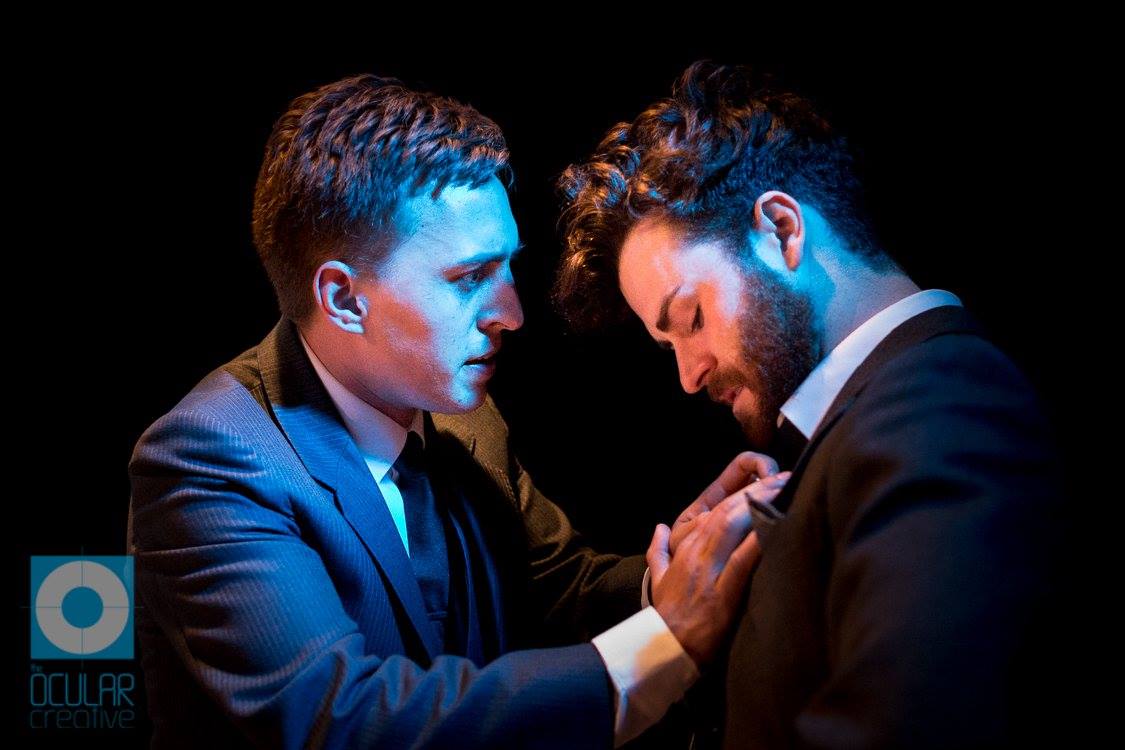
The irony of Shakespeare’s play is that Macbeth isn’t a totally bad guy (though not a particularly nice one either, obviously) but rather someone who allows himself to be led onto a dark path and discovers too late there’s no way back. As Macbeth and his wife, David Paisley and Cornelia Baumann are genuinely frightening – he’s full of violence and rage, while she’s cold and calculating, and together they spin a web of lies and commit crimes that are increasingly bloody and shocking. And yet the revulsion we feel is not without more than a hint of sympathy; both characters ultimately break under the weight of their guilt, and their passionate relationship of the opening scenes disintegrates into one of tension, fear and suspicion. It’s in these moments of vulnerability that Paisley and Baumann are at their most compelling; the pain they feel is palpable and devastating to witness.
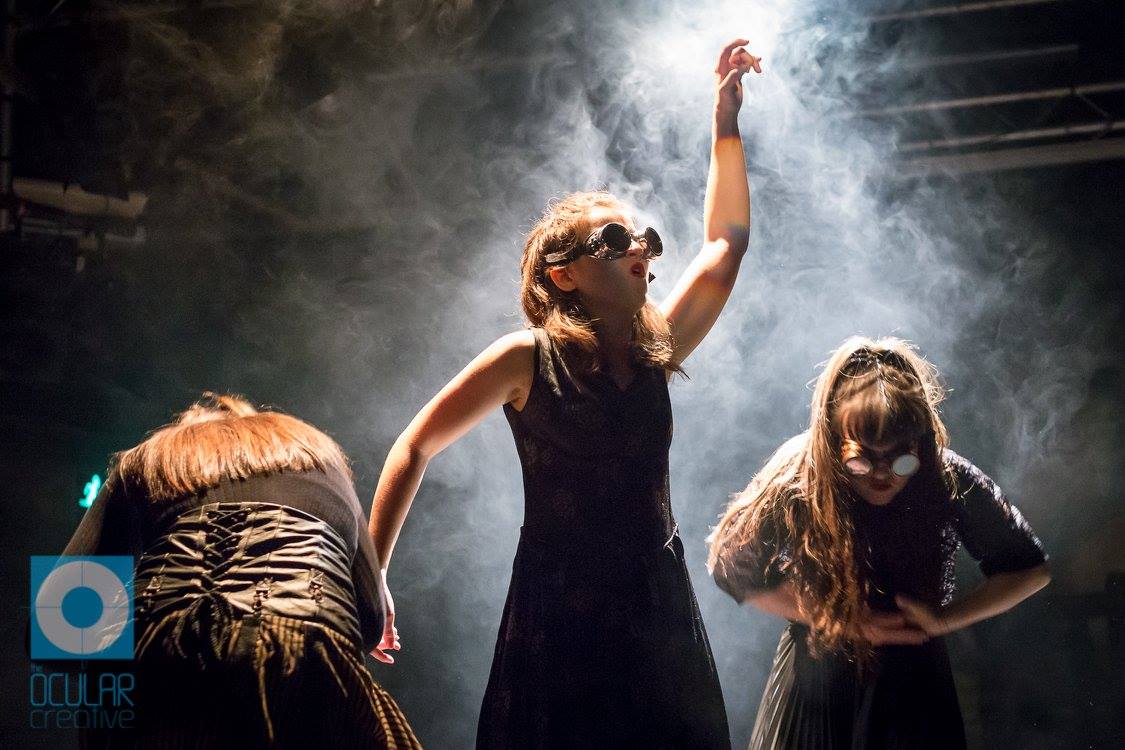
It’s not just the Macbeths that are out to scare us, though; McGregor wanted his Macbeth to be one that’s all about fear, and he’s got his wish. The three witches, played by Elle Banstead-Salim, Olivia Stott and Monique Williams, are part-demon, part-seductress, and their regular appearances on stage throughout the play remind us who’s really in control of events. There’s no shortage of blood and gore from the start, and a few jumpy moments just to keep us on the edge of our seats. And then there’s Banquo’s ghost…
In the kind of original twist that we’ve come to expect from Arrows & Traps, in this production almost all Macbeth’s victims are female – most notably Duncan (Jean Apps) and Banquo (Becky Black) – as are his hired assassins. Seeing this violence both from and against women is a shock to the audience, hammering home the depths to which Macbeth is driven in his thirst for power. And it puts a fresh perspective on the relationships in the play – both Duncan and Banquo are loving mothers who share tender moments with their sons, while we’re also led to wonder about the exact nature of Macbeth’s friendship with Banquo as the play begins.
Like the company’s previous production, Anna Karenina, the show’s a visual feast; there’s smoke and blood galore, and some intense physical scenes from fight director Alex Payne. The climactic scene of Macbeth’s death is particularly stunning, with choreography, movement and music coming together to turn a moment of violence into something quite beautiful from which it’s impossible to look away.
The set is simple – just a table at the centre of the stage – and without the need for elaborate set changes, the production moves along at a rapid pace. The overlapping of some moments is particularly effective, as is the use of freeze frame during the dinner scene, contrasting Macbeth’s dark intentions with the merriment of his guests. And music is used to great effect to add drama, giving the play a very cinematic feel that seems to extend far beyond the theatre’s small stage.
This is the third Arrows & Traps production I’ve seen, and each time I’m surprised and delighted by their unique, inventive take on classic works. Their Macbeth is a political and supernatural thriller that’s as gripping as any episode of Game of Thrones (the body count is about the same, too), and reminds us once again of Shakespeare’s continuing relevance 500 years after his death. As depressing as that relevance may occasionally be.
Can’t see the map on iPhone? Try turning your phone to landscape and that should sort it. I don’t know why but I’m working on it… 😉

 Theatre Things