Review: An Inspector Calls at Playhouse Theatre

Stephen Daldry’s groundbreaking production of An Inspector Calls acquired legendary status when it was first performed at the National Theatre in 1992. Having completed yet another national tour, it’s now back in the West End, and as powerful and relevant as ever. In fact if anything, given the current sorry state of the world, the play’s message of social responsibility speaks to us now even more than it did 24 years ago.

Photo credit: Mark Douet

Though J.B. Priestley’s story is set in the early 20th century, the brilliance of Daldry’s production and Ian MacNeil’s astonishing set is that the events unfolding before us could be taking place anywhere, at any time. In 1912, the well-to-do Birling family are enjoying a dinner party in their elegant home, which resembles a large dolls’ house perched precariously above a dark, rainy street from the 1940s, when the play was written. But the family’s celebration of daughter Sheila’s engagement is interrupted by the arrival of a police inspector, bearing the tragic news of a young woman’s suicide… One by one, the mysterious Inspector Goole forces each member of the family to confess his or her part in the woman’s downfall, and draws them away from their luxurious surroundings to face judgment from a silent audience of “supernumeraries” – men, women and children to whom the Birlings would never usually give a moment’s thought.

The pouring rain, creeping mist and Stephen Warbeck’s ominous music help to build the tension towards an explosive climax and a final direct plea from the Inspector, delivered with genuine emotion by Liam Brennan as he begs us all to remember the responsibility we have to each other. But the story doesn’t end there, and a glimmer of hope can be found in the despair of the Birling children as they stand alongside the family maid Edna (played with quiet dignity by Diana Payne-Myers) and watch the others climb, cackling like pantomime villains, back into their wrecked house.

Photo credit: Mark Douet

As the Inspector, Liam Brennan embodies the very heart of the play, a gruff Scotsman who both ridicules and rages at these people who seem so stubbornly unaware of the damage they’ve caused. Clive Francis cuts a frail but defiant figure as the patriarch Arthur, and there are strong performances from Barbara Marten and Carmela Corbett as mother and daughter – one refusing to acknowledge her guilt, the other readily embracing it with appalled horror.

J.B. Priestley’s political stance as a socialist is well-known, and not at all glossed over in this production. But the story is not just about politics; it’s about humanity. This is the third time I’ve seen the play, but without a doubt it’s the most powerful. Priestley might perhaps have hoped that by 2016 his play would be redundant, but the events of this week show it’s anything but. We live in a world where intolerance and self-interest are increasingly the norm – and as long as that’s the case, this play will continue to resonate.


Can’t see the map on iPhone? Try turning your phone to landscape and that should sort it. I don’t know why but I’m working on it… 😉

Review: Dare Devil Rides to Jarama at the Bussey Building

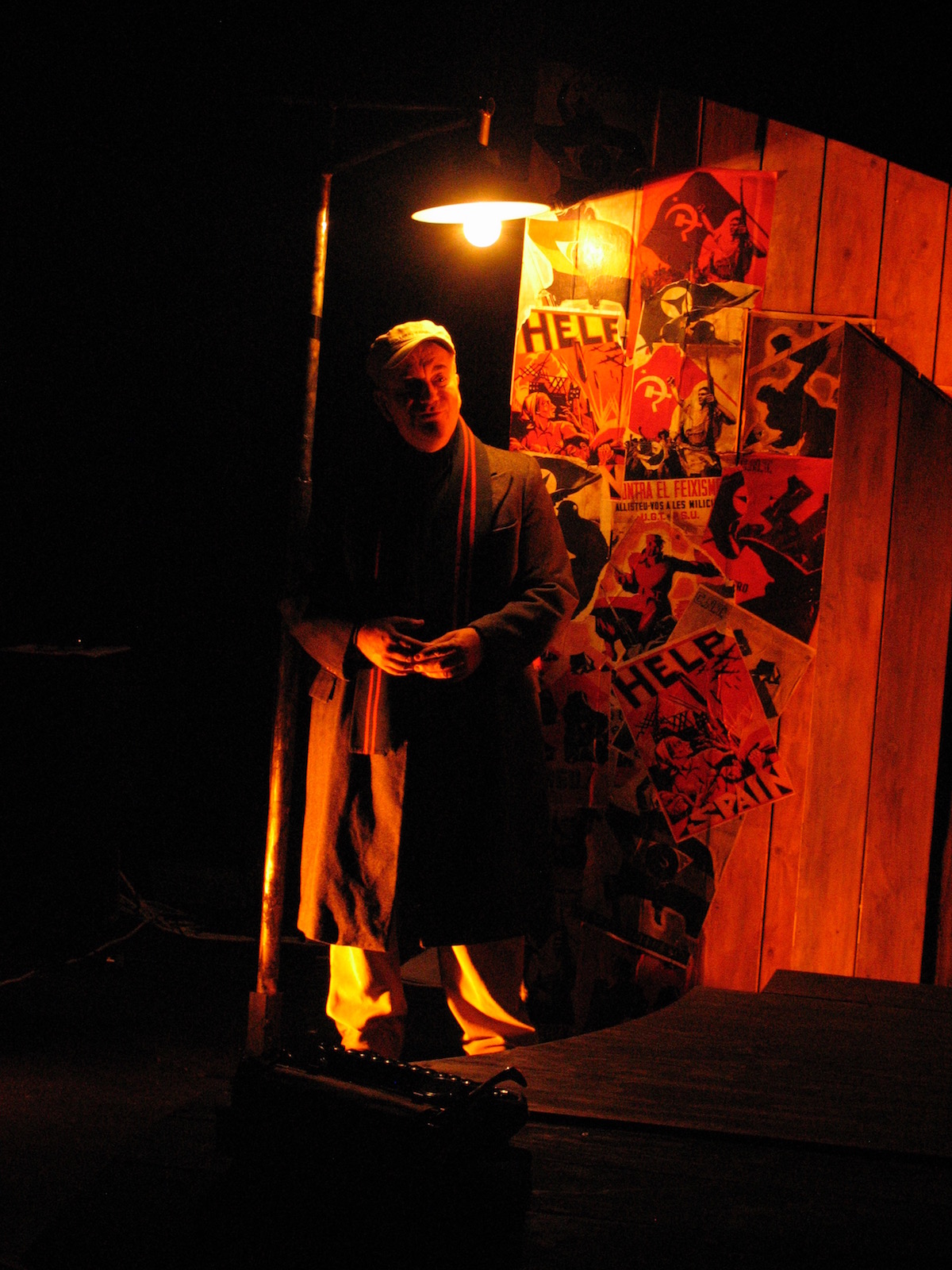
In 1936, Clem Beckett, a young speedway rider from Manchester, travelled to Spain as a volunteer with the International Brigades. Joining the fight against Franco’s Nationalists, Clem and his friend Chris Caudwell tragically lost their lives in the Battle of Jarama.

That’s the end of the story. But Neil Gore’s Dare Devil Rides to Jarama begins much earlier, in 1929, introducing us to a charming, confident young man on the brink of an impressive sporting career. This passion leads him into politics, speaking out against the exploitation of young riders and joining the Manchester Young Communist League. As the years pass, Clem becomes increasingly involved in the fight against fascism at home in Britain – and when the Spanish Civil War breaks out in 1936, he doesn’t hesitate to leave behind his home, career and new wife to go and fight for his beliefs.

It’s a sobering tale, but told with an infectious charm and humour that means we come to really care for the characters. David Heywood oozes charisma as Clem, in a passionate performance that sees him mature before our eyes from cocky stunt rider, risking his life for thrills, to grim soldier taking on the dark forces of fascism. Alongside him, Neil Gore is a joy to watch as he fills all the other roles, from grumpy bosses to drunken Scotsmen, and – most importantly – the writer and intellectual Chris Caudwell. His unlikely friendship with Clem is the beating heart of Act 2, with each helping the other in moments of doubt, and the banter and political discourse between them is as entertaining as it is fascinating.

Photo credit: Daniella Beattie

Neil Gore’s script brings together a delicious mixture of poetry, prose and music. The subject matter – with its talk of bikes, mechanics and politics – could easily have been a bit on the dry side, but the variety of styles and the engaging characters who tell the story constantly keep it lively and entertaining. The play is also, in places, very funny, with an audience participation element that sees us become part of the crowd roaring (and rattling…) Clem down the track, enthusiastically booing Oswald Mosley off the stage, and joining in with folk musician John Kirkpatrick’s melodic and catchy songs.

Though the set is intricate in design, with wooden panels that fold away to take us from the bike tracks of Manchester to the rainy streets of London (then undergoing a more dramatic transformation during the interval to shift the action to Spain), Louise Townsend’s direction has a simple charm that’s incredibly appealing. Hanging a sign that says Albacete means we’re in Albacete, and the cast of two do everything – acting, singing, operating the lights (stage and house) and even greeting and directing the audience at the door. This gives the production an intimate, slightly unpolished feel, and as a result the play’s message has far more impact than any fancy effects could provide.

dare-devil-9-neil-gore-credit-daniella-beattie
Photo credit: Daniella Beattie

Dare Devil Ride to Jarama was commissioned by the International Brigades Memorial Trust as a way to keep the memory alive of the volunteers who gave their lives fighting in Spain. But there’s something chillingly current about it as well; it’s difficult not to draw uncomfortable comparisons with the political situation across Europe – and beyond – right now. There might not be a need for us to physically go to war; it might not carry the same risk, but there’s still, and probably always be, a need for us to speak out and take a stand against fascism in all its forms. Neil Gore’s play honours the memory of Clem, Chris and all the volunteers of the International Brigades, by encouraging a new generation to follow their example. There’s no greater tribute than that.


Can’t see the map on iPhone? Try turning your phone to landscape and that should sort it. I don’t know why but I’m working on it… 😉

Review: Poker Face at King’s Head Theatre

Legal Aliens are an international company, dedicated to telling European stories at a time when others might be tempted to shy away. The result of this determination is their Translating Europe series, which opens with the English premiere of Petr Kolečko’s Poker Face.

Translated by Eva Daníčková, the play tells the story of Jana (Lara Parmiani), a hugely successful international poker player, who in her youth may or may not have got pregnant by the writer, revolutionary, and later first president of the Czech Republic, Václav Havel. The resulting child was Pavlína (Daiva Dominyka), now a young woman and in a relationship with the idealistic Viktor (Mark Ota), who wants to start a revolution of his own, if only he had the funds…

Photo credit: John Watts

Considering the play was written by a Czech playwright, in Czech, (presumably) for a Czech audience, the story and its context are surprisingly easy to understand for British viewers. Although, inevitably, we may not catch every reference in Becka McFadden’s production, even someone with no knowledge at all of Czech history or politics – or poker, come to that – can make sense of what’s going on, and the family drama that unfolds between the characters could almost be happening anywhere.

At the centre of the story is Lara Parmiani’s Jana, whose poker face remains in place even away from the card table, in her troubled, brittle relationship with her daughter. Yet we also meet a younger, more emotional Jana, who longs for news from her absent father (Arnošt Goldflam, on screen) and looks forward excitedly to a meeting with her adored Havel. Lara Parmiani skilfully embodies both versions of the character, so that even as we dislike the woman she’s become, we can’t help but feel – if not sympathy, then at least understanding of the events that have brought her here.

Photo credit: John Watts

Pavlína, played by Daiva Dominyka, is the polar opposite of her cold-hearted mother; sensitive and romantic, she’s struggling to understand who she is and where she fits within her family and her society. As her boyfriend Viktor, Mark Ota probably has the closest to a comedy role within the play; a skilled speaker, he knows how to turn on the charm and deliver a good soundbite, and even his darker scenes are shot through with a surreal humour that’s as entertaining as it is slightly bewildering.

The use of video is effective, if occasionally a bit frustrating – this is particularly the case in the opening scene, when Arnošt Goldflam, the man we later learn to be Jana’s father, speaks at length in Czech. There are subtitles, but positioned as they are at the bottom of the screen, reading them involves a fair bit of neck craning for anyone not sitting in the centre of the front row. The later footage of Havel’s funeral works really well though, playing silently in the background and looming over the family’s dysfunctional attempt at a Christmas celebration.

Poker Face may be set in a foreign country, and it may make reference to events we’re not all that familiar with, but that doesn’t make it any less relatable. At a time when it’s becoming all too common to regard anyone not from our own country as inherently different, this play offers a timely reminder that while we may not speak the same language or share the same politics, at the end of the day we’re all human beings. And while that might not be an especially new or surprising message, it’s nonetheless one that – increasingly, it seems – needs repeating.


Can’t see the map on iPhone? Try turning your phone to landscape and that should sort it. I don’t know why but I’m working on it… 😉

Review: Handbagged at Upstairs at the Gatehouse

Not having really lived through the Thatcher years, I’ve never been able to fully appreciate why’s there such an intensity of emotion – positive or negative – among the older generation each time her name comes up. In Handbagged, Moira Buffini attempts to shed some light for the “young people”, by pitting The Iron Lady against another iconic British woman – Queen Elizabeth.

Beginning at the newly elected prime minister’s first audience with the Queen in 1979, the play imagines what might have taken place at their weekly meetings over the next eleven years. It’s a political satire, charting key events including the Falklands, the Brighton hotel bombing and the Miners’ Strike, but ultimately focusing on the human relationship between the two women. The Queen’s baffled by Thatcher’s coldness and lack of humour, while the Prime Minister fails to understand her monarch’s love of the outdoors, and fears Her Majesty may secretly be a socialist. The stage is set for an epic clash of personalities, and that’s exactly what we get in the Tower Theatre’s production.

handbagged_3
Photo credit: Ruth Anthony

An easily recognisable older and younger version of each leader – playfully referred to in the programme as Q and T, Liz and Mags respectively – look back on events over tea and cake, bickering about what did and didn’t happen, while two increasingly dissatisfied (and disruptive) actors fill in all the other parts in the story, from Denis Thatcher to Nancy Reagan. Directed by Martin Mulgrew, Helen McCormack and Alison Liney’s Queen is warm and personable, with an occasional mischievous streak, and an urgent desire to be ‘useful’ to her country and people. In contrast, Anne Connell and Julie Arrowsmith both nail Margaret Thatcher’s icy facade, practised speech patterns and frozen facial expression – but not to such an extent that we can fail to see the vulnerability beneath, particularly towards the end of the play.

While the conversations between prime minister and monarch are often loaded with quiet sarcasm, Ian Recordon and Jonathan Wober provide much of the laugh out loud humour as they scramble to fill in all the other roles, adopting an impressive array of costumes and accents along the way and occasionally falling out over who gets the best parts. The fact that they’re hired actors in someone else’s narrative is openly acknowledged from the start, becoming increasingly significant as the play goes on, and they struggle to keep quiet about the conveniently gaping omissions.

handbagged_2
Photo credit: Ruth Anthony

For those of us born in the early 80s or later, Handbagged certainly fills in a few gaps in terms of British history and politics. Yet it never becomes dry or boring, and at times even feels surprisingly current; the description of how divided the country became over Thatcher, for instance, is very reminiscent of present tensions over Brexit. The play also helps explain some of the strong public feeling that still lingers today. The script quotes several of Margaret Thatcher’s most well-known and controversial statements, and even hearing them spoken by an actor, you can’t fail to pick up on the ruthlessness behind them (for good or evil, depending on your politics).

Don’t be fooled by the description of Handbagged as an amateur production – the Tower Theatre Company have done a fantastic job yet again on an enlightening, intelligent and, above all, thoroughly entertaining play.


Can’t see the map on iPhone? Try turning your phone to landscape and that should sort it. I don’t know why but I’m working on it… 😉
Review: Ctrl+Alt+Delete at Camden People’s Theatre

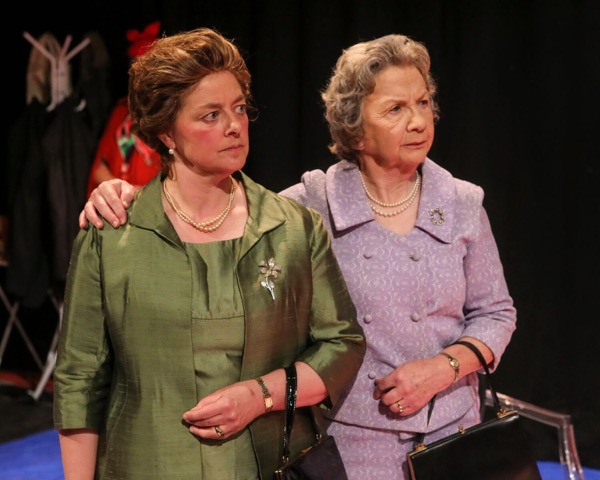
Ctrl+Alt+Delete, written and performed by Emma Packer, is a solo show introducing us to Amy Jones, a bubbly, optimistic young woman who adores her granddad, loves the Spice Girls, and writes repeatedly to her idol Nelson Mandela, never once considering that he might not reply. But there’s a darker side to Amy’s story; she’s been mentally and physically abused by her manipulative, violent mother throughout her childhood and teenage years, for reasons that she’s never been able to understand.

Photo credit: David Packer

The piece is beautifully written, reflecting Amy’s love of creative writing; the language evokes some stunning images and often sounds more like poetry than prose. At times, the show flows almost like a stream of consciousness, jumping back and forth in time as both Amy and her mum share their memories with the audience. Packer plays both women, keeping the two totally distinct in accent, tone of voice and even appearance; while Amy has a wide-eyed, earnest expression, her mother wears a constant snarl as she remembers the many people who’ve angered her – above all, her young daughter – and the cold, calculating way she’s taken her revenge. Even when she finally reveals her motivation, there’s very little redemption in store for this character.

Alone at the centre of a bare stage, with only a chair for company, Emma Packer’s compelling performance absolutely commands our attention. Whether she’s laughing with her friend about Simon Cowell’s trousers, or tearfully remembering the death of her grandad (an event hinted at but never fully explained), we’re with Amy all the way. It’s at the end of the show that things start to go slightly off course, as the focus suddenly switches from Amy’s personal journey to a broader political statement, in which parallels are drawn between the betrayal of an abusive parent and the lies of those in power that have led to everything from the London riots to Brexit. It’s not that the metaphor doesn’t make sense – it just happens very suddenly and, frustratingly, interrupts a story that isn’t quite over yet, and in which we’ve become increasingly absorbed.

Photo credit: David Packer

As the story of a young girl struggling to understand why her mother – the one person who should love her unconditionally – seems to despise the very sight of her, Ctrl+Alt+Delete is a powerful show. As a political statement, though there’s no doubting Emma Packer’s passion, it feels slightly clumsy and a touch heavy-handed in its conclusion. That said, there’s a lot of food for thought in this story about abuse on many levels, and an important message in there if it could only be worked in a little more smoothly from the start of the show.


Can’t see the map on iPhone? Try turning your phone to landscape and that should sort it. I don’t know why but I’m working on it… 😉