Interview: Haste Theatre, Oyster Boy

After award-winning performances all over the world, Haste Theatre’s Oyster Boy is back for a new UK tour. Kicking off last week at London’s Blue Elephant Theatre, the revamped show will travel to venues around the country between now and May, finishing up with four dates at the Brighton Fringe.

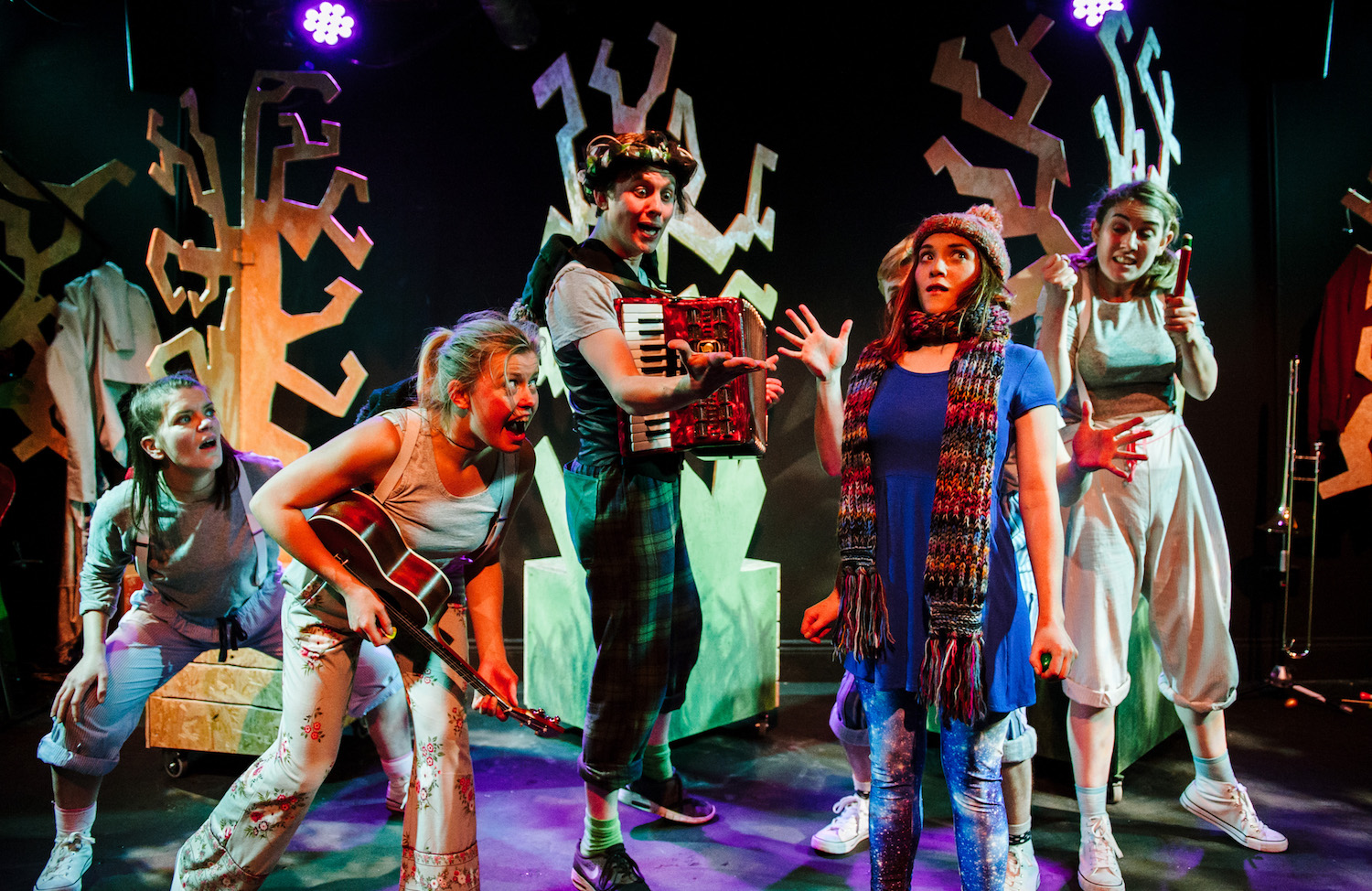
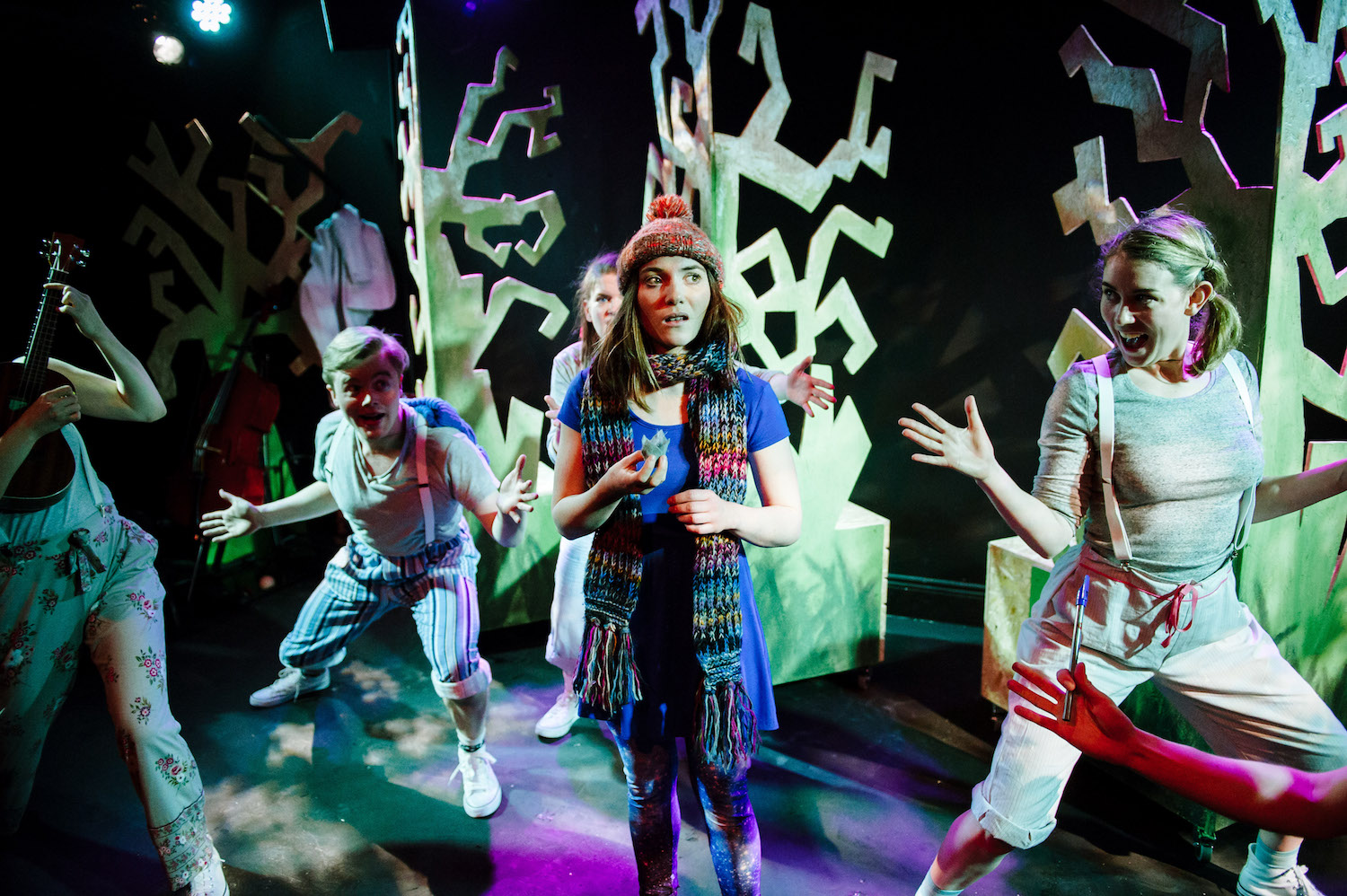
Oyster Boy is a dark comedy told in a light-hearted and quirky way, about the struggles of a boy living with an oyster shell for a head,” says Jesse Dupré, co-founder of Haste. “We use puppetry, clowning, dance and music to tell this strange story.”

Oyster Boy is based on a 1997 poetry book written and illustrated by Tim Burton: “Initially, we were drawn to the stories in his book The Melancholy Death of Oyster Boy because they were so strange, and although short in length, seemed to say a lot and evoke much reflection and thought. We saw potential in the material and in the small number of characters he created, knowing we could inject comedy and humour into this rather sad tale.”

The show has been enjoyed on previous tours by audiences of all ages. “There is something in it for everyone!” says Jesse. “Because we are a physical theatre company, the story is told with a whole range of different performance styles, such as live music with ukulele and a cappella harmonies and choreographed movement and dance sequences. It is high energy and will leave you feeling revived, but also will provoke questions to do with the subject content.

“Primarily, we’d like audiences to have a good time watching the show, as it’s an action-packed performance full of colour, vibrancy and music. We want them to be engaged and to laugh, even though the story has dark undertones. 

“We’d also like to encourage a sense of questioning amongst the audience, especially in terms of morality and judgement of others. The character of Oyster Boy is subject to a lot of harsh criticism from society because of the way he looks, and this acts as a mirror to show the reality of some people’s lives today. We hope that audiences will sympathise and become attached to the puppet of Oyster Boy, and therefore be more inclined to empathise with people who are different without pre-judging them.”

Those who’ve seen the show before will notice some changes this time around. “We’ve performed our original version of Oyster Boy since 2013, and have toured it all over the world including America and Italy where it’s won numerous awards,” Jesse explains. “We know that it worked well how we first made it, but we wanted to challenge ourselves to tweak and change parts that we knew could be better and more developed. We also wanted it to represent our work now as a company rather than 3 years ago when we were just starting out. 

“Many things have changed this time around – in fact with the help of our Associate Director, Kasia Zaremba-Byrne, we’ve done a full overhaul of the story, the characters, the props and the set. Kasia helped us breathe new life into the show and expand on what we had before, bringing out new elements in us as actors as well as in the narrative itself.”
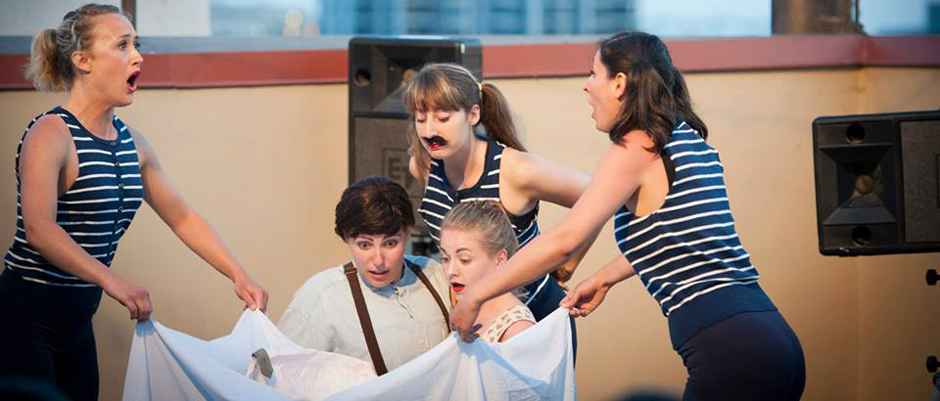
One stop on the tour is the Marlowe Studio in Canterbury, where Haste will be performing for one night only on March 30th. “The Marlowe Studio is a wonderful place to perform,” says Jesse. “We toured another show there in 2015 and had a great experience. The team who programme shows in the studio are very on the ball in terms of new theatre and emerging companies, and so it’s an exciting space to perform in.

“Local audiences should come along to check out smaller productions as well as large touring productions, in order to experience other types of shows. The studio is a great modern space with a decent sized stage and raked seating, and so audiences are guaranteed to have a good experience, especially if they come to watch Oyster Boy!

“Last time we performed in Kent, we had supportive and receptive audiences who made us feel encouraged and appreciated, and so we are really looking forward to bringing a different show to the same theatre. We felt we attracted a wide cross section of the community around the Marlowe and judging by the feedback we had, they thoroughly enjoyed our previous show. We are hoping that the same magic will work again this time!”

Catch Oyster Boy on tour – visit Haste Theatre’s website for dates and venues.
Review: In Other Words at The Hope Theatre

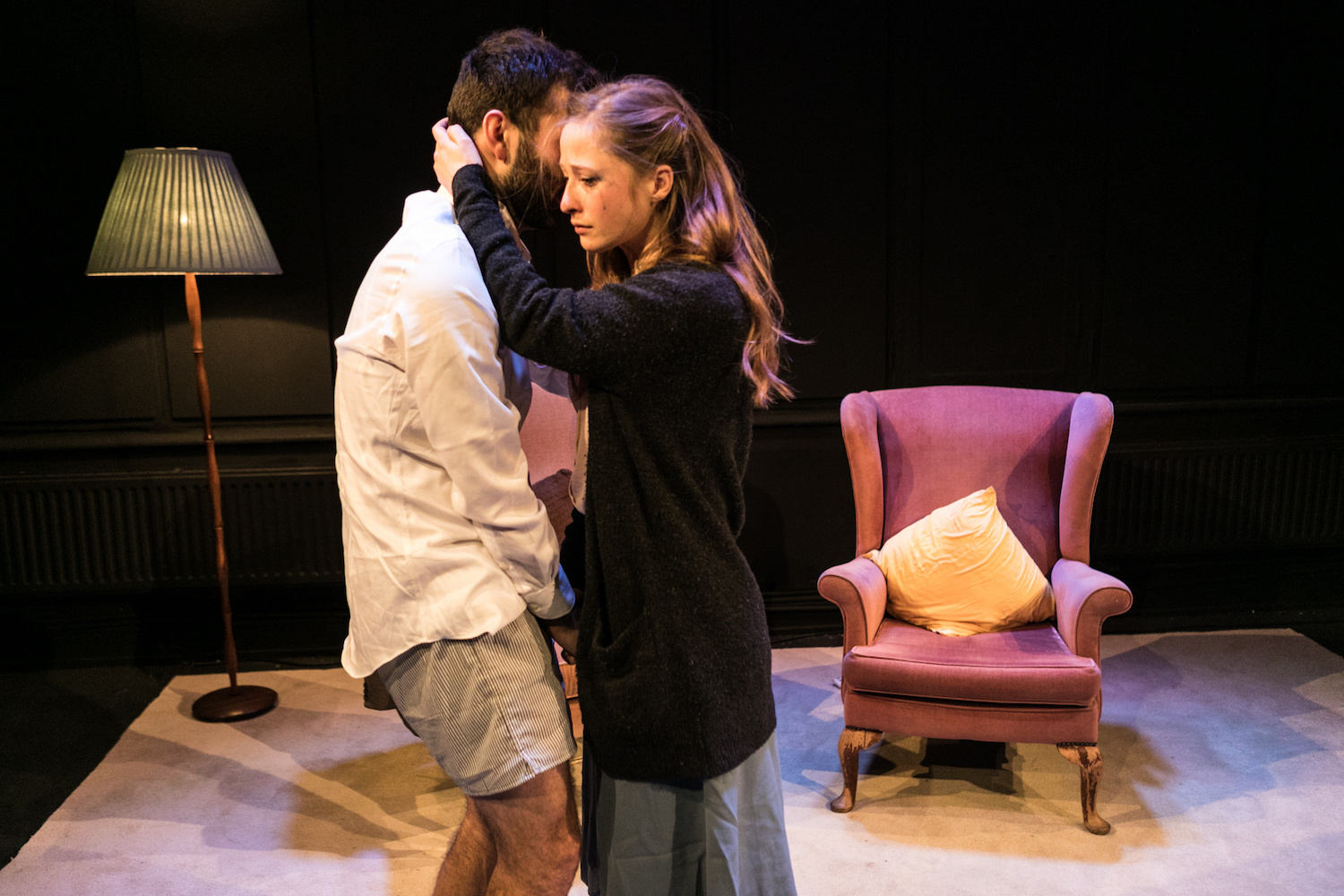
Off the Middle’s Matthew Seager was inspired to write his debut play, In Other Words, by 10 weeks facilitating sensory stimulation workshops in a dementia care home during his last year of uni. A residency with the Lyric Hammersmith’s Emerging Artists Programme followed, and now In Other Words finds its way to the Hope Theatre, directed by Paul Brotherston.

The story follows Arthur and Jane throughout 50 years of their relationship, charting the devastating impact of Alzheimer’s disease on their marriage and life together. It’s an undoubtedly harrowing play to watch – don’t expect to leave without shedding a tear or several – but also contains a glimmer of hope. Because this is also a story about music and its incredible ability to anchor people in reality, even when little else remains of the person they once were.

Photo credit: Alex Fine

Much of the play’s impact is felt in the performances of Matthew Seager and Celeste Dodwell, who are both devastatingly good in their roles as Arthur and Jane. In good times and bad, their relationship is 100% believable – as is Seager’s careful portrayal of dementia as Arthur gradually slips away, and Dodwell’s of Jane’s gut-wrenching grief. The whole play is unflinchingly, brutally honest about the experience of living with Alzheimer’s – not just for Arthur, but for Jane too, who stays at her husband’s side as he descends into a spiral of denial, confusion and rage, but not without privately confessing feelings of resentment, anger, and guilt at having failed to spot the signs and do something sooner.

Apart from one passing reference to middle age, it’s not totally clear how old the couple are meant to be or how quickly the disease is progressing, the only real hint of context in the Sinatra-led soundtrack. Even so, the two actors are clearly younger than their characters – a harsh reminder that dementia sufferers aren’t just “old people”, but people who were once young and full of life: dancing, falling in love, laughing, arguing, singing badly – just like the rest of us. The couple tell us their story together, looking back with tenderness on their happy times as well as the harder years, the love between them as alive as it was in the beginning. And through it all, one song – Fly Me To The Moon – has the power to reach out and heal any wounds, however deep they may be.

Photo credit: Alex Fine

In a space too small for set changes (or indeed much of a set at all), lighting and sound design from Will Alder and Iida Aino combine to situate the action: in a busy pub with music playing in the background; in a living room so silent and full of pain that a ticking clock becomes the only sound; in the doctor’s office as Arthur struggles to remember three simple words… Each detail is spot on and beautifully observed, as are the scenes in which Arthur’s thoughts are drowned out by a wave of white noise and blue light that fills the space in moments when it all gets too much.

In Other Words makes no excuses and covers up none of the harsh details of living with dementia. But it also paints a picture of a love that endures – and will continue to endure – even beyond the cruellest of circumstances. Funny and heartbreaking, charming and brutal, this is a powerful debut that’s not to be missed… but remember to take tissues.


Can’t see the map on iPhone? Try turning your phone to landscape and that should sort it. I don’t know why but I’m working on it… 😉

Review: Thisbe at Gerry’s, Stratford East

It’s reassuring to learn I’m not the only one who finds the end of A Midsummer Night’s Dream vaguely unsatisfying. You know, the one where Demetrius wakes up inexplicably in love with Helena, despite having pursued Hermia all night, and nobody bats an eyelid. It may have seemed like a happy ending for all concerned, but to be honest I’ve always felt a bit bad for Helena, married to a man who only loves her because of a magic spell, rather than because of who she is.

Door Ajar Theatre clearly had similar doubts, and so bring us Thisbe, a charming and very funny follow-up to Shakespeare’s comedy. Fourteen years have passed, and Demetrius and Helena’s teenage daughter Thisbe is tired of always coming second place to her mum in her dad’s affections. Desperate to know what happened all those years ago, she ventures into the woods, where she encounters Puck and his fairies – who have lost none of their appetite for chaos. But it turns out love is a much more complicated business than Thisbe realises, and suddenly it’s up to her to save her parents’ marriage… assuming she wants to, that is.

Photo credit: Alex Brenner

Directed by Roberta Zuric, the show transfers the action to a modern day setting, and is performed by a cast of six talented actor-musicians working together as a seamless ensemble. Rosalind Burt hits exactly the right note as Thisbe, a stroppy yet utterly relatable teenager – though her story may be one of magic, the emotions behind it are all too familiar. Joey Hickman is a hilarious Puck; no longer under Oberon’s thumb, he’s very much the boss in the woods these days, but there’s more than a little of the petulant child in him too.

Anne-Marie Piazza and David Osmond play Thisbe’s bemused parents, quoting Shakespeare in moments of high tension, and – in one of my favourite scenes – regressing fourteen years and getting into a fight with an equally bewildered Hermia (played by the show’s writer, Samantha Sutherland). Meanwhile, the show is BSL interpreted by Jennifer Wilson, who also narrates and plays one of the conflicting voices in Thisbe’s head; and because she’s not only there to sign but as an active member of the cast, the BSL feels very naturally integrated and is a welcome addition to the show rather than a distraction.

At just 75 minutes, the show moves very fast, with cast members switching roles in the blink of an eye (and the change of a hat), playing a variety of instruments – not just on the catchy, toe-tapping musical numbers, but to create sound effects too – and constantly rearranging the set as the action changes location. This is a very physical show, which requires its cast to be on the move (and in the right place) throughout, and they all throw themselves energetically into the action without missing a beat.

Photo credit: Alex Brenner

There are, as you might expect, plenty of witty and well-placed references to A Midsummer Night’s Dream, but the plot of Thisbe necessarily allows for a handy synopsis – “what happened in the woods…?” – so that any audience members who might not be aware of the characters’ backstory don’t miss out.

I don’t know if Thisbe is the sequel Shakespeare would have come up with, but it certainly answers a few of my questions – and it’s also a really entertaining story in its own right. Funny, relevant and beautifully performed, this is an exciting debut from Door Ajar Theatre; let’s hope we see a lot more of them in the future.


Can’t see the map on iPhone? Try turning your phone to landscape and that should sort it. I don’t know why but I’m working on it… 😉

Review: The Nature of Forgetting at Shoreditch Town Hall

Theatre Re’s latest work, The Nature of Forgetting, premiered this week at Shoreditch Town Hall, where it was greeted by sell-out audiences and standing ovations. The three-night run was far too brief – but something tells me we haven’t seen the last of this beautiful and moving show.

Inspired by recent neurobiological research and interviews with people living with dementia, The Nature of Forgetting attempts to piece together their experience through the story of Tom, who’s 55 today. As he dresses for his birthday party, each item of clothing in his wardrobe brings back confused fragments of memory from his earlier life, and the people who played a part in it.

Photo Credit: Richard Davenport for The Other Richard

Though there’s a clear story behind the memories – school days, courtship, marriage, career – what makes this show so powerful is not the events themselves, but the emotions at the heart of them. So while the details of each memory may be a little hazy, we do get to experience the joy of a bike ride, the stress and anxiety of a wedding day, the heartbreaking sense of loss evoked by an empty chair… There’s humour too, in Tom’s overbearing mother and class clown antics – and through it all, the recurring sensation of panic that comes with trying to pin down these elusive memories as they slip away. And importantly, it’s also not just Tom’s story but also that of the people who love him, reminding us that dementia doesn’t only affect the person who suffers from it.

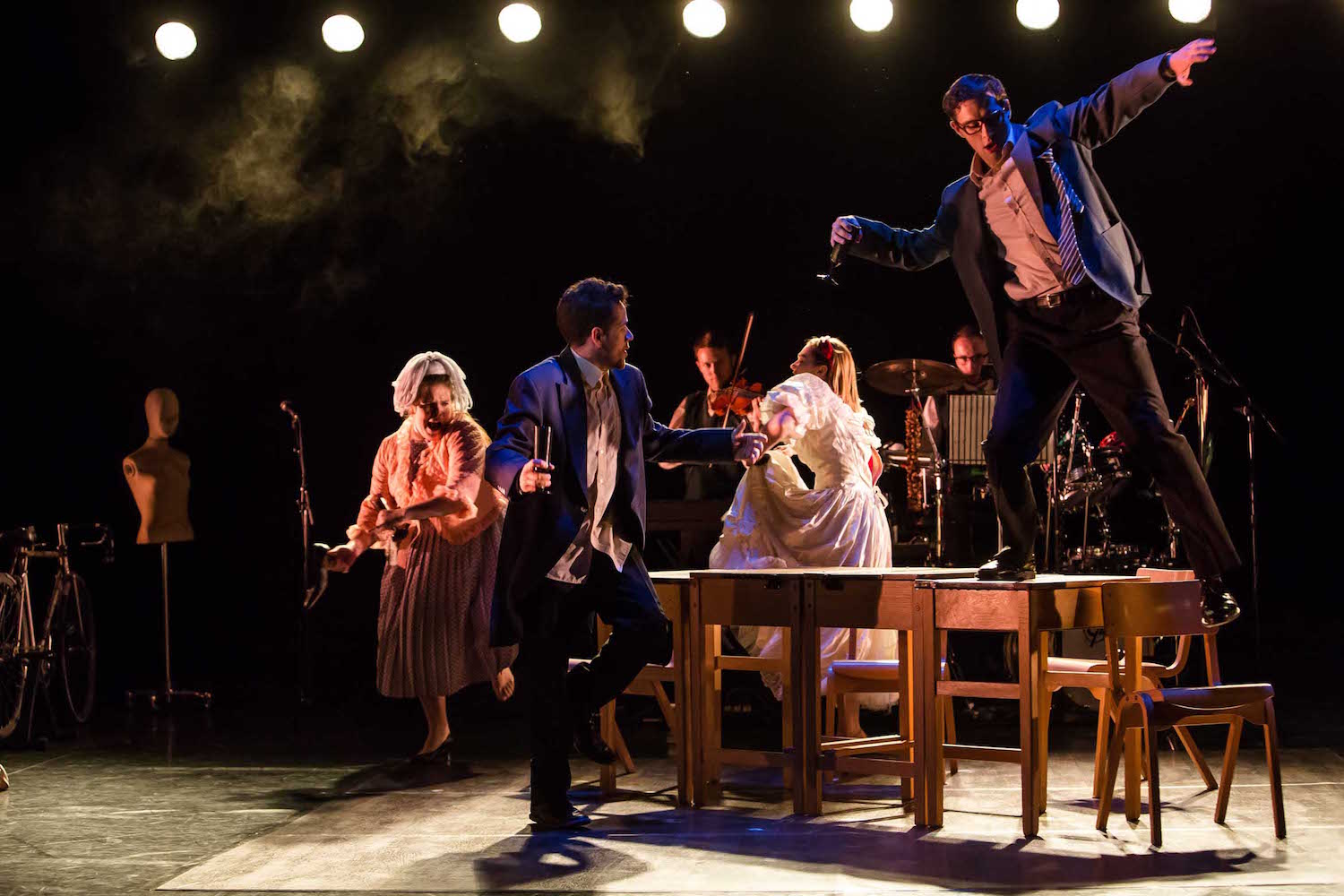
At just over an hour, the show is essentially one single scene, which fades and reassembles as Tom is transported into his memories. The cast (Guillaume Pigé, Louise Wilcox, Eyglo Thorgeirsdottir and Matthew Austin) are in motion almost the entire time, together forming a well-oiled machine that ensures every prop – primarily the wooden school desks that form the show’s central motif – is in position and every performer always in exactly the right place. The result is a whirl of movement that appears entirely fluid and effortless.

Photo Credit: Richard Davenport for The Other Richard

Just as important as the movement is the music, composed and performed by Alex Judd, accompanied by percussionist Keiran Pearson. Written in the rehearsal room as the show was taking shape, the score exquisitely mirrors the emotions on stage, and builds to a stirring climax for the final scene. There are some particularly powerful moments when Tom is struggling with his loss of memory and the soundtrack seems to bend and twist along with his ability to piece together his recollections.

It’s impossible for anyone who hasn’t been there to really experience what it must be like to lose their grip on memory, but this thoroughly researched and beautifully presented show offers us a glimpse into that world. It’s at times a scary picture – but The Nature of Forgetting reminds us that just because those events and emotions may be harder to recall, they’re not gone forever and will live on in Tom, however deeply buried they may be. It’s an uplifting note on which to end this unforgettable show.


Can’t see the map on iPhone? Try turning your phone to landscape and that should sort it. I don’t know why but I’m working on it… 😉

Review: Dick Whittington at the Marlowe Theatre

You wait all year for a pantomime, and then two come along at once. Following Monday’s hilarious outing to Theatre503 for Scrooge and the Seven Dwarves, my pantomime expectations were set sky-high. So did the Marlowe’s Dick Whittington, my second panto in two days, hit the mark? Oh yes it did…

Although a far more traditional pantomime than the night before, there’s so much to love in Paul Hendy’s production that it never once feels tired, despite the presence of all the usual tried and tested panto conventions. The gags – which include the usual local digs and up-to-the-minute topical references – are genuinely funny (even the ones you can see coming a mile off) and while there’s certainly no shortage of innuendo, it’s refreshing to note that Hendy’s avoided the temptation to go after the obvious Dick jokes. And there’s also a 21st century twist to keep us on our toes: a 3D section takes us into a dreamy underwater world that soon becomes more of a nightmare, sending the already impressive decibel level clean through the roof.

Photo credit: Paul Clapp

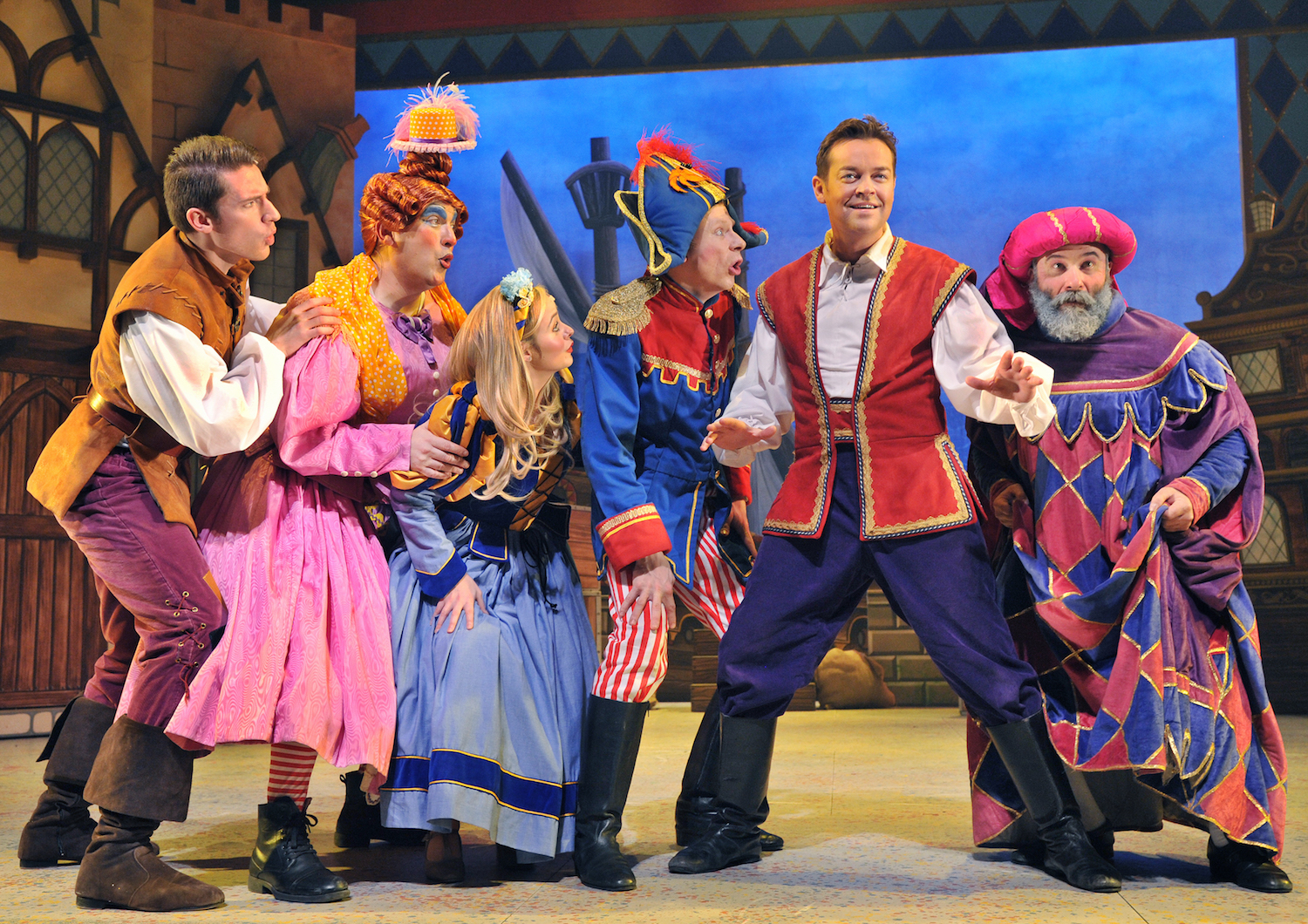
The big name in this year’s Canterbury panto is TV presenter and magician Stephen Mulhern, who charms us with his scene-stealing tricks and infectious giggle. But he’s far from the only star on the stage: West End performer John Barr is a very stagey King Rat (very confusing for a musical theatre fan; half the time I couldn’t decide whether to boo or applaud, and usually ended up doing both). Gymnast Vladimir Georgievsky brings the house down with a jaw-dropping and entirely unexpected (unless you watch Britain’s Got Talent) trampolining display in Act 2. And Marlowe regulars Ben Roddy and Lloyd Hollett, appearing together for the sixth year in a row, are a dream comedy duo as Dolly The Cook and Captain Crabstick; clearly having just as much fun as the audience, they really are a joy to watch.

There are moments when you could even forget you’re watching a pantomime altogether, so polished is the production. There are some spectacular group numbers – not least the Act 2 opener, Sit Down, You’re Rockin’ the Boat from Guys and Dolls, and later a slightly tenuous but still hugely enjoyable celebration of everything that makes Great Britain great. And in a nice moment Chris Wong, the obviously hugely respected musical director of 22 years, joins the show’s romantic leads, Ben Carruthers’ Dick and Jemma Carlisle’s Alice, on stage with an acoustic guitar for the inevitable cheesy love duet.

Photo credit: Paul Clapp

I haven’t been to the Canterbury panto for a long time, but if every year is as good as this one, I’ll definitely be back. Dick Whittington remains true to the pantomime spirit and format, so nobody who turned up particularly wanting to watch an assortment of odd characters sit on a bench and sing Ghostbusters goes home disappointed. But while it’s as predictable and cheesy as you might expect, the show never compromises on production quality, and proves a hugely enjoyable evening for audience members of all ages.

Dick Whittington is at the Marlowe Theatre until 8th January.