Review: Spiked at Pleasance Theatre

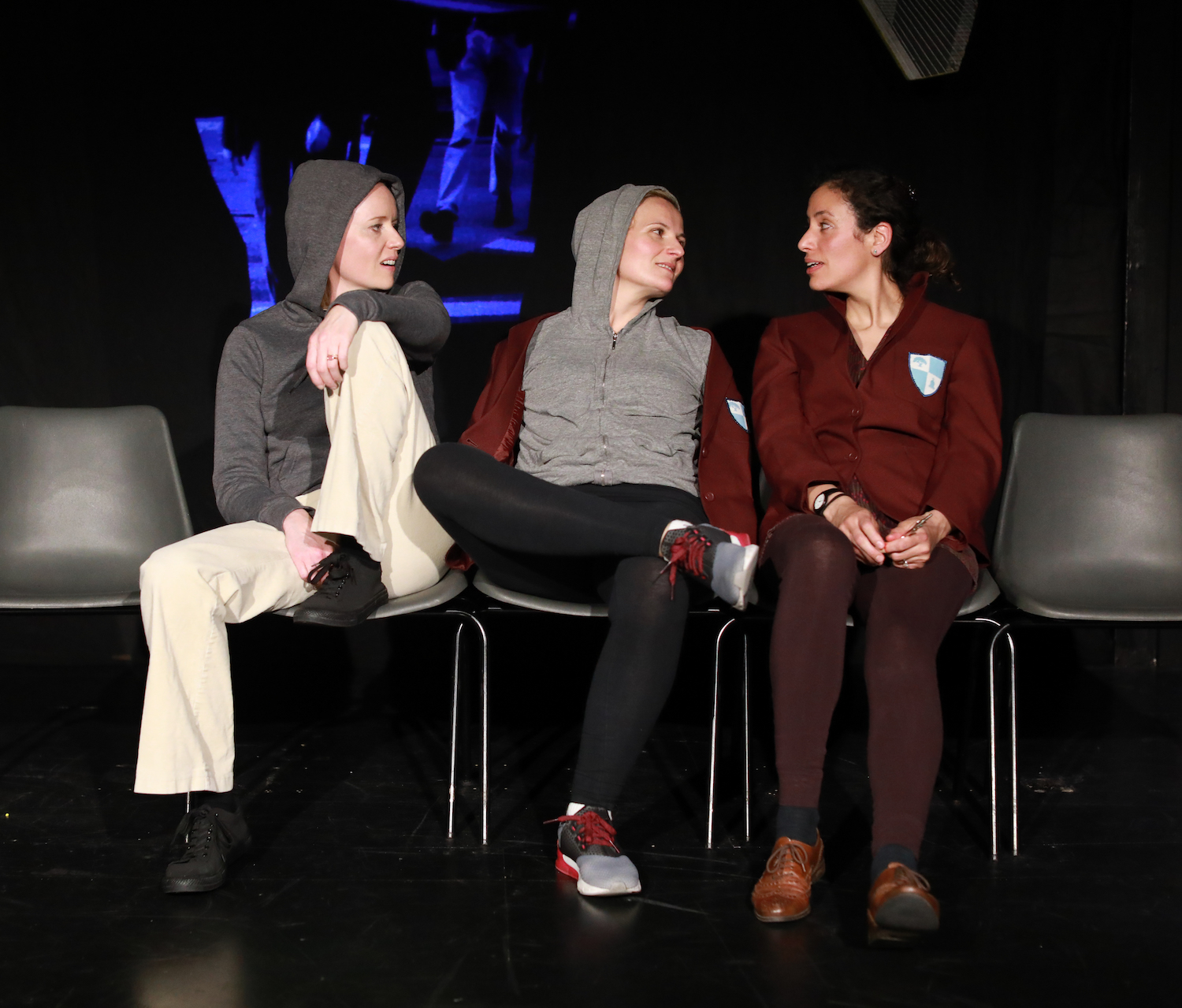
Three mothers face a nightmare scenario in Félicité du Jeu’s Spiked; their teenage children have been admitted to A&E, along with the rest of their class, after being struck down by mysterious symptoms at school. It’s a strong premise, with the potential for plenty of drama and suspense, and which opens the door for discussions about themes including race, class and what constitutes “good” parenting. As individuals, Joanna, Rozhin and Karen could hardly be more different, but as they sit together waiting for news, they begin to find some common ground in the struggles that come with being mother to a teenager. That is until they discover that their children ate a cake deliberately spiked with drugs, at which point the inevitable speculation and finger-pointing begins in earnest.

Photo credit: Félicité du Jeu

The fault lines that divide the three are obvious from the start: Joanna (Charlotte Asprey) is well-off and a bit of a drama queen, while Karen (Daniella Dessa) is a straight-talking single mum and Rozhin (Katie Clark) is a sweet but naive immigrant from Kurdistan. It’s not surprising, therefore, to see which direction the accusatory fingers are pointing in – but what is unexpected is how on the money they turn out to be. It’s a confusing outcome given that the play clearly sets out to challenge these stereotypes, and slightly undermines an eloquent and passionate speech from Rozhin in defence of her family. It also, unfortunately, means that the play ends on a bit of an anticlimax, especially after what looks like it’s going to be a dramatic twist in the tale doesn’t actually go anywhere.

It’s in its exploration of what it means to be a mother that both script and performances are most assured, as the three women try their best to identify with their teenage children in a world that’s moved on in unfathomable ways since their own adolescence. In particular, their attempts to grasp how social media works bring a note of humour to the play, although their lack of understanding also means they react surprisingly calmly to revelations of cyberbullying and sexting amongst their kids.

Photo credit: Félicité du Jeu

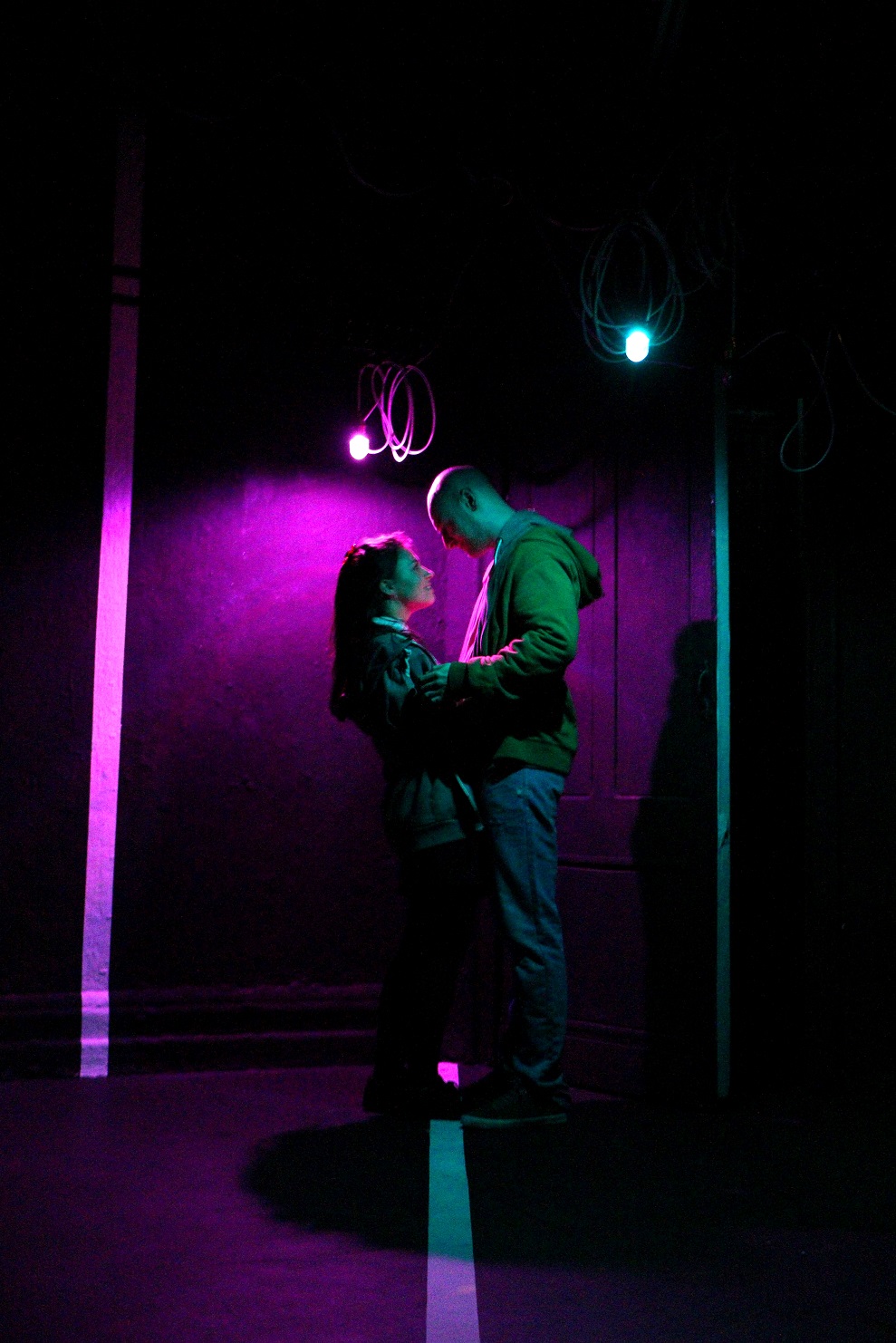
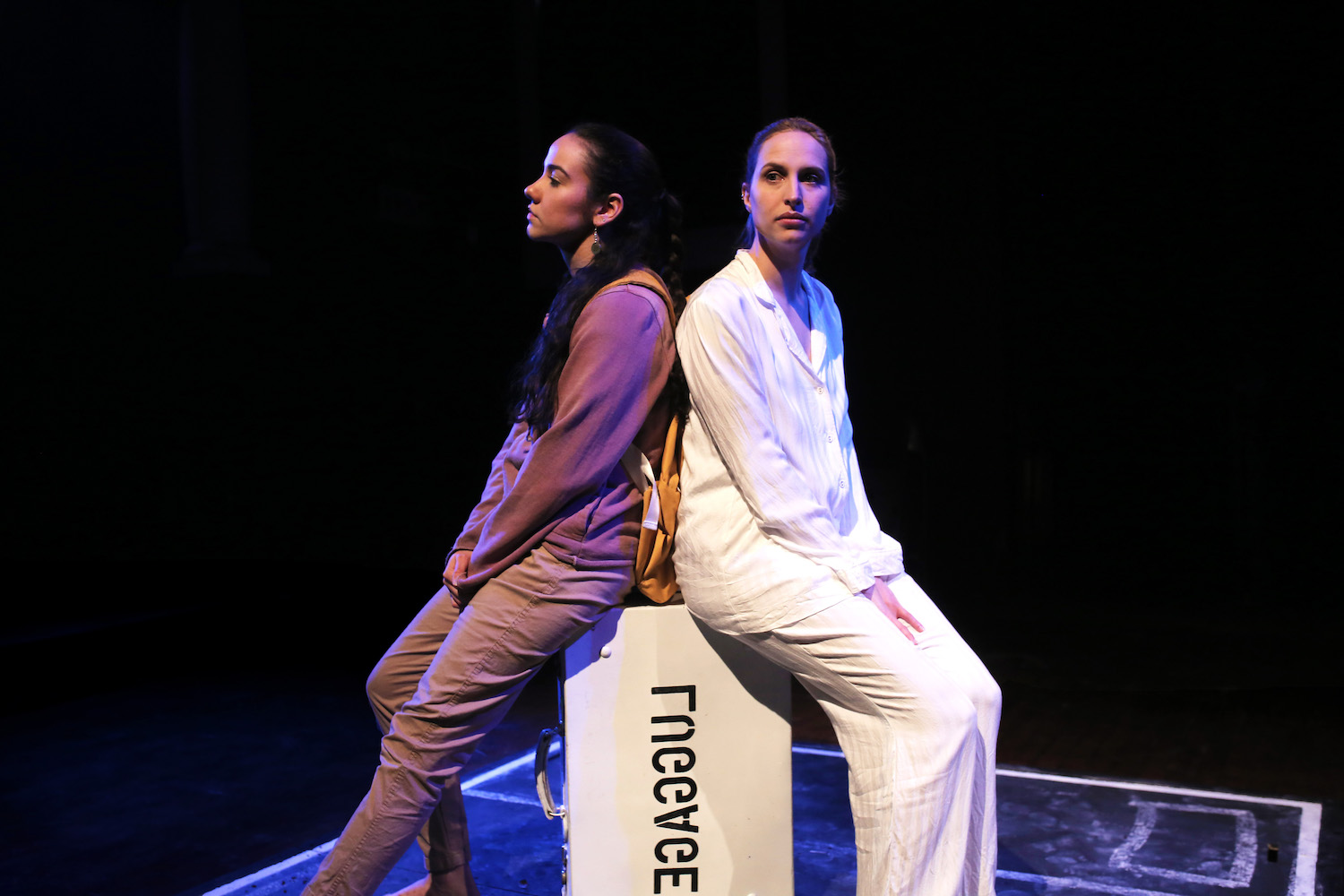
Charlotte Asprey, Daniella Dessa and Katie Clark also play the three teenagers, in intermittent scenes that offer us a further insight into the relationship they have with their mums and with each other. Because of the simple but necessary costume changes required, however, these scenes break up the flow of the action in Gemma Kerr’s production, and don’t really tell us anything about the teens that we haven’t already learnt from listening to their mothers’ conversation in A&E.

It’s the mothers, though, that are at the heart of the play, and a final direct address to the audience proves that despite all their differences, these three women have one thing in common: a wish to keep their kids safe, happy and healthy at all costs. Echoing those words and aspirations with recorded clips of other real-life mums is a nice touch, and ensures that despite any unpleasantness that’s gone before, Spiked concludes on a heartwarming note.


Can’t see the map on iPhone? Try turning your phone to landscape and that should sort it. I don’t know why but I’m working on it… 😉

Interview: Peter Imms, Section 2

“People need to see something about this topic, and to talk about it – as long as you chat about it in the bar afterwards, that’s great.”

Section 2 is a new play by London-based playwright Peter Imms, which addresses the sensitive subject of mental health. It’s been developed in collaboration with Paper Creatures, an emerging theatre company founded last year by Jon Tozzi and Nathan Coenen, and will open in June as part of the Bunker Theatre’s Breaking Out season.

The play follows the story of Cam, who was sectioned 28 days ago, as he faces the review that will decide if he’s well enough to go home. “The play looks at the coping mechanisms that everybody has to find within themselves – not just Cam but everybody around him,” explains Peter. “It’s a really intimate and intense piece that clings on to the desperation that people feel when they’re thrown into a situation as drastic as this.

“It’s a subject that I didn’t really know about until half a year ago, and I think generally it’s something that people don’t know much about – there’s not many source materials for what sectioning is and the effects it has on people. I did a bit of research and found that it does happen to a lot of people, but there’s not really a conversation about it. So this play is a nice way to have that conversation, but also it’s just a good, gritty intense drama about four characters, all trapped in the same situation and trying to achieve the same thing from different angles.”

Peter was inspired to write the play by an unexpected personal experience: “Someone I knew was sectioned, and it shocked me because it’s one of those things that you think is never going to happen to you. So it came from visiting them and reading about other people’s stories – I guess I’m interested by things I don’t understand, so I did a lot of work into what it actually is and the technicalities of it. We also got in touch with Mind, the mental health charity, who have been amazing with information and feedback. They put us in touch with a lot of other people who’ve been sectioned, and then from that point the stories just began to form. So Section 2 has come from a place of interest, intrigue, lack of understanding and passion.”

The play began life as an idea and ten pages submitted in response to a call-out by Paper Creatures, who were looking for a new project following the success of their critically acclaimed debut production, Flood. “Paper Creatures are so good as a company because they’re not like anybody else – they’re all about collaboration and creativity,” says Peter. “When I went to them with the idea for Section 2, they liked what it had to offer in terms of potential, and from there we developed it together. We got the director Georgie Staight on board really early, and it’s been a constant soundboard with everybody involved. We’ve had R&Ds – we went away to Wittering together, which was romantic and lovely – just to explore it and play with it. It’s my favourite way of working; it’s been so nice to be in the room with people at the top of their creative game, to develop the play and test things out.”

That development process has seen the play go through some significant changes from its initial draft. “Between the first and second draft, the play basically completely changed,” Peter explains. “The first draft had this huge twist, but when we had a reading of it we all agreed that although it was great and very tense, it didn’t give us anything other than ‘it’s a twist’. So I went away and essentially re-wrote the whole play, still in keeping with exactly the same themes but I changed the structure of it a lot. It’s been hugely fun and explorative; they’re all so giving and so, so good, and for me it was a treat just to see them rip it all apart and put it back together again.”

As for Paper Creatures, Peter has no doubt they’re the perfect company to tell Cam’s story. “They’re advocates for new writing – I’ve never met anyone else who genuinely cares so much about new writers,” he says. “They go and see new work, they’re growing new artists all the time – and not just writing, they’re constantly looking to connect with new set designers, new lighting designers, whatever. They’re just so passionate about ‘new’, and they want to be pioneers of new work – so for me that’s fantastic because that’s what I am.

“But also the sensitivity that they bring to a subject like sectioning and mental health in general is absolutely priceless; they have a perfect balance of creative desire and the will to push everyone in the company to be the best, but also to honour the story that we’re trying to tell, and I think they marry the two really well.”

Section 2 will be performed as part of the Bunker’s Breaking Out season, which sees six companies perform in rep over four weeks. “The Breaking Out season is a great way for emerging companies to get on stage,” says Peter. “I hope it’s going to have a familial feel, especially for us as we’re always sharing the same night with the same company (This Noise), so I’d like to think we’re going to get to know them and it’ll be quite a community.

“Before I even knew it was a possibility I felt the Bunker would be perfect for Section 2; it’s got this gritty, intimate, almost – in a good way – dirty feel. The audience are encroaching on the show, and it’s like a fly on the wall situation. When I found out that we’d got it, I was delighted and now I can’t see it anywhere else. And the Bunker have been great in terms of help with marketing and outreach. For example we’re having some post-show talks involving the creative team, Mind, and people who’ve been affected by sectioning, so the theatre have offered us the time for that and helped us set it up.”

Originally from the Midlands, Peter moved to London when he was 18 to go to drama school. “I think a lot of playwrights either get into it from acting or from writing in some other form,” he says. “I was the acting route – I went to East 15 for a year, which was absolutely invaluable in terms of knowledge of the business and how stuff works. With that move to London I really discovered theatre, it was like a blast of everything that was new, so going to drama school for that reason alone was so integral.

“From that I realised I liked the production side a little bit more, so I started to work with screen, writing and directing short films, and that led into just writing those films, and that led into theatre, because I found I was more suited to the dialogue base of theatre than the visual base of screen. So it was just a slow transition until I found what I was right for and more comfortable with. Now it’s been three years that I’ve been solely writing plays and honing my craft – everything’s slow with writing, but I feel like I’m getting there.”

His top tip to other aspiring playwrights is to see as much theatre as possible: “See stuff you love, see stuff you hate, see stuff you’re indifferent about, see stuff you hate and find stuff in it that you like. I try and go to the theatre a lot; I just think it’s really important creatively. In terms of new writing, I love the Royal Court, and the Bush is a favourite for me at the minute, I saw Misty there a couple of weeks ago and it was incredible. In terms of smaller venues, I’ve seen some great things at Theatre 503, and I’m really close to the Orange Tree and haven’t seen anything I’ve not loved there, so that’s one that stands out.

“If I’ve got a bit of a block and something I’m working on isn’t really flowing, sometimes I’ll see something at the theatre and it’ll just change something in me – even if you just see something you love, it’ll inspire your writing. I think that’s the most important thing. And in London there’s so much here, especially in fringe theatre. That’s all I spend my money on, to be honest – that and beer! – but I wouldn’t change it.”

Review: Coconut at Ovalhouse

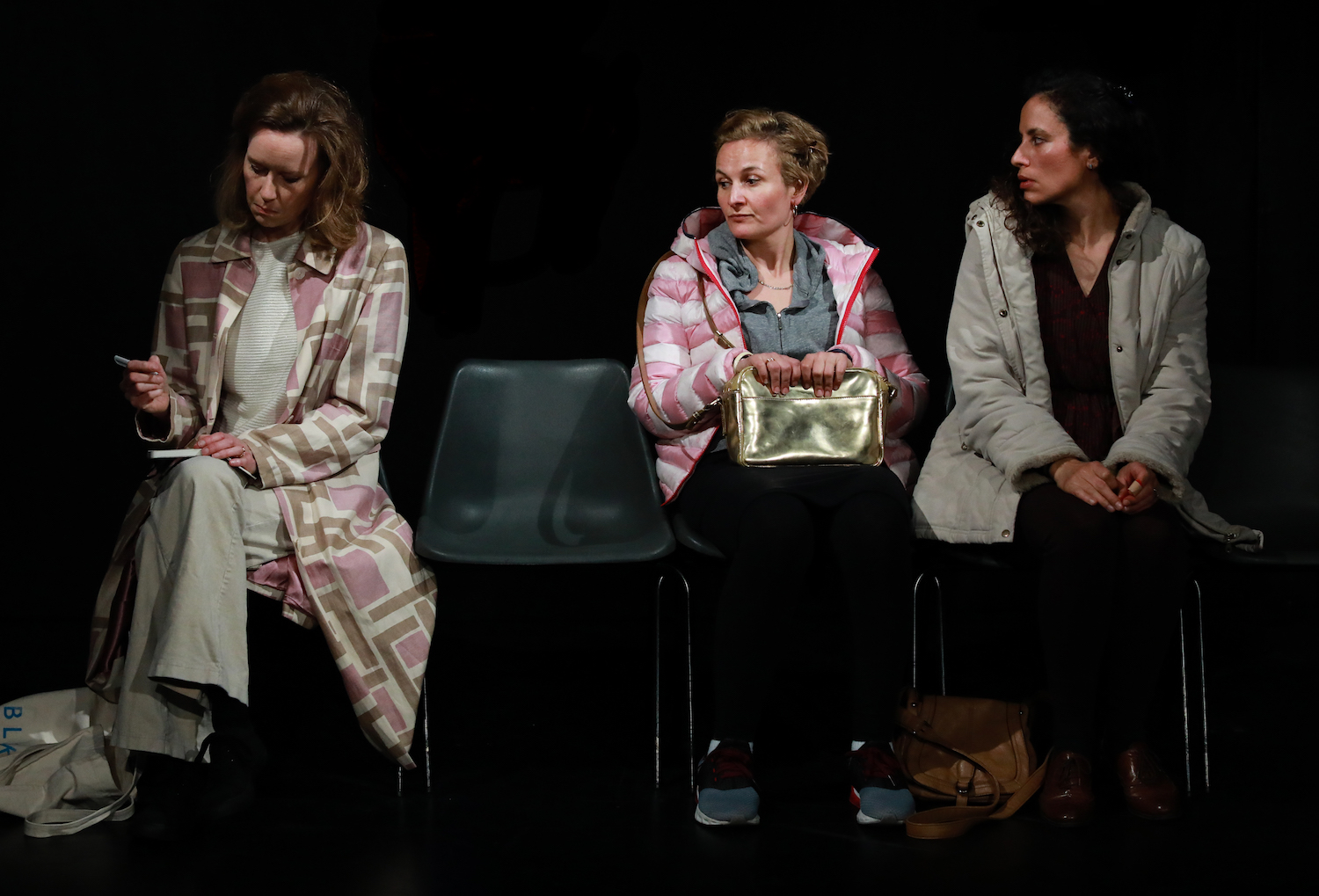
The Thelmas are a female led company specialising in “great stories, told by great women”. And there’s no doubt that Rumi, the main character in Guleraana Mir’s Coconut, fits that bill perfectly. When we meet her, she’s about to go halal speed dating, and dreaming about meeting someone cool who’s attracted not to her Muslim upbringing, but to who she really is: a bacon-loving food blogger who’d rather go to the pub than the mosque. And then she meets Simon, who’s everything she wants in a man – apart from the fairly significant detail that he’s white.

Photo credit: Greg Goodale

As you might expect from a play that begins with halal speed dating, Coconut is a very funny take on religion, culture and the pressure to be someone you’re not for fear of letting other people down. Rumi, played brilliantly by Kuran Dohil, is the coconut of the title: the term is used to describe someone who’s brown on the outside but white on the inside, and as a result not quite enough of either to really belong. In Simon, Rumi sees a chance to move towards the life she really wants, but in return asks him for a small compromise: if they’re going to be together, he’ll need to convert to Islam.

It’s at this point that the play takes an unexpectedly serious turn, and Rumi’s inner fabulous – embodied by Tibu Fortes in a hilariously flamboyant performance that couldn’t be more different to his far more tranquil role as Irfan the Imam – begins to fall silent. Simon’s conversion was supposed to be no more than a box-ticking exercise to keep the family happy, but it turns out not only is he keen to take his new faith seriously, he wants Rumi to do the same. As his enthusiasm develops into an unhealthy obsession, Rumi finds herself forced to choose once again between being true to herself and disappointing the people she loves.

Despite all its ups and downs, Rumi’s story is both entertaining and satisfying to watch, thanks to the effortless comic talents of Kuran Dohil and the down-to-earth, believable way in which her character’s written. Simon, on the other hand, is more problematic; though it’s hard to fault Jimmy Carter’s performance, the transformation in his character feels a little too sudden to be realistic, and is so extreme that it prevents us feeling any sympathy for the fact he now finds himself, like Rumi, caught between two worlds. (Although perhaps I’m just annoyed by his disparaging comments about bloggers…)

Photo credit: Greg Goodale

An ingenious origami-like set from designer Baśka Wesolowska is put to good use throughout Madelaine Moore’s production, with what at first appears to be a simple hexagonal platform coming apart to become a bar, a home, a hilltop, a mosque… at one point, we even find ourselves on a crazy golf course. There are a lot of scene changes during the 90-minute show, but these are all handled swiftly by the cast and are never long enough that our attention has time to waver. And although the play could perhaps come to an end a little earlier than it does, the final scene is worth waiting for; a fitting conclusion for a character we’ve grown to really care about.

Coconut offers a refreshingly unique perspective on what it means to be a Muslim in Britain today, and prompts an interesting discussion on the difference between religion and culture. There are aspects of the story that don’t sit quite right, but a strong cast and irresistible strong female protagonist make this enjoyable show well worth a visit.

Review: Plastic at the Old Red Lion Theatre

Some people look back on their school days as the best of their lives. For others, the only good thing about their teenage years is that they’re over and done with. But how much does that period between childhood and adulthood shape the course of the rest of our lives – and if we knew what lay ahead, how many of us might have done things differently?

Kenneth Emson’s Plastic, directed by Josh Roche, begins in a jumble of timelines, as Kev and Ben – now grown men – reminisce about a teenage football match, at which the star player caught the eye of a popular, pretty 15-year-old girl. That, we’re told, is where it all begins – and although it takes a while to straighten out the tangled threads of the two men’s memories, the story that emerges proves more than worth the effort.

Photo credit: Mathew Foster

Kev (Mark Weinman) used to be the captain of the school football team – which in their town, he tells us with a comical little bow, is a big deal. Or at least it was at the time; now he’s left school and is starting to realise his former popularity counts for little out in the real world. The one bright spot in his mundane existence is his girlfriend, Lisa (Madison Clare), the only person who still looks up to him as the hero he once was. And she’s told him tonight’s the night…

Back at school, Ben (Thomas Coombes) doesn’t fit in; the daily target of bullies, the only way he can cope is to “think Columbine, think Virginia Tech, think Sandy Hook… and breathe”. Luckily, he’s got Jack (Louis Greatorex), who’s been his best mate since forever, even though hanging out with Ben means he inevitably gets bullied too. Ben, Jack and Lisa used to be best friends, until they went to high school and she joined the popular crowd – but this afternoon they’re all bunking off together, and Jack’s hoping it’ll be just like old times.

As we follow the four characters through their day, there’s a mounting tension as Kev waits for Lisa, and the bullies wait for Ben. We know something’s brewing, but when it comes the play’s climax is genuinely shocking, largely because it hits us from so way, way out in the blue. From a narrative point of view this twist in the tale is an impressive feat of misdirection, but it also sits a little awkwardly against the backdrop of all that’s gone before, and feels like it introduces a whole new set of issues which then don’t get dealt with in the play’s closing minutes.

Emson’s script is unusual, a rapid fire rhyming verse that somehow still feels very natural in the mouths of teenagers, and which is brought brilliantly to life by an excellent cast. Thomas Coombes stands out as the tormented Ben, who’s exactly the kind of kid you’d expect to constantly be “thinking Columbine”; we feel bad for him, but at the same time we can’t help but be repelled by his intensity and general strangeness. In her professional stage debut, Madison Clare also really shines as Lisa who, despite being young, pretty and popular, is anything but a mean girl. She wants more out of life than just being one of the popular clique, and there’s a wistfulness to Clare’s performance that’s captivating to watch.

Photo credit: Mathew Foster

Another star of the show is Peter Small’s memorable and atmospheric lighting design, consisting of several bare light bulbs which are propelled across the stage by the actors and change colour seemingly at their command. This results in some powerful and poignant moments, particularly later in the play when each of the characters gets a moment in the (literal) spotlight to reflect on what’s gone before, and what could lie ahead for them.

Gripping, original and entirely unexpected, Plastic is also a pretty tough watch. The play paints a decidedly bleak picture of the school years; this is not a story that sets out to inspire nostalgia in the lucky few who actually enjoyed that time of their life. That doesn’t mean it won’t bring back memories – only that they’re unlikely to be good ones.

Can’t see the map on iPhone? Try turning your phone to landscape and that should sort it. I don’t know why but I’m working on it… 😉

Review: The Sleeper at The Space

Over the last few years, images of refugees fleeing their homes in search of safety in Europe have become such a common sight in our newspapers and on our TV screens that they’ve begun to lose a little of the powerful impact they once had. The Sleeper – or What Happens When You Ask Them to Leave?, inspired by the personal experience of writer and director Henry C. Krempels, restores that immediacy by bringing the refugee crisis out of the papers (despite, ironically, having begun as a journalistic piece) and into the here and now – or more specifically, into British writer Karina’s bed on an overnight train through Europe.

Returning from the bathroom, she finds a young woman hiding in her bunk and unthinkingly goes in search of the train manager to complain. When the woman is revealed to be a Syrian refugee, Karina insists she wants to help; but despite returning to the beginning and replaying the situation in a variety of slightly different ways, there seems to be no obvious solution to the chain of events set in motion by her instinctive reaction.

It’s at this point that things get both interesting and a little uncomfortable, as Amena – who up to now has remained largely silent – steps up to have her say. Amused and bemused by the well-meaning but misguided notion that “a play can solve the refugee crisis”, she’s no longer content to sit by while the two white people try and solve her problem; nor does she need someone else to tell her story for her, however well researched and factually accurate that account might be. This is the play’s pivotal moment, and it jolts both actors and audience out of our complacency, dramatically altering our perception of Amena and our response to her situation.

The experimental piece is performed by a cast of three, with Sarah Agha’s Amena – perhaps not surprisingly – emerging as the strongest personality. Proud, independent and not afraid to stand up for herself, she doesn’t fit the mould of the timid, grateful refugee stereotype, and the play is all the richer for it. That said, the characters of Karina and train manager Georges – played by Michelle Fahrenheim and Joshua Jacob – are equally interesting; both are bound by their own sense of duty to an unwritten code, which means that despite the best intentions, their ability to help is limited to their own narrow frame of reference. It’s only when those restrictive codes are discarded, resulting in a lengthy sequence that builds little by little towards the play’s striking final image, that another possible way forward emerges.

At first glance, this conclusion seems to imply the play is doing exactly what it said it wouldn’t: trying to solve the refugee crisis. But on reflection, it’s not so much suggesting what we should do in this one incredibly specific situation as inviting us to take a step back to view the big picture in a different way, and challenging the sense of privilege that colours our assumptions every time those familiar images appear on our TV screens. And by addressing this lesson as much – perhaps even more – to its own cast as to the audience, the play successfully makes its point without feeling like it’s preaching. Unusual and thought-provoking, The Sleeper is an interesting hour of theatre that may not give us answers, but does leave us with plenty to think about.


Can’t see the map on iPhone? Try turning your phone to landscape and that should sort it. I don’t know why but I’m working on it… 😉