Review: Adam and Eve at The Hope Theatre

Traditionally, we’ve been led by books, movies and the like to believe that “happily ever after” starts when you get married and settle down. This is particularly interesting when you consider that one of the oldest stories ever told is all about a couple who proved that theory wrong in spectacular fashion.

In Tim Cook’s reimagined Genesis story, newlyweds Adam (Lee Knight) and Eve (Jeannie Dickinson) are moving to the country and buying their first house. It’s not quite Paradise, but they need to get on the ladder and it’s all they can afford, especially now they’ve got a baby on the way. Their “masterplan” is all going swimmingly – until English teacher Adam is suspended from work after being accused of improper behaviour by Nikki (Melissa Parker), one of his students. At first, Eve is more than willing to stand by her man, convinced the accusations are a fabrication and will soon blow over. When they don’t, the first doubts creep in and she begins to wonder just how well she really knows her husband.
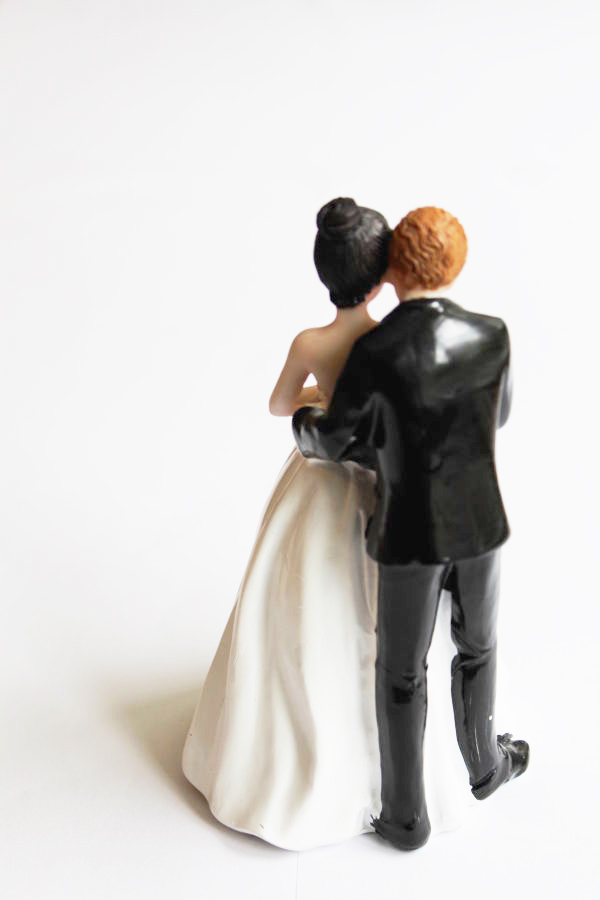
She’s not the only one. Over the course of 65 minutes, the story takes multiple twists and turns, and the balance of power shifts back and forth several times, keeping the audience in a permanent state of uncertainty with no idea who we can trust to tell the truth. It’s difficult to talk too much about the performances from Jeannie Dickinson, Melissa Parker and Lee Knight without risking spoilers but I can say that all three are excellent, taking on board the subtleties in the script and giving us just enough to keep us guessing throughout.

All the characters have significant flaws, and both Adam and Nikki give us plenty of reasons to simultaneously doubt and believe their version of events; even when the truth is revealed, there’s still a lingering suspicion that the other party may not be entirely guilt-free. The play’s conclusion is cleverly seeded by Cook – looking back to the start of the play, we can see the clues we missed earlier – but left me wanting more: to understand more fully the guilty party’s motivation, which is clearly complex but only briefly explained, and to witness the fallout from the big reveal.

That should be taken as a compliment, however, because what’s already there is an hour of tense, gripping drama during which it feels like anything could happen. With just a couple of chairs making up the set, director Jennifer Davis makes effective use of the empty space, maintaining a physical distance between the characters so that every scene – even early on – has the potential to escalate quickly into a conflict. Add to this the way the characters continue to eyeball each other suspiciously during scene changes, and the result is an atmosphere of simmering tension that keeps us on our guard from start to finish.

In Adam and Eve, Tim Cook takes the themes of temptation, trust and accusation and proves that while we may now be living in a very different world – a world dominated by money worries, fake news and the relentless pressure to be perfect in the eyes of others – in reality, humanity has changed very little since the original Adam and Eve got kicked out of the Garden of Eden. If there’s a small consolation to this depressing fact, it’s probably that at least we have an excuse; if they couldn’t make it work in Paradise, what chance is there for the rest of us?

Interview: Nathan Ellis, No One Is Coming to Save You

Kicking off on 11th June, Breaking Out is a festival of world premiere shows by emerging theatre companies, chosen from over 45 different projects by the artistic team at The Bunker Theatre. One of those shows is No One Is Coming to Save You from This Noise, a new theatre company that try to find contemporary languages for political action. An experimental duologue about one night in the lives of two people in their early twenties, No One Is Coming to Save You explores youth loneliness, power and powerlessness, and the hope for something better.

“Pretty much every day a new article will come out online about how young people are really unhappy and disappointed with the world and their lives, and that didn’t seem to be being reflected in the work we were seeing onstage, which either ignores young people altogether or is extremely interested in their sex lives,” explains writer Nathan Ellis. “We wanted to be more reflective and talk about how it really feels to be young, and how that feeling that something better is coming is maybe masking a sneaking suspicion that it isn’t.

“We really want to accurately reflect what it feels like to be young right now in both the content and the form of the play. The form of the show has been ambitiously experimental from the beginning. The two performers tell the story of two people, but as the story progresses, the lines between themselves and their stories start to blur. It’s exploring the feeling of being not-quite-in-the-world that seems particularly salient to contemporary experience. If you like Caryl Churchill or Chris Thorpe – plays that demand you think and feel – then you’ll like this.”

Nathan started writing No One Is Coming to Save You in 2016 at a residency in Oxford. “It’s almost unrecognisable from that point, but it’s essentially got the same DNA as that play,” he says. “Since then the company have had a year’s worth of workshops and scratch performances and sharings to bring it to where it is now, and have been really generously supported by Arts Council England. A lot of the play has been collaborative, with lots of discussion with people within and outside the company about its themes – everyone in the company is under 25 – and experiences from their own lives.”

No One Is Coming to Save You is the first production from This Noise, who focus on making theatre by, with, and for young people: “We are made up of a group of interdisciplinary makers across writing, design, and performance and have been Arts Council East funded since 2018,” says Nathan. “We basically think theatre is a great space to talk about how complicated it is to be alive right now, without resorting to simple answers or platitudes. If you’re looking for a formally experimental show that explores how it really feels to be young today – about youth loneliness, mental health, and the terrors of a world not working, then give No One Is Coming to Save You a go.

“Although it deals with serious issues in a complex, challenging way, the play is actually very hopeful. Without spoiling the ending, it’s got a real belief behind it that communal experiences – like sharing space and sharing a story – can really make us feel more connected to each other. Hopefully it will challenge people with a new form and maybe make them smile a bit too. There are some funny bits – promise!”

With a little over two weeks until their first performance as part of Breaking Out, Nathan and the team are looking forward to bringing their work to The Bunker. “This Noise are unbelievably excited about Breaking Out. It’s so exciting to be part of such a vibrant season of other work by emerging companies. Particularly as a company exploring how it feels to be young, it will be so great to see where their work has taken them and to see the pieces in conversation with each other. We’ve been in love with the Bunker since it opened and always wanted to perform the show there. It already has such a history of supporting complicated, experimental work that would otherwise not get a platform in London. It’s such a versatile space and one that has a real atmosphere and engaged audience, who we think will really appreciate the challenge of a show like No One Is Coming to Save You.”

Interview: Tim McArthur, Into The Woods

Stephen Sondheim’s Into The Woods gets a 21st century makeover this week at the Cockpit Theatre, as All Star Productions join forces with Trilby Productions to revive Tim McArthur’s adaptation of the popular musical. First seen in 2014, the show returns with an ensemble of seventeen larger-than-life characters, all drawn from modern day Britain.

“By transporting the traditional fairy tales into the 21st century, the story resonates with and reflects society as it is now,” explains Tim, who both directs and performs as the Baker in the new production. “The characters will be familiar to reality TV viewers of shows ranging from Jeremy Kyle to TOWIE and Made in Chelsea. Another unique quality is that it’s staged in the round – I want the audience to feel they are part of the story. This also gives scope within the staging to convey better the sense of journey.”

Into The Woods draws on popular fairy tales including Rapunzel, Cinderella, Jack and the Beanstalk and Red Riding Hood to tell a cautionary tale about being careful what you wish for. “Into the Woods is about loss, wanting things that you maybe shouldn’t want, taking things for granted, wanting to be happy, realising that maybe what you have is better than wishing for more,” says Tim. “It’s about dysfunctional families and more importantly how an action you make may have consequences on someone else. This is of course all told through the traditional format of well-known fairy tales, which are interwoven with each other into the simple main story of a baker and his wife. They’re desperate for a child but the witch has put them under a curse, preventing them from having a baby unless they find unique and unusual items which will reverse the witch’s curse. Their future happiness depends on their search.”

Tim directed the show on its initial run in 2014, and says he’s thrilled to return four years later in the role of the Baker. “In 2014, the producers originally asked me to direct the piece and play the part of the Baker, but because I wanted to create a new fresh vision for the show I knew it would be a challenge to both direct and perform. So, I decided to just focus my attention on the direction. Now we have in a way tested the look and feel of the show, I know it works. I have loved and known this show for nearly 30 years, so it’s a dream come true to play the Baker – one of the best male roles in musical theatre.”

The show’s cast also includes Jo Wickham, who was a member of the 2014 company and reprises her role as the Baker’s Wife, alongside several new faces. “About 80% of the cast are new and weren’t in the 2014 production, so it’s exciting to create the characters with the new actors’ energy and ideas and see how that dynamic interacts with the interpretations of the returning actors,” says Tim. “The main factor for me as a director when casting is to bring together a group of actors who are comfortable with who they are, so we can create a safe space in rehearsal to be able to play and experiment. Particularly with an ensemble piece it’s vital that there are no dominant egos. The show is the ego and that’s it. This cast are nice and talented people who care about the production and are excited to be in the rehearsal room.

“They are a mix of performers with whom I have worked as a director and/or fellow actor plus new people, so we have a creative blend of familiarity and new impetus as we come together as a group for the first time and go ‘into the woods’. Our ensemble includes a range of ages and diversity of background and experience – performers with extensive West End pedigrees, including the Rapunzel from the original London production of Into the Woods (Mary Lincoln) who returns as Cinderella’s stepmother, to performers early in their careers.”

But the cast isn’t all that’s new this time around: “Both personally and as a director, my life has changed a lot in the past four years. I very much believe that we continue to learn, grow and develop as people and you naturally bring those life experiences into the creation of the show. One of the greatest aspects of Stephen Sondheim’s work is that you continually find new meanings and emotions within both the text and music of the story.

“My first Sondheim show was a production of Follies at the Shaftesbury Theatre in 1988. I instantly fell in love with his music and lyrics, and the love affair began. Into the Woods was the third Sondheim show I saw; I was 15 years old and I saw it three times. The structure of the show is so clever, and the story is so relevant in today’s world where commerciality drives everything and encourages us to always want more and to never be happy with what we have.”

Tim isn’t only an actor and director; he’s also a singer and presenter, who can currently be heard every Friday presenting The Curtain Up Show on Resonance 104.4 FM. With so many strings to his bow, choosing highlights proves a tough challenge: “That is a really difficult question. I trained to be an actor, and since leaving drama school I have been given so many wonderful opportunities in so many different areas of the entertainment industry. I never originally wanted to be a director or a producer, or perform my solo show or even be a TV/radio presenter. But highlights are probably performing my solo show Mountains in New York at Feinstein’s 54 Below earlier this year, and playing Sam Byck in a production of Stephen Sondheim’s Assassins a few years back – and of course the chance to revisit this fabulous show.”

Review: In the Shadow of the Mountain at the Old Red Lion Theatre

There is no one size fits all when it comes to mental illness, and in Felicity Huxley-Miners’ In the Shadow of the Mountain we see two very different manifestations in the story of one extremely dysfunctional relationship. First, we meet Rob, who’s just found out his girlfriend slept with his best mate and is so devastated he’s thinking about throwing himself under a train – until Ellie explodes into his life and makes it her mission to save him. One thing leads to another, and Rob ends up back at her place… but Ellie has problems of her own, and as her behaviour becomes more and more erratic Rob starts to wonder what he’s got himself into.

Photo credit: Harry Richards

On an otherwise fairly minimal set from Emily Megson, low-hanging “clouds” made out of crumpled paper covered in scrawled handwriting are an early clue that all is not well – and it rapidly becomes clear that Rob and Ellie’s relationship isn’t a healthy one, although it’s not initially obvious exactly why. The play is clever in the way it tackles our assumptions, and it’s only as it comes to an end that we begin to appreciate why Ellie behaves the way she does, and that her mood swings and manipulative behaviour aren’t something she can control. The seemingly unrealistic intensity of the relationship – eight days in the two are already talking love and marriage – also makes more sense with the benefit of hindsight, although it’s still never quite explained why Rob stays as long as he does, when he’s clearly uncomfortable with the speed at which things are moving and his increasing isolation from friends and family.

It’s interesting to note that although the play does make it clear Ellie isn’t well, the only way we know the exact cause – Borderline Personality Disorder – is through the notes in the programme; her diagnosis is never given in the play itself. This is obviously a deliberate decision, since Rob asks outright and Ellie declines to answer, and in some ways it feels right to avoid sticking a label on her. That said, the play’s final scene feels underdeveloped, and perhaps misses an opportunity to raise awareness of a condition that can so easily be misinterpreted.

Photo credit: Harry Richards

There’s also an issue with balance in the story, which becomes increasingly focused on Ellie, leaving Rob and his problems rather out in the cold. Both Felicity Huxley-Miners and David Shears give good performances, and it’s refreshing to see a play about a toxic relationship where the male character doesn’t have the upper hand. But with Ellie stealing pretty much every scene as everyone waits to see what she’ll do next, we get to know little about Rob as a character – which is perhaps why it’s so difficult to put a finger on why he sticks around as long as he does.

In the Shadow of the Mountain takes important steps towards raising awareness of the broad spectrum of mental illness, and Borderline Personality Disorder in particular, and Richard Elson’s production does a good job of capturing, at different moments, the emotional turmoil experienced by both Rob and Ellie. There are areas of the play that could benefit from some more development, but the potential is clearly already there for a powerful and challenging piece of theatre.

Can’t see the map on iPhone? Try turning your phone to landscape and that should sort it. I don’t know why but I’m working on it… 😉

Review: Before 30 at Theatre N16

Yesterday, someone I know helpfully pointed out that in a few weeks I’ll be closer to 40 than 30. And just like that, I went from looking forward to my 36th birthday to panicking about how quickly the years are flying past, when there are so many things I haven’t done yet. It’s not the first time this has bothered me, and it undoubtedly won’t be the last – which is why it’s reassuring to go and see a show like Before 30, and realise that I’m not the only one who’s freaking out.

Written and performed by Tom Hartwell and directed by Phil Croft, Before 30 is a one-man show about a Londoner called Chris. Chris has just turned 29. He’s single, living in a tent in someone’s garage, and the closest he’s got to his dream of being a chef is working for Deliveroo, which would be so much easier (and cheaper) if people didn’t keep nicking his Boris bike. Meanwhile it seems like everyone around him is getting married, getting jobs, having babies and buying houses, and his proudest achievement is – well, he’s not quite sure, to be honest.

Photo credit: Headshot Toby

As Chris veers wildly (and in some cases literally) from one hilarious mishap to another on the road to his 30th birthday, his panic begins to give way to a much more profound feeling of despair. And it’s here that the play really hits home as it examines the damaging expectations imposed on us by society, family, friends – but most of all by ourselves. At the same time, it also makes the very valid point that success is a relative term; someone who appears to have it all according to my world view might be struggling to live up to their own very different ideal, and it’s not for me to judge how happy and fulfilled that person should be.

As in previous plays Flood, Contactless and You Tweet My Face Space, Tom Hartwell demonstrates his exceptional ability to take the 21st century millennial experience and portray it on stage in a way that’s both relatable and very funny. (There’s even a Friends reference; this is a writer who really knows his audience.) As a performer, too, he wastes no time building a rapport with his audience; he has us on side pretty much from the moment he climbs out of his tent wearing a pink Hello Kitty bicycle helmet and tries to sing Happy Birthday to himself. From here, the laughs come thick and fast as we get to know Chris and the array of colourful characters that make up his story – and consequently when events take a more serious turn, we’re sufficiently invested in both story and character to really listen to what he has to say.

Anyone who’s ever had one of those “why God why?!” moments – which I’m willing to bet is most, if not all of us at some point – will find something that speaks to them in Before 30, even if it’s just the comforting knowledge that it’s totally okay to not always feel completely in control of where your life is going. With that knowledge, too, comes the understanding – appropriately timed for Mental Health Awareness Week – that those around us might be dealing with their own issues, even if their Instagram suggests they’ve got it all worked out. 

Yet again, Tom Hartwell has produced a play that delivers on several levels – it’s thoroughly entertaining, frighteningly relatable, and has already inspired a lengthy workplace discussion about the horrors of getting older. Let’s hope the show gets a longer run in the future; it certainly deserves it.

This run of Before 30 is now over 😦 but keep an eye on tomhartwellactor.com or follow @TomHartwell88 for details of future work.