Review: My Name is Cathy at The Chapel Playhouse

If you could have a conversation with yourself 15 years ago, what would you say? The eponymous protagonist in Andrew Sharpe’s My Name is Cathy has little in the way of good news to offer her younger self – she’s spending her 50th birthday alone, having lost her job, her marriage and her kids, partly but by no means entirely through her own fault. What she does have to share, however, is the reassurance that little by little, with persistence and courage, things can and will get better.

Photo credit: Origin8 Photography

Inspired by a real case from the writer’s days as a criminal lawyer, My Name is Cathy is a cleverly crafted drama that charts the downfall of a brilliant, successful and happily married teacher over the course of a few short years in the early 00s. It’s narrated by the older Cathy (Kat-Anne Rogers), a recovering alcoholic who only now has the hindsight and self-awareness to recognise the arrogance of her younger self (Sally Paffett) – and yet despite her best efforts she remains powerless to stop the bad choices, on both her own part and those of others, which will ultimately contribute to their ruin.

Nowhere is this more clearly demonstrated than in the play’s second act, “The Trial”, in which Adam Bottomley’s classroom set is quickly and efficiently converted into a courtroom, presided over by the ironically named Judge Goode (Edwin Flay). Here Cathy is forced to relive all over again the nightmare day she fought to keep her children and lost – the difference being that this time she understands the subtext of what’s going on, and the multiple ways that the male-dominated legal system was always set up to work against her. Consequently the scene descends into a kind of dark farce, which despite moments of humour is ultimately quite heartbreaking to watch.

While it’s not always easy viewing, the performances given by all three actors are compelling and convincing throughout. Kat-Anne Rogers is a likeable narrator, opening with an AA-style monologue in which she acknowledges her own shortcomings. Edwin Flay and Sally Paffett each take on two very different roles with great success; in both cases the dynamic of the relationship between their characters is – at times, uncomfortably – well portrayed.

Photo credit: Origin8 Photography

Velenzia Spearpoint’s simply staged production charts the passing years with snippets of news reports and pop songs (the show’s playlist brings with it some great “haven’t heard it for ages” moments), which help to keep the audience engaged during scene and costume changes. This also combines well with the script’s commentary on the pressures and politics of the teaching profession – and yes, Michael Gove does make an appearance in that conversation.

My Name is Cathy is a moving and thoughtfully written play with a clever twist. The idea of older and younger Cathy being able to work through things together is undeniably poignant, but also adds a much-needed note of optimism to the play’s conclusion: after all, how much easier could certain moments in our lives have been if we’d known with absolute certainty that we would make it through and come out stronger on the other side? And on that reassuring thought… let’s hope this short run isn’t the last we’ve seen of Cathy.

My Name is Cathy was performed by KatAlyst Productions at the Chapel Playhouse on 16th-18th August. For news of future productions, visit katalystpro.com or follow @KatAlystpro.

Review: Before I Am Lost at Etcetera Theatre

If you look up Hilda Doolittle on Wikipedia, in the very first sentence you’ll learn that she was “associated with the early 20th century avant-garde Imagist group of poets, including Ezra Pound and Richard Aldington”. But Doolittle – or H.D. – was a poet and novelist in her own right, so why is it that most of us know her now more by the men she was linked to than by her own name, story or work?

Photo credit: Brendan Walker

This is a wrong that Beatrice Vincent sets out to correct in her new monologue, Before I Am Lost. The play introduces us to Hilda at her most vulnerable, trapped in both literal and metaphorical confinement as she prepares for the imminent birth of her daughter. Frightened and alone, but also angry and defiant, and with nothing else to occupy her, she opens up to her unborn child about their current circumstances and how they got here: her past and present relationships with both men and women, the devastating impact of World War I on what had until then been a loving marriage, and the subsequent affair that led to her pregnancy and abandonment. Slowly a picture emerges, of a passionate, intelligent woman at a pivotal moment – the moment she realises not just to what extent her life so far has been designed and directed by men, but also that it doesn’t necessarily have to continue that way, either for her or her daughter.

Beatrice Vincent gives a beautiful performance, walking a tightrope of emotion with captivating precision throughout the hour-long play. One moment she’s playful, the next bitterly sarcastic; she claims not to want her child and yet addresses her bump with obvious affection; after one furious outburst as she recalls her husband’s affair, she regains her composure with an apologetic, “Sorry, that was embarrassing”. The result is a portrayal that feels very authentic – despite her obvious respect for Doolittle as both a woman and a poet, Vincent avoids the temptation to paint her as wholly admirable, and in doing so makes her much more sympathetic and relatable than any gushing tribute could have done.

Directed by Ross McGregor, the production captures the intimacy of the scene between mother and unborn child, bringing in secondary characters only as voiceovers and thus ensuring that closeness is never interrupted. Just as Doolittle appears so often as little more than a footnote in the stories of others, here the tables are turned to show us these well-known literary figures through her eyes, and it’s a view that’s affectionate but not always flattering. Meanwhile her own writing career is generally more alluded to than openly discussed, through the script’s poetic use of language and literary quotes (of which I’m sure there are many more than I managed to pick up in a single sitting) and references to the classical heroines who featured so prominently in her writing.

Photo credit: Brendan Walker

You won’t learn everything about Hilda Doolittle’s life from watching Before I Am Lost – we don’t even find out if her fearful prediction that she’ll die in childbirth is accurate. But the play is an excellent first step towards (re)introducing the world to a writer and a woman who deserves to be known as more than a lover, or wife, or friend, of That Famous Man. Hilda Doolittle had her own story to tell, and if this brief snapshot is anything to go by, it’s one that’s well worth hearing.

Before I Am Lost is at Etcetera Theatre until 20th August.

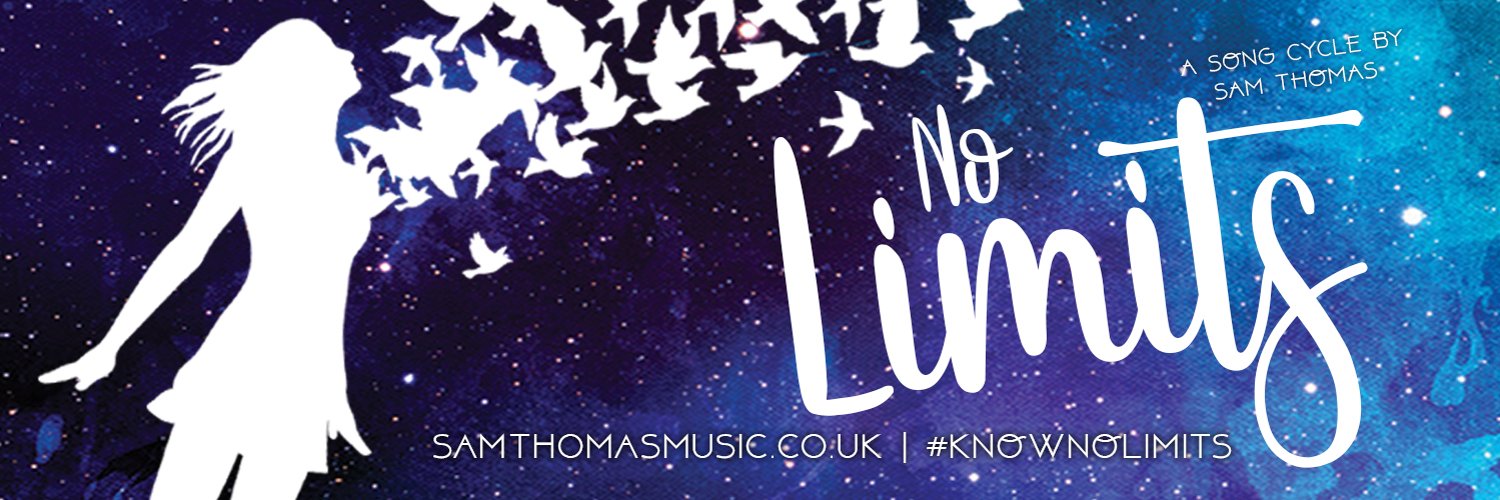
Quick Q&A: No Limits

Where and when: The Hen and Chickens Theatre, 23rd – 25th August

What it’s all about…“Seems like everybody’s getting married / having babies / getting promoted / moving elsewhere”
No Limits is a brand new Musical Theatre Song Cycle by Sam Thomas.
From confessing your dreams of becoming a rock star to catfish-ing your neighbour, the show explores stories of 20-somethings discovering how to tackle life and become an adult.

You’ll like it if… you love Musical Theatre, New Music, New Writing, British writers. Character driven songs and stories. If you feel a bit lost sometimes and you’re looking for answers.

You should see it because… it has so much heart and passion behind it, whilst interjecting comedy and truth. It’s a gorgeous piece of new British writing that is currently under developed and under appreciated. It’s time we start showing people the talent we have on our doorstep.

Where to follow:
Twitter: @RedJayTC / @NoLimitsMusical
Instagram: @redjay_theatrecompany / @nolimits.songcycle
#KnowNoLimits

Book here: www.unrestrictedview.co.uk/no-limits-a-song-cycle/

Got a show opening soon? Visit Promote your show and tell us more!

Review: River in the Sky at The Hope Theatre

Peter Taylor’s River in the Sky was never going to be an easy watch. The story deals with a couple coming to terms with the death of their newborn baby, so it’s no surprise that the play ventures into some dark territory, or that it leaves its audience feeling somewhat fragile. Just as much as the emotional impact, though, it’s the unique and original approach to the subject matter that makes this debut production from Turn Point Theatre particularly memorable.

Ellie (Lindsey Cross) and Jack (Howard Horner) are planning their future, and grappling with an important question: should they have one baby, or two, or three (definitely not four)? In their excitement and optimism, it never occurs to them that the decision could be taken out of their hands. Some time later, Ellie’s fled to a caravan by the sea, Jack’s trying to get on with his life, and it’s obvious that neither of them is coping with the grief of losing their son. Instead, they take refuge in tea, biscuits and storytelling – but while the vivid tales they share start out as an escape from real life, increasingly they come to offer a kind of healing.

And it’s for this reason that while there are parts of the play that are heartbreakingly painful to watch, ultimately River in the Sky is a story of hope. By allowing us to meet Jack and Ellie – albeit briefly – before tragedy strikes, Taylor establishes how much both the individuals and their relationship have been changed by what’s happened in the intervening years. Where once there was playfulness and humour, now there’s awkward small talk and repressed anger. And yet even in the midst of their grief, there are glimpses of the couple we remember from that brief opening scene and the reassuring knowledge that those people, while they may be irrevocably changed, do somehow still exist.

If the storytelling aspect of the play is what makes it unique, it’s also where the production really comes alive. The set is simple – just some simple wooden blocks in the centre of the stage – but between Taylor’s evocative writing and direction, and vibrant performances from Lindsey Cross and Howard Horner, we find ourselves transported to a dangerous but beautiful world of monsters and magical creatures, where the key to survival is to be brave and fight, even if the struggle seems hopeless. By contrast, the couple’s reclusive real-world existence seems even more empty and colourless.

In the end, then, River in the Sky is not so much a story about grief as it is of a couple finding their own way out of it, and – perhaps – back to each other. Taylor doesn’t try to offer easy answers or neat conclusions; there’s no suggestion that Jack and Ellie’s journey is over by the end of the play, but we do feel that they’ve taken a step in the right direction. A thoughtful and quietly moving production, the play appears to set out on a well-worn path, but then strikes out on its own – and in doing so makes the powerful point that there is no one, or correct, way of dealing with tragedy.

River in the Sky is at The Hope Theatre until 24th August.

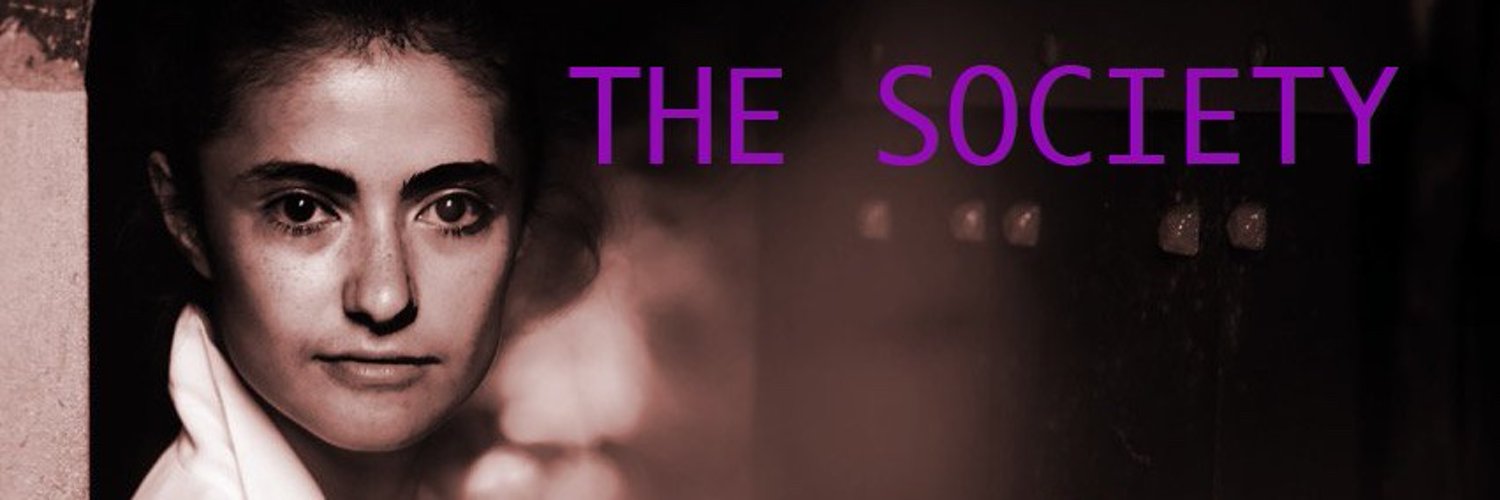
Quick Q&A: The Society

Where and when: St Augustine’s Tower, Hackney – 6th-9th September 2019

What it’s all about… The Society of Satanic Spirits is holding an Open Evening in St Augustine’s Tower, Hackney’s oldest, oddest building. They’re inviting you to join them – they’d like to help you awaken your own Inner Demon.

Merge with a strange crew of witches and demons, denizens of European folklore and the backwaters of our cultural subconscious, as they struggle up through the cracks in Hackney’s modern façade.

The Society is a mix of interactive theatre/audio-installation/game, as part of a series of residencies facilitated by Hackney Historic Buildings Trust at the uniquely atmospheric 16th-Century St Augustine’s Tower. It asks individuals to examine the ways in which myths and archaic images persist in the contemporary subconscious, much as the 16th-Century St Augustine’s persists as a shout back to our cultural heritage on Hackney’s commercial Mare Street.

Brought to St Augustine’s by Don’t Be Absurd after performances at GAS Station (ZU-UK) and the University of East London, with audio-installation by Sebastian H-W Live Artist. Project supported by Hackney Historic Buildings Trust, ZU-UK, University of East London and Anima Theatre.

You’ll like it if… you like Buzzfeed quizzes, myths, witches’ hats, old buildings, narrow staircases, Django Reinhardt, irony, playing pretend, audio-installation, demons, surprising panoramic views of London.

You should see it because… it’s an unprecedented hybrid in terms of form, and offers a new way of understanding ourselves and our surroundings through story and play.

Plus, St Augustine’s Tower is only occasionally open to the public, so it’s a rare chance to see inside this often overlooked gem in the centre of Hackney.

Anything else we should know… The staircase is steep and narrow, so unfortunately not the most accessible.

Be prepared to introspect.

Where to follow:
Twitter: @dontbeabsurd1
Facebook: @dontbeabsurdtheatre
Instagram: @dontbeabsurdtheatre

Book here: ticketlab.co.uk/events/society

Got a show opening soon? Visit Promote your show and tell us more!