Review: Redemption at Drayton Arms Theatre

Faye (Grace Martin) and Jess (Molly Marr-Johnson) have been best friends since their first year at uni. They live together, party together and support each other through thick and thin. But now Faye’s got a new boyfriend, Alf (Douglas Clarke-Wood), and Jess isn’t dealing with it well. Are her misgivings just paranoia, sparked by a trauma that still haunts her from years before – or is she right to be concerned?

Redemption, which marks the writing and directorial debut of Emily Shanks, is a compelling and very well acted play about friendship, dating and the complexities that come with taking our first steps into adulthood, whether we feel ready for it or not. Touching also on issues of mental health and childhood trauma, it’s packed full of twists and turns, with the audience never quite knowing who we can trust, and concludes with an explosive climax that’s both shocking and emotional to watch.

The cast of four are excellent; the intimacy between them is very convincing, and there’s a playfulness to their physical and spoken interactions that feels totally natural. (This is all the more impressive given that Douglas Clarke-Wood only took over the pivotal role of Alf a week or so before opening night.) Grace Martin and Molly Marr-Johnson are particularly strong as the two best friends, whether they’re teasing each other mercilessly or having a serious heart-to-heart. It only takes a few minutes for the audience to become completely engaged with their relationship, which makes it all the more difficult later as we see it begin to fracture under pressure.

The play isn’t just about female friendship, though, and the bond between Alf and his own best friend Nick (Nicholas Marrast Lewis) is equally strong, though far more complex and a lot less demonstrative. And then there’s the relationship between the girls and Nick, which is different again – he’s the classic Gay Best Friend of sitcom tradition, but even this relatively conventional friendship holds a surprise or two.

The action takes place entirely in Faye and Jess’s flat, with a beautifully detailed set that feels genuinely lived in. The lighting is realistic for a cosy, lamp-lit living room, though at times – particularly in the opening scene – this can make it hard to see what’s going on. The production also feels like it needs to find its feet in terms of timing and structure – at just over 80 minutes long, the inclusion of an interval feels unnecessary and needs to be more clearly announced (it took the opening night audience very much by surprise). The play’s conclusion, though powerful, also feels slightly abrupt.

These, however, are minor details that can no doubt be worked out over the course of the run. The play itself – both the story and its characters – already makes for quality viewing, thanks to strong writing and performances across the board. An impressive debut and well worth a visit.

Redemption is at the Drayton Arms Theatre until 21st September.

Quick Q&A: When the Rain Stops Falling

Where and when: The Lion and the Unicorn Theatre, Sept 24th – 29th 2019

What it’s all about… How can we carry the baggage from the generations before us… Every family has a secret, but what is the cost of these mistakes and misfortunes?

We begin our story in Alice Springs, 2039. A fish falls from the sky and lands at the feet of Gabriel York. And it still smells of the sea. It’s been raining for days and Gabriel knows something is wrong. Fifty years earlier, his grandfather Henry Law predicts that fish will fall from the sky, heralding a great flood which will end life on earth as we know it.

WTRSF is an intricate, multi-layered story that spans four generations and two hemispheres, from the claustrophobia of a London flat in 1959 to the windswept coast of Southern Australia, and into the heart of the Australian desert in 2039.

This multi award-winning play by Andrew Bovell interweaves a series of connected stories, as seven people confront the mysteries of their past in order to understand their future; revealing how patterns of betrayal, love and abandonment are passed on. Until finally, as the desert is inundated with rain, one young man finds the courage to defy the legacy.

This is the debut production from The Kindling Collective.

You’ll like it if… you’re interested in theatre that challenges the norm! WTRSF is an explosion of physical storytelling in ways you have not seen before. Bovell’s award-winning text is brought to life by a 6-strong ensemble and original, contemporary music by composer Nick Di Gregorio.

You should see it because… it is the Kindling Collective’s debut production, following a highly successful Variety Show Fan the Flame, and an R&D workshop of When the Rain Stops Falling. Though new and non-profit, the company is rapidly acquiring a strong following, due to the high quality of its work, but also the affordable development opportunities/workshops being launched for likeminded artists, and actors wishing to challenge and refine their personal ‘process’.

Anything else we should know…: The Kindling Collective is a new ensemble driven company doing things a little differently, particularly in the rehearsal room. We’re passionate about creating visceral, sensory-rich experiences for audiences and artists alike, all through an unwavering commitment to the ‘creative process’ at every stage of our work. We seek to revolutionise rehearsal rooms, using dynamic musical and physical storytelling practices to generate freedom, boundless creativity and safe self-expression for our engaged artists.

Where to follow:
Twitter: @TheKindlingC
Facebook: @KindlingCollectiveTheatre
Instagram: @thekindlingcollective

#WTRSF #WhenTheRainStopsFalling #ensembletheatre #physicalstorytelling #artistsforartists #artistssupportartists #visceralmusicality #nonprofit #process #devising

Book here: https://www.thelionandunicorntheatre.com/whats-on#/event/when-the-rain-stops-falling-4

Got a show opening soon? Visit Promote your show and tell us more!

Review: What Girls Are Made Of at Soho Theatre

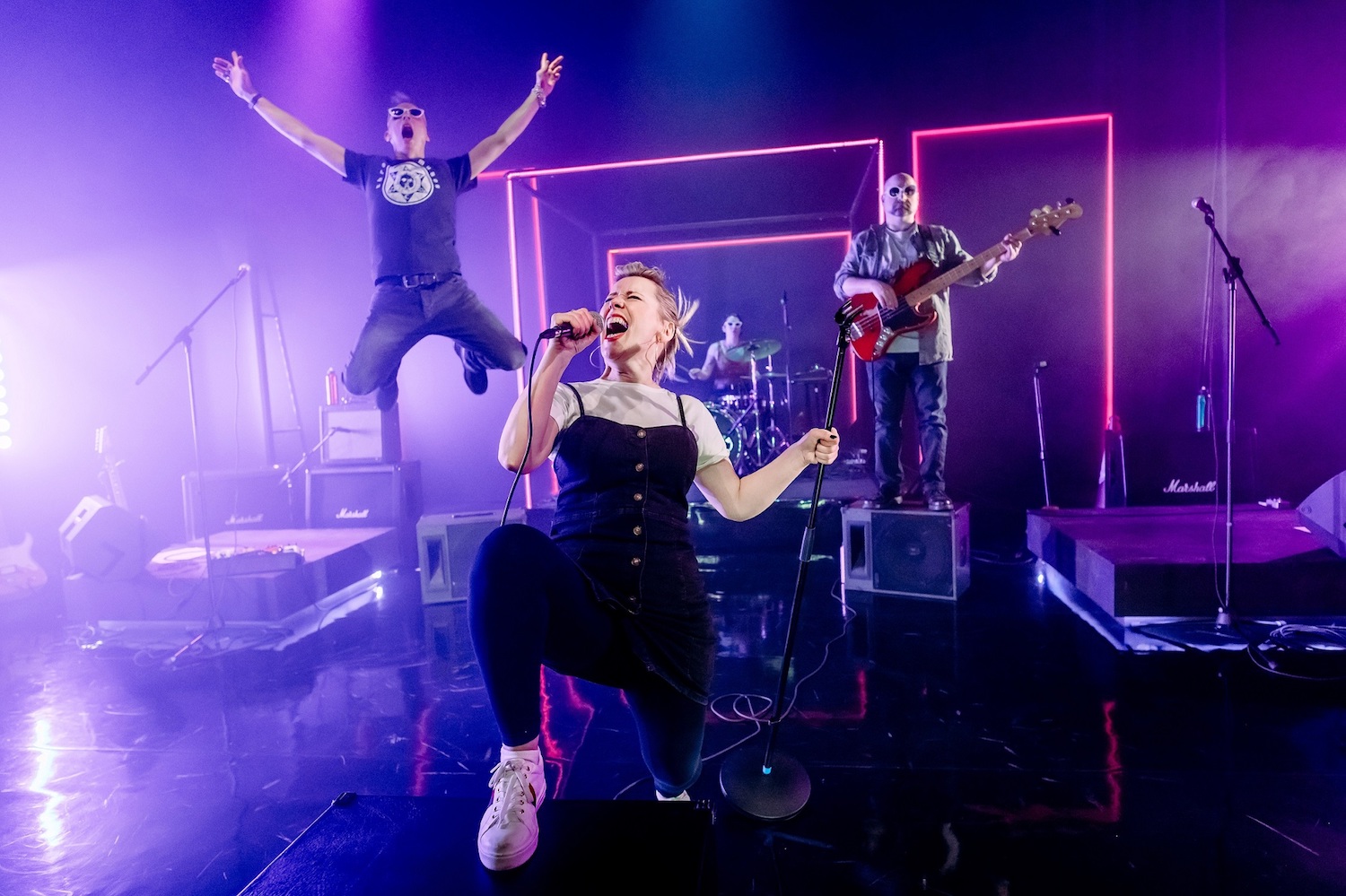
When she was a teenager in Glenrothes, Cora Bissett wanted to be a rockstar. And then she was one, for a while, as lead singer of Scottish band Darlingheart – remember them? No, me neither, but in the early 90s they came pretty close to hitting the big time, signing a six-album deal and touring with the likes of Blur and Radiohead. But showbiz is a fickle industry, and all it took was one bad review in NME to start the reversal of the band’s fortunes that would rapidly bring the dream crashing down.

Photo credit: Mihaela Bodlovic

In What Girls Are Made Of, currently at the latter end of a world tour that’s taken it to Brazil, USA and back to Edinburgh for the second summer in a row, Cora reflects on her time as a teenage rockstar. Although it paints a vivid and entertaining picture of how unforgiving and exploitative the music industry can be, though, the show is about so much more than that. It’s a story of survival, recovery and finding a place in the world. It’s about family, love and loss. And it’s about not letting anyone tell you what you can or can’t do – especially if you’re a girl.

Cora herself is an engaging and charismatic storyteller; microphone in hand, she steps smoothly back into the role of front woman after 25 years. Though there’s no shortage of humour in her tale, nor is there any attempt to sugarcoat any aspect of it, and Cora’s raw honesty means that by the time we get to the business end of proceedings we’re well and truly invested. It’s these final twenty minutes or so where the show really hits home emotionally – perhaps we don’t know what it’s like to party with Blur, but we can certainly relate to the disappointment of having a childhood dream snatched away, the fear of losing a parent, or the desperate longing for a future that’s always just out of reach.

Fittingly, the show takes the format of part play, part gig, with all the appearance and atmosphere of a live music performance – it almost feels wrong for the audience to be sitting down to watch, particularly at the end. Joining Cora on stage are bandmates Emma Smith, Simon Donaldson and Harry Ward, who in addition to providing the music also frequently come close to stealing the show with their hilarious portrayals of everyone from Damon Albarn to Cora’s mum. Under Orla O’Loughlin’s slick direction, the energy of the piece never falters, and the transitions between the musical numbers and spoken word flow very naturally.

Photo credit: Mihaela Bodlovic

Besides being a great nostalgia trip for those of us who grew up listening to the indie music of the 90s, What Girls Are Made Of is a fun and uplifting show that, like any good gig, takes its audience on a journey and then sends us home on a high, confident in the knowledge that while we may not all get (or indeed want) to be rockstars, it’s more than enough to be ourselves – whatever we’re made of.

What Girls Are Made Of is at Soho Theatre until 28th September.

Review: Jade City at the Bunker Theatre

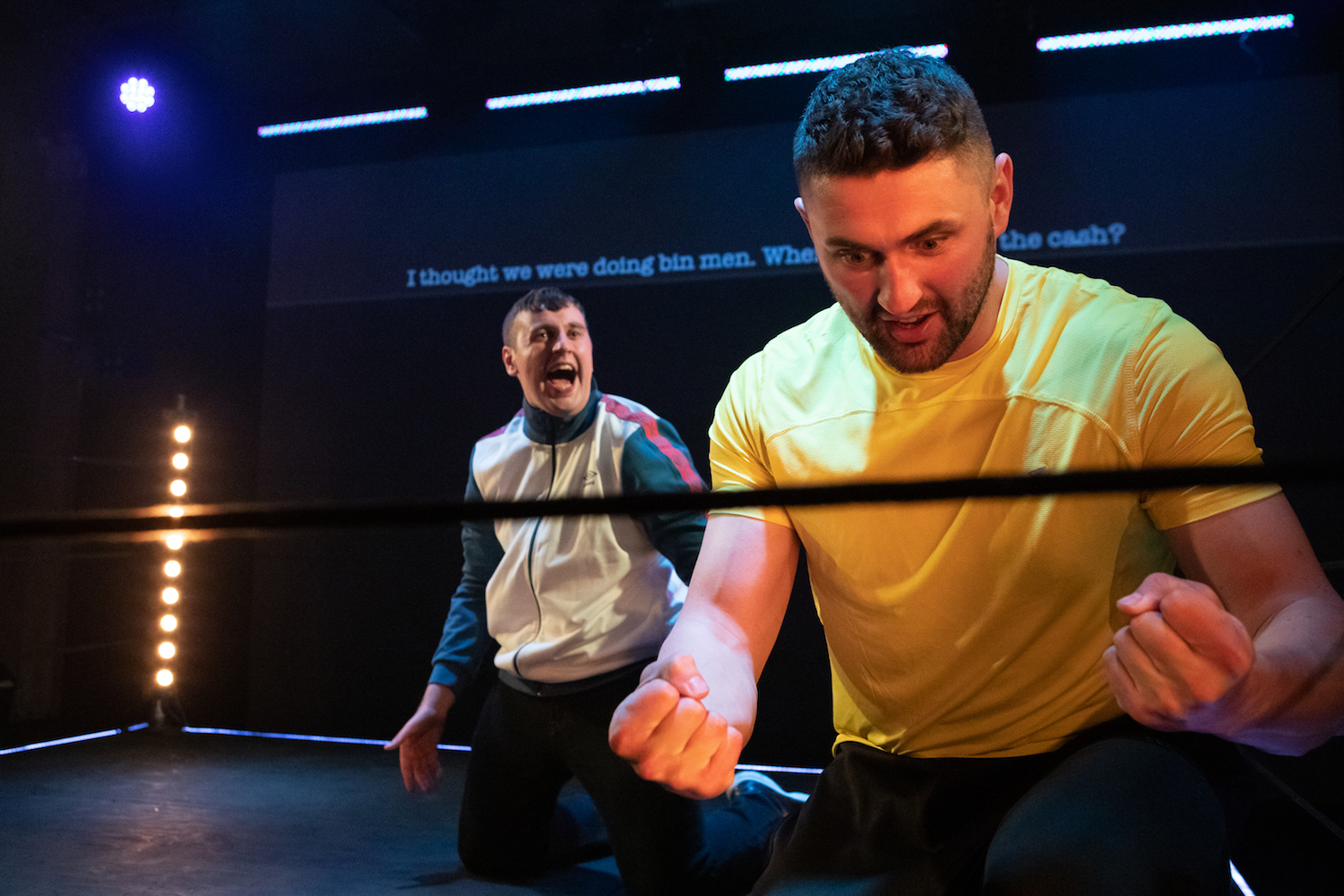
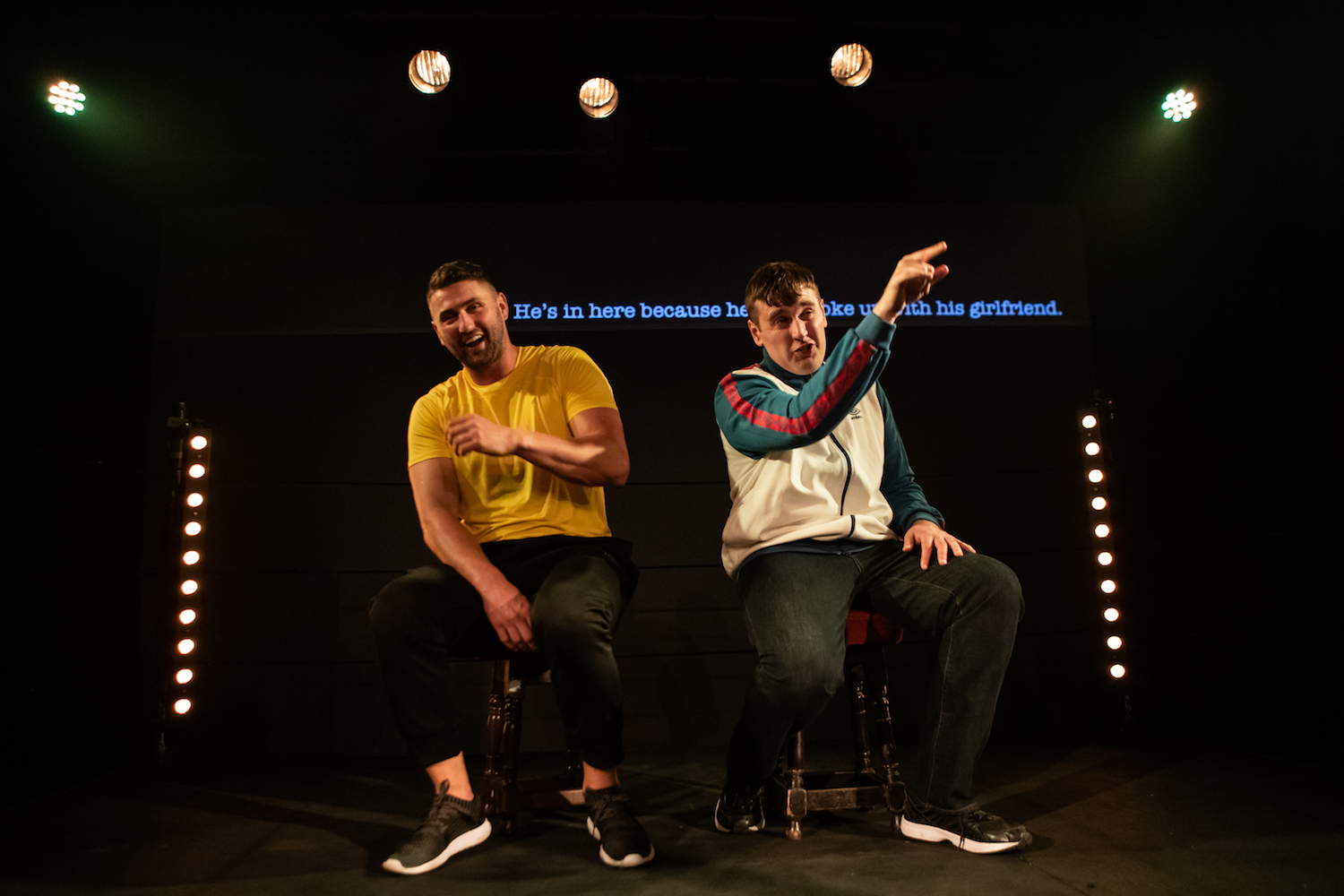
Written in response to the governmental neglect that’s left a lasting mark on the city and people of Belfast, Alice Malseed’s Jade City is a troubling two-hander exploring mental health among young working class men. Unemployed, skint, and with little to strive for or look forward to, friends Sas (Brendan Quinn) and Monty (Barry Calvert) have devised their own way to escape: The Game. Stepping out of their dull, uninspiring lives, in The Game they can be whoever and go wherever they want – fighters in the Cuban Revolution, guests at the Plaza in New York, seagulls soaring high above the city – and for a brief moment they can revel in their newfound freedom, be it financial, political or physical.

Photo credit: Ali Wright

But Sas, who at first glance appears to be the younger and less worldly of the two, has decided it’s time to grow up. He can’t stop thinking about a real-life incident that happened a while back, and he wants to stop playing and start talking – if only Monty would listen. As the story of that night comes out piece by piece, the play takes us down some dark paths, with references to depression, suicide and sexual violence, and a harrowing conclusion that’s left wide open to audience interpretation.

The interaction between Barry Calvert and Brendan Quinn is at first entertaining, then thrilling, and finally deeply uncomfortable to watch. With the action carefully contained by director Katherine Nesbitt within a boxing ring set that’s a literal representation of the guys’ surroundings and simultaneously hints at an impending conflict, the energy between them ebbs, flows, and ultimately mutates into something that feels toxic and dangerous – and not just for them.

As much as the play highlights the many barriers to opportunity faced by young Northern Irish men like Sas and Monty, it’s also something of a love letter to Belfast itself. Amidst the banter, Malseed’s script is often gloriously poetic: a celebration of the language, culture and atmosphere of a city that for so many people, even twenty years after the Good Friday Agreement, still brings to mind only unrest and division. There’s the sense of a community, albeit a dissatisfied one, in the familiar faces who hang out at the local working men’s club to drink their troubles away, and for all the characters’ escapist fantasies, it’s obvious that in reality they can’t picture themselves anywhere else.

Photo credit: Ali Wright

To ensure we don’t miss a word, captions are used throughout – and while these are certainly helpful at times for deciphering the characters’ Northern Irish accents, their inclusion feels as symbolic as it is practical: you get the sense that Sas and Monty are merely acting out a story that’s been written for them, and which for any good intentions they might have, can’t now be avoided.

The play was inspired by two shocking statistics: one third of people in Northern Ireland live on or below the bread line, and there have been more suicides in the last two decades than there were deaths during the Troubles. Behind those numbers are real people like Sas and Monty, who’ve grown up in the shadow of a period in their country’s history that they don’t even remember. The play asks for our understanding, if not quite our sympathy – some of these young men’s actions are unforgivable, regardless of their circumstances – and sends us away with a final image which, however you choose to read it, is unlikely to fade any time soon.

Jade City is at the Bunker Theatre until 21st September.

Review: It’s a Playception at The Hope Theatre

Two women have written a play. It’s about two women writing a play. Which is about two women… You get the idea. The women in question are Evangeline Duncan and Olivia Baker, who play friends Elise and Sirenna as they prepare to bring their “playception” to a paying audience for the first time. Assuming they can figure out a marketing strategy, that is, and get the theatre technician, Gup – a Generally Unhelpful Person (Josh Redding) – to cooperate. Oh, and hopefully sell some tickets to people who aren’t their friends and family.

Long story short: they have no idea what they’re doing, and they’re about to learn that putting on a play is far from easy, even if you do have a great idea, boundless enthusiasm and a generous godfather who’s willing to foot the bill. But at least they have each other… right?

As an audience member, and especially as a reviewer, it can sometimes be easy to forget that every piece of theatre – no matter how big or small in scale – is the product of blood, sweat, tears, and almost certainly copious amounts of coffee. It’s a Playception offers us an insight into just how soul-destroying the process of getting an idea from page to stage can be, but more importantly, it also documents the satisfaction that comes from battling through and actually making it, however clumsily, to opening night.

The hour-long show is performed with heart and humour by two women who aren’t afraid to laugh either at themselves specifically or the theatre industry in general. Elise and Sirenna are naïve, immature and easily distracted by everything from cute dungarees to cute technicians. They’re also very different people, with pretty much only their daily coffee choices in common, but somehow that’s enough to ensure their partnership – both on stage and off – succeeds.

As the different levels of fiction begin to blur, it becomes harder to separate the actors from their characters, or their characters’ characters, particularly since all the action takes place in the small theatre where they’ll rehearse and perform their play. More than once a scene we thought was happening in “real life” stops abruptly and gets rewritten on the spot, while other moments of high drama just keep going, even when things get awkward. When Elise and Sirenna start getting confused about how much of what’s going on is actually true, we know the audience doesn’t stand a chance.

So, are we watching a rehearsal, the play itself or the run-up to the play? I honestly have no idea, but it doesn’t really matter because the heart of every version is the same: two friends who believe in themselves, and each other, enough to throw themselves in the deep end and take a chance. And if that doesn’t sum up the spirit of theatre, then I don’t know what does.

It’s a Playception was performed at The Hope Theatre on 8th and 9th September. For details of future performances, follow @ZestofaLemon and @evieelizabethd.