Interview: Stephanie Martin, Bridle

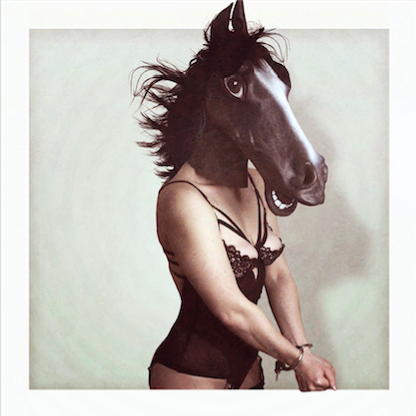
Now in its third year, new writing showcase #Festival47 kicks off next week at the King’s Head Theatre. Among 19 shows featured in the programme is Bridle from Clamour Theatre, a contemporary satire on female sexuality and the attempts to control it, written by Stephanie Martin.

Bridle is about challenging and rewriting narratives and perspectives on female sexuality and behaviour,” explains Stephanie, who also performs in the show. “It’s about desire, heartbreak, shame, fathers, violence, pornography, millennial culture. It’s about how female sexuality and behaviour are subtly policed and judged.”
Bridle marks Stephanie’s debut as a writer: “I wrote it last May, inspired by the disparity between the people I know in real life and the tropes of behaviour that are defined as ‘good’ or ‘proper’,” she says. “We shared the show for the first time, as a full length piece, at the brilliant Camden People’s Theatre hotbed Festival of Sex in April. Our first sharing saw me performing the piece with other actors, Elissa Churchill and Charlotte Clitherow, and so #Festival47 will be the first time I’ve ever performed it solo – I’ll be heartbroken/lonely and bored without the other two.

“As Bridle is the first thing I’ve ever written, I’m also extremely grateful to EJ and Pip at Pluck Productions, Georgie and Will at Flux Theatre and the Emerge Night, as well as Nastazja Somers and her HerStory baby, for first programming excerpts of Bridle as part of their respective new writing nights in November and December 2016. These three companies are a great example of London’s new writing scene, giving opportunities, support and confidence to new writers and makers.”

Bridle may be about women, but that doesn’t mean it’s only a show for women. “Absolutely not, it’s a show for all,” says Stephanie. “I personally believe we all exist as a gorgeous mismatch of the male and the female, so come as you are and enjoy. Some of the ‘male’ audiences of the past performances seemed a little disconnected or in some way to blame for some of Bridle, which I didn’t predict or imagine at all.

“I want us to all remove shame from our lives, to feel comforted that lots of us go through the same things, to feel okay about being weird and vulnerable. And to laugh at me and laugh at all of us.”

Clamour Theatre describe themselves as “raw, excited and all about today”. Stephanie explains, “We’ve formed to explore new perspectives, new characters, new stories in raw, explosive and enjoyable ways. We love humour, we love energy and we like looking at new stories and/or re-examining the status quo.”

Stephanie will be performing the show at the King’s Head on 11th, 12th and 16th July at 9.30pm. “It’s an honour to be programmed as part of the festival and defined as part of the ‘future of the theatre’, especially by a theatre with a reputation like the King’s Head,” she says. “The rest of the festival line-up looks fab too and we’re looking forward to seeing the other companies. I’ve seen such a huge variety of fab, quality work at King’s Head over the last 4 or 5 years so looking forward to being on that stage, too.”

Book now for Bridle at the King’s Head Theatre, 10th-16th July.

Review: Tremors at the King’s Head Theatre

You do have to wonder sometimes what makes people go into politics. Despite certain obvious benefits, it seems often a very thankless career, exposing you to public scorn, ridicule and disdain the minute you mess up or show the slightest sign of weakness. Because of the nature of the job, politicians become public property – and the public has the power to make or break them on a whim.

This is the very predicament in which Tom Crowe, the Labour MP at the centre of Tim Cook’s new play Tremors, finds himself. After a private encounter in a hotel room with a senior party member goes viral, he takes the advice of his PR advisor Lisa and flees to Eastbourne. But his hometown is in chaos, with riots and vandalism led by anti-austerity activists threatening to tear the town apart – and a dark secret from Tom’s past that could derail the attempt to salvage his future.

Though written a few years ago, by chance the staging of Tremors by Broken Silence Theatre has fallen during one of the most extraordinary eras that many of us can remember in British politics. It’s an indication of how disillusioned and suspicious we’ve become – not really a surprise after watching our politicians routinely turn on each other over recent months – that a character like Tom, who genuinely just wants to help people, seems entirely too good to be true. Even so, William Vasey gives a believable performance, managing to convey both the wide-eyed idealist, who followed his heart into politics, and the ambitious social climber, whose accent these days is more Oxford than Eastbourne.

Tom’s one of four characters who never get fully developed, despite good performances from the cast. Much like in politics, each of them comes to represent a particular ideology, which overrides their individual personalities, and consequently we never really get to know them as the 60-minute play unfolds. At the opposite end of the scale from Tom is his old friend Chris (Tim Cook), who has the same passion to make the world better, but very different ideas on how to achieve it. And then there are the women: Lisa (Vicky Winning), a hard-nosed ice queen who doesn’t do feelings, remorse or indeed anything that might get in the way of her own career interests. Her opposite number is Marie (Cerys Knighton), Chris’ sister; her activism days are firmly behind her, and now all she cares about is finding her brother before he does something stupid.

There’s a lot going on for such a short piece, and some of the plot threads at times become a little tangled – Tom’s career crisis and concealed homosexuality, the decline of his coastal hometown, Chris’ struggles to come to terms with his past or the country’s future, and the revelation of the secret that binds the three old friends together. And despite some helpful BBC News announcements, the timeline of the play isn’t always entirely clear; some early flashback scenes only really make sense in the closing minutes.

Though not without some issues, Tremors is an interesting premise and definitely has potential for development into a longer play examining the issues in greater detail. What connects all the various plot threads is a simmering anger over the growing distance between we the people and those who put themselves forward to represent us – which is something I think most of us can identify with. Judging by recent events, that’s not an issue that seems likely to go away any time soon, so here’s hoping Tremors will return to shake things up in the future.


Can’t see the map on iPhone? Try turning your phone to landscape and that should sort it. I don’t know why but I’m working on it… 😉

Interview: Tim Cook, Tremors

With politics on everyone’s mind in the run-up to the general election, Broken Silence Theatre’s new play Tremors, about a disgraced MP, could hardly be more timely. Written by the company’s Artistic Director, and award-winning playwright, Tim Cook, the play receives its world premiere at London’s King’s Head Theatre later this month.

Tremors is set in a modern day dystopian Britain where arson and rioting are rife,” explains Tim. “The plot revolves around a rising star of the Labour Party, a young MP called Tom Crowe, who is involved in a scandal in a hotel room. In an attempt to rebuild his image he travels back to his seaside hometown of Eastbourne to make amends. But he finds himself caught between saving either the community, which is very close to breaking point, or his career.”

Although the timing of the production – just a couple of weeks after the election – may appear deliberate, in fact the play’s been in development for some time. “I actually wrote the first draft of this play over six years ago,” says Tim. “Then I came to rewrite it for a rehearsed reading at the Old Red Lion Theatre last November. It’s strange, but I didn’t have to rewrite the play for 2017 as much as I thought I would. Although a lot has happened in the world of politics in the last six years, I feel like nothing has changed at the same time. Having said that, everything that’s happened has definitely influenced the direction of this production.

“First and foremost I want the audience to enjoy the show, but I also hope each audience member goes away and thinks about their own relationship to politics. Tremors isn’t a play that sides with any particular political party – that’s not the point. It’s a character-driven interrogation of modern politics, from the point of view of a young idealistic MP. It’s asking the question whether we should demand more from those in positions of power.” 

Tim’s inspiration for Tremors came from researching news stories, particularly those about politicians and protest groups. “It’s not based on any specific politician, but I wanted to absorb lots of stories and lots of information and then go off and create a character that embodies everything good and bad about modern politics. On the one hand he’s a saviour, on the other hand he’s a villain. It depends on which side of the fence you sit. In the world of the play he’s seen as one of the only MPs left in the country with a conscience. You see him wrestling with a moral dilemma in the play – that probably comes from my own desire to see a politician who really cares. I also wanted to represent Eastbourne on stage, having grown up there myself. Location plays a huge part in the tone of the play. The seaside. The pier. All that stuff. There’s something unique and strangely isolating about growing up in a British seaside town.”

Tim’s excited to be returning to the King’s Head, which holds special memories for him: “It feels great. The King’s Head have always been very supportive of Broken Silence and my work as a playwright. My play Crushed, about the 2010 London student protests, transferred to the King’s Head after winning the Best New Play Award at Brighton Fringe in 2015. Tremors, in many ways, feels like an indirect sequel to Crushed, so it’s brilliant to come back two years later and premiere the show at the same theatre. The King’s Head are really bold with their programming too – it’s great to play alongside so many other fantastic shows this summer.”

Most of the Tremors cast worked together on Broken Silence’s Necessity, which transferred to the Bread & Roses Theatre from Brighton earlier this year. “We’re lucky to have an exceptional company for this production, including Broken Silence Associate Artist Cerys Knighton and East 15 graduate Vicky Winning,” says Tim. “William Vasey joined the cast for our reading at the Old Red Lion, and plays the lead role of Tom Crowe. He absolutely has the presence of an early career MP – a sort of Blair/Cameron hybrid – and I think his performance in the play is remarkable.

“Paul Macauley, writer and director of Necessity, also returns to direct Tremors. I love working with Paul – we’ve worked together for four years now – he’s a great director of actors. I really value our team, because I think building long-term relationships in the industry is very important.”

Tim founded Broken Silence Theatre in 2013, after graduating from RADA. “We’re based in Brighton and exclusively produce new writing,” he explains. “We care about promoting unheard voices and creating work that is urgent and vital. We also place a specific focus on the quality of the writing and performances; that’s what our aesthetic is based on. We’ve managed to produce work on a very regular basis – Tremors will be our twelfth full production in four years – and each production has grown in terms of scale and quality. We want to continue that over the next few years and work with as many new writers as possible.

“And we’ve got lots coming up this year. In August we’ve got another new show – yet to be announced – coming to the Jack Studio Theatre in Brockley, which I’m really excited about. We’re also planning a brand new London showcase for regional writers, helping playwrights from outside London bring their work to the capital. On top of that we’ve also been workshopping two other plays, which we hope to premiere over the next twelve or so months. So it’s going to be a really exciting year for us!”

Tremors is at the King’s Head Theatre on 25th-26th June and 2nd-3rd July.

Review: Poker Face at King’s Head Theatre

Legal Aliens are an international company, dedicated to telling European stories at a time when others might be tempted to shy away. The result of this determination is their Translating Europe series, which opens with the English premiere of Petr Kolečko’s Poker Face.

Translated by Eva Daníčková, the play tells the story of Jana (Lara Parmiani), a hugely successful international poker player, who in her youth may or may not have got pregnant by the writer, revolutionary, and later first president of the Czech Republic, Václav Havel. The resulting child was Pavlína (Daiva Dominyka), now a young woman and in a relationship with the idealistic Viktor (Mark Ota), who wants to start a revolution of his own, if only he had the funds…

Photo credit: John Watts

Considering the play was written by a Czech playwright, in Czech, (presumably) for a Czech audience, the story and its context are surprisingly easy to understand for British viewers. Although, inevitably, we may not catch every reference in Becka McFadden’s production, even someone with no knowledge at all of Czech history or politics – or poker, come to that – can make sense of what’s going on, and the family drama that unfolds between the characters could almost be happening anywhere.

At the centre of the story is Lara Parmiani’s Jana, whose poker face remains in place even away from the card table, in her troubled, brittle relationship with her daughter. Yet we also meet a younger, more emotional Jana, who longs for news from her absent father (Arnošt Goldflam, on screen) and looks forward excitedly to a meeting with her adored Havel. Lara Parmiani skilfully embodies both versions of the character, so that even as we dislike the woman she’s become, we can’t help but feel – if not sympathy, then at least understanding of the events that have brought her here.

Photo credit: John Watts

Pavlína, played by Daiva Dominyka, is the polar opposite of her cold-hearted mother; sensitive and romantic, she’s struggling to understand who she is and where she fits within her family and her society. As her boyfriend Viktor, Mark Ota probably has the closest to a comedy role within the play; a skilled speaker, he knows how to turn on the charm and deliver a good soundbite, and even his darker scenes are shot through with a surreal humour that’s as entertaining as it is slightly bewildering.

The use of video is effective, if occasionally a bit frustrating – this is particularly the case in the opening scene, when Arnošt Goldflam, the man we later learn to be Jana’s father, speaks at length in Czech. There are subtitles, but positioned as they are at the bottom of the screen, reading them involves a fair bit of neck craning for anyone not sitting in the centre of the front row. The later footage of Havel’s funeral works really well though, playing silently in the background and looming over the family’s dysfunctional attempt at a Christmas celebration.

Poker Face may be set in a foreign country, and it may make reference to events we’re not all that familiar with, but that doesn’t make it any less relatable. At a time when it’s becoming all too common to regard anyone not from our own country as inherently different, this play offers a timely reminder that while we may not speak the same language or share the same politics, at the end of the day we’re all human beings. And while that might not be an especially new or surprising message, it’s nonetheless one that – increasingly, it seems – needs repeating.


Can’t see the map on iPhone? Try turning your phone to landscape and that should sort it. I don’t know why but I’m working on it… 😉

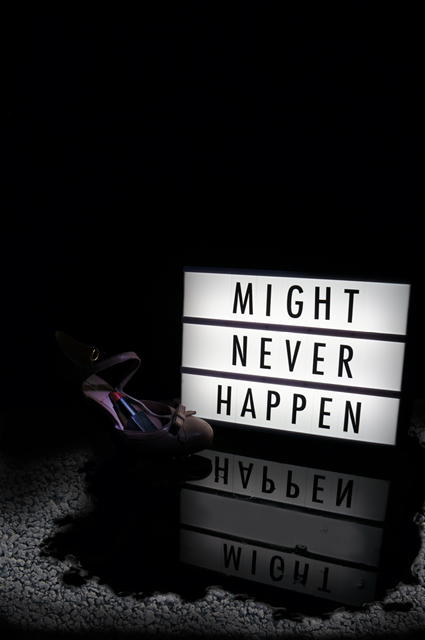
Review: Might Never Happen at King’s Head Theatre

We’ve all been there – you’re walking along, thinking your thoughts, and someone calls out, “Cheer up love, it might never happen!” A bit annoying, maybe, but basically harmless, right? But what if you’re on your way to work and you get wolf whistled, is that still okay? Or a guy sits next to you on the tube and won’t stop trying to chat you up even though you’re clearly uncomfortable? Or a stranger attacks you on the way home one night…?

Where do we draw the line between what’s harmless, and what isn’t? This is one of the questions posed by Might Never Happen from Doll’s Eye Theatre, a thoughtful and commendably balanced exploration of the vast spectrum of acts that constitute street harassment. Written by members of the company, in collaboration with researchers Dr. Fiona Vera-Gray and Dr. Maria Garner, the show takes us through a series of individual scenes, performed by six actors. Some of them are funny, others horrifying, and still others unnervingly reminiscent of our own experiences – but all are designed to make us consider not only the actions themselves, but also the attitudes behind them.

IMG_6650

Although the main focus of the show is the risks faced by women, director Amy Ewbank maintains balance in both cast and content. So two male actors (Ashley Sean Cook and Paul Matania) join members of the all-female company (Catherine Deevy, Danielle Nott, Kirsty Osmon and Vicki Welles) to ensure we get to hear a man’s perspective, as perpetrator, observer and victim of street harassment. More than one scene presents us with the alternative view – from both men and women – that receiving a compliment from a stranger is something to be welcomed rather than condemned, while others challenge the culture of victim blaming, and the belief that street harassment is an inevitability we just have to learn to live with.

The result is a show that educates without preaching, throwing out a variety of different arguments for its audience to consider. It also lightens a heavy subject with some very funny moments, to make the point that harassment isn’t always scary (and therein lies one of the problems with defining and punishing it); sometimes it’s just a bit ridiculous, something to be laughed over and dismissed.

IMG_8217

The cast handle these shifts from dark to light and back again with ease, keeping each character distinct from the one before, so we have no trouble separating the woman who’s shocked by her boyfriend’s casual attitude towards complimenting strangers, for instance, from the one who herself feels that’s perfectly okay.

Though it’s minutely researched and carefully structured to cover many different facets of street harassment, Might Never Happen stops short of telling us what to think, or even suggesting solutions. Instead it sets out to provide us with the material we need to go away and start our own conversations about this huge and complex topic. And it reminds us that we all – male or female – have a voice in the discussion.


Can’t see the map on iPhone? Try turning your phone to landscape and that should sort it. I don’t know why but I’m working on it… 😉