Interview: Stephen Unwin and Colin Tierney, All Our Children

“People keep saying to me is it weird? But in a funny kind of way it isn’t – it’s rather wonderful,” says Stephen Unwin, writer and director of All Our Children, which opens at Jermyn Street Theatre this week. “It’s the first time that I’ve both written and directed a play, so that’s a whole new interesting experience for me.”

Set in Nazi Germany, All Our Children examines the barbaric programme that saw thousands of disabled children murdered by the state, and its effect on five individuals, each of whom is involved in a different way. It’s a very personal project for Stephen, whose 20-year-old son is profoundly disabled, and who was recently appointed chair of children’s charity KIDS.

“There are three aspects to it,” he explains. “My mum is German Jewish; she left Germany as a child in 1936. And then I was brought up in Catholicism, and now I’m the parent of a disabled child, so it’s a kind of perfect storm; it all came together. The idea came from when I was reading a brilliant social history of the Third Reich, and it suddenly started talking about the Nazi programme of murdering disabled people, but then the opposition of this highly conservative Catholic priest called Von Galen – played in All Our Children by David Yelland – who extraordinarily wrote these letters and delivered three very famous sermons. As a result of his power, passion and commitment, the programme was discontinued, and it’s pretty much the only record of someone standing up to Hitler from within Germany and actually changing policy.”
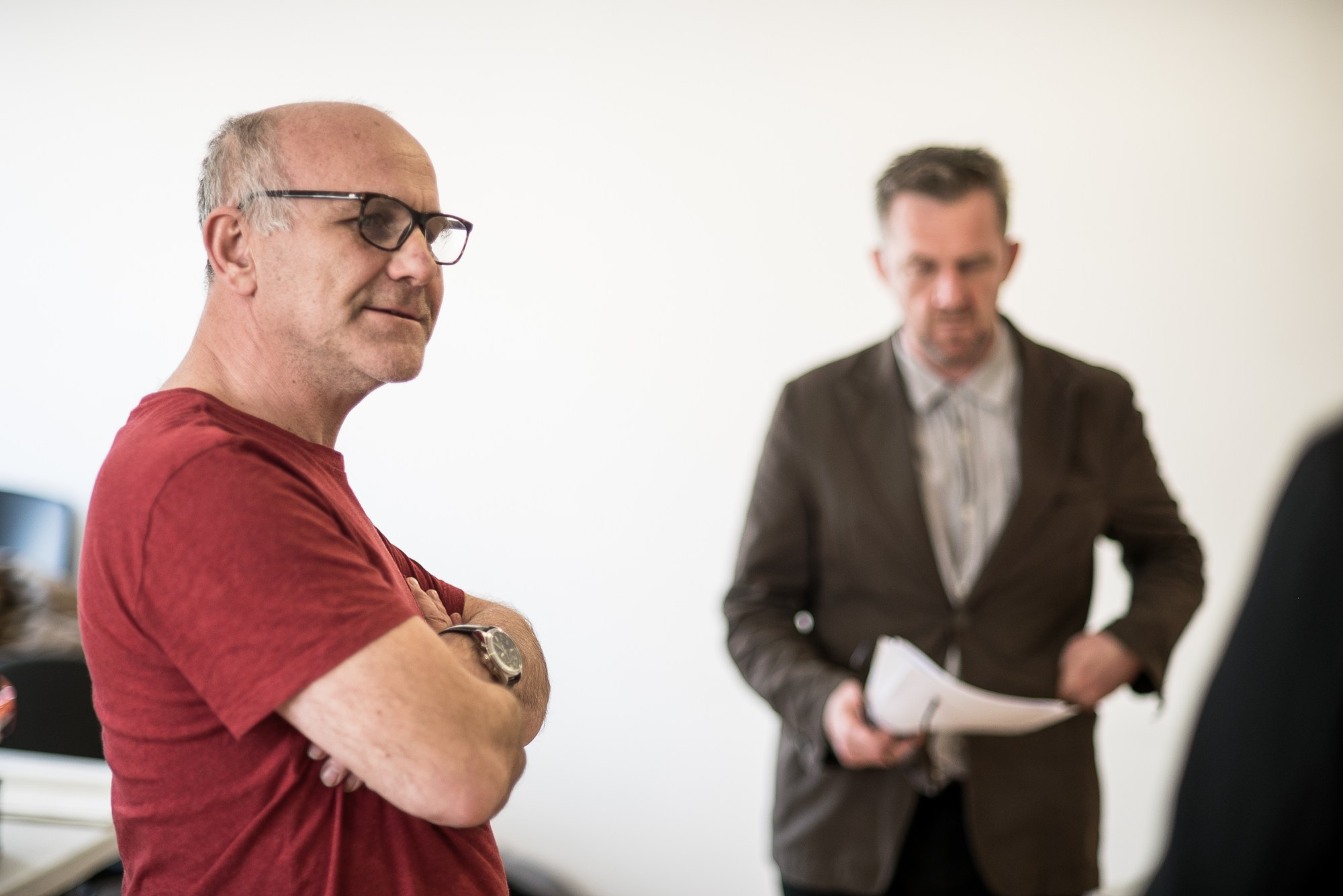
The story takes place in a hospital for severely disabled children, run by chief paediatrician, Dr Victor Franz. Colin Tierney, who plays the doctor, explains, “The Nazis have taken power and they’ve created this situation where children are being sent off to their deaths because they don’t conform to the new German ideal of what life should be. And the play is about my character’s struggle on one day to deal with what he’s doing, why he’s doing it and how he’s going to get out of it.

“Victor Franz was a children’s doctor, somebody who spent his life looking after people, who created this institution where disabled children could be looked after, and all of a sudden in this different new Germany, he feels as if he’s been taken over by this new force. This is what I’m trying to work out along the way – his struggle about what he’s doing and how he makes the decision not to do it. So he’s essentially a good man who’s been forced to do these terrible things, and that’s the complex dilemma I’m wrestling with.”

In getting to know his character and the crisis he’s facing, Colin’s worked closely with Stephen. “It’s quite a short rehearsal time, so I’ve been reading the play a lot and discussing it with Stephen, who of course is both writer and director, and is really inside the world of the play. He’s given me so much information, so much detail around the backstory of the world – and because Stephen has a disabled child of his own, I’ve been looking to him for lots of clues. I’ve done a bit of reading around the subject but the bulk of my work has been in the room with the script, with the actors, breaking down the moments, finding the detail and finding how deeply they resonate within me on a human level.

I’m just enjoying it a lot – even though it’s a serious subject matter, there’s a great sense of wanting to do justice to the work, so there’s a good attitude. People are working hard and committing in a really positive, honest way.”

Despite the heavy topic, both Stephen and Colin are keen to reassure audiences that the play is not as brutal as it sounds. “It’s not a heavy dirge of an evening,” says Colin. “It’s not light either, but it’s philosophical and incredibly well written.”

“You don’t see any children, you don’t see any violence, but you know it’s there,” adds Stephen. “It’s a drama of human beings in a ghastly world trying to work out how to be human beings again. It’s not brutal as a play, and I think maybe some people are worried that it’ll be really horrible, about kids with Down’s Syndrome being shot – but you don’t see any of that, that’s not what I’m interested in presenting. I’m much more interested in presenting why might somebody think that kids with Down’s Syndrome are a bad thing.

“One of the Nazis’ main reasons for their persecution of these people was that they said they’re so expensive, that keeping somebody with cerebral palsy cost a fortune and that money could be spent on better things. And of course although I don’t say that the lives of the disabled is the same as in Nazi Germany – that would be a grotesque thing to say – there are issues today about how do you value a human being in terms of their monetary worth. What do you do about people who will never pay tax, will never have a job, who are non-productive? And it’s a very big radical question, it challenges our priorities. And that’s what I’m really interested in.

“One of my characters, played by Lucy Speed, is the mother of a disabled child. As chair of KIDS, I’ve come into contact with lots of parents of profoundly disabled kids, and there’s a mixture of love for their children and intense love for their vulnerability, combined with absolute towering rage for a society that doesn’t value them properly. It’s really palpable – they’re very radical people.

“We also have Edward Franklin as Eric, a young, committed Nazi – but you discover that his antipathy to disability actually comes from his father having been disabled in World War 1, and he hates it because he’s so angry about that. So one of the things I’m interested in is the way that discrimination towards disabled people is actually towards people’s anxieties about their own weaknesses – and also fear. Our final character is the doctor’s maid Martha, played by Rebecca Johnson, who has an important line about this towards the end: that she used to be afraid of them, used to think they could infect her, but she’s not afraid of them any more. And that’s a great big important development that society needs to take on – how not to be afraid of people with profound disability.”

Colin agrees that even though we’ve moved on from the horrific events depicted in All Our Children, the play still carries important messages for a 21st century audience. “Hopefully it will make people think about our responsibility to others, and our responsibility as a society – how important love is and looking after people, especially those who have trouble looking after themselves. I think that’s the measure of a society, whether people who can help others should, instead of everybody thinking for themselves and doing their own thing and saying ‘screw you’. That’s where the heart of the play is. It’s not like we live in Nazi Germany now at all of course, but I think there’s a strong human resonance that people can tap into when they see this play.”

Book now for All Our Children, at Jermyn Street Theatre from 26th April to 3rd June.
Interview: Sean Brosnan, Beau Brummell – An Elegant Madness

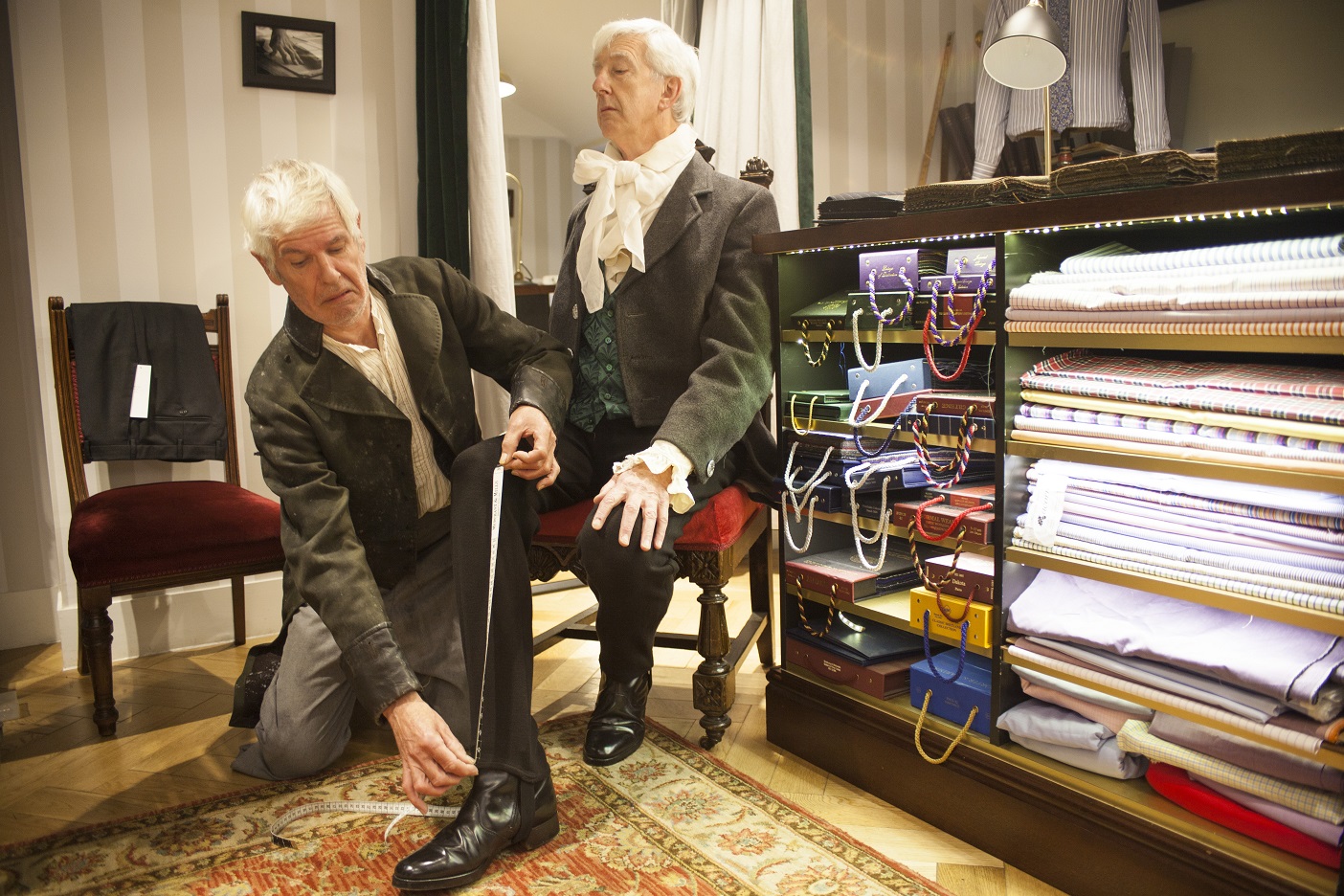
Written by Ron Hutchinson back in 2001, Beau Brummell – An Elegant Madness is a black comedy about the downfall of George Bryan Brummell, known as The Beau. This week the play returns to London for the first time in 15 years, opening tomorrow at Jermyn Street Theatre, just a couple of blocks away from Brummell’s commemorative statue.

Photo credit: Emily Hyland

So who was Beau Brummell? “The play is a fascinating and amusing insight into the world of ‘celebrities’, featuring the original dandy, wit and revolutionary Beau Brummell,” explains Sean Brosnan, who plays him. “Brummell was in many ways a self made man. He seized opportunities where he could and without concern for the consequences. In fact the more he could pique someone with a barbed comment, the happier he was.

“He bucked the trend in fashion and his influence reigns today in the tailored suit. Without him we may all be flouncing around in overly flamboyant colours and fabrics. Imagine a world of Grayson Perry. Today’s equivalent I would say is a cross between David Beckham for style, Kim Kardashian for fame for fame’s sake, and Stephen Fry for biting wit. Imagine that if you will!”

Set in the winter of 1819, the play finds Brummell living in exile in a madhouse in Calais. He’s convinced his old friend King George IV will come and see him on his visit to Calais – but his valet has other plans. “Beau Brummell has so many facets to his character; joy at his past glory, despair at his current situation and a fascinating, complex relationship with his valet, played with great skill and panache by Richard Latham,” says Sean. “Brummell was unique and playing him at this stage of his life, when he is facing desperate reality but also believing his former glory will be restored, is a challenge and a delight.”

Jermyn Street Theatre, in the fashionable St James’s district, is an appropriate home for the production: “Jermyn Street was at the heart of Brummell’s world. He lived close by and bought his wine at Berry Brothers in St. James Street. With his statue at the end of Piccadilly Arcade he must surely be looking down on us with pride. He has not been forgotten. Playing him here is very special.”

Photo credit: Emily Hyland

Although the play’s set nearly 200 years ago, the story of Beau Brummell remains hugely relevant in today’s celebrity-obsessed world. “Brummell was the most famous man of his day and yet is now largely forgotten. Like Oscar Wilde, he had a spectacular fall from grace,” says Sean. “Even today, one mistake in the public eye, be it ever so small, can bring the media’s wrath and vilification. If you’re famous, watch out. They’re out to get you!”

Sean hopes the play will help bring Brummell’s story to audiences who may never have heard of him. “It’s a play that manages to balance the regency farce of Blackadder III with the grandeur of King Lear and has been called ‘Waiting for Godot for the fashion conscious!’ If our audiences leave feeling they understand a little more about the madness and brilliance of Beau and have had a good chuckle along the way, then I will be delighted.”

Beau Brummell – An Elegant Madness is at Jermyn Street Theatre from 13th February to 11th March.

Review: I’m Getting My Act Together and Taking It on the Road at Jermyn Street Theatre

The announcement that I’m Getting My Act Together and Taking It on the Road – which for ease of typing, let’s shorten to Getting My Act Together – was to be revived caused a fair bit of excitement in London musical theatre circles. Written by Gretchen Cryer and Nancy Ford, the show gained something of a cult following during its three-year run off-Broadway from 1978, and now a new generation gets to see why, thanks to Matthew Gould’s irresistible production at the intimate Jermyn Street Theatre.

The wordy title, it turns out, is actually a concise summary of the plot. Pop star Heather Jones is marking her 39th birthday with the opening night of a new act, but much to her manager Joe’s horror, her music’s taken a new direction while he’s been away. Leaving behind the banal pop songs that launched her career (and got her to 89 in the charts), Heather’s decided to stop hiding and reveal herself to her audience as the strong, independent woman she really is.

Photo credit: Richard Lakos

Unfortunately Joe, a well-meaning misogynist, doesn’t know how to sell – or indeed, even talk to – a strong, independent woman like Heather. The ensuing battle of wits is a very personal and angry one, and it soon becomes clear it’s not the new act Heather needs her friend to accept, but the new her (or rather, the her she’s always been but is only now able to show). Along the way, the show opens up a discussion about relationships and gender equality – and though Edward Iliffe’s cosy nightclub set and colourful costumes leave us in no doubt we’re in the 1970s, it’s a discussion that’s nonetheless just as (if not more) relevant today.

Though Getting My Act Together can at times lean a little towards the heavy side, particularly in the dialogue, this is balanced out by some fabulous musical numbers, which range from the uplifting anthem Natural High to the heart-breaking ballad Lonely Lady, and flawless performances from every member of the talented cast. Landi Oshinowo is a joy to watch as Heather; not only are her vocals stunning, but she brings a twinkle and charm to the part that soften the anger in her words. This is not just a bitter divorcee having a rant about men, but a woman who’s proud to have finally discovered who she is and longs to share that knowledge with her old friend (incidentally, Old Friend is another of the musical numbers, and it’s beautiful). The fact that Heather also has a feisty streak only makes her more attractive and enjoyable to watch.

Photo credit: Richard Lakos

Oshinowo receives excellent support – both emotionally and vocally – from Rosanna Hyland and Kristen Gaetz, as her back-up singers and friends Alice and Cheryl. Along with the other members of the band (Alice Offley, David Gibbons, Rich Craig and musical director Nick Barstow), the two singers radiate an infectious joy and enthusiasm for the music, its message and Heather herself. Meanwhile, Nicolas Colicos cuts a lonely figure as Joe, the only character on stage not fully in support of Heather’s new direction. It would be really easy to see him as the enemy, but Colicos’ performance is warm, funny and at times vulnerable enough that it’s hard to dislike him, even at his most outrageously sexist.

Though the subject matter of Getting My Act Together may not be everyone’s cup of tea, there’s no doubt this is a great production; an energetic cast, pitch perfect performances and the irresistible score are more than enough reason to overlook a few outdated and uninspired passages of dialogue. It seems this is another revival that was well worth waiting for.


Can’t see the map on iPhone? Try turning your phone to landscape and that should sort it. I don’t know why but I’m working on it… 😉

Review: Off the Kings Road at Jermyn Street Theatre

Off The Kings Road is the first full-length play from former Hollywood publicist Neil Koenigsberg. A touching reflection on grief, companionship and getting older, the play sees American widower Matt Browne check into a small hotel in London, where he intends to spend some quiet time rebuilding his life following the death of his adored wife, Betty, from cancer. But London has other plans for Matt, and the resulting journey of self-discovery is at once laugh out loud funny and powerfully moving.

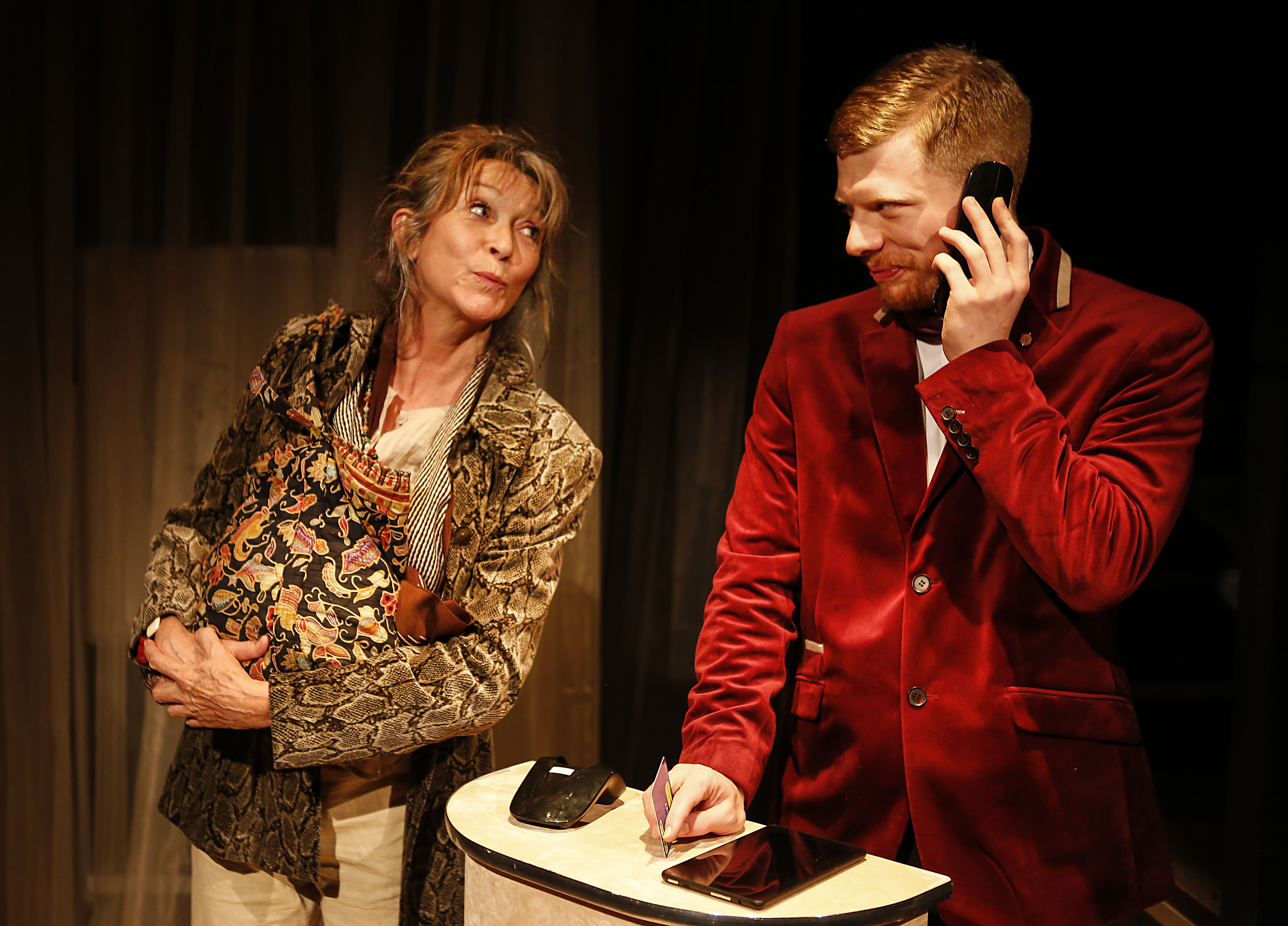
Michael Brandon leads the cast as Matt with a performance that perfectly captures his character’s fragility, but also his humour and compassion; we can’t help but like this genuinely good guy who’s just trying to make his way in a new, unfamiliar world. Along the way he meets some interesting characters, among them Freddie, the hotel concierge, and Ellen, a crazy cat lady from down the hall. Luke Pitman and Cherie Lunghi shine in these roles; as a long-term resident, Ellen has a close friendship with Freddie, and the affectionate scenes they share on stage are wonderful to watch. Though the two roles are predominantly humorous ones, with both actors revelling in their characters’ eccentricities, there are hidden depths here too: Freddie, while often a touch over-enthusiastic, is very good at his job and genuinely cares about his guests’ welfare, while Ellen turns out to have a lot more in common with Matt than he realises.

Photo credit: Pamela Raith

Diana Dimitrovici also appears as a Russian prostitute, the intriguingly named Sheena McDougal. Following their first encounter in her flat, the relationship between Matt and Sheena moves in a direction that’s not wholly unexpected, but no less touching for its predictability, and Dimitrovici gives a strong performance as a young woman disguising her own vulnerability with a veneer of toughness.

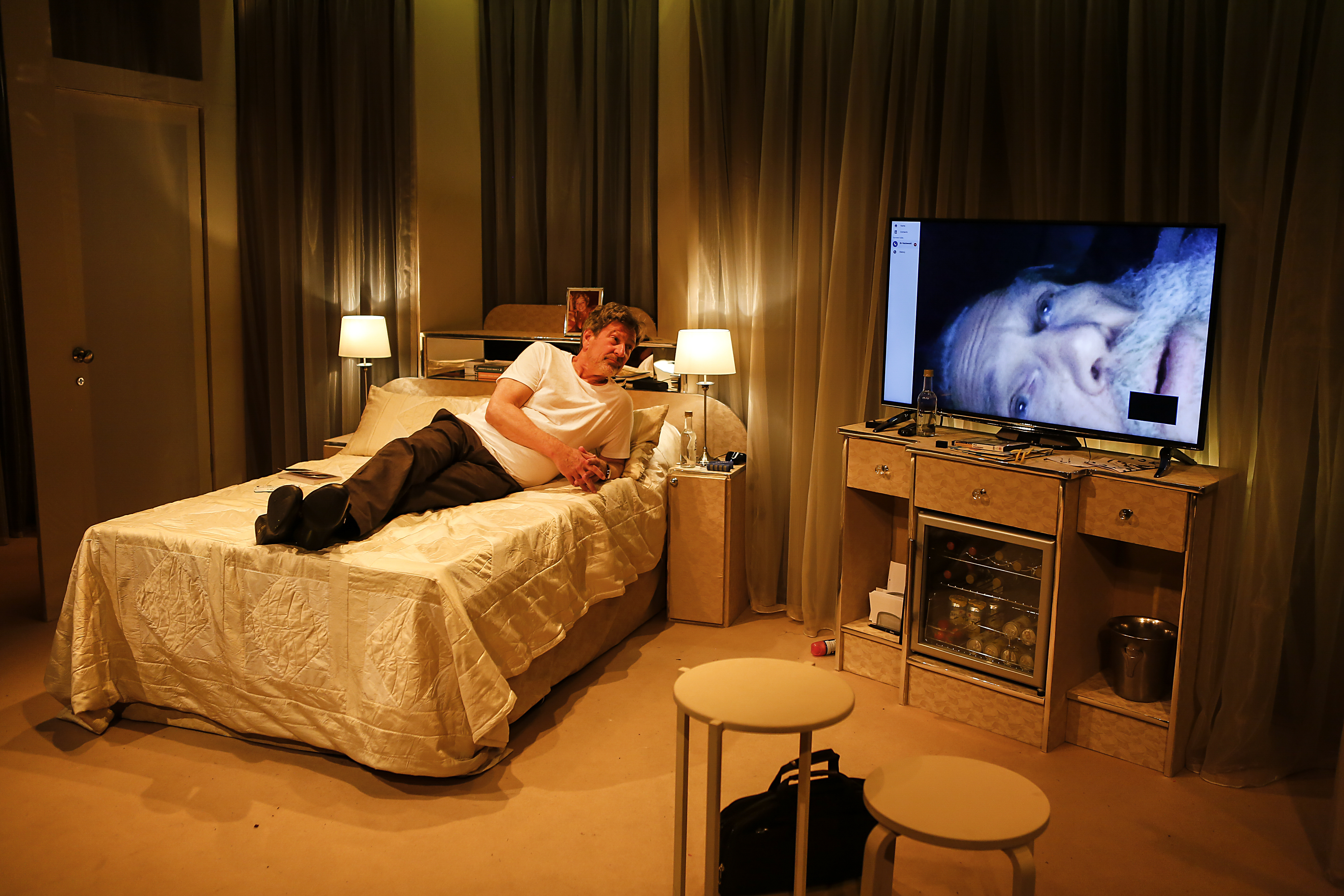
In a unique and thoroughly modern twist, the cast of Alan Cohen’s production includes a fifth member, one who never sets foot on the stage; Oscar winner Jeff Bridges ‘e-appears’ as psychiatrist Dr Kozlowski, with whom Matt has several Skype calls throughout the play. There’s comedy gold in these scenes, partly in watching the two men attempt to use the technology, but mostly because Kozlowski is a spectacularly bad psychiatrist, who’s going through his own marital difficulties, and seems permanently a bit stoned. But where he fails as a doctor, he succeeds as a friend – proof that we don’t always need someone with all the answers; sometimes we just need somebody who’ll listen when things go wrong. These scenes fit so naturally within the live action, and Brandon interacts with the screen so well, that it’s almost possible to forget Bridges’ appearance is pre-recorded.

Photo credit: Pamela Raith

At its heart, Koenigsberg’s play is a celebration of human relationships, in all their wonderful weirdness. Matt starts out as a lonely figure, but as soon as he allows other people in, his life begins to change (mostly) for the better. Like the Ingmar Bergman movie referenced throughout the play, this bittersweet comedy is the story of a man on a journey, both physical and emotional – and like its characters, it’s very hard not to love.


Can’t see the map on iPhone? Try turning your phone to landscape and that should sort it. I don’t know why but I’m working on it… 😉