Interview: Teresa Burns, How It Ended

“The little gardener worked very hard but he was just too little to make a difference. One night, he makes a wish ‘for a little bit of help’ and as he sleeps the local children, inspired by his beautiful flower, help bring his garden to life.”

Photo credit: Eva Sampson

So begins the story of Emily Hughes’ The Little Gardener, adapted by How It Ended, in association with Scamp Theatre. Dramaturg and co-artistic director Teresa Burns explains what drew the company to the story:

“We’re big fans of Emily Hughes so we were very excited about the book’s release last year. The Little Gardener felt like perfect subject material for adaptation, particularly outdoor theatre – not only because of its setting but because of its message about community. The story beautifully illustrates the impact an act of kindness can make on a person’s life and how it can inspire them to carry on.

We’d love our audiences to take away a sense of community; a feeling that by working together you can make something really special.”

The play, which is currently touring and free to attend, is set in a greenhouse, containing a real garden. “The greenhouse is interactive in the sense that it can be opened up to allow children inside. Inside the greenhouse sits a large tree (wherein the Little Gardener sleeps) and flower beds – ready for planting! The set is designed and built by James Lewis, who’s done a remarkable job. The set breaks down into 28 pieces and we tour with over 100 flowers.”
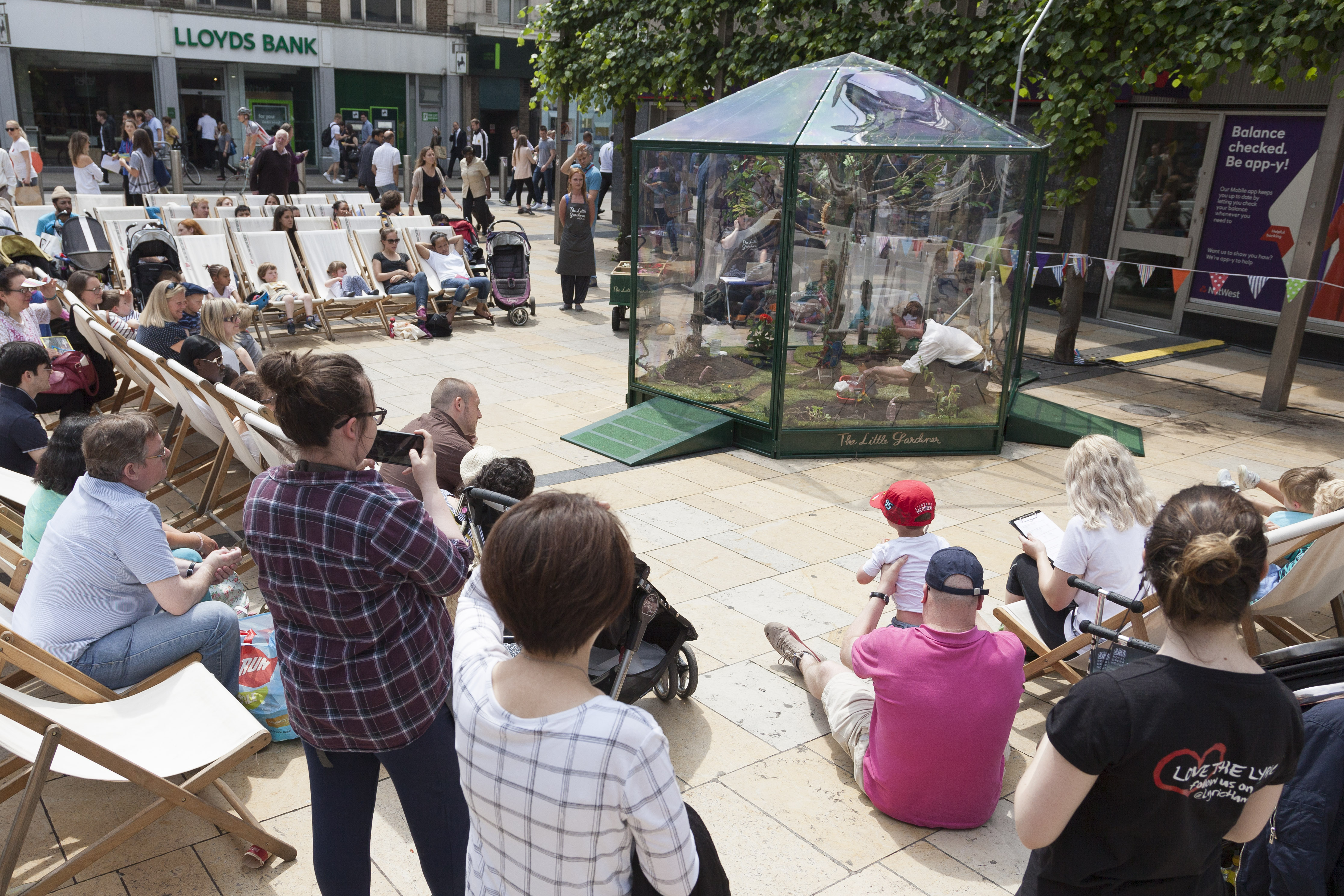
Photo credit: Rachel Ferriman

It’s not the company’s first collaboration with author Emily Hughes. “Last year, we worked with Emily on the stage adaptation of her debut book Wild and we conducted a really successful period of research and development.  We’re hoping to bring Wild to theatres in 2017.

“Emily is such a joy to work with. From day one she has been so warm and encouraging. She isn’t precious about her work and pushes us to delve deeper or go darker, which is really freeing.” 

The fact that The Little Gardener is an interactive show does bring with it an element of unpredictability: “Every audience is different, so we’ve tried our best to prepare for every perceivable eventuality. But of course audiences will always surprise you! Some children are very comfortable with handling plants and getting their hands dirty, whilst others are understandably more hesitant, so it’s about making those children feel at ease. For each performance we have a lovely team of Production Assistants/Gardeners who are there to make sure the audience are happy.”

How It Ended’s goal is to excite young audiences and inspire the next generation of theatre makers. The honesty and responsiveness of children is fantastic. They certainly let you know how they feel about the show whether it be positive or negative – you know where you stand! But making work for young children is boundlessly rewarding, they give back in ways older audiences don’t.

“When we opened the show last week at The Lyric we had lots of children linger around the greenhouse with their parents after the show. They wanted to make comments on the show and ask questions about the flowers and the greenhouse – which was wonderful. It’s great to see them discussing the show, as it hopefully challenges their expectations of what theatre can be.”

Photo credit: Eva Sampson

Catch The Little Gardener at Greenwich and Docklands International Festival (25th – 26th June), Watford Palace Theatre (2nd – 3rd July), Latitude Festival (17th July) and Stockwood Discovery Centre (29th – 30th July). All performances are free to attend and are non-ticketed. Ages 3+.

Interview: Clementine Lovell, Pop-up Opera

Pop-up Opera was established in 2011 with the goal of encouraging more people to see and enjoy opera. After recently performing their first ever tragedy, I Capuleti e i Montecchi, the company return to comedy for their new production of Rossini’s Il Barbiere di Siviglia, which will – as always – take them to some unique and unforgettable venues around the UK.

Director Clementine Lovell founded Pop-up Opera on her return from living in Italy. “When I began training as an opera singer I had mixed reactions from my friends. Opera wasn’t really their thing – one even claimed to be ‘allergic’ to it. That stayed with me, and I wanted to prove them wrong, to show them that opera could be magical, hilarious, devastating or moving.

“Opera is so much a part of Italian culture, so broadly appreciated, and is performed everywhere, not just in the big houses. I grew up in a small village in the UK miles from an opera house. We never went to see it, it wasn’t an option. My uncle has a barn where he hosts folk and blues events and we put on an opera there for a largely non opera going audience. They loved it. It made me think about how the setting can have a bearing on people’s enjoyment, or their willingness to give it a go.”

Photo credit: Richard Lakos

Each new space presents a unique challenge: “The production grows and evolves as it pops up in different places. We stage it in the rehearsal room and then adapt it to embrace each venue, so every night is different. The performance spaces vary wildly in size, shape, acoustic, feeling. We get in to the space on the day and start working out the entrances, exits, how to involve the audience… The performers have to think on their feet and be willing to allow some freedom and spontaneity. I think this keeps it fresh and creates a very special atmosphere.”

Clementine has countless happy memories of the unusual venues in which the company have performed. “One of our first venues was a boat made of scrap metal in Shoreham. The stairs were made out of an old car and the room we performed in had previously been part of a bus. We once performed 100ft underground in Clearwell Caves – to make some of the entrances the singers had to grope their way down a very dark tunnel with only headlamps to light the way, and one of them was terrified of bats!

“Another venue was the ruins of Raglan castle, where our backstage area was a crumbled down tower… We’ve also done shows in the Brunel Museum Thames Tunnel Shaft several times. It used to be more challenging to get in there – you had to crawl through a tiny entranceway and then down a scaffold stairway. It was always a nightmare getting props down there. We love going to the Garlic Farm on the Isle of Wight, the audience always go crazy for it. But my favourite venue will always be our original, the cider barn in Herefordshire. You can have a glass of cider from the Ross-on-Wye Cider & Perry Co, and the atmosphere is always fantastic.”

Photo credit: Richard Lakos

Il Barbiere di Siviglia is one of the world’s best-loved operas, but for those of us who may not know what it’s all about: “It’s the story of Count Almaviva, who wants Rosina to fall in love with him for who he is, not for his money or fame, so he conceals his true identity. In order to win her he must also get past her guardian, so many ridiculous obstacles and disguises ensue before he can get the girl.

“Our version is unique because it’s truly ‘pop-up’ in the way it can adapt to each space. We want to embrace the fact that we have an electric piano, and that we don’t have the budget of the Royal Opera House. We’ve stripped the costume and set right back so it allows the music and the story to shine through. We want to allow those things to take front stage, to show people that you don’t need all this extra stuff to make a comedy: with brilliant singing and acting and by involving the audience you can still create an amazing show.”

The opera will be sung in its original Italian with English captions, presented in Pop-up Opera’s signature style: “We believe that you can still make opera accessible when performed in the original language. The music, the intentions of the actors, the interaction between the characters and the power of the drama get the story across. The captions are there to complement, not to detract. They keep the audience broadly abreast of the story but don’t demand their attention all the time. With a comedy the captions can add another layer of humour, and we can play around with the modern context. In our last production, which was a drama, we kept the translation more ‘straight’ but still with the same approach of captions rather than a full text translated into continuous surtitles.”

As a company, Pop-up Opera aim to broaden opera’s appeal and challenge the perception that it’s stuffy and elitist. “We want to make our productions engaging, exciting, hilarious, dramatic, moving… We hope audiences go away having laughed until their cheeks ache or having been moved to tears, that they will have been drawn into the story and connected with its characters. We hope they take away with them a thirst for more opera, whether it’s by fringe companies or at the Royal Opera House, and a different attitude towards what they thought opera was about or represented. Never been to the opera? Come to one of our shows! You won’t regret it.”

Il Barbiere di Siviglia can be seen around the UK until 1st September 2016 – check the website for full dates and venues.


Interview: Ross McGregor, Arrows & Traps

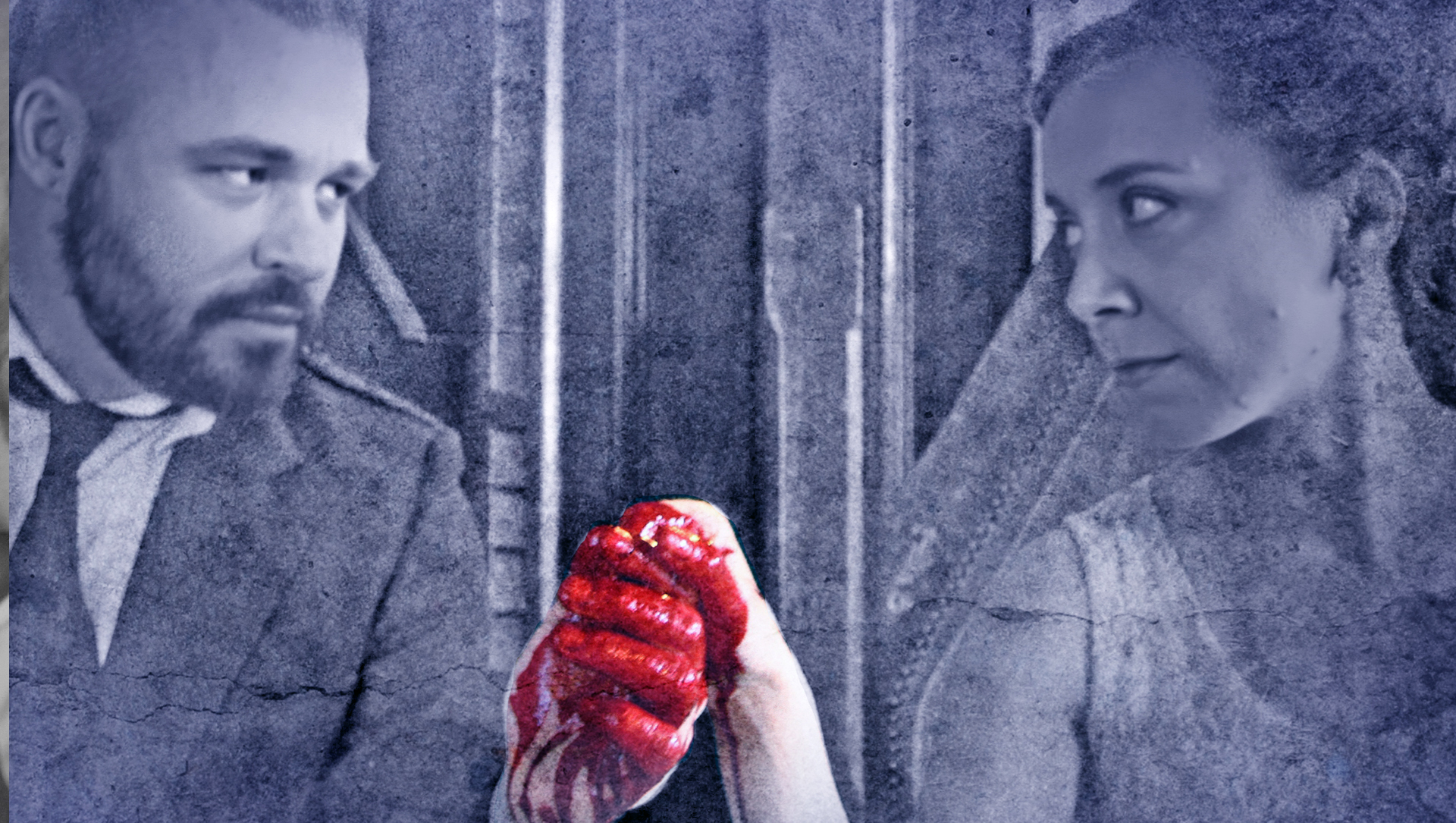
Earlier this year, they took on Tolstoy, condensing the epic novel Anna Karenina into a gripping three hours, and somehow making the story manageable without losing any of its complexity or intensity. And for their sixth production, Arrows & Traps are returning to their Shakespearean roots with Macbeth, which runs from 14th June to 9th July at New Wimbledon Studio, and opens the company’s ‘Broken Crown’ season.

Arrows and Traps, Macbeth

The Macbeth cast reunites actors who’ve worked on previous productions – among them David Paisley and Cornelia Baumann (Anna Karenina), Jean Apps (The Taming of the Shrew) and Alex Stevens (Titus Andronicus) – and introduces several new members of the company. Director Ross McGregor welcomes this mix of old and new faces:

“We’re one of the few operating rep companies in the fringe, in that we have a base of returning actors that we use in every show. It’s delightful to have actors from last year’s Taming Of The Shrew, Titus Andronicus, and this year’s Anna Karenina coming back to work on Macbeth alongside our new blood. This is great for me as a director as it builds a shorthand in rehearsal, but it also gives actors just starting out in their careers a home to come back to hone their craft on some classic drama. They know that there’s always a place for them in Arrows & Traps, and for me there’s no greater honour or compliment than when an actor asks to work with you again. This may seem like a cliché, but six shows in, it does feel like a little theatre family.”

In addition, the cast will work once again with Offie-nominated Movement Director Will Pinchin, who’s been a member of the creative team on all of Arrows & Traps’ previous productions. “It’s an honour to have Will back for a sixth time, working with the witches and ghosts for the show; he’s producing some incredible work in rehearsal. I’ve known Will for almost seven years, and I’d never consider directing a show without him now. We work well as a pair, he sees things I don’t, and I can structure his creative mania – there’s very little wasted time in rehearsal because each of us has a good sense of what the other wants to do. He’s also a new father, so the fact that he can still devote time to the company when he should be fast asleep is a testament to his generosity.”

Photo credit: Beth Gibbs

Following on from last year’s gender-reversed Taming of the Shrew, this version of Macbeth is a gender equal production – in fact, in an intriguing twist, McGregor’s cast includes more women than men. “Macbeth is normally a bit of a sausage fest in terms of casting, so it’s great to be able to offer so many roles to female actors. Both Duncan and Banquo have been made into female roles, and we’re loving the new opportunities and relationship impacts that these changes are making. For example, in our version, Banquo is a mother. Lady Macbeth has lost her child. How does that impact the relationship between the two women? Is there more of a connection between Banquo and Macbeth than just friends? Exactly who is jealous of whom?

“Duncan also has been opened up in so many interesting ways. She has that Margaret Thatcher feel to her: a bold, brave women in a cabinet of men who want her dead. Plus the thought of murdering Duncan is made even more harrowing if it’s an elderly woman in her bed. I was watching rehearsal a few days ago and was struck by the fact that the murder of Banquo is almost an entirely female staged spectacle of combat, and it’s a refreshing thing to be staging, even in an age when we’ve seen it all. I personally think it’s been a boys’ club for long enough. Give a girl a dagger.”

So what can audiences expect from this new version of a well known play? “Arrows & Traps has always been about making commercial entertainment that doesn’t lose its intelligence. I want to make shows that sell (name a theatre director that doesn’t), plays that people will have heard of, but that don’t lose their intellect or beauty for the sake of making it easier or shorter.

“I’m always struck by a common response I hear from people when asked if they go to the theatre. So many people say “I should. I should go more.” Like it’s the dentist. Like watching Hamlet is the theatrical equivalent of a root canal. Why is intelligent classic theatre seen as a dry duty for most people? It shouldn’t be. If Shakespeare had to compete with bear baiters and prostitutes and merchants all selling their wares in the theatre, his lines had to grab their attention. They had to fly. It’s our company goal to make commercial theatre that is as intelligent as it is entertaining. It’s got to be a live event. It’s got to be exciting. And if it’s Shakespeare and it’s done well, you’ve got to understand what they’re all saying. My hope is that Macbeth strikes this balance – both serving the beautiful text as well as being a rollercoaster ride.

Photo credit: Beth Gibbs

“I also wanted to make a genuinely frightening production of the play, because for me it’s all about fear. A standard GCSE answer is that Macbeth is all about ambition, and whilst that’s true, the word ‘fear’ is mentioned more times in Macbeth than any other play in the canon. It’s the story of a man who literally unleashes fear into the world. It’s a story where people believe in ghosts and witches and damnation and spirits. This is not our world, this isn’t reality, it’s a different playing space, a place where Freddy Krueger, Michael Myers and Norman Bates live. A place where things go bump in the night, and all our worst nightmares come and sit down beside us whilst we’re having dinner.

“Olivier said that if you don’t believe in witches then there’s no point in doing Macbeth – and I think he’s right. I think you have to create a world where witches can feasibly exist and take the audience on a journey into the belly of the beast. It feels like a horror film to me. Full of jumps and bumps and frights and somewhere in the midst of the darkness is a cautionary tale about the dangers of desire. But then again, and this is the genius of Shakespeare, Macbeth is also about a couple on the verge of breakdown, and the lengths that two people will go to in order to save their marriage. So there’s a lot to love about the text, and everyone is operating in a shade of grey. I didn’t want there to be villains or clear cut baddies. I think in many ways the Macbeths are more likeable than the ‘heroes’ of the story, Macduff and Malcolm, even though they do despicable things. It’s really the great-great-great grandfather of House Of Cards.”

Book now to see Macbeth at New Wimbledon Studio from 14th June to 9th July.

Interview: Penny Rodie and Davide Vox, Rounds

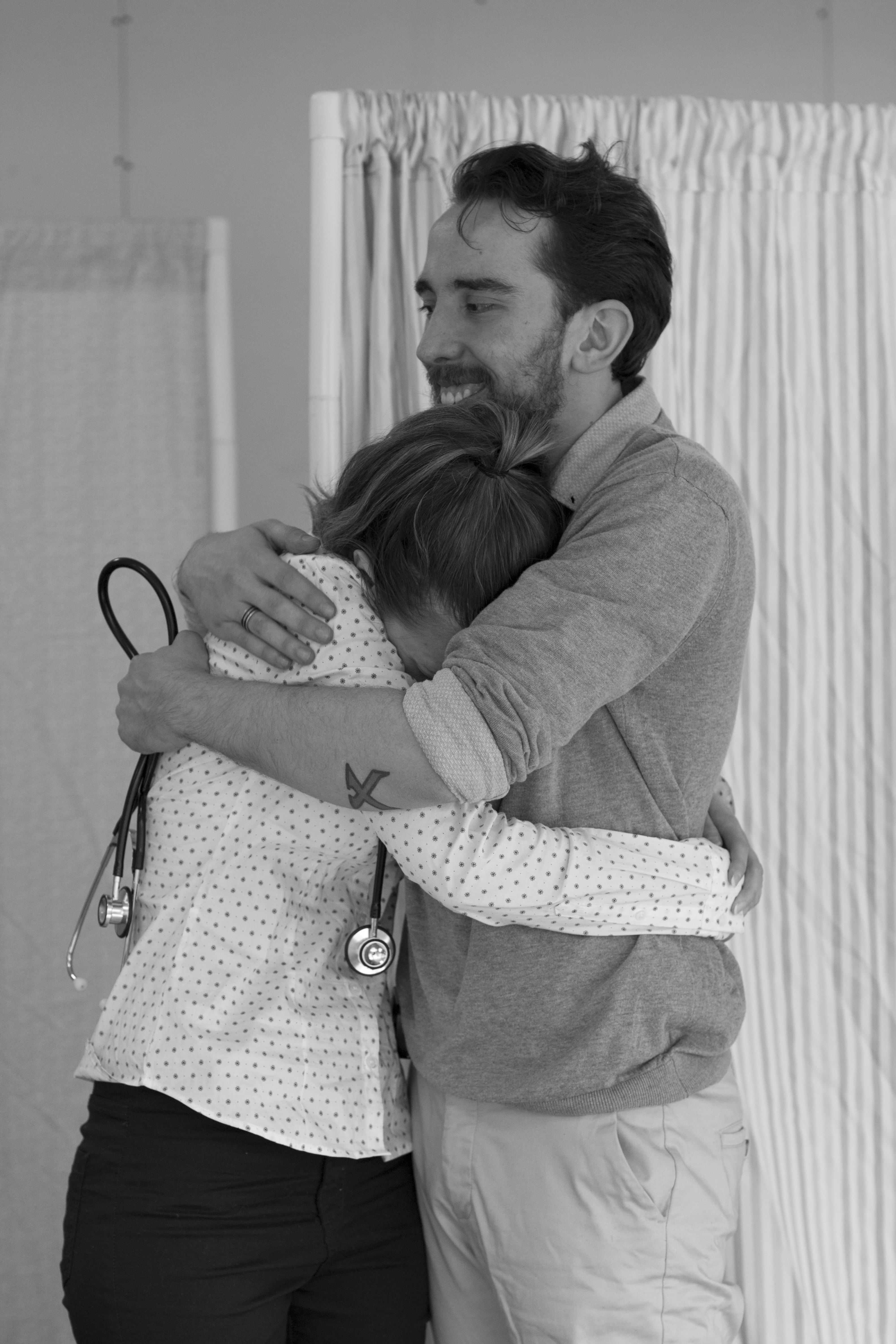
Rounds, which opens this week at the Illuminate Festival in Wimbledon, follows six junior doctors as they try to balance their demanding jobs with a life outside work. It’s a hugely topical subject, and while they’ve avoided taking a political stance, Resuscitate Theatre are hoping the show will open audience’s eyes to the pressures – both personal and professional – faced by junior doctors every day.

Rounds Image

“I don’t think there could be a more relevant time to be doing a show like this. I’m proud of the work we’ve done and hope that the production is able to convey to audiences what it’s like to be coping with life, death and the pressures of an overstretched NHS on a daily basis,” explains Penny Rodie, who plays Dr. Lucy Wright.

“Lucy’s a hard working overachiever who often feels that her best isn’t good enough. She found things tough at medical school so is determined to prove that she’s a capable and confident doctor. Her single-mindedness means she struggles to form the close relationships she’d hoped to have with her fellow doctors, and this leads her to make some questionable choices.”

Davide Vox plays Dr. Giobbe Poretti: “Giobbe is a young Italian doctor that moved to the UK one year before the events of Rounds, in order to pursue his career in medicine. During the show we see him facing the difficulties of being a foreign doctor in an English hospital, being alone and far away from his friends and family, and struggling to create new relationships with the other doctors that revolve around him.

“We’ve taken the decision to face the issue by purely presenting junior doctors’ everyday lives, rather than push a preconception on the strikes and political situation. This gave us the chance to focus on their human relationships and feelings. When does anyone ever think about their doctor’s everyday life?”

The show’s been in development for a few months, incorporating material gained from interviews with junior doctors and the actors’ own personal research. Davide interviewed Italian doctors living and practising in the UK, and says he discovered things he would never have known:

“Lack of time for family and friends (an Italian junior doctor gets an average of 2 or 3 minutes every two weeks to speak with their relatives on Skype, as they’re constantly pushed to work not only inside the hospitals but also on their own to try and solve the natural language gap), pressure to constantly work on ameliorating their English, and racism are still big problems for all Italian doctors. Of course I was also able to relate and bring in part of my personal experience as an immigrant.

“The biggest surprise was probably that, despite the fact that they are praised and extremely respected for their professionalism, Italian doctors, like all doctors coming from non-English speaking countries, are periodically tested on their language knowledge, no matter how long they’ve been living in the country. Apparently the English test is quite challenging, even for British doctors, and one small failure can cost you a full year of mandatory break. Foreign doctors are absolutely not supported and it just doubles the pressure they’re put under.”

Wimbledon Rehearsal (13 of 15)

Penny took a different approach: “I focussed my research on mental health problems amongst doctors and NHS workers in general, as this is something that has affected Lucy’s life and continues to do so. I learnt about the stigma that still surrounds mental health issues, symptoms and triggers, and looked at how this might affect what happens in the workplace.

“I looked at a few distressing case studies where doctors’ mental health deteriorated, and found that the procedures of the General Medical Council in these circumstances can often just pile more pressure on rather than providing the support required. I came away with a sense that these were caring people whose profession failed them.

“I hope audiences have empathy for Lucy’s situation and come away with an appreciation of just how tough it can be to get through each day, no matter how passionately she might want to help people.”

Davide hopes the show will move people. “I’d like them to go away feeling related to the characters we’re bringing on stage, understanding all the turmoil, hopes and dreams of these human beings. I hope they’ll also be able to get what it means to be an immigrant and how difficult it is to be far away from home, from your family and friends, no matter where you actually come from. How the choice of leaving for another place is never easy and it always come with a lot of sacrifices.”

Rounds is at New Wimbledon Studio on 18th and 19th May.

Interview: Joe Sellman-Leava, Labels

Joe Sellman-Leava is co-artistic director of Worklight Theatre, and writer of the award-winning Labels, a solo show that tells a very personal story and invites us to consider its implications on a much broader political scale. In this interview, Joe explains a little about the show’s background, and how it’s been received so far.

Labels can currently be seen at Theatre Royal Stratford East until 30th April – you can read my 5-star review over at Carn’s Theatre Passion – before embarking on a national tour.

If you could sum up the show in one sentence, what would it be?

A personal, political odyssey through right-wing rhetoric, prejudice and family. 

What inspired you to write Labels?

I was in a drama workshop at Exeter University in 2009, exploring racism and inequality. It was led by Emma Thompson, who was doing a series of talks and events at the University after her son Tindy experienced racist abuse during his degree. I wrote the beginnings of what eventually became Labels, in preparation for that workshop. Afterwards I kept writing and developing it in small bites. A year later, in early 2015, with a general election looming and national debate dominated by anti-immigration rhetoric, I felt it was time to finish the show and start touring it.

Emma Thompson described the show as “simple, powerful, important and funny”. What does it mean to you to have such a successful and influential supporter?

It means a lot! Firstly, it’s a huge validation, especially when the show was initially inspired by her workshop. Also, getting new audiences to trust you is hard, and Emma’s words have meant that people who might never have connected with us have now seen the show, told their friends and will hopefully stay interested in what Worklight are doing next.

Photo credit: Ben Borely

The show is obviously very current. Did it develop in the way you expected when you started writing it, or has it taken other directions as a result of world events?

Specific events in the last 12 months or so have definitely made their impact on the show, and we felt we had a responsibility to respond to what was happening given the themes and content of the show. That said, things were different 6 years ago when I started writing this, and different again when my parents were experiencing some of the things the show discusses. As well as responding to what’s happening now, we’ve always tried to acknowledge the timeless elements of the show (people have always migrated), as well as the fact that history repeats itself: for instance, we cite Enoch Powell’s speeches alongside those of David Cameron and Nigel Farage.

You share several very personal and quite difficult memories – both your own and your family’s. Has that been hard, and does it get any easier the more you perform the show?

It’s not hard performing it, but creating the show had its challenges with regard to including personal stories. So much of the content is derived from my parents’ first hand experiences of racism, as well as other experiences or conversations within our family. When the story isn’t yours alone, you have to tread carefully so no one feels used, or exploited when it’s made public. So yes, performing the show feels fine, but getting the show to a place where it did justice to the people whose stories it’s built on, that was challenging!

How have audiences responded? Have you had any unexpected reactions?

Responses have been very positive: after most shows people are keen to chat and lots of them tell us how the story resonated because they’ve experienced racism or other forms of prejudice in their own lives. Or because they’ve seen a friend or family member on the receiving end of those experiences. As for unexpected reactions…there are sometimes people who disagree with certain opinions expressed in the show, and to be honest we always welcome this. Theatre should be a space where people can discuss, debate, disagree, and Worklight try to embrace the opportunity live performance has to create this kind of experience for audiences which, for instance, film or TV can’t in quite the same way.

Photo credit: Anna Bruce

You do a lot of impressions in Labels. Which was the toughest one to get the hang of? And which is your favourite?

I find the Australian accent quite tricky, so Tony Abbott is probably the toughest! My favourite is Ed Miliband… let’s hope he finds something new to do soon, or I’ll have to retire his impression!

When did Katharina [Reinthaller, the director] come on board? How has it been working with her on developing the show?

Katharina came on board in March 2015, via Jessica Beck – a director both of us have worked with a lot. Her input as director and dramaturg has been invaluable and took the show forward in new, exciting ways. She has a fantastic ear for the power of language, imagery and the way stories resonate, so the countless hours spent working through the many, many drafts of the text with her were a joy. And her equally brilliant eye for proxemics, energetic shifts and rhythmic changes meant she took the performance to a new level. It’s her first collaboration with Worklight and we’re thrilled she’ll be directing our next show, Fix!

How does it feel to be launching the new theatre space at Stratford East?

It’s a real privilege and very exciting! Stratford East is truly committed to being “a people’s theatre” and you can see this in their programme, their audiences, the very building itself. We couldn’t think of a better fit for the show.

What’s one thing you hope your audiences will take away from the show?

We want people to leave thinking about and talking about what they’ve seen!