Interview: Adam Bambrough, Four Thieves’ Vinegar

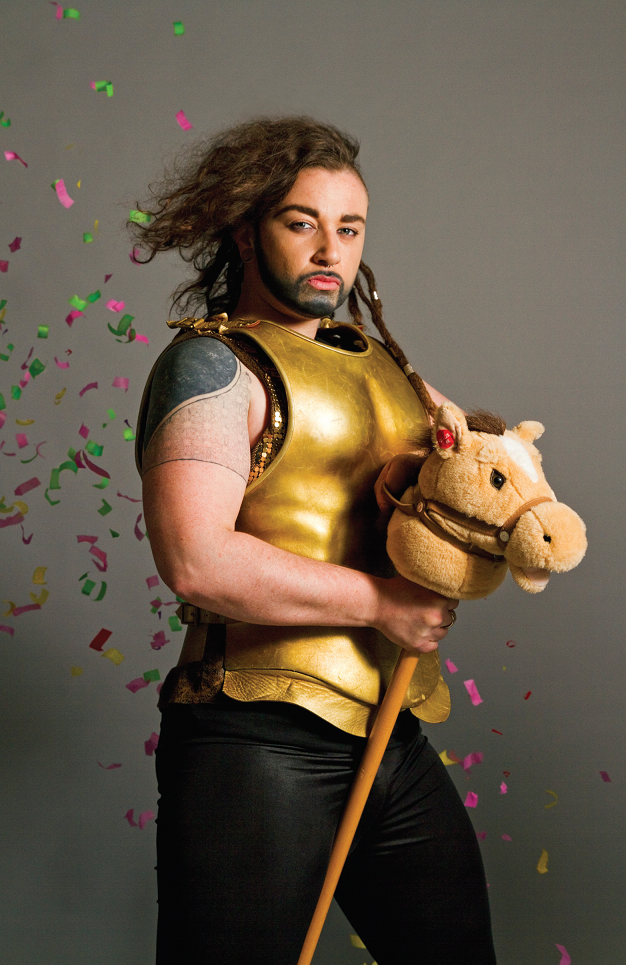
Four Thieves’ Vinegar is a character driven piece of new writing, set in London during the plague of 1665, which explores the behaviour of ordinary people in times of disaster,” says Adam Bambrough, Artistic Director of The 42nd Theatre Company. The play, written by Christine Foster, opens next month at the Barons Court Theatre and is the company’s debut production.

I set up The 42nd Theatre Company as I wanted to be involved in the creative process from the ground up,” explains Adam. “I was a theatre actor for years and grew tired of working for companies who used their actors as pawns, rather than assistant story-tellers, so moved into directing with the aim of being more creative. This company was meant to be a side project in-between directing published plays elsewhere, but it has evolved into so much more.

“Our underlying ambition is to become the leading theatre company for unproduced writers and emerging artists in the UK. We’re a long, long way from achieving that, but hopefully, this production will be the first step along that path.”

four-thieves-vinegar-flyer-front-cover-social-media-version

Since being established in 2013, Adam and the team have received over 2,000 plays, but Christine Foster’s first professional full-length play stood out from the crowd. “We work with writers who’ve never had their work produced before, so most plays that we receive are a long way from being ready for the stage – but we read every submission that we receive in full, looking for signs of an interesting story, told with relatable characters and memorable moments. 

“Even in the first draft, Four Thieves’ Vinegar had those qualities, more so than any of the other submissions that we read. There was a story that immediately interested me, characters who I connected with and moments that I could imagine audiences going to bed at night thinking about. If there’s one word I’d like people to use after seeing this show, it’s ‘relatable’.”

Four Thieves’ Vinegar follows alchemist Matthias, who’s been thrown in jail and must enlist the dubious help of his cellmates Hannah and Jennet to make a cure for the Black Death. But even though it’s set in 1665, the story is still very relevant to our lives today. “The play examines the human spirit, the most connectable theme of all,” says Adam. “Every one of us is faced with circumstances at some point in our lives that we do not know how we will react to until we are faced by them, whatever the scale – and the parallels to modern life can be found all over the world, be it in the current migration crisis or the outbreak of Ebola in West Africa a few years ago.”

As well as their passion for supporting new writers, The 42nd Theatre Company are also committed to fair wages for the artists they work with, and to equal representation for women. “Starting a new theatre company is the perfect opportunity to remodel the way things are done and a lot of our core principles came from my experiences as an actor – and, to a lesser extent, as a director for hire,” explains Adam. “I am a firm believer that artists should be treated with respect from the outset and paid for their work, which is why we are a proud supporter of Equity’s Professionally Made Professionally Paid campaign. There should be opportunities for new voices to be heard in theatre, as there is so much potential out there, it just needs to be nurtured. 

“There are also some principles that stem from my personal life. I have a three-year-old daughter and I often wonder what the theatre landscape will look like for her when she is older. I want her to be treated as fairly and equally as any man, which led me to commit to ensuring that at least half of the cast and creative team on our every production, including Four Thieves’ Vinegar, will be women. There really should be equally representation and opportunity for all in theatre, regardless of gender, race or social background.”

Four Thieves’ Vinegar is at the Barons Court Theatre from 8th-26th March.
Interview: Sam Elwin and Tom Shah, One Last Thing (For Now)

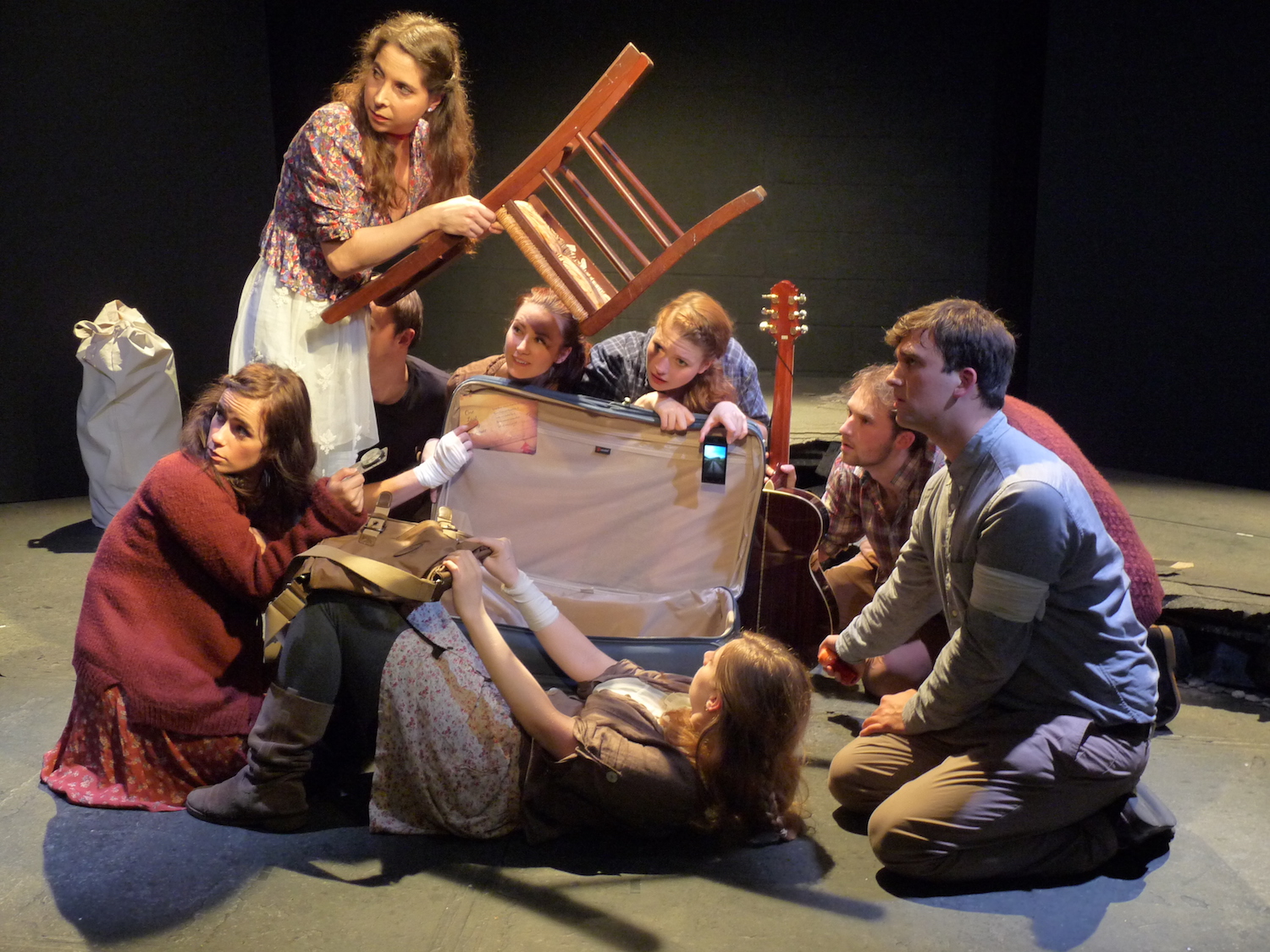
After more than two years in the making, Althea Theatre’s One Last Thing (For Now) has its world premiere at Islington’s Old Red Lion Theatre next month. Conceived by director Lilac Yosiphon, this ambitious project has been developed by the internationally diverse company, including cast members Tom Shah and Sam Elwin, and offers “a universal look at the language of love, the wounds of war and everything in between”.

The play’s creation was inspired by love letters from times of conflict in different cultures and languages. “The concept came from our director, Lilac, whose first instruction was to start reading,” says Tom. “Often they were the letters that were only intended to be read ‘should the worst happen’, and what is important to people in those situations – the words that they can’t leave unsaid – is more than enough inspiration.”

Photo credit: Laurie Field

“Alongside discussing the letters’ common themes, we began to develop a physical language for the show,” continues Sam. “We then attempted writing our own letters and began writing scenes inspired by the stories that had stood out to us. We selected and adapted from this pool of scenes to create a number of more cohesive storylines, which we then overlapped with each other, using the physical language to bind them together and enhance the storytelling.”

The development process began in September 2014, when the basis for most of the storylines was formed. Sam explains: “The process is still ongoing; since the initial development process we’ve had a rehearsed reading of a full length version of the script and we have two more days of R&D (research and development) before rehearsals start, during which we’ll finalise the script. Moreover, rehearsals themselves are a process of devising and discovery, so the show will continue to develop and change during the rehearsal weeks.”

“Initially, it was about using the fact that we were a group of people of different ages, genders, and nationalities with different experiences to draw us to as wide and varied subjects as possible,” says Tom. “Since then we have periodically come back to One Last Thing (For Now) to get it to the point it’s at now. That said, we still have one more story to write; Islington will be our home for the duration of the show’s run, and we’ll be creating an entirely new scene based on letters sourced from the Islington borough.

“One of the themes of the show is that for all our differences, we have the fundamentals in common. We’re asking for letters from Islington that we will workshop with people from the borough to help create this brand new scene for the show. We want to make our show part of the local community, because with such a global spread of stories, we don’t want it to feel like it’s about other people.”

This additional scene is a crucial part of the audience experience, wherever the show is being performed. “We believe that everyone has a story that needs to be heard,” explains Sam. “The intention is to use the letters to inspire a new storyline or scene which is specific to the Islington area and will only be performed while the show is at the Old Red Lion – a new venue would result in a new scene being devised; again inspired by letters, emails, texts etc from the local area. We also wanted to create a direct link with the local community in the performance they would see. To give the audience a sense of ownership and participation – these stories belong to all of us in that they have shaped and continue to shape the world we live in.”

Dealing with such universal issues as love and war, the company hope that the show has something for everyone. “We can certainly all learn something from it, and indeed, since one if its primary themes is cross-cultural understanding, we hope everyone would,” says Sam. “That said, the people most likely to want to see it are those who are interested in stories from around the world; those who have experienced war, either through family and friends or directly; people with an interest in the history; and people who enjoy visually arresting theatre.”

Tom agrees, and adds, “I do think anyone would take something away from seeing the show, but it will probably resonate most with people who at one time or another have felt cut-off from the people they love. I hope audiences will leave with a better idea of what it is that’s important to them.”

The show brings together stories from several different conflicts across the world – stories that the cast have come to know well during the development process. “One of my favourites follows a Colombian woman as she travels the world in search of someone she loves,” says Tom. “Even though she’s from a country most of us have never been to (and probably couldn’t name the capital of), speaks another language, and the ‘foreign’ environment she finds herself in is London, our connection to her is almost instantaneous.”

Sam has a few favourites: “That’s a really tough question to answer, all of the stories are so special. I think three in particular stand out. One is a letter conversation between an American soldier in Vietnam and his wife at home in the US, because it highlights the gap between what is written home and what is experienced and the couple’s struggle to deal with that.

The second is a storyline concerning a French resistance fighter, because it asks how much can love forgive and can we escape the roles we have chosen for ourselves? Thirdly, the story about a woman who sends her touch, because it’s in the tradition of the Brothers Grimm and Struwwelpeter – full of the fantastical and the macabre.”

Photo credit: Laurie Field

The fact that the different stories cross so many historical and geographical borders inevitably presents some challenges: “First, with so many of the storylines featuring non-British characters we had to devise ways of translating or having enough English to be understood by English speakers without repeating ourselves,” explains Tom. “Second, was to have some form of connection between what could otherwise be unconnected stories from different times and places.”

“As part of this some of us have to learn new languages and accents,” adds Sam. “Russian and Hebrew were a particular challenge…”

He concludes: “I hope our audiences will go away with an empathy for people from countries other than their own, an insight into the effects of war after the shooting stops, a remembrance of those who have died on all sides, and a hope that these three things can reduce conflict.”

One Last Thing (For Now) is at the Old Red Lion Theatre from 7th-25th March.

Interview: Sean Brosnan, Beau Brummell – An Elegant Madness

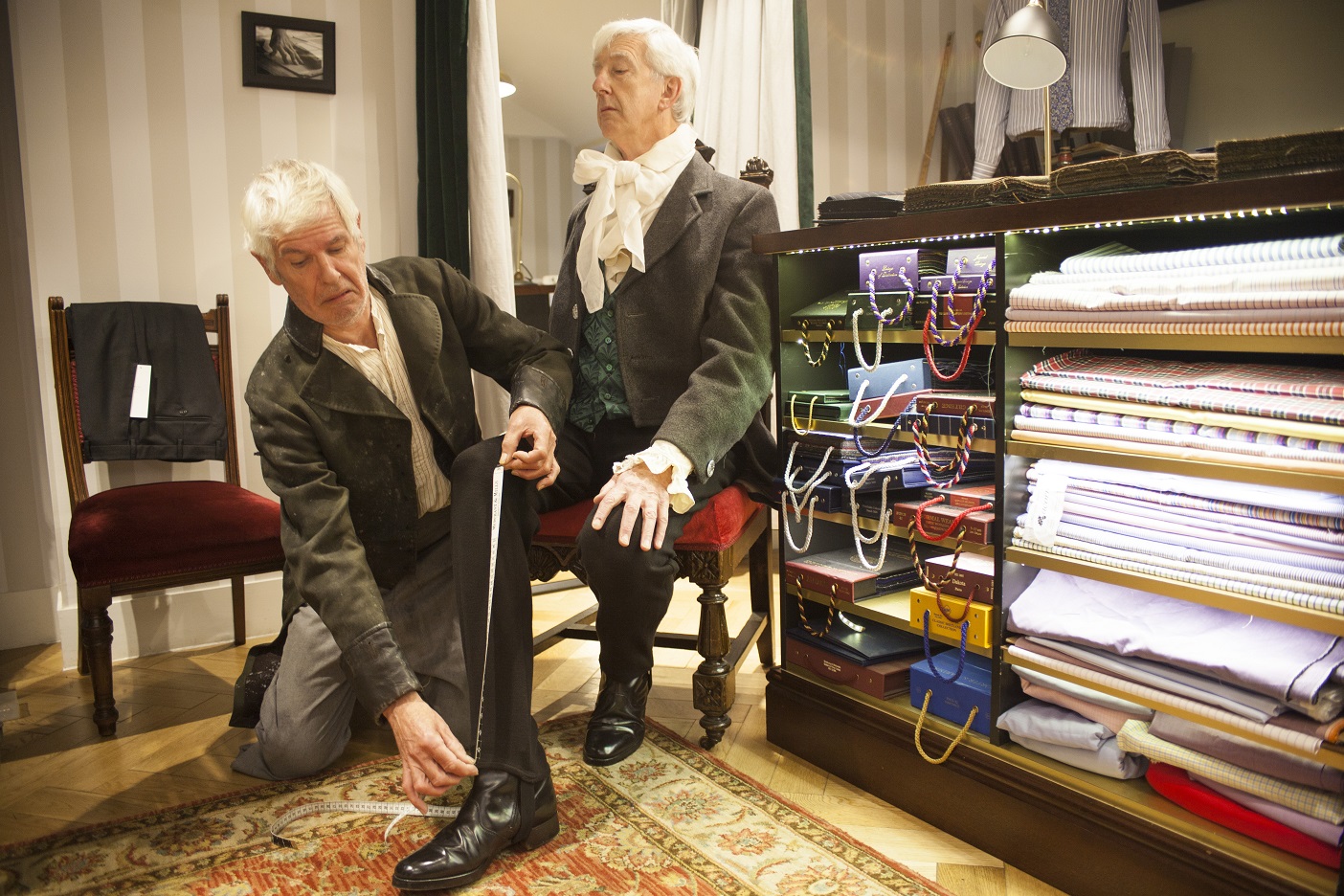
Written by Ron Hutchinson back in 2001, Beau Brummell – An Elegant Madness is a black comedy about the downfall of George Bryan Brummell, known as The Beau. This week the play returns to London for the first time in 15 years, opening tomorrow at Jermyn Street Theatre, just a couple of blocks away from Brummell’s commemorative statue.

Photo credit: Emily Hyland

So who was Beau Brummell? “The play is a fascinating and amusing insight into the world of ‘celebrities’, featuring the original dandy, wit and revolutionary Beau Brummell,” explains Sean Brosnan, who plays him. “Brummell was in many ways a self made man. He seized opportunities where he could and without concern for the consequences. In fact the more he could pique someone with a barbed comment, the happier he was.

“He bucked the trend in fashion and his influence reigns today in the tailored suit. Without him we may all be flouncing around in overly flamboyant colours and fabrics. Imagine a world of Grayson Perry. Today’s equivalent I would say is a cross between David Beckham for style, Kim Kardashian for fame for fame’s sake, and Stephen Fry for biting wit. Imagine that if you will!”

Set in the winter of 1819, the play finds Brummell living in exile in a madhouse in Calais. He’s convinced his old friend King George IV will come and see him on his visit to Calais – but his valet has other plans. “Beau Brummell has so many facets to his character; joy at his past glory, despair at his current situation and a fascinating, complex relationship with his valet, played with great skill and panache by Richard Latham,” says Sean. “Brummell was unique and playing him at this stage of his life, when he is facing desperate reality but also believing his former glory will be restored, is a challenge and a delight.”

Jermyn Street Theatre, in the fashionable St James’s district, is an appropriate home for the production: “Jermyn Street was at the heart of Brummell’s world. He lived close by and bought his wine at Berry Brothers in St. James Street. With his statue at the end of Piccadilly Arcade he must surely be looking down on us with pride. He has not been forgotten. Playing him here is very special.”

Photo credit: Emily Hyland

Although the play’s set nearly 200 years ago, the story of Beau Brummell remains hugely relevant in today’s celebrity-obsessed world. “Brummell was the most famous man of his day and yet is now largely forgotten. Like Oscar Wilde, he had a spectacular fall from grace,” says Sean. “Even today, one mistake in the public eye, be it ever so small, can bring the media’s wrath and vilification. If you’re famous, watch out. They’re out to get you!”

Sean hopes the play will help bring Brummell’s story to audiences who may never have heard of him. “It’s a play that manages to balance the regency farce of Blackadder III with the grandeur of King Lear and has been called ‘Waiting for Godot for the fashion conscious!’ If our audiences leave feeling they understand a little more about the madness and brilliance of Beau and have had a good chuckle along the way, then I will be delighted.”

Beau Brummell – An Elegant Madness is at Jermyn Street Theatre from 13th February to 11th March.

Interview: Owen Calvert-Lyons, Ovalhouse Spring 2017

“It’s a season of new beginnings – new artists, new works, new ideas,” says Owen Calvert-Lyons, Head of Theatre and Artist Development at South London’s Ovalhouse. This week sees the launch of his first major season since taking over last year, featuring an imaginative and innovative programme of shows that runs until the end of April.

“I had a number of ambitions for this first season,” Owen explains. “I wanted to signal a return to our roots as a 
home for radical artists and radical ideas. I wanted to build a community of artists at all
 stages of their career. I wanted to take a risk on some young artists – giving them the 
opportunity to create work for our main stage. I also wanted to provide opportunities for a
 whole series of artists to work with Ovalhouse for the first time, which is why my first season 
is weighted towards experimentation – with eight new works-in-development.

“I think it’s a great season – there are shows that I can’t wait to see again
 and shows which I’m desperate to see for the first time. I am really pleased that five artists 
presenting work in my first season are graduates of our participation programme, which tells 
me that we have a strong future ahead of us.”

joan
JOAN, 11th-22nd April

With so many exciting shows to choose from, how does Owen go about putting a season together? “I start with a series of principles – ideas that I want to see within the season: radicalism,
 diversity, politics, feminism, gender politics. Some shows I see at festivals – both JOAN and
 Eurohouse were at the Edinburgh Festival Fringe – and I saw a work-in-progress of Focus Group
 over a year ago and loved it. Other shows, such as Custody, have come to me more recently
 but have an urgency about them which demands to be heard.

“Then there are the FiRST
 BiTES – eight work-in-progress productions which we are testing out for the first time. All of
 these start with an artist bringing us a great idea; an idea which just needs some time, some
 resources and some love to start the journey towards becoming a great play. This season, I’ve also launched a regular strand of work for children and families. We want this work to 
have the same principles as our work for adults, so our first two productions explore grief 
(The Many Doors of Frank Feelbad) and gender politics (Moonshine’s Entirely Necessary 
Adventure).”

Moonshine’s Entirely Necessary Adventure, 13th-14th February

Presented with the thankless task of choosing some season highlights, Owen tactfully rises to the challenge: “It’s impossible to pick a favourite, but I would recommend Focus Group – a dark and
 unsettling journey into the world of Mister Kipling cakes, and JOAN – a beautiful re-telling of the
 story of Joan of Arc. Lucy, who plays Joan, won The Stage award for her performance, and
 rightly so, she’s brilliant. And Custody – Urban Wolf has been trying to get this play made for
 the past two years; it explores the injustices by the police which he’s witnessed first-hand
 in Brixton. He’s put together a great creative team, with a brilliant script from Tom Wainwright – it’s an urgent story and I’m really proud that we are going to bring it to an
 audience.”

For first-time visitors, he has a few additional tips. “I’m still amazed when people say to me that they’ve never been to Ovalhouse – it’s a
 hidden gem, right in central London. If you’ve never been before and want to dip your toe in,
 then come for a FiRST BiTE show for just £5. Or if you’re feeling more adventurous, come to
 one of our *Discuss nights, where you see a show, immediately followed by an audience-led 
discussion over a glass of wine.

“I’m not sure we’ll ever be the sort of venue that pleases everyone – but this season has a
 pretty broad appeal. If you’re ever unsure if there is a show for you, just call our box office -
 we have a brilliant team who can talk you through the brochure and find a show that suits
 your tastes.”

Ovalhouse’s Spring Season runs until 29
th
 April 2017.

Interview: Carmen Nasr, Georgie Staight and Caley Powell, Dubailand

Carmen Nasr’s Dubailand won her a 2017 Channel 4 Playwrights’ Scheme Playwright in Residence Bursary at the Finborough Theatre, supported by The Peggy Ramsay Foundation. Opening on 5th February, this urgent new play explores the plights of Dubai’s migrant labour force as the life of an Indian migrant labourer becomes fatefully intertwined with that of a British expat with his eye on the big time.

“I grew up in Lebanon, where there’s a similar issue with the violation of human rights of migrant workers explored in Dubailand,” explains Carmen. “In Lebanon, this is especially prominent with Ethiopian, Sri Lankan and Filipino women who come over to work as housemaids in the homes of middle class families. Many of these women have their passports held by their employers, as a way to ensure they complete their employment contracts, as the family will have paid a large fee to a recruitment agency to process their visa and pay for flights. So they are essentially trapped, and have no legal rights. They are also paid a pittance, and many work seven days a week, and don’t ever get a proper break during the day, or annual leave. While my family never hired a maid, many of my school friends’ families did, and I witnessed this mistreatment on many occasions, so it’s something I’ve been aware of, on a very personal level, for years and have felt very strongly about.

“The difference in Dubai and the UAE in general, is that the same thing is happening, but on a massive scale, with many British and American companies turning a blind eye. This legal system of ‘sponsorship’ or Kafala as it’s called in Arabic, is what allows all this to happen. Workers are forced to complete their contracts, sometimes up to four years long, no matter what working conditions they are met with on arrival. Also, because they are in financial debt to their companies, who will have covered the cost of their flights and visa paperwork, their passports are confiscated until they have paid off their debts, which takes them much longer than planned or expected as they are usually paid much less than they were originally promised. They’re essentially trapped. This is a system used widely across the Middle East, and this is the same system used across the UAE to manage thousands and thousands of workers who come over from mainly India and Pakistan, to escape the poverty of their home countries.

“One day, I got an image in my head of a construction worker from India, standing alone on the top of a huge skyscraper in Dubai, still under construction, at night,  surrounded by a sky full of stars, and the bright lights of the Dubai skyline in the background, and I wondered what he would have to say. That was the catalyst for the actual writing of the play. It’s a story that says something about the globalised world we live in today, about the world order that is being established and that we are actively taking part in, and forces us to take a step away from our own individual perspectives and examine it.”

c2jgp3qxeaazytq

The production is being brought to the Finborough by a team including director Georgie Staight and producer Caley Powell. “Dubailand attacks an important ethical issue which doesn’t seem to be being addressed in the way it should be. The reaction we’ve had from so many people of ‘I had no idea this exploitation was happening’ is incredibly telling in itself,” says Georgie, who’s co-artistic director of Flux Theatre, a company dedicated to bringing socially engaging theatre to new audiences. “The success of the script lies in the way Carmen tackles an important ethical issue with humanity, truth and humour. Our loyalties to certain characters constantly shift, leaving the audience to make certain choices.

“I hope audiences will take away an awareness of an issue they may not have tapped into. A reflection on their own lives in turn. And hopefully an enjoyable 90 minutes of new writing and a new writer to keep their eye on.”

Caley adds, “I was instantly intrigued by this play. Reading the script I learnt so much about a side of Dubai I didn’t really know that much about, the migrant labour force and the treatment of the construction workers. What Carmen does so well is juxtapose the lives of these Indian construction workers with a team of British expats, particularly Jamie, who’s new to the country and is enjoying being introduced to the glamorous life of Dubai. The play shows that Dubai is sold as a better life to everyone, whether it’s an Indian construction worker given the opportunity to make money to send to their families back home, or British expats that move to Dubai to live in lavish apartments, earn lots of money and enjoy the glamorous lifestyle – but this play exposes the darker side of the country and is a shocking, heart breaking piece of theatre that will hopefully move you.”

Since its first staged reading in 2015, the play’s had quite a thorough re-write, and been through several drafts. Carmen explains, “While the form and shape of the play has remained essentially quite stable throughout the re-writing process, the voice and journey of Amar, a construction worker from India, has become more nuanced and layered with each draft. Having been unable to access and speak to construction workers on my research trip to Dubai, Amar’s voice took a lot of sensitivity and exploration to fictionalise and construct.”

Caley’s particularly excited about working with a female-led team. “As a producer I’m always actively seeking female led projects. I’m part of the organisation The League Of Professional Theatre Women that seeks to promote women in the arts; although progress has been happening with women in theatre I want in any way that I can to help women bring their projects to the stage and help them get their stories and ideas heard. I enjoy working with a group of women to create projects, for example on Dubailand we have a female director, writer, producer, stage manager, designer and our cast is a 50/50 split between male and female roles – but plays like this are still unfortunately a rarity in the industry.

“We want everyone to feel as though they have contributed to creating this project. We have an amazing team and it’s been a pleasure watching them all work and create the piece together. I hope people will come to see the play and it will lead to more work for everyone on board!”

Carmen agrees: “As a writer, collaborating with a group of theatre practitioners on a play, is all about achieving a production in which a little bit of everyone’s experience and perspective and personality is gently woven into the final production, which is what makes it feel alive. The goal I guess is to produce something that is a result of a huge group conversation, rather than purely the vision of one member of the team. This is what Georgie, as the director, is crafting so beautifully.

“I hope that the audience will go away from the theatre, and think about the play again the next day, or week, or month. Even if it’s just on one occasion.”

Tickets are selling fast – book now for the world premiere of Dubailand at the Finborough Theatre on Sundays, Mondays and Tuesdays, from 5th to 21st February.