Interview: Heather Fairbairn, The Mutant Man

How much have we really progressed over the last century in our understanding and treatment of gender? This is the question posed by Christopher Bryant’s The Mutant Man, which has its world premiere at The Space on 28th March.

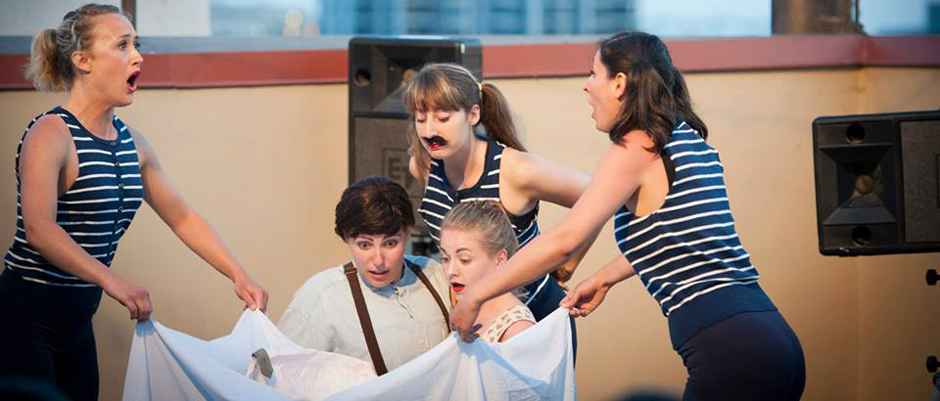
The Mutant Man is about challenging the stereotypes of gender,” says director Heather Fairbairn. “The play follows the true story of Harry Crawford, who lived in the early 20th century. In this psychological thriller, Harry grapples with his gender identity, faces an arranged marriage, attempts to disappear at sea, and, when charged with the alleged murder of his wife, is subjected to an unfair trial focussed more on questions of gender than on guilt or innocence.

“That said, the play is not naturalistic, let alone linear. If you could imagine the Norwegian playwright Jon Fosse adapting Netflix’s Making a Murderer for stage, you would be well on the way to forming a picture of The Mutant Man.”

Heather was drawn to the play, first and foremost, by the quality of the writing. “Christopher Bryant’s multi-award-nominated script is a testament to excellence in new playwriting. I was already a fan of Bryant’s work, and when he sent The Mutant Man to me, I could see it would be an excellent foundation to build a production from. When the writing is this good, one can take more risks with the staging.

The Mutant Man was written around four years ago and has received numerous semi-staged readings since. We recently presented an excerpt at Theatre N16’s HerStory: Feminist Theatre Festival, and further afield in Melbourne, where Bryant is based, an excerpt of the play was included in Gasworks Arts Park’s Midsumma Festival as part of their ‘Playtime Staged Readings’ of new queer theatre. Even so, our production is the world premiere of the full work. To find such a strong, politically relevant, new play, that hasn’t been staged yet, is a rare and exciting treat for a director.”
Though the events described take place in the early 20th century, the story has just as much to say 100 years later. “Given the current political climate, arguably any story that aims to smash a societal framework of prejudice is an important one to hear,” says Heather. “The Mutant Man in particular exposes historical and continuing injustices facing members of the LGBTQIA community, yet ends with hope for the future.

“It explores the beginnings of Western society’s understanding of gender diversity; suggesting that, though the events in the play took place about a hundred years ago, our comprehension hasn’t grown much in the intervening years. Through the portrayal of historical events, the play highlights some unfortunate but necessary parallels between the intolerance of the early 1900s and the intolerance we’re consistently seeing now towards anyone, regardless of gender, who does not fit accepted stereotypes. The play is almost Brechtian in that regard: using a setting of another time and place to afford the audience with objectivity about what is happening here and now.

“I hope The Mutant Man contributes to the larger current discourse about the non-binary nature of gender and encourages audiences to disregard archaic gender stereotypes. At its heart, this inherently feminist play promotes the positive values of compassion, acceptance, and equality.”

The production is supported by the Arch and Bruce Brown Foundation, who champion LGBT positive arts projects inspired by history. “Their support has been invaluable to the development of The Mutant Man,” says Heather. “In 2015, Christopher Bryant was the first Australian to be shortlisted for the AABB Foundation’s playwriting award when The Mutant Man won an Honourable Mention in the competition. For the upcoming premiere season, I’m collaborating with a great team, including designer Charlotte Henery and lighting designer Sean Gleason. We’ve been fortunate to receive continued support from the Foundation in the form of a production grant, which will enable us to realise the design elements of the production.”

As a theatre and opera director, Heather’s worked all over the world, in a career that’s already full of highlights. “The one that jumped straight to mind was working as Assistant Director to Katie Mitchell on Ophelias Zimmer. I had worked with Katie Mitchell previously, but to do so at the Schaubühne – an institution I have long admired, with Simon McBurney creating Beware of Pity in the neighboring studio, and productions directed by Ostermeier and Castellucci showing at night, it was an exhilarating experience for me as an early career director.

“Another highlight has been collaborating with composer Ana Seara and librettist Sophie van der Stegen. We met in Munich last year whilst participating in a workshop about new music theatre for young audiences. During that weeklong workshop, we created a short opera, and we haven’t stopped creating work together since. We currently have an immersive adaptation of Mozart’s The Magic Flute in repertory at the Music Chapel in Belgium, and three other projects at various stages of development.”

The Mutant Man is Heather’s UK directorial debut: “So, this project marks a homecoming of sorts for me. I grew up in Nottinghamshire before moving to London by myself when I was 17 to attend The BRIT School. After The BRIT School, I continued my studies in Australia, but since graduating from NIDA in Sydney, most of my practice has been Europe-based. The Mutant Man, a project I am so passionate about, felt like the right work to return home with.”

The Mutant Man is at The Space from 28th March-8th April.

Interview: Alex Packer, Ballistic

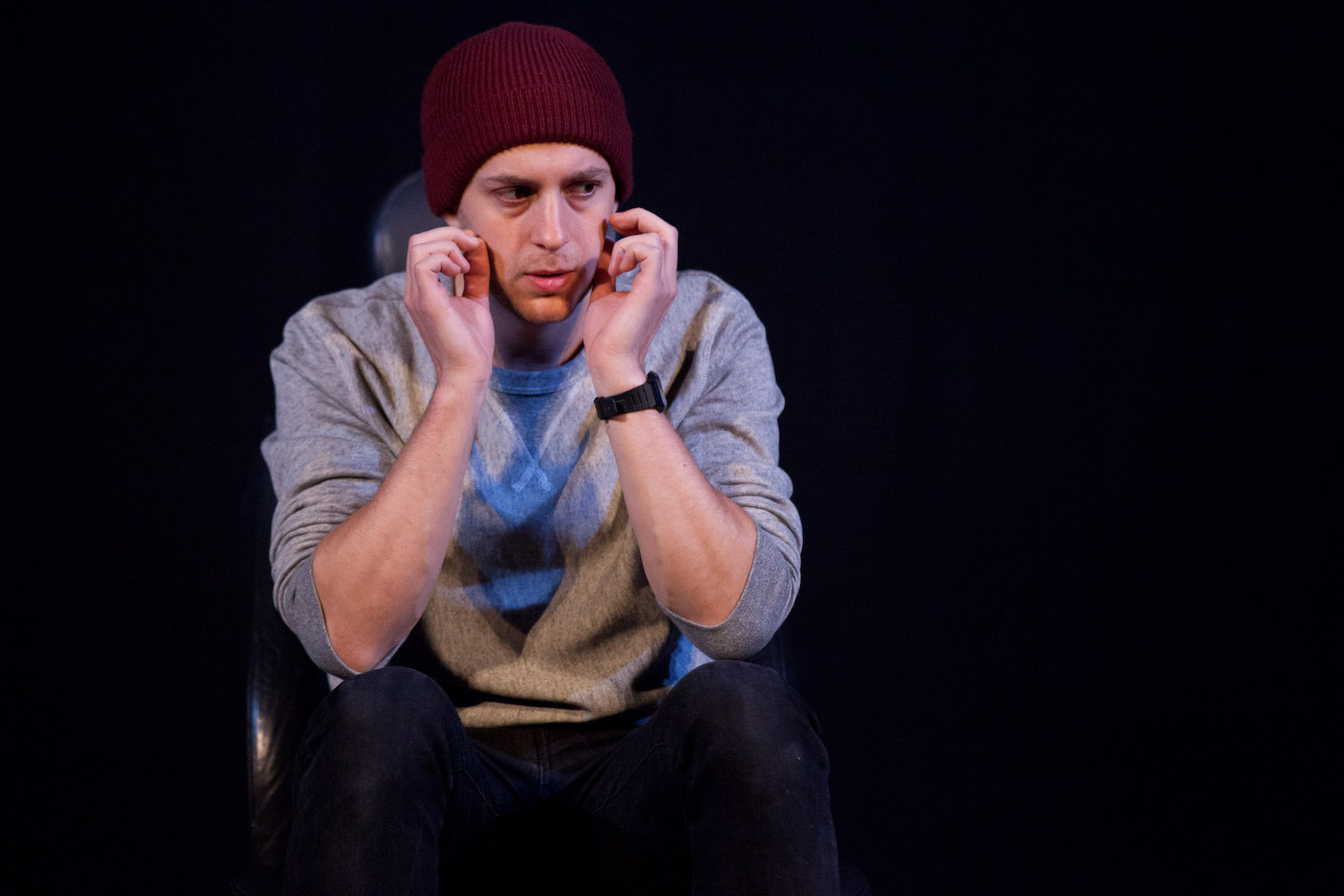
In 2014, 22-year-old Elliot Rodger killed six people and injured fourteen others in Isla Vista, California, before taking his own life. After the attack, a lengthy document emerged that came to be known as his manifesto, in which he outlined his motives for the killings. It’s this manifesto and his online diaries that inspired Alex Packer to write Ballistic, an original story based on real events.

Ballistic is a coming of age story with a difference,” explains Alex. “It’s about a troubled young man struggling with masculinity, isolation and his place in the world. It’s about the potential dangers of what can happen if we don’t identify and help people like this.

“Before he committed the horrific mass shooting in 2014, Elliot Rodger published a 100,000-word manifesto about his life. I was shocked, uncomfortable but also very sad when I read it. He also kept a YouTube channel where he filmed himself. I wanted to understand the chain of events that can lead to a young man doing such a thing. After reading the manifesto and watching his videos, I had some answers but many more questions. I adapted, adjusted and created the play around some of the elements in his story.”

The one-man show is performed by Mark Conway, who’s been involved since the beginning. “We’ve been creating it for a year and a half,” says Alex. “I started writing it for Mark and we worked for several months on writing drafts, reading it aloud and adjusting it. The final piece in the puzzle was working with Anna Marsland, who’s been a fantastic collaborator. I feel it’s important to work on something as sensitive as this as a team in order to look at it from all angles and perspectives. As collaborators we’re always looking for the most effective way of telling this story.”

Has it been difficult to work with such chilling material? “It has and it hasn’t,” says Alex. “Because the play is a careful mix of truth and fiction, we’re able to find moments of lightness in the story too. Even though Elliot’s story is a dark one, as a writer I have to have a certain amount of empathy in my character in order to try and convey all the parts of his life sensitively. Reading about his life in his manifesto, I’m particularly curious about the near-misses – the what-ifs. He wanted friendship, wealth, love – normal things that normal people want. If key moments in his life went slightly differently would the ending have been the same?”

Alex believes the play has a message for everyone: “We see and read about characters like Elliot all the time. I think we all need to heighten our awareness and sensitivity with vulnerable and troubled young people. We need to avoid labelling them and pushing them away. Instead, we should ask the right questions and work together to prevent them going down the wrong path.”

Three years on from the events that inspired Ballistic, similar attacks continue to dominate the headlines. “I’m not sure the world has really learnt anything from Elliot Rodger’s story,” says Alex. “My catalyst for writing this play was the seemingly unending reoccurrence of violent attacks that were being reported. The media crave these dramatic stories and by giving them such prominence in newspapers and TV, I feel it’s extremely precarious. We need to ask why we broadcast these stories like this.

“The world seems to be filling up with fear, alienation and anger. The expansion of these ideas combined with lonely and troubled individuals are a toxic mix. It’s becoming easier and more comfortable to avoid real human interaction and put the blinkers on. I feel we need to notice this and be aware of its dangers.”

Above all, Alex hopes that Ballistic will prove thought-provoking. “The play isn’t about answers. I think the best theatre asks questions of its audience and keeps them thinking about it long after the curtain call.”

Ballistic is at the King’s Head Theatre from 27th February to 17th March.

Interview: Debra Baker, Big Guns

Interview: Haste Theatre, Oyster Boy

After award-winning performances all over the world, Haste Theatre’s Oyster Boy is back for a new UK tour. Kicking off last week at London’s Blue Elephant Theatre, the revamped show will travel to venues around the country between now and May, finishing up with four dates at the Brighton Fringe.

Oyster Boy is a dark comedy told in a light-hearted and quirky way, about the struggles of a boy living with an oyster shell for a head,” says Jesse Dupré, co-founder of Haste. “We use puppetry, clowning, dance and music to tell this strange story.”

Oyster Boy is based on a 1997 poetry book written and illustrated by Tim Burton: “Initially, we were drawn to the stories in his book The Melancholy Death of Oyster Boy because they were so strange, and although short in length, seemed to say a lot and evoke much reflection and thought. We saw potential in the material and in the small number of characters he created, knowing we could inject comedy and humour into this rather sad tale.”

The show has been enjoyed on previous tours by audiences of all ages. “There is something in it for everyone!” says Jesse. “Because we are a physical theatre company, the story is told with a whole range of different performance styles, such as live music with ukulele and a cappella harmonies and choreographed movement and dance sequences. It is high energy and will leave you feeling revived, but also will provoke questions to do with the subject content.

“Primarily, we’d like audiences to have a good time watching the show, as it’s an action-packed performance full of colour, vibrancy and music. We want them to be engaged and to laugh, even though the story has dark undertones. 

“We’d also like to encourage a sense of questioning amongst the audience, especially in terms of morality and judgement of others. The character of Oyster Boy is subject to a lot of harsh criticism from society because of the way he looks, and this acts as a mirror to show the reality of some people’s lives today. We hope that audiences will sympathise and become attached to the puppet of Oyster Boy, and therefore be more inclined to empathise with people who are different without pre-judging them.”

Those who’ve seen the show before will notice some changes this time around. “We’ve performed our original version of Oyster Boy since 2013, and have toured it all over the world including America and Italy where it’s won numerous awards,” Jesse explains. “We know that it worked well how we first made it, but we wanted to challenge ourselves to tweak and change parts that we knew could be better and more developed. We also wanted it to represent our work now as a company rather than 3 years ago when we were just starting out. 

“Many things have changed this time around – in fact with the help of our Associate Director, Kasia Zaremba-Byrne, we’ve done a full overhaul of the story, the characters, the props and the set. Kasia helped us breathe new life into the show and expand on what we had before, bringing out new elements in us as actors as well as in the narrative itself.”

One stop on the tour is the Marlowe Studio in Canterbury, where Haste will be performing for one night only on March 30th. “The Marlowe Studio is a wonderful place to perform,” says Jesse. “We toured another show there in 2015 and had a great experience. The team who programme shows in the studio are very on the ball in terms of new theatre and emerging companies, and so it’s an exciting space to perform in.

“Local audiences should come along to check out smaller productions as well as large touring productions, in order to experience other types of shows. The studio is a great modern space with a decent sized stage and raked seating, and so audiences are guaranteed to have a good experience, especially if they come to watch Oyster Boy!

“Last time we performed in Kent, we had supportive and receptive audiences who made us feel encouraged and appreciated, and so we are really looking forward to bringing a different show to the same theatre. We felt we attracted a wide cross section of the community around the Marlowe and judging by the feedback we had, they thoroughly enjoyed our previous show. We are hoping that the same magic will work again this time!”

Catch Oyster Boy on tour – visit Haste Theatre’s website for dates and venues.

Interview: Freddie Tapner, London Musical Theatre Orchestra

The London Musical Theatre Orchestra exploded onto the West End stage last year with their five-star concert performances of State Fair and A Christmas Carol. This Sunday, they’re launching their 2017 season at the London Palladium with Jason Robert Brown’s Honeymoon in Vegas, starring Maxwell Caulfield, Samantha Barks and Arthur Darvill. And to think all this began with a simple Facebook post…

“It was mid-May 2015, and I was playing through the piano score to Phantom of the Opera, when I realised that it would be considerably more fun to play it through with a full orchestra,” explains LMTO founder and Musical Director, Freddie Tapner. “I posted on Facebook asking if anyone wanted to join me and make it happen, and 24 hours later I had 250 people signed up. I honestly thought I might find 25 – to find 250 keen people in such a short space of time was amazing.

“I never in a million years expected to be where we are now – the success of the orchestra has taken us all by surprise. It’s not to say it has happened by accident; we’re lucky to have an astonishing team of people driving this machine who work tirelessly to create the magic on stage. Shaun Kerrison, our regular Director, happened upon us by chance and is now one of our closest allies. Mike Robertson, an Olivier Award winning lighting designer, is a joy to work with and produces show stopping moments I wouldn’t even know how to describe, let alone create from nothing. Avgoustos Psillas and Nick Lidster from the Autograph sound team make LMTO concerts sound glorious, epic and truly orchestral – and that, after all, is what it’s all about. We’re riding a wave of luck and I don’t want to get off!

“The only expectation I have ever had from LMTO is that it would always be fun. We have moved in the direction which allows us as an organisation to create the most enjoyable concerts possible, for our audience, yes, but also our players and performers. Without fun on stage, concerts can be terribly boring.”

Photo credit: Jamie Scott-Smith

The last two years have brought several highlights for Freddie. “Personal highlights for me will always be about people. Meeting and working with these amazing artists is something we all dream of doing, and I’m lucky enough to do it every day in rehearsals. The highlight for LMTO must be our sold out concert of A Christmas Carol at the Lyceum Theatre – moments like that remind you that what we’re doing is really welcomed by audiences.”

LMTO’s first show of 2017 is romantic comedy Honeymoon in Vegas, based on the 1992 movie starring Nicolas Cage and Sarah Jessica Parker. “Honeymoon in Vegas is SUCH a brilliant show,” enthuses Freddie. “It’s a proper Broadway comedy musical, complete with huge big band numbers, samba rhythms and sweeping Jason Robert Brown melodies which will take your breath away. It follows the story of Jack and Betsy, as they run away to get married in Las Vegas – but others have plans to disrupt, even cancel their wedding. I don’t want to say anymore, otherwise I’ll spoil the story!

“The show has all the hallmarks of a great musical which works in concert format. The songs are idiomatic, powerful and so fulfilling that they stand on their own two feet without needing the structure of a full production. Although set in the present day, the story is in many ways a Las Vegas myth, a legend which could take place in any time in the last 50 years – which means the music takes us through all of the big Broadway styles. If there is one thing LMTO loves, it’s a big Broadway tune!”

Like their previous concerts, which have featured stars including Robert Lindsay, Wendi Peters, Carrie Hope Fletcher and Celinde Schoenmaker, Honeymoon in Vegas boasts a stellar line-up of West End talent, and Freddie couldn’t be happier. “We’re thrilled to have such a talented cast on board. Samantha Barks is someone I’ve wanted to work with ever since I saw her sing Defying Gravity on the BBC’s I’d Do Anything programme. Having started work with her already, she’s perfect for the part of Betsy.

“Musical theatre followers will know Arthur Darvill from Once, but his current thrust is TV/film work, so it’s a delight to be bringing him back to the stage. Maxwell Caulfield is a living legend, and his oozing charm and effortless charisma make him the perfect Tommy. Rosie Ashe – Dame Rosie to her friends – is a class act, and as the original Carlotta from Phantom, I grew up listening to her voice on the recording. Simon Lipkin has played pretty much every comedy part going in the last ten years, and his comedy chops will be really brought into play as he gives his Roy in Act 2 – a high singing, high flying, high jumping Elvis impersonator. I could go on and on – the entire cast are glorious.”

For the first time, Freddie’s handing his baton to a guest conductor – the show’s composer, Jason Robert Brown. “It is nothing but a pleasure to be able to share the fun of conducting LMTO with Jason,” says Freddie. “All of my favourite conducting experiences have been with LMTO, because every person in the orchestra truly loves the music we’re working on. That makes such a difference: it produces an extra spark, an extra precision and extra care to produce the goods come show time. I think on the night I’ll be sad not to be up there, but overall it’s a really positive experience – I get to sit and watch the show for once, after all!”

The concert marks the beginning of an exciting season for LMTO: “Next up will be a trip to St Albans Cathedral where we’ll present our first compilation show: A Night on Broadway. Featuring all of your favourite showtunes, we’re going to rock one of the biggest churches in the country for one night only on Saturday 13th May. Then we go back in time, to Bernstein’s masterpiece Candide. We’ll be tackling this astonishing work back at Cadogan Hall – tickets for this are already beginning to disappear, showing that this score is ever popular.”

Don’t miss Honeymoon in Vegas at the London Palladium on Sunday 12th March.