Interview: Karen Mann and Roy Mitchell, Care

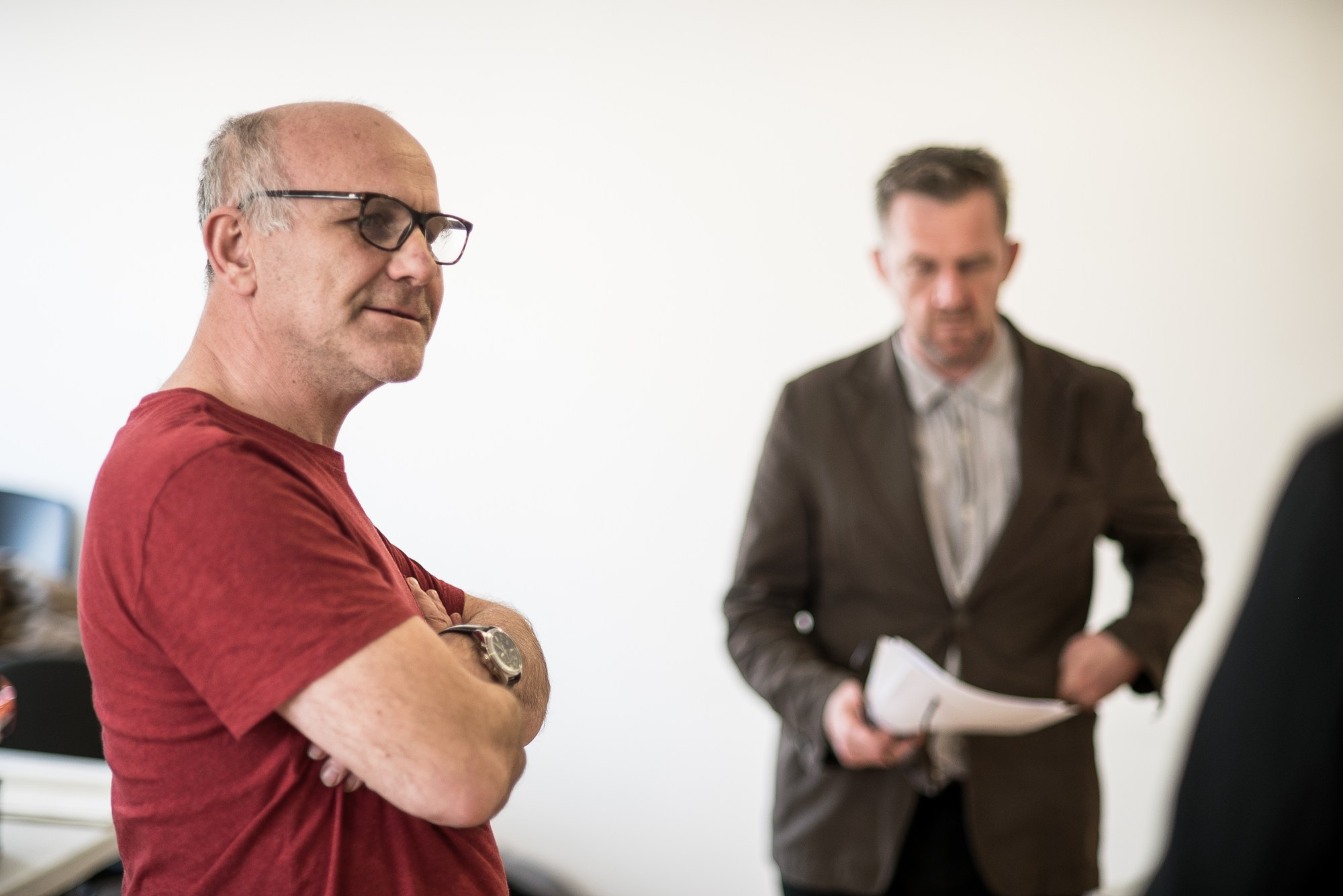
Roy Mitchell, co-creator of BBC’s New Tricks, wrote Care when he was a student at Manchester Polytechnic School of Theatre in 1977. Last performed at the Royal Court in 1983, this “powerful and provocative” work is about to be revived with an ethnically diverse cast by The Angus Mackay Foundation, and will run from 9th-14th May at the Courtyard Theatre in Hoxton.

“In essence it’s about a young couple in 1970s Birmingham who end up putting their baby in a cupboard,” summarises Roy. “Why they do so takes about two hours of stage time to explain.”

Karen Mann, who plays central character Cheryl, adds, “They’re a young couple who love each other, but have found themselves in an awful circumstance trying to navigate a secret that could alter their life.

“The sense of disenfranchisement and isolation is really relatable. These are good people who are trying so hard but they have never been given amazing opportunities; how can anyone survive and grow without support?”

Karen jumped at the chance to be involved in reviving Care for a new generation. “The producer introduced me to the play and I just knew I had to be a part of it, although I knew it would be very dark,” she explains. “He told me it looked at a relationship that was so raw and real, but the play was so physical, and as someone with physical theatre training but who loves straight plays with strong narratives, I knew I wanted to be a part of it. And when I got my hands on that script I thought to myself I will give anything to play Cheryl; her journey is astounding.

“When I opened the script I saw two humans who are very much in love and trying to make the most of the situation handed to them. I never perceived them as bad people – I thought WOW I can understand how that happened and why they have created this bubble to exist in. The play although dark is so funny and so full of love, and that to me is really interesting because I think all of us can relate to this play in some type of way.”

For Roy, seeing Care performed again after all these years is a surreal experience, and has come with a few surprises. “I’m not the young man who wrote it any more – and yet of course, I am,” he says. “It’s been surprising to see how well the cast and director are able to understand and recognise the characters’ behaviour.

“It’s also great fun hearing the Birmingham accent and language of my youth – it has become very diluted. What is new is the multi-racial casting element; it actually makes much more sense of a couple of things that have occurred in the back story, and perhaps one or two in the play itself. What it has to say about spiritual poverty and materialism I think seems a lot more prescient than I once thought. 

“The idea was inspired by my upbringing; I was very happy but a lot of the world around me wasn’t. Children were invariably seen and not heard – though not in my case! And in particular, the play was inspired by Strindberg’s The Ghost Sonata.”

Karen, her fellow cast members – Marc Benga, Jaana Tamra and Leo Shirely – and director Emily Marshall have been working closely with Roy on the play’s revival. “Roy has been so generous with his time and I’ve learnt so much about the world of this play because of him,” says Karen. “He’s allowing all of us actors to own our characters, but he is so intuitive when we don’t understand certain quirks and is so sensitive when explaining it to us. Roy is an actors’ writer and having him be a part of rehearsals has been the most enjoyable experience – especially considering all the experience he has!”

As for what audiences take away from seeing the play? “That’s up to them,” concludes Roy. “Despite the content and subject of the play, it will make them laugh in places – otherwise we’re buggered.”

Care is at the Courtyard Theatre from 9th-14th May. Tickets are just £9 with code Monkey16.

Interview: Bric à Brac, Just Lose It

Following the success of their first production, Ash, international ensemble Bric à Brac have begun developing their next project, Just Lose It, an immersive show about weight loss and body image. “Our audience is introduced to different members of our fictional weight loss programme, The Bin the Belly Weightless Corporation. By poking fun at our society’s obsession with body image we hope to shed light on the ridiculousness of this subject whilst instilling confidence in everyone that we are all lovely just the way we are!

“It’s a fairly young idea. We started talking about it half a year ago, and had a couple of workshops playing around with the theme. But the actual creation of the show is happening right now. We’re doing a research and development showing at The Space on 10th May, to learn and get feedback. If all goes to plan, we’ll continue developing after summer.”

Bric à Brac’s aim is to tackle difficult and relevant subject matter with clever, dynamic, and humorous storytelling. “Our collaborative process allows for a more diversified and unique take on these issues. We want our audiences to have fun, leaving them with questions and not necessarily all of them answered. If we can provoke laughter and meaningful discussion through our work then I’d say we’ve done a good job.”

The idea for the show came initially from director Anna Marshall’s own experience. “We’d been touring and working on Ash for nearly two years and as a group we were looking for our next challenge,” she explains. “Two years of Ash also meant two years out of Lecoq; I noticed that my body had changed from stopping the everyday exercise we were doing whilst training and I started becoming quite self conscious – I’d be nervous about going back to Yorkshire in case my family commented on whether or not I’d gained weight, and I realised that it was just stupid.

“After that I began thinking why I felt unhappy about it – I wasn’t clinically overweight or unhealthy, but I just didn’t feel like I looked great and I started noticing how magazines, adverts, Instagram etc were showing me images of how I wanted to look. Once I started looking for it I realised how mixed the messages I was being told were – ‘be healthy’, ‘be happy with yourself no matter what’, ‘do this three-day detox to be beach ready’ – and I thought this could be an incredibly rich topic to explore.”

Just Lose It is an immersive promenade experience, in which the audience is split into five teams, each led by a different cast member. “Bric à Brac company members’ individual talents in comedy and improvisation come into their own here, allowing each audience member to have a slightly different experience depending on who their leader is.

“The structure of the piece allows for a more engaging way of addressing the subject matter for the audience. In order to achieve this bold and immersive presentation, we’re using the R&D time at The Space to research further the insecurities of calorie-counters and the competition these pyramid structures of weight loss can create. The aim is to create the feel of a ‘night out’ whilst we delve into the grotesque greed of this weight loss group and their hunger to win big, by losing large.

“We believe the style we’ve chosen is the perfect way to present this subject, as it takes the form which is used commercially to market against a healthy body image through a Weight Watchers slimmers programme. This show is not intended to mock these groups, as slimming programmes encourage people to achieve their ideal weight through togetherness, and provide a great support structure to do so. The aim is to challenge the presentation of a negative body image that goes hand in hand with these slimming programmes.”

The company believe the show has something to say to everyone, regardless of age, gender, size or shape. “Weight loss, and more specifically body image, is something we all think about, whether we’re aware of it or not. Our society is crammed full of pressures on what you eat, how you exercise and what you wear for your shape. Popcorn instead of crisps, sold out boot camps and vertical stripes over horizontal. Adverts for health foods and gyms are purposely cross-generational, and often feature young adults to pensioners, proving that anyone can be fit. This show should investigate just how universal a topic body image is, hence how important it is for us to understand it better.

“We’re hoping audiences go away thinking ‘yeah, I’m happy with the way I am’. Or at least happy to discuss their body issues and find a better solution to feeling more comfortable in their own skin than resorting to programmes, crazy diet plans and hardcore fitness regimes because society ‘tells’ them to change the way they look. It’s about being healthy mentally and physically. That’s different for everyone.”

The members of Bric à Brac, who are from Britain, Jersey, America and Norway, founded the company on their graduation in 2015. “We all met and trained together at Jacques Lecoq in France. In a nutshell, Lecoq is about using movement to explore a huge range of theatrical styles, from clown and bouffon to tragedy and melodrama, whilst always placing an emphasis on a collaborative process. I guess there is quite a strong preconception that Lecoq ensembles solely produce ‘physical theatre’ – which is not completely untrue – but I also think there is so much more to it than that.

Just Lose It, an immersive, promenade show, might not seem at first sight to be in a distinctively Lecoq style, but it nonetheless gives us an amazing opportunity as a company to draw on our shared background. There are absurd characters aplenty, undertones of cabaret, and hopefully a healthy amount of silliness to keep our audience-cum-participants laughing along!”

Check out Bric à Brac’s Just Lose It on 10th May at The Space.

Interview: Iain Gibbons, The Performance

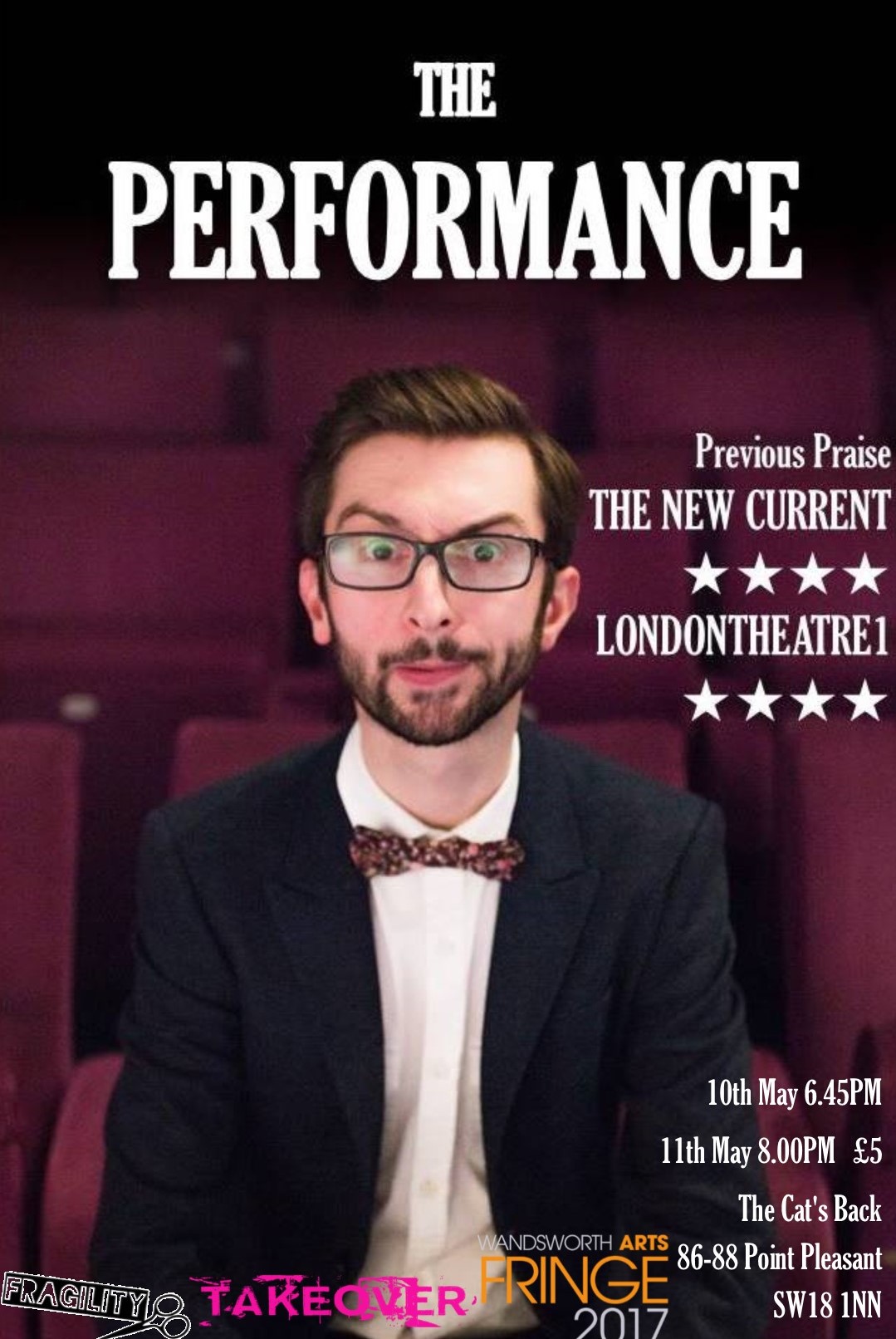
Iain Gibbons is a London-based actor, most recently seen as a stressed out junior doctor in Resuscitate Theatre’s Rounds at the Blue Elephant Theatre. But he’ll be taking on a rather more light-hearted role in his new solo show, The Performance, which previews at the Wandsworth Fringe on 10th and 11th May before heading to Brighton for its premiere.

The Performance is a sometimes sketch, sometimes clown, sometimes farcical comedy show about three men’s attempts to make the best of a bad situation,” explains Iain. “The performance must go ahead, no matter how silly things get.

“Originally, the idea came from a Charlie Chaplin quote that says, ‘Life is a tragedy when seen in close-up, but a comedy in long shot’. Also, after watching some of the later Jacques Tati films, where often you would see one eccentric figure in the giant canvas of the shot, I began to wonder what ‘giant canvas’ I could set a comic figure against. As I spend a lot of my time in theatre auditoriums, I decided to create a short experimental piece in 2012 where the audience sat on the stage and looked up at a lone figure eating his lunch in a sea of red seats. The idea was funny to me and remained in the back of my mind until I decided to develop it further late last year.”

Though The Performance is not his first one-man show, after working as part of a close-knit team on devising and performing Rounds, Iain admits to mixed feelings about performing solo again. “It’s absolutely terrifying. The key element of creating theatre for me, particularly comedy, is responding to an audience. You can only know if a show works when you’re physically there performing it with people. A lot of the work I’ve done for this show has been alone in a room trying to work out how to physically get from one place to another – but I have a supportive group of people I can draw reaction and ideas from, which has been invaluable in ensuring the practicalities remain fun to perform.”

As a performer, Iain takes a lot of his inspiration from classic comedy: “I watched sketches from the likes of Charlie Chaplin, Jacques Tati, Rowan Atkinson, Fry and Laurie, Monty Python and Tommy Cooper, amongst others. I think you can see a lot of these influences in the mix of the show. They were particularly essential for working out the structure of the sketches and guiding my approach to the timing. Timing will also be affected by the audience present on the night.

“I studied with master clown Philippe Gaulier, who emphasises the child-like playfulness of the moment, while listening and responding to the audience present. His master insults will be ringing in the back of my head as I discover how this show really works at the two festivals I’m attending this summer. You may also recognise influence from early Stoppard, Ionesco and Pirandello. These are all hugely successful idols to work from, which I feel is important when you’re trying to create something successfully wonderful yourself.”

In The Performance, Iain plays “the most annoying audience member you could ever wish to sit next to”. As an actor, he’s seen his fair share of bad theatre etiquette – but what bugs him the most? “From noisy eating to stage invaders, I’ve seen quite a bit of distracting activity in the theatre stalls,” he says. “However, what most irritates me are those ‘seasoned’ audience members who believe that they have a right to disrespect the audience and theatre staff. The theatre is a shared space, so we should *ahem* share the space…”

So what would his number one piece of advice be to an inexperienced theatregoer? “Have fun. Enjoy the experience of being with people presenting ideas live in front of you – or indeed in any direction. Anything could happen, so be open to the possibilities.

The Performance is like most other theatre shows, in that there will be a performer, an audience and an usher on the door. The only twist is that I’ll be playing all three. If you recognise the theatre setting, you’ll connect with the world I’m creating instantly; if you’re new to theatre, I hope I can show you how much fun we can have in a space that still appears daunting to outsiders. Come and see why I find people sharing a theatre setting fascinating to watch. But most of all, come to have fun!”

Catch The Performance at The Cat’s Back, Wandsworth on 10th and 11th May, and at The Warren: Studio 3, Brighton on 25th-27th May.

Interview: Stephen Unwin and Colin Tierney, All Our Children

“People keep saying to me is it weird? But in a funny kind of way it isn’t – it’s rather wonderful,” says Stephen Unwin, writer and director of All Our Children, which opens at Jermyn Street Theatre this week. “It’s the first time that I’ve both written and directed a play, so that’s a whole new interesting experience for me.”

Set in Nazi Germany, All Our Children examines the barbaric programme that saw thousands of disabled children murdered by the state, and its effect on five individuals, each of whom is involved in a different way. It’s a very personal project for Stephen, whose 20-year-old son is profoundly disabled, and who was recently appointed chair of children’s charity KIDS.

“There are three aspects to it,” he explains. “My mum is German Jewish; she left Germany as a child in 1936. And then I was brought up in Catholicism, and now I’m the parent of a disabled child, so it’s a kind of perfect storm; it all came together. The idea came from when I was reading a brilliant social history of the Third Reich, and it suddenly started talking about the Nazi programme of murdering disabled people, but then the opposition of this highly conservative Catholic priest called Von Galen – played in All Our Children by David Yelland – who extraordinarily wrote these letters and delivered three very famous sermons. As a result of his power, passion and commitment, the programme was discontinued, and it’s pretty much the only record of someone standing up to Hitler from within Germany and actually changing policy.”

The story takes place in a hospital for severely disabled children, run by chief paediatrician, Dr Victor Franz. Colin Tierney, who plays the doctor, explains, “The Nazis have taken power and they’ve created this situation where children are being sent off to their deaths because they don’t conform to the new German ideal of what life should be. And the play is about my character’s struggle on one day to deal with what he’s doing, why he’s doing it and how he’s going to get out of it.

“Victor Franz was a children’s doctor, somebody who spent his life looking after people, who created this institution where disabled children could be looked after, and all of a sudden in this different new Germany, he feels as if he’s been taken over by this new force. This is what I’m trying to work out along the way – his struggle about what he’s doing and how he makes the decision not to do it. So he’s essentially a good man who’s been forced to do these terrible things, and that’s the complex dilemma I’m wrestling with.”

In getting to know his character and the crisis he’s facing, Colin’s worked closely with Stephen. “It’s quite a short rehearsal time, so I’ve been reading the play a lot and discussing it with Stephen, who of course is both writer and director, and is really inside the world of the play. He’s given me so much information, so much detail around the backstory of the world – and because Stephen has a disabled child of his own, I’ve been looking to him for lots of clues. I’ve done a bit of reading around the subject but the bulk of my work has been in the room with the script, with the actors, breaking down the moments, finding the detail and finding how deeply they resonate within me on a human level.

I’m just enjoying it a lot – even though it’s a serious subject matter, there’s a great sense of wanting to do justice to the work, so there’s a good attitude. People are working hard and committing in a really positive, honest way.”

Despite the heavy topic, both Stephen and Colin are keen to reassure audiences that the play is not as brutal as it sounds. “It’s not a heavy dirge of an evening,” says Colin. “It’s not light either, but it’s philosophical and incredibly well written.”

“You don’t see any children, you don’t see any violence, but you know it’s there,” adds Stephen. “It’s a drama of human beings in a ghastly world trying to work out how to be human beings again. It’s not brutal as a play, and I think maybe some people are worried that it’ll be really horrible, about kids with Down’s Syndrome being shot – but you don’t see any of that, that’s not what I’m interested in presenting. I’m much more interested in presenting why might somebody think that kids with Down’s Syndrome are a bad thing.

“One of the Nazis’ main reasons for their persecution of these people was that they said they’re so expensive, that keeping somebody with cerebral palsy cost a fortune and that money could be spent on better things. And of course although I don’t say that the lives of the disabled is the same as in Nazi Germany – that would be a grotesque thing to say – there are issues today about how do you value a human being in terms of their monetary worth. What do you do about people who will never pay tax, will never have a job, who are non-productive? And it’s a very big radical question, it challenges our priorities. And that’s what I’m really interested in.

“One of my characters, played by Lucy Speed, is the mother of a disabled child. As chair of KIDS, I’ve come into contact with lots of parents of profoundly disabled kids, and there’s a mixture of love for their children and intense love for their vulnerability, combined with absolute towering rage for a society that doesn’t value them properly. It’s really palpable – they’re very radical people.

“We also have Edward Franklin as Eric, a young, committed Nazi – but you discover that his antipathy to disability actually comes from his father having been disabled in World War 1, and he hates it because he’s so angry about that. So one of the things I’m interested in is the way that discrimination towards disabled people is actually towards people’s anxieties about their own weaknesses – and also fear. Our final character is the doctor’s maid Martha, played by Rebecca Johnson, who has an important line about this towards the end: that she used to be afraid of them, used to think they could infect her, but she’s not afraid of them any more. And that’s a great big important development that society needs to take on – how not to be afraid of people with profound disability.”

Colin agrees that even though we’ve moved on from the horrific events depicted in All Our Children, the play still carries important messages for a 21st century audience. “Hopefully it will make people think about our responsibility to others, and our responsibility as a society – how important love is and looking after people, especially those who have trouble looking after themselves. I think that’s the measure of a society, whether people who can help others should, instead of everybody thinking for themselves and doing their own thing and saying ‘screw you’. That’s where the heart of the play is. It’s not like we live in Nazi Germany now at all of course, but I think there’s a strong human resonance that people can tap into when they see this play.”

Book now for All Our Children, at Jermyn Street Theatre from 26th April to 3rd June.

Interview: Matthew Parker, Brimstone and Treacle

The Hope Theatre in Islington has been quietly building a reputation for excellence over the last couple of years, collecting rave reviews and countless award nominations, including one for Fringe Theatre of the Year at The Stage Awards. Much of this success must be attributed to the theatre’s artistic director Matthew Parker, who came on board in late 2014 and was recently named Best Artistic Director at the Off West End Awards.

Next month The Hope kicks off its 2017 in-house season with a 40th anniversary revival of Dennis Potter’s controversial Brimstone and Treacle, directed by Matthew and starring Olivia Beardsley, Stephanie Beattie, Fergus Leathem and Paul Clayton. Originally written as a BBC Play for Today in 1976, it was banned for its disturbing content, and wasn’t performed until the following year at the Sheffield Crucible. A film version starring Sting followed in 1982, but it wasn’t until 1987 that the BBC finally allowed the play to be transmitted.

Brimstone and Treacle is about a young man who thinks he’s the devil, and visits a middle class, middle aged couple who are caring for their vulnerable daughter,” explains Matthew, who admits he’s been longing to tackle this particular play for years. “It’s darkly funny, frightening and shocking, a controversial masterpiece about good and evil, identity, religion and what it means to be British. Who wouldn’t want to tackle a one act play that explores all of those monumental themes? Plus, and crucially for me and the Hope, it is a gender balanced cast – two women and two men – with roles for two actors over 50.”

40 years after it was written, Potter’s play remains just as relevant in 2017 – though that’s hardly something to celebrate. “It’s about racism, the horror that lies behind the twitching floral curtains of middle England homes,” says Matthew. “It attacks what it means to be British and the lengths people will go to inside their own heads to ‘reclaim their country’. Coming off the back of 2016’s Brexit vote it really couldn’t be more timely if it tried! It’s the 40th anniversary this year and I am always fascinated to look at these 20th century classics with a 21st century audience and ask ourselves, ‘What has changed?’ It’s scary to see just how little matters have actually changed in terms of attitudes to race, gender and religious tolerance.”

The play contains scenes that were deemed too offensive to be shown in the 1970s, but does it still have the same shock value today? Matthew believes it does: “In a word, yes. It contains scenes of sexual violence against someone in a vulnerable position and it really doesn’t shy away from showing evil, both in a physical and mental way. It’s very important to me that our production is not exploitative with the scenes of sexual violence. But nor should it be sugar-coated. We are dealing with pure evil here. The darkness of humanity. The piece examines the nature of good and evil, and asks whether miracles can occur from an act of evil – from the visitation of the devil rather than an angel.

“And it is funny – and the fact that it is funny as well as violent is shocking in itself. Even at our first read through some of the team were laughing away whilst some others were staring at them in horror, thinking ‘how can you be laughing at that?’ As a director, work that creates different reactions within audiences has always attracted me.”

Matthew’s delighted with his cast for the show. “Well, they’re bloody brilliant. Stephanie Beattie was in my production of Steel Magnolias last year and blew everyone away with her astonishingly heartbreaking performance as M’Lynn. Joining her as her on stage hubby is Paul Clayton, an actor with an amazing career spanning TV (Peep Show, Him and Her, Coronation Street) and theatre including RSC, Chichester, Royal Exchange, West End. They are joined by two graduates of Drama Studio London: Fergus Leathem, who last year appeared in Game of Thrones, and Olivia Beardsley joins us less than a year from graduating and I’m super-excited to get to work with her at this early stage of her career. She’s definitely one to watch!”

As disturbing as the play undoubtedly is, there is some good news. “I’d like our audiences to take away the comfort that good will always triumph over evil,” says Matthew. “And knowing that The Hope takes risks with its programming, and that you can see theatre here that is bold, theatrical and stunningly performed.”

So what makes The Hope different from other fringe theatres? “Little room – BIG ideas. Small space – HUGE ambition. Minimal money – MASSIVE passion,” summarises Matthew. “And every piece is theatrical. It’s not kitchen sink dramas. It’s not really naturalism. Everything has a little sprinkle of magical theatricality.”

Not surprisingly, when it comes to choosing which productions go into a season at The Hope, Matthew and his team operate a careful, thorough selection process: “I have a brilliant team of people who read all the plays that get submitted. If they like them then I read them, then I meet with the company and chat though the unique way in which we collaborate with people at The Hope. Not everyone is the right ‘fit’ and I won’t just take anyone or any show.

“It’s super important to me that everything that takes place in that lovely little space is brilliant. I take risks but I take them on people who enter into the collaboration with honesty, and with joy and passion. It really is fantastic to see that this approach has paid off with a Stage Award nomination as Fringe Theatre of the Year and my recent success at the Off West End Awards as Best Artistic Director 2016.”

Catch Brimstone and Treacle at The Hope Theatre from 2nd-20th May – and why not check the theatre’s website to see what else is coming up?