Review: Mirrors at Leicester Square Theatre

In a world of fashion magazines, social media, online dating and reality TV, who needs a magic mirror to remind you every day that you’re not the fairest – or funniest, or coolest, or most talented – of them all? In darkly humorous modern fairytale Mirrors, Siobhan McMillan draws on her own experiences to examine our obsession with measuring our own self-worth based on the perception of others, and the desperate places that obsession can take us to.

Photo credit: Thomas Aston

Vlogger ShyGirl is excited – not only does she now have eight YouTube subscribers, she also has a new boyfriend, Mikey, who’ll be here any minute. Mikey, however, doesn’t sound to us like much of a catch, and when he inevitably doesn’t show up, ShyGirl’s fragile self-esteem is crushed. In a fit of rage, she conjures up a gorgeous, confident alter ego, Shivvers, who’s a distant relative of Snow White’s evil stepmother. Shivvers has her own magic mirror, which dutifully tells her every day that she’s the most beautiful in the land… until one day it doesn’t. Horrified and furious, she sets out to find and destroy her competition, but ultimately discovers only other women who are secretly as messed up and neurotic as she is.

Directed by Gabi Maddocks, Mirrors is a short, punchy and action-packed solo show, which takes us on an epic journey through a brand new fairytale land. Writer and performer Siobhan McMillan is a gifted storyteller, bringing her characters and surroundings to life with the aid of a few props, some impressive physical characterisation, and a lot of imagination. She’s also very funny, frequently diverting from the traditional fairytale script and in doing so making her character much more relatable than your standard Disney villain; Shivvers might be a terrifying ice queen on a murderous quest, but she also drinks, swears, and gets bored, hungry and grumpy just like the rest of us.

Photo credit: Thomas Aston

As laugh out loud funny as the show frequently is, however, anyone hoping for a fairytale ending for Shivvers (or ShyGirl) will be disappointed. This surreal adventure ends as it began: having failed to find her rival, she returns home alone, still begging her broken mirror/laptop for reassurance. It’s a gloomy note to end on, but feels appropriate given that the universal quest for perfection – whether you’re a Shivvers or a ShyGirl – is one that seems unlikely ever to be over.

Frequently bizarre, and occasionally downright baffling, Mirrors is a unique experience. The show tackles some serious questions in an entertaining and humorous way, and while it doesn’t offer any constructive solutions, in reflecting back to us our own anxieties and fears, it does make us feel a little bit less alone.


Can’t see the map on iPhone? Try turning your phone to landscape and that should sort it. I don’t know why but I’m working on it… 😉
Review: The Dog Beneath The Skin at Jermyn Street Theatre

On the face of it, W.H. Auden and Christopher Isherwood’s eccentric fairy tale The Dog Beneath The Skin bears little resemblance to the world we live in today – but scratch beneath the surface and there’s a strong note of political satire that can be read as a cautionary tale for the 21st century.

The play’s central character, unassuming English gent Alan Norman (Pete Ashmore), is picked at random for a quest: if he can track down his village’s missing heir Francis Crewe, he gets a share in the Crewe fortune and the hand of Francis’ beautiful sister in marriage. Which is all well and good, except Francis has been gone ten years, and Alan is far from the first to undertake this perilous search.

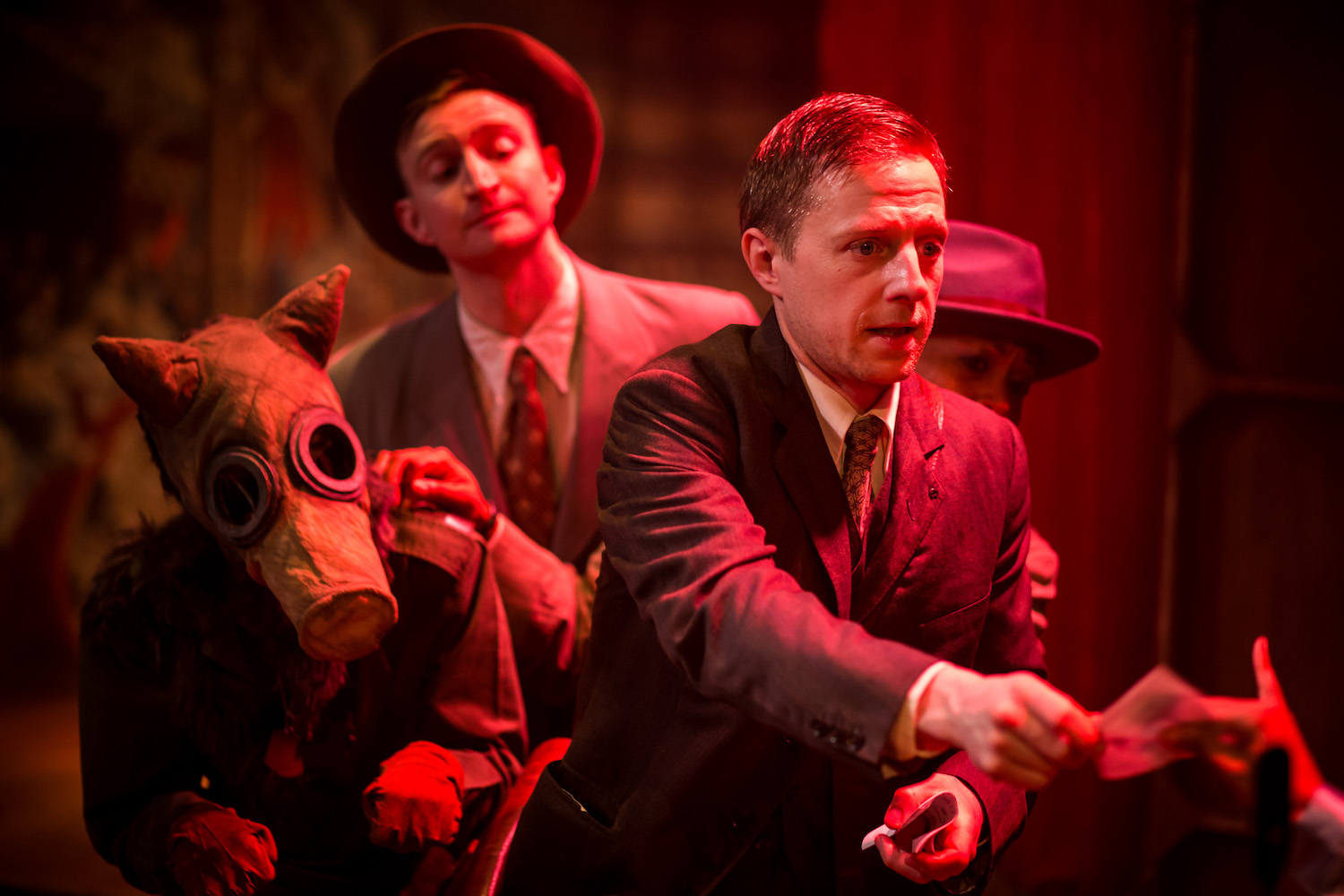
Photo credit: Sam Taylor (S R Taylor Photography)

Undeterred, our hero sets boldly off across pre-war Europe, accompanied by a dog from the village (Cressida Bonas) whose oddly human behaviour doesn’t seem to surprise or concern anyone. As they journey through fictional European nations that feel a million miles from the charm of rural England, they meet monarchs and prostitutes, lunatics and lovers, but find no trace of the missing Francis. Despondent, the pair return home to the village of Pressan Ambo – except it’s not quite how they remember it. (Side note: I was interested to discover, while researching the play, that Auden and Isherwood each wrote a different ending. This particular production uses Isherwood’s marginally more upbeat conclusion.)

To say that the play has a bit of everything feels like an understatement; I couldn’t pin it down to one particular style or genre if I tried. At times it’s laugh out loud funny, at others darkly ominous, and occasionally entirely baffling. In other hands it could have been a bit of a mess, but under Jimmy Walters’ direction, a competent and incredibly hard-working cast – some of whom play no fewer than ten characters each – ensure we remain entertained and interested throughout, even when we have little or no idea what’s actually going on.

As the only two actors to play just one role each, Pete Ashmore and Cressida Bonas give enjoyable performances as Alan and The Dog, but it’s the ensemble who really bring the play to life. I particularly enjoyed Edmund Digby Jones’ smarmy vicar turned dictator and Eva Feiler’s obsequious master of ceremonies, while Suzann McLean is compelling in brief appearances as a grieving mother, whose words of warning are dismissed by the villagers.

Photo credit: Sam Taylor (S R Taylor Photography)

The production makes maximum use of the limited space available, with one end of Rebecca Brower’s set devoted to a stage area that suggests a lot of what we’re seeing is merely a performance (it’s not what you say, it’s the way that you say it, etc). Scene changes are incorporated seamlessly into the action, while a recorded voiceover provides poetic narration to keep things moving along.

The Dog Beneath The Skin was first performed in 1936, as Europe faced head on the rise of fascism and the threat of World War 2. That dark period may now be the stuff of history books, but the disquieting reminder as the play begins and ends that “this might happen any day” forces us to consider if where we’re headed right now is really that different. It is without doubt a bizarre play and consequently might not be everyone’s cup of tea, but the cast’s enthusiasm and the script’s underlying relevance make this a very worthy and welcome revival.

Can’t see the map on iPhone? Try turning your phone to landscape and that should sort it. I don’t know why but I’m working on it… 😉

Review: Abducting Diana at the Hen and Chickens Theatre

The media has long had the power to influence (some might say manipulate) our hearts and minds – but 2018 seems a particularly relevant moment for a revival of Dario Fo’s Abducting Diana, if only to prove that we’ve learnt nothing since the play was first written in 1986.

Media tycoon Diana Forbes McKaye is in the middle of a romantic liaison with a guy called Kevin when she’s kidnapped by three masked figures. However, she quickly turns the tables on her incompetent abductors and concocts a plan to cut out the middleman, make them all rich, and save her own skin. Quite straightforward, you might think. Except that Diana isn’t really Diana, Kevin isn’t really Kevin, there’s a man in the fridge with electrodes attached to his halluxes (that’s his big toes to you and me)… and where did that priest with the big nose come from?

As you might imagine, everything gets rather chaotic, rather quickly, with existing characters switching allegiances, and new ones popping up just when you thought the story couldn’t get any more complicated. Such is the air of general mayhem that the play almost forgets to make its point, and the characters have to return to the stage in the final moments to remind us why we’re all there – namely, corruption in high places and the exploitation of the working classes (in this scenario the hapless kidnappers, who seem to come out of every allegiance a bit worse off).

The company are enthusiastic and deliver some strong comedy performances, although in all but two cases, Fo’s characters don’t give them a huge amount of material to work with. As the only one of the three kidnappers we really get to know, Marius Clements has the thankless task of delivering most of his lines from inside a fridge, but rises to the occasion with spot-on comic timing. And Elena Clements plays Diana with cool sophistication and withering sarcasm, keeping her head when all around her are losing theirs – which has the unfortunate side effect of leaving us a bit confused over whether we’re supposed to cheer or boo her resourcefulness.

There are a few issues with Michael Ward’s production; not all the chaos feels entirely deliberate, and there are times – particularly when everyone’s on stage at once – when pace and volume could both come down a notch to ensure the audience is able to keep up with the plot’s more complex twists and turns. It’s also not very clear when the play is set; some of the biggest laughs are inspired by the kidnappers donning masks that feature the faces of Trump, Farage, Boris and the like – but while these topical references to the ruling elite make perfect sense in light of the play’s message, they feel confusingly out of place in a room where people still use typewriters, tape recorders and cheque books.

If you’re after sharp political commentary, Abducting Diana is possibly not the play you’re looking for. What it does offer, however, is high-energy, absurdist fun, performed by a committed cast who are obviously enjoying themselves immensely. Though at times a little unpolished, the play promises an hour of farcical mayhem, and on that score it certainly delivers.

<em>Can’t see the map on iPhone? Try turning your phone to landscape and that should sort it. I don’t know why but I’m working on it… ;)</em>

Review: Foul Pages at The Hope Theatre

To quote the timeless classic Shakespeare in Love (not sarcasm, I love that movie): “Love, and a bit with a dog – that’s what they want.” Robin Hooper clearly subscribes to the same belief; his play Foul Pages has both – and Shakespeare too, though in this case it’s not him who’s in love but pretty much everyone else. Will, meanwhile, is more interested in refining his latest work, As You Like It, whilst fending off interference from the Countess of Pembroke, a fellow writer full of helpful suggestions, and from King James I, who’s become infatuated with one of the actors and insists that he be given the lead role. The purpose of the production is to charm the monarch into pardoning Sir Walter Raleigh, who’s days from execution for treason – but pleasing the king comes at a cost for more than one member of the company.

Oh, and there’s also a talking dog.

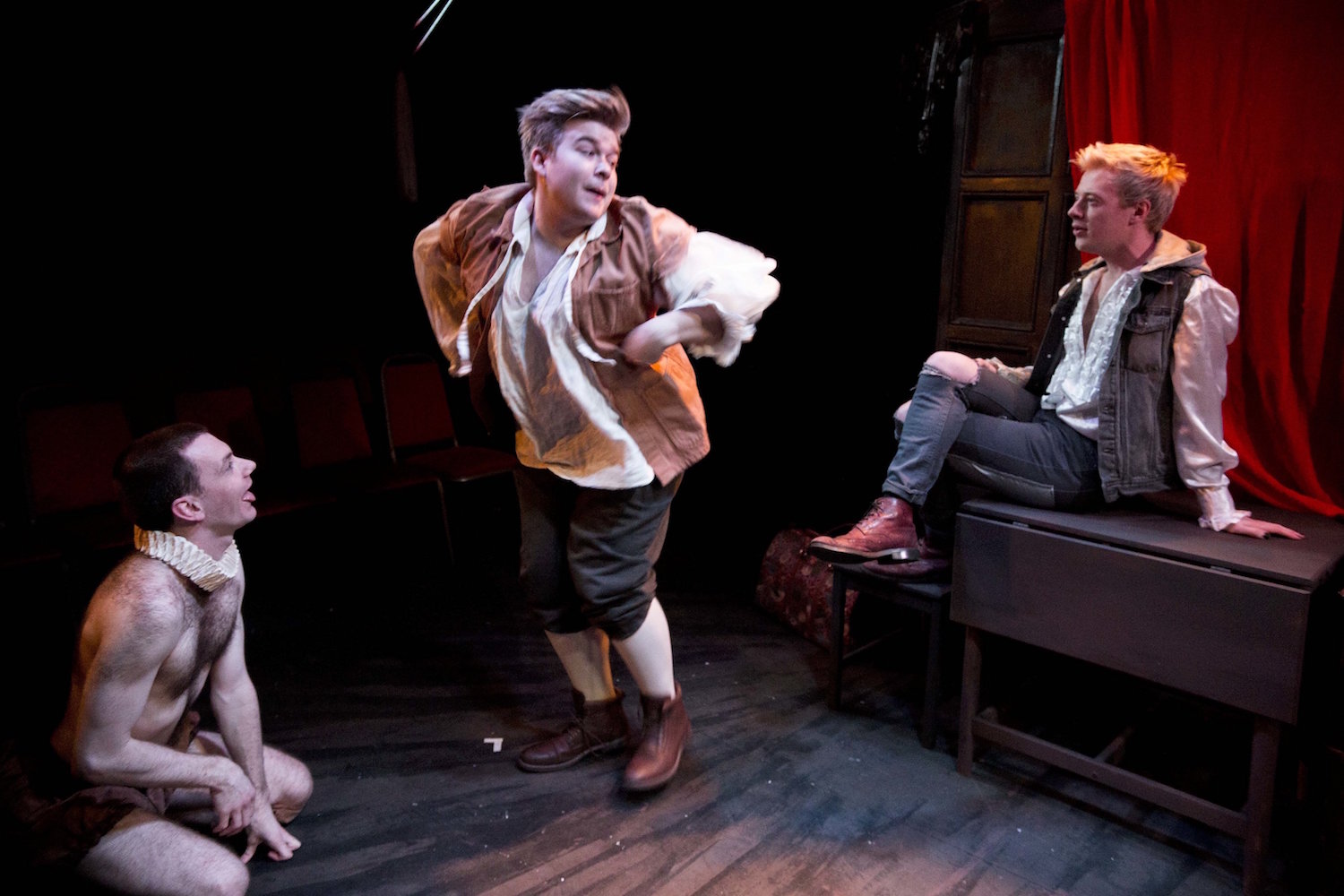
Photo credit: LHPhotoshots

Ian Hallard appears as Shakespeare, but such are the scandalous goings on that for once the legendary playwright isn’t the centre of attention. As his all-male company is torn apart by jealousy, ambition and more than a little sexual tension, all Will can do is watch in bemusement and do his best to hold everything together, along with straight-talking maid Peg (Olivia Onyehara) and the king’s devoted Scottish bodyguard Mears (Jack Harding).

Meanwhile it’s the more flamboyant characters – Lewis Chandler’s shunned actor Alex, Clare Bloomer’s eccentric Mary, Countess of Pembroke, and Tom Vanson’s lovelorn King James – who take centre stage, each driven by their own desires to take potentially catastrophic actions. There’s poignant work from Thomas Bird and Greg Baxter as actors Rob and Ed (also Shakespeare’s brother), whose fledgling relationship is threatened by the king’s interference. And then there’s Chop the dog, played to scene-stealing perfection by James King, who’s not only got all the animal behaviours down but also gets the most laughs, with wry observations on the bizarre human behaviour going on around him.

Photo credit: LHPhotoshots

Though the action is set in 1603, director Matthew Parker gives the production a modern twist; the costumes are an intriguing mix of 17th and 21st century, and rapid scene changes are punctuated by loud music and flashing lights, creating a sense of urgency as the stakes become ever higher and events take an unexpectedly tragic turn. Rachael Ryan’s economical set allows us a glimpse of goings on both upstairs and downstairs at Wilton, while still somehow allowing enough room on the tiny Hope stage for nine people to come out and treat us to an energetic jig at the end of the show.

There’s a political detour in the plot that doesn’t quite fit – it arrives out of nowhere and is just as quickly dealt with and forgotten – but that aside, Foul Pages is a compelling and irresistibly entertaining tale of love, lust and theatrical ambition that may just make you see As You Like It, and Shakespeare himself, in a whole new light.

Can’t see the map on iPhone? Try turning your phone to landscape and that should sort it. I don’t know why but I’m working on it… 😉
Review: Ken at The Bunker Theatre

Ken Campbell was a writer, actor, director and legendary prankster, who had a profound influence on the careers of some of Britain’s best-loved entertainers – among them Terry Johnson and Jeremy Stockwell, whose two-man show marks the tenth anniversary of their friend’s death.

The Ken experience begins with Tim Shortall’s set; stepping inside The Bunker is like going back in time to the 1970s. There’s plush pink carpet everywhere you look, a smell of incense hanging in the air, and a random assortment of audience seating choices, from cushions to bar stools.

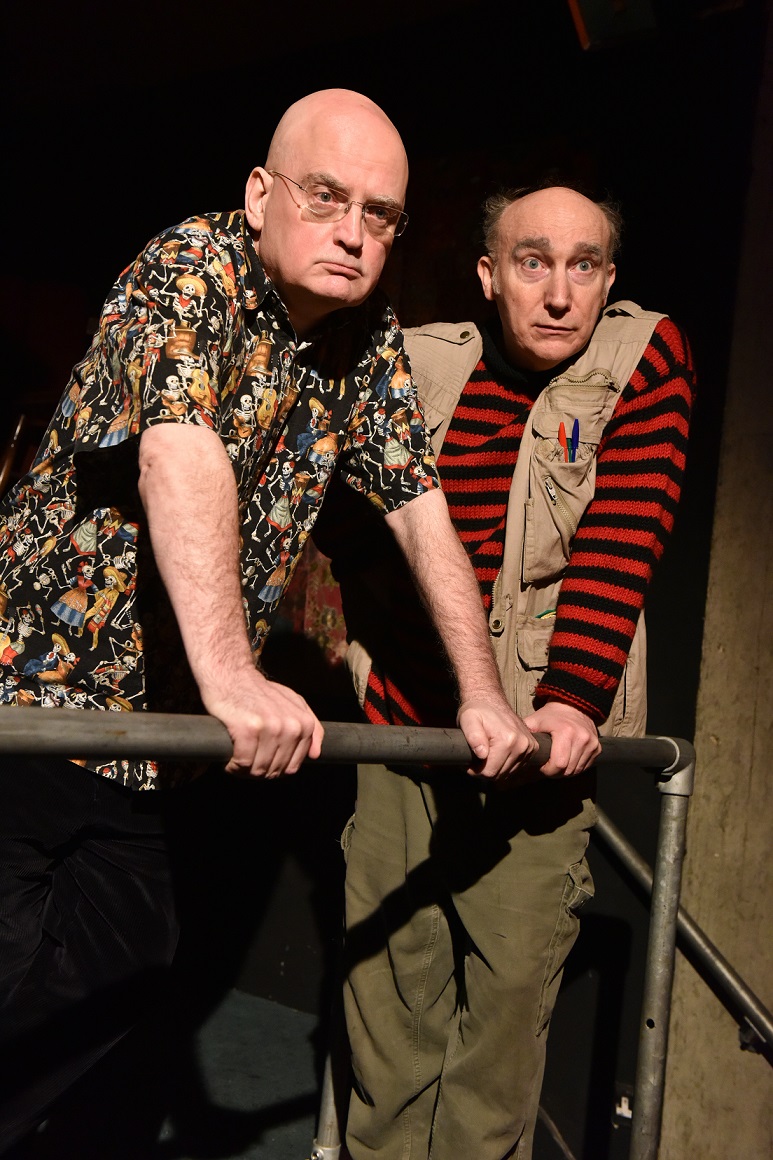
The format of the show, directed by Lisa Spirling, is equally unusual, and sees Johnson (in the programme named as The Writer but in reality speaking as himself) presenting from a lectern for the majority of its 90-minute duration. Meanwhile Jeremy Stockwell roams the theatre as Ken, spending more time among the audience than he does on stage (though that doesn’t mean he isn’t participating in the show – far from it). Both men appear throughout to be enjoying themselves immensely, not least when the script – deliberately or not, it’s impossible to tell – goes out the window.

Photo credit: Robert Day

Ken is difficult to put into any particular box; I can best describe it as a hybrid of part theatre, part stand-up, part eulogy, and it’s this last that leaves the deepest impression. Among other anecdotes, we learn how Ken and Terry met in a chance encounter, witness their collaboration on a notorious 24-hour production at the Edinburgh Fringe, and hear about a later, equally infamous, attempt to stage The Hitchhikers’ Guide to the Galaxy – an attempt that marked the end of Terry Johnson’s acting career (until now, at least).

Johnson is open and honest about his tempestuous relationship with Campbell and his own journey of self-discovery as a result of their friendship. Despite all the ups and downs, there’s an obvious affection there as he looks back with a wry smile on their madcap adventures, and the play closes with a poignant reflection on Campbell’s funeral and the legacy he left behind.

Jeremy Stockwell’s performance, in contrast to Johnson’s quiet dignity, is brash, unembarrassed, and not afraid to improvise. Even for those of us not familiar with the real Ken, there’s such conviction in his portrayal that it’s easy to believe we’re in the presence of the man himself, though he slips just as easily into other impressions, from Irish actor John Joyce to theatre director Trevor Nunn. His performance is exciting to watch because – like Campbell – he’s entirely unpredictable and we never quite know what he might say or do next.

Photo credit: Robert Day

Ken is a moving, warm tribute to an unforgettable character. There’s no doubting the sincerity of the performance or the sentiments expressed, but the show stops short of becoming maudlin; as Johnson points out, Ken – who reminded his friends from beyond the grave that “funeral” is an anagram of “real fun” – would have hated that. Like all the best memorials, this is a joyful and more than a little bonkers celebration of a unique life and personality, and through it Ken lives on.

Can’t see the map on iPhone? Try turning your phone to landscape and that should sort it. I don’t know why but I’m working on it… 😉<<<<<<
;