Review: How To Win Against History at Ovalhouse

I watched How To Win Against History after a very long day at work, hardly any sleep and okay, maybe a couple of glasses of wine. Perhaps that’s why looking back at this fast, frenetic and frankly quite bonkers little musical brings with it a slightly surreal, dream-like feeling – although I suspect had I been wide awake and stone cold sober it wouldn’t be much different.

Seiriol Davies’ show tells the little-known story of Henry Cyril Paget, the 5th Marquis of Anglesey, a cross-dressing aristocrat from the 1800s who blew his family’s fortune on an unsuccessful theatrical career, and died at the young age of 29 in Monte Carlo of an unspecified “lung thing”. His outraged family then erased all trace of him from history.

Photo credit: Rah Petherbridge

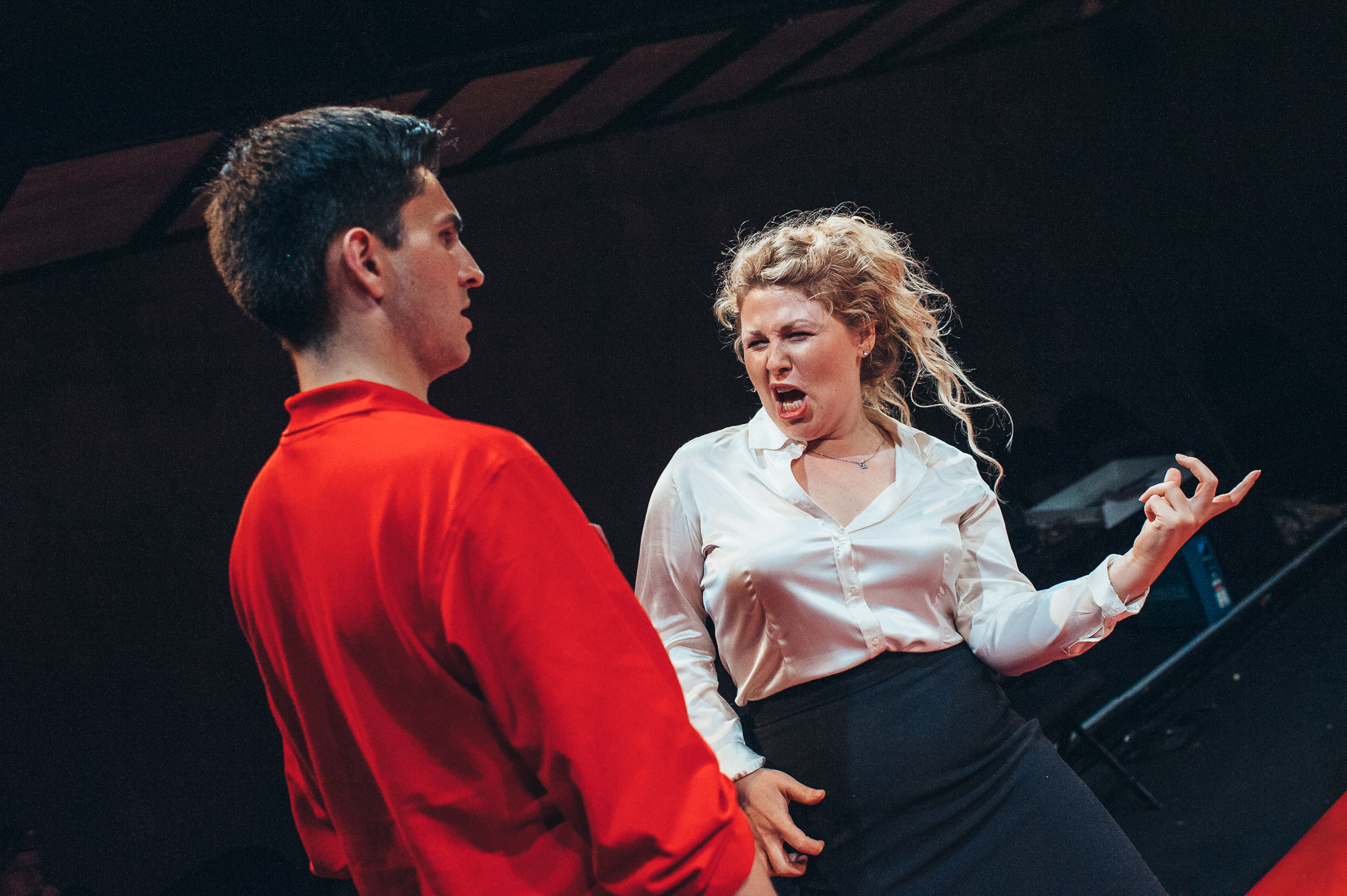
This tragic story makes for a surprisingly hilarious musical, directed by Alex Swift and performed by a cast of three: writer and composer Seiriol Davies as Henry, musical director Dylan Townley as The Band, and Matthew Blake as Mr Alexander Keith (and everyone else). These three are a dream team, bouncing off each other brilliantly and working in perfect harmony throughout to bring this bizarre story to life.

In the hottest week of the year so far, all three performers nonetheless give it their absolute all. The tiny stage brims with energy and an infectious enthusiasm that never lets up; this show is full on fabulous from start to finish. And though it’s only an hour long, it packs in a lot – so much so, in fact, that it becomes hard to keep up. Fortunately, as instructed by the actors themselves, we have the option to go away and Google anything we might have missed, and I’m willing to bet a significant proportion of the audience did just that.

Davies’ Henry is an ethereal being, so delicate that at times his voice barely rises above a whisper. He’s instantly appealing despite his many flaws, full of wide-eyed innocence and seemingly blissfully unaware that he might not be winning at life (“apparently,” he explains at one point, appearing genuinely surprised, “I treated Lilian [his wife] rather badly”). He’s joined by loyal friend and supporter Mr Alexander Keith – just one of many roles played by the multitalented Matthew Blake (another is Lilian, in case you were wondering) – and his band, played by the eccentrically wonderful Dylan Townley on piano.
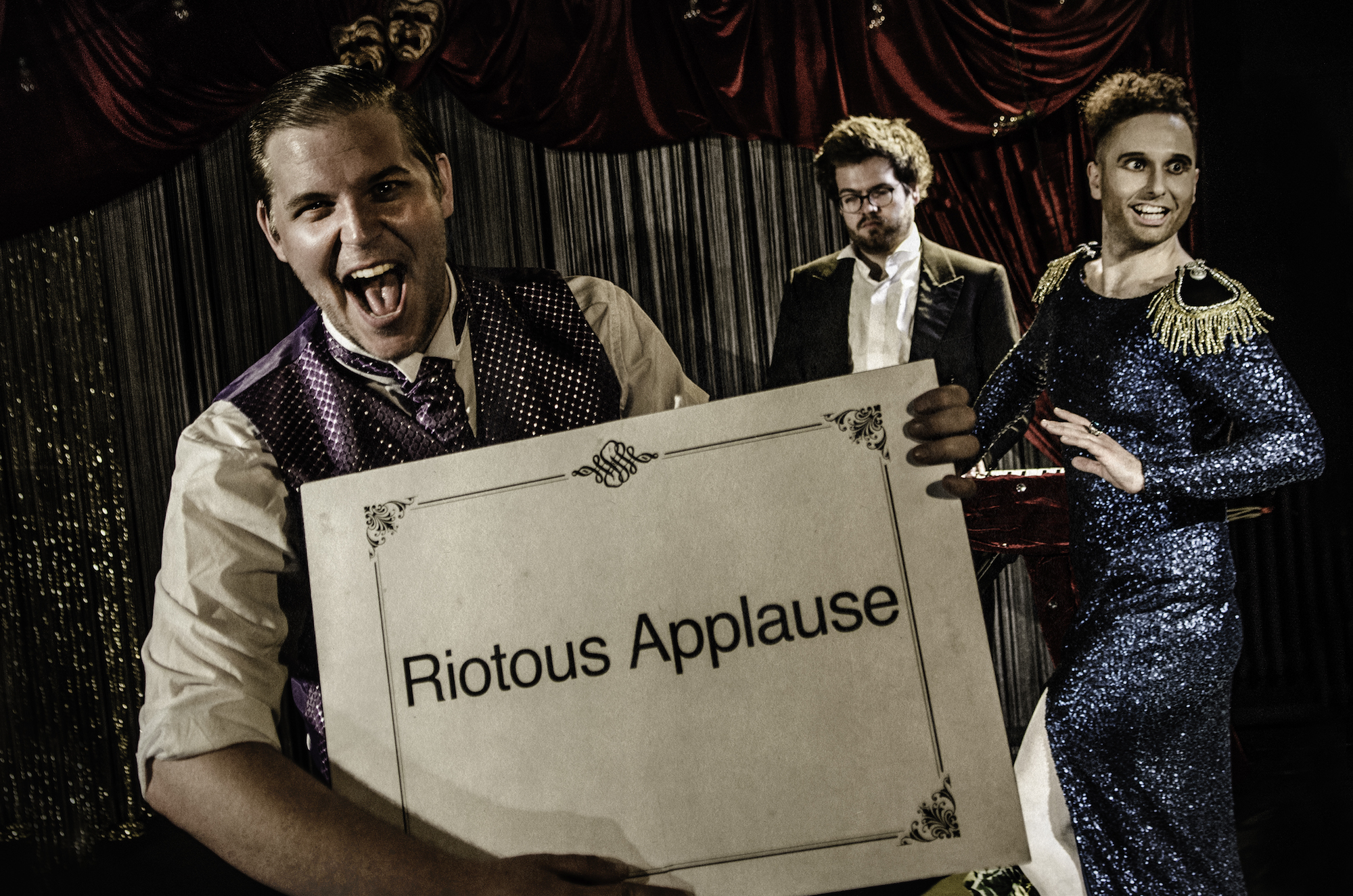
Photo credit: Rah Petherbridge

The show acknowledges and addresses its audience, encouraging participation (at one point we found ourselves singing in German) with a witty script that includes several current political and cultural references; the Daily Mail joke went down particularly well. In keeping with its central character, the humour occasionally steers very close to the line – a couple of jokes drew audible groans from the audience – but never slips across it completely, and remains good, (almost) clean fun. The final message seems a bit muddled: on the one hand, Henry feels that he’s “sort of won” by being himself and living life his way, despite opposition and indifference from those around him; on the other, he also counts it as a win to convince the Daily Mail that he’s “normal” and enjoys wearing tweed.

How To Win Against History is undoubtedly an odd show (even without a glass of wine in your hand) – but like its hero, it’s also fabulous and fierce. And it does things its own way, no matter what anyone thinks, with a cast of three who seem to be having easily as much fun as the audience. Riotous applause is a fitting end to such an entertaining and brilliantly performed show.


Can’t see the map on iPhone? Try turning your phone to landscape and that should sort it. I don’t know why but I’m working on it… 😉
Review: Happy to Help at Park Theatre

If you thought a supermarket was nothing more than a place to pick up a pint of milk, think again. Happy To Help by Michael Ross opens the door to Frisca, the UK’s biggest supermarket chain, and takes us behind the scenes for one dramatic week, to reveal the internal politics and daily power struggles hidden behind the brand’s cheerful public face. It’s a sharp, clever comedy but with a serious message, in which the huge corporation is likened to an autocratic state, where speaking out against the regime can have dire consequences.

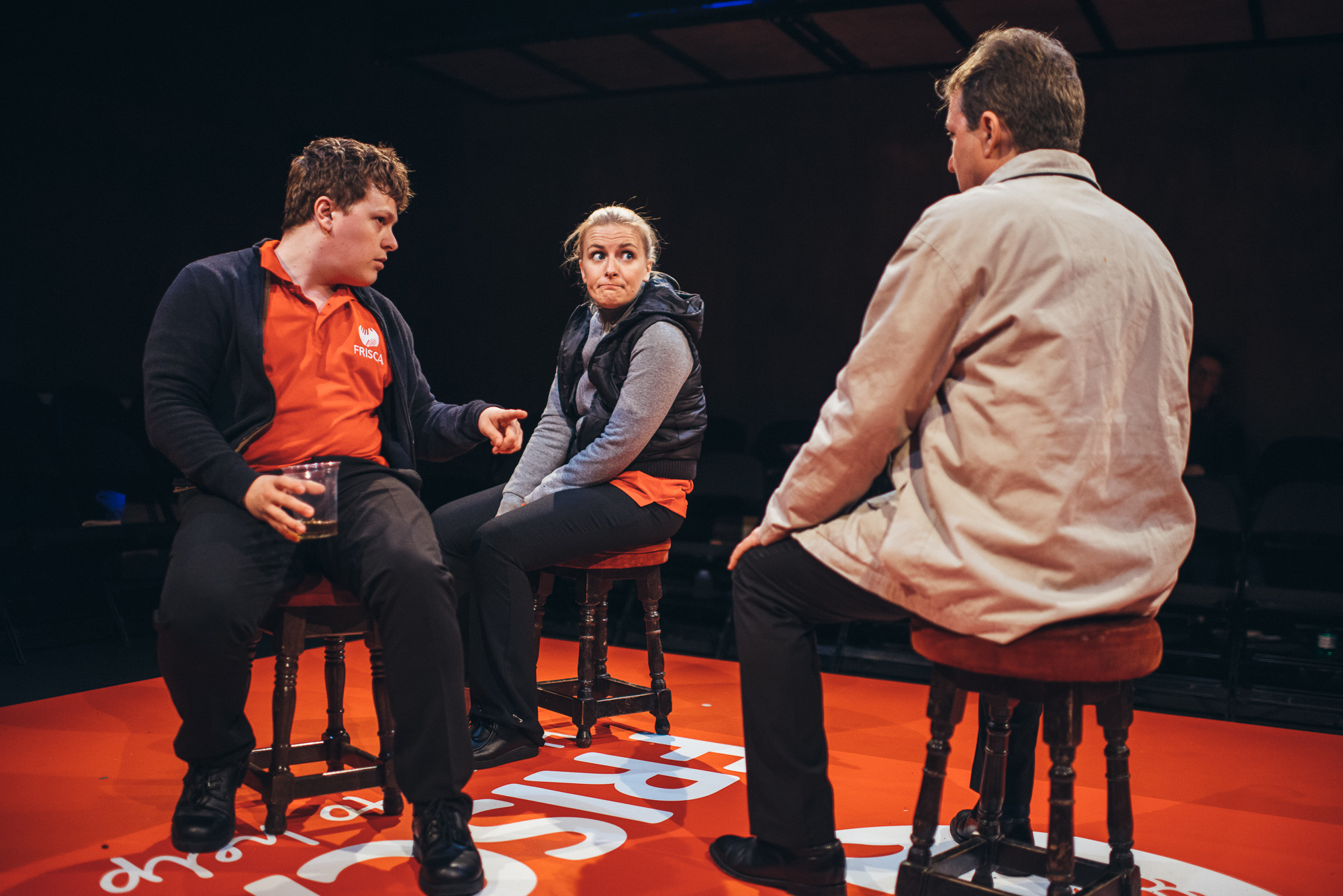
UK managing director Tony (Charles Armstrong) is doing his Secret Millionaire bit, on the advice of American boss Huck (David Bauckham), going behind the scenes at a Frisca branch to mingle with the workers. But little does he know that store manager Vicky (Katherine Kotz) has her own agenda… Meanwhile disgruntled employees Elliott (Jonny Weldon) and Myra (Rachel Marwood) are whispering about unions, and wannabe rockstar Josh (Ben Mann) has no intention of sticking around for long, even if he is everyone’s favourite shelf-stacker. For Frisca’s customers, it’ll be just another week, but behind the scenes everything’s about to change as a hilarious, shocking and unsettling chain of events is set in motion.

Photo credit: David Monteith-Hodge

In a fantastic cast, Katherine Kotz gives a stand-out performance as the manipulative Vicky; with a sunny smile that never reaches her eyes, she prowls the stage, a figure of absolute authority and control – but with a slightly manic air that suggests she could lose it at any moment. Ben Mann also shines as the brashly confident Josh, who thinks he’s got it made by being teacher’s pet. The confrontation between Vicky and Josh at the end of Act 1 is masterfully constructed and performed; much like Josh, we don’t realise what’s happening until it’s too late.

Perhaps the biggest personality on stage, though – both literally (the brand name is emblazoned across Emma Tompkins’ set) and figuratively – is Frisca itself, a business so wildly successful that it’s come to dominate every area of our lives, without ever pausing to consider who might be suffering as a result. Directed by Roxy Cook, the play skilfully contrasts Frisca’s shiny public image with the less than glamorous reality, in which employees are devalued, dissatisfied, and anything but ‘happy to help’. Each scene change is punctuated by a soundtrack of till beeps and monotonous store announcements, and there’s even a perky (and frustratingly catchy) Frisca song. It’s a world governed by ridiculous rules and regulations, whose absurdity is hammered home by Tony – the man who wrote them – now having to abide by them.

Photo credit: David Monteith-Hodge

But Happy To Help, which was shortlisted for the Liverpool Hope Playwriting Prize in 2015, is also a stark warning about the power that big businesses are allowed to wield over both us as consumers and the smaller firms that get in their way. As much as we may laugh watching the play, it actually paints a pretty bleak picture, and though the twist in the tale isn’t difficult to see coming, it still makes a powerful point. And it may make you think twice about ever setting foot in a supermarket again… at least until the next time you run out of milk, anyway.


Can’t see the map on iPhone? Try turning your phone to landscape and that should sort it. I don’t know why but I’m working on it… 😉

Interview: Les Femmes Ridicule, In The Gut

Les Femmes Ridicule are Alice Robinson, Siobhan McKiernan and Margot Courtemanche, who together aim to create highly entertaining, moving and fresh work that directly engages with their audience. Following recent performances at the Brighton Festival, the trio are about to bring their show In The Gut to London for a short tour.

“In The Gut broaches the subjects of pregnancy, childbirth and parenthood; tackling tragic themes, such as miscarriage and infertility, with a thoughtful and comedic approach,” explains director Alice Robinson. “The audience will be introduced to different scenarios that offer alternative perspectives and approaches to the subjects – from the ridiculous and strange, to the dramatic and poignant.

“The show came about as an off shoot of another project that failed, which we’re really glad about! The three of us found we had so much to say on the topic of fertility and potential motherhood, and that we shared a slightly dark and silly sense of humour.”

In The Gut, Les Femmes Ridicules

In The Gut is Les Femmes Ridicules’ first show as a trio, and they’ve enjoyed working together. “It’s been really good! We’ve devised the show from our collective imaginations and passions, and that’s always a big process. As devisers our process is ongoing as we meet our audiences and continue to respond to them. We’ve laughed a lot in rehearsals and been really honest throughout, which is essential.”

The company hope to raise awareness for miscarriages in all relationships and are delighted to have the support of the Miscarriage Association and the Maternal Mental Health Alliance. “They really helped us in the research stage and opened our eyes to the impact of miscarriage on men, women and their families. We have been handing out Miscarriage Association leaflets at the shows and hope to promote the incredible services that they offer.

“In the Gut is direct in its staging of the fears around pregnancy. It doesn’t take sides, or preach, it’s unafraid of looking ugly, of moving its audiences and of playing with them.”

The RADA-trained trio’s creative process starts with simple improvisation. “I just shout things – ideas, thoughts, questions – at the other two and they plough on, adapting to what’s said in their own way. We all feed off each other’s ideas and we ended up with something we could never imagine on our own. Everything starts with a hunch, a question or something really silly like trying to outdo each other with a mime of the worst birth possible… and off we go!

“We think comedy is a brilliant way to open up a discussion, to heal and to set us free! There is humour in everything and releasing or acknowledging that is more interesting than ignoring it. Our audiences have taken the show really well, in that they have responded differently and personally. They have laughed and been moved. We’ve had midwives, parents, grandparents, people who don’t want children, young adults, people who do and people who can’t. There’s something for everyone, and everyone has an opinion on the subject matter, which is a great start.”

In The Gut is at the London Clown Festival on 12th June, the Blue Elephant Theatre from 14th-18th June, and the RADA Festival at John Gielgud Theatre on 25th and 29th June.

Interview: Clementine Lovell, Pop-up Opera

Pop-up Opera was established in 2011 with the goal of encouraging more people to see and enjoy opera. After recently performing their first ever tragedy, I Capuleti e i Montecchi, the company return to comedy for their new production of Rossini’s Il Barbiere di Siviglia, which will – as always – take them to some unique and unforgettable venues around the UK.

Director Clementine Lovell founded Pop-up Opera on her return from living in Italy. “When I began training as an opera singer I had mixed reactions from my friends. Opera wasn’t really their thing – one even claimed to be ‘allergic’ to it. That stayed with me, and I wanted to prove them wrong, to show them that opera could be magical, hilarious, devastating or moving.

“Opera is so much a part of Italian culture, so broadly appreciated, and is performed everywhere, not just in the big houses. I grew up in a small village in the UK miles from an opera house. We never went to see it, it wasn’t an option. My uncle has a barn where he hosts folk and blues events and we put on an opera there for a largely non opera going audience. They loved it. It made me think about how the setting can have a bearing on people’s enjoyment, or their willingness to give it a go.”

Photo credit: Richard Lakos

Each new space presents a unique challenge: “The production grows and evolves as it pops up in different places. We stage it in the rehearsal room and then adapt it to embrace each venue, so every night is different. The performance spaces vary wildly in size, shape, acoustic, feeling. We get in to the space on the day and start working out the entrances, exits, how to involve the audience… The performers have to think on their feet and be willing to allow some freedom and spontaneity. I think this keeps it fresh and creates a very special atmosphere.”

Clementine has countless happy memories of the unusual venues in which the company have performed. “One of our first venues was a boat made of scrap metal in Shoreham. The stairs were made out of an old car and the room we performed in had previously been part of a bus. We once performed 100ft underground in Clearwell Caves – to make some of the entrances the singers had to grope their way down a very dark tunnel with only headlamps to light the way, and one of them was terrified of bats!

“Another venue was the ruins of Raglan castle, where our backstage area was a crumbled down tower… We’ve also done shows in the Brunel Museum Thames Tunnel Shaft several times. It used to be more challenging to get in there – you had to crawl through a tiny entranceway and then down a scaffold stairway. It was always a nightmare getting props down there. We love going to the Garlic Farm on the Isle of Wight, the audience always go crazy for it. But my favourite venue will always be our original, the cider barn in Herefordshire. You can have a glass of cider from the Ross-on-Wye Cider & Perry Co, and the atmosphere is always fantastic.”

Photo credit: Richard Lakos

Il Barbiere di Siviglia is one of the world’s best-loved operas, but for those of us who may not know what it’s all about: “It’s the story of Count Almaviva, who wants Rosina to fall in love with him for who he is, not for his money or fame, so he conceals his true identity. In order to win her he must also get past her guardian, so many ridiculous obstacles and disguises ensue before he can get the girl.

“Our version is unique because it’s truly ‘pop-up’ in the way it can adapt to each space. We want to embrace the fact that we have an electric piano, and that we don’t have the budget of the Royal Opera House. We’ve stripped the costume and set right back so it allows the music and the story to shine through. We want to allow those things to take front stage, to show people that you don’t need all this extra stuff to make a comedy: with brilliant singing and acting and by involving the audience you can still create an amazing show.”

The opera will be sung in its original Italian with English captions, presented in Pop-up Opera’s signature style: “We believe that you can still make opera accessible when performed in the original language. The music, the intentions of the actors, the interaction between the characters and the power of the drama get the story across. The captions are there to complement, not to detract. They keep the audience broadly abreast of the story but don’t demand their attention all the time. With a comedy the captions can add another layer of humour, and we can play around with the modern context. In our last production, which was a drama, we kept the translation more ‘straight’ but still with the same approach of captions rather than a full text translated into continuous surtitles.”

As a company, Pop-up Opera aim to broaden opera’s appeal and challenge the perception that it’s stuffy and elitist. “We want to make our productions engaging, exciting, hilarious, dramatic, moving… We hope audiences go away having laughed until their cheeks ache or having been moved to tears, that they will have been drawn into the story and connected with its characters. We hope they take away with them a thirst for more opera, whether it’s by fringe companies or at the Royal Opera House, and a different attitude towards what they thought opera was about or represented. Never been to the opera? Come to one of our shows! You won’t regret it.”

Il Barbiere di Siviglia can be seen around the UK until 1st September 2016 – check the website for full dates and venues.


Review: Off the Kings Road at Jermyn Street Theatre

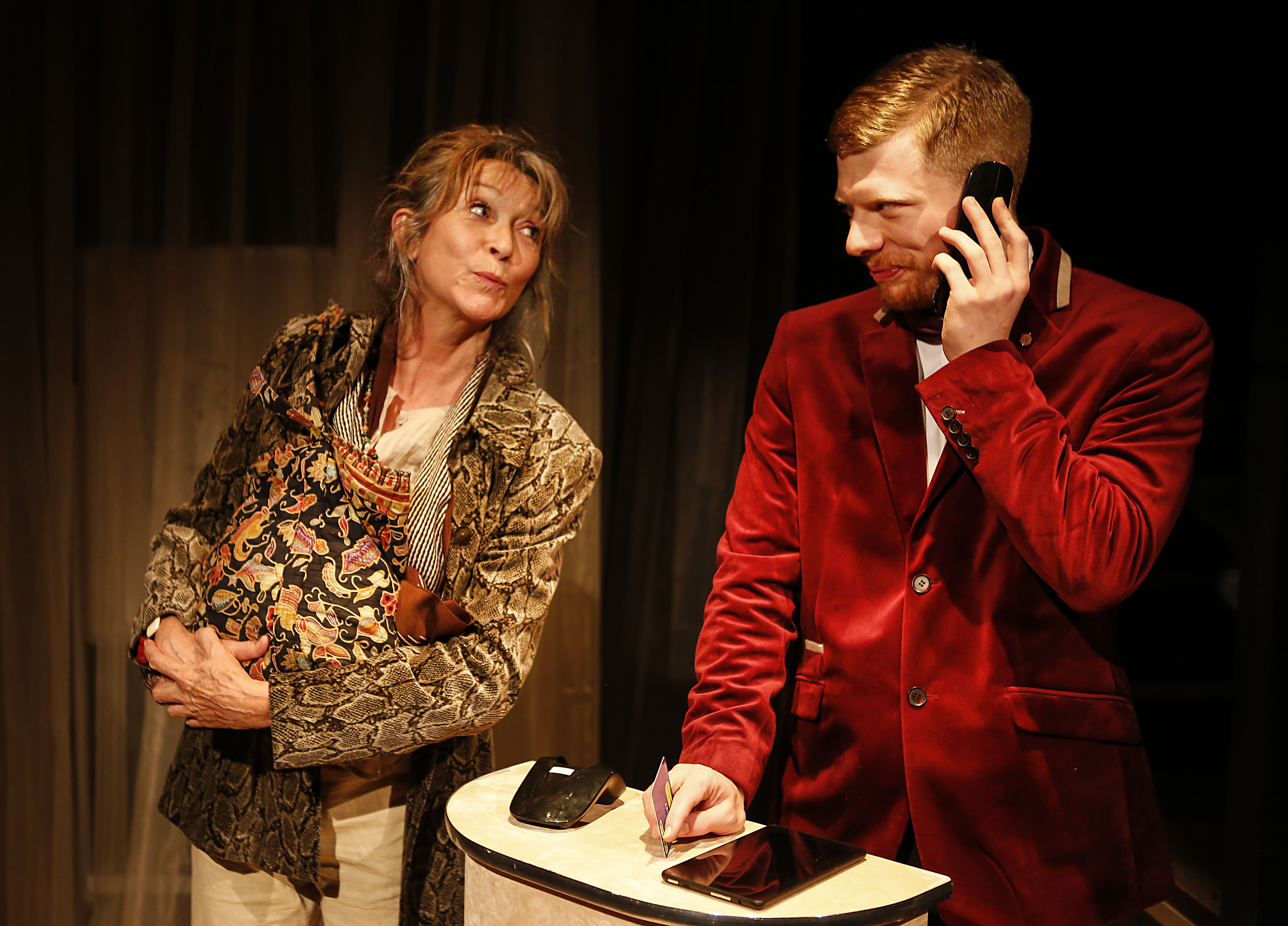
Off The Kings Road is the first full-length play from former Hollywood publicist Neil Koenigsberg. A touching reflection on grief, companionship and getting older, the play sees American widower Matt Browne check into a small hotel in London, where he intends to spend some quiet time rebuilding his life following the death of his adored wife, Betty, from cancer. But London has other plans for Matt, and the resulting journey of self-discovery is at once laugh out loud funny and powerfully moving.

Michael Brandon leads the cast as Matt with a performance that perfectly captures his character’s fragility, but also his humour and compassion; we can’t help but like this genuinely good guy who’s just trying to make his way in a new, unfamiliar world. Along the way he meets some interesting characters, among them Freddie, the hotel concierge, and Ellen, a crazy cat lady from down the hall. Luke Pitman and Cherie Lunghi shine in these roles; as a long-term resident, Ellen has a close friendship with Freddie, and the affectionate scenes they share on stage are wonderful to watch. Though the two roles are predominantly humorous ones, with both actors revelling in their characters’ eccentricities, there are hidden depths here too: Freddie, while often a touch over-enthusiastic, is very good at his job and genuinely cares about his guests’ welfare, while Ellen turns out to have a lot more in common with Matt than he realises.

Photo credit: Pamela Raith

Diana Dimitrovici also appears as a Russian prostitute, the intriguingly named Sheena McDougal. Following their first encounter in her flat, the relationship between Matt and Sheena moves in a direction that’s not wholly unexpected, but no less touching for its predictability, and Dimitrovici gives a strong performance as a young woman disguising her own vulnerability with a veneer of toughness.

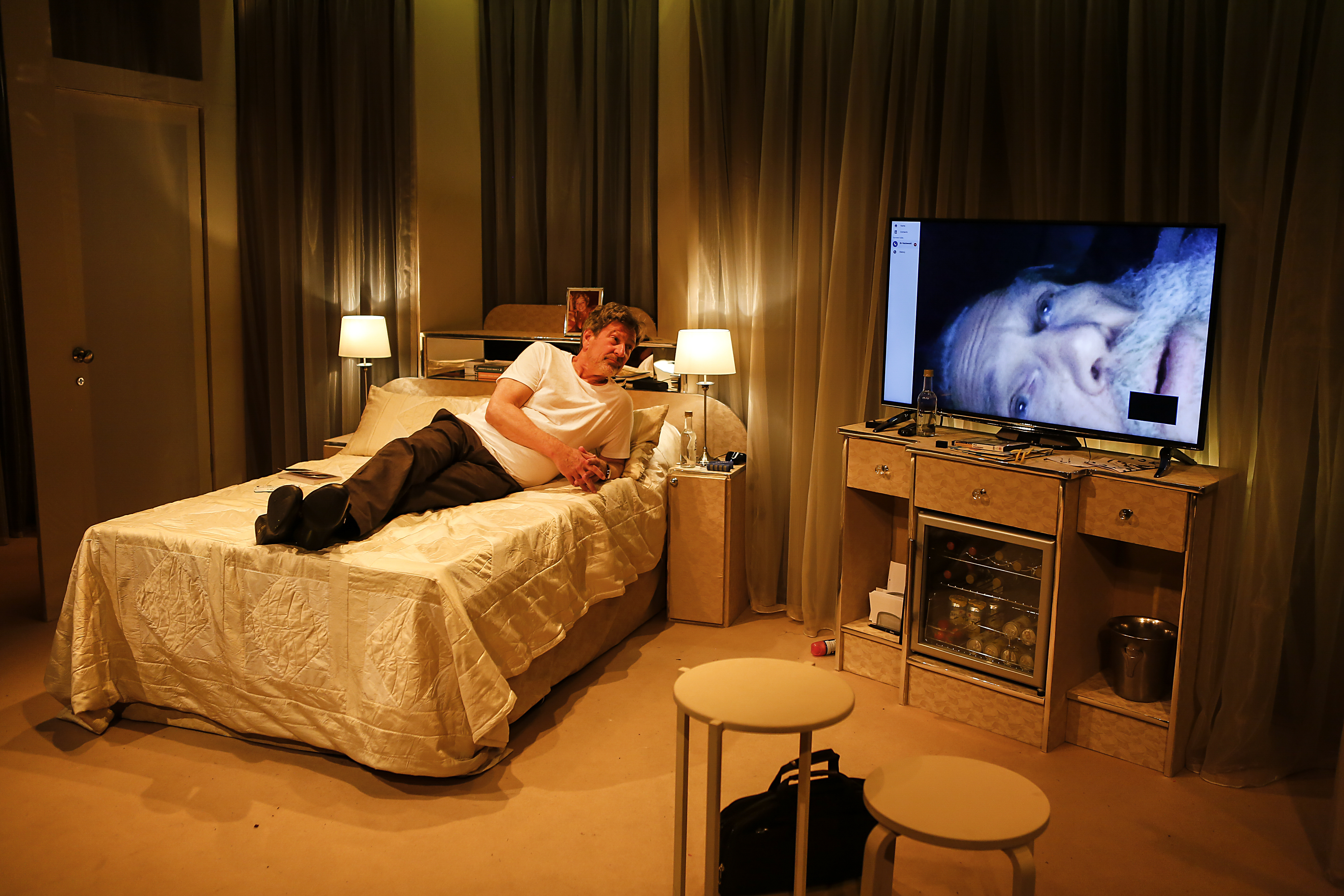
In a unique and thoroughly modern twist, the cast of Alan Cohen’s production includes a fifth member, one who never sets foot on the stage; Oscar winner Jeff Bridges ‘e-appears’ as psychiatrist Dr Kozlowski, with whom Matt has several Skype calls throughout the play. There’s comedy gold in these scenes, partly in watching the two men attempt to use the technology, but mostly because Kozlowski is a spectacularly bad psychiatrist, who’s going through his own marital difficulties, and seems permanently a bit stoned. But where he fails as a doctor, he succeeds as a friend – proof that we don’t always need someone with all the answers; sometimes we just need somebody who’ll listen when things go wrong. These scenes fit so naturally within the live action, and Brandon interacts with the screen so well, that it’s almost possible to forget Bridges’ appearance is pre-recorded.

Photo credit: Pamela Raith

At its heart, Koenigsberg’s play is a celebration of human relationships, in all their wonderful weirdness. Matt starts out as a lonely figure, but as soon as he allows other people in, his life begins to change (mostly) for the better. Like the Ingmar Bergman movie referenced throughout the play, this bittersweet comedy is the story of a man on a journey, both physical and emotional – and like its characters, it’s very hard not to love.


Can’t see the map on iPhone? Try turning your phone to landscape and that should sort it. I don’t know why but I’m working on it… 😉