Review: Stepping Out at Brockley Jack Studio Theatre

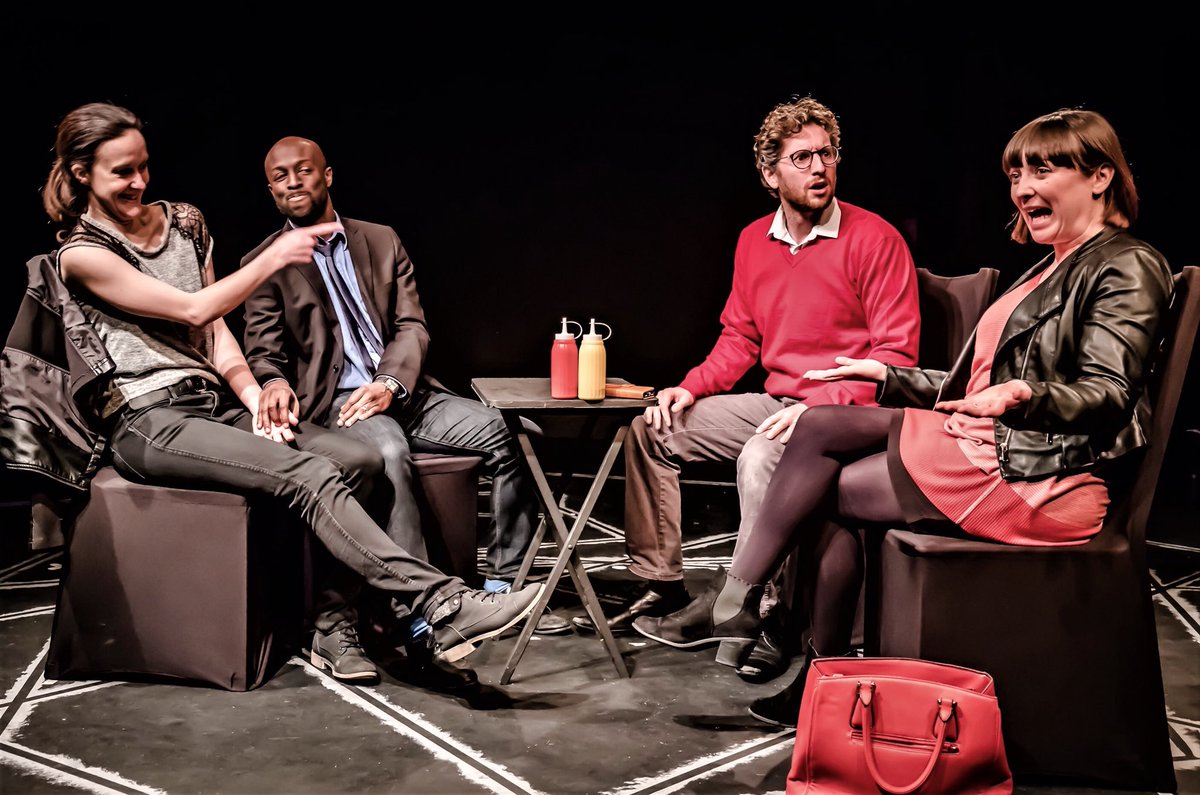
We all love a good underdog story, so it’s no surprise that Richard Harris’ 1984 comedy Stepping Out continues to pull in audiences over 30 years after its first performance. Written after observing the various interesting characters at his wife’s weekly dance class, the play is a charming, feel-good story about friendship and perseverance against seemingly impossible odds that ultimately proves impossible to resist.

In a small North London community hall, we’re introduced to tap teacher Mavis, pianist Mrs Fraser, and eight enthusiastic but rather rhythmically challenged students. They’re very different characters, who constantly misunderstand and antagonise each other, to the point where you have to wonder why they’d all – Mavis and Mrs Fraser included – put themselves through it every week. It quickly becomes obvious, however, that the class means a huge amount to all of them, even the ones who appear to have life all worked out.

Photo credit: David Ball

While some of the characters feature more prominently than others – among them shy, nervous Andy (Emily Sitch), for whom the class is the only time she gets to herself all week, token male Geoffrey (Sean McDowell), whose wife recently passed away, and newest member Vera (Helen Jeckells), who can’t stop cleaning and starts every sentence with “I’m not being funny or anything…” –  we do get to know all of them just well enough that by the end of the show, we’re rooting for the whole group to succeed (even Vera). And yet at the same time there’s still so much we don’t know; the play’s finale somehow succeeds in bringing the story to a satisfying close while at the same time leaving us with a frustrating number of loose ends about every character.

The small venue for this production, directed and choreographed by David Ball, mostly works well, with the cramped conditions on stage only adding to the chaos each time the class attempts a routine. Such is the level of noise and general incompetence, in fact, that by the time Mavis finally, inevitably snaps, the audience is right there with her (and possibly wondering what took her so long). In a play where the most memorable performances are the funniest – Ceris Hine’s permanently anxious Dorothy, Jessica Brady’s straight-talking Sylvia and Harriet Earle’s eccentric Mrs Fraser, to name a few – it’s Christina Meehan as Mavis who leaves the deepest impression. Her passion for her art, her motherly affection for her students, and her growing frustration at their inability to follow simple instructions are all completely believable, and there are moments when she’s teaching that it really does feel like we’re watching a tap class rather than a play.

Photo credit: David Ball

Light and frothy it may be, but there’s something about Stepping Out that strikes a chord and may even bring a tear to the eye. Anyone who’s ever felt lonely, or unloved, or worried that they’re not good/clever/pretty/talented enough, will be able to relate to at least one of the characters, and the play is a great reminder that sometimes it’s possible to find companionship and support where we least expect it. But all that aside, it’s also great entertainment – and as Mavis herself would say, as long as we’re enjoying ourselves, that’s the most important thing.


Can’t see the map on iPhone? Try turning your phone to landscape and that should sort it. I don’t know why but I’m working on it… 😉
Review: The Night Alive at the Brockley Jack Studio Theatre

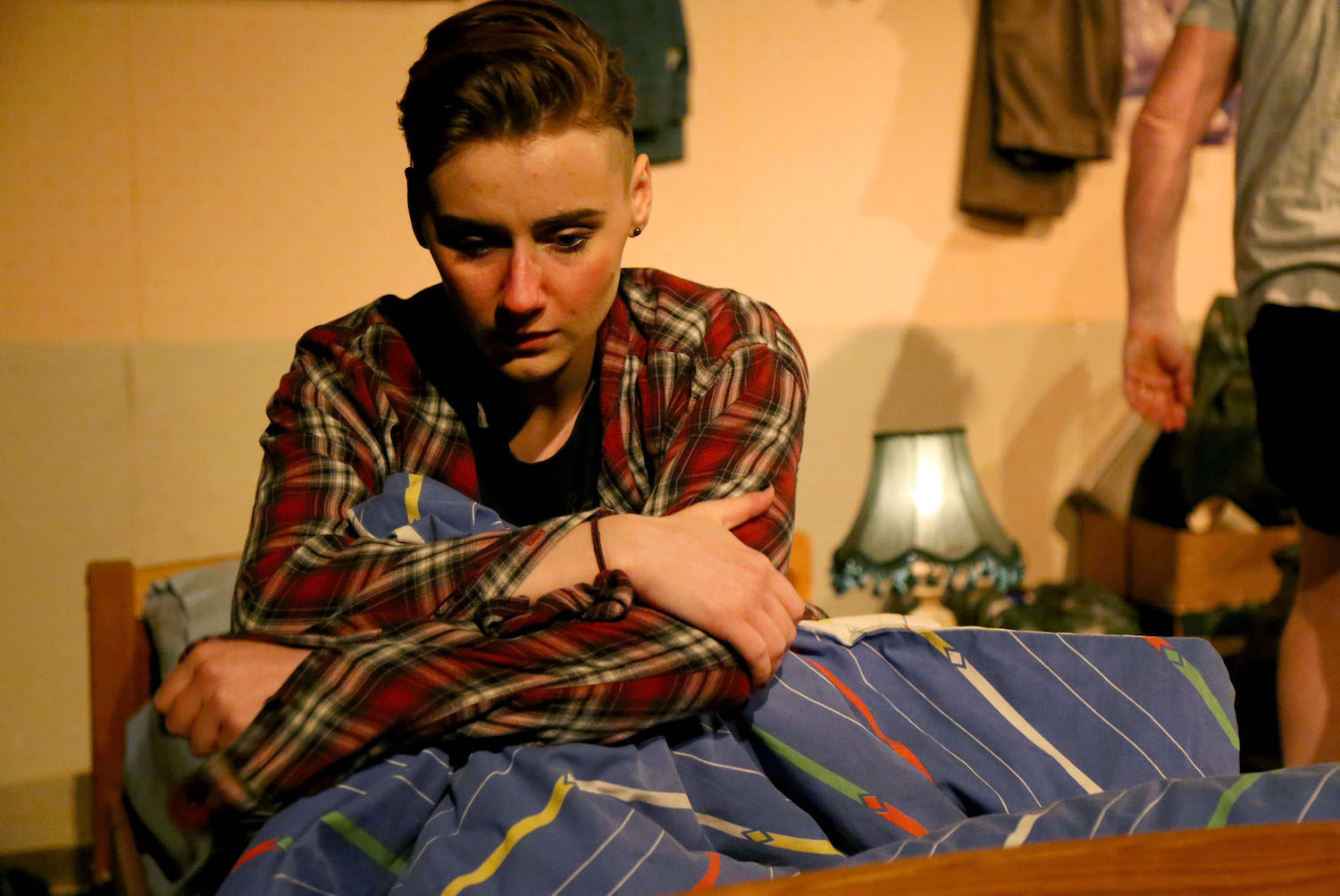
Despite its ominous title, and playwright Conor McPherson’s reputation for producing work populated by ghosts and devils, his 2013 play The Night Alive seems – at least at first – to be firmly rooted in reality. 50-something Tommy (David Cox) rescues Aimee (Bethan Boxall) from a violent attack by her ex-boyfriend, and brings her home to the room he rents from his widowed Uncle Maurice (Dan Armour). With nowhere else to go, Aimee agrees to stay for a few days, but while her presence proves a comfort to the lonely Tommy, it also brings trouble – not least for Doc (Eoin Lynch), Tommy’s friend and business partner (of sorts) – when her ex Kenneth (Howie Ripley) tracks her down.

Photo credit: Robert Piwko

I say it seems rooted in reality because there are definitely a couple of moments that are open to interpretation in First Knight Theatre’s new production, bringing both Acts 1 and 2 to an ambiguous close and leaving it to the audience to decide for ourselves what exactly we’ve just seen. In fact, both script and direction are clever enough that it’s possible to go back over the whole play afterwards, remembering little details and wondering if they meant more than they appeared to on first sight.

One element that is very real, however, is the isolation and desperate need for human connection displayed by the characters, each of whom is damaged in their own way. Tommy’s estranged from his family and getting by doing odd jobs with Doc, who has a mild learning disability and keeps getting kicked out by his sister and her boyfriend. The unconventional but clearly genuine friendship between the two men lies at the very heart of the play, and is movingly portrayed by David Cox and Eoin Lynch, with a generous and welcome sprinkling of humour to lighten the mood.

Bethan Boxall’s Aimee adapts quickly to her new surroundings, and offers a different kind of companionship, allowing Tommy a brief escape from the monotony of his unsatisfying daily life – and it seems he’s willing to pay almost any price to keep hold of that opportunity. Finally, there’s Uncle Maurice, played by director Dan Armour, whose gruff exterior and authoritarian manner can’t quite hide the fact that he’s still mourning and blaming himself for the death of his wife, or that he desperately wants Tommy to stop wasting his life and appreciate what he’s got while he still can.

Into all this quiet drama steps Howie Ripley’s Kenneth, in the first of two brief but memorable appearances, and instantly the play takes on a different energy as he prowls restlessly around Tommy’s room, taking in every detail and rambling about the darkness outside. We know something bad’s going to happen, but when it does it’s still unexpected enough to leave the audience sitting in shocked – and, if I’m honest, slightly perplexed – silence as we head into the interval. Both this moment of drama and the one that follows in Act 2 are well acted and directed, but don’t seem to fit within the rest of the play, particularly as neither event is really discussed again by the characters once the immediate aftermath is over. This is so odd, in fact, that it feels like it must be deliberate – so perhaps this is one of those details that will take on new meaning after a few days’ reflection.

Photo credit: Robert Piwko

Putting it all together, The Night Alive is a poignant, humorous and intriguing portrayal of five unhappy people whose lives are changed in one fateful moment. Whether that change ends up being for better or worse is left as something of an open question, along with much else that happens during the play. If you’re in the mood for a high quality production that doesn’t give you all the answers, The Night Alive is well worth a visit.


Can’t see the map on iPhone? Try turning your phone to landscape and that should sort it. I don’t know why but I’m working on it… 😉

Review: Kes at Brockley Jack Studio Theatre

At just under 70 minutes, Kes – adapted by Robert Alan Evans from Barry Hines’ 1968 novel A Kestrel for a Knave – isn’t a long play, but in the hands of director Kate Bannister and the dream team at the Brockley Jack, even that brief amount of time flies by. The theatre’s latest in-house production is, in fact, something of a masterclass in every sense: performance, design and direction all come together to tell a great story really, really well.

That story is all about Billy Casper, who at 15 years old already knows he’s unlikely to ever get out of the northern mining town he calls home. Bullied by his older brother Jud, ignored by his mother (except when she can steal the wages from his paper round) and victimised by most of the teachers at his school, Billy’s life offers very little to look forward to, until the day he finds a wild kestrel and decides to raise and train her. Through Kes he discovers a freedom, friendship and passion that he’s never known before – but all it takes is one bad decision to put his precarious new happiness in jeopardy.

Photo credit: Timothy Stubbs Hughes

We never actually see Kes, obviously (bird of prey plus small pub theatre would probably be a bad idea; you certainly wouldn’t get me in there), but her presence is very powerfully felt, thanks to two spellbinding performances from Simon Stallard and Rob Pomfret, who both interact with the young kestrel as if she were right in front of them, and to some wonderfully evocative sound design by Jack Barton. And it’s not only the bird who’s conjured into life by the production’s design; Karl Swinyard’s set perfectly encapsulates  each aspect of Billy’s uninspiring everyday world down at floor level, but opens up on higher ground – with the help of some beautiful lighting from Ben Jacobs – to reveal the vast rural landscape where Kes flies free. When she soars through the air, it’s not only Billy’s heart that lifts.

In a production that clearly doesn’t believe in limits, perhaps it should come as no surprise that two actors doesn’t equate to only two characters. Alongside Simon Stallard’s sympathetic and touchingly innocent Billy, Rob Pomfret plays a dizzying array of other roles, from a bullying headmaster to Billy’s mum, slipping from one to the other with ease. Perhaps most interestingly, though, he also plays Billy: an older, wiser version, who tries to protect his younger self from the heartbreak he knows is to come. It works both ways, however, and in looking back and confronting the pain he felt all those years before, the older Billy is also reminded of the joy that came before it – and it’s this emotion that lingers longest as the play comes to an end.

Photo credit: Timothy Stubbs Hughes

2018 marks the 50th anniversary of the publication of Barry Hines’ novel, and I can think of no better way to mark the occasion than with this exquisite production. For some, Kes will bring back memories of the book; for others, it offers an introduction to this timeless story. Either way, it’s a must see.


Can’t see the map on iPhone? Try turning your phone to landscape and that should sort it. I don’t know why but I’m working on it… 😉
Review: Three Sisters at the Brockley Jack Studio Theatre

It only takes one look at Odin Corie’s set – a light, sophisticated and immaculately decorated family room, which makes the intimate Brockley Jack Studio look far bigger than it is – to understand that with their third foray into the Russian classics, Arrows and Traps mean business. Following the success of their Anna Karenina and Crime and Punishment in 2016 and ’17 respectively, the multi-Offie nominated company has now turned its attention to Chekhov, with a new adaptation of Three Sisters written and directed by Ross McGregor.

Photo credit: Davor Tovarlaza

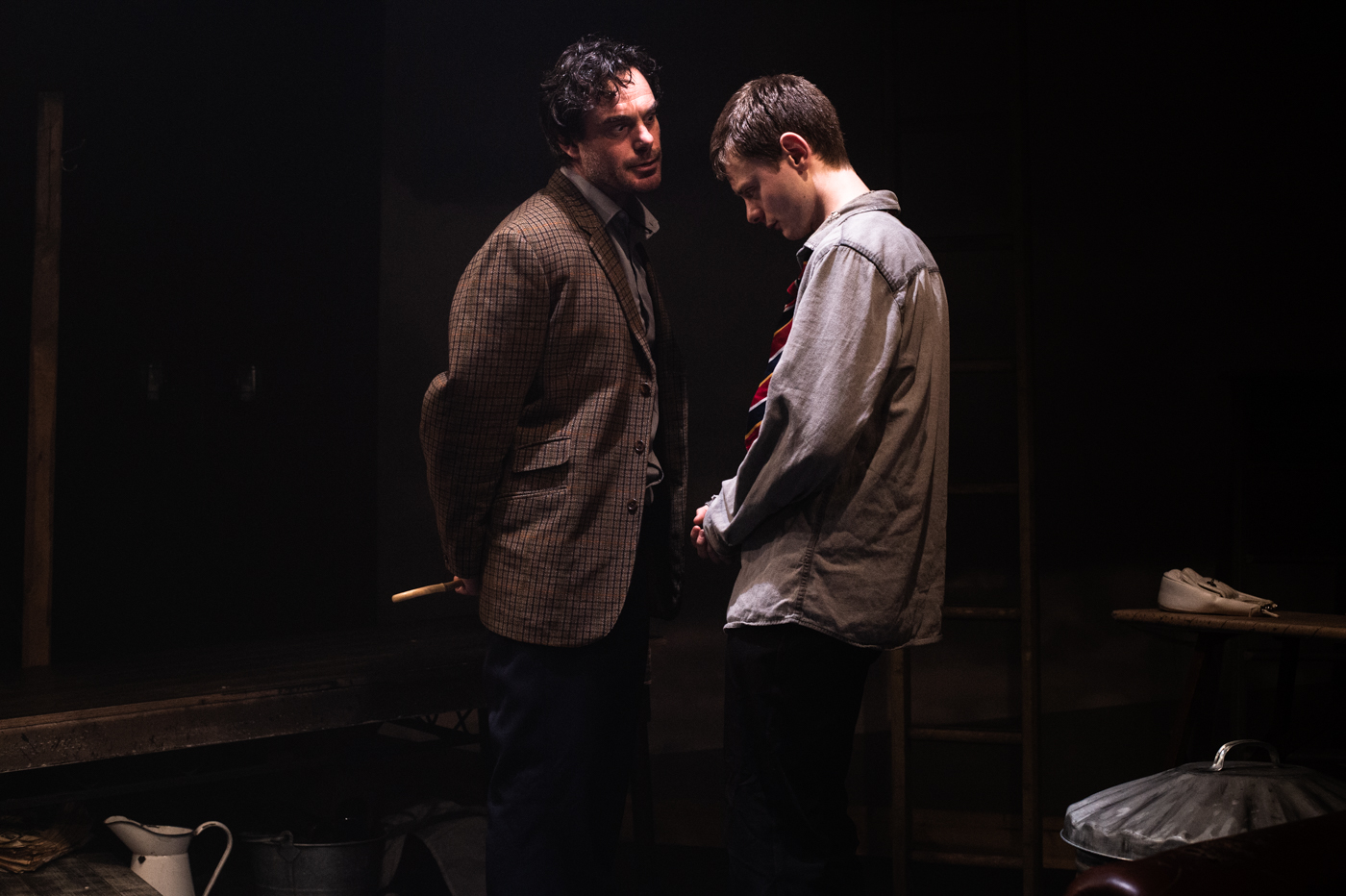
Set in a Russian garrison town, the play immediately introduces the eponymous three sisters: Olga (the responsible one), Masha (the passionate one) and Irina (the romantic one). One year on from the death of their father, all three yearn to find some joy and purpose in a life that’s become relentlessly dull and ordinary. They believe the answer lies in their long-held dream of returning to Moscow – and yet, four years later, we find them exactly where they began, having moved precisely nowhere. This inertia means that not only have they not found happiness; they’re also significantly worse off, thanks to their brother Andrei (Spencer Lee Osborne). He’s led them into ruin with his gambling habit and disastrous marriage to Natasha (Hannah Victory) – a local girl they all once looked down on, but who now rules the roost with an iron fist and has, little by little, driven them out of their own home.

The substantial cast of fourteen is uniformly excellent. Cornelia Baumann never disappoints, and she hits the target again with her fragile and lonely Olga, trapped in a public service job she never wanted because she’s too nice to say no. At the other end of the scale, Claire Bowman is full of uncompromising fire as the sharp-tongued Masha; her disdain for her comically ridiculous husband Fyodor (Stephen MacNeice, whose plaintive insistence that he’s a happy man becomes harder and harder to believe) is matched only by her passion for the equally unhappily married Colonel Vershinin (Toby Wynn-Davies). Somewhere in the middle, Victoria Llewellyn balances the two out as the youngest sister Irina, soaring from ecstatic highs to desperate lows in her search for an idealistic true love that seems doomed to end in tragedy.

Photo credit: Davor Tovarlaza

The production also makes interesting use of music, with musical director Elliot Clay combining sweeping orchestral tracks with a more modern twist provided by guitar-toting soldiers Vladimir and Alexei (Freddie Cambanakis and Ashley Cavender), and – in a rare moment of joyful abandon – a traditional Russian singalong that might just have you reaching for the vodka, and will almost certainly get stuck in your head, possibly forever. (Just to make sure, they sing it twice.)

At 2 hours and 45 minutes it’s not a short play, but we easily become invested enough in the characters that the story remains compelling, and under Ross McGregor’s direction it never feels like the pace is too slow – all the more impressive when you consider this is, by its very nature, a play where the characters talk a lot but don’t do much. Five years of consistent excellence from Arrows and Traps have set the bar incredibly high – but while Three Sisters perhaps lacks a little of the cinematic grandeur we’ve seen in the company’s earlier work, this is still without doubt a stylish and beautifully acted piece of storytelling.


Can’t see the map on iPhone? Try turning your phone to landscape and that should sort it. I don’t know why but I’m working on it… 😉
Review: Stuffed at the Brockley Jack Studio Theatre

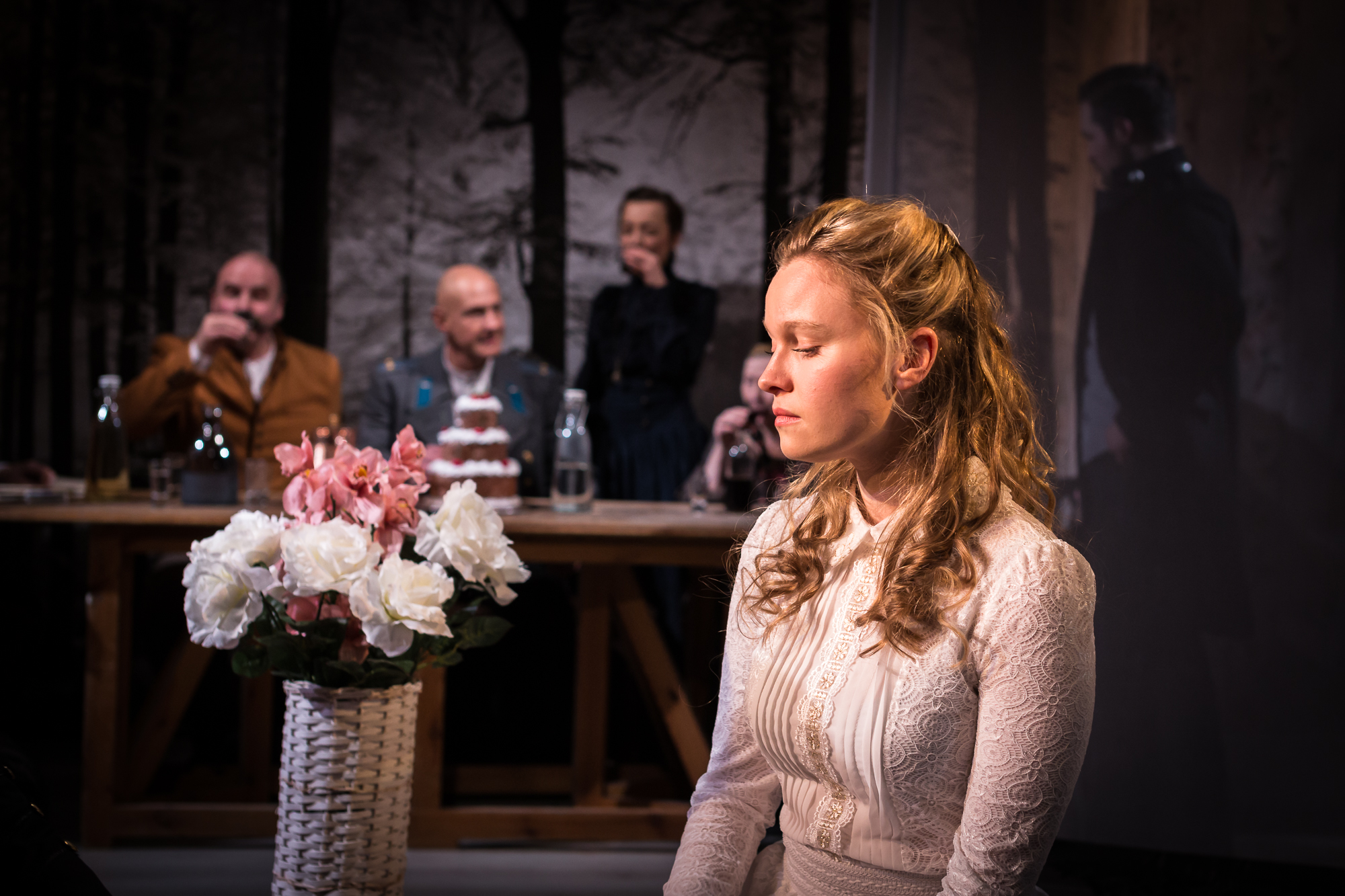
I can’t pretend to know what Kim and Jack, the couple undergoing IVF in Lucy Joy Russell and Holly McFarlane’s play Stuffed, are going through. Having said that, as a childless woman in my 30s (who recently had a heated discussion with a male friend after he made the mistake of saying, in genuine bewilderment, “But don’t all women want kids?”) there are moments in the play that I can relate to a little bit too well.

Red Squash Theatre were most recently seen at the Hen and Chickens in their extremely daft Shakespearean comedy, Macbeeth. Stuffed is quite a different project and given the topic it unsurprisingly feels much more grounded in reality, but it retains a little of Macbeeth‘s delightfully surreal humour – largely in its portrayal of healthcare professionals, for some reason.

Photo credit: Robbie Ewing

These moments aside, it’s actually quite a sad story, about a couple whose desperate need for a baby has taken over their lives to the obliteration of everything and everyone else, and to the point where even they can’t remember why they wanted to be parents in the first place. Every time the IVF fails, they have to deal not only with their own disappointment but also that of friends and acquaintances, whose well-meaning attempts to be helpful and comforting just end up making things ten times worse.

Faye Maughan and Ben Scheck are likeable and convincing as Kim and Jack, but it’s the scenes where their facade of brittle optimism slips and we glimpse the turmoil beneath that they really come into their own. Maughan in particular has a lost, fragile and exhausted look; this is most evident during scene changes, when she lingers aimlessly on stage while the other cast members rearrange the furniture around her.

Also excellent are Dorothy Cotter, as Kim and Jack’s old uni friend Grace, now a mother of three, and Alexander Tol as her husband Colin, a lovable geek with a heart of gold. It’s interesting and refreshing to see that it’s Grace, not Kim, who’s most excited about reigniting their friendship, and a welcome reminder that having children – no matter how much you love them – doesn’t make your life magically complete. Co-writer Holly McFarlane plays a number of roles but particularly stands out as Kim’s mum Frances, the one character who always seems to know exactly the right thing to say. Finally, director Rory Fairbairn completes the cast with a brief, humorous appearance as another friend’s teenage son.

Photo credit: Robbie Ewing

From my own experience I can confirm that this heartwarming and poignant comedy – based on co-writer Lucy Joy Russell’s own experience of IVF – will have women of a certain age nodding in agreement (while also enjoying an excellent soundtrack of 90s tunes from Oasis, Alanis Morissette, Meredith Brooks and more). But as the play shows us only too well, the pressure and desire to have a baby isn’t something that only affects women; Jack’s pain is just as real as Kim’s, yet he often goes unnoticed as everyone falls over themselves to offer his wife sympathy and encouragement. And through Grace and Colin we see the story from the other side – the discomfort of never knowing the right thing to say, but also the sadness of seeing a friend so consumed by the idea of parenthood that they begin to slip away from us. Well acted and a bit of a tearjerker, this little gem of a play is definitely worth a visit.


Can’t see the map on iPhone? Try turning your phone to landscape and that should sort it. I don’t know why but I’m working on it… 😉