Review: Radiant Vermin at the Brockley Jack Studio Theatre

Philip Ridley’s Radiant Vermin, which sees a young couple resort to murder to secure their dream home, is a disturbing supernatural fantasy based on an equally depressing reality. With house prices still prohibitively high for so many, the play asks us to question not only what we would be willing to do to get on the property ladder – but also where we’d be prepared to stop.

Photo credit: Robert Piwko

Jill (Laura Janes) and Ollie (Matthew John Wright) are a young couple, recently married and looking forward to the birth of their first baby. As they despair of ever escaping their rented flat on a grotty estate, they’re invited by the mysterious Miss Dee (Emma Sweeney) to join a government scheme that will give them a free house, on the condition they take care of all the renovations. The couple jump at the chance, knowing it’s the only way they’ll be able to afford their dream home. When Ollie accidentally kills a homeless man on their first night, only to discover their kitchen has been magically transformed into the one they saw in Selfridges, he and Jill realise what they need to do, and set out on a murderous mission to complete the rest of the house. But then their baby is born, and new neighbours move in – and pretty soon Jill and Ollie find they can’t stop “renovating”, despite the terrible cost.

The play takes the form of a “confession” to the audience; Jill and Ollie hope if they can make us understand then it’ll justify what they’ve been doing and, more importantly, allow them to continue. Ridley’s play is a damning comment not only on the housing crisis but more broadly on the ease with which human beings adjust our moral compass to suit our own needs, implicating not only its characters but also the audience. Jill and Ollie seem like nice, normal people; the way they tell their story is very funny and engaging, and in spite of ourselves we find ourselves both liking and relating to them.

This is due largely to winning performances from Laura Janes and Matthew John Wright, who quickly build a rapport with the audience and bring the story vividly to life with the aid of absolutely no set or props. The action in Dan Armour’s production takes place against a stark white backdrop, and almost everything that happens is not seen but described by Jane and Ollie, inviting us to imagine, perhaps, our own dream home taking shape around them. Although excellent throughout, the pair’s stand-out moment comes towards the end of the play, at a birthday party for Jill and Ollie’s baby son, when the two actors play between them around twelve different characters – a high-speed tour de force that leaves both actors and audience breathless.

Photo credit: Robert Piwko

Though the majority of the stage time belongs to Jill and Ollie, it’s clear from the start that they’re not at all in command of the situation. Despite appearing only twice, all the power is in the hands of Emma Sweeney’s Miss Dee, who calmly manipulates and seduces the couple into taking her deal. There are enough clues scattered throughout the play to help us figure out Miss Dee’s true identity, but even without them it doesn’t take a genius to understand who – or what – we’re looking at.

Deeply disturbing but undeniably funny, Radiant Vermin is a cleverly written play that turns the spotlight ultimately on its audience. We all like to think we wouldn’t take the deal – but in a world where materialism reigns and enough is never enough, can we ever really know for sure?


Can’t see the map on iPhone? Try turning your phone to landscape and that should sort it. I don’t know why but I’m working on it… 😉

Review: Sweet Like Chocolate Boy at the Brockley Jack Studio Theatre

Powerful, polished and utterly absorbing, Tristan Fynn-Aiduenu’s Sweet Like Chocolate Boy explores the changing face of Black British identity and protest over the last three decades, through the very different experiences of two young Londoners.

In the 90s, Bounty (Michael Levi Fatogun) is a quiet, well-spoken boy who just doesn’t quite fit, no matter how hard he tries. He’s aware of racism, even in his best friend James, but he doesn’t like to confront it – a reluctance that will come back to haunt both him and the people he loves. In the present day, Mars (Andrew Umerah) is street-smart and brimming with confidence as he sets out to meet his dream girl, Fantasia (Veronica Beatrice Lewis) for a protest march that simmers throughout the day with the potential for violence. Mars and Bounty seem at first glance to have little in common – until an explosive finale reveals that their lives and actions are far more intricately linked than we thought.

Photo credit: Aaron Kelly

The show’s lyrical and fast-moving script is set to a soundtrack of garage and jungle, which evolves with the story through the decades, and is accompanied by energetic choreography and movement sequences from Sean Graham. Under writer Fynn-Aiduenu’s direction (and the watchful eye of Alice Fofana as the omnipresent god-like figure of the DJ), the action is as non-stop as the dialogue, with the actors often given only seconds to slip on a new outfit and in doing so, embody a very different character. All rise to the challenge with incredible dexterity; such is the success of the play’s characterisation that it often feels like we’re watching a much bigger cast. Veronica Beatrice Lewis in particular shines as she reappears in the guise of brash Sandra, mysterious Fantasia and sweet-natured Michelle, as well as the overly aggressive mental health nurse trying to get Mars’ attention.

Andrew Umerah and Michael Levi Fatogun are equally impressive as the two central characters. Umerah owns the stage as the young, cocky Mars – but like the chocolate bar after which he’s named, beneath the tough facade there’s a softer centre. We learn that he met Fantasia while recently hospitalised after a bout of depression, and it’s clear that she holds significant power over him; his actions on the day of the march are motivated just as much by his need to be loved – by her or by anyone – as by any particular ideology. Meanwhile, Fatogun’s endearingly awkward Bounty struggles to understand his place within an increasingly politically active Black community; he just wants to get along with everyone, and his naive attempts to fit in and act the role he thinks he should play are simultaneously a source of humour and desperately sad to watch.

Photo credit: Aaron Kelly

Sweet Like Chocolate Boy isn’t always an easy play, not least to those of us for whom it’s an uncomfortable (but necessary) reminder of our own privilege. But with race as an important, current and ever-present backdrop, the play also doesn’t shy away from tackling other themes like mental illness, the need for human connection, and the struggle faced by so many young people in Britain today to find a place in the world where they can truly feel like themselves. This is a challenging and gripping piece of theatre from an exciting emerging voice; though it may be named for a 90s tune, it has just as much to say – and maybe even more – in 2018.


Can’t see the map on iPhone? Try turning your phone to landscape and that should sort it. I don’t know why but I’m working on it… 😉

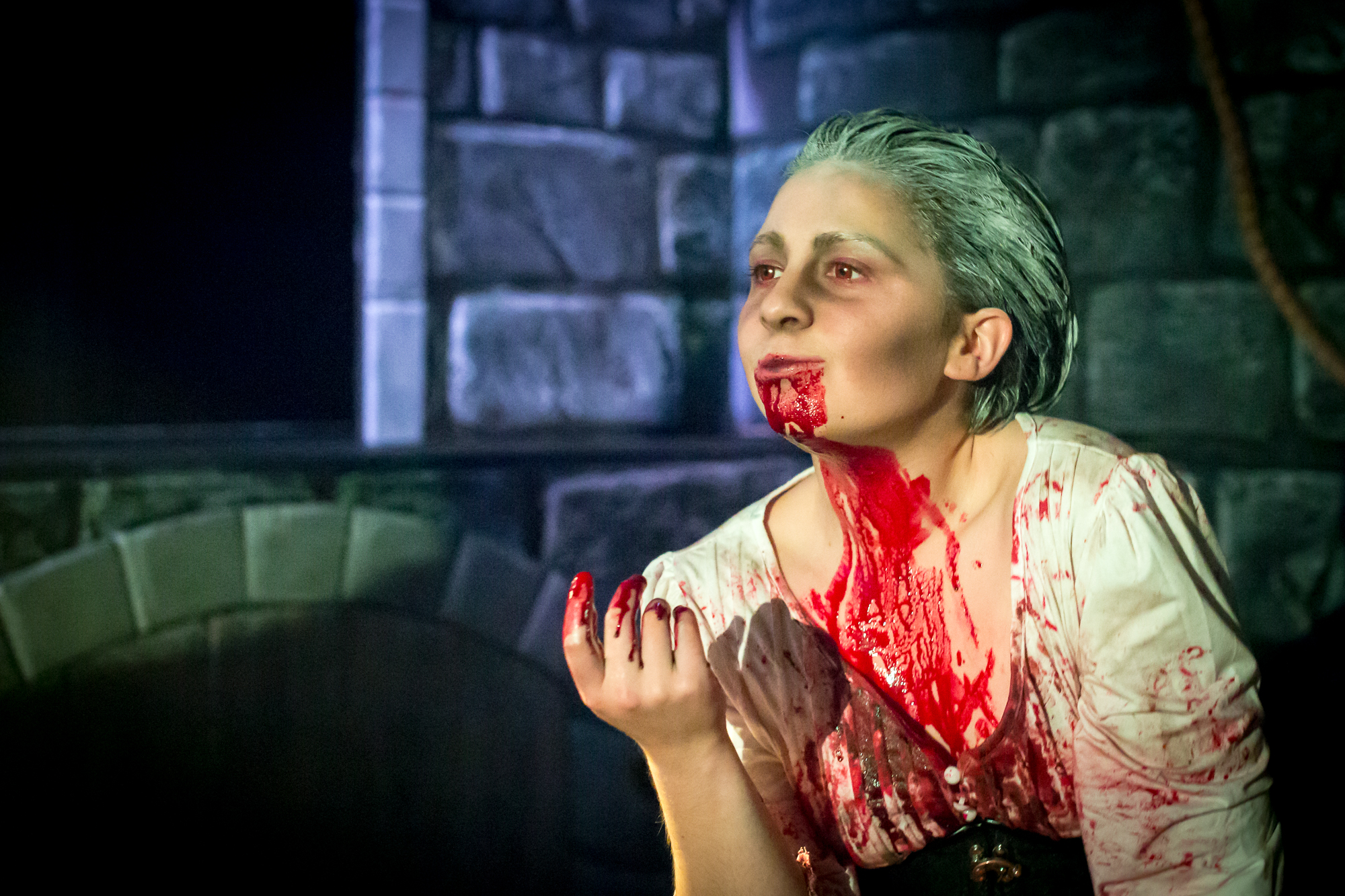
Review: Dracula at the Brockley Jack Studio Theatre

Following the smash hit success of The White Rose earlier this year, Arrows & Traps return to more familiar territory with a brand new reimagining of Bram Stoker’s Dracula. Adaptations of literary classics is where the company began, and for long-time fans of their work, this deliciously entertaining production feels a little like coming home.

Photo credit: Davor Tovarlaza @ the Ocular Creative

Adaptations of classic horror stories have a tendency to go one of two ways – either full-on terror, or spoof humour. Writer and director Ross McGregor charts his own unique course between these two options, bringing us a story which is both very funny and pretty scary in almost equal measure. The novel sets the scene through letters exchanged between solicitor Jonathan Harker (Conor Moss) and his fiancée Mina (Beatrice Vincent), and between Mina and her friend Lucy (Lucy Ioannou), and the play adopts the same style in its opening scenes, quickly introducing all the key characters and locations before immersing us in Stoker’s chilling tale. Slightly overlapping scenes ensure that the action keeps moving along at a brisk pace, building up to a fiendishly clever twist that diverts from the novel by allowing Mina to choose for herself how her story ends.

This, of course, is no accident; there’s a refreshingly modern flavour to the language and the attitudes throughout the play, and nowhere is this more evident than in its portrayal of the female characters. There’s no such thing as a damsel in distress in this story, and even in their moments of greatest peril, Mina and Lucy – both targeted by Dracula on his arrival in England – aren’t about to sit quietly around waiting for the menfolk to save them, any more than they’ll let anyone tell them earlier in the story who they should or shouldn’t marry. Meanwhile, the maniac Renfield (Cornelia Baumann) – in this adaptation also a woman – may be in thrall to Dracula, but despite the persistent efforts of Dr Seward (Alex Stevens), it’s Mina with whom she finally makes enough of a connection to withstand her master’s power.

Part of the fun of being an Arrows regular is seeing familiar actors taking on completely different roles, and always getting it right. Christopher Tester – last seen as the quietly conflicted Gestapo officer Mohr in The White Rose – wields power of a very different kind as Dracula, oozing charisma and menace as he seduces men and women alike; it’s not difficult to see why everyone ends up doing his bidding. Conor Moss and Alex Stevens (joined by returning Arrows Oliver Brassell and Andrew Wickes) go from fighting Nazis to taking down vampires – albeit with a touch less dignity – while Beatrice Vincent and Lucy Ioannou are drawn to the charms of the dark side, in stark contrast to the resolute strength of German resistance fighters Traute Lafrenz and Sophie Scholl. Finally, Cornelia Baumann’s performance as Renfield is a work of genius; a hunched figure with a vacant grin, she’s simultaneously vulnerable and dangerous, and undeniably mad but with moments of lucidity (and some cracking one-liners) that make her seem like easily the sanest person in the room.

Photo credit: Davor Tovarlaza @ the Ocular Creative

As with any Arrows show, everything about the production is visually stunning: Odin Corie’s costumes are beautiful, the spooky castle set designed by Francine Huin-Wah not only looks the part but proves unexpectedly versatile, and the brilliantly atmospheric lighting design from Ben Jacobs sets us up more than once for a bit of a scare. Even the final violent moments of Act 1 end up looking amazing, thanks to the expert contribution of movement director Will Pinchin (and a lot of fake blood).

As someone who’s avoided horror-based theatre ever since being good and traumatised by The Woman in Black when I was fourteen (not to mention an earlier visit to The Dracula Experience on a family holiday to Whitby), I had my doubts about going to see a show billed as “a spine-chilling masterpiece of fear”. But while the show is certainly not for the faint-hearted, it’s also unexpectedly funny and a brilliant piece of storytelling. Devilishly good entertainment from Arrows & Traps – don’t miss it.

Interview: Cornelia Baumann and Beatrice Vincent, Dracula

Their last production met with widespread acclaim, five star reviews and an Offie award nomination for Best Production. And now with Halloween fast approaching, Arrows & Traps have something suitably scary planned – a chilling new adaptation of Bram Stoker’s Dracula, written and directed by Ross McGregor.

“It’s definitely not a show for the faint-hearted!” warns Beatrice Vincent, who plays Mina. “I think we cover a lot of classic horror bases – there are a few jump scares in there, as well as what feels like gallons of blood – but ultimately it’s a play about the darker side of humanity, and things the characters don’t want to admit they want.”

“A lot of people, once they find out that we’re currently working on Dracula, assume that it is a spoof and ask if it’s funny,” adds Cornelia Baumann, who’ll be appearing in her tenth Arrows production as Renfield. “It definitely isn’t a spoof. While there are certainly some jokes in the play, we are aiming to create a real story that should be scary because of what the characters go through.

“There’s definitely an Arrows feel to the show in terms of quick overlapping scenes, swift changes and interwoven timelines. After the success of the real story of the White Rose, Dracula is very different and much more focused on entertainment, aiming to thrill and be eerie and scary to serve fans of the original and the genre.”

The show opens next week at the Brockley Jack Studio Theatre, where Arrows & Traps were recently announced as the official associate company. “Ross will never compromise on the scale of the story he wants to tell, and the result feels almost cinematic,” says Beatrice. “The great thing about the Jack as a venue is that it’s big enough to tell a story like this, but it’s still very intimate, which means that the smaller moments aren’t lost, and of course the audience are closer to the action!”

Over the last few years, the Arrows have built a formidable reputation with their adaptations of literary classics, from Shakespeare to Dostoevsky. Following the success of Frankenstein last year, they’re returning to horror with their take on Stoker’s novel. “Ross has made some decisions that are unique to this version and hopefully will make it exciting and bring out certain elements of the familiar story as well as create a very specific feel,” says Cornelia. “We don’t want to give everything away – you have to come and watch it – but some changes are obvious. For example, Renfield, the character that I’m playing, has been turned into a woman.

“Apart from following the Arrows’ ethos to create more exciting roles for women, this change creates some interesting new dynamics, but also gives some different insights into the story, the themes and the characters. Dracula usually preys on women, so it makes sense that Renfield perhaps originally was going to be turned into a vampire as well, but then Dracula abandons her. She completely succumbs to his powers and is a contrast to the other women in the play, particularly Mina.”

There’s also a significant – and welcome – change in the characters of Mina and Lucy: “As iconic as the novel is, it does contain some really insidious ideas about gender and what makes a ‘good’ woman, which led the original Mina and Lucy – as well as many of their stage and screen counterparts – to be a lot less fleshed out than the male characters in the novel,” Beatrice explains. “There’s a tendency to portray them as the angel and the whore, both of whom are victims that require saving by Van Helsing and their respective love interests, but Ross was very keen to distance his adaptation from those tropes, and what he’s ended up writing is a female-led piece.

“I’m incredibly excited to be playing Mina; she’s a real joy and a challenge to play. I’ve read the book and watched a few film adaptations, but Ross’s Mina is so different from previous ones that I actually found the experience very freeing. She’s referred to in the book and in Ross’s adaptation as ‘one of the brightest’ lights in the world, but the story we’re telling depends on bringing the darkness out of her as well, so finding that balance has been key for me.”

For Cornelia, playing the “zoophagous maniac” Renfield, an inmate at the lunatic asylum overseen by Dr John Seward, is an equally exciting challenge. “There’s so much freedom and scope in playing this kind of character. I think more than usual the physicality of the character was a way in for me. The connection to animals is very apparent, so from the beginning we were talking about how much Renfield’s physicality is affected by the flies and the spiders and the cats etc. But there is also the general physicality of someone who has been in an asylum for a while and who has been put into straitjackets and through various treatments. I worked with our movement director Will Pinchin on finding some of those elements, which was very helpful.”
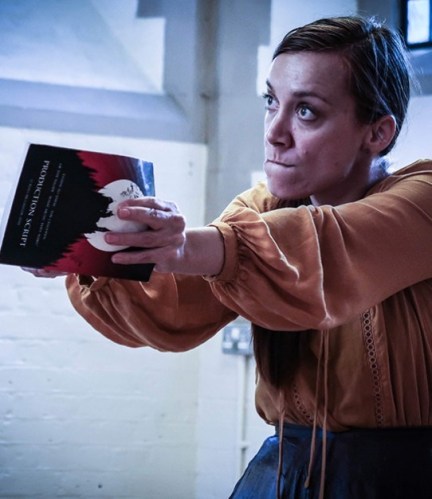
Both Cornelia and Beatrice appeared in the Arrows’ last production, The White Rose, which told the true story of anti-Nazi political activist Sophie Scholl – and both list it among their highlights with the company. “It was so rewarding to see the company and Ross get so much recognition for all the hard work that has led to that production,” says Cornelia. “Finding out about the Best Production Offie nomination was very special and one of my favourite backstage memories.

“Personally, it is difficult to pick highlights as I have been very lucky to play lots of exciting characters with A&T, but I would have to say that playing Lady Macbeth in 2016 and Mary Shelley in last year’s Frankenstein were probably my favourites. Lady Macbeth is obviously any actress’ dream but I think I particularly liked exploring the relationship between her and Macbeth, and finding the humanity and trauma behind the horrible things that they do. Similarly I loved finding out about Mary Shelley’s incredible life and it was an honour to portray her.

“Saying that, I am having an absolute blast playing Renfield in rehearsals… so I think that will definitely be added to my highlights, if not top the other two.”

Beatrice also has special memories of The White Rose. “There was just something about that show. I think we as a company were all very aware of the importance of the story we were telling, and we never stopped being moved by the bravery of the people we were playing every night.

Three Sisters would also have to go up there, as it was a completely different experience to any I’ve had in theatre before. I was pretty nervous when Ross asked me to assistant direct, but I found the process really fascinating, and although there were moments during rehearsals when I was more stressed than I’ve ever been as an actor, watching from the lighting box on opening night made it all worthwhile – I think I cried a little bit!

“Although we’re still in the midst of rehearsals for Dracula, there’s already been so much laughter and fun in this production. I think we’re all enjoying playing stuff that we wouldn’t normally get to do, as well as having gritty emotional conflicts to sink our teeth into – pun absolutely intended.”

Dracula brings together a cast of familiar Arrows faces, all of whom have appeared in previous productions with the repertory theatre company: “Rep theatre is simply the best way to work,” says Cornelia. “It is so nice to enter a rehearsal room from the first day and be comfortable and ready to explore, take risks and have fun. It cuts through all the awkwardness of having to prove yourself to the director or even other actors. You can hit the ground running. It is about working together and creating the best you possibly can. Ross knows how we work and how he can get the most out of us. Similarly we know his style and vision and there is a shorthand to get to the end result quicker. We have so many references from previous plays that it is very easy to be on the same page.

“For any play you have to be very open and vulnerable to get to the core of the characters and the story. It is easier when you’ve worked with people before. There is more trust there. This is particularly true for playing roles outside of your comfort zone, and of course intimate scenes or in fighting and movement where you are very reliant on your fellow cast members.”

“It’s great to be able to find new dynamics within the group for each show as well,” adds Beatrice. “Lucy (Ioannou) and Chris (Tester) for example, are worlds away from Sophie and Mohr as Lucy and Dracula! It never gets boring, even though it’s a similar cast each time – this is actually my first time doing significant scenes with Chris, even though it’s our third show together. Every show has an incredibly different atmosphere, and it’s so lovely to get to share all of it with an amazing group of people.”

Beatrice joined the company last year, making her first appearance as Mary Shelley’s half-sister, Fanny Imlay, in Frankenstein. “I feel incredibly spoiled,” she says. “Frankenstein was my first professional job, and I got to give an emotional death speech while wearing a gorgeous dress, which is the dream, honestly.

“But in all seriousness I’ve learnt so much this year; as someone who is still fresh out of drama school I never would have dreamed that I’d get to play such a range of complex and interesting female characters at this point in my career. And on top of that, I’ve been able to play them against actors who really force me to raise my game, in productions I am truly proud to be a part of. We’re all very dedicated to the work we do – Ross puts his heart and soul into every production, and as actors we all want to support him in that, and give our all as well.”

Cornelia was first cast in 2015 as Baptista in Taming of the Shrew, and has been a regular cast member ever since: “Honestly I can’t put into words how much I have enjoyed working with Ross and the company. It has been a real blessing and I am very grateful to have been part of so many wonderful productions and work with so many lovely, creative and talented people. Ross always picks exciting material and it has been great to see the company grow and find its style and identity.

“And as an actor I think I would never have learned as much as I have over the last three years working on these productions. It has been an honour to be recast and have a director trust you to explore different roles. It is a real chance to be stretched and be put out of your comfort zone. Renfield is certainly a very different role to what I have done before.

“But most of all it feels a bit like a family and a home. I am always happiest when working on an A&T production.”

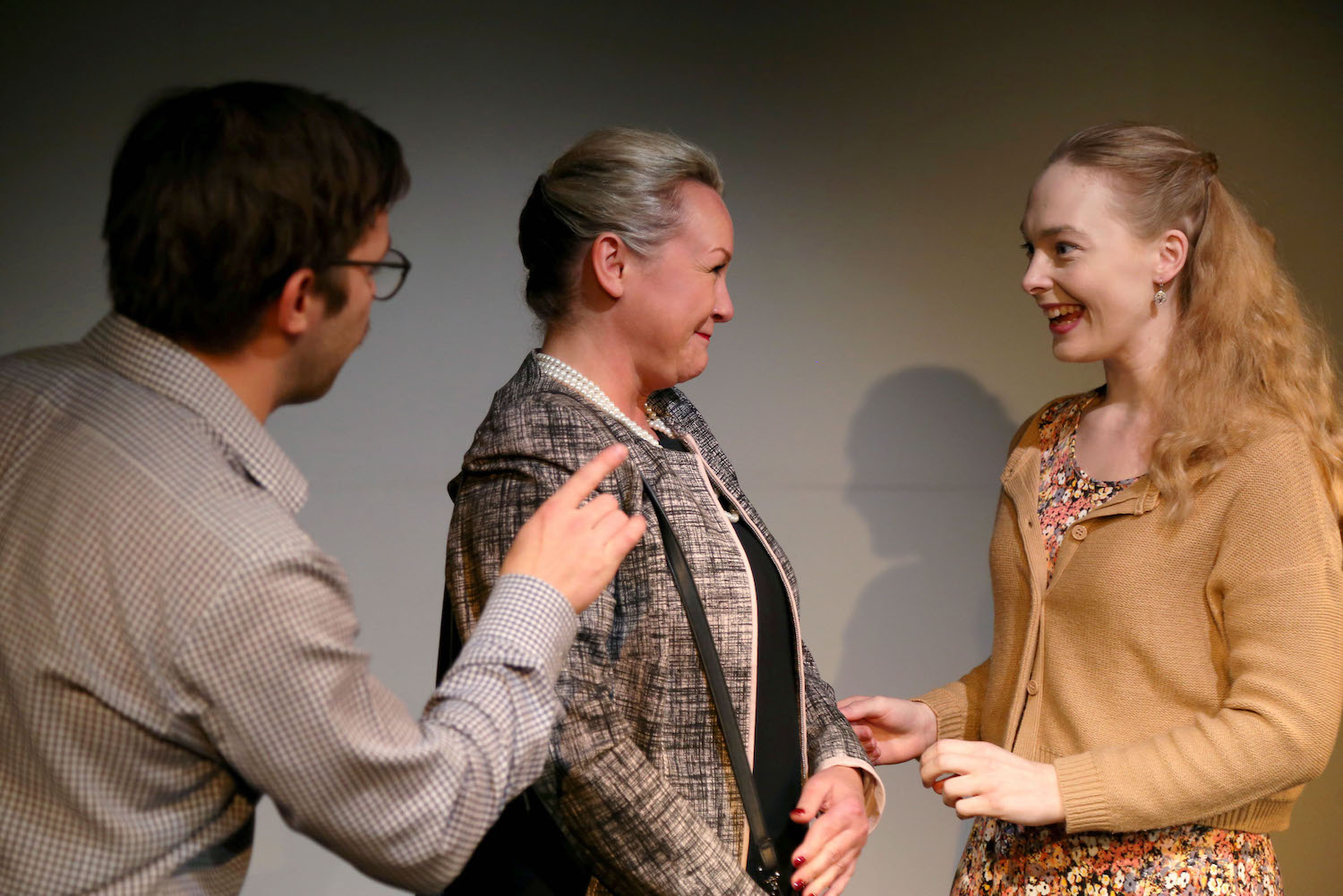
Review: Lifeboat at the Brockley Jack Studio Theatre

In September 1940, a ship carrying evacuee children from Britain to Canada was sunk by a torpedo attack, with the loss of an estimated 258 lives. For nineteen hours, two schoolgirls, Bess Walder and Beth Cummings, clung to an overturned lifeboat in the middle of the Atlantic, dressed only in their pyjamas and dressing gowns. As the hours passed, they willed each other to hang on, until they were finally rescued and brought home to Britain. Their terrifying ordeal and the friendship and courage that helped them both survive it, are the subject of Nicola McCartney’s two-hander Lifeboat, and under the direction of the consistently brilliant Kate Bannister, they make for an enthralling 70 minutes.

Photo credit: Tim Stubbs Hughes

The play covers the hours following the attack, when we find Beth (Lindsey Scott) and Bess (Claire Bowman) floating, alone and terrified, in the freezing Atlantic. But it also flashes back to the months leading up to their departure, and the impact of the war on their lives in Liverpool and London respectively, as well as their four days travelling on The City of Benares, where they’re brought together by a shared love of The Wizard of Oz. There’s a playfulness and humour to these flashbacks – in which Claire Bowman and Lindsey Scott also play all the other characters, from annoying little brothers to the ship’s Indian crew members – that draws us in, and which contrasts sharply with the intensity of the lifeboat scenes placed intermittently throughout the play. The more we know about the two friends’ lives and their dreams for the future, the more we want them to survive.

The Brockley Jack has a well-deserved reputation for its excellent in-house productions. Lifeboat is no exception, rising magnificently to the challenges presented by the play’s structure and themes, and ticking every box in terms of design, direction and performance. Karl Swinyard’s set transforms the small studio space into the deck of the doomed ship, while the sound and lighting design from Jack Elliot Barton and Tom Kitney recreates with stunning accuracy not only the sights and sounds of the 1940s but also the horror of the attack and its aftermath.

Throughout the play, Claire Bowman and Lindsey Scott show their versatility as they slip seamlessly from one character to another. But it’s as the central characters that they’re most compelling – whether they’re cheerfully singing rude songs about Hitler, gazing in awestruck wonder at the cinema screen, giggling over a handsome sailor, or fighting for survival in icy waters. In just 70 minutes we come to know and care about both girls, and as their ordeal continues, we can feel their fear and growing exhaustion.

Photo credit: Tim Stubbs Hughes

Although Lifeboat focuses on one specific incident of World War II, it’s difficult to watch it and not think more broadly about the horrors of war, and the millions of innocent lives lost around the world to conflicts past and present. Bess and Beth’s story ends well – the two women would go on to be lifelong friends – and Lifeboat pays tribute to their incredible courage and resilience. But the play’s sombre conclusion also ensures we don’t forget the 258 people, among them 77 children, who weren’t so lucky.

It’s tragic that stories like this one still need to be told, but if they must then it’s at least some comfort to see them told as well as this. A sensitive portrayal of devastating real events, Lifeboat is undoubtedly another triumph for the Brockley Jack team. Go and see it while you can.


Can’t see the map on iPhone? Try turning your phone to landscape and that should sort it. I don’t know why but I’m working on it… 😉