Review: Fear and Misery of the Third Reich at Jack Studio Theatre

Bertolt Brecht’s Fear and Misery of the Third Reich does pretty much what it says on the tin, but in Aequitas’ new revival, there’s a twist. Selecting from Brecht’s collection of short scenes set in Nazi Germany, the production sticks to the source material, but also takes the opportunity to draw parallels with the depressing post-2016 world in which Trump and Brexit continue to loom ever larger.

The link is obvious to anyone who’s willing to see it – both Trump and Brexit were the result of a democratic process, as was Hitler, and there are clear similarities to be found in the powerful rhetoric of fear used in all three cases. Though the characters remain Germans living under the Nazi regime, the actors are all in modern dress, and sporting accessories including a MAGA cap and a save our NHS badge (“I should put on my Iron Cross,” says one of the men at one point, as he hastily dons his “Brexit means Brexit” badge). To make sure we get the point, we’re also treated to scene change soundbites from and about Trump and co.

Director Rachael Bellis doesn’t try to claim we’ve reached the levels of (justified) paranoia experienced by Brecht’s characters, but she does suspect it’s where we’re headed if action isn’t taken: a world where parents fear being turned in by their children, where a throwaway comment can cost lives, and where a Jewish wife is forced to leave her husband and flee the country in order to save them both. It’s easy to shake our heads and claim such things could never happen here – but then two years ago, how many of us honestly thought Trump would be in the White House, or that anyone in the UK who speaks out against Brexit would be dubbed a traitor in the press?

The cast of six interact well with each other (and, on occasion, the audience) as a variety of characters of different ages and backgrounds. In the first of two scenes that feel closest to our current reality, Clark Alexander and Hugo Trebels face off in an intense debate between an SA thug and his cook’s brother; while the latter clearly has the upper hand in terms of logic and reason, it’s worth nothing when all his adversary need do is draw a chalk cross on his back to ensure he’ll be arrested. In the other, Rhiannon Sommers stands out with a heartbreaking performance as a Jewish woman trying to explain to her husband why she must leave the country, and by extension their marriage.

It’s not all doom and gloom; the play ends abruptly with a shout of “NO!” from a group of protesters getting organised to fight back. Even so, the play’s title is an apt description; we may not be in the Third Reich, but the fear and misery are all too real.

Can’t see the map on iPhone? Try turning your phone to landscape and that should sort it. I don’t know why but I’m working on it… 😉

Review: The Claim at Shoreditch Town Hall

Based on two years’ first hand research into the refugee experience in the UK, Tim Cowbury’s The Claim takes a little while to get going – but when it does, it packs a massive punch. Intensely (and deliberately) frustrating, the play sets out to be provocative, and does so with such success I could actually feel my blood pressure rising in response.

Photo credit: Paul Samuel White

But let’s back up slightly. The Claim is the story of Serge, who fled to the UK from Uganda a year ago, to escape being sent back to his home nation, the Democratic Republic of Congo. Something bad happened there when he was ten; we know this because he tries repeatedly to explain it to the two officials he meets when he decides to apply for asylum in the UK. Unfortunately, Serge finds himself facing a distinct lack of understanding on either a linguistic or emotional level, with both members of staff too caught up in their own petty dramas to pay attention. The interview culminates in a farcical three-way interrogation, in which all Serge’s responses are wildly misinterpreted to paint a picture so far from reality all he – and we – can do is gape in appalled disbelief.

Mark Maughan’s production stages the interview more like a court appearance, with Serge forced to sit centre stage under the glare of harsh strip lighting, and at which the audience’s presence is not only acknowledged but welcomed. While the circumstances are exaggerated, however, the way in which Cowbury’s script manipulates Serge’s words feels all too plausible, with all three actors perfectly nailing the complex timing of the dramatic and fast-paced exchange. There’s also a clever play on language; though we hear everything in English, a large part of the conversation is in reality taking place in French – and while this is initially a source of comedy, it soon becomes a dangerous and insurmountable barrier.

What it all comes down to, ultimately, is that Serge – who has a job, a home and a life in the UK – doesn’t fit the one-dimensional image the two officials expect from a refugee. Played by Ncuti Gatwa, he’s charming, likeable and generally pretty relaxed, eventually cracking not out of desperation over his plight but out of simple fury at not being listened to. Consequently, Yusra Warsama’s cold, disinterested B assumes he must have something to hide, but ironically it’s Nick Blakeley’s A, who repeatedly insists he wants to help, that ends up doing the most damage.

Photo credit: Paul Samuel White

The Claim is not what I’d call an enjoyable play, but that doesn’t mean it’s not a very good play, or that I didn’t respond quite powerfully to it. The inclusion of the audience in the story is no accident, and prevents us from smugly sitting back full of righteous anger at the two nameless officials. We’re complicit in this particular encounter, and it forces us to wonder how we ourselves might react in A and B’s shoes. There are no easy answers – but maybe simply listening is a good place to start.

Can’t see the map on iPhone? Try turning your phone to landscape and that should sort it. I don’t know why but I’m working on it… 😉
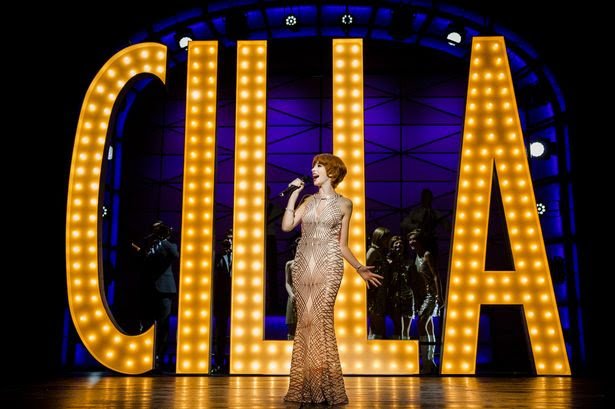
Review: Cilla – The Musical at the Orchard Theatre

Guest review by Sarah Gaimster

The Orchard Theatre, Dartford welcomes one of Britain’s best-loved entertainers Cilla to the stage in the opening of this run of the musical for anyone who had a heart: Cilla – The Musical.  

Willy Russell and Laurie Mansfield present a spectacular and heart-warming adaptation of BAFTA Award winner Jeff Pope’s critically acclaimed hit TV series.

Cilla -The Musical tells the story of teenage Liverpudlian Priscilla White, whose dreams of stardom lead her to become one of the best-loved entertainers of all time, Cilla Black. 

Cilla is played by Kara Lily Hayworth in her first starring role. Kara performed in Annie alongside Cilla’s friend Paul O’Grady as one of the child actors. Whilst on break, out with her mother, Kara spotted Cilla in a shop and recalls, “I just went up to her and said I wanted her autograph and that I was going to be a singer and an actress when I was older.” Well, it looks like Cilla has been watching over this fantastic young artist and has had a guiding hand in making her dreams come true, as did Cilla’s. 

Kara does Cilla proud with a powerhouse of a voice hitting those high notes and singing with charisma and tenderness. 

Cilla the teenager is the pride of her parents Big Cilla and John White; through hard work and ambition she has earned herself a prestigious place in the typing pool at British Insulated Callender’s Cables, and Big Cilla is proud to boast this fact to anyone who will listen!

Cilla’s heart really belongs to music though, and we are treated to scenes of her performing with her hairbrush into her mirror at home and regularly popping on stage at Liverpool’s famous Cavern Club, encouraged by friends the Beatles to join them for a number or two. 

It is here that Cilla catches the eye of young Bobby Willis, played by Carl Au, who’s determined to win her heart so encourages her to take him on as her manager. Cilla also catches the eye of big shot music mogul Brian Epstein, played by Andrew Lancel.

In the first half we are quickly transported back to the 60s with hit after hit by the up and coming bands of the day The Big Three, Gerry and The Pacemakers, and of course The Beatles. The costumes, choreography and lighting add atmosphere to the fantastic performances by the live band and wonderful singers; the entire cast take a turn at treating us to the hits of yesteryear such as Roll over Beethoven, Twist and Shout and You Really Got A Hold On Me. 

The second act focuses on the on-off love story of Bobby and Cilla, and her rise to stardom. 

The entire cast transports us in time and makes the audience forget which era we are now in, but supporting actors Carl Au (Bobby Willis), formerly Bad Barry in Waterloo Road, and Andrew Lancel (Brian Epstein), formerly Frank Foster in Corrie, deserve special mentions. Both actors portray their characters extremely well and treat us to unexpected musical numbers themselves. 

Review: Tiny Dynamite at the Old Red Lion Theatre

In Abi Morgan’s Tiny Dynamite, one of the characters relates an anecdote about a man who throws the remains of a sandwich off the top of the Empire State Building. By the time it reaches ground level, it’s gained so much velocity that it kills a woman walking past.

This theme of “freak accidents” runs throughout the play, which muses on the ways that sometimes the smallest and most innocuous of actions can have a dramatic impact. The story begins by telling us that one of the characters, Anthony, was struck by lightning as a child. But was it pure chance, or – as his friend Luce argues – the result of a set of circumstances that, when combined, made it an accident waiting to happen?

Photo credit: The Other Richard

Now grown up, Anthony (Niall Bishop) and Luce (Eva-Jane Willis) are on holiday. This, we learn, is an annual event – part of a routine that involves Luce helping the mentally fragile Anthony get back on his feet. Theirs seems an uneasy relationship; Luce’s need to help sees her alternate between patronising and tough love, and both are haunted by the loss some years ago of a mutual friend who they both loved. Into this odd set-up steps the unsuspecting Madeleine (Tanya Fear), a free spirit who never stays in the same place for more than a few months. When both Anthony and Luce fall for her, it seems that history is repeating itself – but first the two friends need to make sense of what happened the last time. This story is revealed slowly, piece by piece, finally coming together as the play reaches its emotional climax.

In a play that’s all about vulnerability, Niall Bishop and Eva-Jane Willis give strong performances as Anthony and Luce, two very different characters who each grapple with their problems in their own way. Anthony is fully aware of his undefined mental illness and makes no attempt to hide it, frequently resorting to violence against himself or others to vent his frustration. Luce, on the other hand, firmly believes she has her life under control, with a “boring” job in risk assessment and a tiny, tidy flat – but the cracks are beginning to show, and there’s a tension in her frame that reveals just how hard she’s having to work to hold everything together. For both of them, their friendship appears more of a duty than a pleasure, until the arrival of Tanya Fear’s Madeleine – lively, confident and unimpeded by bad memories – forces them to face up to the reason they’re so broken, and attempt to move on. The impact of the encounter isn’t only one-way, though; stepping into their world alerts Madeleine to the loneliness that’s an inevitable result of her transient way of life.

Photo credit: The Other Richard

David Loumgair’s production creates an air of suspense and danger throughout; a cluster of bare lightbulbs hangs above a stage surrounded by water, and each new scene is introduced by flickering lights and the ominous crackle of electricity. The deceptively simple set, designed by Anna Reid, makes ingenious use of the limited space available – the wooden deck is revealed to have two large under-floor compartments, from which the characters produce newspapers, drinks and towels, and there’s even an area where they go swimming more than once.

Despite the title, Tiny Dynamite never quite explodes but rather quietly simmers before boiling over in its final moments. As the play ends, we’re left with the sense that not everything is resolved – it would be unrealistic, after all, to suggest a few weeks one summer could erase years of trauma – but that the three characters are now at least in a position to try and move on, and to deal with whatever consequences life throws their way.

Can’t see the map on iPhone? Try turning your phone to landscape and that should sort it. I don’t know why but I’m working on it… 😉

Review: East at King’s Head Theatre

East begins with a cacophonous rendition of East End classic, My Old Man Said Follow The Van, with each of the five actors singing at different speeds and in different keys. It’s an unconventional opening to a play that we quickly realise doesn’t believe in compromise; much like its characters, and the famously distinctive area of London in which it’s set, Steven Berkoff’s 1975 play – which returns for the first time to its original London home at the King’s Head, directed by Jessica Lazar – has its own unique personality and makes no apology for the brutal, foul-mouthed honesty with which it depicts East End life.

Photo credit: Alex Brenner

The story – such as it is – centres predominantly around two friends, Les (Jack Condon) and Mike (James Craze), whose first encounter sees them beat each other to a bloody pulp after Les looks the wrong way at Mike’s girlfriend Sylv (Boadicea Ricketts). We then meet Mike’s parents (Debra Penny and Russell Barnett), a faded, loveless couple whose only pleasure seems to come from watching TV, reminiscing on times past and – in Dad’s case – lecturing the family on his right-wing views.

From there, the play abandons any pretence at a linear narrative, instead painting a series of pictures of the characters’ lives through a mix of heartfelt soliloquies, physical set pieces and comedic silent movie sequences – all performed by an outstanding cast to a live piano soundtrack played by musical director Carol Arnopp. The action jumps backwards and forwards in time, spanning several years, and keeps us constantly off balance as we try to keep up with the relentless pace of it all.

Berkoff’s language is a fascinating blend of Shakespearean and contemporary, laced with rhyming slang, references to East London locations, and enough expletives to turn the air well and truly blue. His characters are all frequently reprehensible, but also display a deep dissatisfaction with their lives that goes some way to winning our sympathy. Boadicea Ricketts’ Sylv leads the way in the hope for change, reflecting wistfully on a woman’s role in a male-dominated world, in a speech that could (to society’s discredit) have been written yesterday instead of 30 years ago. Jack Condon cuts a pathetic figure as Les – constantly left out, making jokes that don’t quite hit the mark, and ultimately betrayed by his own loneliness – with Debra Penny’s Mum similarly unfulfilled as she observes her sleeping husband and remembers with apparent satisfaction an incident at the local cinema that should have left her horrified.

Photo credit: Alex Brenner

East is a difficult play to pin down – at times funny, at others shocking, it has an underlying current of frustration that explodes in a variety of ways, from sex to violence to dodgy dancing (and, on one occasion, flying baked beans). The cast excel in physically and emotionally demanding roles, and the production maintains a constant drive and energy from the first moment to the last – all the more impressive given the lack of flow in the narrative. It may not be everyone’s cup of tea; if you’re easily offended then you may want to steer clear. But for anyone who’s excited by bold, striking theatre that’s not afraid to go its own way, this is a must-see.

Can’t see the map on iPhone? Try turning your phone to landscape and that should sort it. I don’t know why but I’m working on it… 😉