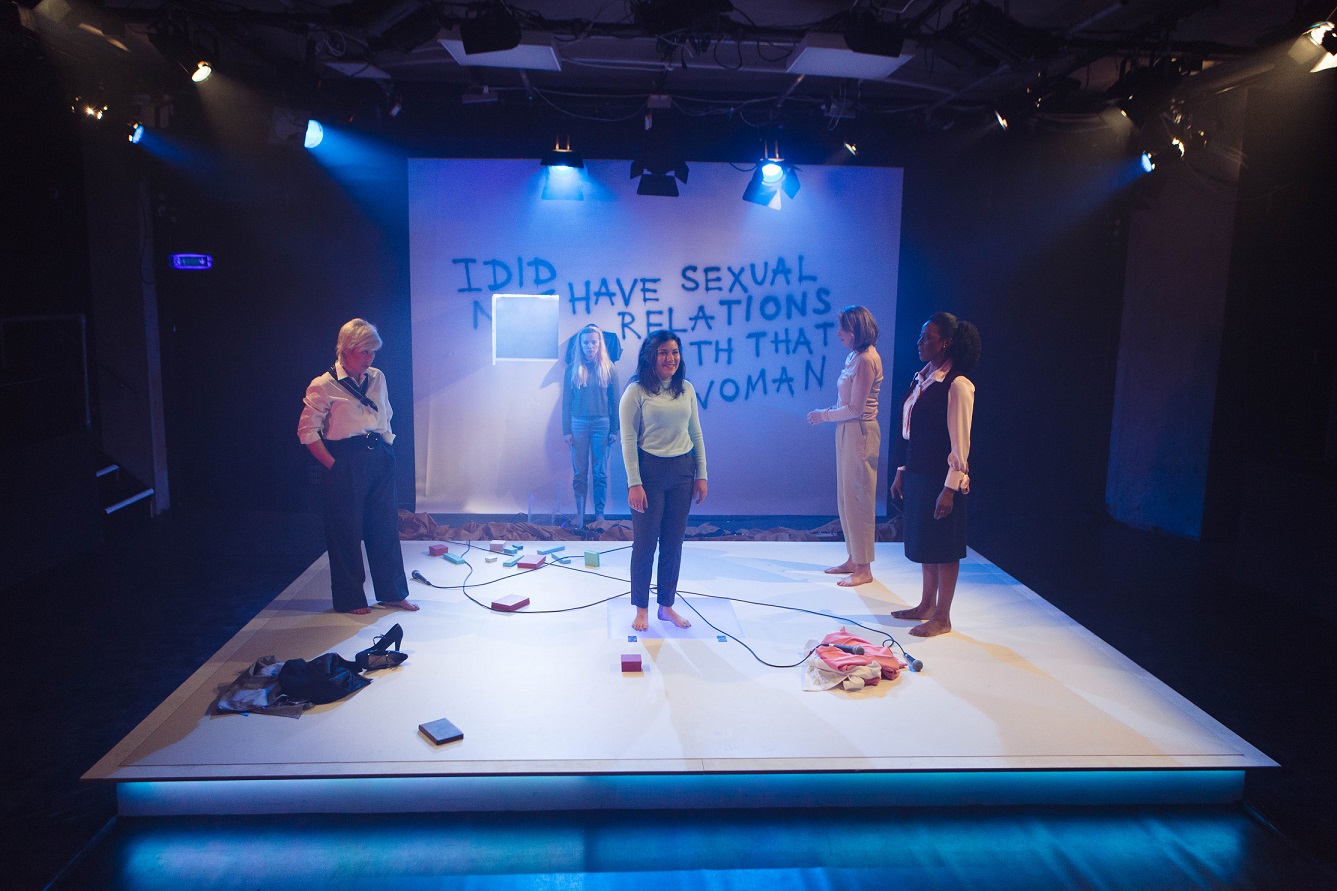
Review: Plastic at the Old Red Lion Theatre

Some people look back on their school days as the best of their lives. For others, the only good thing about their teenage years is that they’re over and done with. But how much does that period between childhood and adulthood shape the course of the rest of our lives – and if we knew what lay ahead, how many of us might have done things differently?

Kenneth Emson’s Plastic, directed by Josh Roche, begins in a jumble of timelines, as Kev and Ben – now grown men – reminisce about a teenage football match, at which the star player caught the eye of a popular, pretty 15-year-old girl. That, we’re told, is where it all begins – and although it takes a while to straighten out the tangled threads of the two men’s memories, the story that emerges proves more than worth the effort.
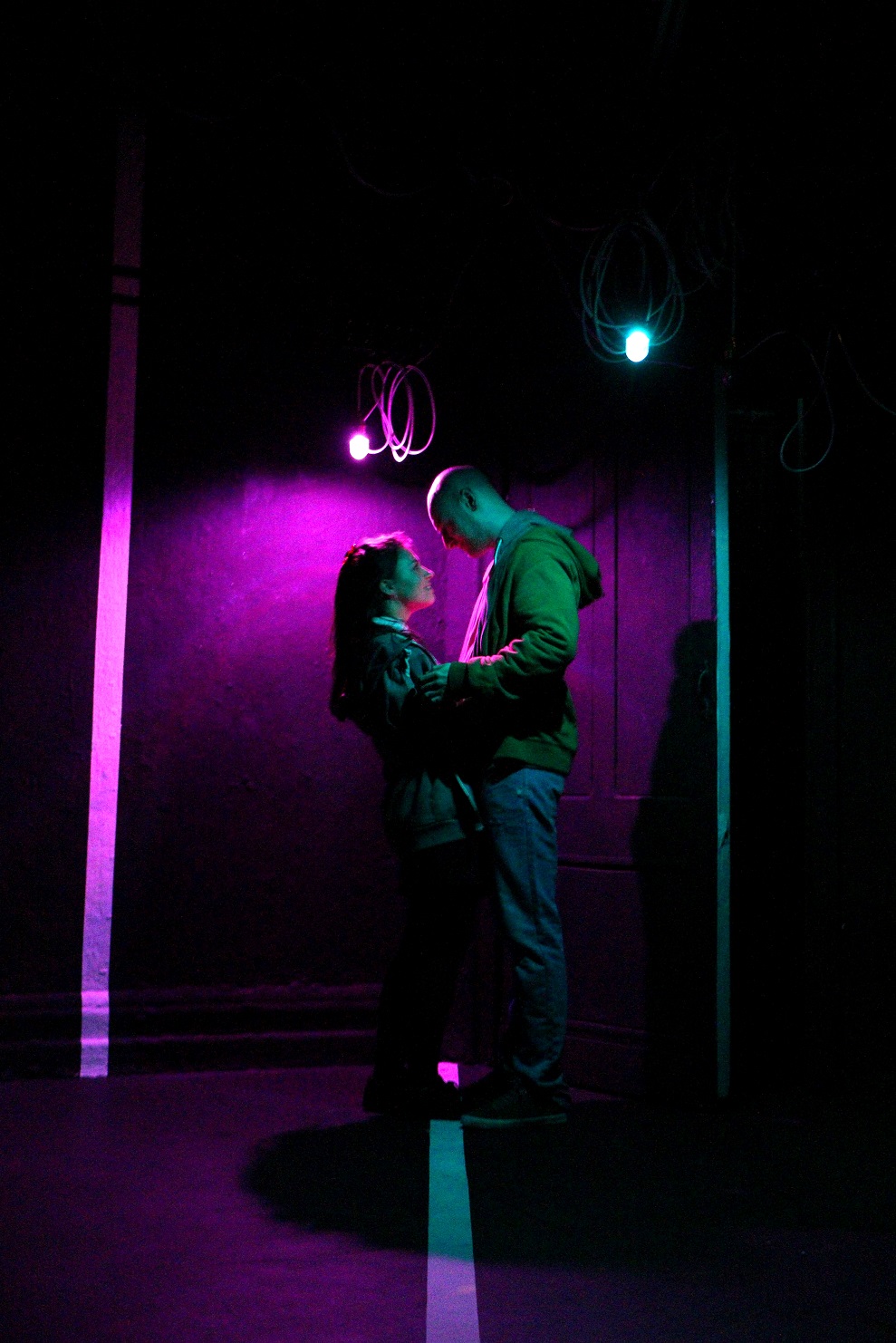
Photo credit: Mathew Foster

Kev (Mark Weinman) used to be the captain of the school football team – which in their town, he tells us with a comical little bow, is a big deal. Or at least it was at the time; now he’s left school and is starting to realise his former popularity counts for little out in the real world. The one bright spot in his mundane existence is his girlfriend, Lisa (Madison Clare), the only person who still looks up to him as the hero he once was. And she’s told him tonight’s the night…

Back at school, Ben (Thomas Coombes) doesn’t fit in; the daily target of bullies, the only way he can cope is to “think Columbine, think Virginia Tech, think Sandy Hook… and breathe”. Luckily, he’s got Jack (Louis Greatorex), who’s been his best mate since forever, even though hanging out with Ben means he inevitably gets bullied too. Ben, Jack and Lisa used to be best friends, until they went to high school and she joined the popular crowd – but this afternoon they’re all bunking off together, and Jack’s hoping it’ll be just like old times.

As we follow the four characters through their day, there’s a mounting tension as Kev waits for Lisa, and the bullies wait for Ben. We know something’s brewing, but when it comes the play’s climax is genuinely shocking, largely because it hits us from so way, way out in the blue. From a narrative point of view this twist in the tale is an impressive feat of misdirection, but it also sits a little awkwardly against the backdrop of all that’s gone before, and feels like it introduces a whole new set of issues which then don’t get dealt with in the play’s closing minutes.

Emson’s script is unusual, a rapid fire rhyming verse that somehow still feels very natural in the mouths of teenagers, and which is brought brilliantly to life by an excellent cast. Thomas Coombes stands out as the tormented Ben, who’s exactly the kind of kid you’d expect to constantly be “thinking Columbine”; we feel bad for him, but at the same time we can’t help but be repelled by his intensity and general strangeness. In her professional stage debut, Madison Clare also really shines as Lisa who, despite being young, pretty and popular, is anything but a mean girl. She wants more out of life than just being one of the popular clique, and there’s a wistfulness to Clare’s performance that’s captivating to watch.

Photo credit: Mathew Foster

Another star of the show is Peter Small’s memorable and atmospheric lighting design, consisting of several bare light bulbs which are propelled across the stage by the actors and change colour seemingly at their command. This results in some powerful and poignant moments, particularly later in the play when each of the characters gets a moment in the (literal) spotlight to reflect on what’s gone before, and what could lie ahead for them.

Gripping, original and entirely unexpected, Plastic is also a pretty tough watch. The play paints a decidedly bleak picture of the school years; this is not a story that sets out to inspire nostalgia in the lucky few who actually enjoyed that time of their life. That doesn’t mean it won’t bring back memories – only that they’re unlikely to be good ones.

Can’t see the map on iPhone? Try turning your phone to landscape and that should sort it. I don’t know why but I’m working on it… 😉

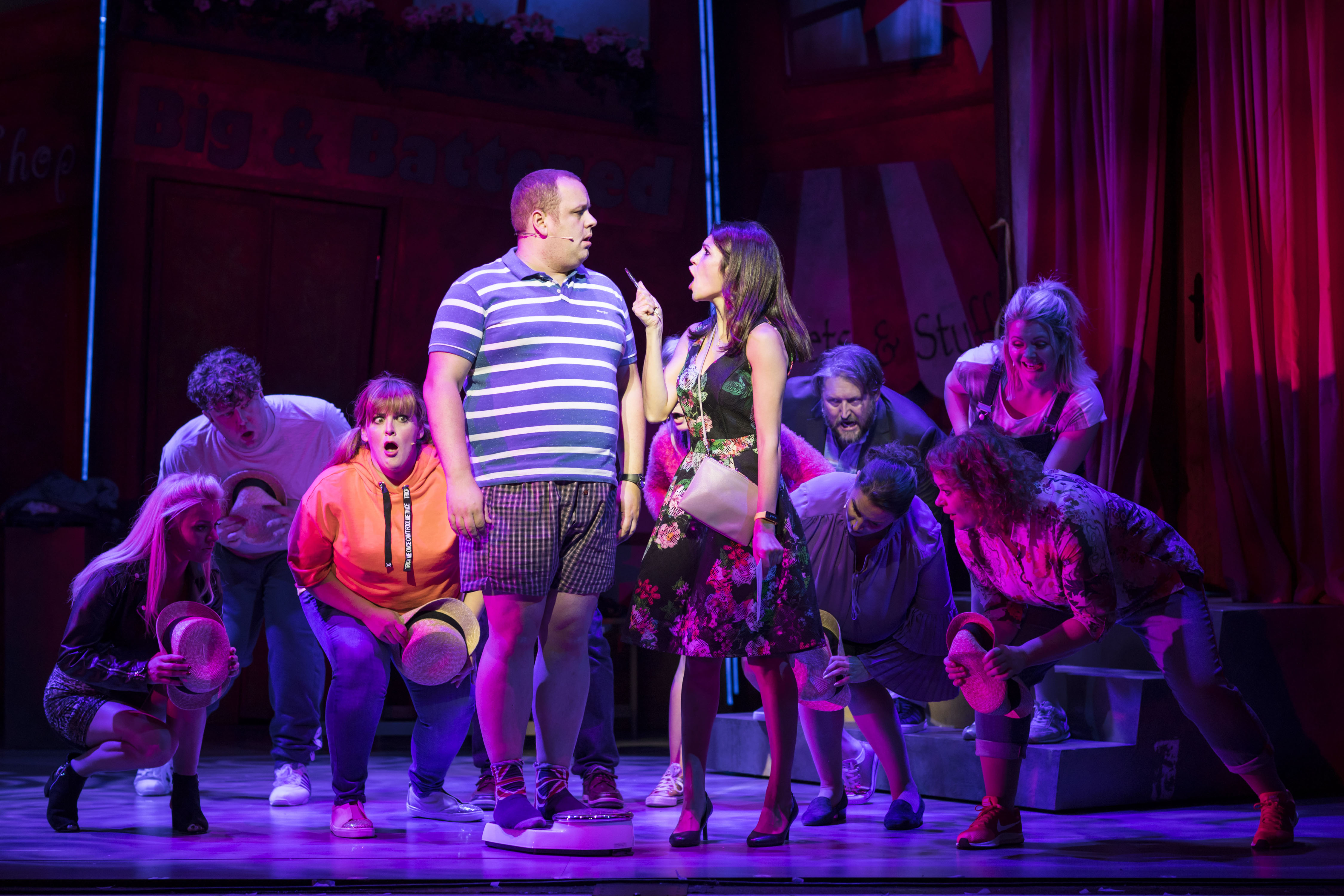
Review: Fat Friends the Musical at the Orchard Theatre

On paper, Fat Friends the Musical ticks all the boxes: a nostalgic revival of a much-loved TV series, written by the show’s original creator Kay Mellor; a heart-warming story about loving yourself and your body no matter what you weigh; and a starry cast featuring stage and screen favourites that include Jodie Prenger, Sam Bailey and Kevin Kennedy.

The show condenses some of the main plotlines from the first series of Fat Friends into one story, primarily focused on Kelly (Jodie Prenger), who’s about to marry the love of her life, Kevin (Joel Montague), and would be the happiest woman in the world if only she could fit into her dream wedding dress. But that’s not so easy when your parents (Sam Bailey and Kevin Kennedy) own a fish and chip shop, your skinny sister (Rachael Wooding) won’t stop teasing you about your weight, and you’re hungry all the time. Encouraged – for different reasons – by best friend Lauren (Natalie Anderson) and dieting queen Julia Fleshman (Natasha Hamilton), Kelly sets out to lose those extra pounds… but will being slimmer actually make her happy?

Photo credit: Helen Maybanks

It’s great to see Kelly, Betty and co again, thirteen years after Fat Friends left our screens, and the show’s script sparkles with Kay Mellor’s trademark Yorkshire wit and warmth. Just as we remember them, the characters are loveable and easy for real people to relate to; some of the biggest laughs are ones of recognition as the slimmers shed as much clothing as possible before their weigh-in, or battle with themselves over whether or not to have that bag of chips. We’ve all been there, and that’s why it works. (And if you don’t leave the theatre craving fish and chips, you’re a lot stronger than I am.)

Jodie Prenger is well cast as the irrepressible Kelly, and soon has us on side with her down to earth humour and unflinching honesty. Sam Bailey – just a couple of years older in real life – seems an unlikely choice to play her mother, but the two pull off a convincing on-stage relationship, with shy, nervous Betty the very opposite of her outgoing daughter. Meanwhile, Rachael Wooding doubles up so effectively as Kelly’s sister Joanne and Julia’s downtrodden assistant Pippa that I didn’t even realise it was the same person, and Natalie Anderson throws herself with seemingly limitless energy into her one character Lauren’s multiple roles as dress shop owner, slimming class leader and Zumba instructor (not to mention hopeless romantic).

Unfortunately, the music – composed by Nick Lloyd Webber, with lyrics by Mellor – doesn’t quite match up to the rest of the evening. Despite a few stand-out numbers, and the undeniable vocal talents of Sam Bailey, Jodie Prenger, Natalie Anderson and others, the songs on the whole add little to the plot and, though well performed, are not particularly memorable. Given that its strength lies in the characters, story and dialogue, you have to wonder if the show, which runs at over two and a half hours, might not have worked better as a play.

Photo credit: Helen Maybanks

Although as a musical it doesn’t quite work for me, Fat Friends is still a good night out, with a talented cast and a strong message about body image. By updating the story to the present day, Mellor is also able to cover both the opportunities and the dangers posed by social media, and the many ways in which we allow others – both people we know and complete strangers – to dictate how we should feel about ourselves. A feel-good show with a heart as big as its appetite, this revival of a TV favourite is a lot of fun for old and new friends, of all shapes and sizes.

Review: The Sleeper at The Space

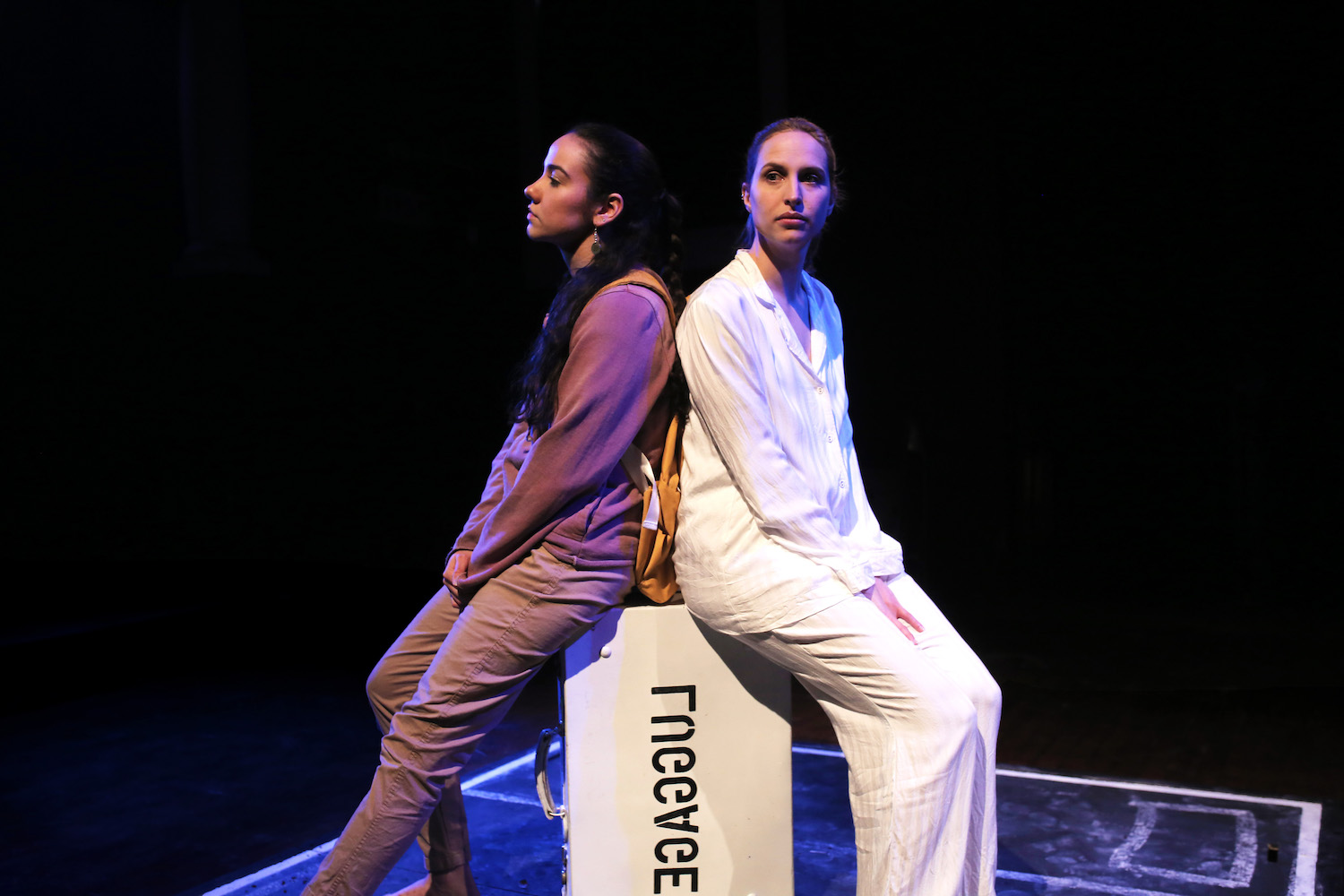
Over the last few years, images of refugees fleeing their homes in search of safety in Europe have become such a common sight in our newspapers and on our TV screens that they’ve begun to lose a little of the powerful impact they once had. The Sleeper – or What Happens When You Ask Them to Leave?, inspired by the personal experience of writer and director Henry C. Krempels, restores that immediacy by bringing the refugee crisis out of the papers (despite, ironically, having begun as a journalistic piece) and into the here and now – or more specifically, into British writer Karina’s bed on an overnight train through Europe.

Returning from the bathroom, she finds a young woman hiding in her bunk and unthinkingly goes in search of the train manager to complain. When the woman is revealed to be a Syrian refugee, Karina insists she wants to help; but despite returning to the beginning and replaying the situation in a variety of slightly different ways, there seems to be no obvious solution to the chain of events set in motion by her instinctive reaction.

It’s at this point that things get both interesting and a little uncomfortable, as Amena – who up to now has remained largely silent – steps up to have her say. Amused and bemused by the well-meaning but misguided notion that “a play can solve the refugee crisis”, she’s no longer content to sit by while the two white people try and solve her problem; nor does she need someone else to tell her story for her, however well researched and factually accurate that account might be. This is the play’s pivotal moment, and it jolts both actors and audience out of our complacency, dramatically altering our perception of Amena and our response to her situation.

The experimental piece is performed by a cast of three, with Sarah Agha’s Amena – perhaps not surprisingly – emerging as the strongest personality. Proud, independent and not afraid to stand up for herself, she doesn’t fit the mould of the timid, grateful refugee stereotype, and the play is all the richer for it. That said, the characters of Karina and train manager Georges – played by Michelle Fahrenheim and Joshua Jacob – are equally interesting; both are bound by their own sense of duty to an unwritten code, which means that despite the best intentions, their ability to help is limited to their own narrow frame of reference. It’s only when those restrictive codes are discarded, resulting in a lengthy sequence that builds little by little towards the play’s striking final image, that another possible way forward emerges.

At first glance, this conclusion seems to imply the play is doing exactly what it said it wouldn’t: trying to solve the refugee crisis. But on reflection, it’s not so much suggesting what we should do in this one incredibly specific situation as inviting us to take a step back to view the big picture in a different way, and challenging the sense of privilege that colours our assumptions every time those familiar images appear on our TV screens. And by addressing this lesson as much – perhaps even more – to its own cast as to the audience, the play successfully makes its point without feeling like it’s preaching. Unusual and thought-provoking, The Sleeper is an interesting hour of theatre that may not give us answers, but does leave us with plenty to think about.


Can’t see the map on iPhone? Try turning your phone to landscape and that should sort it. I don’t know why but I’m working on it… 😉
Review: Devil With The Blue Dress at The Bunker Theatre

In Kevin Armento’s Devil With The Blue Dress, Hillary Clinton refers to her husband’s affair with Monica Lewinsky as the second worst thing ever to happen to her. It’s a great line, which unsurprisingly earns a big laugh, but it’s also a very telling comment. Hillary Rodham Clinton – lawyer, author, politician, mother, grandmother, the first woman to be nominated for president by a major political party in U.S. history – is still known above all by people across the world, and within her own nation, for two main events: that time her husband cheated on her with a 22-year-old intern, and that time she was beaten in the presidential election by a man with zero political experience, qualifications or intelligence.

Photo credit: Helen Murray

Devil With The Blue Dress examines the circumstances of the former, while reflecting on the impact it may or may not have had on the latter. Most of us above a certain age will remember, however vaguely, what’s become known as “the Monica Lewinsky scandal”; Armento’s script fills in the political and personal details, from the perspective of both Hillary (Flora Montgomery) and Monica (Daniella Isaacs), as well as the Clintons’ daughter Chelsea (Kristy Philipps), Bill’s devoted secretary Betty (Dawn Hope) and Monica’s friend and confidante, Linda (Emma Handy).

Joshua McTaggart’s production begins in an orderly fashion, with Flora Montgomery’s meticulously controlled Hillary presenting each of the characters in “her play” as they emerge from behind a curtain at the back of the stage. Then Monica, played by Daniella Isaacs, crashes the party, at which point the narrative takes a very different direction. She wants to tell her side of the story, and does so with colour and emotion; in fact she’s the total opposite of Hillary, and if we met her out of context, we’d probably quite like her. It’s a sympathetic view of a woman who’s rarely seen in such a positive light: young and in love, she’s manipulated by those around her and pays for it by becoming the face and name of a global scandal.

By Act 2, the curtain’s down, the truth is out and the gloves – or rather heels – are well and truly off, as little by little the five women turn on each other. And if there’s one key player noticeably missing from the all-female line-up, Bill Clinton still makes his voice heard, both through the sterling work of saxophonist Tashomi Balfour and through the women themselves, with the “supporting cast” of Chelsea, Linda and Betty each taking turns to speak his words. Meanwhile Hillary and Monica face off in a battle over who’s been most wronged by the other, neither apparently giving a moment’s thought to the idea that the President might bear some responsibility for their misery. And it’s that very point that makes this play about a 20-year-old scandal so relevant right now in 2018, with the #metoo movement continuing to gain momentum, even as Donald Trump – a man who literally believes he can do anything he wants to women because he’s famous – sits smugly in the White House.

Photo credit: Helen Murray

Though a little knowledge of U.S. political history might help, particularly at the start of the play, Armento’s writing is clear enough that anyone with the sketchiest knowledge of what happened in 1998 – and 2016 – can easily keep up with the chain of events. The conflict between the women makes for compelling viewing, but what really sets the stage for an interesting debate is the underlying question of why that conflict is even happening, and what damage it’s inflicting on both the individuals involved and the perceptions of those watching. I’ve never questioned why it’s known as the Monica Lewinsky scandal and not the Bill Clinton scandal – but I am now, and I don’t think I’m the only one.

Can’t see the map on iPhone? Try turning your phone to landscape and that should sort it. I don’t know why but I’m working on it… 😉

Review: Mirrors at Leicester Square Theatre

In a world of fashion magazines, social media, online dating and reality TV, who needs a magic mirror to remind you every day that you’re not the fairest – or funniest, or coolest, or most talented – of them all? In darkly humorous modern fairytale Mirrors, Siobhan McMillan draws on her own experiences to examine our obsession with measuring our own self-worth based on the perception of others, and the desperate places that obsession can take us to.

Photo credit: Thomas Aston

Vlogger ShyGirl is excited – not only does she now have eight YouTube subscribers, she also has a new boyfriend, Mikey, who’ll be here any minute. Mikey, however, doesn’t sound to us like much of a catch, and when he inevitably doesn’t show up, ShyGirl’s fragile self-esteem is crushed. In a fit of rage, she conjures up a gorgeous, confident alter ego, Shivvers, who’s a distant relative of Snow White’s evil stepmother. Shivvers has her own magic mirror, which dutifully tells her every day that she’s the most beautiful in the land… until one day it doesn’t. Horrified and furious, she sets out to find and destroy her competition, but ultimately discovers only other women who are secretly as messed up and neurotic as she is.

Directed by Gabi Maddocks, Mirrors is a short, punchy and action-packed solo show, which takes us on an epic journey through a brand new fairytale land. Writer and performer Siobhan McMillan is a gifted storyteller, bringing her characters and surroundings to life with the aid of a few props, some impressive physical characterisation, and a lot of imagination. She’s also very funny, frequently diverting from the traditional fairytale script and in doing so making her character much more relatable than your standard Disney villain; Shivvers might be a terrifying ice queen on a murderous quest, but she also drinks, swears, and gets bored, hungry and grumpy just like the rest of us.

Photo credit: Thomas Aston

As laugh out loud funny as the show frequently is, however, anyone hoping for a fairytale ending for Shivvers (or ShyGirl) will be disappointed. This surreal adventure ends as it began: having failed to find her rival, she returns home alone, still begging her broken mirror/laptop for reassurance. It’s a gloomy note to end on, but feels appropriate given that the universal quest for perfection – whether you’re a Shivvers or a ShyGirl – is one that seems unlikely ever to be over.

Frequently bizarre, and occasionally downright baffling, Mirrors is a unique experience. The show tackles some serious questions in an entertaining and humorous way, and while it doesn’t offer any constructive solutions, in reflecting back to us our own anxieties and fears, it does make us feel a little bit less alone.


Can’t see the map on iPhone? Try turning your phone to landscape and that should sort it. I don’t know why but I’m working on it… 😉