Theatre Thoughts: 8 ways we can all #BeMoreMatilda

It’s almost eight years since a little but mighty show called Matilda first opened in Stratford-upon-Avon. Based on the novel by the legendary children’s author Roald Dahl and with music and lyrics by Tim Minchin, the award-winning musical moved in to the West End’s Cambridge Theatre the following year, and has been delighting audiences of all ages there ever since – many of us more than once.

Why this universal appeal? Well, perhaps it’s because even though the central character – Matilda Wormwood – is only five years old, she’s the kind of person most of us wish we could be. Not only is she much cleverer than a lot of grown-ups, she’s also braver, kinder and has a far clearer understanding of the difference between right and wrong, as well as a greater willingness to step up and fight when she sees something that’s not fair. There’s a lot we can learn from her – so to celebrate the show’s (almost) 8th birthday, here are 8 ways we can all #BeMoreMatilda…

1. Don’t let other people write your story

It’s your life – so stop worrying about what other people think, and live it the way you want. She may only be five years old, but Matilda already knows who she is and what she likes, and she isn’t about to let her horrible parents, or her evil (and slightly unhinged) headmistress, tell her she’s doing it wrong.

2. Turn off the telly and read a book

Despite the best efforts of Mr Wormwood to convince us that books rot kids’ brains and make them boring, put bookworm Matilda next to her TV addict brother Michael, and there’s only ever going to be one winner… (All together now: “Backwards!”)

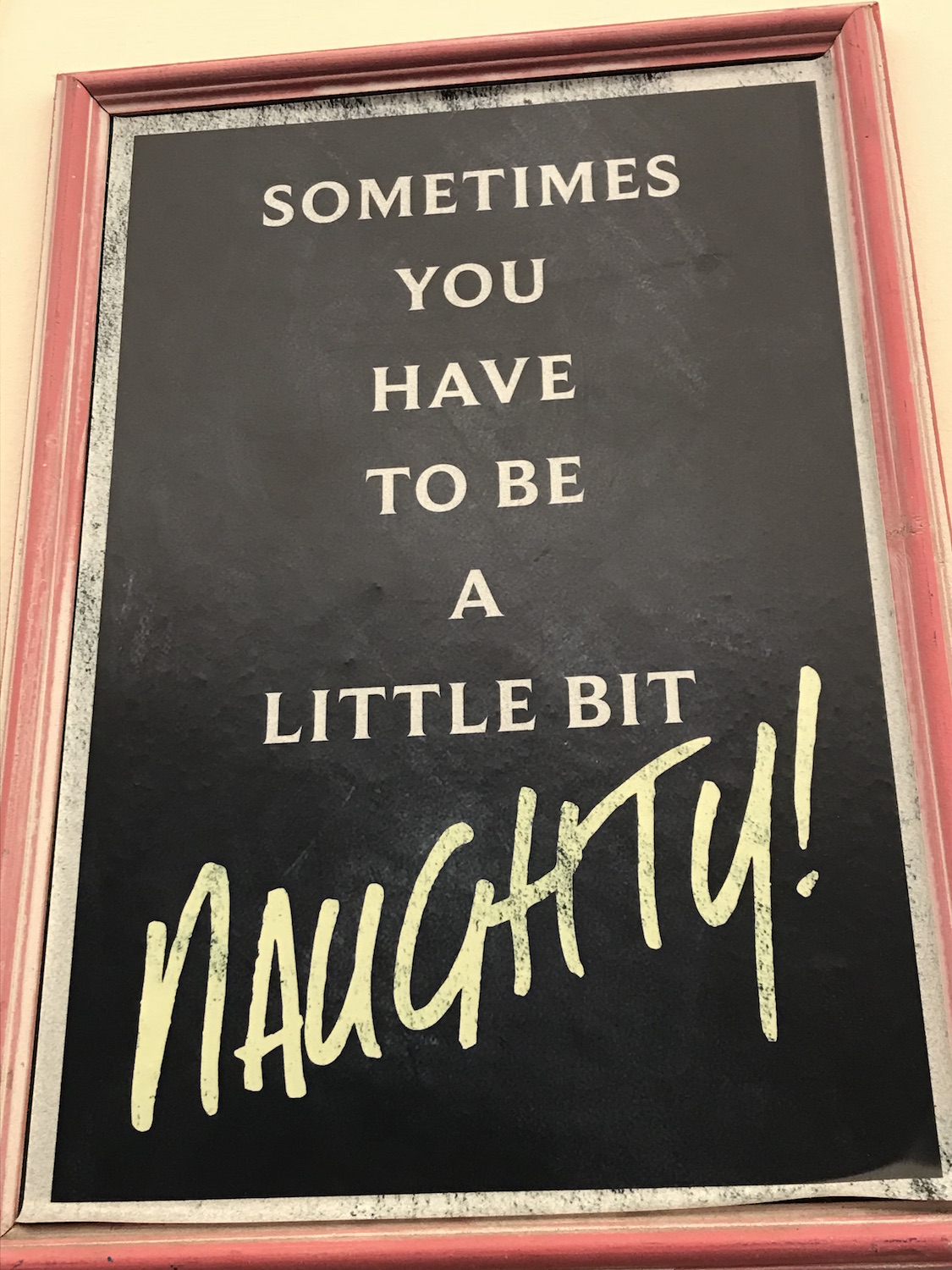
3. Sometimes you have to be a little bit naughty

It may be true that two wrongs don’t make a right – but it’s also true that you can’t always beat injustice by sticking to the rules. If Matilda teaches us anything, it’s that sometimes you have to think outside the box and get creative – even if it does mean being a little bit naughty.
4. Learn to speak another language

Speaking another language is a great skill to have – it can help you get a better job, make new friends, see the world; there’s even evidence it can help delay the onset of conditions like dementia. But most importantly, you never know when it might come in handy to save your family from the Russian mob.

5. Work on your power pose

Matilda has a number of signature power poses, and she may well be on to something, as apparently there’s scientific theory proving a good power pose can do wonders for your confidence. Also, let’s be honest – it’s quite fun.

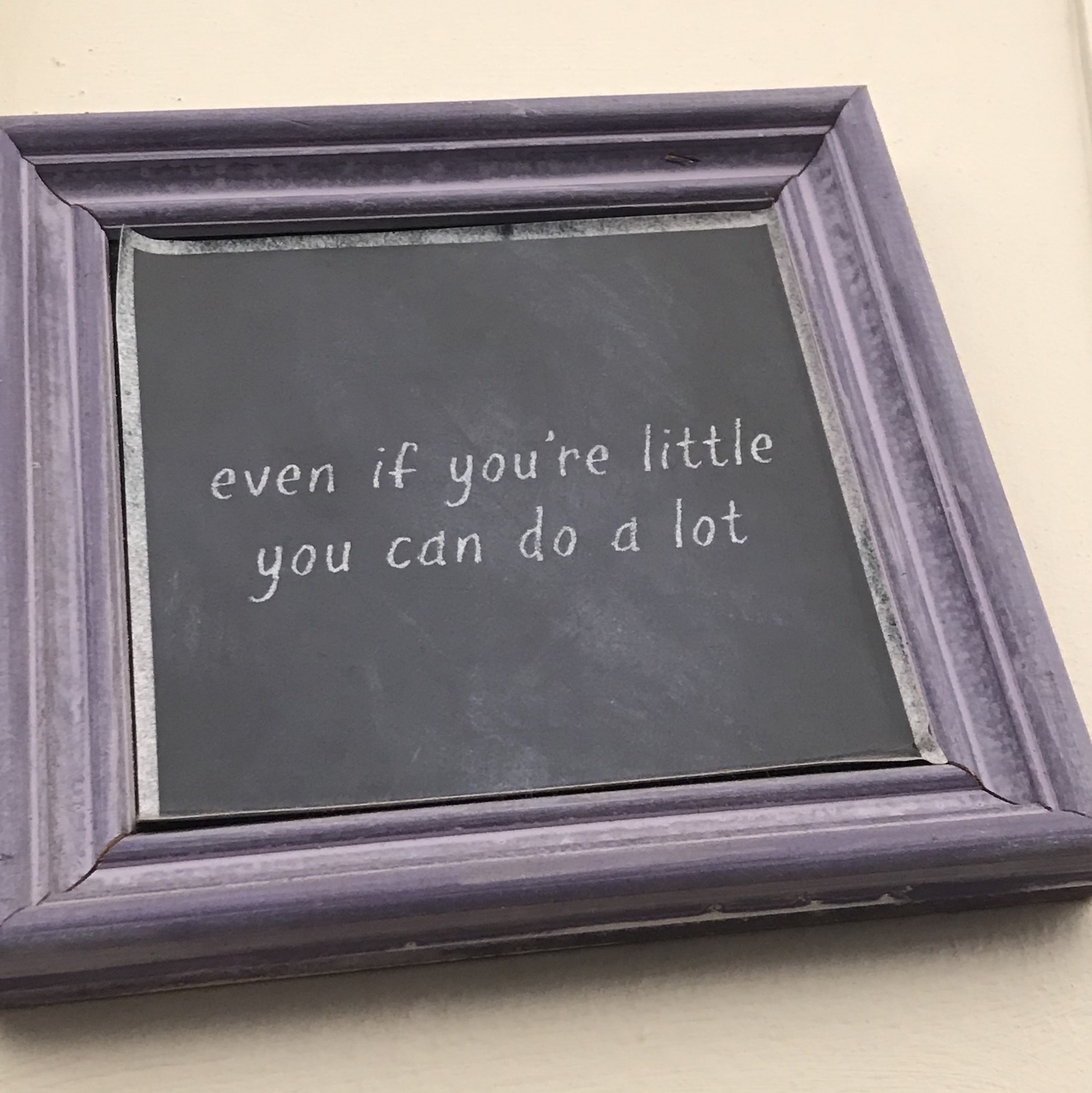
6. Never let a little thing like “little” stop you

Nobody proves better than Matilda that size isn’t everything. She may be tiny, but she doesn’t let that stop her taking on her huge, hammer-throwing headmistress, Miss Trunchbull – who, like most bullies, is also a massive coward. And she’s not the only one; inspired by her example, it’s the “revolting children” who ultimately come out on top.
7. Be proud of being a girl

Guess what, Mr Wormwood? Not having a “thingy” isn’t the end of the world… 😉

8. If it’s not right… put it right

A particularly powerful one to end on. Whether it’s destroying library books, force feeding chocolate cake to a small child or, er, murdering someone’s dad and stealing his house, Matilda knows when something isn’t right, and she won’t let anyone get away with it. If we all took a leaf out of her book and stood up against injustice wherever we saw it, just imagine what a very different – and much better – place the world could be.

Want to #BeMoreMatilda? Why not start by booking your tickets to this funny, inspiring and ever so slightly bonkers show – visit matildathemusical.com to find out more.

Review: La Tragédie de Carmen at Asylum Chapel

As operas go, Bizet’s Carmen is a good choice for anyone in search of an entry-level option, because chances are most of us know more of the music than we think. In La Tragédie de Carmen, Peter Brook, in collaboration with composer Marius Constant and writer Jean-Claude Carrière, takes this a step further, condensing Bizet’s four-act original – and all its greatest hits – into just 80 minutes. This means we lose all but four of the characters, and instead focus solely on the tragic “love rectangle” between the protagonists.

Photo credit: Ugo Soffientini

Micäela (Alice Privett) arrives from the country looking for her childhood friend Don José (Satriya Krisna), a corporal in the Nationalist army, with whom she’s in love. He, however, has fallen for the seductive Carmen (Chloe Latchmore), who leaves him after a brief romance for Escamillo (James Corrigan), an officer. After trying and failing to win her back, Don José murders his former lover in a fit of passion.

Directed by John Wilkie, Pop-Up Opera’s production of La Tragédie de Carmen is exquisitely performed by the four singers and musical director Berrak Dyer; watching and listening to her perform the opera’s entire score on piano is worth the ticket price all by itself. Though it may be much smaller in scale than a traditional performance of Carmen, there’s nothing half-hearted about this production, which brims over throughout with passion, intensity and obvious talent. As the tragic love story unfolds, a video screen shows images from the Spanish Civil War – which, in this updated version of the story, has just ended – as well as Pop-Up Opera’s trademark minimalist surtitles, which provide us with just enough of a translation to understand the context of each scene, but don’t distract from the action.

Cutting back the story so dramatically has both advantages and drawbacks. On the plus side, it’s much shorter and more accessible than the original, with a more straightforward storyline, which makes this an ideal ticket for an opera first-timer. On the other hand, it’s all over so quickly that there’s a risk of the audience not becoming fully invested in Don José’s relationship with Carmen, or appreciating why he reacts so violently to her rejection. This is dealt with, to some extent, by setting the action at the end of the Civil War, and portraying both Don José and his love rival Escamillo as having suffered some trauma as a result of what they’ve seen and experienced during the conflict. In light of his obvious fragility, perfectly captured in Satriya Krisna’s performance, the apparent ease with which Don José is driven to madness doesn’t seem quite so hard to accept.

Peter Brook’s aim in writing La Tragédie de Carmen was “to focus on the intense interaction, the tragedy of four people” that lies at the heart of the story. Pop-Up Opera have stayed true to that purpose, and while some may take issue with Brook’s extreme edits, it’s hard to find fault with this particular production of his work. (That said, I do recommend sitting at the front if you can – depending on the venue, some audience members further back may struggle to see what’s happening during the final climactic scene.) Whether you think you like opera or not, this one is certainly worth a visit.

La Tragédie de Carmen continues on tour – for full details visit www.popupopera.co.uk.

Review: An Indian Abroad at the Bread and Roses Theatre

There’s nothing we Brits love more than laughing at ourselves, and Pariah Khan’s one-man show An Indian Abroad offers us plenty of opportunities to do exactly that. Turning on its head the well-worn theme of the white man who goes on a spiritual journey to India, here it’s the Indian man who comes to the UK in search of enlightenment, as Krishnan escapes his stifling middle-class upbringing and heads off on a gap year in search of something more fulfilling.

What he discovers is clubbing, coffee shops and the dubious delights of an NHS waiting room. He visits the Peak District, watches the Queen’s Speech, gets a job, falls in love. As the months pass, Krishnan shares with us his observations on both British and Indian culture, all the while treating his travels with the solemnity you’d expect from someone on a spiritual quest to find himself. The fact that he’s looking in such less than exotic places as Bradford and Birmingham only makes the show funnier.

Any complacent assumptions that we’re about to spend a carefree hour howling with laughter over our national idiosyncrasies are soon shelved, however, because this show has a surprising edge to it. Though the show does contain a lot of hilarious one-liners, the laughter grows increasingly uncomfortable as Khan shines a light not only on British charms but also on British flaws – particularly when it comes to perceptions of race. The fact that everyone assumes Krishnan must be Muslim; the casual racism of his white girlfriend, which hurts him far more than the deliberate abuse of the EDL supporters he meets later on; the way his younger relatives, living in Bristol, have shrugged off their Indian heritage to try and fit in. It’s far from a flattering picture, and all the Yorkshire tea in the world can’t disguise the unsavoury taste these anecdotes leave behind.

Khan’s performance style also seems designed to keep us slightly off balance. At times staring at a point somewhere above our heads, at others fixing his gaze intensely on an unprepared member of the audience, his deadpan delivery of the material is interrupted from time to time by a sudden roar of anger or burst of song. He also likes to keep us waiting between scenes, meticulously rearranging the furniture on stage whilst humming a tune that will eventually resolve itself into some popular British hit or other, from Can You Feel The Love Tonight? to Auld Lang Syne with most of the lyrics missing (because who actually knows the words to Auld Lang Syne anyway?).

The best comedy can both make us laugh and make us think; An Indian Abroad succeeds on both fronts. Pariah Khan is a talented performer who clearly knows how to work an audience for maximum impact, while in his writing he doesn’t shy away from tackling sensitive subjects through what is at times quite surreal humour. Krishnan may not find the answers he’s looking for in the UK – but if we’re open to it, there’s still plenty of enlightenment to be found in this enjoyable hour-long show.

Review: Lifeboat at the Brockley Jack Studio Theatre

In September 1940, a ship carrying evacuee children from Britain to Canada was sunk by a torpedo attack, with the loss of an estimated 258 lives. For nineteen hours, two schoolgirls, Bess Walder and Beth Cummings, clung to an overturned lifeboat in the middle of the Atlantic, dressed only in their pyjamas and dressing gowns. As the hours passed, they willed each other to hang on, until they were finally rescued and brought home to Britain. Their terrifying ordeal and the friendship and courage that helped them both survive it, are the subject of Nicola McCartney’s two-hander Lifeboat, and under the direction of the consistently brilliant Kate Bannister, they make for an enthralling 70 minutes.

Photo credit: Tim Stubbs Hughes

The play covers the hours following the attack, when we find Beth (Lindsey Scott) and Bess (Claire Bowman) floating, alone and terrified, in the freezing Atlantic. But it also flashes back to the months leading up to their departure, and the impact of the war on their lives in Liverpool and London respectively, as well as their four days travelling on The City of Benares, where they’re brought together by a shared love of The Wizard of Oz. There’s a playfulness and humour to these flashbacks – in which Claire Bowman and Lindsey Scott also play all the other characters, from annoying little brothers to the ship’s Indian crew members – that draws us in, and which contrasts sharply with the intensity of the lifeboat scenes placed intermittently throughout the play. The more we know about the two friends’ lives and their dreams for the future, the more we want them to survive.

The Brockley Jack has a well-deserved reputation for its excellent in-house productions. Lifeboat is no exception, rising magnificently to the challenges presented by the play’s structure and themes, and ticking every box in terms of design, direction and performance. Karl Swinyard’s set transforms the small studio space into the deck of the doomed ship, while the sound and lighting design from Jack Elliot Barton and Tom Kitney recreates with stunning accuracy not only the sights and sounds of the 1940s but also the horror of the attack and its aftermath.

Throughout the play, Claire Bowman and Lindsey Scott show their versatility as they slip seamlessly from one character to another. But it’s as the central characters that they’re most compelling – whether they’re cheerfully singing rude songs about Hitler, gazing in awestruck wonder at the cinema screen, giggling over a handsome sailor, or fighting for survival in icy waters. In just 70 minutes we come to know and care about both girls, and as their ordeal continues, we can feel their fear and growing exhaustion.

Photo credit: Tim Stubbs Hughes

Although Lifeboat focuses on one specific incident of World War II, it’s difficult to watch it and not think more broadly about the horrors of war, and the millions of innocent lives lost around the world to conflicts past and present. Bess and Beth’s story ends well – the two women would go on to be lifelong friends – and Lifeboat pays tribute to their incredible courage and resilience. But the play’s sombre conclusion also ensures we don’t forget the 258 people, among them 77 children, who weren’t so lucky.

It’s tragic that stories like this one still need to be told, but if they must then it’s at least some comfort to see them told as well as this. A sensitive portrayal of devastating real events, Lifeboat is undoubtedly another triumph for the Brockley Jack team. Go and see it while you can.


Can’t see the map on iPhone? Try turning your phone to landscape and that should sort it. I don’t know why but I’m working on it… 😉

Review: Hear Me Howl at the Old Red Lion Theatre

If you ask most children what being a grown-up looks like, chances are most would say at least some of the following: job, marriage, family, house, car, dog/cat/goldfish… That’s what society trains us to believe from a young age, so it’s no surprise that if we don’t fit into that box, we’re deemed – by both others and ourselves – to have somehow failed.

This seems particularly true in relation to the marriage and babies part, and because of the idea of a “biological clock”, it’s almost always women who take the brunt of the judgment. At my friend’s wedding a couple of years ago, as the only single member of the wedding party, I fielded questions from no less than three people (all of whom I’d only just met) as to why I was there alone – and as a bonus, a helpful reminder from the bride’s mum that I should probably get a move on.

Photo credit: Will Lepper

I feel like Jess, the character in Lydia Rynne’s Hear Me Howl, would sympathise with that experience. She’s about to turn 30, and has been in a relationship for years with a very lovable guy. So naturally she faces frequent pressure from family and friends to take the next step, whether that’s marriage or babies, because after all, she’s “not getting any younger”. The only problem is that Jess doesn’t really want to take that step, so it’s no surprise that when she discovers she’s pregnant, she freaks out quite dramatically. A week later, she’s joined a post-punk band, thrown out most of her clothes, attended her first protest and even appeared on the news – and all the while, she knows she has a huge, life-changing decision to make.

There’s plenty of humour in the one-woman show, which is beautifully performed with energy and unflinching conviction by Alice Pitt-Carter, but we’re also very aware that what we’re watching is much more than simply a woman having a meltdown. What we’re seeing is the dawning, liberating realisation not only that Jess doesn’t want to be a mother, but that she doesn’t need to be. She’s spent the last twelve years conforming to what society expects – boring job, nice boyfriend, rented flat, hair-free armpits – and is only now beginning to understand those are just a few of the options open to her.

This produces a conflicting set of emotions for the audience; it’s exhilarating to see Jess take her first steps towards figuring out who she really wants to be, but also depressing because it took a crisis – not to mention twelve years – for her to realise she even had that option. We see her grappling with the idea that not wanting a baby makes her selfish, or that she’s somehow failing in her womanly duty to continue the human race, even though she knows it wouldn’t make her happy – and to see another woman go through that turmoil is infuriating.

Photo credit: Will Lepper

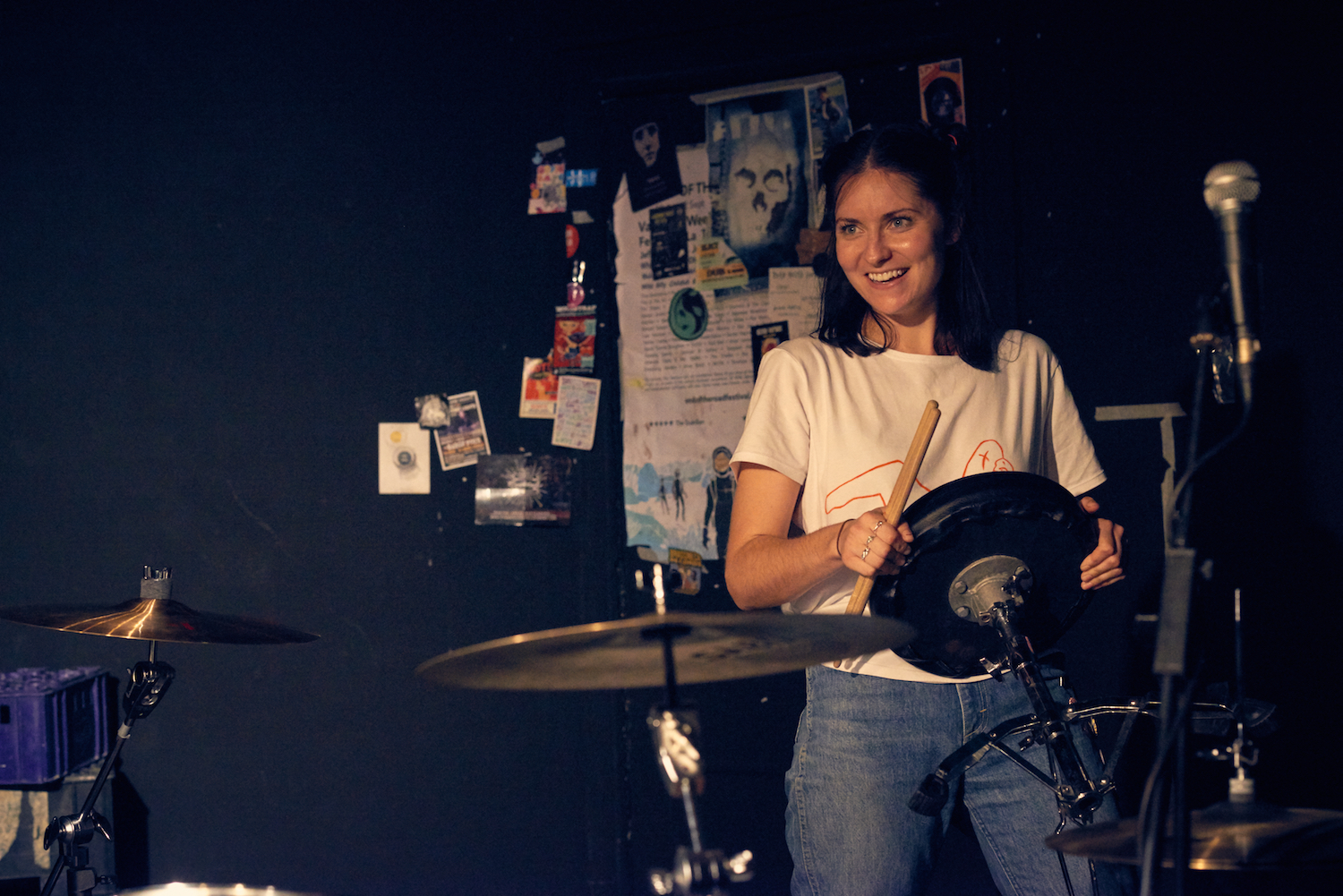
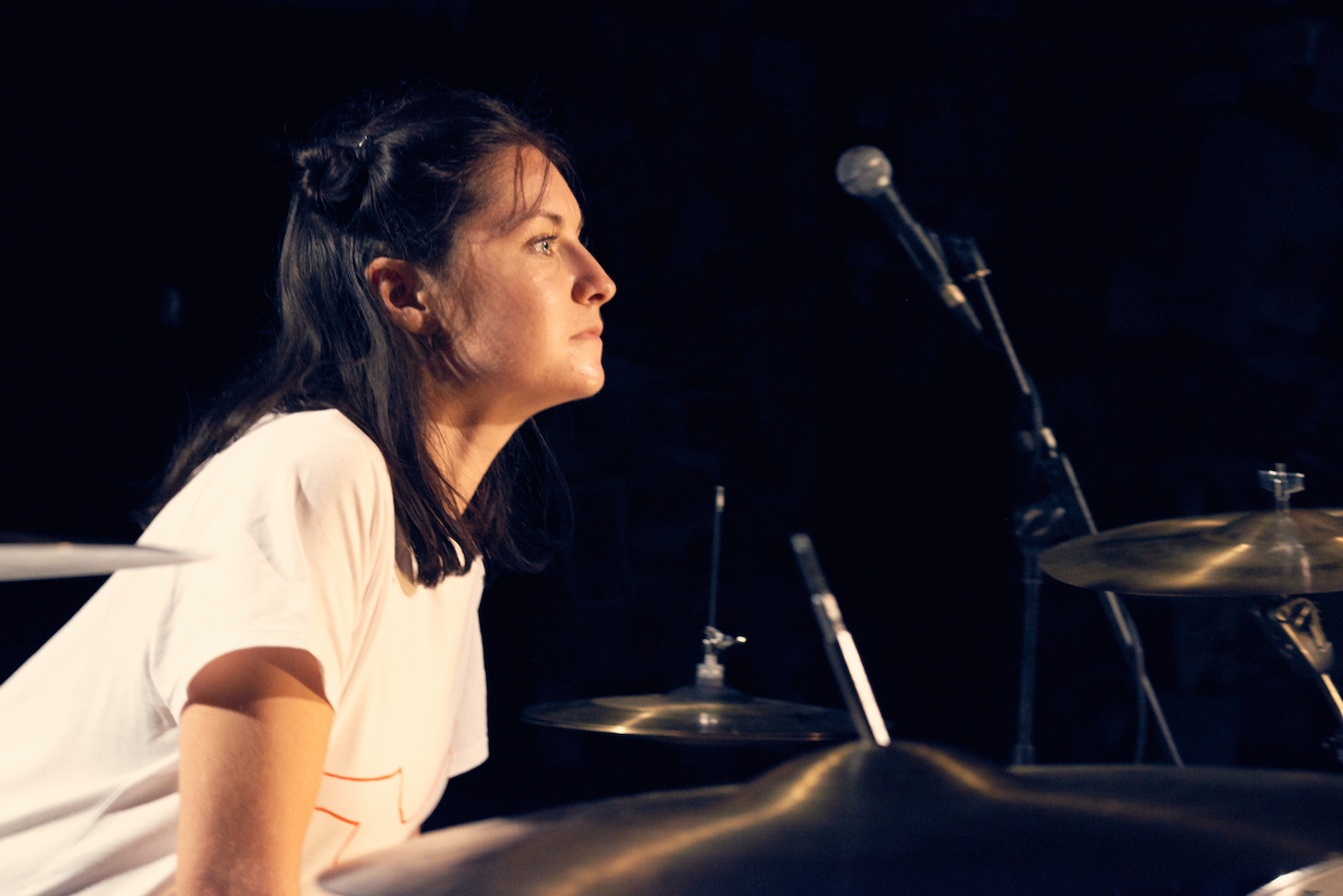
Throughout the 70-minute show, director Kay Michael ensures we’re always aware of the drum kit that sits centre stage, as Jess hovers around it, her hands never far from the drumsticks she’s clearly itching to use. And when she finally takes her place behind the kit at the end of the show, she’s drumming not only for herself, but for every woman who’s ever felt unable to live the life she wants for fear of judgment. You may at this point want to use the earplugs provided at the box office; personally I wanted to experience every beat of her performance.

Can’t see the map on iPhone? Try turning your phone to landscape and that should sort it. I don’t know why but I’m working on it… 😉