Review: Pickle Jar at Soho Theatre

When you’re at school, you tend to assume your teachers are fully functioning adults who have life all figured out. Then a few years pass, you reach the age they were when they taught you, and you’re startled to realise that perhaps they weren’t quite as together as you thought.

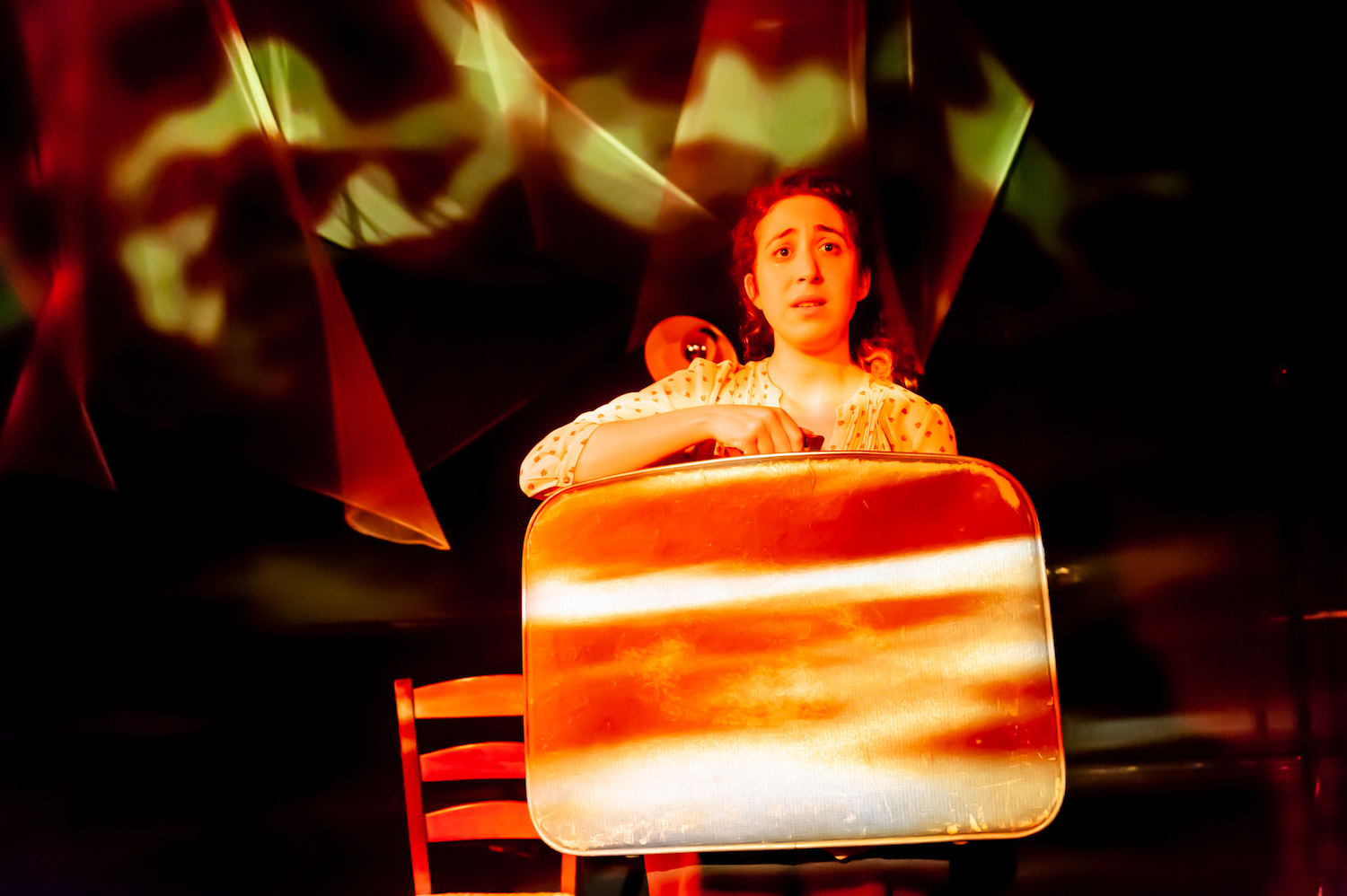
In Maddie Rice’s one-woman play Pickle Jar, Miss is a young English teacher struggling to find her footing both in and out of the classroom. Away from work, she’s just been dumped and can’t stop obsessing over how bad her life is compared to everyone else’s. At work, her approach to teaching is to try and be friends with her teenage pupils, who fascinate her with their apparent confidence and worldliness – it often seems her attempts to connect with them are as much for her own comfort and support as they are for her students’ benefit.

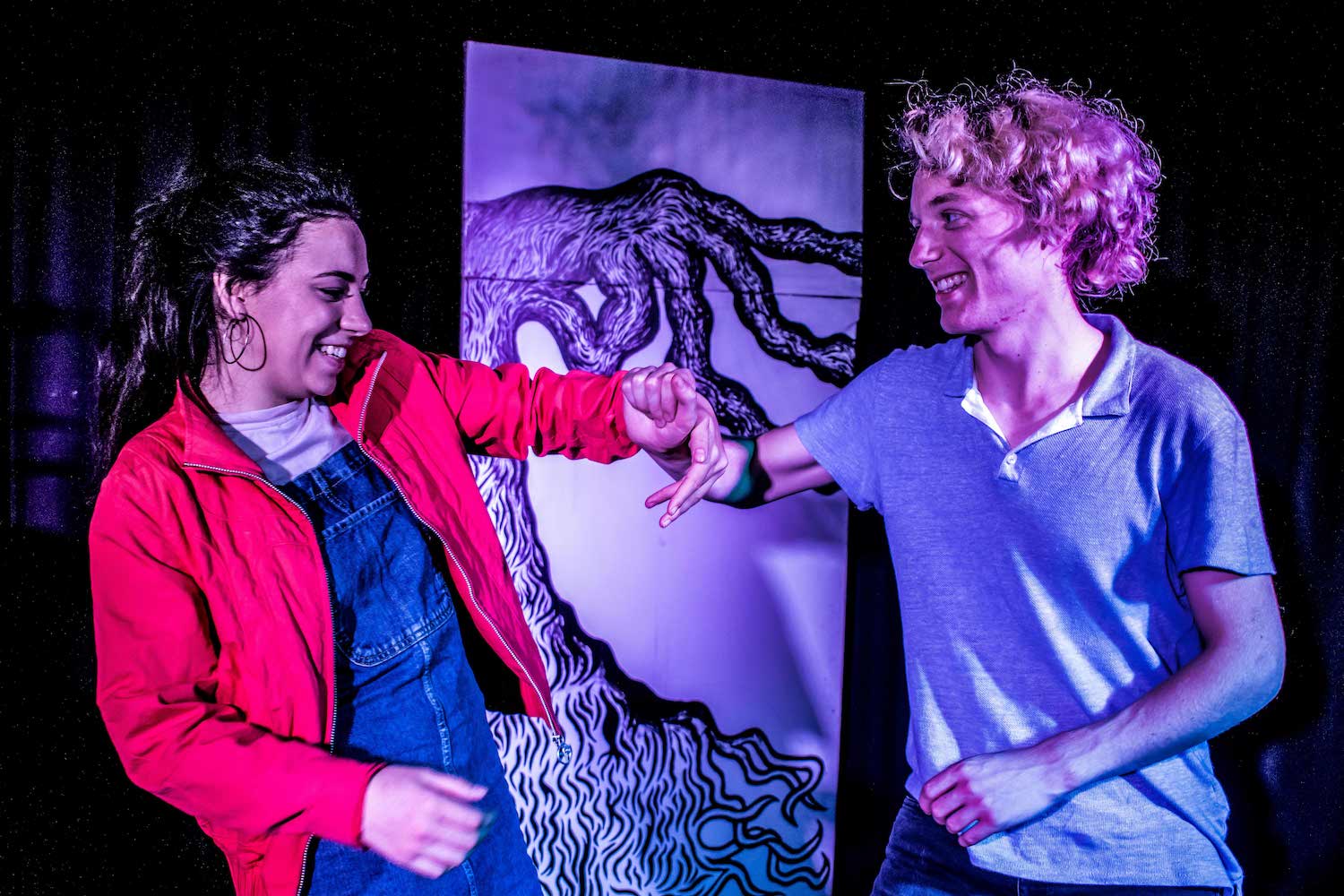
Photo credit: Ali Wright

Maddie Rice, who previously starred in the touring production of Fleabag, was encouraged by that show’s creator, Phoebe Waller-Bridge, to write something that made her laugh or cry. Pickle Jar ticks both boxes. Directed by Katie Pesskin, the first half of the show is straight-up, laugh-out-loud comedy, as Miss reflects on everything from her meagre Instagram follower count, to the night her ex broke up with her (shortly after advising her to get tested for chlamydia), to her fumbling attempts – egged on by best friend Mairead – at flirtation with Mr Ellis, the much-fancied food tech teacher.

And then, about halfway through, the story takes a dark turn, and just keeps getting darker as one twist follows another, ultimately catching us off guard with some very uncomfortable, and topical, questions around consent and victim blaming. The humour is still present, but the laughs become far less frequent, and the overwhelming emotion we feel as the show comes to an end is much closer to anger than amusement. Even in the #metoo era, the fact that a female character feels she has to shoulder any of the responsibility for a man’s actions shows how very far we still have to go.

One thing that’s immediately clear is that Maddie Rice is an exceptional performer, bringing an extensive cast of characters, a complex back-and-forth timeline, and a number of different locations to life without ever missing a beat. Colleagues, friends, students, strangers: they’re all here, and all perfectly distinct from each other. Miss in particular is a well-drawn, realistically flawed character who most of the show’s target audience – women in their 20s and 30s – can identify with to some extent (whether we’re willing to admit it or not). The half hour that we spend getting to know her, laughing with – and at – her, never feels like wasted time, even though it delays the show getting to its actual point.

Photo credit: Ali Wright

There’s so much to enjoy about Pickle Jar, a very funny and brilliantly acted hour of theatre that will no doubt resonate with teachers, women and indeed anyone still trying to figure out how this whole adulting thing works (which, let’s be honest, is most of us). But behind the laughter, the play does have a point to make – and it’s a point that needs to be heard and acted on, however uncomfortable that might be.

Can’t see the map on iPhone? Try turning your phone to landscape and that should sort it. I don’t know why but I’m working on it… 😉

Review: Adventures in Black and White at Camden People’s Theatre

The theme of displacement has become increasingly topical in recent years, largely as a result of the intense media coverage of the refugee crisis. It’s important to remember, however, that displacement didn’t start there; it’s been happening for centuries, all across the world – and its effects are often felt down the generations.

Photo credit: Nina Carrington

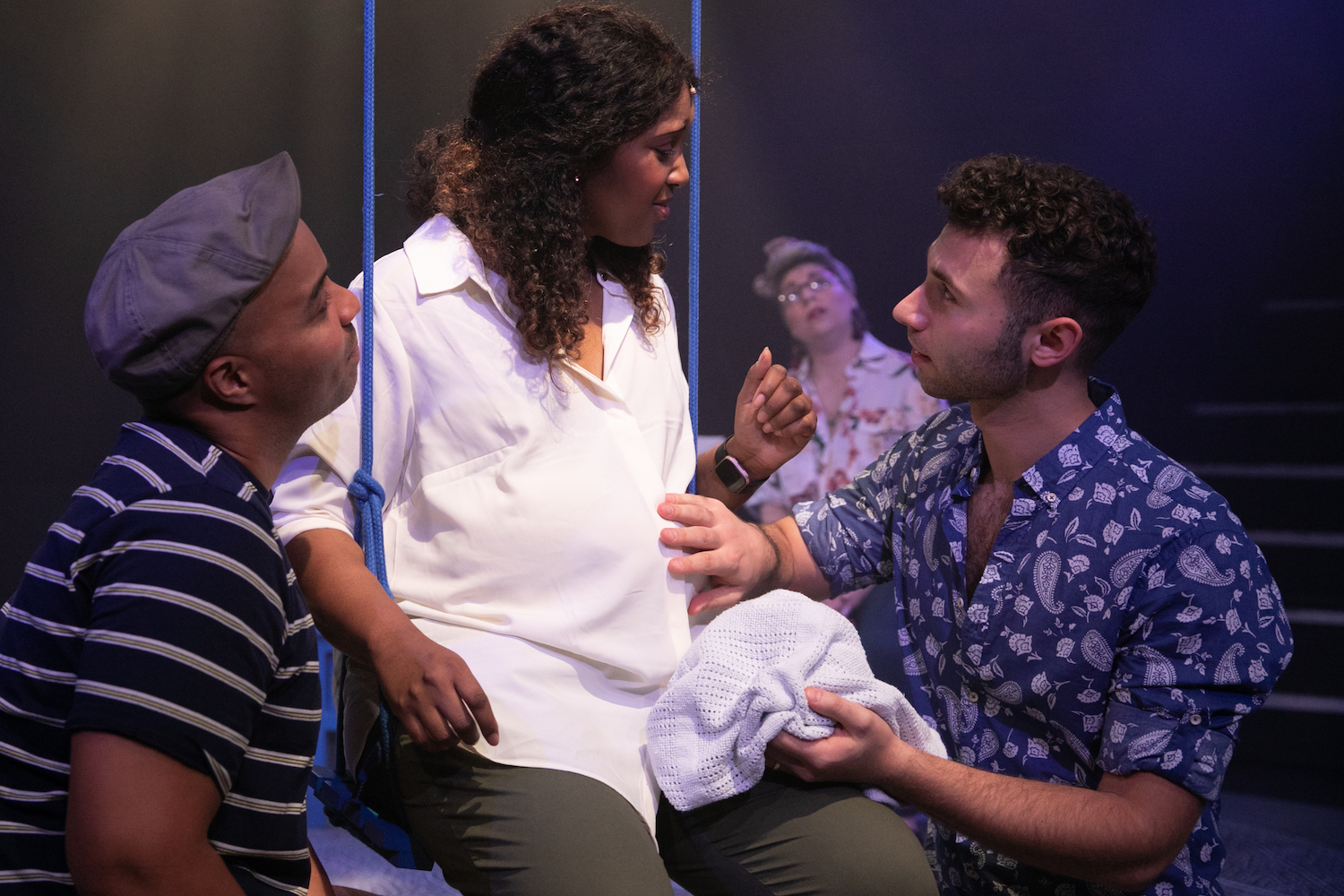
Such is the case for Miriam Gould and Judita Vivas, also known as Double Trouble, the creators and performers of Adventures in Black and White. Inspired by their grandparents’ diaries, this is the story of Stasys and Lilly – the former exiled as a child from Lithuania to Siberia, the latter sent to England from Austria on the Kindertransport. But it’s also the story of Judita and Miriam, and of all those trying to figure out where they fit within a world that seems ever more obsessed with the invisible borders between nations.

The show combines projected images, improvisation and physical theatre to tell these stories, and as a result it becomes an intriguing mix of poignant and bizarre. Some anecdotes are related in a straightforward way through the reading of letters or diary entries, or in one case a simple monologue direct to the audience, delivered with the help of a particularly appealing visual aid (which only slightly softens the blow of the story’s tragic conclusion). These memories are often supported by photos of the real people involved, displayed on an old-school projector which is set up early on in the show, even as the reliability of some of them is called into question; at one point Lilly swears that the letters in her hand aren’t real, despite acknowledging that they contain many accurate facts about her life.

In between these scenes of reminiscence are moments that feel deliberately alienating. One such scene includes many words, but not one of them in English, and though we can get the gist of what’s being said, there’s still an uncomfortable sense that we’re missing something – much as it must feel to arrive in a strange country as a young child. This isn’t the only moment where it’s difficult to say with certainty what exactly is happening, but there’s a playfulness to the performance of these scenes that means we remain engaged and entertained even when we don’t quite know what we’re watching. Poignant and thought-provoking the show may be, but it also has a great sense of humour, found not only in the characters and their stories but also in the interactions of the two performers as they wrestle for the spotlight and our attention.

Photo credit: Nina Carrington

Much like the two performers’ patchwork outfits, the idea of displacement is portrayed in the show as far more than just a single, universal experience that everyone goes through in exactly the same way. A humorously awkward conversation between Stasys and Lilly reveals that each knows little about what happened to the other; nor are their lives as grandparents in any way similar. Adventures in Black and White shares two families’ stories, whilst reminding us there are many, many more out there waiting to be told – in fact Double Trouble are in the process of collecting these memories from their audiences and others, for a new online archive launching in 2019 as a continuation of their work on this show.

At a time when we’re more aware than ever of the idea of displacement, but still lack so much understanding of what that actually means, this timely and well performed piece provides much needed food for thought*.

* And also actual food – although I won’t ruin it by giving away the details…

Review: Testament at The Hope Theatre

Following a warm reception in Edinburgh, Chalk Line Theatre bring their show Testament to The Hope Theatre for a limited run, and one thing is instantly clear: this is not a company who believe in doing things by halves. Written and directed (with William Harrison) by Sam Edmunds, Testament comes at us like the head-on collision that begins the story, sweeping us up in a strobe-lit whirl of panic and confusion, punctuated by just the right amount of darkly comic relief.

Photo credit: Tongchai O. Hansen

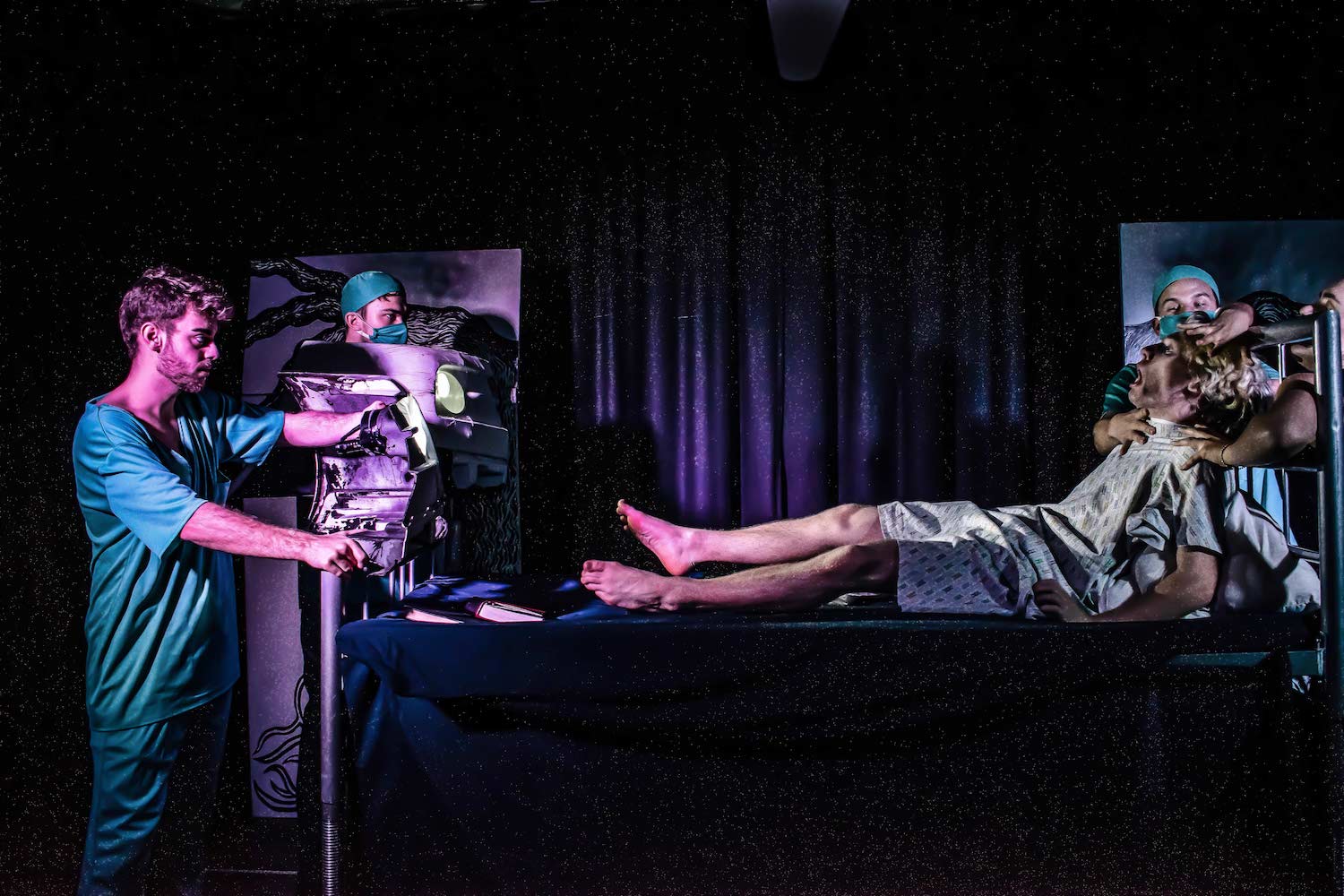
At the centre of it all is Max (Nick Young), who’s just woken up in hospital after jumping off a building – a suicide attempt prompted by the recent death of his girlfriend Tess (Hannah Benson) in a car accident. There’s just one problem; Max doesn’t remember that Tess is gone, and he can’t understand why his brother Chris (William Shackleton) and his doctor (Jensen Gray) are keeping her from him. As his medical condition worsens, Max has a decision to make – with a little bit of “help” from a visiting Jesus (David Angland) and Lucifer (Daniel Leadbitter) – to accept treatment for his injuries and risk losing Tess all over again, or refuse it and keep hold of her for a little longer.

As Max struggles to choose a path, remembering funny moments with Tess one minute and wrestling with sinister masked surgeons the next, we get a glimpse of the chaos inside his traumatised mind. The pre-show warning about strobe effects is not to be taken lightly; there are several scenes in which these feature prominently and for prolonged periods, intensifying the nightmarish quality of Max’s visions. These include reliving more than once the car crash that started it all, which leads to a surprising twist revelation about what really happened that night.

Set in counterpoint to these dramatic scenes are moments of stark reality, where Chris and the doctor discuss Max’s treatment. These scenes are played convincingly by Jensen Gray and William Shackleton, bringing us back to the real world and the growing urgency to take action. The obvious concern they both feel contrasts sharply with Max’s view that the medical staff are out to harm him, and once the truth about the accident is revealed, their conversations and the decision they need to make take on an interesting new direction.

Though the play deals with some difficult themes – bereavement, suicide, survivor’s guilt – there’s also plenty of humour, buckets of energy, and the faintest glimmer of light at the end of the tunnel, all of which keep Testament from becoming too traumatic even in its darkest moments. Nick Young leads a strong cast, skilfully juggling the pre-accident Max – exuberant, charismatic, a bit immature – with the fragile, tormented figure we find curled up in a hospital bed, discussing the meaning of life with biblical figures, each of whom has their own agenda.

Photo credit: Tongchai O. Hansen

If the play’s conclusion feels a little flat compared with the unstoppable energy and unsettling oddness of what’s gone before, it’s a minor complaint. The themes of Testament have been written about many times before, in many different ways, so to find an approach that still feels fresh and unique is quite an achievement. This high quality production will stress you out, make you laugh and send you home with plenty to think about. With only two dates left at The Hope, grab a ticket while you have the chance.


Can’t see the map on iPhone? Try turning your phone to landscape and that should sort it. I don’t know why but I’m working on it… 😉
Review: Jericho’s Rose at The Hope Theatre

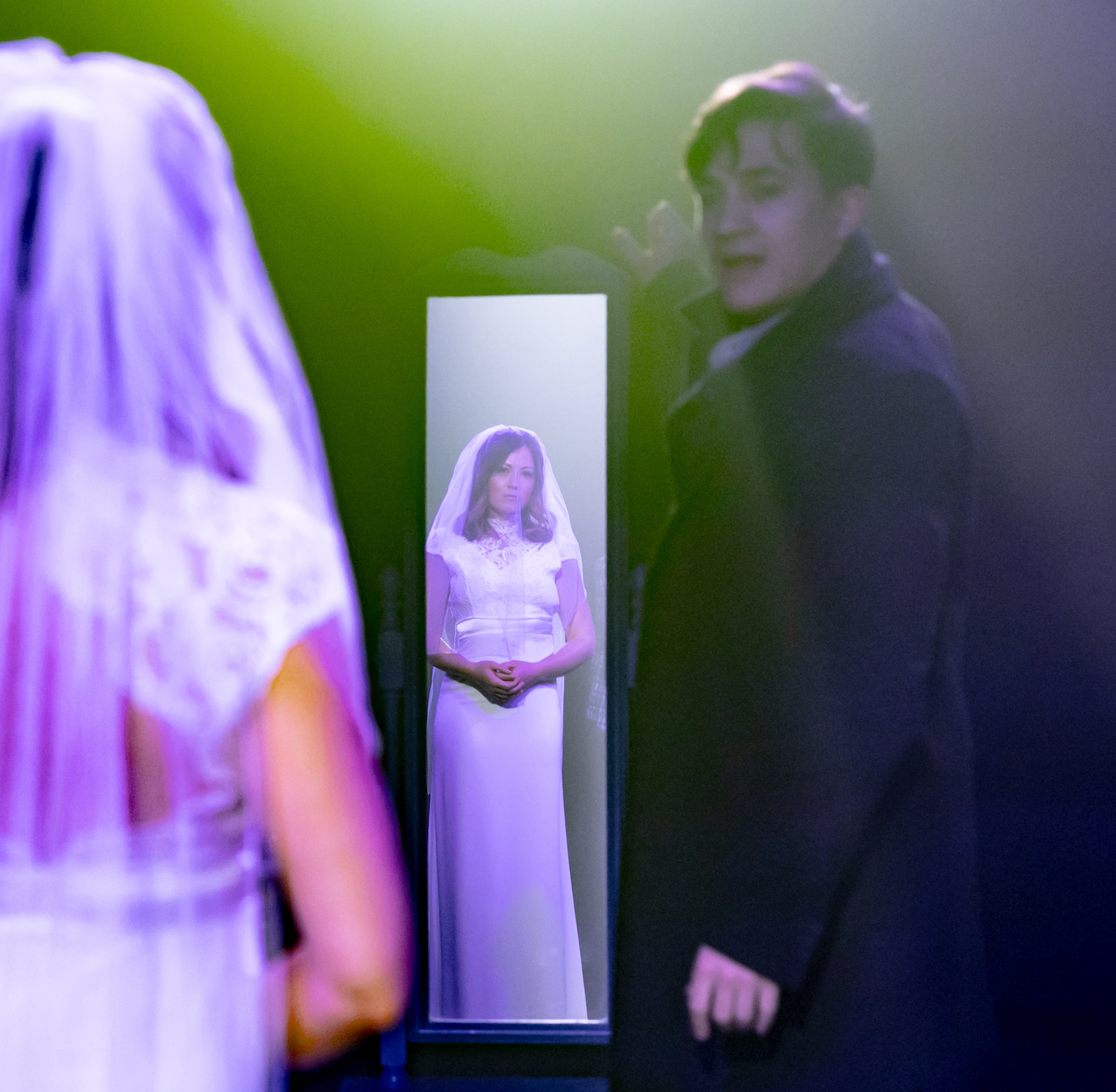
“Where do you live?” It seems like such a simple question – but the enquiry takes on new significance with each repetition in Jericho’s Rose from Althea Theatre. Written by Lilac Yosiphon, who also directs along with Mike Cole and Annie-Lunnette Deakin-Foster, it’s a moving and intriguing exploration of the true meaning of “home”, seen through the eyes of two characters. Jasmine is a writer fighting for the right to stay in London, and her grandfather, back in Tel Aviv, has been diagnosed with Alzheimer’s. For each of them, and for different reasons, answering the straightforward question “Where do you live?” becomes an increasingly difficult – and sometimes impossible – task.

Photo credit: Lidia Crisafulli

The structure of the show is based around repetition: the frustrations of having the same conversations over and over with someone who doesn’t remember; the endless meetings with doctors who can never say anything new; the constant disappointment of being rejected – again – for a visa. All that really changes in Jasmine’s life over the course of the 75-minute show is her location, as she moves from one city to the next in search of… something. Even then, in each city her experience is much the same – drinking too much, having disappointing romantic encounters in nightclubs, and ultimately ending up back in Tel Aviv with Grandpa.

In other hands, this cyclical structure could easily teeter on the brink of tedium, and it’s credit to Lilac Yosiphon’s engaging, almost mesmerising performance as both Jasmine and Grandpa that this doesn’t happen. Slipping seamlessly from one character to the other – at times conversing with her other persona on stage, at others with her own recorded voice – she holds our attention throughout with ease.

This is fortunate, because the fragmented narrative of the piece, which hops around in time, location and style, does demand the audience’s constant focus in order to piece it all together. We’re aided in this, to some extent, by the use of music and loop pedalled sound, composed and performed live from the corner of the stage by Sam Elwin, and by Will Monks’ projections, both of which provide us with certain audiovisual signposts as we make our way through the show’s deliberately disorienting landscape.

Photo credit: Lidia Crisafulli

For those of us privileged enough to have never questioned where we belong, this unique multi-sensory production paints a powerful picture of the trauma of displacement – whether physical or emotional – through the sharing of a very personal and poignant story. The eclectic nature of the show may not be everyone’s cup of tea, but Jericho’s Rose is bold, original and invites us to consider themes we may think we understand in a whole new light.


Can’t see the map on iPhone? Try turning your phone to landscape and that should sort it. I don’t know why but I’m working on it… 😉
Review: The Distance You Have Come at Cockpit Theatre

Not quite a musical, but somewhat more than a concert, song cycle The Distance You Have Come brings together some of the greatest hits from Scott Alan’s star-spangled songwriting career, performed by an equally glittering cast of West End talent. On paper, it’s a musical theatre fan’s dream. In practice, a flimsy story and over-emotional first act hold an otherwise excellent show back from quite hitting all the highs we might expect.

The plot that links all the songs together is based around six people, whose lives intersect in different ways as they each walk their own path through the ups and downs of life. While Joe (Dean John-Wilson) battles addiction and heartbreak, new lovers Samuel (Adrian Hansel) and Brian (Andy Coxon) plan their future as parents; Anna (Jodie Jacobs) and Laura (Alexia Khadime) are coming to terms with their recent break-up, as Maisey (Emma Hatton) is struggling to get her big break in the theatre.

Photo credit: Darren Bell 

Both performances and music are as top-notch as you’d expect given the credentials; there’s no denying the sensational talent of the cast and musicians, or the poignant beauty of the songs. This is music from which a good vocalist can wring every last drop of emotion, and these six performers do it so effectively that in Act 1 it all gets a bit much. With a couple of welcome exceptions – most notably the fabulous Jodie Jacobs and her comedy number, His Name – the tone throughout the first hour of the show remains much the same, and the songs begin to run together as we move from one desperate situation to another, with very little time to pause for reflection (or even applaud) in between.

It’s therefore a relief that the mood lifts significantly after the interval, when the plot threads – which until that point have been proving difficult to reconcile – finally come together. As the characters begin to make connections and find their way out of the darkness, there’s a lot more hope and humour to be found on all sides, and the show ultimately ends on a joyful high with the infectiously uplifting title number.

The simple staging of the show has most of the action taking place in a park, which provides a convenient central location for the characters to run into each other, or simply meander past as they go about their lives. Unfortunately, because it’s in the round, the actors inevitably have to turn their backs on parts of the audience, and this causes some problematic acoustic issues – particularly in the group numbers, when it can be impossible to hear what someone facing away on the other side of the stage is singing about.

Photo credit: Darren Bell

As a showcase of Scott Alan’s work, The Distance You Have Come is a hit; for existing fans it’s a celebration, for newcomers a pleasant introduction that will no doubt have you heading for Spotify the moment the show’s over. The cast, too, are superb, conveying all the joy, heartbreak, frustration and emotional fragility of their characters whilst simultaneously blowing the audience away with some stunning vocals. Setting it to a story – also written and directed by Alan – actually proves a bit of a distraction from all this excellence, and you get the feeling the whole show might have worked a bit better in a concert format. Nevertheless, if you want to hear some beautiful songs, exquisitely performed, it’s certainly worth travelling some distance to experience.