Review: Going the Distance (online)

Over the course of the Covid pandemic, the Lawrence Batley Theatre has become known for its innovative digital productions, among them What a Carve Up! and The Picture of Dorian Gray. Their latest offering, a co-production with Oxford Playhouse, The Dukes and The Watermill Theatre, is Going The Distance, a charming and poignant comedy about a small local theatre group struggling to survive when their doors are forced to close.
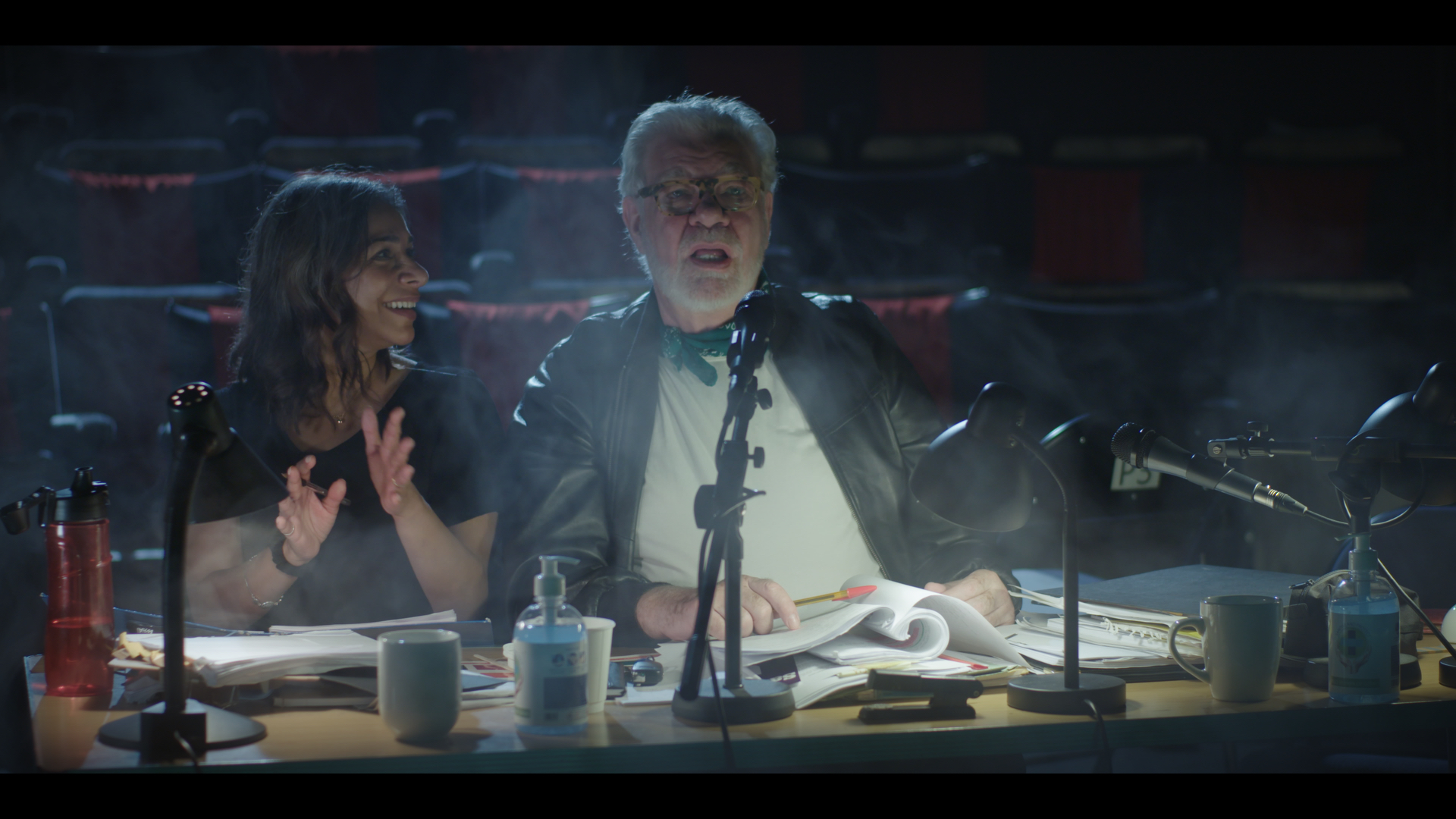
Photo credit: Dennis Madden & James Rees

Written by Henry Filloux-Bennett and Yasmeen Khan and directed by Felicity Montagu in a style reminiscent of TV comedies like W1A, Going The Distance features a wry voiceover from narrator Stephen Fry, narrating on what can best be described as a bunch of misfits who have to find a way to work together to save the thing they all love – their theatre. Led by director Frank (Matthew Kelly), self-appointed Head of Marketing (and various other things) Rae (Sarah Hadland) and treasurer Maggie (Penny Ryder), the group decide to put on a production of Wizard – a new story written by Frank’s ex-wife Vic (Shobna Gulati) and inspired by, but for rights purposes definitely not, The Wizard of Oz.

So begins a bumpy road towards opening night, where everything seems set against them – complicated romantic entanglements, a depressing dearth of local talent, and budget constraints that are largely the result of local diva Billie (Nicole Evans) wildly overspending on a Glinda dress. And yet somehow they keep going, and one by one it becomes clear how much the theatre means to them – for newcomer Gail (Emma McDonald) it’s a chance to make something of herself; for Vic it’s an outlet for her grief and insecurity following the breakdown of her marriage; and for Maggie, it’s been part of her life for decades and is now pretty much all she has. Even Rae and Billie, on the surface the two most obnoxious characters, allow their masks to slip briefly so the audience can understand that for all their bluster, they care just as deeply as the others.

Photo credit: Dennis Madden & James Rees

There’s no hidden meaning in Going The Distance, it’s not trying to be controversial or provoke debate – bar one brief mention at the start, there’s barely even any criticism of the confused government policy that closed the theatres in the first place. The play is quite simply a love letter to theatre, and a tribute to those of all shapes and sizes that haven’t been able to reopen their doors since Covid struck. The members of the Matchborough Community Theatre are certainly larger than life and played for laughs, but the fun being poked at them is always affectionate and sympathetic to their plight; ultimately what they’re fighting for becomes far more important than any annoying traits or petty squabbles.

Watching the play is also a reminder of the early days of the pandemic, a time that already seems distant and strange, and while it’s certainly poignant to think that some won’t be returning, it’s also uplifting to know that Covid hasn’t been able to kill off theatre completely. It’s an institution that means so much to so many, and this play is a heartwarming piece which perfectly highlights that universal love and respect.

Going The Distance is available to watch online until 17th October.

Review: Tokyo Rose at Southwark Playhouse

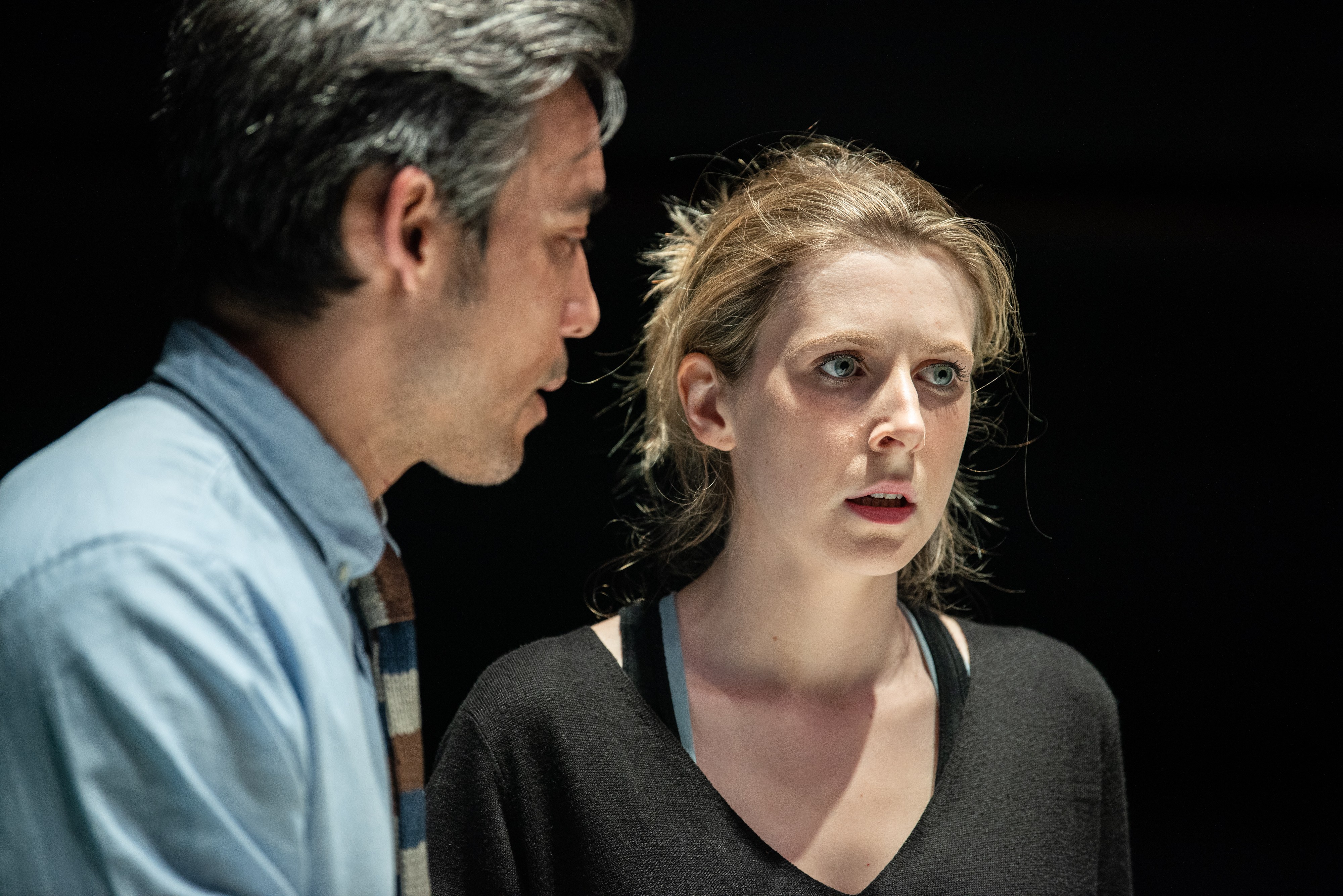
Based on the true story of one of America’s most controversial trials, Tokyo Rose is a new musical written by Maryhee Yoon and Cara Baldwin, directed by Hannah Benson, and performed by an all-female cast. It follows the life of Iva Toguri, an American woman who was wrongly convicted of treason in 1949, having been accused of broadcasting enemy propaganda to American troops during World War II. The show follows her from her teenage years, documenting her fierce devotion to her country, and the betrayal of that devotion by a victorious US government determined to root out traitors at any cost. In doing so, it confronts the audience head on with the racism that continues to play a significant role in the American justice system to this day, and questions to what extent we should allow our identity to be defined by where we come from.

Photo credit: Steve Gregson

Born in the USA to immigrant parents, Iva (Maya Britto) is reluctant to embrace her Japanese heritage and proudly declares herself to be American through and through. After graduating from UCLA, she’s sent to Japan to care for a sick aunt (Kanako Nakano), but finds herself trapped when war breaks out and she’s unable to return home. When she refuses to give up her US citizenship, the Japanese authorities confiscate her ration card, and she’s forced to leave her aunt’s home and take a job as a typist to survive. Not long afterwards, she gets recruited as a broadcaster at Radio Tokyo, where she teams up with POW Major Charles Cousens (Cara Baldwin) to discreetly lift Allied troops’ spirits, whilst ostensibly doing the opposite.

Even for those unfamiliar with the Tokyo Rose story, it’s clear from the opening number that this is a tale of extraordinary injustice, and that the villain of the piece is America itself. Comparisons with both Six and Hamilton are there for the taking, but Tokyo Rose soon carves its own path, with William Patrick Harrison’s score quickly moving on from the perky pop style of the opening number and ramping up the intensity as Iva’s peril deepens. This can at times become a bit overwhelming, with key pieces of dialogue drowned out by the music (the testimony of two prosecution witnesses is almost completely lost, even in the cast recording) and occasionally the score feels more like a showcase for the cast’s vocal talents than it is a vehicle for the plot.

Then again, when you have a cast as good as this, there are worse things that could happen. Maya Britto plays Iva with a compelling mix of vulnerability and determination, and her solo number in Act 2 – at the moment Iva realises she’s been betrayed by the country she’s risked everything for – is truly stunning. Kanako Nakano is captivating as Iva’s frail aunt, and Lucy Park skilfully balances comedy and tragedy in dual roles as Iva’s jovial father and her colleague George, whose relationship with the US is far more complex than Iva’s.

Photo credit: Steve Gregson

The show’s plot remains relatively faithful to the historic events they depict, and in trying to cover everything ends up perhaps a shade too long (the production has been expanded since its Edinburgh debut in 2019). That said, it’s a fascinating story with enough twists and turns to keep us hooked, and horrified, until Iva finally gets justice. Nor is Tokyo Rose just a retelling of history, but a challenge to expose and confront the anti-Asian xenophobia that continues to pervade western society. By focusing on the viewpoint of Iva the woman rather than the actions of Tokyo Rose the legend, the show opens a far more nuanced discussion about race and identity, which contrasts starkly with the one-sided rhetoric presented at her trial.

Earlier this week, an article appeared in the Telegraph asking if Britain really needs more musicals. All I can say to that is, if they’re as exciting as this one, why on earth wouldn’t we? While it’s not quite perfect, it certainly has the potential to be; this ambitious, energetic show is definitely one to watch.

Tokyo Rose is at Southwark Playhouse until 16th October, then continues on tour. For full details of dates and venues, visit https://www.burntlemontheatre.com/tokyo-rose

Review: Penetration at the Cockpit Theatre

As a piece of theatre, Carolyn Lloyd-Davies’ consent drama Penetration left me feeling vaguely unsatisfied – but hear me out, because that’s not necessarily a bad thing. As the play concludes, there’s no feeling of justice being done, no clear villain to rail against (unless you count the awful James, who we’ll get to later) or hero to root for, and not even any sense that lessons might be learnt from the events of the play. There are just a lot of people whose lives are ruined by one split second decision – a decision that we fully understand didn’t come from a place of malice but one of ignorance – and as frustrating as all that is for an audience, the lack of closure, depressingly, feels like quite a realistic portrayal of how such a scenario would actually play out.

Photo credit: David Monteith-Hodge

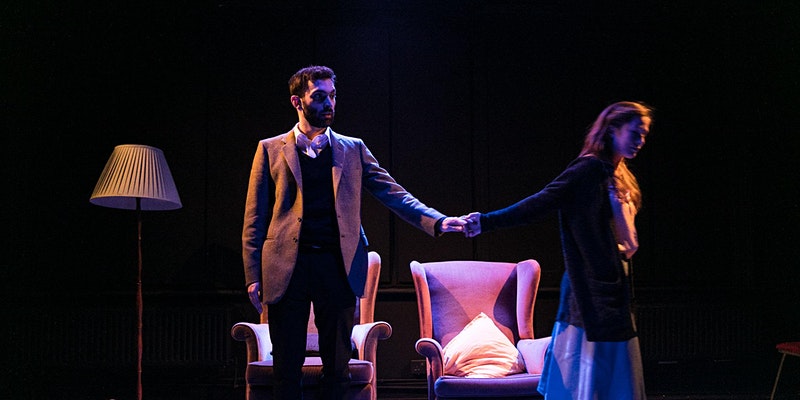
Medical student Anna (Georgina Armfield) is reluctantly convinced by her controlling doctor boyfriend James (Steve Chusak) to agree to an open relationship, and hooks up with fellow medic Sean (Calum Wragg-Smith) at a party. But the following morning a boundary gets crossed, and so begins the slow unravelling of multiple lives. The play asks important questions about what constitutes both rape and consent, and explores the impact of failing to understand those concepts for not only the “victim” and “perpetrator” but also for those around them. It also deals with the phenomenon of trial by social media, whereby whatever the outcome from a legal point of view, once an accusation of this kind is made public, it never really goes away.

In terms of educating the audience, the play can’t be faulted; there are clear explanations throughout – thanks largely to the scenes featuring rape crisis counsellor Vivienne (Amantha Edmead) – and it’s made abundantly plain that a “he said she said” case like this doesn’t necessarily mean one of the two must be lying; it’s much, much more complicated than that. And there’s no denying Penetration offers an audience plenty to think and talk about (since seeing it I’ve spent more time discussing this play than anything else I’ve seen in a long time), which can only be a good thing.

Where things are not so clear is in terms of who the play is for and what message it’s trying to send. I can certainly see that for a male audience member, it’s a cautionary tale about what can happen if you don’t get consent from a sexual partner. But the moral of that story seems to be: if you don’t get consent your life might be ruined, rather than the danger that you might irreparably harm someone else. At no point does Sean appear to wonder how Anna’s doing, or what impact his actions might have had on her; even when they discuss it at the time, his apology is more of the “sorry you feel that way” flavour. And while he stops short of accusing Anna of lying, he clearly feels victimised by her decision to report what happened between them.

Photo credit: David Monteith-Hodge

Women, meanwhile, may well be left with the uncomfortable feeling that if we report an incident like this one, we could inadvertently destroy the life and prospects of a nice guy like Sean. And however realistic that might be, given recent events anything that doesn’t actively encourage women to protect themselves or stand up to violence of any kind doesn’t sit quite right. Ultimately, while the play clearly strives to tell both sides, in the end it feels much more like Sean’s story – perhaps because his one supporter, his mum Felicity (Louise Bangay), is significantly more vocal and articulate in his defence than anyone on Anna’s side. (The person who should be Anna’s main source of support is the aforementioned awful James, who claims to love her but never once asks her how she is or speaks up on her behalf, and manages to make the situation about him to an almost absurd degree.)

These misgivings aside, the play is well written and performed, and even though parts of the script feel slightly too didactic to be completely natural, the story never drags or fails to hold our attention. In the programme it says the play “aims to jolt the audience into exploring parameters of consent” – and on that front, it certainly succeeds. This relevant and hard-hitting piece will provoke some strong opinions, and it won’t be to everyone’s taste, but it will certainly get audiences thinking, and talking, and that’s an essential first step in bringing about change.

Penetration is at the Cockpit Theatre until 9th October.

Q&A: Matthew Seager, In Other Words

In Other Words was inspired by writer and performer Matthew Seager’s experiences volunteering in a care home before the pandemic. First performed in 2017 (when Theatre Things reviewed it during its run at The Hope Theatre), the critically acclaimed two-hander now returns in a new filmed version which is available to watch online from today. In our Q&A Matthew talks about what inspired him to tell Arthur and Jane’s love story, and how the show’s been adapted in 2021 for a digital audience.

Can you briefly summarise what the show’s about?

In Other Words is a love story which, connected by the music of Frank Sinatra, explores the effects of Alzheimer’s disease and the transformative power of music in our lives. We are led through 50 years of Arthur and Jane’s relationship, jumping in and out of memories and experiencing a failing mind as it loses its grip on reality. 

Why was this a story you wanted to tell?

When I first experienced the extraordinary power that music can have in keeping those living with dementia connected to themselves and the world around them, it really felt like a light bulb moment for me in relation to storytelling. Firstly, I couldn’t believe that more people didn’t know about this. There was already plenty of work being made about dementia but very little to do with music. My research then led me to understanding that this specific school of thought was fairly recent, and incredible documentaries like Alive Inside, or phenomenal charities like Playlist for Life were only fairly new. 

It’s such a moving thing to witness when a person living with dementia is able to recount memories or ‘live again’ through the power of music. It’s also intensely theatrical as it’s equal parts epic and beautiful, but also deeply intimate as it requires personal connection to songs and relationships. That’s what we all relate to, the personal connection.

How did you first discover the powerful effects of music for people with dementia?

In my last year studying at the University of Leeds, we were facilitating ten weeks of sensory stimulation workshops in a dementia care home. We would play music at the end of each session which we think might connect with a time in the young adult lives of the residents. What we witnessed was profoundly moving and, in some ways, life changing for me.

Residents who were seemingly totally cognitively unaware, or mostly non-verbal, would stand and sing every word to a song that connected with them from earlier on in their life. Not only that, but they were subsequently much more able to speak about their lives with clarity. 

What made you decide to produce a filmed version of the play, and why now?

We’d always thought it’d translate well to film. It’s an intimate show which is purposefully simple and direct in its storytelling. It relies on developing a relationship with the audience which is something appealing to translate to camera. 

We had two tours curtailed as a result of the pandemic and so it felt as though, if we were ever going to do it, now was the time!

How did you go about adapting the piece for a digital audience?

Mostly it was about forming the right team. I did a lot of watching of digital theatre and contacted the cinematographers and DOPs whose work I felt visually aligned with the ideas we had. We didn’t really know what we were doing, so the key was to make sure everyone involved was on the same page about how we wanted the piece to feel, and then we could go about seeking advice on the best ways to communicate and achieve that.

Can you tell us a bit about Playlist for Life?

Playlist for Life was founded in 2013 by writer and broadcaster Sally Magnusson after the death of her mother, who lived with dementia, to ensure that everyone living with the condition has a playlist of personal music and that everyone who cares for them to know how to use it effectively.

The charity’s work is based on more than two decades of research showing that ‘personal music’ – the specific tunes attached to someone’s emotions that spark memories – can help those living with dementia by alleviating stress, managing symptoms and strengthening relationships with family members and carers.

We have been working with them since the first iteration of the show in 2017. Their work is so perfectly aligned with ours, it’s been such a special part of the process. Excitingly, we now hope to offer the film as part of their e-learning resources used in higher educational institutions across the UK.

Finally, where and when can we watch it?

You can watch it from Monday 27th September to Sunday 10th October. We think this is a great opportunity for the production to be made available to those who may not have previously been able to watch it, and all tickets will be ‘Pay What You Can’. 

It’ll be streamed via Eventbrite: https://www.eventbrite.co.uk/e/in-other-words-digital-theatre-tickets-169849730115 and tickets can be purchased via the website or by searching ‘In Other Words Digital Theatre’

Review: Anything Is Possible If You Think About It Hard Enough at Southwark Playhouse

Beautifully written and emotionally devastating, Cordelia O’Neill’s two-hander Anything Is Possible If You Think About It Hard Enough sensitively explores the impact of losing a child to stillbirth for a young couple, Rupert (Huw Parmenter) and Alex (Gemma Lawrence). And while the loss of a baby is an incredibly difficult thing to really understand if you haven’t been through it, the play does an exquisite job of verbalising the experience in a way that at least allows us to empathise.

Photo credit: Taz Martin

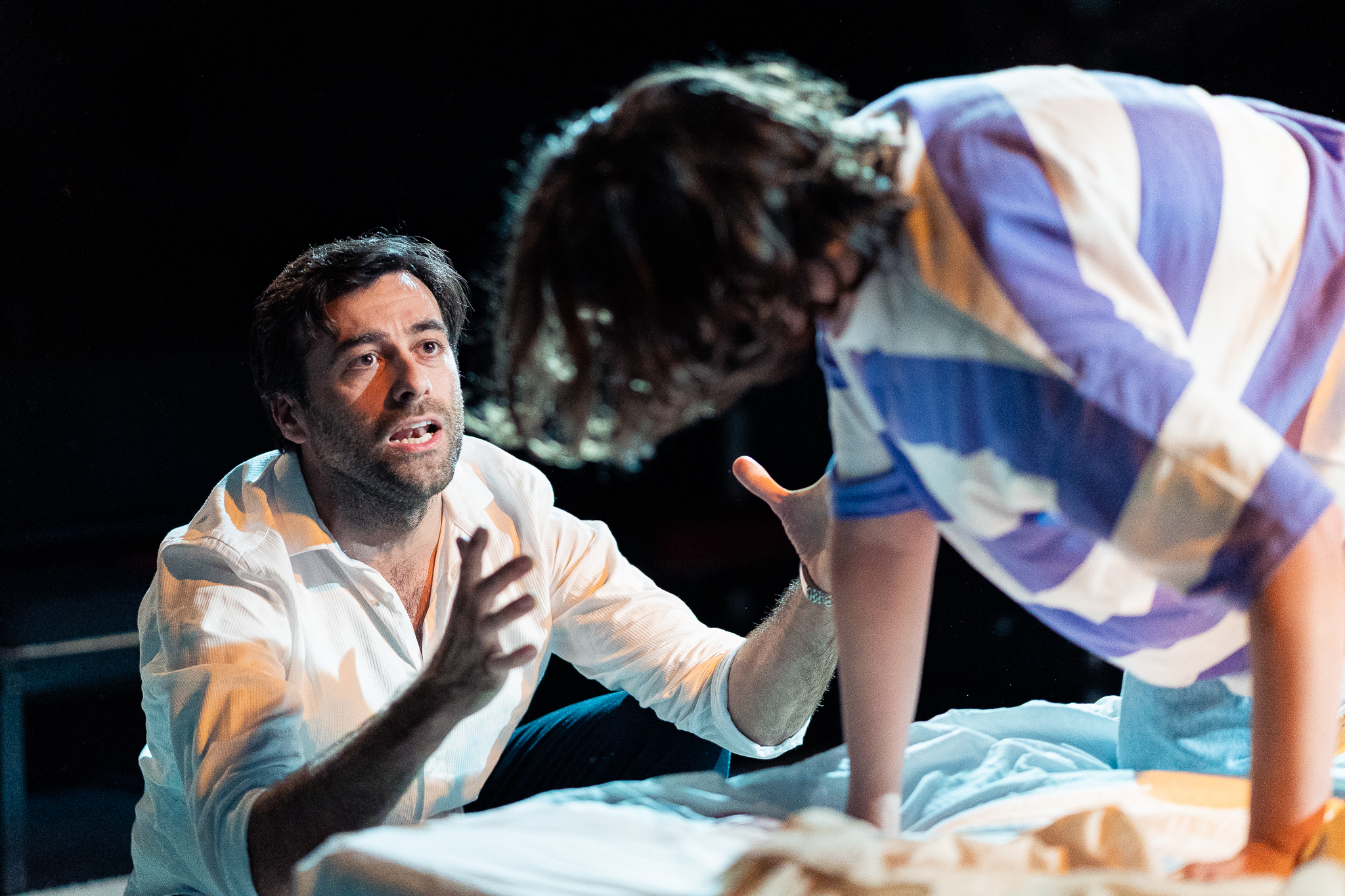
Despite the subject matter, the first half of the production is frequently laugh out loud funny as it charts the blossoming relationship between two very different personalities: Rupert is a former asthmatic who works in finance, loves his mum, and swears by a life of routine and careful planning, while Alex is a free spirit and a smoker, with complicated family relationships, who always says exactly what she thinks – even when she probably shouldn’t. On paper they make no sense at all… but a romance blossoms, a life begins, and suddenly they’re deciding what colour to paint the nursery.

Then, around halfway through the play’s 90-minute run time, their baby dies. And even though we know it’s coming, it lands like a hammer blow, such is the skill of writer Cordelia O’Neill, who’s given us just long enough to get to know Rupert and Alex and share in their excitement, and director Kate Budgen, who punctuates the horrifying pivotal scene with a long moment of silence and stillness, allowing us time to process the enormity of what’s just happened.

From here, everything that was amusing about Alex and Rupert’s quirky relationship comes back around, but in a very different way. His habit of avoiding difficult conversations, her tendency to slip into fantasy; his need to be the responsible adult, her messed up relationship with her parents. While before these were minor obstacles to be laughed off, suddenly they seem like mountains as Alex and Rupert struggle, alone and in their own way, to recover from their shared tragedy. Where before their conversations flowed easily and rapidly, now the silences between them carry far more weight, and when they do try to communicate there’s an awkwardness that we never felt before.

Photo credit: Taz Martin

From the start, the performances from Gemma Lawrence and Huw Parmenter are absolutely on the money, and despite the oddness of the pairing, there’s never a single moment where we don’t believe or feel invested in either the characters or their relationship. And when everything falls apart, both actors make the transition from comedy to tragedy seamlessly, effortlessly breaking our hearts where five minutes before they had us crying with laughter.

So fair warning, this is a very sad play that deals with an incredibly difficult subject. But it’s also an excellent production, with direction and performances that thoughtfully bring a perfectly written script to life. Highly recommended.

Anything Is Possible If You Think About It Hard Enough is at Southwark Playhouse until 9th October.