Review: La Cage Aux Folles at the Orchard Theatre

There are some shows that just make you feel good about life. La Cage Aux Folles is one such show. Setting the stage for more recent hits like Priscilla Queen of the Desert and Kinky Boots, Jerry Herman and Harvey Fierstein’s award-winning musical is a feel-good extravaganza that looks stunning, sounds fabulous and features a sensational starring performance from John Partridge.

Based in St Tropez, La Cage Aux Folles is the story of nightclub owner Georges (Adrian Zmed) and his partner Albin (John Partridge), the popular star of the club’s drag act. But then Georges’ son Jean-Michele (Dougie Carter) announces his engagement to the daughter of an infamous right wing politician, and hilarious chaos ensues as the couple attempt to tone down their flamboyant lifestyle and “act normal”.
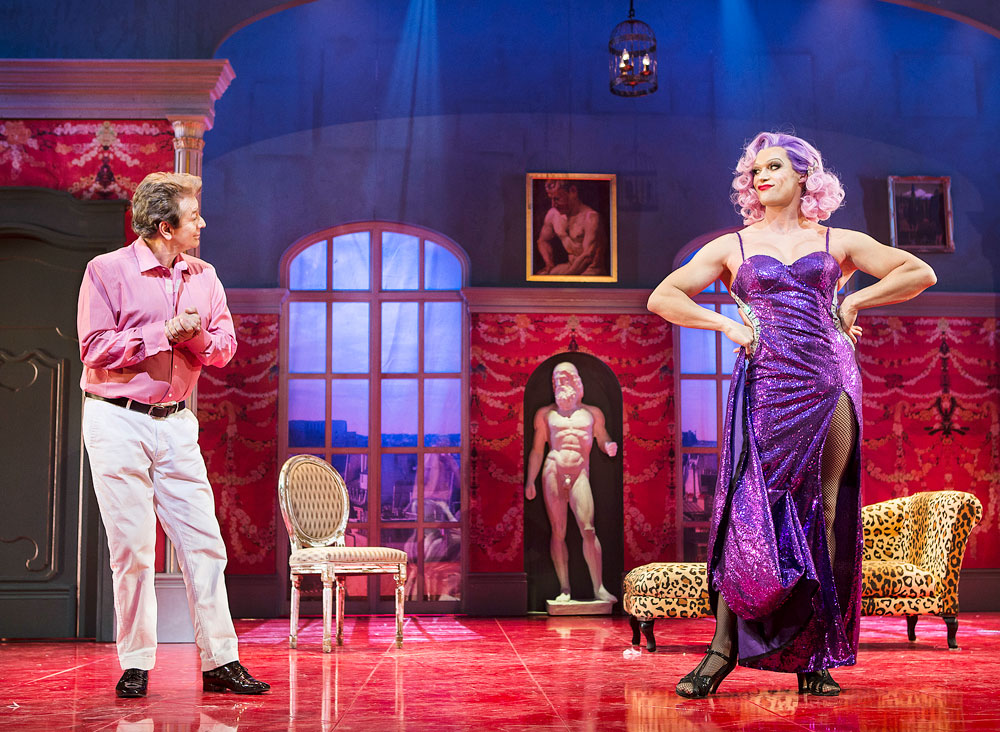
Photo credit: Pamela Raith Photography

Act 1 in director Martin Connor’s production acts largely as an opportunity to set the scene and show off Albin’s jaw-dropping array of glittering gowns; “it’s like Black Friday at Primark back there,” he confides after yet another lightning-fast costume change. Perhaps inevitably given this frenetic backstage activity, parts of the first act – particularly during the title number – start to feel a bit like they’re only there to fill time while we wait for the next big reveal. Having said that, it does give us plenty of time to admire Gary McCann’s drop dead gorgeous set, and features one of the highlights of the evening as the distraught Albin, having learned he’s to be excluded from the meeting with Jean-Michele’s new in-laws, brings the house and curtain down with a heart-felt performance of I Am What I Am.

This, by the way, was the only song I knew from the show beforehand, but it turns out to be part of a fabulous, catchy score that’s hard to get out of your head, even 24 hours later. Song on the Sand, With You on My Arm and The Best of Times are just a few of the tunes that get the feet tapping and simultaneously pull on the heart-strings.

After the interval, there’s more action and fewer costume changes, so the comedy can begin in earnest as we head towards a somewhat predictable but still heart-warming conclusion; I’m not ashamed to admit I welled up at one point, and spontaneously cheered at another. As light-hearted as the show is, it still has an important message about accepting others and ourselves, and Dindon the homophobic politician (Paul F. Monaghan) unfortunately feels just as real in 2017 as he was when the musical was written in the 1980s.

Photo credit: Pamela Raith Photography

As Albin, John Partridge is exquisite – and not just in appearance, though he does look amazing in every outfit he puts on. Vocally, emotionally, comically, he pitches his performance exactly right, and his relationship with Adrian Zmed as Georges is both believable and touching. But while, much like his character, Partridge is undoubtedly the star of the show, the rest of the cast are by no means in his shadow. Zmed is easily likeable and a natural comedian, Marti Webb (literally) steals the limelight during her all too rare appearances as restaurant owner Jacqueline, and Samson Ajewole is particularly fun as the sassy maid/butler Jacob.

La Cage Aux Folles may not be one of the best known musicals for British audiences, but that deserves to change. A treat for the eyes, ears and heart, this dazzling production of a hugely entertaining and uplifting show is well worth a visit. If it doesn’t brighten your day, then I really don’t know what will.

La Cage Aux Folles is at the Orchard Theatre until 13th May.

Review: Care at the Courtyard Theatre

Guest review by Lucrezia Pollice

Funny, but is it?
It’s all lovely and nice to have children but what are the stories not told?

Care was first performed at the Royal Court Upstairs, with its first revival by the Angus Mackay Foundation at the Courtyard Theatre in Shoreditch. Set in a young couple’s living room, the play looks very intimately at the narratives of Terry and Cheryl, who seem to be dealing with something. It is this something that drives the narrative. An it – a she – something or someone hidden centre stage in a cupboard, which forces spectators to engage.

Terry, played by Marc Benga, is very charismatic and seems at first to be unaffected by the whole situation. Karen Mann’s Cheryl instead is distressed from the start. She is suffering from some pain of her own, trying to get attention from Terry and a love which is not given back. The TV glares throughout the scene as we watch their daily life over the course of a long weekend. The story is simple, but interesting; it gives actors more responsibility to deliver the script.

Throughout the performance, their friends David (Leo Shirley) and Cathy (Jaana Tamra) come round to the house. The relationships between the couples are strong, and create a comical scene in which Terry and Cheryl are in distress but cannot find the courage to tell Cathy and David to leave. The Polish stereotype of Cathy’s character is overly rude and sexual, and her lack of social understanding of the situation is made comical by the hilarious body language during the scene of her husband, who seems to have given up on her.

From what seems like a normal domestic, it escalates into what instead looks like an abusive relationship. Who is abusing who is unclear though. It begins as a physically abusive relationship from Terry’s part, to then shift to a loving relationship, to then seem like it is her who is abusing him. Slightly confusing, perhaps on purpose, who in the relationship was causing troubles. Terry seems to be innocent; he makes all the jokes and seems to be stuck in a house and situation he doesn’t want to be in. Or is Cheryl right in saying that he doesn’t respect her?

The playwright Roy Mitchell was a member of the National and Birmingham Youth Theatres, trained as an actor at the Manchester Polytechnic School of Theatre, and more recently has been participating in the creation of BBC1’s New Tricks drama. He touches upon very difficult topics in this play, making the audience work to understand the motifs behind the characters’ actions by not giving much away until the end.

Perhaps the simple narrative at times needs a bit more tension as this is lacking. Conveying a constant distress creates a slightly lamenting voice, which becomes uncomfortable after a while, and accents are slippery at times. The intentions between the two main characters are slightly unclear, and the grief of a baby’s loss is not conveyed as deeply as it could be in moments of despair. However, overall the performances are believable, and it was really lovely to engage with an ethnically diverse cast with such a powerful taboo topic which is death.

My favourite moment must be when Terry and Cheryl come back drunk from the pub and start watching a horror on TV. It is amazing to see how something so simple can be made into something so entertaining. The performance is overall touching upon very delicate topics, but is presented also with light moments of comedy and an obscurity as to what is happening, which might intrigue spectators.


Can’t see the map on iPhone? Try turning your phone to landscape and that should sort it. I don’t know why but I’m working on it… 😉

Interview: Cath Mattos, Wandsworth Fringe 2017

Cath Mattos is producer of the Wandsworth Fringe, which launched last week in South West London and continues until 21st May. Now in its eighth year, and four years old as a standalone festival, the Wandsworth Fringe came out of the Wandsworth Arts Festival, which originally started in response to Black History Month. “The festival is a spotlight on creativity in Wandsworth, as well as being a testing ground for new work,” explains Cath. “We moved toward a Fringe model as there was so much grass roots support and the creative companies in the area wanted to be a part of the festival in May.

“I started working on the 2014 festival for exactly this reason, to bring more knowledge and experience of Fringe Festivals and to work with the Enable LC Arts Team and the WAF steering group to help carve a model that would work for the area and its cultural economy.”

As always, the festival offers a varied programme of events and entertainment. “There is so much on offer – we’ll be shaking up South West London with an eclectic programme of arts and culture that will thrill, move and inspire audiences from across the city,” promises Cath. “We have many talented local artists and producers but also performers who are bringing their talent from around the UK, Europe, North America and beyond to entertain and bring excitement to the streets and venues across the Borough.

“The festival is emphatically inclusive and welcomes participation from artists across all art forms – including outdoor arts, theatre, music, dance, comedy and everything in between. WAF provides the opportunity and support to try something new, take creative risks, test new ideas and reach new audiences.

“As a non-curated festival, the themes that have emerged reflect the world in 2017. Identity and difference plays a large part in the line up, as do environmental and current political concerns. There is a significant amount of work being presented by inclusive arts companies about disability issues, as well as work that explores gender and feminism.

“We also try and bring the arts to people, by literally leaving our own comfort zone and going into those hard to reach places. For example, during WAF you can see quite a few performances that focus on issues of mental health or disability, and certain shows will be supported by British sign language as a way to make the festival relevant and accessible to all.”

Unsurprisingly, preparations for the festival start early, and go on for most of the year: “We start the planning for the Fringe year during the evaluation of the previous festival in June,” explains Cath. “Then we start our first networking events in September and open an expression of interest phase, which we use to encourage as many interesting and unusual artists and producers as possible to come and find out about the festival and think about taking part.

“We advise artists and emerging producers on suitable venues and potential funding avenues. WAF has a dedicated grants funding scheme and we advise artists with their applications to this. It’s an open access festival, so anyone can register to take part as long as they have a venue sorted. Once all the artists are registered we then put a brochure together and the listings on our website, and start to sell tickets to the shows and promote the free events.

“We aim to make the festival as accessible as possible to both artists and audiences by having affordable options and many free events.”

So what are some of the many highlights to look forward to at the Wandsworth Fringe 2017? “Fragility Takeover The Arches at St. Mary’s Church under Putney Bridge and The Cat’s Back Pub in Wandsworth Town, and are hosting some cutting edge theatre and quirky Edinburgh previews,” suggests Cath.

“There’s also Super Hamlet 64: Parody DLC – armed with an ocarina, a ukulele and a thirst for revenge, Lecoq-trained Edward Day battles four decades of video game nostalgia, in an explosion of Shakespeare, live music, video projection and 16 bit mayhem. Odjo – King of the Ocean is a new show from The Comedy Cats, about a reporter who spent three months living at sea with an idiot fisherman named Odjo, witnessing bizarre martial arts practices, unruly animal impressions and unhealthy absurdities that reduced him to tears of laughter.

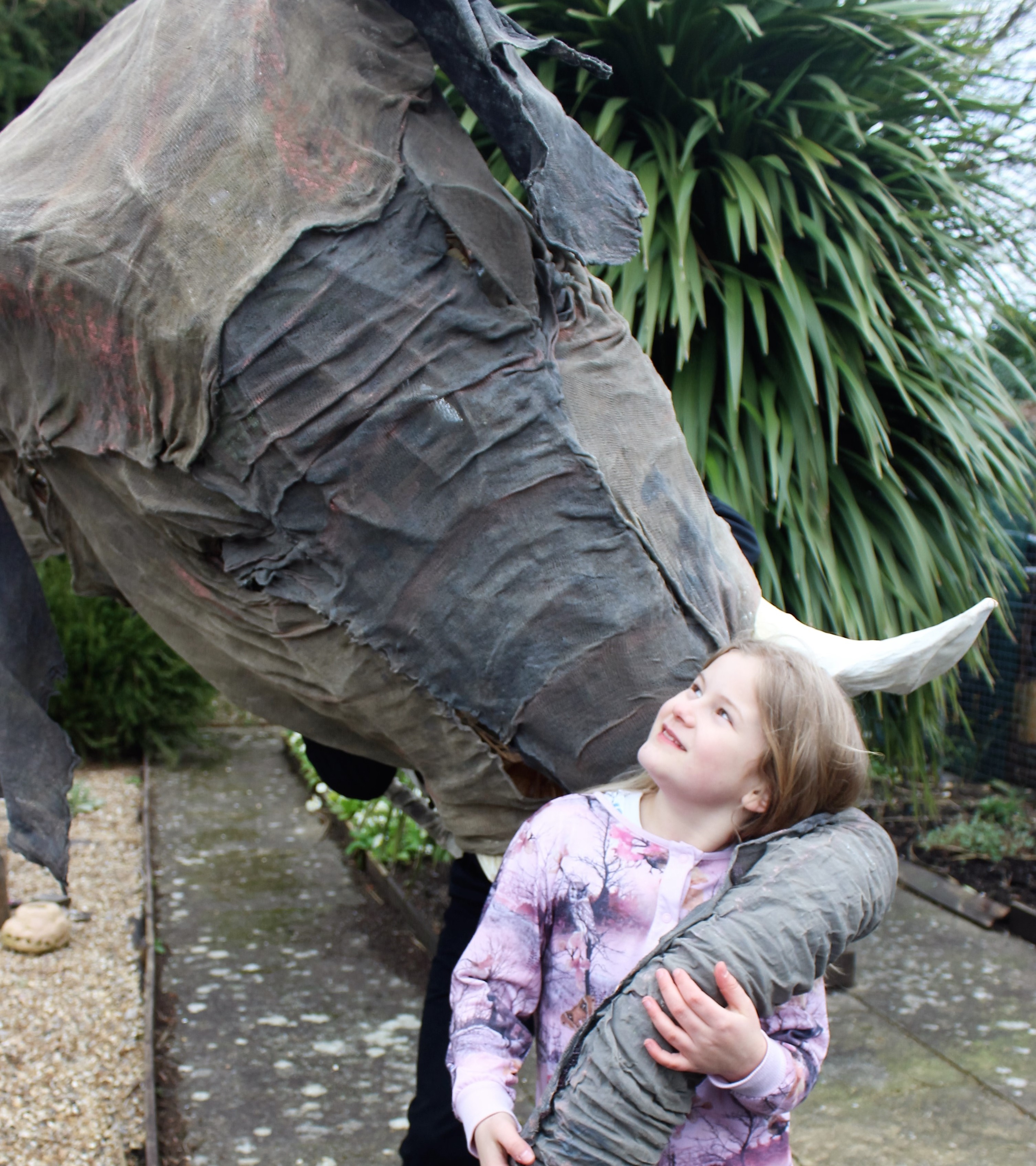
“Hidden Heathbrook is a weekend of outdoor arts in Heathbrook Park; we have leading large scale puppet makers Puppets With Guts, orchestrating the largest giant rampaging rhinoceros stampede in South London, and Hikapee’s brand new show Home weaves together slapstick comedy with breathtaking aerial acrobatics, to create a ‘house’ for you to explore. This weekend is one not to miss!

“And An Elemental Cycle of Life and Death in Four Acts is an intense and intimate experience encircling art, theatre, ritual and shamanic story weaving of the Fabulous and the Magickal, and of all that lies Betwixt and Between. The Transience create doorways to worlds which may or may not exist and are inviting you into an initiation where you are likely to lose or find yourself, for there is never any telling which. Sssh, secret locations!”

Interview: Caroline Byrne, Blocked

Playwright Caroline Byrne returns to the Brighton Fringe this month with her new play, Blocked, which uses comedy to challenge society’s unspoken rules against talking about infertility. “A famous stand-up’s successful routine – sending up love, marriage and babies – falls apart as she melts down. It’s fast paced and delivered as a stand up routine throughout.”

Caroline explains that Blocked was inspired by her own experience of failed fertility treatment: “There’s a taboo around discussing infertility that society imposes on you and you get crap advice from people. I wanted to explore this and use dark humour to engage the audience, so that’s why I made the character a comedian.”

The show’s performed by Laura Curnick, and reunites Caroline with acclaimed director Scott Le Crass, following a previous collaboration at the Brighton Fringe 2015. “Scott directed my play In A Better Place, which was set in a hotel room, in the rock n roll themed Hotel Pelirocco,” she explains. “He is extremely creative and also very tactful and calm, so I was relieved when he agreed to direct Blocked because traditionally writers aren’t allowed in rehearsal – so you have to trust your director completely or you’d go mad. Scott has been nominated for many awards, and recently had a West End Transfer with Sid, a fabulous show.”

Blocked promises something of a mixed experience for Brighton audiences: “I want them to laugh out loud at the stand up, and then slap them in the face with the final dramatic act,” says Caroline. “You should come and see it because it’s a provocative standup routine within a piece of theatre. Two genres for the price of one!”

As the Brighton Fringe gets underway for another year, Caroline has plenty to look forward to. “I can’t wait to watch Laura Curnick perform the show for the first time!” she says. “But I’ll also be catching up with other theatre buddies and seeing their shows. In particular I’m looking forward to Nick Myles’ Trouble with Men, three great shorts. Also Goddess by Serena Haywood and Purged starring Orla Sanders.”

After Brighton, Caroline has several exciting projects lined up with her company Pure Fluke Theatre. “We write daring, comic roles for women over 35,” she explains. “I’ve just finished a new sitcom about working in fringe, with my co-writer Rachel Goth. The material writes itself. I’m also planning to tour my farce How To Make Money From Art in Ireland.”

Catch Blocked at Duke Box from 18th-24th May.

Review: The Pulverised at Arcola Theatre

Alexandra Badea’s The Pulverised is all about connection. Or rather, the lack of it. Globalisation may be bringing everyone closer together on a business level, the play argues, but at what cost to us as human beings? Following the stories of four professionals based in different countries but working for the same multinational corporation, Badea paints a catastrophic picture of lives without meaning, families who barely know each other, and identities lost to the corporate machine. In keeping with this, director Andy Sava situates Lucy Phelps’ translation in a scene of carnage; the stage is littered with smashed office equipment and rubble, and four bodies lie inert on the ground.

Photo credit: Dashti Jahfar

A Quality Assurance of Subcontractors Manager from Lyon (Richard Corgan) wakes up in a characterless hotel room and for a minute can’t remember what country he’s in. A factory worker in Shanghai (Rebecca Boey) spends her days on a production line in which any loss of speed and efficiency could cost her job – or worse. An ambitious Call Centre Team Leader in Dakar (Solomon Israel) can’t understand why a new recruit might object to adopting a French name in place of her own. And a Research and Development Engineer in Bucharest (Kate Miles) spends time with her family the only way she can – by spying on them via CCTV while she’s at the office.

The character profiles are deliberately vague; they’re all just one more nameless face in the rat race of global business, taking it in turns to address the audience in the second person and make the point that any one of them could be any one of us. The dialogue is rapid, and there’s a constant sense of urgency and pressure, of time being short – “the clock’s ticking, and you’re falling behind” is a frequent refrain, as is the supposedly motivational “aim for excellence”. In between their scenes, the actors crumple to the ground as if too exhausted to react to anything beyond their own experience, raising their heads to monotonously voice secondary characters in other stories, before powering back up to continue their own.

This unusual structure effectively conveys the isolation of the characters, though it does run the risk of becoming repetitive, particularly as the play is more a collection of snapshots than a story in the traditional sense, and we end pretty much where we began. It’s testament to the engaging performances of the four actors that the play holds our attention for the full 90 minutes, with each capturing the emotional and mental strain faced by their character, but also the absolute impossibility of breaking free from their soul-destroying routine. Simultaneously they – and we – are bombarded by a multimedia sensory overload, with video projections from Ashley Ogden particularly effective at demonstrating the constant flow of data and images that’s become part of 21st century life.

Photo credit: Dashti Jahfar

The Pulverised is a relentlessly bleak piece of theatre. Nobody gets a happy ending, and even for the characters who are offered an opportunity to escape, there’s a depressing sense that nothing is really going to change. But the play does force us to confront for a moment the damaging effects of progress, to reflect on that ‘made in China’ label that allowed us to pay half price, and also to consider our own priorities and work-life balance. The piece-by-piece breaking down of the set’s rear wall offers the tiniest glimpse of an emergency exit for those brave enough to take it, and the suggestion that while we may not be able to stop globalisation, we can at least save ourselves from being pulverised by it.


Can’t see the map on iPhone? Try turning your phone to landscape and that should sort it. I don’t know why but I’m working on it… 😉