Review: This Is Not Culturally Significant at The Bunker

Rightly or wrongly, there’s one thing most people will know going into Adam Scott-Rowley’s one-man show, This Is Not Culturally Significant – so let’s get it out the way first. Yes, he’s naked. No, it’s not weird. Uncomfortably explicit on occasion, yes; the first couple of minutes are unforgiving and throw us entirely in the deep end. It definitely won’t be everyone’s cup of tea. But surprisingly quickly the nudity not only stops being an issue; it starts to feel like a necessary part of the performance.

Photo credit: Bessell McNamee

To make sense of that, let’s go back a bit. This Is Not Culturally Significant, we learn in the programme, began life as a series of caricatures that grew and developed, and ultimately began to link together. There’s an American porn star and her lonely father, an abusive husband and his timid wife, a homeless Scottish woman, a bitter theatre producer who’s being ousted in favour of Andrew Lloyd Webber… and several others, all of whom challenge us and each other simply by being themselves in a world that doesn’t quite know what to do with them.

And every one of those characters is played by Adam Scott-Rowley in an astonishing virtuoso performance that sees him transforming from one persona to the next, sometimes abruptly, sometimes slowly. These changes become more frequent as the show goes on and his characters increasingly jostle for centre stage. Posture, personality, voice and accent are always absolutely distinct; it’s clear he knows each of the characters intimately, and his embodiment of them is so skilful that by the end of the 50 minutes we feel we’re starting to know them too.

And so back to the nudity, which was initially introduced as a way to add vulnerability to the characters, but ends up serving a far more practical purpose: with no need for costume changes, the shifts are not only easier and quicker but a lot more effective; it would have been difficult to believe in a bag lady dressed in the same clothes as a posh racist or a spiritualist lecturer, and pausing to change would interrupt the flow. Seeing someone so entirely exposed – in every sense – also gives the show an extra intensity, and ironically it ends up being the one naked guy in the room who’s most at ease.

Photo credit: Bessell McNamee

It’s not only the nakedness that keeps us on edge; this is a show you experience rather than enjoy, and the abruptness of the character changes, flashing lights, loud noises, and one exquisitely awkward moment where it’s not clear if audience participation is required (I still don’t know, if I’m honest), all contribute to ensure we never get too comfortable. Yet there are moments of dark humour too, with much of the laughter fuelled as much by surprise or recognition as by amusement.

I can honestly say This Is Not Culturally Significant is unlike any show I’ve seen before – but I can just as honestly say that’s not only because it’s performed nude. If everyone goes in knowing that one thing, let’s hope they come out talking about Adam Scott-Rowley’s extraordinary performance, and acknowledging that the nudity enhances something that’s already pretty special – with or without clothes.


Can’t see the map on iPhone? Try turning your phone to landscape and that should sort it. I don’t know why but I’m working on it… 😉
Review: Amicus presents The Exonerated at Middle Temple Hall

Jessica Blank and Erik Jensen’s The Exonerated tells the stories of five men and one woman who were sentenced to death in the USA for crimes they didn’t commit, and spent years living with the threat of execution before their innocence was finally proven. It’s a powerful piece of writing in any circumstances – but never more so than when one of those people is played by herself.

Copyright: Matt Cetti-Roberts/Frontline Pictures

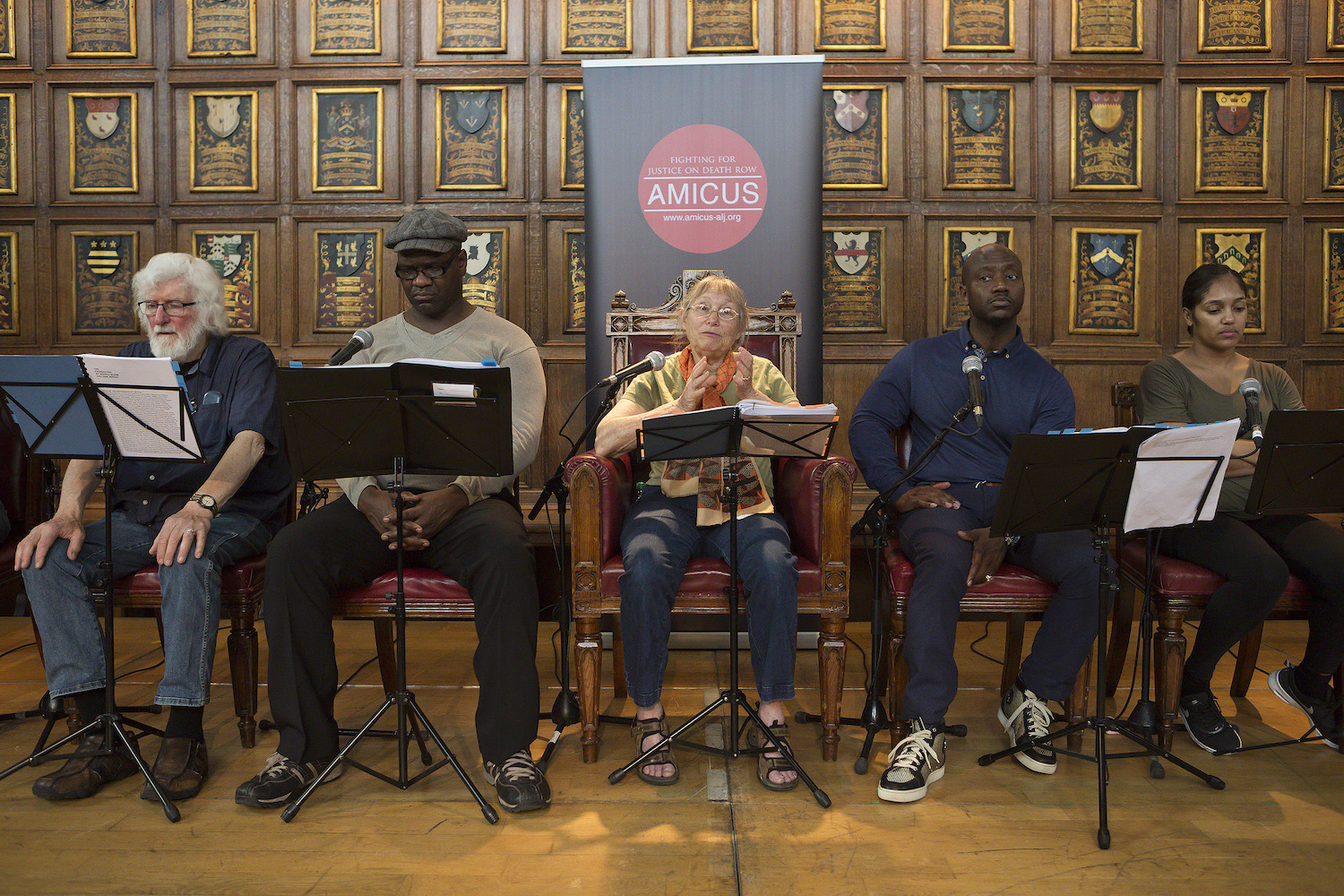
In this special one-off play reading of The Exonerated presented by death row legal charity Amicus, an impressive cast – including two actors from Harry Potter and the Cursed Child and two respected British barristers – was led by the incredible Sunny Jacobs. Sunny spent 17 years on death row, saw her children grow up without their parents, and lost her husband Jesse Tafero to the electric chair, before the real murderer confessed and she was (eventually) released. And yet despite all this, she radiates an astonishing positivity and a refusal to be beaten by what she went through – that, she says, is her revenge. Sunny was joined on stage by Peter Pringle, himself an exoneree who spent 15 years on death row in Ireland. The two met through their work to support exonerees, and married in 2011; both are now patrons of Amicus and make a truly inspiring couple.

Sunny’s “status” naturally made her the guest of honour for the event, which was held in the beautiful and historic Middle Temple Hall – but even so it was touching to see the respect and care shown to her by every member of the illustrious cast. It was clear throughout the evening that the actors were just as affected as the audience by the stories they were telling, and emotions ran high both during the performance and the Q&A that followed, in which several members of the cast spoke eloquently and passionately about issues surrounding the death penalty debate.

Copyright: Matt Cetti-Roberts/Frontline Pictures

Blank and Jensen’s script is powered by an incredulous anger that cases like these can really have happened. Kerry Max Cook (Jamie Parker) was convicted on the basis of one old fingerprint, and was subjected to horrific sexual violence while in prison. Gary Gauger (Peter Pringle) was interrogated for 12 hours straight about the murder of his parents, and eventually had his words twisted by the police into a false confession. Delbert Tibbs (Chris Jarman) and Robert Hayes (Tunde Okewale MBE) were guilty of nothing more than being black. David Keaton (Leslie Thomas QC) was a frightened teenager, who confessed under duress to a crime he knew nothing about. And finally Sunny, who was simply in the wrong place at the wrong time. Between them, these six cases reveal a spectrum of the countless flaws in the U.S. justice system, and the terrifying reality of how easily just about anyone can be falsely accused and convicted. In addition, it explores life after death row, and the harsh truth that being released from prison is far from the end of the story.

Above all, the play – staged simply by directors Peter and Ellen Gould – helped to demonstrate why the work Amicus does is so crucial. The charity, which was founded 25 years ago in memory of Andrew Lee Jones, trains and sends British legal interns to support defence attorneys fighting death penalty cases in the USA, and has been instrumental in countless important victories. Without them, who knows how many more innocent lives would have been lost.

To find out more about the work of Amicus and future events, visit amicus-alj.org.


Can’t see the map on iPhone? Try turning your phone to landscape and that should sort it. I don’t know why but I’m working on it… 😉
Review: Paper Hearts at Upstairs at the Gatehouse

You know in The BFG (stay with me) how he makes dreams for people by taking all the different elements and blending them together? Well, this is essentially what Liam O’Rafferty, Daniel Jarvis and Tania Azevedo have done in Paper Hearts. Musical? Check. Books? Check. Love story? Check. Folksy score performed live on stage by actor-musicians with gorgeous harmonies and catchy choruses? Check, check, check, check, check. Long story short – this is my dream show, and I’m a little bit in love.

Photo credit: Tim Hall Photography

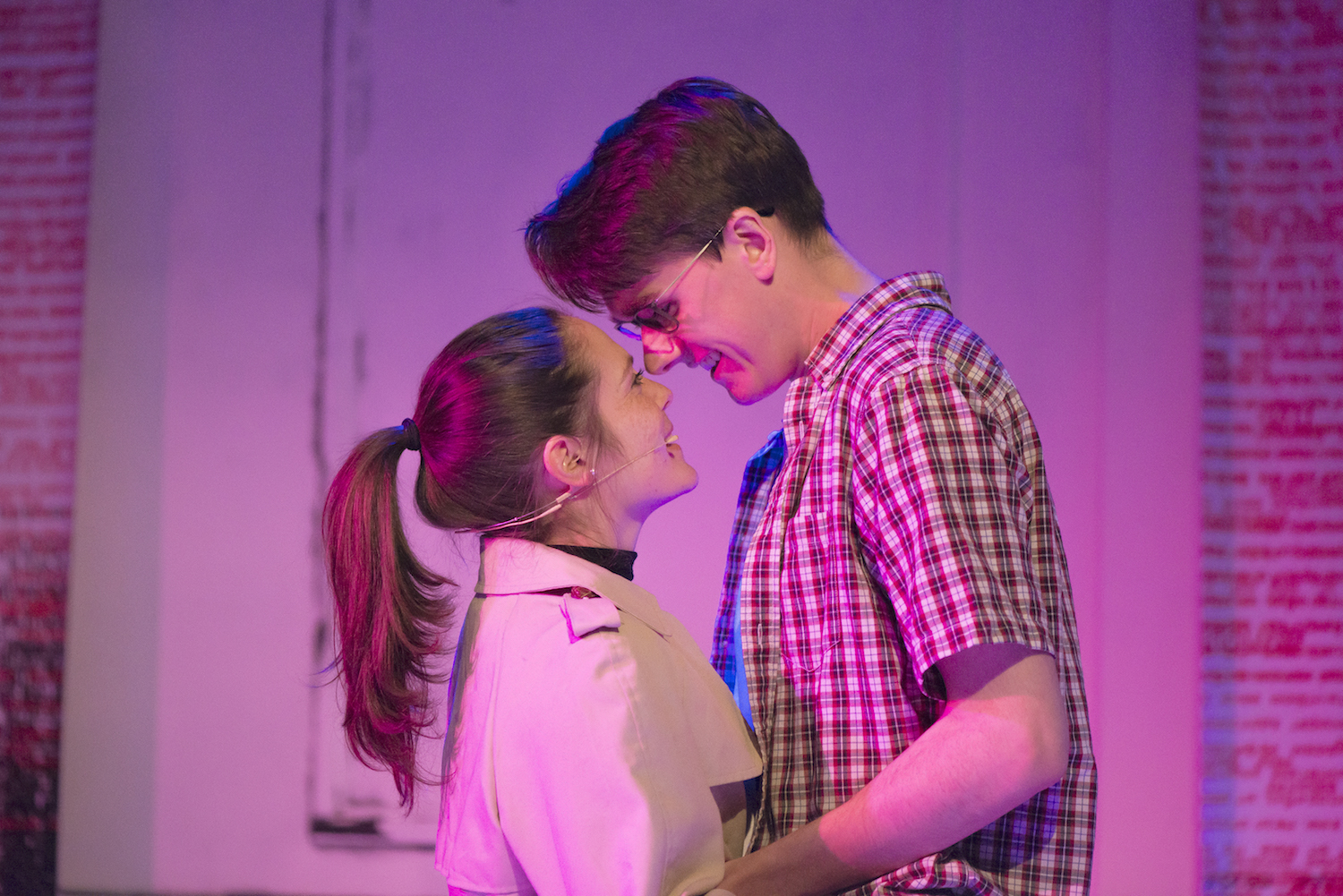
After proving a hit at last year’s Edinburgh Fringe, the show’s been developed into a full-length musical set in The Final Chapter bookshop, where aspiring writer Atticus (Adam Small) is trying to finish his epic novel of romance and betrayal in Stalin’s Russia. When the shop’s threatened with closure at the hands of a large online retailer, Atticus finds himself with only one option – finish the novel in time for the upcoming young writers competition, win top prize, save the bookshop. Simple, right? Well no, actually, because his girlfriend (Sinéad Wall) could hardly be less supportive, he’s got history to work out with his dad (Alasdair Baker) and he’s just met a girl (Gabriella Margulies), who may just be his soulmate – but for one fairly major complication…

Fact and fiction are effortlessly interwoven as we slip into the snowy Russia of Atticus’ main characters Yanna and Isaak, and follow their story – which seems to bear some striking parallels to their creator’s own life. And as the characters develop, it becomes clear they’re shaping his destiny just as much as he is theirs.

Liam O’Rafferty was inspired to write Paper Hearts by his passion for bookshops, and the show overflows from the start with that love for the written word. From Anna Driftmier’s set – built largely from books, and full of delightful details like the floating book light (which is something I never knew I wanted until I saw it, and now it’s all I can think about) – to the brilliant “book-off” where Atticus and new shop manager Lilly challenge each other’s literary knowledge, it’s a thrill for anyone who loves to read.

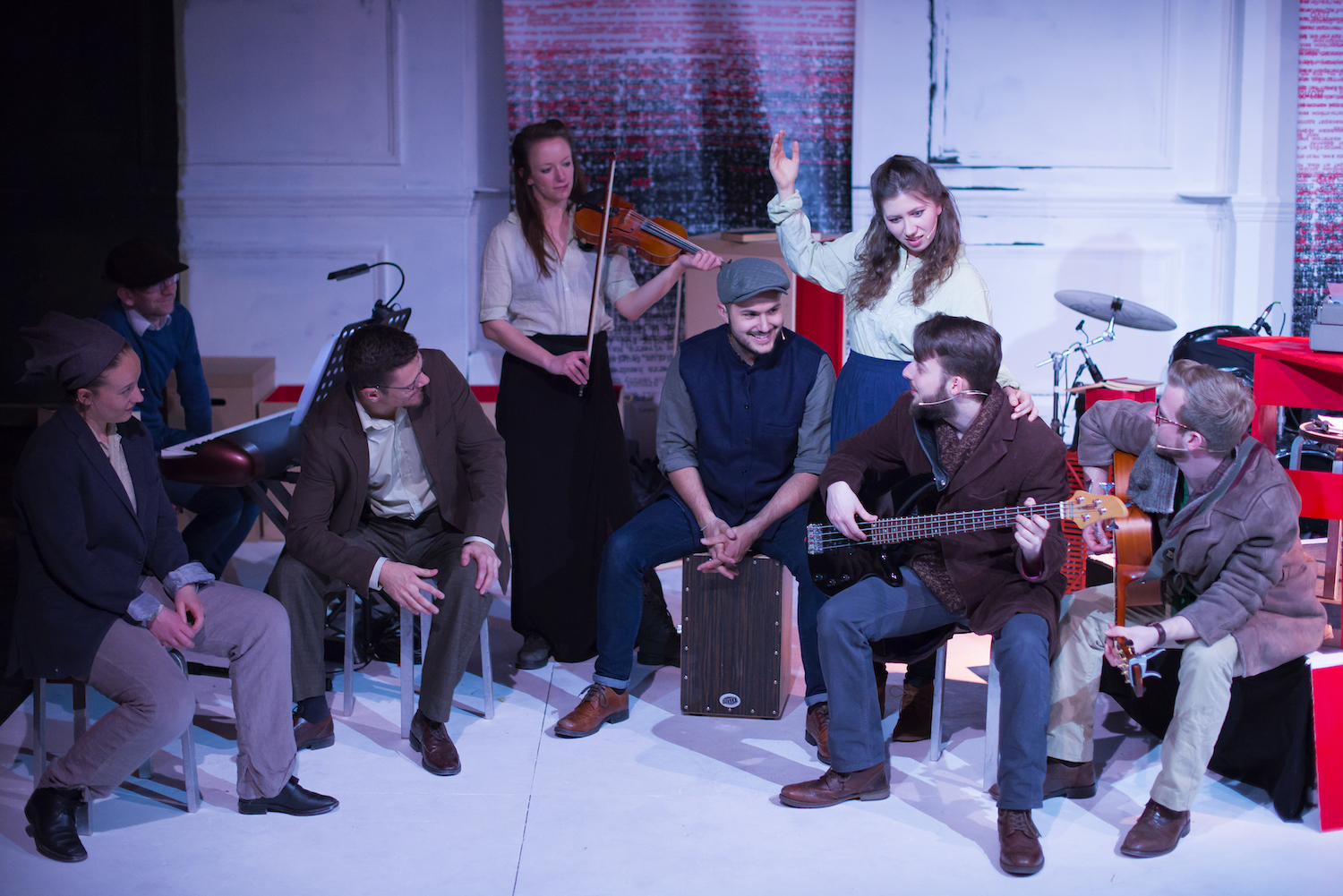
The cast of actor-musicians are sensational and work seamlessly as an ensemble to bring the score to life. And what a score it is, taking in a range of genres but always feeling very natural, like it’s just a bunch of friends getting together to play – and did I mention the gorgeous harmonies? There are some really beautiful songs here, with two of many highlights the heart-wrenching duet Stand Up and the title number Paper Hearts, which closes the show on a soaring high.

Photo credit: Tim Hall Photography

Perhaps one of my favourite things about the show is, despite its frequent forays into Stalin’s Russia, how very British it is; you can totally imagine it on screen as a Richard Curtis rom-com in the vein of Notting Hill. The dusty old bookshop is quintessentially British, the script has a wry, self-deprecating humour – particularly from Matthew Atkins’ gloriously camp shop owner Norman – and when things go wrong, everyone’s immediate response is to put the kettle on. This gives the production a very cosy, homely feel, and makes the characters and everything that happens to them incredibly relatable.

The show does get a bit dark and tense at times (gun alert) and there’s no shortage of emotion either. But overall Paper Hearts is uplifting, heartwarming and basically just a joy from start to finish. It’s got everything you could want from a West End show at a fraction of the ticket price – so see it now before it gets snapped up for a transfer. And then go again, because it’s worth it.


Can’t see the map on iPhone? Try turning your phone to landscape and that should sort it. I don’t know why but I’m working on it… 😉
Interview: Georgie Morrell, A Poke in the Eye

Georgie Morrell is a writer, blogger and stand-up comedian. Next week she’s bringing her show A Poke in the Eye to Brighton following a successful run in Edinburgh and a transfer to London’s Soho Theatre. “The show is about one woman, one eye and her (sort of) blind life,” Georgie explains. “Being disabled is her excuse to do exactly what she wants, say what she wants and live her one eyed life as she wants.”

That one woman is Georgie herself, who wrote the show to share her experience of living with a visual impairment. “It’s scary to share my personal story, but that’s also part of the thrill!” she says. “You don’t know how an audience might react and it’s fun to play with that. However, I keep certain parts of personal life back, I make sure there are things just I know. It makes it less scary when I know something they don’t… I have a secret. To keep the balance because it is such a personal show I don’t discuss my private life, like relationships, love life etc. Got to keep some things private.”

Georgie’s been delighted with the public’s response to the show, which also received a 4-star review from LondonTheatre1. “It’s been terrific! All sorts of kind, funny and slightly mad feedback. A lot of people who come across my work that are visually impaired get in touch and often are grateful someone’s candidly talking about disability. This means the world to me to hear and makes all the hard work more than worthwhile!”

The aim of the show, Georgie explains, is to make people laugh, but also to come away with a greater knowledge of disability. “I want those in the audience who’ve not experienced disability, physical or sensory impairments to learn it doesn’t mean you are at a loss or vulnerable or should be pitied. I want them to see the individual not just a disability.”

And for those who are adapting to life with a disability, she has another message: “Just because you’re disabled does not mean you are any less of a person. Some people, but also systems in place for those of us with a disability, have a way of making us feel vulnerable and as if we are  missing something. Not at all! We experience the world in a remarkable way that must be shared, acknowledged and appreciated.

“Never be ashamed of your disability. Just because you are disabled does not mean you can’t be yourself and live your life as you want.”

It’s certainly not stopping Georgie, who has plenty going on. “I’m a blogger for topical website The New Establishment and am taking my new show, The Morrell High Ground, to Underbelly at the Edinburgh Fringe Festival. I’m also an advocate for RNIB and International Glaucoma Association.”

As well as performing, Georgie has a couple of other goals in mind for her time in Brighton. “Going to the seaside and Sea World! And if I had to pick one show besides my own, I’d recommend Gemma Arrowsmith: Earthling at The Warren. It’s a character sketch show about the future of mankind.

“I love my show being in Brighton because it’s such a liberal, fun and mischievous town. My show is all these things but also with a gut punch. I think it will fit into Brighton’s way of thinking beautifully!”

Catch A Poke in the Eye at The Warren Studio 3 from 24th-26th May.

Review: Out There on Fried Meat Ridge Road at Trafalgar Studios

Keith Stevenson’s Out There on Fried Meat Ridge Road became a cult hit when it opened in the States in 2012 – even spawning two equally well received sequels – and it’s not difficult to see why. Transferring from London’s White Bear Theatre to Trafalgar Studio 2 under director Harry Burton, this joyously bonkers little story about a bunch of misfits in a remote West Virginia motel is 70 all too short minutes of good-natured fun.

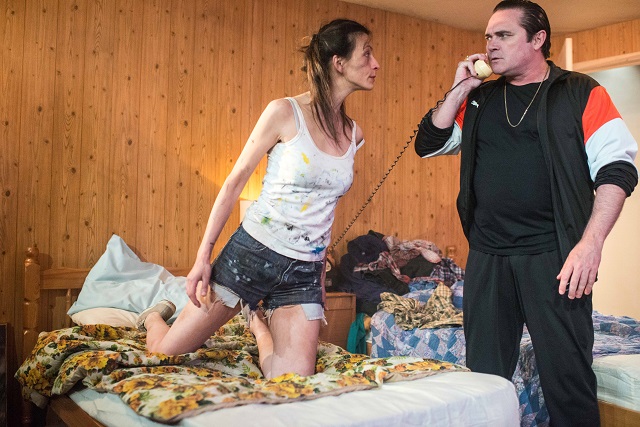
Mitch (Robert Moloney) has just lost his job at the local spork factory, had his car set on fire and been kicked out by his girlfriend. When he answers an ad for a roommate placed by the eccentric but loveable JD (Keith Stevenson), little does he realise things are about to get even worse. Sleazy motel landlord Flip (Michael Wade) think he’s gay, next door neighbour Marlene (Melanie Gray) thinks he’s David Schwimmer – and then there’s Tommy (Alex Ferns)…

Photo credit: Gavin Watson

It’s all barking mad, but very enjoyably so; an hour of pure escapism in which literally anything could – and does – happen. The larger than life characters prove to be a cautionary tale in the dangers of judging by appearance; they might look like stereotypes, but none of them is quite what they seem. This is particularly true for Keith Stevenson’s JD, possibly the nicest man in the world, whose imposing stature hides a gentle nature, kind heart and interesting back story. In light of said back story, it later seems fitting that it’s JD who delivers the moral of the story, which is simply this: be kind. As he himself points out, that’s not something we should need to be reminded of – yet somehow in today’s often self-obsessed world it ends up feeling like something of a revelation.

Simon Scullion’s set is cosy and lived-in, a wood-panelled motel room littered with JD’s clothes, possessions and casually discarded mini vodka bottles. The familiarity with which all the characters enter and make themselves at home helps establish the relationship between the friends; JD is the centre of the group, the one everyone comes to when they need support – and he in turn is always ready with a supply of tuna sandwiches and a few words of advice.

Stevenson’s irresistible JD has excellent support from Robert Moloney as Mitch, whose appearance grows increasingly dishevelled even as his inner turmoil settles. Alex Ferns’ poet/gangster Tommy revives the crazy-eyed menace of evil Trevor (that’s his famous Eastenders character from 15 years ago, for younger readers). Michael Wade is hilariously creepy as Flip the landlord, but even he has a protective streak where JD’s concerned. And hysterical drug addict Marlene is played to perfection by Melanie Gray, who makes her likeable and sympathetic where she could have been incredibly annoying.

Photo credit: Gavin Watson

If I have one complaint about the play, it’s that – unlike its unwieldy title – it’s too short; we can only hope the sequels soon make their way to London so we can find out what the gang get up to next. Out There On Fried Meat Ridge Road is not deep and meaningful, and is at times utterly bizarre. But it’s also fantastic entertainment that leaves you with a smile on your face and a warm fuzzy feeling inside. And a craving for tuna sandwiches. (Just me? Oh.)


Can’t see the map on iPhone? Try turning your phone to landscape and that should sort it. I don’t know why but I’m working on it… 😉