Review: An Injury at Ovalhouse

Kieran Hurley’s An Injury is unsettling from the start, as the four performers walk on to the set deliberately looking around to catch the audience’s eye. This sets the tone for a play whose aim is to remind us of our own complicity in the violence that increasingly dominates our everyday world – whether that violence is happening right in front of us or on the other side of the world, and whether we’re participants or merely observers.

Photo credit: Alex Brenner

This is the story of four characters – three of them living in the same anonymous city, the other in a foreign country. Writer Danny is desperately trying to make his mark by writing something revolutionary. Joe’s a drone pilot haunted by a small figure he saw running towards the target seconds before his last missile hit. Morvern longs to escape her temp job inputting the names of rejected asylum seekers. And then there’s Isma, a young girl in a far-off country – and that’s all we know about Isma. As the four characters’ stories begin to intersect, the actors take turns playing them, reinforcing the idea that these people could be any one of us. Meanwhile the others narrate for our benefit, never allowing us to forget that we’re in a theatre and there are lessons to be learnt. As we build towards a dramatic climax, it seems inevitable that one of the characters must take action against the status quo… but will they, or will they simply continue in their numb acceptance of the way things are?

The delivery of the play, which is directed by alex swift – who previously collaborated with Kieran Hurley on Heads Up – is unusual, disorientating and potentially divisive. The production has an unpolished feel in both performance and design; all four actors read from their scripts, although it’s never completely clear if this is from necessity or if it’s just another way to remind us we’re watching a piece of theatre. The only other props are four chairs, which are rearranged as each new scene is introduced by a burst of white noise and an instruction to “zoom in” or “zoom out”. This simplicity of design means our attention is entirely focused on the script, which describes in detail everything we can’t see or hear, and is delivered with passion and real anger by the cast (Khalid Abdalla, Julia Taudevin, Yusra Warsama and Alex Austin). But the lack of variety in scenes also makes the piece hard to define – it falls somewhere between a play and a lecture, with the actors frequently breaking the fourth wall to challenge us directly about our own response to what we’re seeing.

Photo credit: Alex Brenner

Hurley’s script is undoubtedly thought-provoking, asking some brutal and highly topical questions about ends and means, which linger in the mind as we step back into the real world. There’s so much to consider, and delivered at such a rapid-fire pace, that it’s almost impossible to take it all in at a single hit. An Injury is a call to action – although what action we’re being invited to take remains unclear; the only truly unforgivable response to the play, it seems, is continued apathy.


Can’t see the map on iPhone? Try turning your phone to landscape and that should sort it. I don’t know why but I’m working on it… 😉

Review: Disco Pigs at Trafalgar Studio 2

Enda Walsh’s Disco Pigs begins with its two characters reenacting their births – on the same day, in the same hospital – as they squeeze head first through a gap in the curtains. This original, funny and slightly grotesque opening sets the scene for what follows – a story that will amuse, shock and move us all at the same time.

Fast forward… and those same two characters, who we now know refer to themselves as Pig (Colin Campbell) and Runt (Evanna Lynch) are turning 17. They’ve been inseparable their whole lives, to the exclusion of everyone else – but now adulthood is looming on the horizon, is it possible they might be heading down different paths? Maybe – but not before one last wild night out at the legendary Palace Disco… What could go wrong?

Photo credit: Alex Brenner
The effect of Disco Pigs overall is rather dizzying. The pace of John Haidar’s production rarely lets up, and there’s so much going on from a physical, linguistic, emotional and even symbolic point of view, that it’s difficult to decide what to deal with first. The final scenes hit particularly hard, because they tell a story that will resonate with everyone, if not in the detail then certainly in the emotional impact. As the lights fade, we’re left to wonder if any of what we’ve just seen is actually real, or if it’s a metaphor for the inevitable journey into adulthood we all eventually have to make.

There are several star attractions in the play. First, the actors – Evanna Lynch and Colin Campbell – who are both enchanting to watch, albeit in an uncomfortable, distressing kind of way. As Pig, Campbell’s red-faced, dripping with sweat and bouncing with restless energy, flipping from comedy dance moves to physical violence in the blink of an eye. Lynch’s Runt, in contrast, is icily cool and detached, prone to drifting off into a daydream about the life she could have if she can only break free from Pig’s increasingly intense devotion. Both actors capture the childlike behaviour and vulnerability of teenagers who act tough only to cover up the insecurities beneath the surface.

Another unique and fascinating element of the play is its use of language. Between themselves, Pig and Runt speak a mixture of the Cork dialect and their own unique code. It’s impossible to understand every word, though there’s always just enough there to keep up with the story – and somehow the more unintelligible their conversations become, the clearer our understanding of the pair’s guarded, exclusive relationship. When Runt drifts away mentally from her friend, her speech becomes much clearer, which serves the double purpose of giving the audience a brief respite and filling in gaps in the plot, and emphasising the difference between the world in which Runt lives, and the what if? world of her imagination.

Photo credit: Alex Brenner
The direction and design of the play take a blank set, furnished only with a battered TV, and make it come alive through light, sound and movement. Wherever Pig and Runt go, we can follow them and picture the scene – whether it’s a busy bar, a moving cab or a quiet spot by the sea. Later, haze and lasers combine with a soundtrack of classic 90s dance hits to recreate the euphoric atmosphere of the Palace Disco and transport us back to our own teenage years.

Disco Pigs is a 75-minute rollercoaster, and though it’s a short play, the relentless physical pace and emotional intensity are such that any longer might be too much for both audience and actors. Simultaneously funny, heartbreaking and horrifying, its power lies largely in the fact that Pig and Runt, even with their strange language and dysfunctional behaviour, are ultimately just like us; the route may be a little different, but their final destination is the same as everyone else’s. And in this respect, Disco Pigs is as fresh and relevant now as it was 20 years ago.


Can’t see the map on iPhone? Try turning your phone to landscape and that should sort it. I don’t know why but I’m working on it… 😉
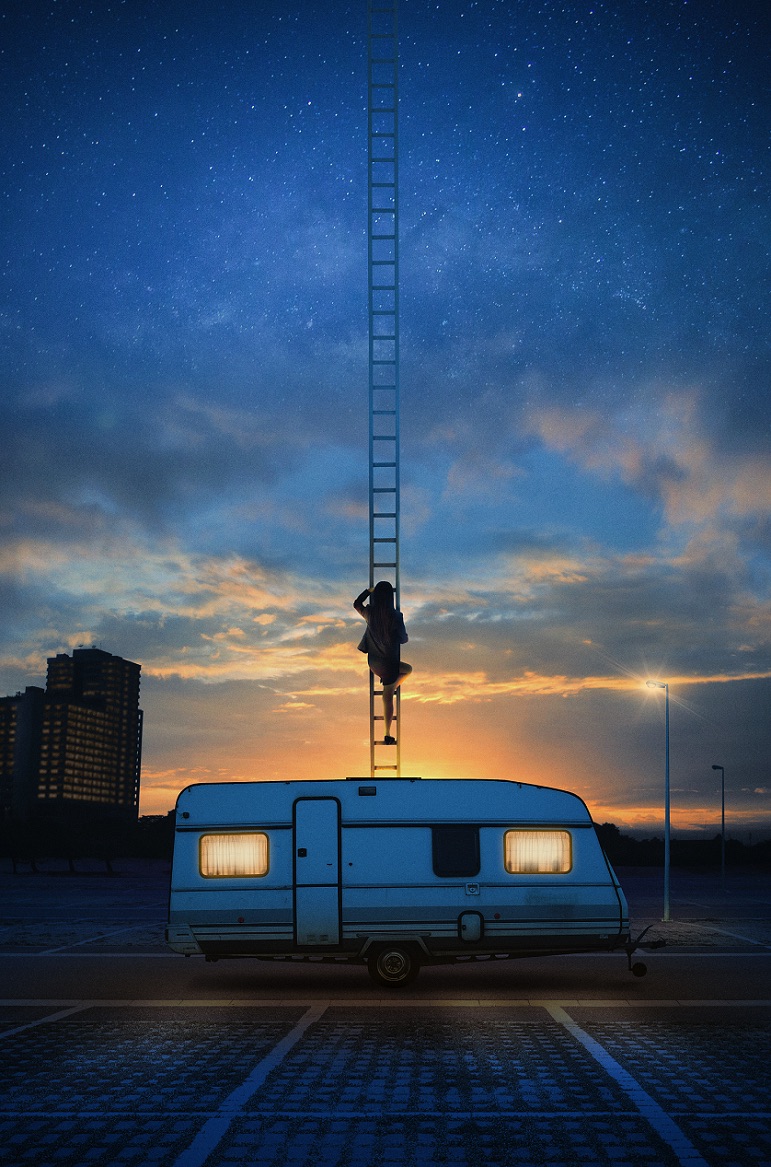
Interview: Jemma McDonnell, Mobile

The Paper Birds are a devising theatre company with a political agenda, currently touring the country with Mobile, the second show in a trilogy about social class. Staged in a caravan for audiences of up to eight people at a time, the show is an intimate piece of verbatim theatre based on personal testimonies, and will be popping up at the seaside, on high streets, at schools, and in arts centres and theatres all over the UK until October.

“We want people to think about social class and social mobility,” says The Paper Birds’ Artistic Director, Jemma McDonnell. “Who are you and how do you experience the world? Did the start in life that your parents gave you determine who you would be? Is the society we live in one that gives everyone an equal opportunity? And if not, is this important?

“We were keen to make a trilogy about class because it is so complex in the way it shadows who we are and what we do in the world. We began by collaborating with a sociologist, Dr Sam Friedman from London School of Economics, who shared a range of verbatim interviews with us that he had undertaken as part of his research. This led us to talking to more communities and beginning to shape a show that really explored ideas around social mobility.”

Photo Credit: Richard Davenport for The Other Richard

While it’s undoubtedly a unique and fascinating choice of setting, staging a show in a caravan is not without its equally unique challenges: “The caravan is very intimate and this allowed us to use theatrical images and trickery that would not be impactful in a larger traditional theatre space,” explains Jemma. “But the caravan’s size was also its downfall, as limited space meant we had to be creative with the ways we created our characters. Luckily, we managed to come up with a few tricks!

“The show is made to be highly accessible. It can travel, it is only 40 minutes long and there is a cap on ticket prices. We want people to take a risk on the show, to be brave and step inside the caravan with us!”

And people, it seems, are happy to take that risk; having already been on tour since May, the company have found audiences very receptive to the unusual format of the show. “Overwhelmingly so,” confirms Jemma. “Audience feedback and responses have been fantastic. People love to try something different and whilst the caravan looks ordinary from the outside, it has many unexpected surprises inside that the audiences have loved.”

Photo Credit: Richard Davenport for The Other Richard

The Paper Birds are an established company aiming to inspire, educate, and make big socio-political subjects accessible. “We met whilst at Bretton Hall, Leeds University studying,” explains Jemma. “We graduated in 2003 and have been making work together since. As a company, we make political work that gives people a voice. Sometimes it is our voice, more often the shows are based on people we meet around the UK. We want to make work that has an impact socially.”

Intrigued? Catch Mobile on tour – visit thepaperbirds.com for all dates and venues.

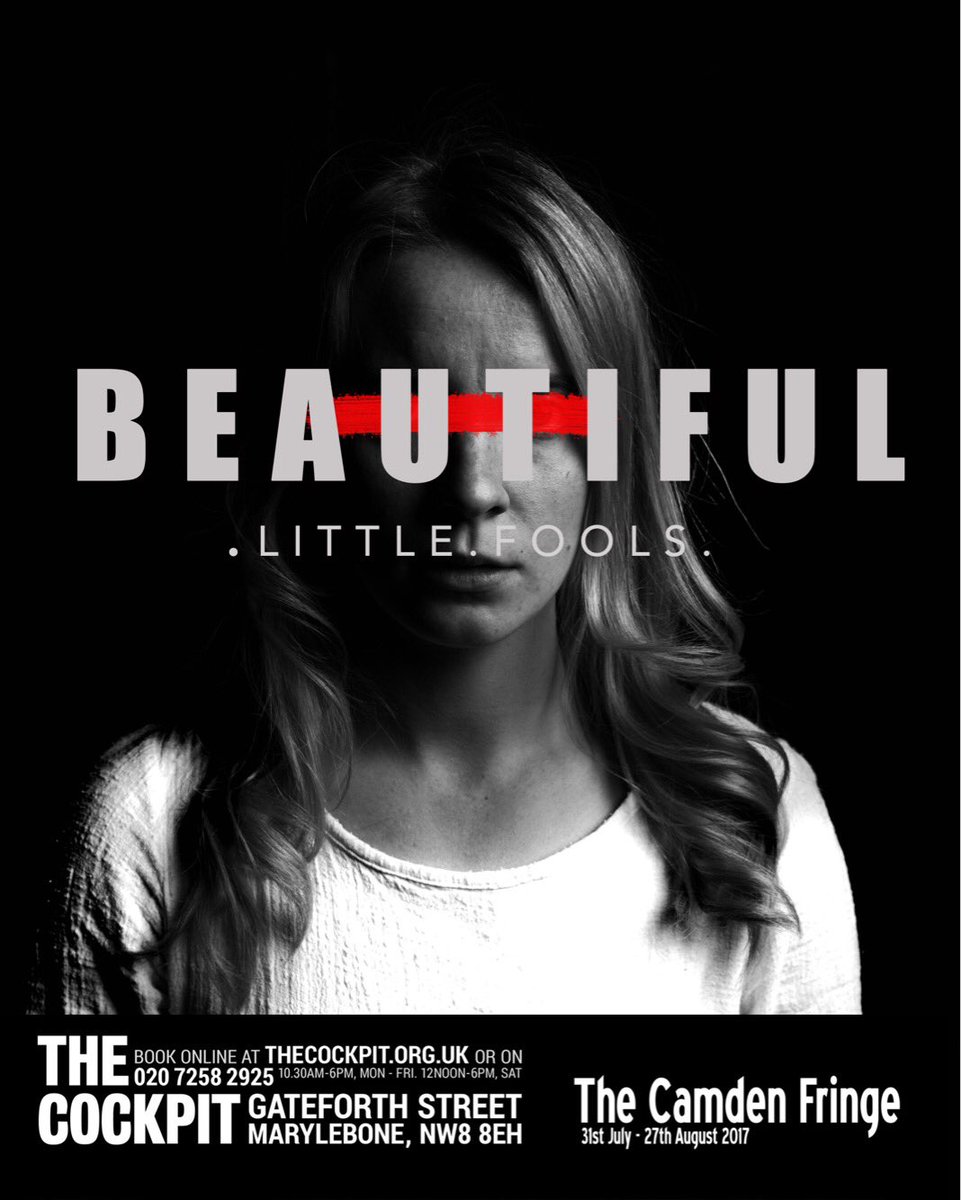
Interview: Jemma Burgess, Beautiful Little Fools

“We want audiences to leave the performances asking questions. To be even more curious. To spark debate. To think about their own beliefs and other people’s beliefs and ask why…”

Jemma Burgess, the founder of Optic Theatre, makes her playwriting debut at the Cockpit Theatre next month with Beautiful Little Fools, a piece inspired by recent political events. “Beautiful Little Fools is an all-female, new writing piece exploring how media can manipulate the human mind,” she explains. “With Trump, The Iron Lady, Mrs Strong and Stable, The Bush and more. We see if three girls can be brainwashed to adhere to the government’s demands. In today’s turbulent times, this couldn’t be more relevant.”

Perhaps unsurprisingly, when Jemma outlines her inspirations for the show, the recent UK general election and the rise of Donald Trump top the list. “But also documentaries and programmes such as Hypernormalisation by Adam Curtis,” she adds. “The Handmaid’s Tale. Big Brother. Black Mirror. Books: The Great Gatsby and 1984. Social experiments: Pavlov’s Dog. MK ULTRA and The Stanford Prison Experiment. Lastly, just listening and observing people that I know. Their views on the world and why they believe what they believe.”

Jemma set up the company with a clear goal in mind: “Optic Theatre was founded to give more opportunity to women within the Industry, without writing a play specifically for women or revising a play and gender swapping the roles,” she explains. “At the end of the day, we are all human; raw, messy, caring, beautiful humans. I want to make theatre that is both challenging and exhilarating to perform. Stories that come from our guts and our impulses.”

True to that vision, Beautiful Little Fools is presented by an all-female team. “Our director Anna Marshall recently graduated from the Ecole
Internationale de Theatre de Jacques Lecoq in Paris, and also has a BA Hons from the Royal Central School of Speech and Drama in Puppetry. With a vast and outstanding CV, we are so chuffed to have her directing Beautiful Little Fools,” says Jemma, who trained at the Academy of Live and Recorded Arts, and will also perform as SUBJECT A in the production. “Sophia Hannides, who plays SUBJECT D, trained alongside me and went on to sign with Cole Kitchen after graduating; she’s recently appeared in Doctors. 

“After graduating from Guildford School of Acting, Izzy Goldby-Briggs, who plays SUBJECT C, moved to London and is hoping to set up a writing group for actors, mainly looking into short films that could be used for show reel material. And lastly is Jessica Collins, who plays SUBJECT B. Jessica has trained at the BRIT school since she was fourteen and has gone on to perform in programmes such as the BBC’s Silent Witness and Doctors.”

Beautiful Little Fools doesn’t only mark Jemma’s debut as a writer – it’s also her company’s first time at the Camden Fringe. “We’re all looking forward to pretty much everything,” she says. “It’s an exciting process and we are constantly learning. It’s a fantastic festival and we hope that it can open opportunities for future development of the play.

“Ours is a show for anyone interested in all-female work and female equality. Physical theatre lovers. Anyone who’s curious about how the world is run. From students to your grandma, if you have an opinion on the ‘system’, then come and see our show.”

See Beautiful Little Fools at the Cockpit Theatre on 7th and 8th August.

Interview: Jennifer Sutherland, Tiddler and Other Terrific Tales

Jennifer Sutherland is co-founder of Scamp Theatre, the multi award-winning team that brought us West End hit Stick Man: Live on Stage. In 2016, she launched a new company, Freckle Productions, whose focus is on bringing inspirational stories to the stage for children, young people and families.

“Freckle started in 2016 after the co-founders of Scamp decided after many happy years of working together, that we wanted to pursue our own projects,” Jennifer explains. “Freckle gathered its skirts, bought some chickens, acquired an extra dog and a lost cat and set off to tell stories, big and small.”

And they’re doing just that at Leicester Square Theatre this summer, with the return of Tiddler and Other Terrific Tales – a live stage show featuring four of the most loved books from Julia Donaldson and Axel Scheffler: Tiddler, Monkey Puzzle, A Squash and a Squeeze and The Smartest Giant in Town. All four books are brought to life through puppetry, music and a host of adorable characters.

Former Children’s Laureate Julia Donaldson and internationally acclaimed illustrator Axel Scheffler are the team behind countless popular children’s books, among them The Gruffalo and Room on the Broom, as well as Stick Man and the stories featured in Tiddler and Other Terrific Tales. “As co-founder and director of Scamp Theatre, I was fortunate enough to be approached by Julia herself after she saw two of our other shows,” says Jennifer. “She loved the productions and wanted to know if we could bring any of her books to the stage. We were only too pleased to work with her – who wouldn’t be!”

Photo credit: Robin Savage

So is this just a show for kids? “Yes! No! Maybe!” debates Jennifer. “Of course, children do love it – these are their stories after all and they feel they own them and know them, but they’re not just for children. The production is full of wit, charm and storytelling – suitable for any age.

“What one word would we like our audiences to use to describe the show…? Magical! Or amazing! Can I have two?”

As Tiddler and Other Terrific Tales returns to the West End for a two-month run, Jennifer and the team are excited to share their own enthusiasm for these irresistible stories with new audiences. “Firstly, it is lovely to be back at Leicester Square Theatre,” she says. “It’s such a welcoming venue for everyone, the audience and everyone who works on the show. It’s also great to see the smiling faces of the audience as they leave the show every day. 

“Come and see some of your favourite books brought to life! Children know these stories and these characters and they love seeing them brought to life. But there’s another reason too – something magical happens in a theatre when you have one group of people telling another a tale they love so much.”

Photo credit: Robin Savage

And what of Freckle Productions’ future plans? “Well, Freckle is still producing Tiddler and also co-producing Stick Man: Live on Stage with Scamp,” says Jennifer. “However we are excited to be developing some bigger projects in the future. Scamp started as a perfectly formed smaller scale theatre company – Freckle is going to be creating some much larger work with some exciting artist collaborations in the future. Watch this space!”

Tiddler and Other Terrific Tales is at the Leicester Square Theatre until 3rd September.