Interview: Claire Rammelkamp and Danica Corns, A Womb of One’s Own

The founding members of emerging all-female theatre company Wonderbox – who include Danica Corns, Carla Garratt, Claire Rammelkamp, Holly Bond, Larissa Pinkham and Olivia Early – met as members of the National Youth Theatre. “We got so comfortable with each other that we started oversharing about sex, periods, emotions, mental health, politics, relationships, wanking… the list goes on,” admits Claire. “So we decided to carry on doing that as a theatre company, and turn it into art. We want to explode taboos and share unheard stories with some filthy, fabulous feminism.”

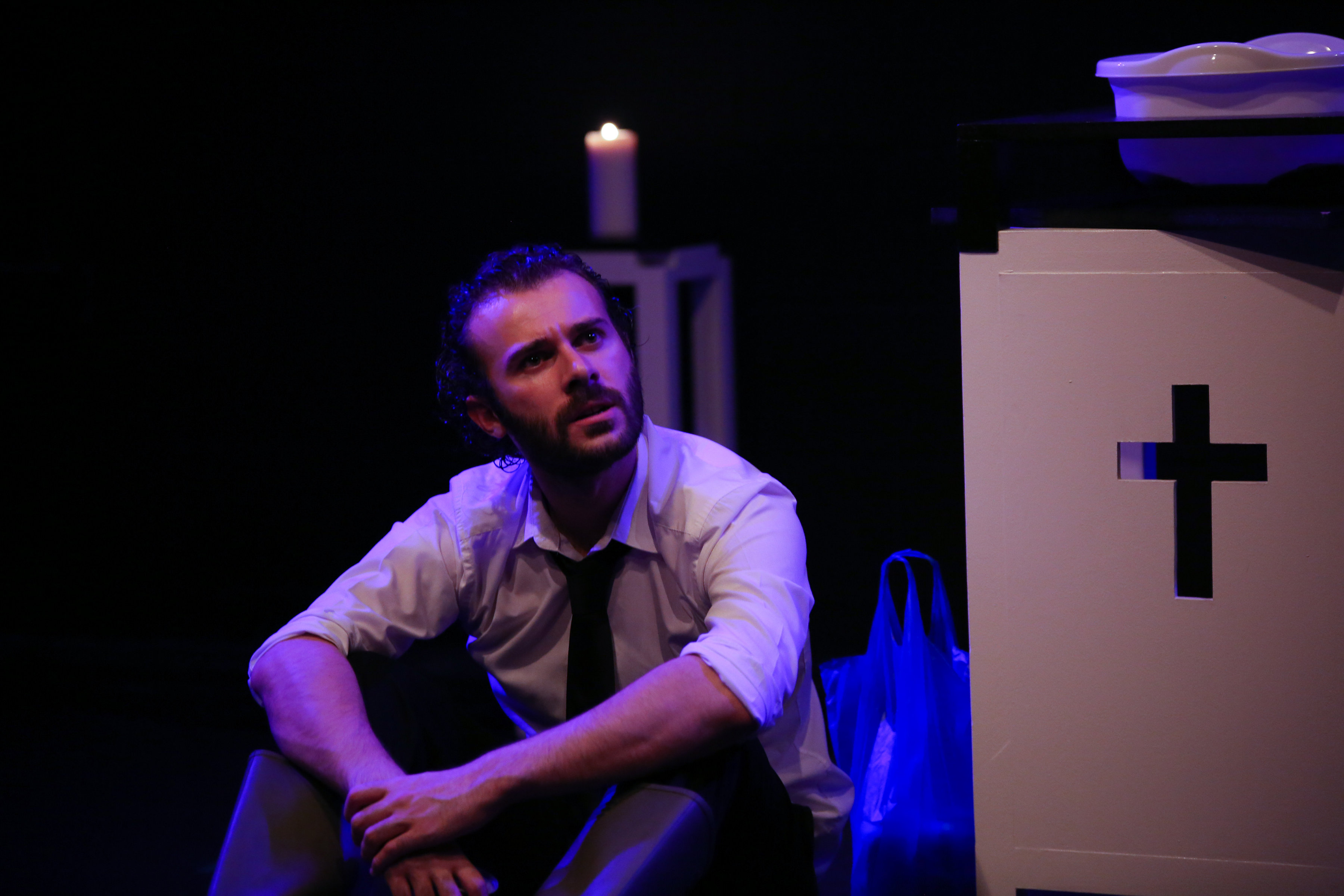
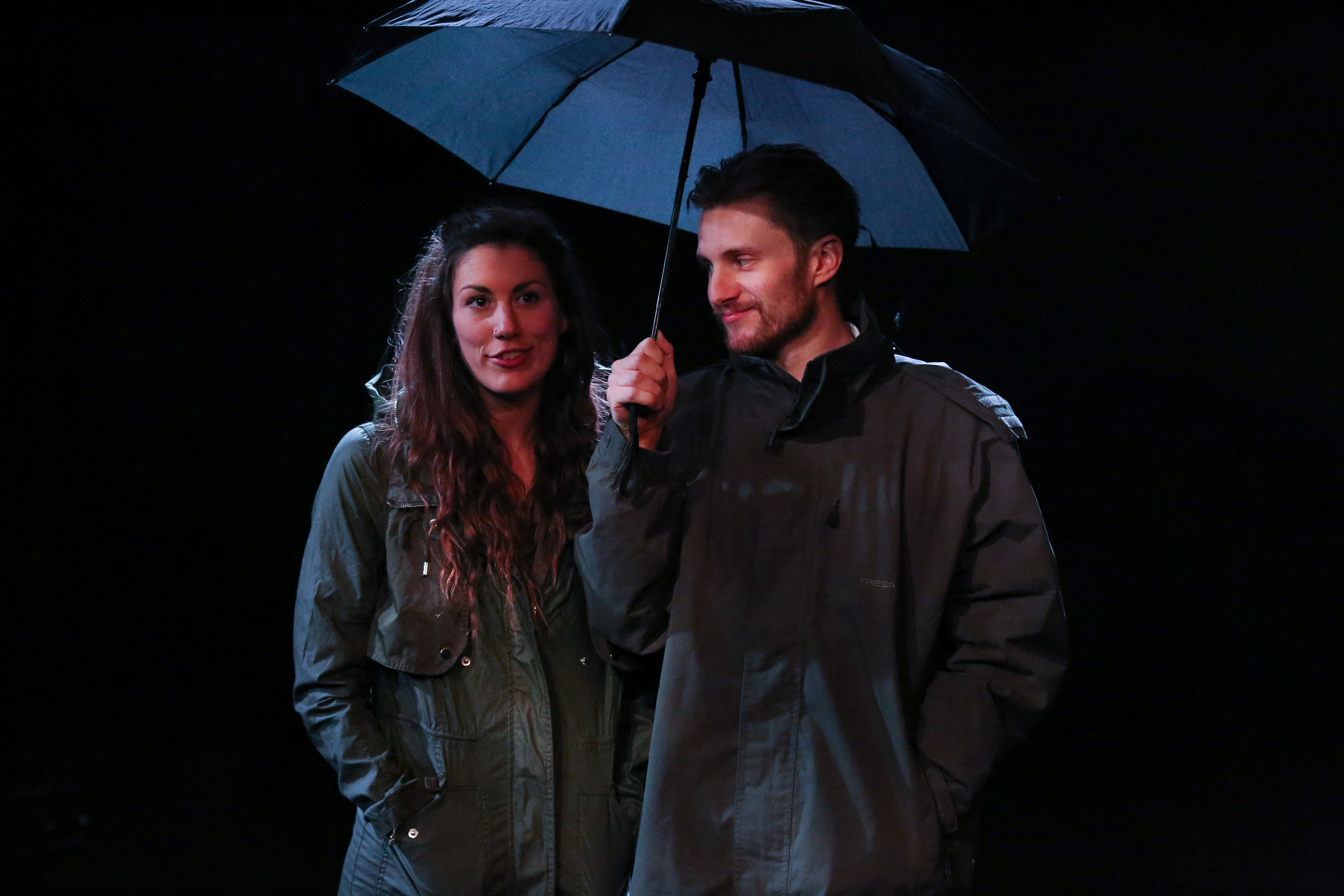
They’re turning their attention first to the issue of abortion in their debut production A Womb of One’s Own, which runs at The Space from 15th-19th August.  “The play follows the story of Babygirl, an eighteen-year-old fresher who was raised Catholic by two strict elderly women and ends up getting pregnant the first time she has sex,” says Claire, who wrote and performs in the play, as she and fellow cast members Danica, Larissa and Carla bring Babygirl to life, revealing different aspects of her personality and an absurd cast of characters. “It starts off as a coming of age comedy; she’s learning how to flirt and get drunk, she’s exploring her sexuality, she’s trying not to embarrass herself on a date. Then all of a sudden she’s facing much bigger challenges.”

A Womb of One’s Own was inspired by Claire’s own personal experience: “I had an abortion at university, and I had no idea how to handle it because no one had ever spoken to me about abortions. Fortunately, I have a very supportive Mum and friends. Babygirl doesn’t have a mother, and she’s only been at uni a few weeks, so the play explores what it would be like to go through an abortion feeling totally alone.”

One of Wonderbox’s aims is to break the taboos surrounding abortion and get people talking about what’s traditionally been a difficult subject. “We’re still oddly hung up on old-fashioned notions of propriety when it comes to discussing abortion,” says Claire. “It used to be the same for divorce and homosexuality. Even periods. One in three women in the UK will have an abortion at some point, and yet people are largely silent about it. If we all spoke about it more then women wouldn’t feel scared or ashamed. We’ve still got a lot of education work to do to give women control over their own bodies and we need to make sure we don’t go backwards – like with Trump’s abortion gag order.”

Despite the heavy topic, Claire and her co-founders are quick to point out that the show is at times irreverent and laugh-out-loud funny: “I’m a firm believer in laughing at essentially everything, especially myself. We didn’t want to be didactic – an audience will pay much more attention to a comedy full of sex jokes than a lecture. It also helps to humanise a character; once the audience have shared a joke with Babygirl they’ll have more empathy when she starts having a hard time.”

And it seems to be working; they’ve been thrilled with early responses to the show, which include an endorsement in February from actor Paul McGann. “Our first performance was to a bunch of queer, feminist, theatre-lovers, so we were really preaching to the choir,” says Claire. “But then our second audience had middle-aged people, older people, Tories, and a vicar. The vicar was especially fond of it.”

Of course, starting a theatre company isn’t always easy, and co-founder Danica has no hesitation in identifying their biggest challenge: “Money! We’re a young, unfunded theatre company so this is of course the first and biggest obstacle we are having to overcome – but we are getting creative with how we do this. Finding rehearsal space free of charge has been and remains one of the biggest challenges we face, and so far we have been getting round this by using gardens, living rooms and empty classrooms at our universities/previous places of study. We even once did a voice warm-up on Clapham Common. Social media has also been a great alternative to a website for us in the first instance to help build our online presence while funding is scarce.

“Around 90% of the work we put into the company and the show is not in the rehearsal room,” she adds. “We’ve all had to turn our hands to other things and use our skills and knowledge effectively and efficiently. We’re lucky enough to have a photographer, a designer, a marketer and members with lighting technician knowledge within our company, so we haven’t had to hire anyone in yet – which would come with a cost. However, while we’re all working hard on this to get things off the ground, we have found it difficult balancing being creative and making the art with the admin and running the business side of the company – it’s a bit of a juggling act at the moment, and we’re still figuring this out. One of the things we are finding so important is timetabling separate rehearsals for creativity and meetings about important business stuff.”

Claire’s hoping that the show will speak to everyone, whether or not they have personal experience with abortion: “I hope if they’ve had an abortion, they’ll feel a sense of community, and that anyone who needs an abortion in future won’t feel so alone. I hope it encourages people to share their own experiences, and I hope it will make other people more understanding. I also hope everyone will wet themselves laughing.”

A Womb of One’s Own is at The Space from 15th-19th August.
Review: Mrs Orwell at the Old Red Lion Theatre

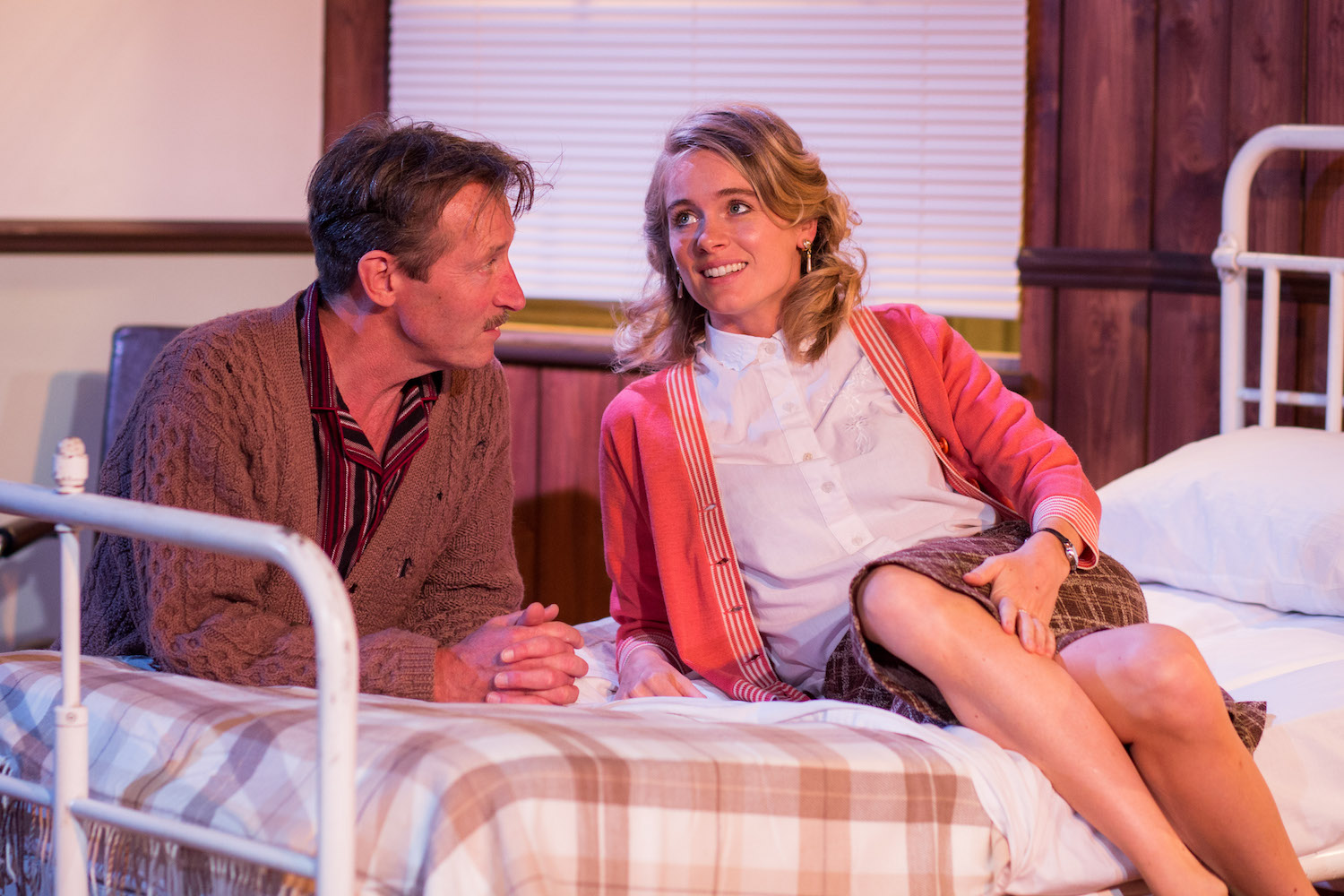
Fun fact to remember for future pub quizzes: George Orwell’s real name was Eric Blair. This is just one of the things to be learnt about the author of Animal Farm and 1984 in Tony Cox’s Mrs Orwell at the Old Red Lion. The play, directed by Jimmy Walters, charts the final months of Orwell’s life following the publication of 1984. Admitted to University College Hospital suffering from tuberculosis, a fragile George proposes to young, glamorous magazine editor Sonia Brownell, who goes on to become the second Mrs Orwell. Cox examines their relationship and the motivations of each party in this fascinating and moving new play, which also touches on Orwell’s politics, his guilt over the death of his first wife Eileen, and the universal need to be remembered after we’re gone.

Photo credit: Samuel Taylor
Despite its title, the play is just as much the story of Mr Orwell as that of his wife, and Peter Hamilton Dyer absolutely commands the stage for almost the entirety of the evening. A hunched, pathetic figure in clothes that are far too big for him, racked by ill health and desperately lonely and afraid, it’s tragically clear that his wits are still as sharp as ever, and he longs to believe he has at least three more novels in him. George loves Sonia without hope or agenda, knowing full well her heart belongs to the French philosopher Maurice Merleau-Ponty, and his simple joy in just being around her is devastatingly well played by Hamilton Dyer.

As his new wife, Cressida Bonas is equally compelling. Clipped, efficient and often impatient, she also demonstrates an obvious affection for George that makes it difficult to work out Sonia’s true motivation. While she certainly seems swayed by the suggestion that she could benefit financially from the marriage, her grief when she learns of his death and her desire to honour his final wishes appear genuine and heartfelt. She’s not a particularly likeable character in the story – all our sympathy is spent on the vulnerable figure of Orwell himself – but at the same time, she’s not a villain of the piece either, and we find ourselves admiring her sacrifice whilst still questioning her motives.

A brilliant cast is completed by Rosie Ede as Orwell’s no-nonsense nurse, Robert Stocks as his fiercely loyal publisher Fred Warburg, and Edmund Digby Jones in a particularly intriguing performance as Lucian Freud. His scenes with Bonas are marked by a simmering sexual tension, while with her husband he’s relaxed and humorously frank about his own and others’ shortcomings. (In fact the play in general is surprisingly funny, considering it’s a story about a dying man.)

Photo credit: Samuel Taylor
The majority of the action takes place in George’s hospital room, though some conversations are held in the corridor behind, amplified for our benefit and with the actors visible through the bedroom windows. This presents a slight confusion, because it isn’t made clear if these discussions can also be heard inside the room – perhaps this isn’t hugely significant given that George is always fully aware of Sonia’s romantic indifference to him, but it’s a minor frustration in an otherwise excellent production.

Cox delights in name-dropping famous writers and artists throughout as a way of reminding us that the play’s based on true events: Picasso, Dalí, Thomas Mann, Norman Mailer all get a mention. Even so, you don’t need to know much – or anything at all, really – about Orwell or his work to enjoy this very human story of love, fear and hope. Beautifully performed with warmth and humour, Mrs Orwell is a fascinating and entertaining insight into the life and death of a legend.


Can’t see the map on iPhone? Try turning your phone to landscape and that should sort it. I don’t know why but I’m working on it… 😉

Review: America’s Number One Detective Agency at the Drayton Arms

Written by Liv Hunterson and directed by Anna Marshall, Fatale Femme’s debut production America’s Number One Detective Agency is an enjoyably silly and suitably atmospheric – if a little more convoluted than feels strictly necessary – homage to the film noir genre.

Our heroine Vivian O’Connell (Fleur De Wit) is fighting to reclaim her crown as America’s top private detective, recently lost to her ex-boyfriend Bobby (Hamish Adams-Cairns) in a high profile case. But he gets all the best clients these days, so Vivian and her partner Joey (Siobhan Cha Cha) are reduced to helping out irritatingly perky aspiring actress Betty Channing (Alex Hinson), who seems to have acquired a stalker. Throw in a deranged gangster (Oliver David-Harrison), a dapper English gent (Iain Gibbons), and something about a gorilla(?), and the stage is set for a mystery caper that will take the gang all the way to Las Vegas. But will they all make it out alive…?

Arriving at the theatre is like stepping into an early 20th century jazz club, with a live band and singer playing in the corner while the actors lurk in the shadows, smoking and looking moody. The musical accompaniment works particularly well in maintaining the film noir atmosphere throughout the play, with singer Isabella Bassett taking on a very different role on occasion as Betty’s thuggish ex-husband, Freddie.

Under the direction of Anna Marshall, the cast of six give good individual performances but also work very well as an ensemble, keeping the action moving at a rapid pace throughout. (If anything it’s all a bit too fast – in such a complex plot where every detail counts, it’s easy to blink and miss something important.) Even when not directly involved in a scene the actors all remain on stage, either as secondary characters or as part of the set; the moment in the car is particularly well executed. I’m still not 100% sure if the problem with the door was part of the script or a set malfunction, but if it was the latter, then the cast are also to be congratulated on smoothly working around a frustrating technical glitch and turning it into a running gag.

With an even male/female split in the cast, it’s refreshing to see the women taking charge and driving the story forward, while the men are busy pining for lost lovers, cowering under tables and getting punched in the face. Fleur De Wit’s Vivian is a feisty heroine, keeping her cool despite the chaos unfolding around her, with strong support from Siobhan Cha Cha as Vivian’s trusty associate Joey, and Alex Hinson as Betty, the Hollywood starlet with hidden depths. Meanwhile the three men provide some of the best comedy moments, particularly Iain Gibbons as Teddy, who just can’t help putting himself in harm’s way whenever he feels a lady’s honour needs defending – even though the ladies are more than capable of taking care of themselves.

America’s Number One Detective Agency is good fun, particularly for fans of the film noir genre; it certainly looks and sounds the part. The plot could benefit from being a little less complex, or the pace of the production taken down just a touch so the audience can keep up with the various twists and turns (and jokes). That said, this is still a very entertaining show, and a promising debut from Fatale Femme.


Can’t see the map on iPhone? Try turning your phone to landscape and that should sort it. I don’t know why but I’m working on it… 😉

Review: Flood at Tristan Bates Theatre

Funny, heartwarming and a little bit damp (though not, to the bizarre disappointment of one of my friends, actually flooded), Tom Hartwell’s Flood is the first outing for newly formed Paper Creatures – and it’s fair to say they’re off to a flying start.

Set in a remote rural town, Flood is the story of Adam, who’s having a really bad day. It’s the morning of his mum’s funeral, his house is flooded, and he’s just found out his sister and best friend are having a baby (not to mention driving a Skoda), and that his ex-girlfriend’s now dating a guy who used to stab people with protractors. Anyone could be forgiven for hitting the secret whisky in those circumstances; the only problem is that Adam, like his mum before him, has been doing a bit too much of that just lately…

Photo credit: Toby Lee

Though this is a story about five characters and the various directions their lives have taken, Jon Tozzi’s Adam naturally takes centre stage as the one character who stayed at home, and now becomes the focal point for their return. Effortlessly charismatic, with a dry wit and an appealing vulnerability, it’s easy to root for him despite a frustrating refusal to address his various issues. Nathan Coenen and Emily Céline Thomson are perhaps the most relatable as Jess and Michael, a young couple taking their first clumsy steps into responsible adulthood, while Molly McGeachin makes a relatively brief but highly significant appearance as Adam’s ex Laura, who may have moved on physically, but has left a little of herself behind nonetheless. Finally, you get the feeling writer Tom Hartwell might be venting a few frustrations in his role as Ben, whose six-month stay in London has apparently converted him into a vegetarian, gluten-free, green tea drinker with a posh accent, but quickly reverts to type when he returns home.

In Flood, as in his previous plays, Hartwell demonstrates a talent for zeroing in on human experiences we can all relate to, and tackling them with humour and empathy. Moving away from home, leaving behind – or being left by – friends and family, and then attempting to reignite those relationships later as different people is something almost all of us have gone through, and the play is marked by a recognisable blend of tension and nostalgia between the five old friends. Under the expert direction of Georgie Staight, it’s easy to believe the five actors really have known each other all their lives, and to get caught up in the familiar struggles that form an inevitable part of growing up.

Photo credit: Toby Lee

Although much of the flood water exists only in our imaginations, the underwater theme is subtly present in the production’s design: characters who’ve been out in the rain actually look wet; dripping sound effects remind us that the waters are still rising; even the choreographed set changes include slow-mo moments where the characters appear to be floating across the stage. It’s clear that a great deal of care has gone into the production, and proves yet again that big budgets and fancy effects aren’t always necessary to create something special.

Paper Creatures’ focus is on making theatre for and about millennials; as a member of that demographic (just…) who’s still figuring out how to be a grown-up, it’s perhaps not surprising that I really related to and enjoyed Flood. It’s a shame that the play has such a short run this time, but hopefully it’s not the last we’ll see of this excellent production – and if you can get there before Saturday, it’s well worth a visit.


Can’t see the map on iPhone? Try turning your phone to landscape and that should sort it. I don’t know why but I’m working on it… 😉

Interview: Liam Joseph, PLUTO

Liam Joseph and Callum O’Brien met when they were working Front of House together at the Harold Pinter Theatre. Now co-founders of their own company, Moonchild Theatre, this month they return to London with their acclaimed first production, PLUTO.

PLUTO tells the story of the titular former planet during the period in which he finds out he is no longer a planet,” says Liam, who plays Pluto. “We follow his story as he battles with an identity crisis and his moon Charon tries her best to keep his spirits high. The show is an allegorical examination of LGBT issues that are still rampant in the world today.”

Liam explains that the story of PLUTO was inspired by the now notorious anti-LGBT laws passed in North Carolina last year, which required transgender people to use the restrooms that matched their birth certificate. “On the surface this would seem an unlikely source to inspire a play about the former planet Pluto,” he admits. “However, the story of a governing body dictating the personal identity of others and actively doing harm in the process, upon closer inspection, does in fact bear a remarkable similarity to that of our fallen cosmic comrade. The toilets of North Carolina have been exchanged for the constellations of the night sky. In lieu of the transgender population there is a distant planet battling with his identity.

Photo credit: Dave Bird

“Although our story is not limited specifically to transgender struggles, these ongoing issues – and many like it – helped develop the themes of identity, labelling and loneliness that form the emotional crux of PLUTO. This play is a marriage of two enormous but previously unrelated themes; the LGBTQ+ experience in today’s society and the beautiful, incomprehensible mysteries of space.”

The show was last performed in April at Baron’s Court Theatre, where Millennial London called it “an impressive first production of a new play that captures many important issues in today’s world”. Now returning as part of the Camden Fringe, the show’s undergone some changes: “As we’re now performing as part of a festival run, the show had to be adapted to suit the new working environment,” explains Liam. “With strict get in and get out times, it was necessary for us to cut the run time of the play from eighty minutes to one hour. It used to be bookended by a prologue and epilogue of human characters, to bring the audience back down to earth – literally – but that’s completely gone now.

“It’s much more streamlined and serious, focusing more on the effect of labels and the issues that labels cause in society. And it also opens up a whole new level to the relationship between Pluto and Charon, the icy twins who live in the furthest reaches of the solar system. Completely removed from the solar system, one wants to escape their one-billion-year solitude and the other wants to stay in their ‘safe oasis of anxiety’. Naturally this causes catastrophic tension…”

Despite these changes in structure, the message and spirit of the piece has remained intact: “The show is generally aimed at a millennial/queer audience whose experiences we hope the show manages to capture,” says Liam. “We are a theatre company composed of relatively young individuals and so it was in our interest to create theatre that appealed to us as audience members.

“I think Callum would agree in saying it’s a fable for the millennial; understand that this story is happening now in London as we speak. So many young millennials struggle with being labelled something by ‘words on a page’ and it affects them deeply. We can all do something by accepting each other for who we are: human beings. Simple as that.”

Photo credit: Dave Bird


The foundation of Moonchild Theatre came about when the two friends and colleagues realised they’d rather be on the stage than in front of it. “I wanted to be on stage so I asked Callum to write me a play – that’s it!” says Liam. “Over time, we’ve seen PLUTO and ultimately our ethos grow and change, but our aim is to create ‘Now Theatre’, dealing with issues that society’s happy to brush under the rug. We don’t want to solve them, we want people to be aware of them and be able to engage and debate these issues.

“The whole process has been a huge surprise. We only wanted to put a play on and now it’s turned into a successful theatre company with fans and regulars. We were surprised about how many people wanted to see PLUTO at the Baron’s Court and how well it was received by the reviewers.

“All in all, to be able to perform at the King’s Head Theatre, the most prestigious gay theatre in the world, and The Cockpit this summer, we’ve done and achieved a lot more than we’d ever hoped for. The future is ours!”

See PLUTO tonight (1st August) at the King’s Head Theatre or book for the Cockpit Theatre from 14th-17th August.