Review: The House of Yes at The Hope Theatre

Bringing to a close Matthew Parker’s critically acclaimed tenure at The Hope, The House of Yes is a jet-black comedy drama that very much sees the theatre’s outgoing artistic director leave with a bang. Deeply twisted in a variety of ways, Wendy MacLeod’s story of the dysfunctional Pascal family is both horrifying and hilarious, and in this production it’s performed exquisitely by the cast of five.

It’s Thanksgiving, and Marty (Fergus Leathem) is bringing his fiancée Lesly (Kaya Bucholc) home to meet the family. The problem? His family… By their own admission, the Pascals have never had a guest before, and it’s unlikely they’ll ever have one again once the dust settles on this particularly eventful 24 hours. Marty’s twin sister Jackie-O (Colette Eaton) has two obsessions: her namesake, the former First Lady; and – unfortunately for him – Marty. Younger brother Anthony (Bart Lambert) is a college dropout whose eye falls rather too enthusiastically on his brother’s future wife. And through it all, their mother (Gill King), a self-professed “free spirit”, wafts around the house, seemingly taking little interest in her children’s lives… but in reality paying just a bit too much attention to what they’re getting up to.

What’s particularly enjoyable about this production is the care each actor puts into their performance. It’s impossible to choose a standout performance when each of them is so captivating. Every detail – the way a line is delivered, the movements and gestures, the facial expressions and eye rolls – feels perfectly timed and judged. The characters are, to put it kindly, not normal people – and yet somehow they come across as three-dimensional and 100% believable, particularly in the setting of their gloomy, claustrophobic house, with the power out and a hurricane raging outside. Rachael Ryan’s set design perfectly captures the essence of a home whose former splendour has now well and truly faded, even if that message hasn’t quite reached the Pascals themselves. It’s all a bit Addams Family meets Hotel California; both house and residents seem to have a way of ensnaring those who step inside, and the thought of anyone ever leaving becomes increasingly remote as the evening goes on.

Photo credit: lhphotoshots

As hard as it may be to believe, this dark and twisted tale is also very funny, despite that constant creeping sense that all will not end well. Much of our laughter is the result of surprise; these are characters who just say whatever’s on their mind, whether or not it’s considered appropriate – and as dysfunctional as they undeniably all are, there’s something quite refreshing and enjoyable about that openness.

The House of Yes may not be everyone’s cup of tea, but for those who are willing to let themselves be drawn into the Pascals’ crazy little world, there’s so much to enjoy about this expertly put together production. It’s a fitting and suitably offbeat farewell from Matthew Parker, a play that will make you laugh, recoil, and possibly have a nightmare or two. But don’t panic – they do let you out at the end. Honest.

The House of Yes is at The Hope Theatre until 26th October.

Review: Classified at the Lion and Unicorn Theatre

Consisting of three short interlinking plays set in 2019 and a dystopian near future, Jayne Woodhouse’s Classified offers a chilling but not wholly unrecognisable glimpse of a Britain where social class has become our single defining characteristic.

In Choices Leanne (Kayley Rainton), a new mother, is interviewed by an official from the “Department of Life Choice Options” (David House), who knows everything about her living situation and employment history, and uses that knowledge to question her ability to raise her child. 60 years later, in Classified, a couple (Neil Gardner and Rosannah Lenaghan) argue over her decision to stop and help a “class Z” homeless man: a moment of compassion that could have an impact on their own class ranking – or worse. And finally in The Watchers, Sarah (Rainton) looks back on her mother’s decade of non-violent resistance to the system, and explains why she’s now chosen to respond in a different way.

Photo credit: John Bruce

The trio of plays is simply staged by director Calum Robshaw, but with universally strong writing and performances, the show nonetheless succeeds in making its point very effectively. Though each story is only 20 minutes long, the audience quickly becomes invested in the characters and what happens to them – perhaps because the world they live in and the attitudes within it, though extreme, are not entirely unfeasible. I’m sure, for instance, that while DOLCO isn’t (yet) a thing, the kind of interrogation to which eighteen-year-old Leanne is subjected three days after giving birth almost certainly does take place. Similarly, unwillingness to help those less fortunate because of the risk it might reflect badly on ourselves is taken to exaggerated lengths in the second play – but that attitude already exists in our current social and political climate. It’s easy to see how these stories could become reality, and by more than once bringing the audience into the action, the play shows us too how we could be complicit in making it happen.

Photo credit: John Bruce

The final play is perhaps the most challenging, because it asks us to consider how we should respond to a corrupt and heartless system of government that weaponises social status against its own people. There’s never any doubt that something needs to be done – but is meeting violence with violence really the answer, even when all other arguments seem to have failed?

Throughout the show, the characters are forced to make choices – sometimes with the audience’s help, other times alone. In some cases, there’s a clear right and wrong; in others, it’s not so black and white. The impact of each choice is then felt throughout the rest of the play, demonstrating how the decisions we make every day can resonate and affect not just our own lives but those of people around us. Cleverly written and deeply unsettling, this trio of stories sends its audience home reflecting on both the possible future we’ve just seen, and on our own actions and attitudes in the here and now. Highly recommended for a thought-provoking evening.

The final performance of Classified is at the Lion and Unicorn Theatre tonight (12th October).

Review: Moby Dick at Brockley Jack Theatre

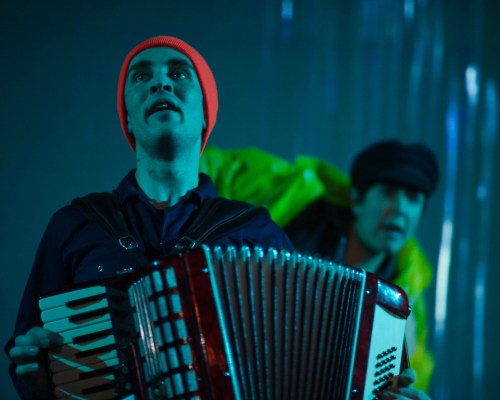
In the week that Extinction Rebellion protests kicked off across the globe, and a lost whale tragically died after being struck by a ship in the Thames, So It Goes’ modern, multimedia production of Herman Melville’s Moby Dick is both intentionally and accidentally topical. The story of Captain Ahab and his obsessive quest to find the monstrous white whale that took his leg comes vividly to life at the hands of a five-strong cast, strongly supported by the inventive use of video, light and sound effects. Oh, and not forgetting Alex Chard’s original sea shanties about the various perils and pitfalls of 21st century life.

Photo credit: Carl Fletcher

Douglas Baker’s significantly abridged adaptation of the 500-page novel follows the hunt for Moby Dick as Ishmael (Ben Howarth), a comically naive young man with a hankering to go to sea, sets out with new acquaintance Queequeg (Stephen Erhirhi) on board the whaling vessel Pequod. Shrugging off the warnings of chief mate Starbuck (Lucianne Regan) that his search will end badly for them all, Captain Ahab (Charlie Tantam) insists on pursuing his prey to the ends of the earth, with predictably disastrous results.

The play takes as its focus a line from the novel, which rings as depressingly true now as it did in 1851: “man takes this whole universe for a vast practical joke”. Looking back on his experience aboard the Pequod, an older, wiser and far more cynical Ishmael (Rob Peacock) draws parallels between the self-destructive whale hunt and the many ways in which our planet continues to pay the price for humanity’s greed and thoughtlessness.

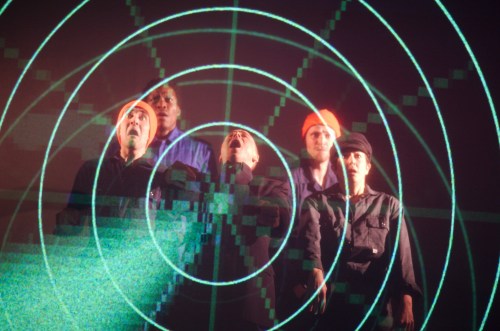
It’s hard to imagine how both a ship and a whale could realistically fit inside any theatre, and particularly one as small as the Brockley Jack – but this production achieves both with surprising success. The use of video projection is inspired and works extremely well, in particular during the surprisingly entertaining rowing boat sequence set to the immortal soundtrack of Europe’s The Final Countdown (though arguably this loses a little of its appeal after the third outing). Ahab’s dramatic struggle with Moby Dick is captured in a whirl of light, colour and movement, building to a haunting final scene that brings fact and fiction, and past and present, crashing together.

Photo credit: Carl Fletcher

The multimedia aspect of the show means that the cast have to interact not only with each other but also with whatever’s happening on the screen. This they do with great flair and conviction, dodging ocean spray, holding intense consultations with the captains of other nearby vessels, and – most memorably – scaling the suspended corpse of a huge sperm whale. Though we’re always aware we’re looking at images, they’re incorporated so well into the live action of the play that they never feel out of place.

Don’t be put off by the daunting length of Wikipedia’s plot synopsis (yes, I looked it up); this enjoyable production is a short, sharp adaptation of Melville’s story, with a powerful and very relevant message lying in wait at the climax. It’s by turns dramatic and funny and heartbreakingly sad, and at this particular moment in our political and ecological history, it’s telling a story we all need to be listening to.

Moby Dick is at the Brockley Jack Theatre until 26th October.

Review: Moth Hunting at Cockpit Theatre

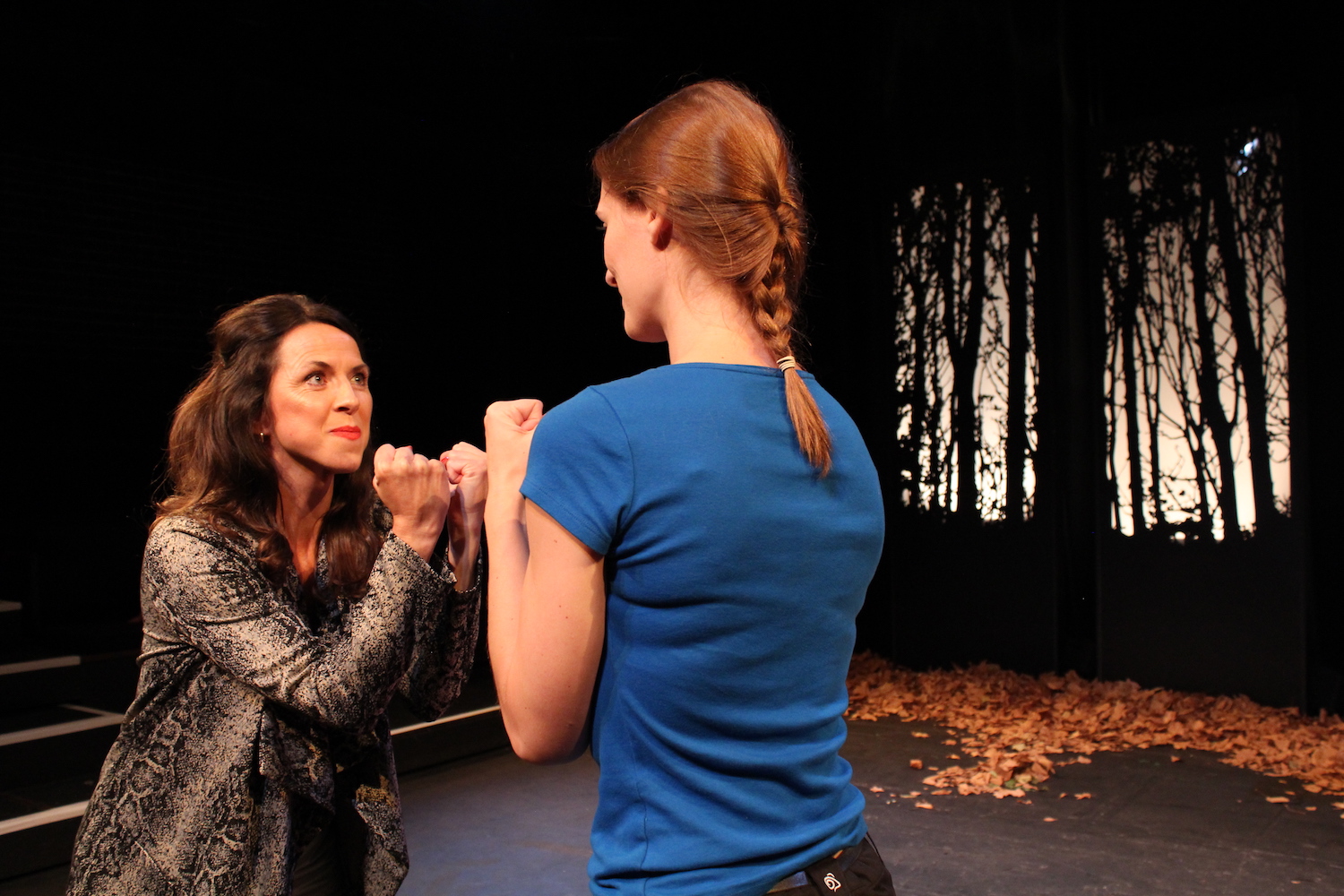
The first full-length play from writer Phil Ball, Moth Hunting is a comedy that very much sums up the expression, “You can’t choose your family.” Sisters Ann (Charlotte Baker) and Sue (Kathryn McGarr) are about as different as two women can be, and their relationship is on decidedly shaky ground – despite the best efforts of their mum Gill (Verity Richards) to smooth things over. When the three of them find themselves on a girls’ night “mothing” in the woods, tensions inevitably begin to boil over.

With Greg Spong’s attractive woodland design setting the scene, Rosie Snell’s production is a perfect fit for a drizzly autumn evening, and provides an enjoyable hour of entertainment that most of us will be able to relate to on some level. It’s also educational; who knew that moth hunting was a thing? Not that our characters have a lot of success on the mothing front – they’re generally too busy bickering to pay much attention to their surroundings, and it’s only when something bad happens that they’re forced to pull together and tentatively begin to build some bridges.

Though it’s undeniably a comedy, and largely a very successful one, the play does also delve into some more serious territory as it unpicks the family history and gets to the bottom of their troubled relationships. Bereavement, marital problems, and references to alcoholism and both physical and mental illness, are handled sensitively within the script – and although the play ends on a positive note, there’s no unrealistic suggestion that in one night the characters have managed to clear up years of resentment, or that all their problems have suddenly gone away.

The fraught relationship between the three women, with all its ups and downs, is well portrayed by Kathryn McGarr, Verity Richards and Charlotte Baker. While the differences in their personalities ensure plenty of laughs, there are moments of connection too, which makes it much easier to picture them as a family – however messed up that family might be. They’re also joined briefly, but memorably, by Gareth Turkington as Sue’s amiable husband Sid, whose arrival is as unexpected as it is entertaining.

If the play has a flaw, it’s in the way it frequently removes one character from the stage so that the other two can talk in private. While this works, it begins after a while to feel a bit contrived, particularly since the third character has a way of always reappearing just at a crucial moment in the conversation. The play’s conclusion, too, comes very suddenly, leaving several unanswered questions in its wake about the events of the evening.

Nevertheless, as a lighthearted comedy about a dysfunctional family, Moth Hunting is a great watch. It’s skilfully directed and performed and with plenty of belly laughs to be had – though I’m not sure it’ll have me running off to the woods to try moth hunting any time soon…

Moth Hunting‘s final performance at the Cockpit Theatre is tonight – you can follow @BuddingRoseProd for details of future productions.

Review: The Open at The Space

2050. Brexit is (finally) done. The environment is (predictably) a mess. And Britain’s been sold and turned into a giant golf course owned and run by “The Organisation” – a.k.a. Donald Trump, who at 100 years old may or may not still be alive, and who’s taken on such God/Voldemort-like status that nobody even says his name out loud any more. The Great British Golf Course promises citizens, or at least the ones born in Britain, the opportunity to “live, work, thrive” – but three friends are about to discover what really goes on behind closed doors…

Photo credit: Kit Dambite

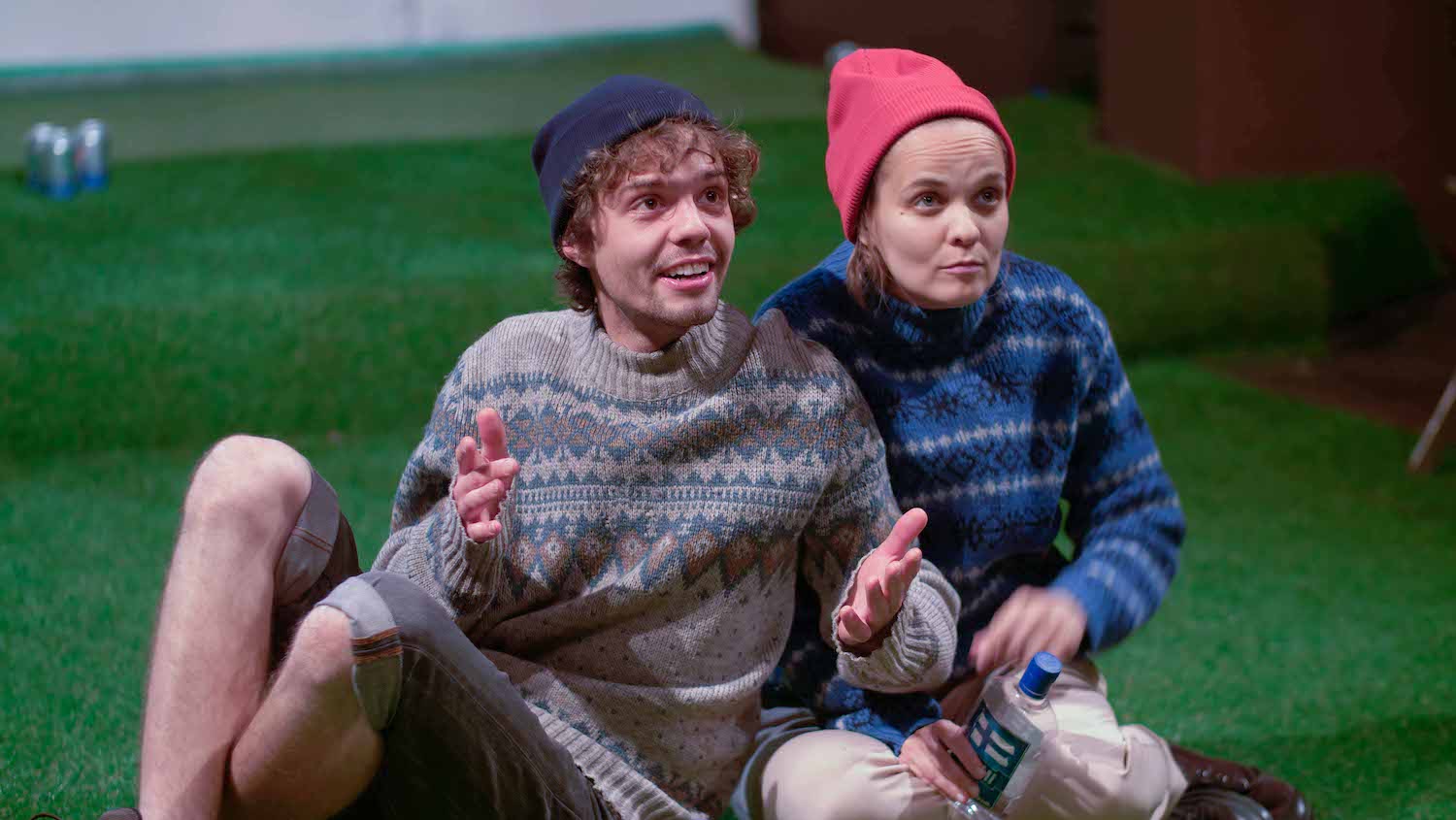
As with any dystopian drama, the central idea of Florence Bell’s The Open – the GBGC itself – sounds far-fetched, but the foundations on which it’s built aren’t all that implausible: a future in which money continues to be the source of power, social status is dictated purely by nationality, and any resistance is dismissed as “fake news” or simply made to disappear. Arthur (Priyank Morjaria) has bought into the dream 100%, particularly after bumping into one of the GBGC’s chief architects, Bella (Emma Austin). Such is his devotion to his employer that he’s even willing to consider betraying his closest friends, Estonian immigrant Jana (Heidi Niemi) and her boyfriend Patrick (Tom Blake), when they dare to question everything he thinks he knows.

Through the play’s four characters, we meet the full range of people who make up the GBGC community – and they’re all recognisable figures to a 2019 audience. Emma Austin’s Bella is self-involved, manipulative and absolutely lacking in remorse. At the other end of the scale, Heidi Niemi steps into the role of hero as straight-talking Jana, who’s willing to risk everything in defence of what’s right. She’s come back for Tom Blake’s innocent, almost childlike Patrick, who has his doubts – and certainly shows little loyalty to The Organisation – but would quite cheerfully continue to do and say nothing without his girlfriend there to push him into action. And then there’s Priyank Morjaria as Arthur, the embodiment of a good man turned bad by a combination of fear, promises and false information.

It’s a clever and intriguing premise, and executed well by a strong cast, so it’s surprising that The Open never completely takes flight; the ingredients are all there, but the play as a whole lacks balance. A complicated plot and back story mean that Act 1 has to spend a lot of time explaining how we got here, often through slightly circular conversations between the characters. The pace of the show starts to lag as a result, and even then it feels like there’s a lot we still haven’t quite pieced together. All the action then happens rather suddenly in Act 2, which feels rushed by comparison and, oddly, raises more laughs than Act 1, even though it’s only after the interval that the true horror of the GBGC is revealed.

Photo credit: Kit Dambite

Looking at the current state of the world, it’s not hard to imagine a situation like the one in The Open – the play essentially takes characters and attitudes that already exist and puts them into an extreme scenario to see what they’ll do. This has the potential to work really well, but the pace and structure of the unfolding drama needs some work in order for the play to fully capture the audience’s imagination.

The Open is at The Space until 12th October.