Review: Amicus presents The Exonerated at Middle Temple Hall

Jessica Blank and Erik Jensen’s The Exonerated tells the stories of five men and one woman who were sentenced to death in the USA for crimes they didn’t commit, and spent years living with the threat of execution before their innocence was finally proven. It’s a powerful piece of writing in any circumstances – but never more so than when one of those people is played by herself.
Copyright: Matt Cetti-Roberts/Frontline Pictures

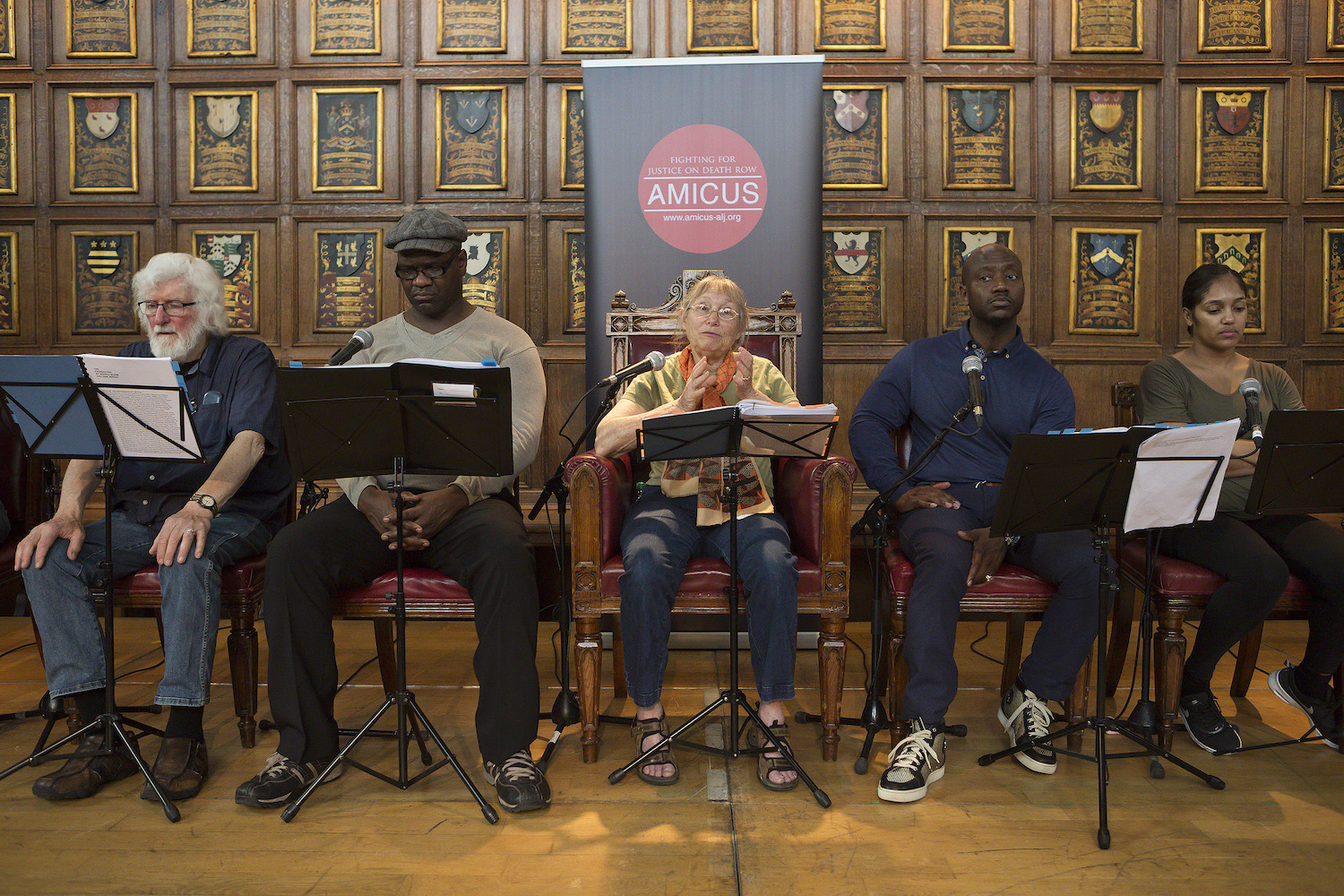
In this special one-off play reading of The Exonerated presented by death row legal charity Amicus, an impressive cast – including two actors from Harry Potter and the Cursed Child and two respected British barristers – was led by the incredible Sunny Jacobs. Sunny spent 17 years on death row, saw her children grow up without their parents, and lost her husband Jesse Tafero to the electric chair, before the real murderer confessed and she was (eventually) released. And yet despite all this, she radiates an astonishing positivity and a refusal to be beaten by what she went through – that, she says, is her revenge. Sunny was joined on stage by Peter Pringle, himself an exoneree who spent 15 years on death row in Ireland. The two met through their work to support exonerees, and married in 2011; both are now patrons of Amicus and make a truly inspiring couple.

Sunny’s “status” naturally made her the guest of honour for the event, which was held in the beautiful and historic Middle Temple Hall – but even so it was touching to see the respect and care shown to her by every member of the illustrious cast. It was clear throughout the evening that the actors were just as affected as the audience by the stories they were telling, and emotions ran high both during the performance and the Q&A that followed, in which several members of the cast spoke eloquently and passionately about issues surrounding the death penalty debate.

Copyright: Matt Cetti-Roberts/Frontline Pictures

Blank and Jensen’s script is powered by an incredulous anger that cases like these can really have happened. Kerry Max Cook (Jamie Parker) was convicted on the basis of one old fingerprint, and was subjected to horrific sexual violence while in prison. Gary Gauger (Peter Pringle) was interrogated for 12 hours straight about the murder of his parents, and eventually had his words twisted by the police into a false confession. Delbert Tibbs (Chris Jarman) and Robert Hayes (Tunde Okewale MBE) were guilty of nothing more than being black. David Keaton (Leslie Thomas QC) was a frightened teenager, who confessed under duress to a crime he knew nothing about. And finally Sunny, who was simply in the wrong place at the wrong time. Between them, these six cases reveal a spectrum of the countless flaws in the U.S. justice system, and the terrifying reality of how easily just about anyone can be falsely accused and convicted. In addition, it explores life after death row, and the harsh truth that being released from prison is far from the end of the story.

Above all, the play – staged simply by directors Peter and Ellen Gould – helped to demonstrate why the work Amicus does is so crucial. The charity, which was founded 25 years ago in memory of Andrew Lee Jones, trains and sends British legal interns to support defence attorneys fighting death penalty cases in the USA, and has been instrumental in countless important victories. Without them, who knows how many more innocent lives would have been lost.

To find out more about the work of Amicus and future events, visit amicus-alj.org.


Can’t see the map on iPhone? Try turning your phone to landscape and that should sort it. I don’t know why but I’m working on it… 😉
Review: Paper Hearts at Upstairs at the Gatehouse

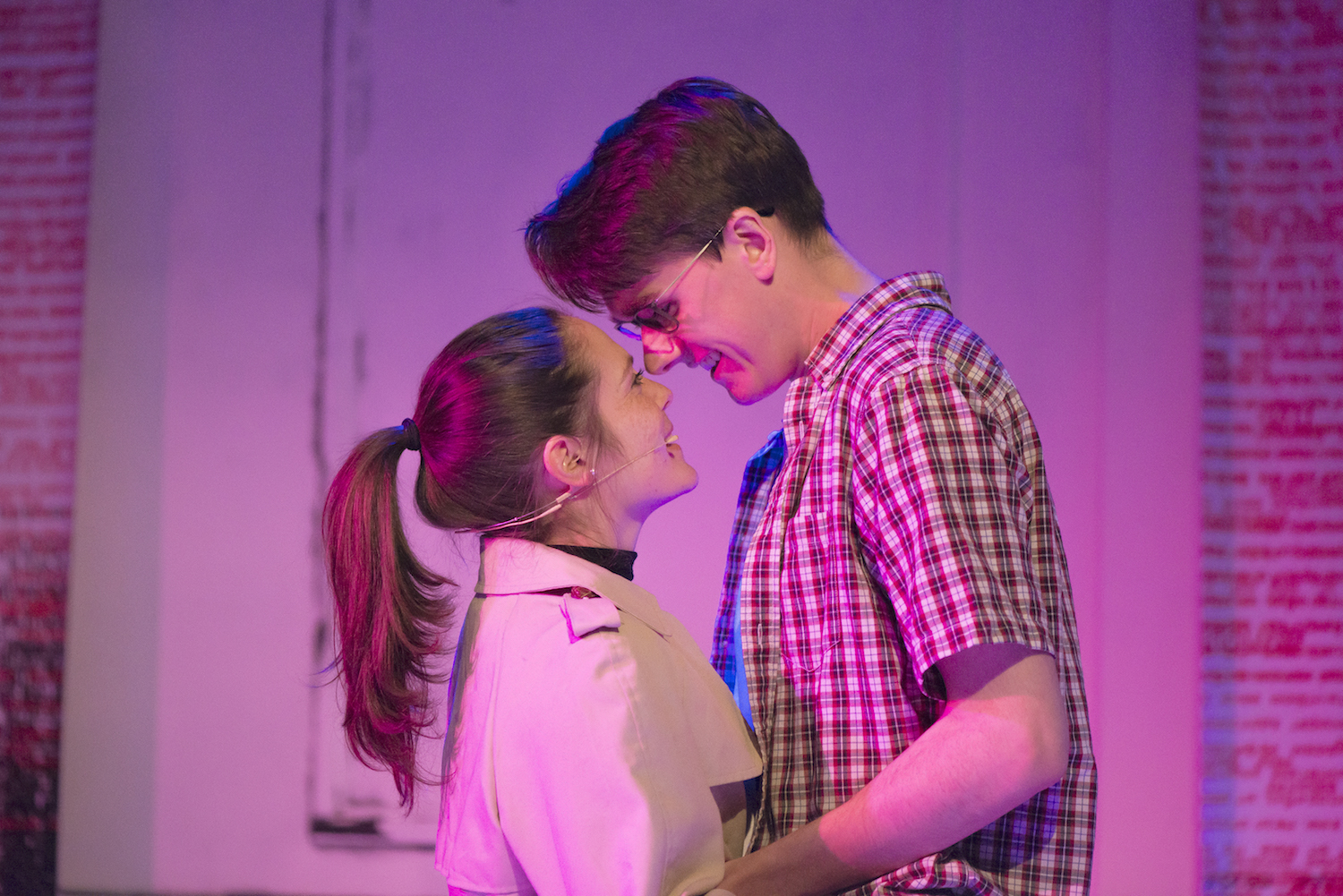
You know in The BFG (stay with me) how he makes dreams for people by taking all the different elements and blending them together? Well, this is essentially what Liam O’Rafferty, Daniel Jarvis and Tania Azevedo have done in Paper Hearts. Musical? Check. Books? Check. Love story? Check. Folksy score performed live on stage by actor-musicians with gorgeous harmonies and catchy choruses? Check, check, check, check, check. Long story short – this is my dream show, and I’m a little bit in love.

Photo credit: Tim Hall Photography

After proving a hit at last year’s Edinburgh Fringe, the show’s been developed into a full-length musical set in The Final Chapter bookshop, where aspiring writer Atticus (Adam Small) is trying to finish his epic novel of romance and betrayal in Stalin’s Russia. When the shop’s threatened with closure at the hands of a large online retailer, Atticus finds himself with only one option – finish the novel in time for the upcoming young writers competition, win top prize, save the bookshop. Simple, right? Well no, actually, because his girlfriend (Sinéad Wall) could hardly be less supportive, he’s got history to work out with his dad (Alasdair Baker) and he’s just met a girl (Gabriella Margulies), who may just be his soulmate – but for one fairly major complication…

Fact and fiction are effortlessly interwoven as we slip into the snowy Russia of Atticus’ main characters Yanna and Isaak, and follow their story – which seems to bear some striking parallels to their creator’s own life. And as the characters develop, it becomes clear they’re shaping his destiny just as much as he is theirs.

Liam O’Rafferty was inspired to write Paper Hearts by his passion for bookshops, and the show overflows from the start with that love for the written word. From Anna Driftmier’s set – built largely from books, and full of delightful details like the floating book light (which is something I never knew I wanted until I saw it, and now it’s all I can think about) – to the brilliant “book-off” where Atticus and new shop manager Lilly challenge each other’s literary knowledge, it’s a thrill for anyone who loves to read.

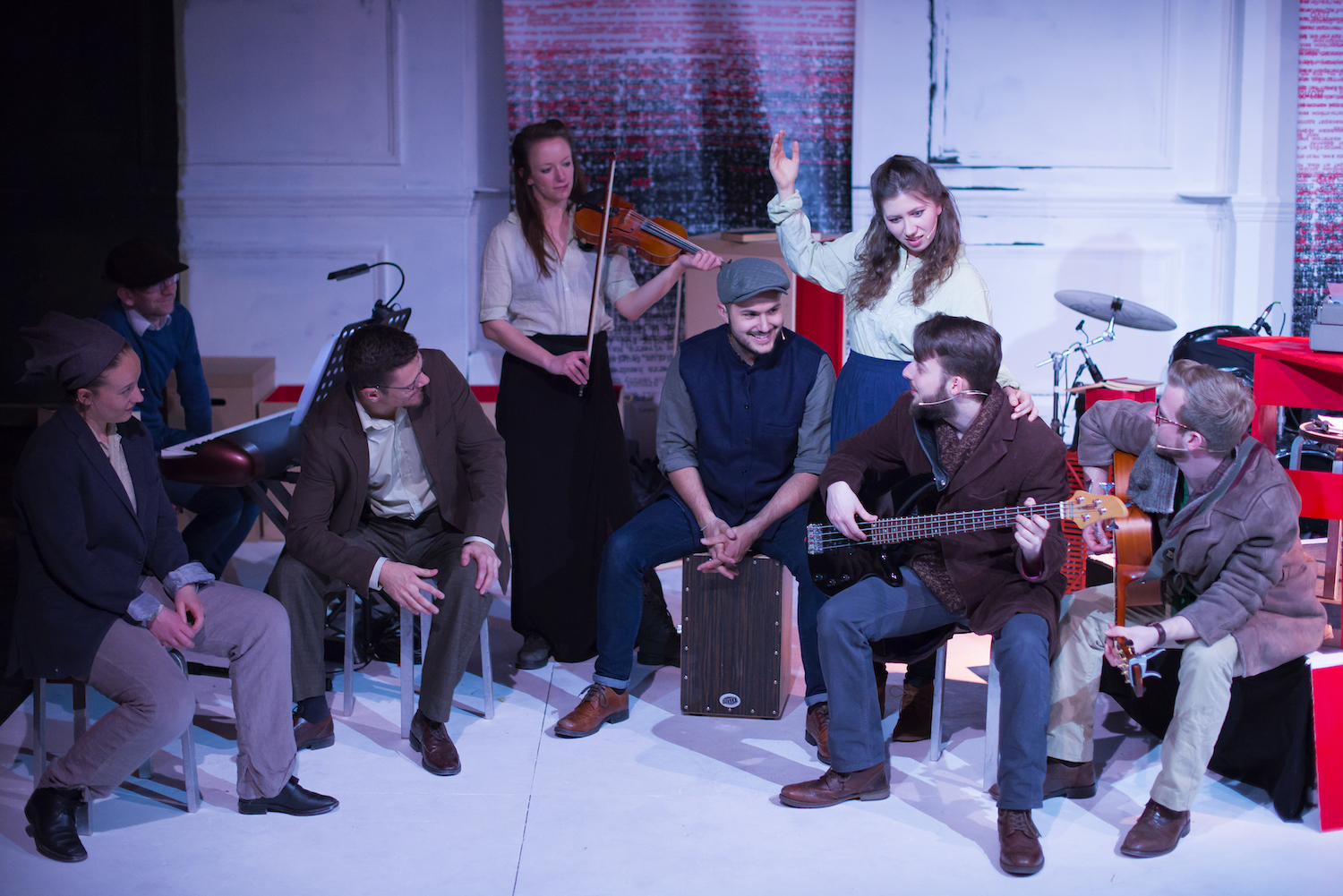
The cast of actor-musicians are sensational and work seamlessly as an ensemble to bring the score to life. And what a score it is, taking in a range of genres but always feeling very natural, like it’s just a bunch of friends getting together to play – and did I mention the gorgeous harmonies? There are some really beautiful songs here, with two of many highlights the heart-wrenching duet Stand Up and the title number Paper Hearts, which closes the show on a soaring high.

Photo credit: Tim Hall Photography

Perhaps one of my favourite things about the show is, despite its frequent forays into Stalin’s Russia, how very British it is; you can totally imagine it on screen as a Richard Curtis rom-com in the vein of Notting Hill. The dusty old bookshop is quintessentially British, the script has a wry, self-deprecating humour – particularly from Matthew Atkins’ gloriously camp shop owner Norman – and when things go wrong, everyone’s immediate response is to put the kettle on. This gives the production a very cosy, homely feel, and makes the characters and everything that happens to them incredibly relatable.

The show does get a bit dark and tense at times (gun alert) and there’s no shortage of emotion either. But overall Paper Hearts is uplifting, heartwarming and basically just a joy from start to finish. It’s got everything you could want from a West End show at a fraction of the ticket price – so see it now before it gets snapped up for a transfer. And then go again, because it’s worth it.


Can’t see the map on iPhone? Try turning your phone to landscape and that should sort it. I don’t know why but I’m working on it… 😉
Review: Out There on Fried Meat Ridge Road at Trafalgar Studios

Keith Stevenson’s Out There on Fried Meat Ridge Road became a cult hit when it opened in the States in 2012 – even spawning two equally well received sequels – and it’s not difficult to see why. Transferring from London’s White Bear Theatre to Trafalgar Studio 2 under director Harry Burton, this joyously bonkers little story about a bunch of misfits in a remote West Virginia motel is 70 all too short minutes of good-natured fun.

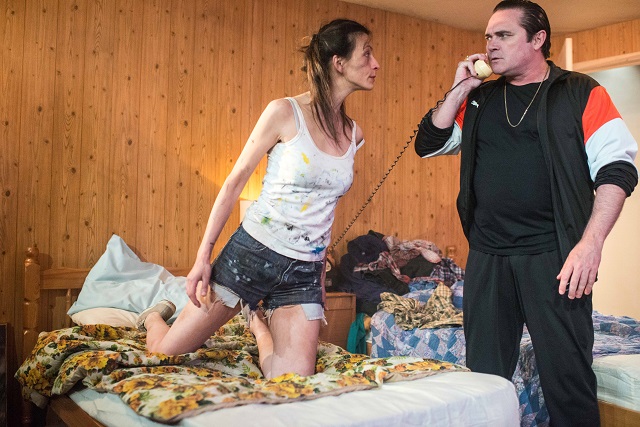
Mitch (Robert Moloney) has just lost his job at the local spork factory, had his car set on fire and been kicked out by his girlfriend. When he answers an ad for a roommate placed by the eccentric but loveable JD (Keith Stevenson), little does he realise things are about to get even worse. Sleazy motel landlord Flip (Michael Wade) think he’s gay, next door neighbour Marlene (Melanie Gray) thinks he’s David Schwimmer – and then there’s Tommy (Alex Ferns)…

Photo credit: Gavin Watson

It’s all barking mad, but very enjoyably so; an hour of pure escapism in which literally anything could – and does – happen. The larger than life characters prove to be a cautionary tale in the dangers of judging by appearance; they might look like stereotypes, but none of them is quite what they seem. This is particularly true for Keith Stevenson’s JD, possibly the nicest man in the world, whose imposing stature hides a gentle nature, kind heart and interesting back story. In light of said back story, it later seems fitting that it’s JD who delivers the moral of the story, which is simply this: be kind. As he himself points out, that’s not something we should need to be reminded of – yet somehow in today’s often self-obsessed world it ends up feeling like something of a revelation.

Simon Scullion’s set is cosy and lived-in, a wood-panelled motel room littered with JD’s clothes, possessions and casually discarded mini vodka bottles. The familiarity with which all the characters enter and make themselves at home helps establish the relationship between the friends; JD is the centre of the group, the one everyone comes to when they need support – and he in turn is always ready with a supply of tuna sandwiches and a few words of advice.

Stevenson’s irresistible JD has excellent support from Robert Moloney as Mitch, whose appearance grows increasingly dishevelled even as his inner turmoil settles. Alex Ferns’ poet/gangster Tommy revives the crazy-eyed menace of evil Trevor (that’s his famous Eastenders character from 15 years ago, for younger readers). Michael Wade is hilariously creepy as Flip the landlord, but even he has a protective streak where JD’s concerned. And hysterical drug addict Marlene is played to perfection by Melanie Gray, who makes her likeable and sympathetic where she could have been incredibly annoying.

Photo credit: Gavin Watson

If I have one complaint about the play, it’s that – unlike its unwieldy title – it’s too short; we can only hope the sequels soon make their way to London so we can find out what the gang get up to next. Out There On Fried Meat Ridge Road is not deep and meaningful, and is at times utterly bizarre. But it’s also fantastic entertainment that leaves you with a smile on your face and a warm fuzzy feeling inside. And a craving for tuna sandwiches. (Just me? Oh.)


Can’t see the map on iPhone? Try turning your phone to landscape and that should sort it. I don’t know why but I’m working on it… 😉

Review: Care at the Courtyard Theatre

Guest review by Lucrezia Pollice

Funny, but is it?
It’s all lovely and nice to have children but what are the stories not told?

Care was first performed at the Royal Court Upstairs, with its first revival by the Angus Mackay Foundation at the Courtyard Theatre in Shoreditch. Set in a young couple’s living room, the play looks very intimately at the narratives of Terry and Cheryl, who seem to be dealing with something. It is this something that drives the narrative. An it – a she – something or someone hidden centre stage in a cupboard, which forces spectators to engage.

Terry, played by Marc Benga, is very charismatic and seems at first to be unaffected by the whole situation. Karen Mann’s Cheryl instead is distressed from the start. She is suffering from some pain of her own, trying to get attention from Terry and a love which is not given back. The TV glares throughout the scene as we watch their daily life over the course of a long weekend. The story is simple, but interesting; it gives actors more responsibility to deliver the script.

Throughout the performance, their friends David (Leo Shirley) and Cathy (Jaana Tamra) come round to the house. The relationships between the couples are strong, and create a comical scene in which Terry and Cheryl are in distress but cannot find the courage to tell Cathy and David to leave. The Polish stereotype of Cathy’s character is overly rude and sexual, and her lack of social understanding of the situation is made comical by the hilarious body language during the scene of her husband, who seems to have given up on her.

From what seems like a normal domestic, it escalates into what instead looks like an abusive relationship. Who is abusing who is unclear though. It begins as a physically abusive relationship from Terry’s part, to then shift to a loving relationship, to then seem like it is her who is abusing him. Slightly confusing, perhaps on purpose, who in the relationship was causing troubles. Terry seems to be innocent; he makes all the jokes and seems to be stuck in a house and situation he doesn’t want to be in. Or is Cheryl right in saying that he doesn’t respect her?

The playwright Roy Mitchell was a member of the National and Birmingham Youth Theatres, trained as an actor at the Manchester Polytechnic School of Theatre, and more recently has been participating in the creation of BBC1’s New Tricks drama. He touches upon very difficult topics in this play, making the audience work to understand the motifs behind the characters’ actions by not giving much away until the end.

Perhaps the simple narrative at times needs a bit more tension as this is lacking. Conveying a constant distress creates a slightly lamenting voice, which becomes uncomfortable after a while, and accents are slippery at times. The intentions between the two main characters are slightly unclear, and the grief of a baby’s loss is not conveyed as deeply as it could be in moments of despair. However, overall the performances are believable, and it was really lovely to engage with an ethnically diverse cast with such a powerful taboo topic which is death.

My favourite moment must be when Terry and Cheryl come back drunk from the pub and start watching a horror on TV. It is amazing to see how something so simple can be made into something so entertaining. The performance is overall touching upon very delicate topics, but is presented also with light moments of comedy and an obscurity as to what is happening, which might intrigue spectators.


Can’t see the map on iPhone? Try turning your phone to landscape and that should sort it. I don’t know why but I’m working on it… 😉

Interview: Cath Mattos, Wandsworth Fringe 2017

Cath Mattos is producer of the Wandsworth Fringe, which launched last week in South West London and continues until 21st May. Now in its eighth year, and four years old as a standalone festival, the Wandsworth Fringe came out of the Wandsworth Arts Festival, which originally started in response to Black History Month. “The festival is a spotlight on creativity in Wandsworth, as well as being a testing ground for new work,” explains Cath. “We moved toward a Fringe model as there was so much grass roots support and the creative companies in the area wanted to be a part of the festival in May.

“I started working on the 2014 festival for exactly this reason, to bring more knowledge and experience of Fringe Festivals and to work with the Enable LC Arts Team and the WAF steering group to help carve a model that would work for the area and its cultural economy.”

As always, the festival offers a varied programme of events and entertainment. “There is so much on offer – we’ll be shaking up South West London with an eclectic programme of arts and culture that will thrill, move and inspire audiences from across the city,” promises Cath. “We have many talented local artists and producers but also performers who are bringing their talent from around the UK, Europe, North America and beyond to entertain and bring excitement to the streets and venues across the Borough.

“The festival is emphatically inclusive and welcomes participation from artists across all art forms – including outdoor arts, theatre, music, dance, comedy and everything in between. WAF provides the opportunity and support to try something new, take creative risks, test new ideas and reach new audiences.

“As a non-curated festival, the themes that have emerged reflect the world in 2017. Identity and difference plays a large part in the line up, as do environmental and current political concerns. There is a significant amount of work being presented by inclusive arts companies about disability issues, as well as work that explores gender and feminism.

“We also try and bring the arts to people, by literally leaving our own comfort zone and going into those hard to reach places. For example, during WAF you can see quite a few performances that focus on issues of mental health or disability, and certain shows will be supported by British sign language as a way to make the festival relevant and accessible to all.”

Unsurprisingly, preparations for the festival start early, and go on for most of the year: “We start the planning for the Fringe year during the evaluation of the previous festival in June,” explains Cath. “Then we start our first networking events in September and open an expression of interest phase, which we use to encourage as many interesting and unusual artists and producers as possible to come and find out about the festival and think about taking part.

“We advise artists and emerging producers on suitable venues and potential funding avenues. WAF has a dedicated grants funding scheme and we advise artists with their applications to this. It’s an open access festival, so anyone can register to take part as long as they have a venue sorted. Once all the artists are registered we then put a brochure together and the listings on our website, and start to sell tickets to the shows and promote the free events.

“We aim to make the festival as accessible as possible to both artists and audiences by having affordable options and many free events.”

So what are some of the many highlights to look forward to at the Wandsworth Fringe 2017? “Fragility Takeover The Arches at St. Mary’s Church under Putney Bridge and The Cat’s Back Pub in Wandsworth Town, and are hosting some cutting edge theatre and quirky Edinburgh previews,” suggests Cath.

“There’s also Super Hamlet 64: Parody DLC – armed with an ocarina, a ukulele and a thirst for revenge, Lecoq-trained Edward Day battles four decades of video game nostalgia, in an explosion of Shakespeare, live music, video projection and 16 bit mayhem. Odjo – King of the Ocean is a new show from The Comedy Cats, about a reporter who spent three months living at sea with an idiot fisherman named Odjo, witnessing bizarre martial arts practices, unruly animal impressions and unhealthy absurdities that reduced him to tears of laughter.

“Hidden Heathbrook is a weekend of outdoor arts in Heathbrook Park; we have leading large scale puppet makers Puppets With Guts, orchestrating the largest giant rampaging rhinoceros stampede in South London, and Hikapee’s brand new show Home weaves together slapstick comedy with breathtaking aerial acrobatics, to create a ‘house’ for you to explore. This weekend is one not to miss!

“And An Elemental Cycle of Life and Death in Four Acts is an intense and intimate experience encircling art, theatre, ritual and shamanic story weaving of the Fabulous and the Magickal, and of all that lies Betwixt and Between. The Transience create doorways to worlds which may or may not exist and are inviting you into an initiation where you are likely to lose or find yourself, for there is never any telling which. Sssh, secret locations!”