Review: Lullabies for the Lost and The Delights of Dogs at Old Red Lion Theatre

There’s a very personal feel to the two plays by Rosalind Blessed currently being performed in rep at the Old Red Lion – and it’s no surprise to learn that they’re both based on the writer’s own experience. The first, Lullabies for the Lost, is a new piece directed by Zoë Ford Burnett, which explores the power of open conversation in the battle against mental illness. The second, The Delights of Dogs and the Problems of People, is directed by Caroline Devlin and depicts the unravelling of an abusive marriage. Both very powerfully written and performed, neither shies away from the tough issues with which they’re dealing, and while they’re far from easy viewing, they each make a valuable contribution to a vitally important discussion.
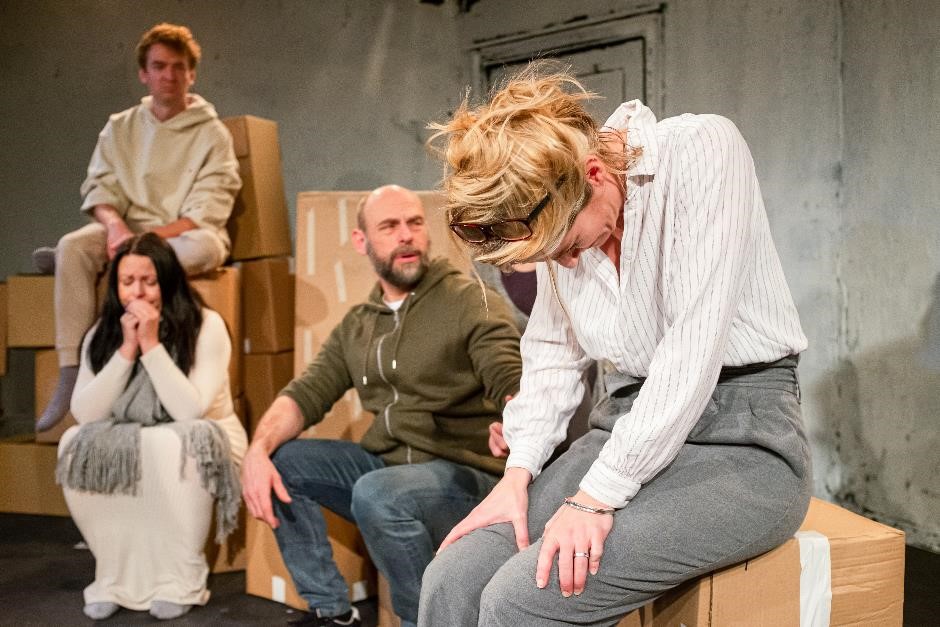
Photo credit: Adam Trigg

Lullabies for the Lost uses the metaphor of a room in which eight characters find themselves trapped. It’s not clear what the room is, or indeed how they got there, but the key point is that to get out, they have to reach some point of understanding or resolution with their own mental health issues. And in order to do that, they have to repeatedly tell their stories to their fellow “residents”. Some, like Robin (Rosalind Blessed) and Ash (Duncan Wilkins), who each describe their experience of eating disorders, have been there for years. Larry (Chris Porter) has just become the newest arrival, as he wrestles with crippling social anxiety. Andy (Chris Pybus) has spent months in bed with depression, viewing the world only through the appearance-obsessed filter of social media. Nerys (Kate Tydman) started hoarding after suffering multiple miscarriages. Sarah (Helen Bang) is plagued by emotional sensitivity and low self-esteem into a lonely, unsatisfying existence. And brothers Jez and Tim (Nick Murphey and Liam Mulvey) each feel they need to put on a brave, “manly” face for the other, not realising they’d take much better care of each other if they just talked.

The metaphor is clever and well set up, and while the piece is essentially a series of monologues, the content of each is so well written and the performances so compelling, that the format never struggles to hold our attention. Where the play struggles slightly is in its conclusion, which certainly packs an emotional punch, but feels somehow underdeveloped and a little too neat. The words of Ma, an unexpected extra character played by Blessed’s own mother Hildegard Neil, are warm, wise and important, but it’s not made clear enough why, after so long grappling with their problems, it should be her who suddenly breaks through for so many of the characters.

As the more established play, The Delights of Dogs and the Problems of People suffers no such issue. The story of Robin – played by Blessed and importantly, the same character we met in Lullabies for the Lost – and James (Duncan Wilkins) is both gripping and desperately sad. This piece allows us to see more of Blessed herself, and the emotional intensity of her words really resonates; it’s clear they come from a very real and heartfelt place.

The play begins on the couple’s fifth wedding anniversary, as James excitedly prepares a romantic meal for his wife. He’s funny and charming, and it seems we’re looking at a loving husband. But the clues are already there, in the way he speaks about Robin, that all is not quite as it seems – although the truth, when it’s revealed, still has the power to shock us. Through a series of flashbacks, we see how a seemingly loving relationship began to crumble, and explore the factors on both sides that contribute to creating a toxic, abusive environment.

As is also the case with Lullabies for the Lost, the play tackles difficult issues, but nonetheless does so with humour and a degree of optimism and faith that human nature will prevail. In The Delights of Dogs, not unexpectedly, this lighter content is inspired by the writer’s love of dogs and appreciation for the support they provide. Even at her lowest, Robin can still talk to her old dog Ben, who listens without judgment and responds only with unconditional love. In Lullabies, too, a dog provides unexpected relief to one of the characters, and ultimately this new-found friendship allows them to become the only one who leaves of their own accord.
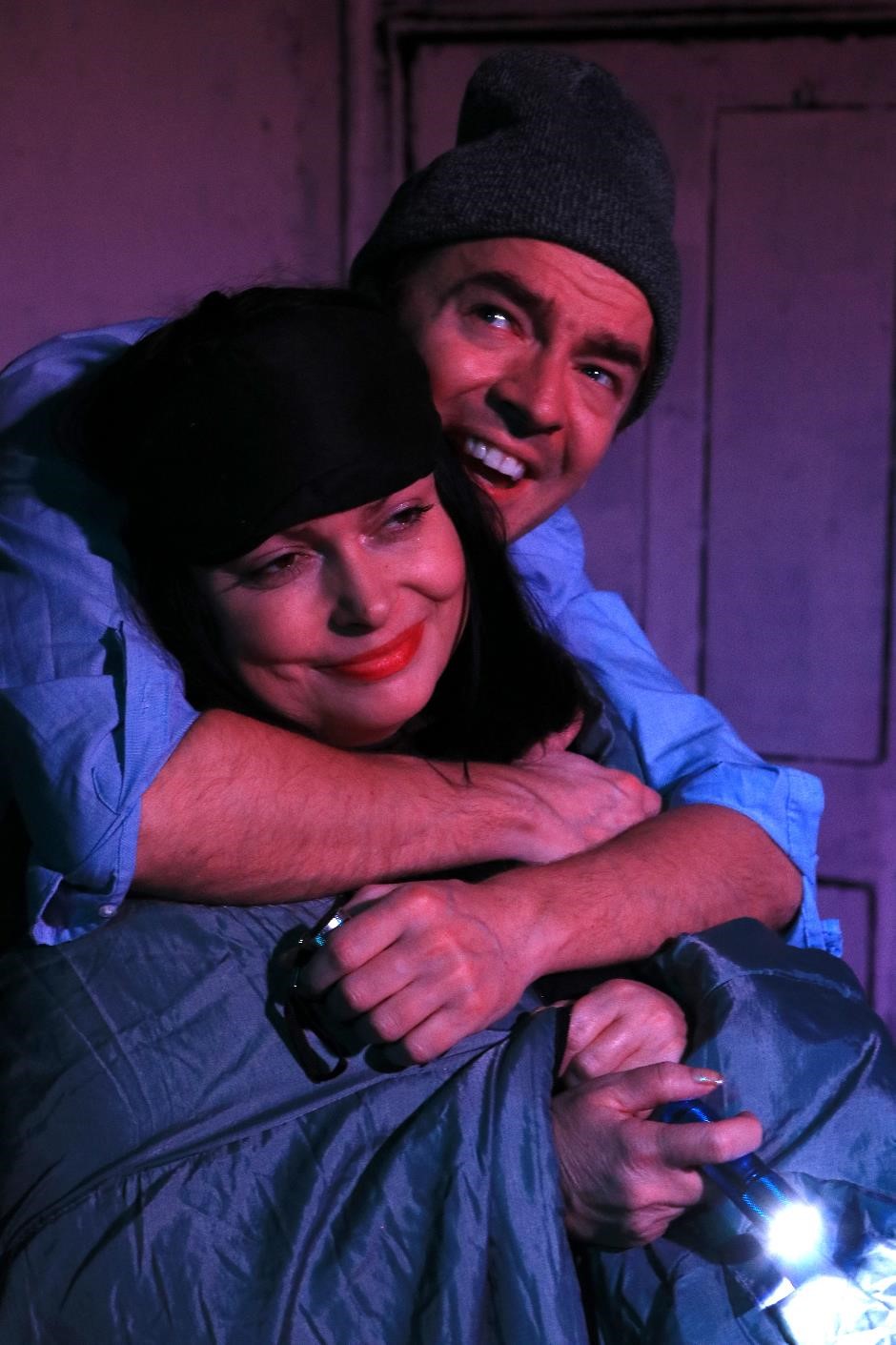
Photo credit: Natalie Wells

Another factor that unites the two plays is the way the characters speak out directly to the audience. This is more overt in The Delights of Dogs, but in both cases we become a key player as the characters bare their souls, allowing them to speak out and share their innermost struggles without fear of judgment or ridicule. And so they do, holding very little back, which again reveals how much the stories are grounded in real experiences. Some of the details are gruesome, others shocking, others just very sad – but each helps to educate the audience a little more about conditions and experiences that many of us will know little or nothing about.

Watching one play, let alone both together, makes for an intense and at times quite distressing few hours in the theatre. The content is intensely real and raw, and shines a spotlight on a variety of mental health issues in a very personal but accessible way. A tough but fascinating watch.

Lullabies for the Lost and The Delights of Dogs and the Problems of People are being performed in rep at Old Red Lion Theatre until 1st February.

Review: The Importance of Being Earnest – played by immigrants at Tower Theatre

There’s a good reason The Importance of Being Earnest remains one of the most popular comedies in British theatre. It’s a very silly story about ridiculous people doing utterly implausible things, and yet for all its joyous irreverence, the play still has plenty to say about society, class and the judgments we make about each other based on little more than a name or birthplace.

It’s this last that most informs Pan Productions’ unique and memorable adaptation of Oscar Wilde’s classic. The company’s first production in English, its cast is made up entirely of immigrants whose first languages include French, Turkish and Greek. These actors may never have had to confess to being found in a handbag at Victoria Station, but they’ve all certainly had to explain and perhaps even justify where they come from, probably on more than one occasion. So it’s through their eyes that we see this very English comedy unfold, cucumber sandwiches and all, as friends Jack (Louis Pottier Arniaud) and Algernon (Duncan Rowe) pursue two women who know exactly what they want – and, more importantly, what they don’t – in a suitable husband.

There’s no denying that the vision of director Aylin Bozok is an unusual one, though that’s by no means a bad thing – after so many “traditional” versions of the play, a fresh take is more than welcome. The modern dress production retains Wilde’s script, albeit peppered with moments where the cast slip back into their native languages, but beyond that this interpretation bears little resemblance to the genteel Victorian drama we know. It’s still a comedy, yet visually and tonally the play is much darker than we’re used to; there’s a decidedly gothic feel to the production that’s unexpected, to say the least. The pace is also considerably slower, though there’s never any danger of the audience’s attention wandering – the deliberation that goes into each and every movement is fascinating, and ultimately proves to be a source of comedy in itself. (Who knew watching someone painstakingly lower themselves on to a sofa could raise so many laughs?)

Another intriguing, if slightly confusing, aspect is the suggestion that the characters, for all their wealth and social standing, have no control over their own story. Instead, that power lies with the omnipresent and slightly sinister character of the maid (Nea Cornér), who encompasses both manservants, Lane and Merriman, while also filling the role of a Greek chorus and a puppeteer who manoeuvres the characters on, off and around the stage. While this is an interesting take, at times it feels like a bit of a distraction – due in no small part to Nea Cornér, whose performance is completely compelling throughout. The problem is that the production is already so rich in detail that we have more than enough to look at and absorb, and by adding another element to it, we find ourselves at times not knowing quite where to look.

The cast are uniformly excellent, taking recognisable characters and breathing fresh life into them; particular highlights among many include Glykeria Dimou’s feisty teenager Cecily and Pinar Öğün’s perfectly poised Gwendolen. The actors are all clearly enjoying themselves with Wilde’s use of language, and this in turn allows the audience to hear the familiar text afresh. Some of the more famous lines are played down – Lady Bracknell’s appalled exclamation of “a handbag?!” is delivered by Ece Özdemiroğlu as little more than an incredulous and even mildly amused murmur – while others are elevated to new significance through deliberate mispronunciation and subsequent gentle correction by the rest of the cast.

Though it at times veers towards trying to do too much, this unique new take on The Importance of Being Earnest certainly hits the mark in terms of both entertainment and intrigue. It’s also a very polished and precise production, where every aspect has clearly been given careful consideration – which in turn leaves the audience with plenty to think about on the ride home and beyond.

The Importance of Being Earnest – played by immigrants is at Tower Theatre until 18th January.

Review: The Invisible Man at Brockley Jack Studio

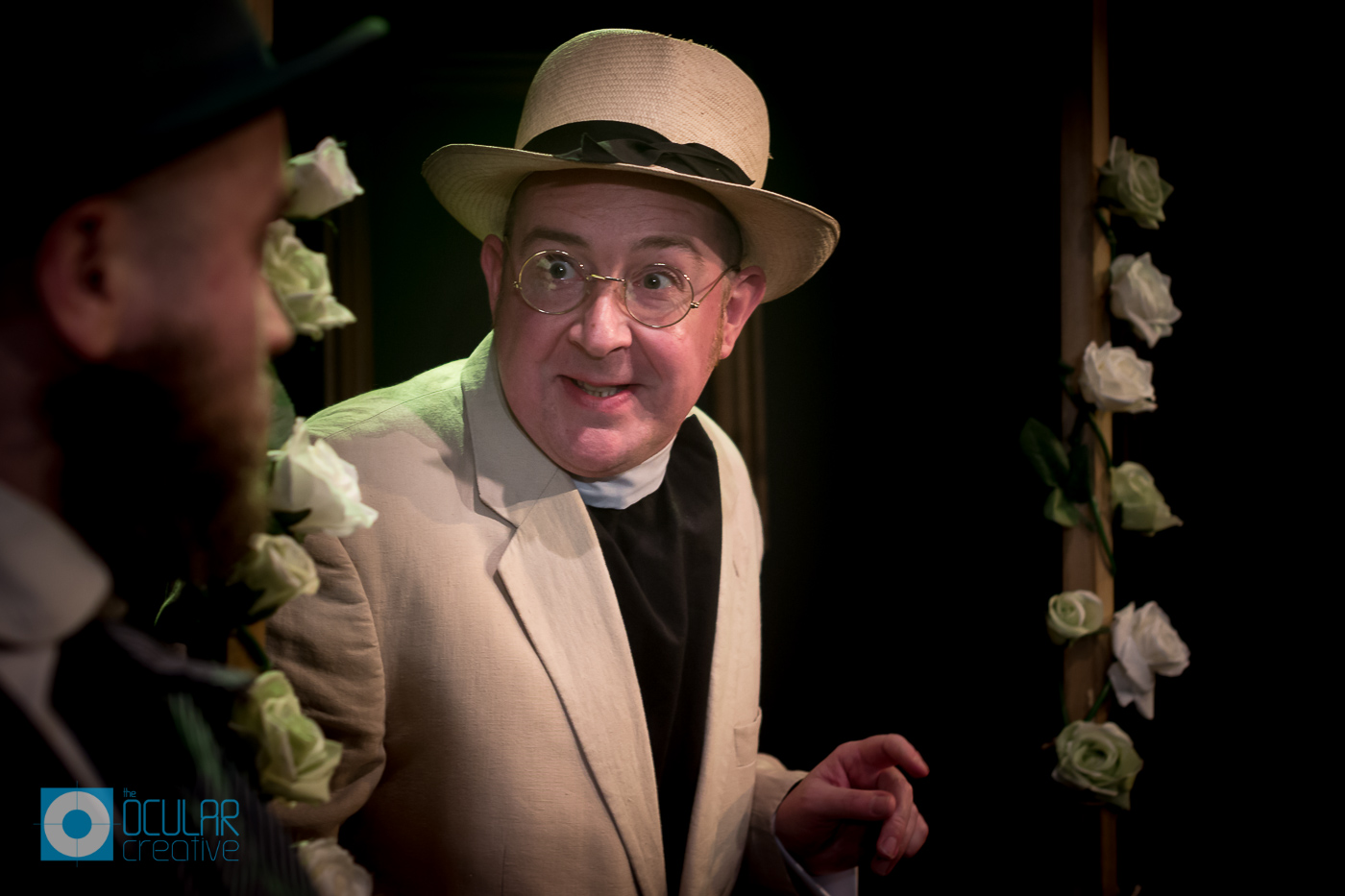
At first glance, the Brockley Jack’s choice for their final show of the year doesn’t seem particularly festive. But while it may not be a Christmas story – nor, in its original form, a particularly cheery one – The Invisible Man proves to be another winner for the theatre’s in-house creative team, and easily as entertaining as the best panto in town.

Photo credit: Davor@The Ocular Creative

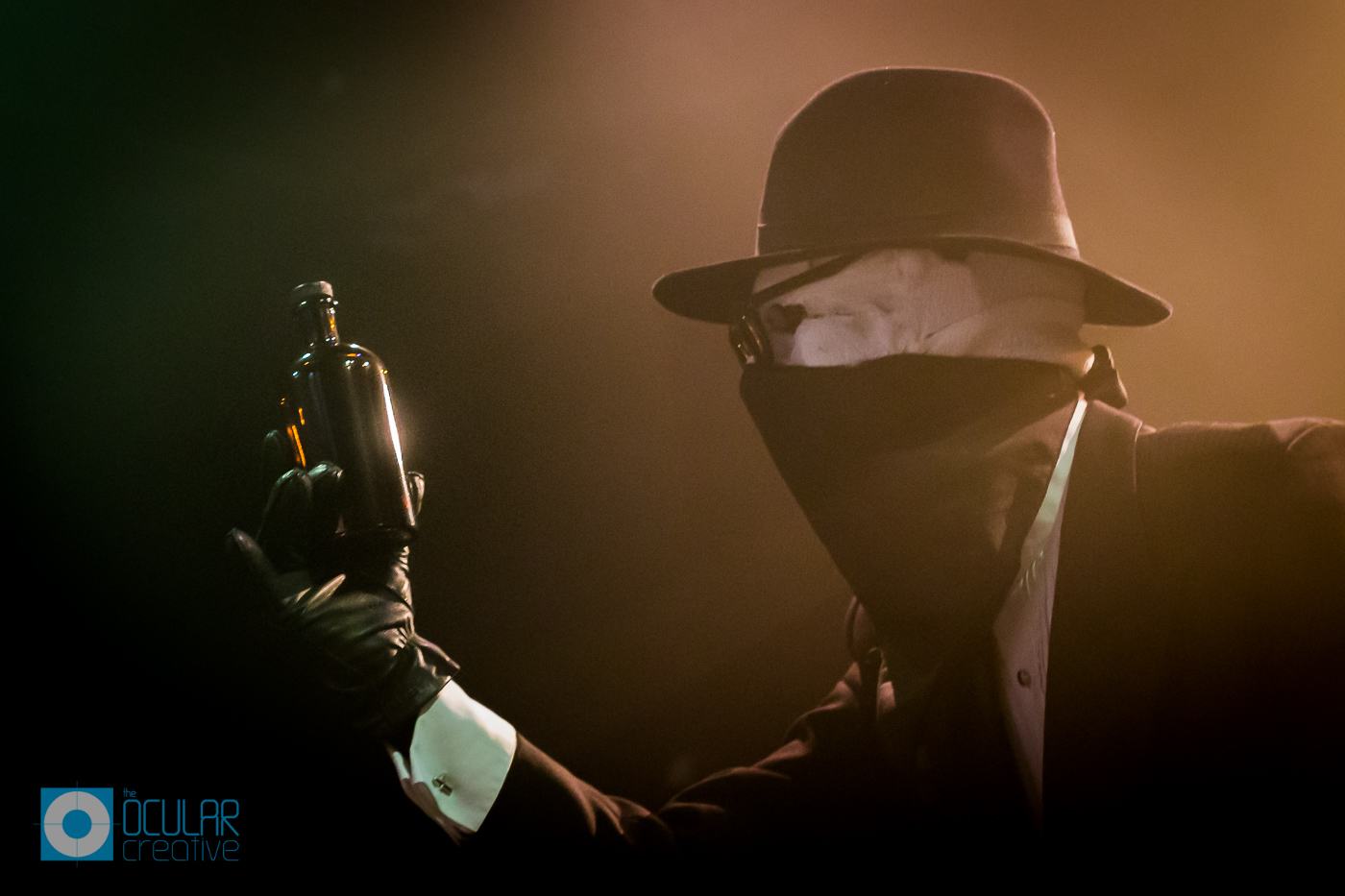
Based on the H.G. Wells novel and adapted for the stage by Derek Webb, The Invisible Man finds us in the small English village of Iping, where a stranger wrapped in bandages (Shaun Chambers) has just taken a room at the pub. Bad-tempered and mysterious, he’s quickly viewed with suspicion by the locals, among them his landlady Mrs Hall (Matthew Parker) and the village doctor, Cuss (Scott Oswald). When his secret is revealed, the Invisible Man – a scientist unable to reverse his own discovery – embarks on a reign of terror against anyone who stands in his way.

In Webb’s adaptation, fifteen characters are played by three actors – with all the ensuing chaos that ratio implies. And yet it’s perfectly managed chaos in the hands of director Kate Bannister, costume designer Martin Robinson, and of course the multi-talented cast, each of whom juggles their various roles with great enthusiasm, and without missing a beat. Wisely, both script and production openly acknowledge the multi-roling aspect, and play it for maximum laughs, delighting the audience with tongue-in-cheek observations like the fact that the three policemen (all played by Chambers) all look alike, or that Dr Cuss must always carry a medical bag to avoid confusion.

As you might expect from a show in which the main character is invisible, the production also pulls off some impressive magic tricks. Karl Swinyard’s set is deceptive in its simplicity; there are several hidden secrets waiting to be discovered as the story unfolds. Wine glasses hang in mid-air, signposts turn all by themselves, and the actors – Scott Oswald, in particular – hold entire conversations, including physical interactions, with thin air. (And they do it so successfully that it’s almost possible to believe there really is an invisible man up on stage with them.)

Photo credit: Davor@The Ocular Creative

For all the comedy, however, the show does follow Wells’ original plot pretty closely, so inevitably there are some serious moments. The Invisible Man is the target of suspicion in Iping because he’s different and doesn’t fit any of the traditional village stereotypes, and it’s ultimately this isolation that pushes him on to a dark path. There’s a political element too; he speaks more than once about the dangers of capitalism, claiming he wants to steal from the bankers and redistribute their wealth – a particularly topical reference given recent events.

We’ve come to expect great things from the Brockley Jack team, and once again this production does not disappoint. Already a compelling story, this adaptation keeps us entertained and enthralled with its slapstick humour and just the right amount of playful audience engagement, but never detracts from the story’s more solemn themes. A thoroughly enjoyable alternative to the more traditional Christmas fare – get your hands on a ticket if you can.

The Invisible Man is at Brockley Jack Studio Theatre until 4th January.

Review: Snow White at Chickenshed

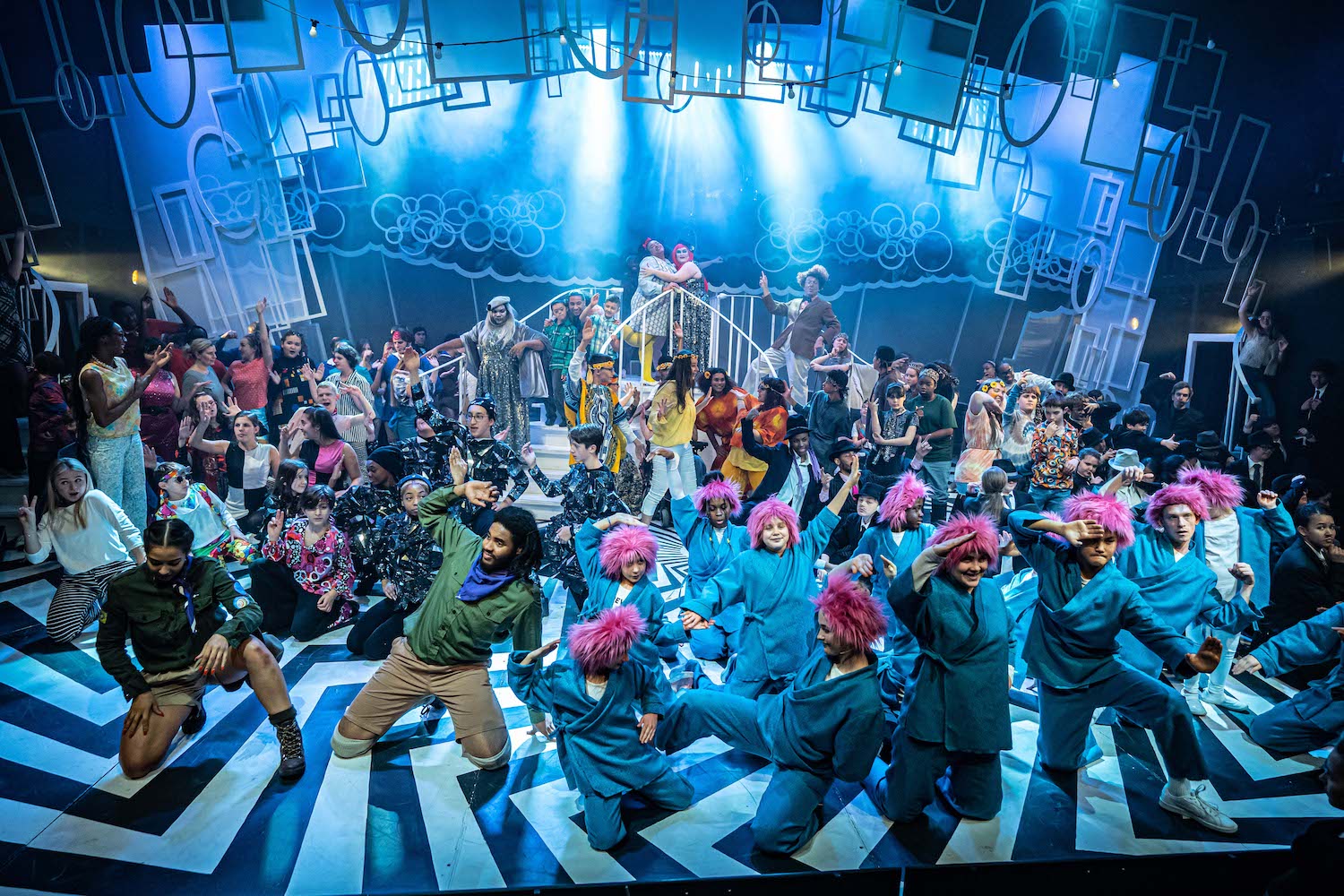
The run-up to Christmas means different things to different people. For the team at Chickenshed, it means it’s time once again for the challenge of putting 800 people on stage in the company’s final production of the year. Not all at once – there are four casts rotating throughout the six-week run – but still, it’s no mean feat to direct 200 people at a time, particularly when the majority of them are children.

Photo credit: Daniel Beacock

This year, the inclusive theatre company bring us an alternative Snow White. Written and directed by Lou Stein, it’s set in 1960s London, with a feminist plot twist and a heartwarming message about inner beauty, the redemptive power of forgiveness and the importance of staying true to yourself no matter what. Oh, and there’s a couple of really, really catchy tunes that will stay in your head all the way home, whether you like it or not. In other words, it’s the very definition of a Chickenshed Christmas show.

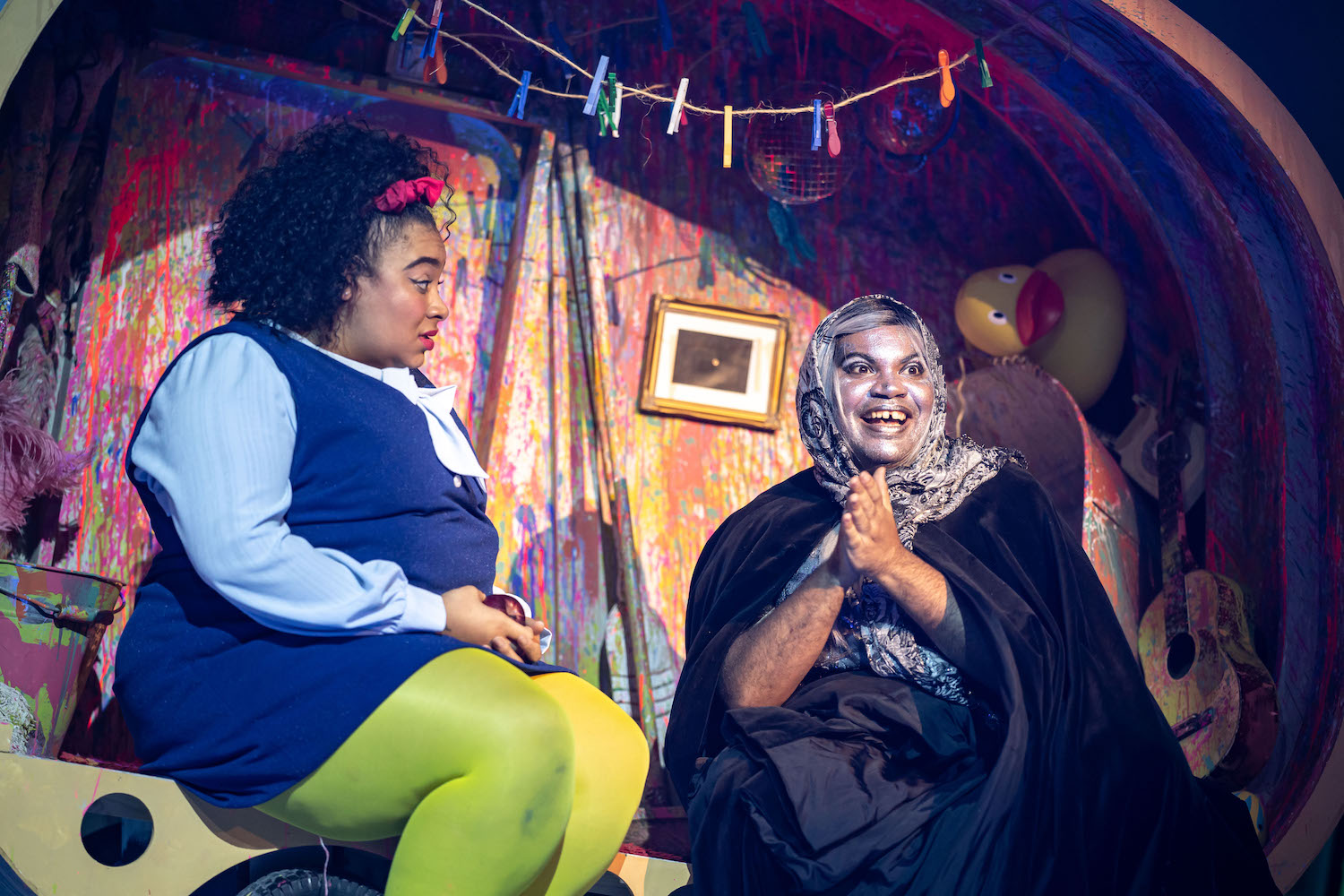
The show isn’t technically a panto – though I was tempted to boo more than once at Sarah Connolly’s gleefully convincing wicked stepmother Jane De Villiers – but it has roughly the same format: lots of musical numbers, a fairly lightweight plot, fabulous costumes, random superfluous characters, a swift and somewhat implausible happy ending, and a little bit of audience participation. There’s even a man in a dress, courtesy of Ashley Driver, who totally steals the show as Jane’s delightfully sassy Mirror. If Kinky Boots ever makes a comeback (please, theatre gods) – I know who I’ll be backing to play Lola.

A bit of romance is also, of course, on the agenda (this is a fairy tale, after all), and Cara McInanny and Nathaniel Leigertwood make an engaging pair as Snow White and security guy/single dad Jason. McInanny has a beautiful voice, and really shines in the musical numbers as her character tries to understand who she is and where she belongs. But there are lighter moments too; the scene in which Jason “kills” Snow White on her stepmother’s orders, for instance, is both a bit surreal and very funny.

Photo credit: Daniel Beacock

Perhaps inevitably, given the sheer number of people involved, there are a few issues with acoustics and it’s sometimes difficult to make out all the lyrics to Dave Carey’s 60s-inspired songs (unless you happen to know BSL, as the whole show is also signed). What the musical numbers sometimes lack in vocal clarity, however, they more than make up for in terms of choreography and sheer enthusiasm. As previously mentioned, at times there are 200 people on stage, and to see them all dancing, singing and having fun together is not only an impressive directorial achievement; it also sums up exactly what Chickenshed is all about. As always, their Christmas show is a festive treat that’s guaranteed to warm your heart and send you home feeling a little bit better about the world. Who can say no to that?

Snow White is at Chickenshed until 11th January.

Quick Q&A: Bored of Knives

Where and when: The White Bear Kennington, 11th – 14th December

What it’s all about… You are now entering a secret space. A place where stories are told, promises are made, and secrets are kept. This is ‘The Den’. After nine years of estrangement, two friends find themselves back in their childhood den, looking for closure. But at what point does loyalty become dangerous, and friendship become exploitation? Bored of Knives is an eccentric and energetic play about the joys and complications of female friendships, and how far we are willing to let our moral compass stray for the sake of loyalty.

You’ll like it if… If you’ve got a massive child inside you, this show is definitely for you. Messy, silly, and full of awkward laughs, Bored of Knives is a big celebration of the uglier, weirder, and more intimate side of female friendships. If you want to watch two full grown women throw crisps at each other, suck dolls, and dance like hooligans- there’s really no better place to be.

You should see it because… underneath the madness, the games, and the dancing around, this story has a lot to offer anyone who has ever found themselves holding onto the past, or struggling to let their grudges go.

Anything else we should know…: This is Flawstate’s debut play.

Where to follow:
Website: https://flawstategroup.com/
Twitter: @flawstate

Book here: www.whitebeartheatre.co.uk/whatson/Bored-of-Knives

Got a show opening soon? Visit Promote your show and tell us more!