Review: Jekyll and Hyde at Chickenshed

Like the gothic novella on which it’s based, Chickenshed’s new musical adaptation of Jekyll and Hyde is short and to the point. Storming through Robert Louis Stevenson’s story in around 70 minutes (plus interval), Jonny Morton’s highly physical piece takes the original plot and adds a modern twist to the performance, along with a strong theme of social responsibility that feels particularly resonant today.

The studio space at Chickenshed has been transformed by set designer Constance Villemot into a smoky, dimly lit Victorian London street, where the poor huddle in corners while the more well-to-do go about their business, blind to the suffering around them. The story’s opening incident, which sees Hyde trampling a young girl in the street, has been upgraded in this version from a moment of carelessness to a deliberate and prolonged attack, which is observed but not interrupted by passing lawyer Utterson (Demar Lambert) and his companion Dr Lanyon (Finn Kebbe). Their chief concern in that moment is not for the nameless girl who’s beaten and left for dead in the street, but for their friend Dr Jekyll (Nathaniel Leigertwood), who they fear is being blackmailed by the perpetrator of the attack, Hyde.

Utterson’s anxiety grows when he’s informed by Jekyll’s household staff, led by butler Poole (Will Laurence), that their master seems changed – but it’s only much later that he learns the truth: Hyde is Jekyll, transformed by a potion of the doctor’s own invention into a villain. Over time, this side of Jekyll has seized control and gone on the rampage, climaxing at the end of Act 1 with the brutal, unprovoked murder of philanthropist Sir Danvers Carew (Ecevit Kulucan) as he tends to the poor.

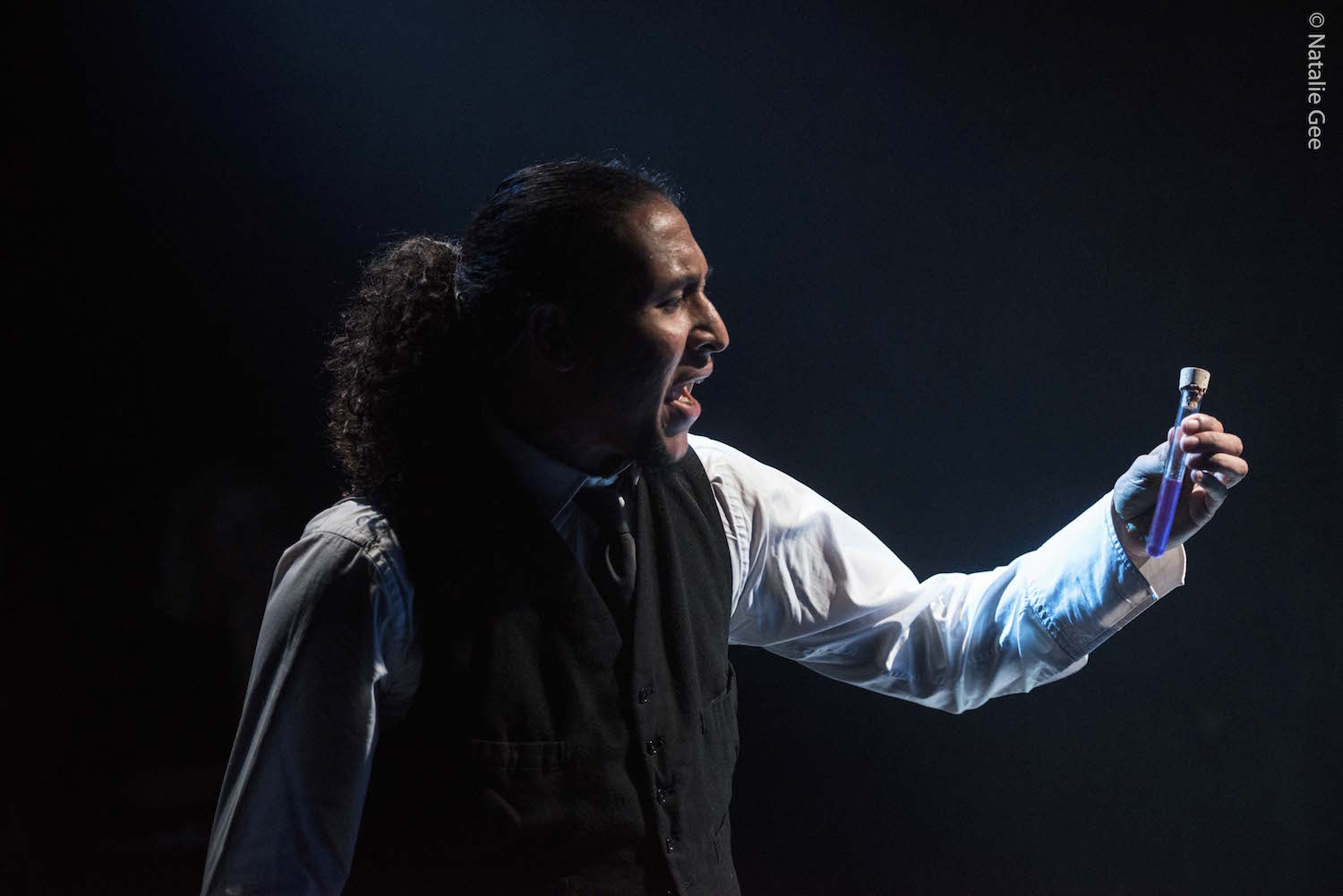
Both Jekyll and Hyde are played by Nathaniel Leigertwood, and while he gives a good performance as both, it’s as the more interesting of the two – Hyde – that he really comes into his own. His transformation from the elegant and mild-mannered Jekyll into Hyde (further enhanced by Andrew Caddies’ particularly atmospheric lighting) is frighteningly convincing: appearance, voice and personality all change beyond recognition as he’s wracked by spasms and emerges a hunched, animalistic figure with an evil cackle and an absolute lack of remorse.

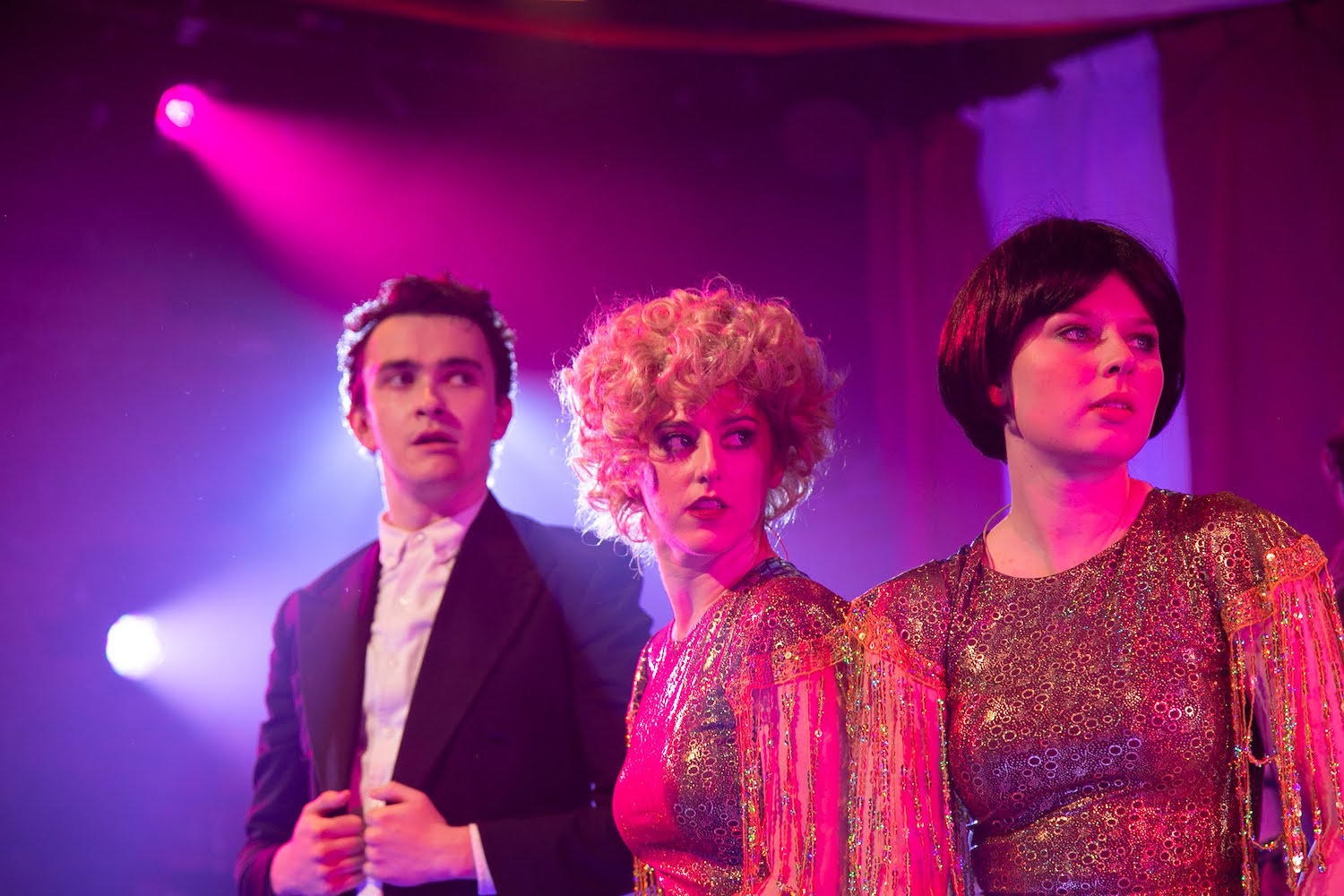
Strong individual support comes in the form of Demar Lambert and Finn Kebbe as Utterson and Lanyon – the former a commanding presence, the latter ultimately a broken man destroyed by the knowledge of his complicity in Hyde’s crimes. In reality, however (and in keeping with Chickenshed’s inclusive philosophy), this is an ensemble piece; a diverse, hard-working and vocally impressive chorus perform the majority of the physically demanding musical numbers and provide commentary on events as they unfold.

Like the rest of the production, Dave Carey and Hanna Bohlin’s up-tempo rock musical score has a distinctly modern flavour. With no spoken dialogue, the show moves swiftly from one number to the next, managing to pack an impressive 21 songs (albeit with several reprises) into its 70-minute duration. There are occasions when the vocals struggle to compete with the volume of the pre-recorded soundtrack, and combined with the pace of some of the songs, this can make it difficult to catch every word. Perhaps in recognition of this, the “penny dreadfuls” that are distributed as we arrive contain a handy synopsis of the plot, while the title of each new chapter is projected on the wall to help us orientate ourselves and fill in any plot gaps.

With this production, Chickenshed proves once again that it knows how to entertain audiences with a good story. But the show also asks us to consider some pertinent and rather topical questions about the importance of the choices we make – for ourselves, for others and for society as a whole.


Can’t see the map on iPhone? Try turning your phone to landscape and that should sort it. I don’t know why but I’m working on it… 😉

Review: Side Show at the CLF Art Cafe

First performed in 1997 – a couple of decades before The Greatest Showman earwormed its way into our lives – Side Show is based on the true story of conjoined twins Daisy and Violet Hilton. Like the recent monster hit movie about the life of PT Barnum, Bill Russell and Henry Krieger’s musical is a story about being different, but takes a rather darker and more grimly realistic approach than Jackman and co.

As the star attractions of a travelling show, the two sisters – conjoined at the hip – dream of stardom (Daisy) and romance (Violet). But while they experience brief glimpses of both, the two never get to live the one dream they share: that of a normal life. Instead they find themselves ruthlessly exploited by everyone around them, while they’re constantly torn between their desire to be alone and their fear of being apart.

Photo credit: Michael Smith

Pint of Wine’s revival, at the suitably unconventional Bussey Building in Peckham, immerses us instantly in the sights, sounds and atmosphere of the side show. A lot of attention has clearly gone into the production’s design, with Lemington Ridley’s increasingly glamorous array of costumes plotting the sisters’ rise to fame, while a simple but effective set from Roberta Volpe proves you can do a lot with some wooden bleachers and a couple of screens.

The cast for Dom O’Hanlon’s production are generally strong, with stand-out vocal performances from Matthew James Nicholas as Terry, the twins’ manager, and Lauren Edwards as the sweet-natured Violet. She and Katie Beudert work well together, capturing in both performance and appearance the differences between Violet and Daisy’s personalities, and managing with ease the physical demands that come with being attached to another performer.

As Violet’s love interest Buddy, Barry O’Reilly excels in the dance numbers – including an impressive solo tap routine – and Alexander Bellinfantie is vocally strong as the sisters’ friend and protector Jake. Both seem less confident with their spoken dialogue, however, and we never quite get to the bottom of their character’s complex emotional struggles around their feelings for Violet.

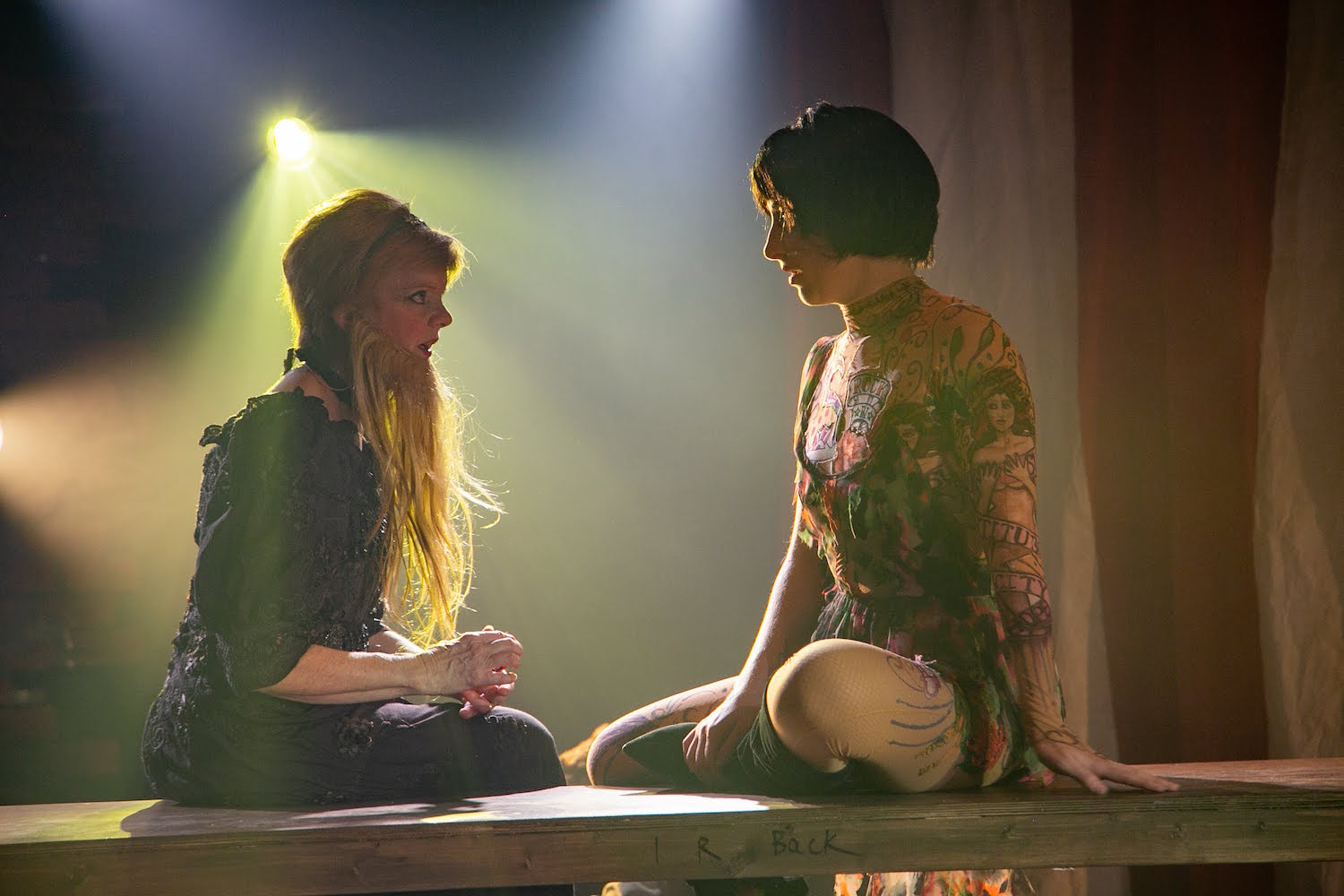
Meanwhile the ensemble give an accomplished performance, particularly as the other side show acts, who step up to support their friends against their bullying adoptive father, Sir (Stephen Russell). In doing so each gives us a glimpse of their distinct personality, and a reminder that they’re not just attractions to be stared at, but real people who live, love and dream like everyone else. In fact, they’re considerably more human than the journalists, doctors and audiences – the other parts played by the ensemble – who view Daisy and Violet as little more than objects to be exploited.

Photo credit: Michael Smith

The musical numbers are performed well, led by musical director John Reddel’s excellent band, with the opening number Come Look at the Freaks and Terry and Daisy’s Act 2 duet Private Conversation among several highlights. The vaudeville routines are great entertainment, and Act 1 comes to a poignant close with the cast’s heartfelt rendition of Who Will Love Me As I Am? This song in particular taps into an emotion we can all identify with – the need to be loved and accepted just as we are – but it also represents something Daisy and Violet seem destined never to have. The show’s sombre conclusion might be more realistic than most, but that doesn’t stop us from feeling a bit unsatisfied by the resignation with which the twins accept what lies ahead.

Pint of Wine’s debut musical theatre production, while not perfect, is a welcome opportunity for London audiences to discover a little-known show – as well as the true story of two fascinating women who, while certainly unique, in a lot of ways really were “just like everyone else”.


Can’t see the map on iPhone? Try turning your phone to landscape and that should sort it. I don’t know why but I’m working on it… 😉

Interview: Cornelia Baumann and Beatrice Vincent, Dracula

Their last production met with widespread acclaim, five star reviews and an Offie award nomination for Best Production. And now with Halloween fast approaching, Arrows & Traps have something suitably scary planned – a chilling new adaptation of Bram Stoker’s Dracula, written and directed by Ross McGregor.

“It’s definitely not a show for the faint-hearted!” warns Beatrice Vincent, who plays Mina. “I think we cover a lot of classic horror bases – there are a few jump scares in there, as well as what feels like gallons of blood – but ultimately it’s a play about the darker side of humanity, and things the characters don’t want to admit they want.”

“A lot of people, once they find out that we’re currently working on Dracula, assume that it is a spoof and ask if it’s funny,” adds Cornelia Baumann, who’ll be appearing in her tenth Arrows production as Renfield. “It definitely isn’t a spoof. While there are certainly some jokes in the play, we are aiming to create a real story that should be scary because of what the characters go through.

“There’s definitely an Arrows feel to the show in terms of quick overlapping scenes, swift changes and interwoven timelines. After the success of the real story of the White Rose, Dracula is very different and much more focused on entertainment, aiming to thrill and be eerie and scary to serve fans of the original and the genre.”

The show opens next week at the Brockley Jack Studio Theatre, where Arrows & Traps were recently announced as the official associate company. “Ross will never compromise on the scale of the story he wants to tell, and the result feels almost cinematic,” says Beatrice. “The great thing about the Jack as a venue is that it’s big enough to tell a story like this, but it’s still very intimate, which means that the smaller moments aren’t lost, and of course the audience are closer to the action!”

Over the last few years, the Arrows have built a formidable reputation with their adaptations of literary classics, from Shakespeare to Dostoevsky. Following the success of Frankenstein last year, they’re returning to horror with their take on Stoker’s novel. “Ross has made some decisions that are unique to this version and hopefully will make it exciting and bring out certain elements of the familiar story as well as create a very specific feel,” says Cornelia. “We don’t want to give everything away – you have to come and watch it – but some changes are obvious. For example, Renfield, the character that I’m playing, has been turned into a woman.

“Apart from following the Arrows’ ethos to create more exciting roles for women, this change creates some interesting new dynamics, but also gives some different insights into the story, the themes and the characters. Dracula usually preys on women, so it makes sense that Renfield perhaps originally was going to be turned into a vampire as well, but then Dracula abandons her. She completely succumbs to his powers and is a contrast to the other women in the play, particularly Mina.”

There’s also a significant – and welcome – change in the characters of Mina and Lucy: “As iconic as the novel is, it does contain some really insidious ideas about gender and what makes a ‘good’ woman, which led the original Mina and Lucy – as well as many of their stage and screen counterparts – to be a lot less fleshed out than the male characters in the novel,” Beatrice explains. “There’s a tendency to portray them as the angel and the whore, both of whom are victims that require saving by Van Helsing and their respective love interests, but Ross was very keen to distance his adaptation from those tropes, and what he’s ended up writing is a female-led piece.

“I’m incredibly excited to be playing Mina; she’s a real joy and a challenge to play. I’ve read the book and watched a few film adaptations, but Ross’s Mina is so different from previous ones that I actually found the experience very freeing. She’s referred to in the book and in Ross’s adaptation as ‘one of the brightest’ lights in the world, but the story we’re telling depends on bringing the darkness out of her as well, so finding that balance has been key for me.”

For Cornelia, playing the “zoophagous maniac” Renfield, an inmate at the lunatic asylum overseen by Dr John Seward, is an equally exciting challenge. “There’s so much freedom and scope in playing this kind of character. I think more than usual the physicality of the character was a way in for me. The connection to animals is very apparent, so from the beginning we were talking about how much Renfield’s physicality is affected by the flies and the spiders and the cats etc. But there is also the general physicality of someone who has been in an asylum for a while and who has been put into straitjackets and through various treatments. I worked with our movement director Will Pinchin on finding some of those elements, which was very helpful.”
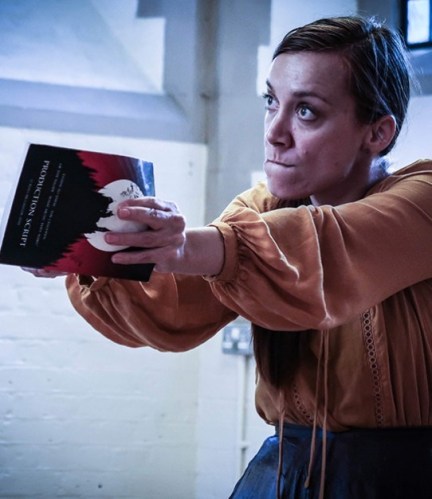
Both Cornelia and Beatrice appeared in the Arrows’ last production, The White Rose, which told the true story of anti-Nazi political activist Sophie Scholl – and both list it among their highlights with the company. “It was so rewarding to see the company and Ross get so much recognition for all the hard work that has led to that production,” says Cornelia. “Finding out about the Best Production Offie nomination was very special and one of my favourite backstage memories.

“Personally, it is difficult to pick highlights as I have been very lucky to play lots of exciting characters with A&T, but I would have to say that playing Lady Macbeth in 2016 and Mary Shelley in last year’s Frankenstein were probably my favourites. Lady Macbeth is obviously any actress’ dream but I think I particularly liked exploring the relationship between her and Macbeth, and finding the humanity and trauma behind the horrible things that they do. Similarly I loved finding out about Mary Shelley’s incredible life and it was an honour to portray her.

“Saying that, I am having an absolute blast playing Renfield in rehearsals
 so I think that will definitely be added to my highlights, if not top the other two.”

Beatrice also has special memories of The White Rose. “There was just something about that show. I think we as a company were all very aware of the importance of the story we were telling, and we never stopped being moved by the bravery of the people we were playing every night.

“Three Sisters would also have to go up there, as it was a completely different experience to any I’ve had in theatre before. I was pretty nervous when Ross asked me to assistant direct, but I found the process really fascinating, and although there were moments during rehearsals when I was more stressed than I’ve ever been as an actor, watching from the lighting box on opening night made it all worthwhile – I think I cried a little bit!

“Although we’re still in the midst of rehearsals for Dracula, there’s already been so much laughter and fun in this production. I think we’re all enjoying playing stuff that we wouldn’t normally get to do, as well as having gritty emotional conflicts to sink our teeth into – pun absolutely intended.”

Dracula brings together a cast of familiar Arrows faces, all of whom have appeared in previous productions with the repertory theatre company: “Rep theatre is simply the best way to work,” says Cornelia. “It is so nice to enter a rehearsal room from the first day and be comfortable and ready to explore, take risks and have fun. It cuts through all the awkwardness of having to prove yourself to the director or even other actors. You can hit the ground running. It is about working together and creating the best you possibly can. Ross knows how we work and how he can get the most out of us. Similarly we know his style and vision and there is a shorthand to get to the end result quicker. We have so many references from previous plays that it is very easy to be on the same page.

“For any play you have to be very open and vulnerable to get to the core of the characters and the story. It is easier when you’ve worked with people before. There is more trust there. This is particularly true for playing roles outside of your comfort zone, and of course intimate scenes or in fighting and movement where you are very reliant on your fellow cast members.”

“It’s great to be able to find new dynamics within the group for each show as well,” adds Beatrice. “Lucy (Ioannou) and Chris (Tester) for example, are worlds away from Sophie and Mohr as Lucy and Dracula! It never gets boring, even though it’s a similar cast each time – this is actually my first time doing significant scenes with Chris, even though it’s our third show together. Every show has an incredibly different atmosphere, and it’s so lovely to get to share all of it with an amazing group of people.”

Beatrice joined the company last year, making her first appearance as Mary Shelley’s half-sister, Fanny Imlay, in Frankenstein. “I feel incredibly spoiled,” she says. “Frankenstein was my first professional job, and I got to give an emotional death speech while wearing a gorgeous dress, which is the dream, honestly.

“But in all seriousness I’ve learnt so much this year; as someone who is still fresh out of drama school I never would have dreamed that I’d get to play such a range of complex and interesting female characters at this point in my career. And on top of that, I’ve been able to play them against actors who really force me to raise my game, in productions I am truly proud to be a part of. We’re all very dedicated to the work we do – Ross puts his heart and soul into every production, and as actors we all want to support him in that, and give our all as well.”

Cornelia was first cast in 2015 as Baptista in Taming of the Shrew, and has been a regular cast member ever since: “Honestly I can’t put into words how much I have enjoyed working with Ross and the company. It has been a real blessing and I am very grateful to have been part of so many wonderful productions and work with so many lovely, creative and talented people. Ross always picks exciting material and it has been great to see the company grow and find its style and identity.

“And as an actor I think I would never have learned as much as I have over the last three years working on these productions. It has been an honour to be recast and have a director trust you to explore different roles. It is a real chance to be stretched and be put out of your comfort zone. Renfield is certainly a very different role to what I have done before.

“But most of all it feels a bit like a family and a home. I am always happiest when working on an A&T production.”

Theatre Thoughts: 8 ways we can all #BeMoreMatilda

It’s almost eight years since a little but mighty show called Matilda first opened in Stratford-upon-Avon. Based on the novel by the legendary children’s author Roald Dahl and with music and lyrics by Tim Minchin, the award-winning musical moved in to the West End’s Cambridge Theatre the following year, and has been delighting audiences of all ages there ever since – many of us more than once.

Why this universal appeal? Well, perhaps it’s because even though the central character – Matilda Wormwood – is only five years old, she’s the kind of person most of us wish we could be. Not only is she much cleverer than a lot of grown-ups, she’s also braver, kinder and has a far clearer understanding of the difference between right and wrong, as well as a greater willingness to step up and fight when she sees something that’s not fair. There’s a lot we can learn from her – so to celebrate the show’s (almost) 8th birthday, here are 8 ways we can all #BeMoreMatilda…

1. Don’t let other people write your story

It’s your life – so stop worrying about what other people think, and live it the way you want. She may only be five years old, but Matilda already knows who she is and what she likes, and she isn’t about to let her horrible parents, or her evil (and slightly unhinged) headmistress, tell her she’s doing it wrong.

2. Turn off the telly and read a book

Despite the best efforts of Mr Wormwood to convince us that books rot kids’ brains and make them boring, put bookworm Matilda next to her TV addict brother Michael, and there’s only ever going to be one winner… (All together now: “Backwards!”)

3. Sometimes you have to be a little bit naughty

It may be true that two wrongs don’t make a right – but it’s also true that you can’t always beat injustice by sticking to the rules. If Matilda teaches us anything, it’s that sometimes you have to think outside the box and get creative – even if it does mean being a little bit naughty.

4. Learn to speak another language

Speaking another language is a great skill to have – it can help you get a better job, make new friends, see the world; there’s even evidence it can help delay the onset of conditions like dementia. But most importantly, you never know when it might come in handy to save your family from the Russian mob.

5. Work on your power pose

Matilda has a number of signature power poses, and she may well be on to something, as apparently there’s scientific theory proving a good power pose can do wonders for your confidence. Also, let’s be honest – it’s quite fun.

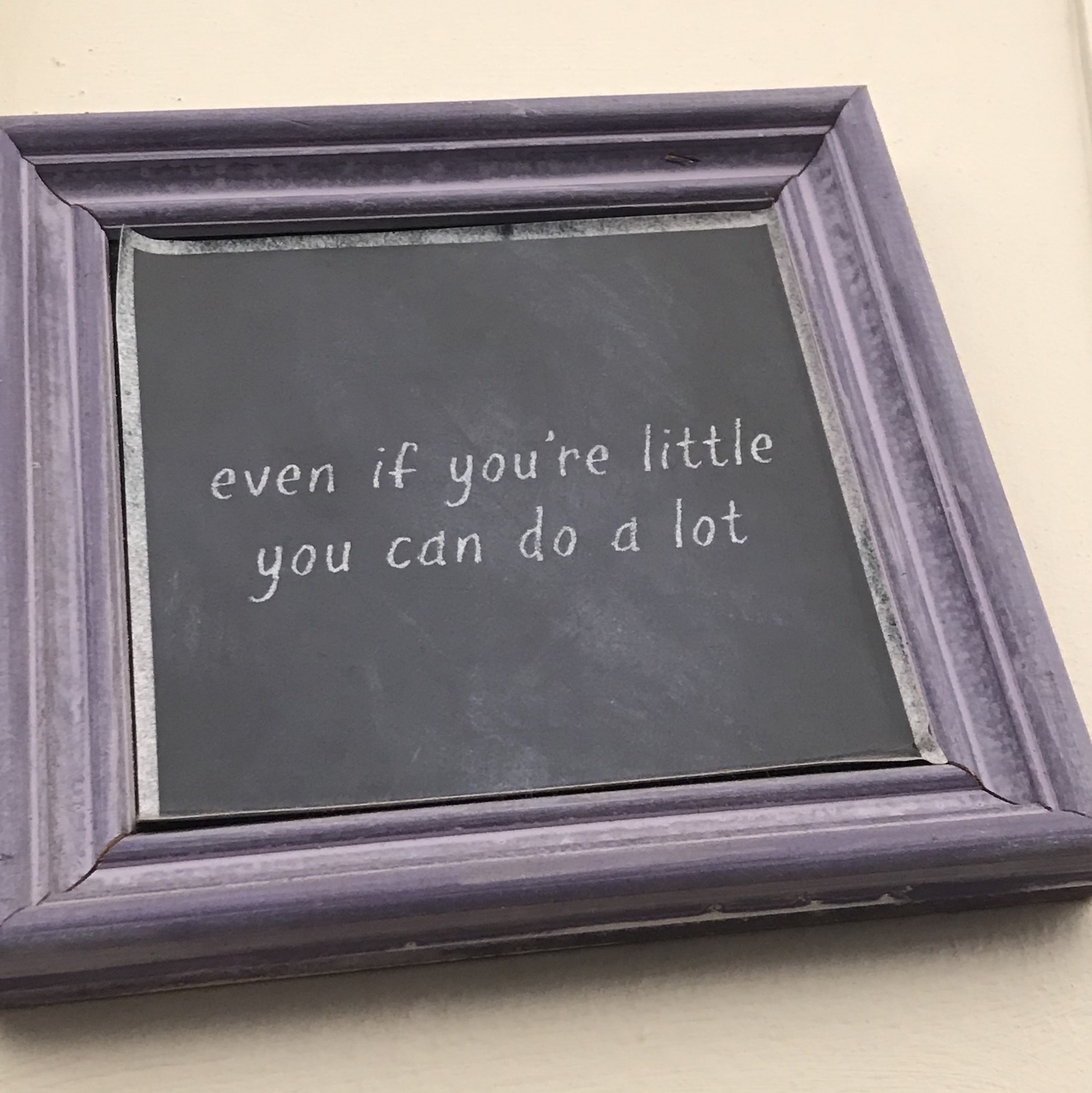
6. Never let a little thing like “little” stop you

Nobody proves better than Matilda that size isn’t everything. She may be tiny, but she doesn’t let that stop her taking on her huge, hammer-throwing headmistress, Miss Trunchbull – who, like most bullies, is also a massive coward. And she’s not the only one; inspired by her example, it’s the “revolting children” who ultimately come out on top.

7. Be proud of being a girl

Guess what, Mr Wormwood? Not having a “thingy” isn’t the end of the world… 😉

8. If it’s not right… put it right

A particularly powerful one to end on. Whether it’s destroying library books, force feeding chocolate cake to a small child or, er, murdering someone’s dad and stealing his house, Matilda knows when something isn’t right, and she won’t let anyone get away with it. If we all took a leaf out of her book and stood up against injustice wherever we saw it, just imagine what a very different – and much better – place the world could be.

Want to #BeMoreMatilda? Why not start by booking your tickets to this funny, inspiring and ever so slightly bonkers show – visit matildathemusical.com to find out more.

Review: La TragĂ©die de Carmen at Asylum Chapel

As operas go, Bizet’s Carmen is a good choice for anyone in search of an entry-level option, because chances are most of us know more of the music than we think. In La TragĂ©die de Carmen, Peter Brook, in collaboration with composer Marius Constant and writer Jean-Claude CarriĂšre, takes this a step further, condensing Bizet’s four-act original – and all its greatest hits – into just 80 minutes. This means we lose all but four of the characters, and instead focus solely on the tragic “love rectangle” between the protagonists.

Photo credit: Ugo Soffientini

MicĂ€ela (Alice Privett) arrives from the country looking for her childhood friend Don JosĂ© (Satriya Krisna), a corporal in the Nationalist army, with whom she’s in love. He, however, has fallen for the seductive Carmen (Chloe Latchmore), who leaves him after a brief romance for Escamillo (James Corrigan), an officer. After trying and failing to win her back, Don JosĂ© murders his former lover in a fit of passion.

Directed by John Wilkie, Pop-Up Opera’s production of La TragĂ©die de Carmen is exquisitely performed by the four singers and musical director Berrak Dyer; watching and listening to her perform the opera’s entire score on piano is worth the ticket price all by itself. Though it may be much smaller in scale than a traditional performance of Carmen, there’s nothing half-hearted about this production, which brims over throughout with passion, intensity and obvious talent. As the tragic love story unfolds, a video screen shows images from the Spanish Civil War – which, in this updated version of the story, has just ended – as well as Pop-Up Opera’s trademark minimalist surtitles, which provide us with just enough of a translation to understand the context of each scene, but don’t distract from the action.

Cutting back the story so dramatically has both advantages and drawbacks. On the plus side, it’s much shorter and more accessible than the original, with a more straightforward storyline, which makes this an ideal ticket for an opera first-timer. On the other hand, it’s all over so quickly that there’s a risk of the audience not becoming fully invested in Don JosĂ©’s relationship with Carmen, or appreciating why he reacts so violently to her rejection. This is dealt with, to some extent, by setting the action at the end of the Civil War, and portraying both Don JosĂ© and his love rival Escamillo as having suffered some trauma as a result of what they’ve seen and experienced during the conflict. In light of his obvious fragility, perfectly captured in Satriya Krisna’s performance, the apparent ease with which Don JosĂ© is driven to madness doesn’t seem quite so hard to accept.

Peter Brook’s aim in writing La TragĂ©die de Carmen was “to focus on the intense interaction, the tragedy of four people” that lies at the heart of the story. Pop-Up Opera have stayed true to that purpose, and while some may take issue with Brook’s extreme edits, it’s hard to find fault with this particular production of his work. (That said, I do recommend sitting at the front if you can – depending on the venue, some audience members further back may struggle to see what’s happening during the final climactic scene.) Whether you think you like opera or not, this one is certainly worth a visit.

La TragĂ©die de Carmen continues on tour – for full details visit www.popupopera.co.uk.