Interview: Theatre Counterpoint, Am I Pretty?

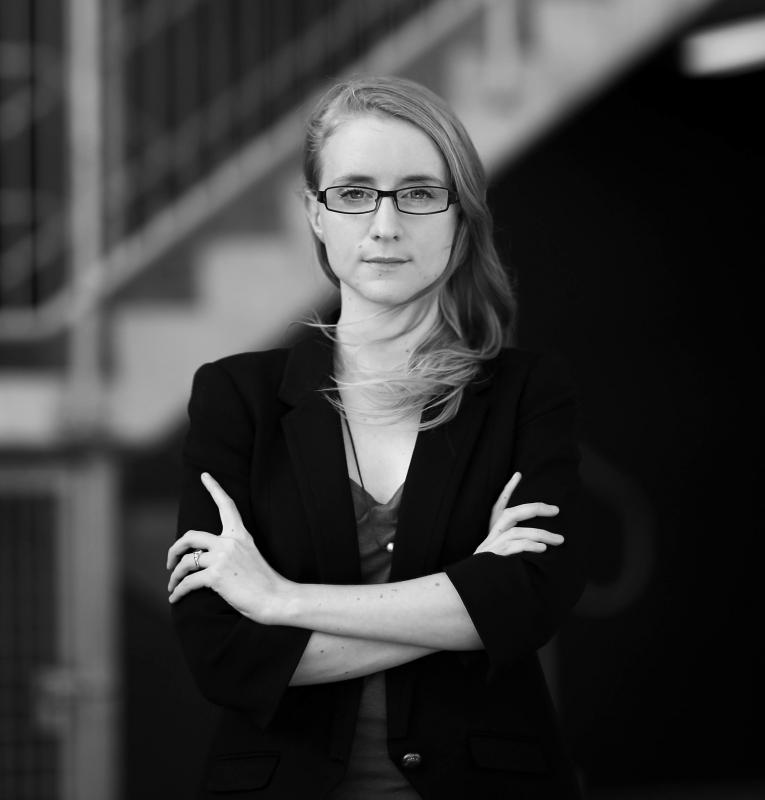
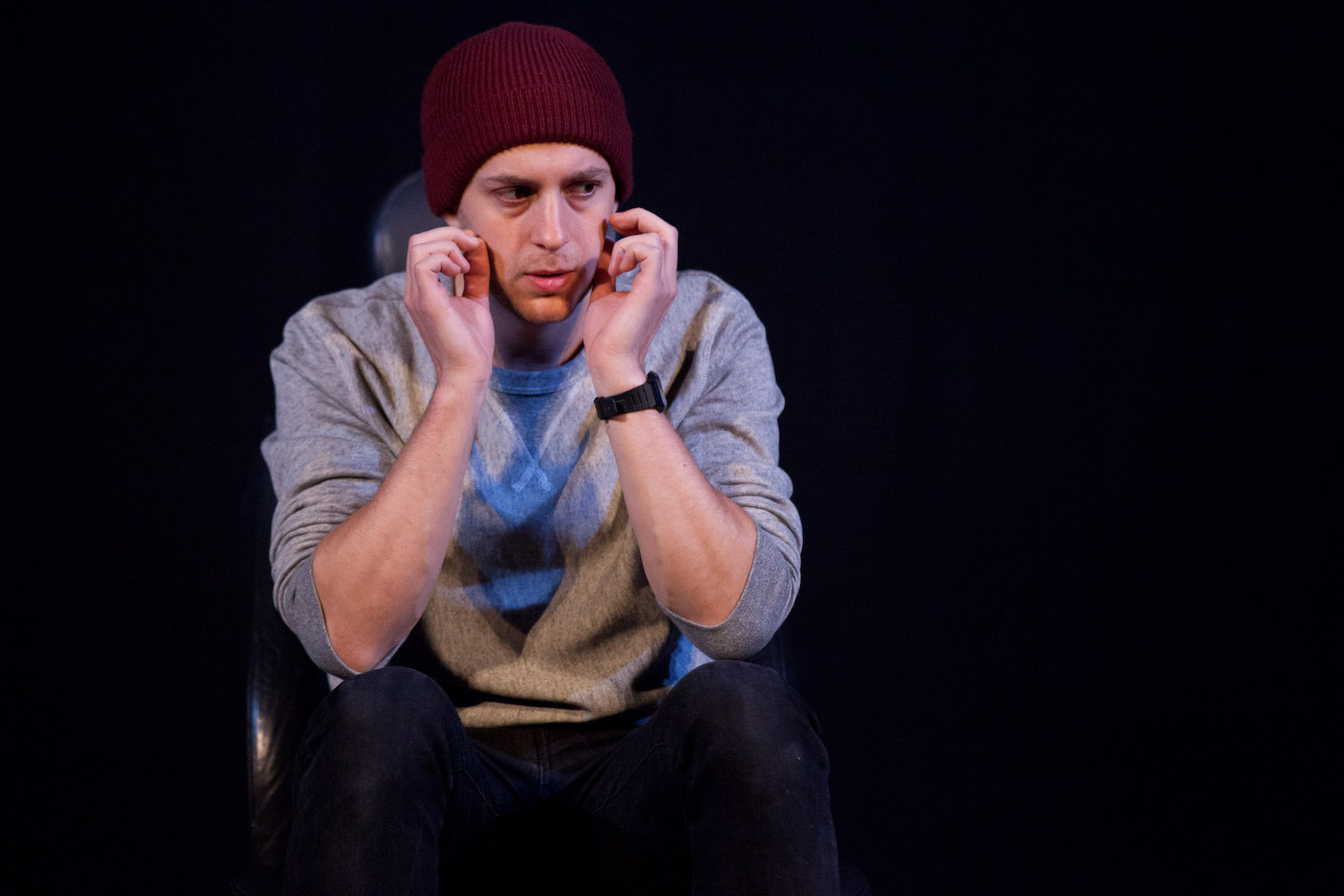
Theatre Counterpoint produced their first show, Don’t Turn the Lights On, in 2015. The following year, with the arrival of two new members, work began on Am I Pretty? – an original devised performance which examines current issues around the self, body image, and cosmetic surgery. After months of development, the company will be presenting Am I Pretty? at Camden People’s Theatre from 6th-8th April, and are also seeking touring opportunities to share the work with more people.

The London-based company’s made up of director Dadiow Lin, producer Johanna Coulson, Mira Yonder, Valentin Stoev, Tori Zdovc and Jay Walker, who’ve worked closely together on the show. So where did the idea come from? “It started as a joke, or what we thought was a joke really. We were in a cafe, thinking about what our next project’s going to be, and Dadiow said, ‘I always wanted to have a chin’. And we looked at her and said ‘Well, you do Dadiow, you have a chin!’ We kept talking about appearance, what it means to us, and to what extent it’s linked to who we are. Having these thoughts in mind made us curious about all the people who’ve had cosmetic surgeries and what it feels like for them before and afterwards. Do they change their perception of themselves? What psychological journey might a person go through when applying this operation to their bodies and faces?

Photo credit: Jost Franko

“Cosmetic surgery is so many things, has so many dimensions. Most people dismiss it as an unnecessary vanity but it is a scientific marvel, a form of self-expression like tattoos and piercings, a complete life changer, in both good and bad ways. Some of our members’ perception of cosmetic surgery was completely changed from even just the first workshop we did. Am I Pretty? aims to start a conversation about this growing, evolving phenomenon, and to provide an opportunity to think about cosmetic surgery in all its complexity.”

The show’s been in development for about nine months. “The creative team was formed in June 2016, and that’s when we started developing the work. As we’re using jazz composition to shape the work, we firstly created a small piece, presented at Rich Mix in August 2016, to test out how we may establish a sense of jazz in a theatre performance. It was an important experience as we not only performed something jazzy but also gathered the comments and feedback about how this piece was perceived. After the trial of the jazz structure, we then delved into research on cosmetic surgery in order to form a ‘theme’ of this show.

“Our initial research into cosmetic surgery involved speaking to people who’ve experienced it as well as reading articles and journals about the whole process, both from the perspective of the patient and the medical people involved in the procedures. We broke down this research and data to see how it made us feel and understand the different viewpoints of those involved in the procedure. This led to us presenting a work-in-progress examining the journey of getting a nose job done at Goldsmiths, University of London in October 2016.

“Improvisation is the most important part in jazz music; therefore, after the presentation in October, we worked a whole week at The Old Vic Lab in November to seek our improvisational tools in a theatrical realm. From November until now, we’ve been generating material based on our ‘theme’ and refining our improvisational approaches, and now the performance is evolved into a three-act show with six scenes in each act. It’s huge and exciting!”

The team are clear that they’re not looking to preach about the pros or cons of cosmetic surgery: “We’d like people to leave with a more in-depth understanding of cosmetic surgery and the motivation behind people’s choice to undergo what can be a very painful, expensive and dangerous operation. However, we’re not giving a position to our audience, as it’s a very complex issue and there’s no black and white answer to it. Instead, we would like to intrigue you with more questions, challenge the superficial perspectives about cosmetic surgery, and reveal the intricate stories of the journey of becoming ‘prettier’.”

Importantly, Am I Pretty? has something to say to everyone, whether or not we’ve ever thought about cosmetic surgery. “It’s a work about how we are perceived and how we perceive ourselves. Cosmetic surgery is a complex issue that we use as a lens to talk about who we are and how we might change in society. It should be interesting to anyone, as we all have some opinion on cosmetic surgery but our knowledge is often ‘skin deep’ – we know ours was until we started researching for this show. It involves a lot of issues and these go to the core of who we are as individuals, even if we have never considered having surgery.”

Photo credit: Jost Franko

And for anyone who is thinking about surgery, what would be the team’s advice? “We think it’s essential to figure out why you’d like to have cosmetic surgery – for instance, trying to discover if you will actually be ‘happier’ afterwards. If you have made up your mind, please consult the surgeon in detail, be aware of all the risks and complications, and prepare for the recovery thoroughly. We might ignore the ‘recovery period’ when seeing the effective before and after images, however, the recovery period could be very dreadful, and painful for both mental and physical status.”

What’s unique about Theatre Counterpoint, the team explain, is that they use analysis of music structures for the composition of their devised performances. “As we’ve been hosting workshops for theatre students who are also interested in devised theatre, we will keep sharing this method and developing it by expanding the scale of workshops and inviting more and more theatre practitioners to them.

“The jazz structure we take for Am I Pretty? is from ‘All the Things You Are’ by Jerome Kern and Oscar Hammerstein II. We made the basic sections in the music into different acts of the work, and the chord progressions into the scenes in each act. However, we’d like to keep some secrets about how we create these scenes, and how we interpret and deliver the sense of ‘jazz’ when making Am I Pretty? This jazz interpretation is not literal, the show does not involve music or singing. We’d love to have people come, see the show, find out, and question us about the shaping of the performance!”

Catch Am I Pretty? at Camden People’s Theatre from 6th-8th April.
Interview: Paul Bradley, Caste

Best known to many for his long-running roles in Eastenders and Holby City, next month Paul Bradley will be taking to the stage at the Finborough Theatre in a long-awaited revival of T.W. Robertson’s Caste. This new production from Project One marks the 150th anniversary of the ground-breaking comedy, which hasn’t been performed in the UK for over 20 years.

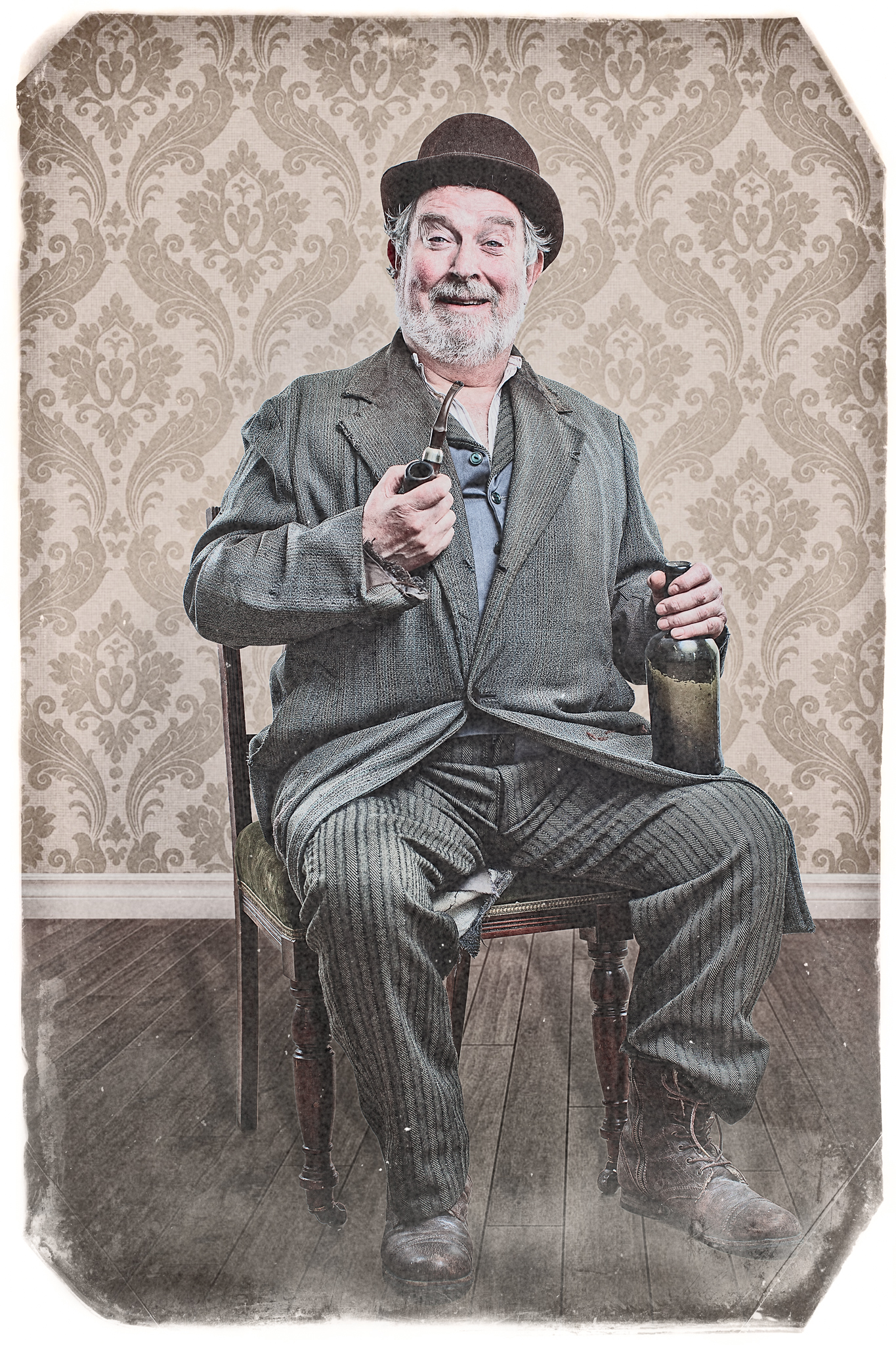
So what’s it all about? “Well of course the clue’s in the title,” says Paul. “It’s a play about social divisions in Victorian London. Eccles, a drunken father with no money, has two daughters: Esther, who’s being courted by George, an aristocrat and miles above her in social station; and Polly, who’s being courted by Sam, a man of her own social class. George’s mother is a snobbish Marquise who disapproves completely of the match and is appalled by the Eccles family. George and Esther marry but he’s called to fight in India. He disappears and Esther’s father drinks and gambles away all the money that had been left for her and she’s now, as well as having given birth to a son, impoverished again. I won’t spoil the denouement but it’s a comedy so all ends well!”

Photo credit: Greg Veit Photography

Paul joins the cast – which also features another TV favourite, Susan Penhaligon – as Esther’s father Eccles, and he’s enjoying exploring his character’s hidden depths: “Eccles is a drunken father – so a bit of a stretch for me there! He’s a complicated man. On the surface he seems just a drunken beggar, but he’s intelligent and sees himself as being as good as anyone in a higher station. He is also cruel and has an addict’s selfishness. He claims to be a champion of the working man but hasn’t worked a stroke in twenty years. Although he doesn’t live by them, the sentiments he spouts are commendable; he’s a victim of both his circumstances and his own ‘life choices’.”

Caste was described by George Bernard Shaw as “epoch making” – but what made Robertson’s play so revolutionary for its time? “It’s the first ‘cup and saucer’ play – the equivalent of the 60’s ‘kitchen sink’ dramas,” explains Paul. “And it’s as radical as they also were. The people and situations are realistic – a mirror to nature of Two Nation Britain. It’s also that rare thing; a funny play which looks at English social mores.”

And Paul believes the play is just as forward-thinking today as it was 150 years ago. “Absolutely. It’s so modern, so – depressingly – relevant. A real political play. It expresses, in a comical way, real, deep concerns about class, aristocracy, poverty and social mobility.

“It’s very funny and moving and a sort of social document. I think it will amuse, move but also leave an audience thinking. It spotlights the challenge of social mobility. Without satire it introduces real characters whose social gulf seems insuperable but who, in finding love, see that gulf as irrelevant.”

Photo credit: Greg Veit Photography

Caste‘s production team is headed up by director Charlotte Peters, currently Resident Director on An Inspector Calls in the West End. “I’m rather daunted by how brilliant the cast and director and designer are,” says Paul. “They’re a brilliant team who are all committed to making this show a landmark production.”

It’s been more than two decades since Caste was seen in the UK, and Paul’s delighted to be bringing the play to a new audience. “When I first read the play I loved it and felt I had to be part of it. I can’t believe that this hugely influential work hasn’t been performed for so long. It’s the sort of groundbreaking play that the National or RSC should be championing.

“Because it is such a gem I feel a responsibility to live up to the author’s vision, and I think this is a view shared by us all. With a play of such quality it is a gift to be a part of the production. I hope that we start a re-appreciation of Robertson’s work and find a new audience for him.”

Caste is at the Finborough Theatre on Sundays, Mondays and Tuesdays from 2nd-18th April.

Interview: Tobias Oliver, Miss Nightingale

Since its premiere in 2011, Matthew Bugg’s Miss Nightingale has toured five times, earned numerous five-star reviews, been named one of the Guardian’s Top 50 Shows of 2016 and been voted into BritishTheatre.com’s Top 100 Greatest Musicals of All Time. And now it’s finally coming back to London, with a two-month run at The Vaults from 30th March.

Miss Nightingale is not your usual musical theatre show,” explains co-producer (with writer and composer Matthew Bugg), Tobias Oliver. “It’s set in World War Two London and challenges you to stand up for yourself, to fight for what you believe in and to resist prejudice in all forms. But it does this whilst entertaining the socks off you with a gripping narrative, tender love story and a load of absolutely brilliant songs, some of which are very, very naughty! One of my favourite reviews on our last tour said it was like, ‘Cabaret – as if written by Victoria Wood.’ I really love that description.”

It’s a long-awaited return to London for Miss Nightingale. “We’ve wanted to bring the show back to London for several years and have had a number of offers but they never felt quite right,” says Tobias. “We aren’t your typical West End show and we wanted to find the right venue. When the opportunity of transferring to The Vaults came up we jumped at it. It’s just perfect and almost feels as if it were made for Miss Nightingale, particularly as all the action in the show takes place in London. And I grew up in London and it’s where I started going to and falling in love with theatre, so performing the show here is always going to be extra special for me.”

What is it that makes The Vaults an ideal venue for the show? “It’s one of the most exciting venues in the capital right now,” says Tobias. “The fact that it feels like a cross between a theatre, an illegal drinking den, a subterranean jazz club and an air-raid shelter really couldn’t be better. Miss Nightingale is set in 1942 and much of the action centres around a smoky, underground cabaret club in the heart of war-torn London. The Vaults is absolutely the perfect fit for us – and the fact that you can hear the rumble of trains and other sounds of city life sets the scene perfectly of life carrying on regardless.”

The show’s changed a lot since it was first performed six years ago: “The 2011 production was a small-scale, chamber version of the show with a cast of just three. The response was fantastic, we were the best-selling late night show at the King’s Head and the show went on to tour the UK five times. However, back in 2011 as soon as we started performing the show in front of an audience we knew there were things we wanted to change and creases to be ironed out. There’s always a missing link in making theatre until you get it in front of an audience. This is why all big-budget shows have extensive development periods, a number of workshops, lengthy previews and out-of-town runs to smooth out the glitches and fix any problems.

“So we did some fairly hefty re-writes and added several new songs before we presented the show again in a full-scale production that toured in 2013. And we’ve continued to refine the show for each new outing. I guess anyone who saw the show back in 2011 is in for a bit of a surprise when they come to watch it at The Vaults, and it will be fascinating to see their reaction.”

In addition to his co-producing responsibilities, Tobias also has a small  role in the show as well as playing double bass – and he has nothing but praise for his fellow cast members. “Our cast are seriously talented. Not only do they act, sing and dance, but they also play all the musical instruments! And there is something that is incredibly exciting about working with actor-musicians who are at the very top of their game. We spend a lot of time looking out for and casting the right people. Our two leading men, Conor O’Kane and Nicholas Coutu-Langmead have such great chemistry on-stage and it’s really beautiful watching them fall in love every night.

“We also have a couple of new cast members, including the wonderful, award-winning singer-songwriter Tamar Broadbent making her musical theatre debut as ‘Miss Nightingale’. If you’ve ever been lucky enough to see her perform her comedy shows then you know she’s a star in the making.”

Though described in one of its many rave reviews as “raucously funny”, the show also has a serious point to make. “If anything the show seems more relevant than ever in 2017 what with recent events both in the UK and overseas,” says Tobias. “We don’t know what will happen to LGBT people’s rights after Brexit because much of the protection we have gained against discrimination came from the EU. The far right is on the rise across Europe with a particularly regressive, homophobic platform. Then there’s the frankly terrifying, virulently anti-LGBT agenda of the Trump government in the United States. It’s truly frightening. Now more than ever the arts and performance – satire in particular – seem to be powerful ways to offer an alternative to these messages of hate and division.”

Finally, what’s one thing Tobias wants audiences to know before we see the show – and one word he’d like us to use to describe it afterwards? “Blimey, that’s a tricky question to end with! I want people to know that Miss Nightingale has absolutely nothing to do with Florence Nightingale – it’s set in World War Two, not the Crimean War! And I’d like them to describe the show as ‘life-affirming’. Does a hyphenated word count?”

Miss Nightingale is at The Vaults from 30th March to 20th May.

Interview: Heather Fairbairn, The Mutant Man

How much have we really progressed over the last century in our understanding and treatment of gender? This is the question posed by Christopher Bryant’s The Mutant Man, which has its world premiere at The Space on 28th March.

The Mutant Man is about challenging the stereotypes of gender,” says director Heather Fairbairn. “The play follows the true story of Harry Crawford, who lived in the early 20th century. In this psychological thriller, Harry grapples with his gender identity, faces an arranged marriage, attempts to disappear at sea, and, when charged with the alleged murder of his wife, is subjected to an unfair trial focussed more on questions of gender than on guilt or innocence.

“That said, the play is not naturalistic, let alone linear. If you could imagine the Norwegian playwright Jon Fosse adapting Netflix’s Making a Murderer for stage, you would be well on the way to forming a picture of The Mutant Man.”

Heather was drawn to the play, first and foremost, by the quality of the writing. “Christopher Bryant’s multi-award-nominated script is a testament to excellence in new playwriting. I was already a fan of Bryant’s work, and when he sent The Mutant Man to me, I could see it would be an excellent foundation to build a production from. When the writing is this good, one can take more risks with the staging.

The Mutant Man was written around four years ago and has received numerous semi-staged readings since. We recently presented an excerpt at Theatre N16’s HerStory: Feminist Theatre Festival, and further afield in Melbourne, where Bryant is based, an excerpt of the play was included in Gasworks Arts Park’s Midsumma Festival as part of their ‘Playtime Staged Readings’ of new queer theatre. Even so, our production is the world premiere of the full work. To find such a strong, politically relevant, new play, that hasn’t been staged yet, is a rare and exciting treat for a director.”

Though the events described take place in the early 20th century, the story has just as much to say 100 years later. “Given the current political climate, arguably any story that aims to smash a societal framework of prejudice is an important one to hear,” says Heather. “The Mutant Man in particular exposes historical and continuing injustices facing members of the LGBTQIA community, yet ends with hope for the future.

“It explores the beginnings of Western society’s understanding of gender diversity; suggesting that, though the events in the play took place about a hundred years ago, our comprehension hasn’t grown much in the intervening years. Through the portrayal of historical events, the play highlights some unfortunate but necessary parallels between the intolerance of the early 1900s and the intolerance we’re consistently seeing now towards anyone, regardless of gender, who does not fit accepted stereotypes. The play is almost Brechtian in that regard: using a setting of another time and place to afford the audience with objectivity about what is happening here and now.

“I hope The Mutant Man contributes to the larger current discourse about the non-binary nature of gender and encourages audiences to disregard archaic gender stereotypes. At its heart, this inherently feminist play promotes the positive values of compassion, acceptance, and equality.”

The production is supported by the Arch and Bruce Brown Foundation, who champion LGBT positive arts projects inspired by history. “Their support has been invaluable to the development of The Mutant Man,” says Heather. “In 2015, Christopher Bryant was the first Australian to be shortlisted for the AABB Foundation’s playwriting award when The Mutant Man won an Honourable Mention in the competition. For the upcoming premiere season, I’m collaborating with a great team, including designer Charlotte Henery and lighting designer Sean Gleason. We’ve been fortunate to receive continued support from the Foundation in the form of a production grant, which will enable us to realise the design elements of the production.”

As a theatre and opera director, Heather’s worked all over the world, in a career that’s already full of highlights. “The one that jumped straight to mind was working as Assistant Director to Katie Mitchell on Ophelias Zimmer. I had worked with Katie Mitchell previously, but to do so at the Schaubühne – an institution I have long admired, with Simon McBurney creating Beware of Pity in the neighboring studio, and productions directed by Ostermeier and Castellucci showing at night, it was an exhilarating experience for me as an early career director.

“Another highlight has been collaborating with composer Ana Seara and librettist Sophie van der Stegen. We met in Munich last year whilst participating in a workshop about new music theatre for young audiences. During that weeklong workshop, we created a short opera, and we haven’t stopped creating work together since. We currently have an immersive adaptation of Mozart’s The Magic Flute in repertory at the Music Chapel in Belgium, and three other projects at various stages of development.”

The Mutant Man is Heather’s UK directorial debut: “So, this project marks a homecoming of sorts for me. I grew up in Nottinghamshire before moving to London by myself when I was 17 to attend The BRIT School. After The BRIT School, I continued my studies in Australia, but since graduating from NIDA in Sydney, most of my practice has been Europe-based. The Mutant Man, a project I am so passionate about, felt like the right work to return home with.”

The Mutant Man is at The Space from 28th March-8th April.

Interview: Alex Packer, Ballistic

In 2014, 22-year-old Elliot Rodger killed six people and injured fourteen others in Isla Vista, California, before taking his own life. After the attack, a lengthy document emerged that came to be known as his manifesto, in which he outlined his motives for the killings. It’s this manifesto and his online diaries that inspired Alex Packer to write Ballistic, an original story based on real events.

Ballistic is a coming of age story with a difference,” explains Alex. “It’s about a troubled young man struggling with masculinity, isolation and his place in the world. It’s about the potential dangers of what can happen if we don’t identify and help people like this.

“Before he committed the horrific mass shooting in 2014, Elliot Rodger published a 100,000-word manifesto about his life. I was shocked, uncomfortable but also very sad when I read it. He also kept a YouTube channel where he filmed himself. I wanted to understand the chain of events that can lead to a young man doing such a thing. After reading the manifesto and watching his videos, I had some answers but many more questions. I adapted, adjusted and created the play around some of the elements in his story.”

The one-man show is performed by Mark Conway, who’s been involved since the beginning. “We’ve been creating it for a year and a half,” says Alex. “I started writing it for Mark and we worked for several months on writing drafts, reading it aloud and adjusting it. The final piece in the puzzle was working with Anna Marsland, who’s been a fantastic collaborator. I feel it’s important to work on something as sensitive as this as a team in order to look at it from all angles and perspectives. As collaborators we’re always looking for the most effective way of telling this story.”

Has it been difficult to work with such chilling material? “It has and it hasn’t,” says Alex. “Because the play is a careful mix of truth and fiction, we’re able to find moments of lightness in the story too. Even though Elliot’s story is a dark one, as a writer I have to have a certain amount of empathy in my character in order to try and convey all the parts of his life sensitively. Reading about his life in his manifesto, I’m particularly curious about the near-misses – the what-ifs. He wanted friendship, wealth, love – normal things that normal people want. If key moments in his life went slightly differently would the ending have been the same?”

Alex believes the play has a message for everyone: “We see and read about characters like Elliot all the time. I think we all need to heighten our awareness and sensitivity with vulnerable and troubled young people. We need to avoid labelling them and pushing them away. Instead, we should ask the right questions and work together to prevent them going down the wrong path.”

Three years on from the events that inspired Ballistic, similar attacks continue to dominate the headlines. “I’m not sure the world has really learnt anything from Elliot Rodger’s story,” says Alex. “My catalyst for writing this play was the seemingly unending reoccurrence of violent attacks that were being reported. The media crave these dramatic stories and by giving them such prominence in newspapers and TV, I feel it’s extremely precarious. We need to ask why we broadcast these stories like this.

“The world seems to be filling up with fear, alienation and anger. The expansion of these ideas combined with lonely and troubled individuals are a toxic mix. It’s becoming easier and more comfortable to avoid real human interaction and put the blinkers on. I feel we need to notice this and be aware of its dangers.”

Above all, Alex hopes that Ballistic will prove thought-provoking. “The play isn’t about answers. I think the best theatre asks questions of its audience and keeps them thinking about it long after the curtain call.”

Ballistic is at the King’s Head Theatre from 27th February to 17th March.