Review: Ctrl+Alt+Delete at Camden People’s Theatre

Ctrl+Alt+Delete, written and performed by Emma Packer, is a solo show introducing us to Amy Jones, a bubbly, optimistic young woman who adores her granddad, loves the Spice Girls, and writes repeatedly to her idol Nelson Mandela, never once considering that he might not reply. But there’s a darker side to Amy’s story; she’s been mentally and physically abused by her manipulative, violent mother throughout her childhood and teenage years, for reasons that she’s never been able to understand.

Photo credit: David Packer

The piece is beautifully written, reflecting Amy’s love of creative writing; the language evokes some stunning images and often sounds more like poetry than prose. At times, the show flows almost like a stream of consciousness, jumping back and forth in time as both Amy and her mum share their memories with the audience. Packer plays both women, keeping the two totally distinct in accent, tone of voice and even appearance; while Amy has a wide-eyed, earnest expression, her mother wears a constant snarl as she remembers the many people who’ve angered her – above all, her young daughter – and the cold, calculating way she’s taken her revenge. Even when she finally reveals her motivation, there’s very little redemption in store for this character.

Alone at the centre of a bare stage, with only a chair for company, Emma Packer’s compelling performance absolutely commands our attention. Whether she’s laughing with her friend about Simon Cowell’s trousers, or tearfully remembering the death of her grandad (an event hinted at but never fully explained), we’re with Amy all the way. It’s at the end of the show that things start to go slightly off course, as the focus suddenly switches from Amy’s personal journey to a broader political statement, in which parallels are drawn between the betrayal of an abusive parent and the lies of those in power that have led to everything from the London riots to Brexit. It’s not that the metaphor doesn’t make sense – it just happens very suddenly and, frustratingly, interrupts a story that isn’t quite over yet, and in which we’ve become increasingly absorbed.

Photo credit: David Packer

As the story of a young girl struggling to understand why her mother – the one person who should love her unconditionally – seems to despise the very sight of her, Ctrl+Alt+Delete is a powerful show. As a political statement, though there’s no doubting Emma Packer’s passion, it feels slightly clumsy and a touch heavy-handed in its conclusion. That said, there’s a lot of food for thought in this story about abuse on many levels, and an important message in there if it could only be worked in a little more smoothly from the start of the show.


Can’t see the map on iPhone? Try turning your phone to landscape and that should sort it. I don’t know why but I’m working on it… 😉

Interview: BAZ Productions, dreamplay

BAZ Productions was formed in 2009 with the goal of creating work that’s “alive and limitless… courageous and more than a little bit mischievous…” And if you think that sounds intriguing, wait until you hear director Sarah Bedi’s summary of the company’s latest production, dreamplay, which comes to The Vaults in September.

dreamplay is a dreamy-journey through underground tunnels, searching for the door which hides the answer to the meaning of life, pursued by a clown, a teacher and a set of lovers…

The play’s a modern re-working of August Strindberg’s A Dream Play, written in 1901, and tells the story of a young woman who arrives on earth from ‘above’ to discover the mysteries of humanity. For the uninitiated, Sarah explains, “Strindberg’s original A Dream Play is a massive, bonkers, labyrinthine play about the meaning of life and why we suffer – or at least that’s what I think it’s about. I was chatting to a well-respected theatre academic last week, who admitted he hadn’t the faintest clue what Strindberg was getting at with A Dream Play! He couldn’t pin it down. I love it because of that. I think it’s the most honest Strindberg is in any of his writing. It’s all about human expression and suffering and feeling lost. Like a dream, it’s to be felt.”

dreamplay, BAZ Productions

Like BAZ’s previous productions, dreamplay makes innovative use of an unusual space: “We’ve always loved spaces that weren’t designed to be theatres. That had a purpose and a life before we arrived, and so are bristling with their own energy. In some ways they become another character in our team of performers. We aim to work with what the space gives us for free – it’s not always a process of layering up a design, rather brushing away at the edges of the space until we stumble upon something special. Archaeology in a sense.

“Unusual venues are also fun in terms of playing with audience expectations. There’s always lots of talk around about theatre ‘subverting’ audience expectations. However, I think we want to go further. It’s about removing expectations completely. You rock up outside a Crypt in the centre of London and you don’t know what to expect, so as an audience member you arrive empty. You find your way to an artgallery down a graffitied alley in Shoreditch and again you’re open to something new. You have to be. Because this doesn’t look like a theatre in the traditional sense, so all the usual rituals go out the window – along with all expectations and preconceptions. You can be present with us, here and now.

“The Vaults is another great space to play in – it’s still connected to Waterloo station, we are right below the platforms so every few minutes a train passes overhead and its vibrations permeate the space. It feels alive. And very dream-like: the tunnels and spaces range in size, from intimate and claustrophobic to gaping and cavernous, space leading onto space in a maze of interconnected rooms. We’re imagining it’s the giant sub-conscious of London. Alive but in the shadows, pulsing away down there and holding all our fears and dreams.”

dreamplay also features original music from alternative singer-cellist Laura Moody. “Laura started working with us a few years ago, and her work has become central to the piece. At that time, we’d been developing a very playful set of rehearsal ‘rules’ and it was fun to introduce Laura and see how ‘normal’ impro would work if you made one character cello music. So I’m sat arguing with my Mum, but my Mum is this weird set of noises Laura’s making. So Laura isn’t playing my Mum, the music is. It was instantly dream-like. Her music is not so much soundtrack as another performer in the play.”

It’s becoming increasingly clear that dreamplay isn’t your ‘traditional’ night at the theatre… starting with the seating arrangements – or lack of. “I guess an obvious difference is that the audience will be on their feet, moving through the space: rather than observing the play, you will be inside it. Narratively, though, I hope it’ll feel like we’re offering you a bunch of dots and it’s for you to join them to create whatever shape you think you see. I think it’s a show that literally cannot exist without the audience’s imagination.

“I guess what the audience take away from the piece is very open, I don’t think I’d want to dictate what that should be. I hope they feel like they’ve been inside a dream of their very own, and are left with the collection of feelings and thoughts that arise from that.”

Catch dreamplay at The Vaults from 10th September-1st October.

Review: Harry Potter and the Cursed Child at Palace Theatre

It’s not been an easy few weeks. Ever since I was lucky enough to be at a preview performance of Harry Potter and the Cursed Child, friends have been asking questions – some blatant, others a bit more subtle – to try and find out what happens.

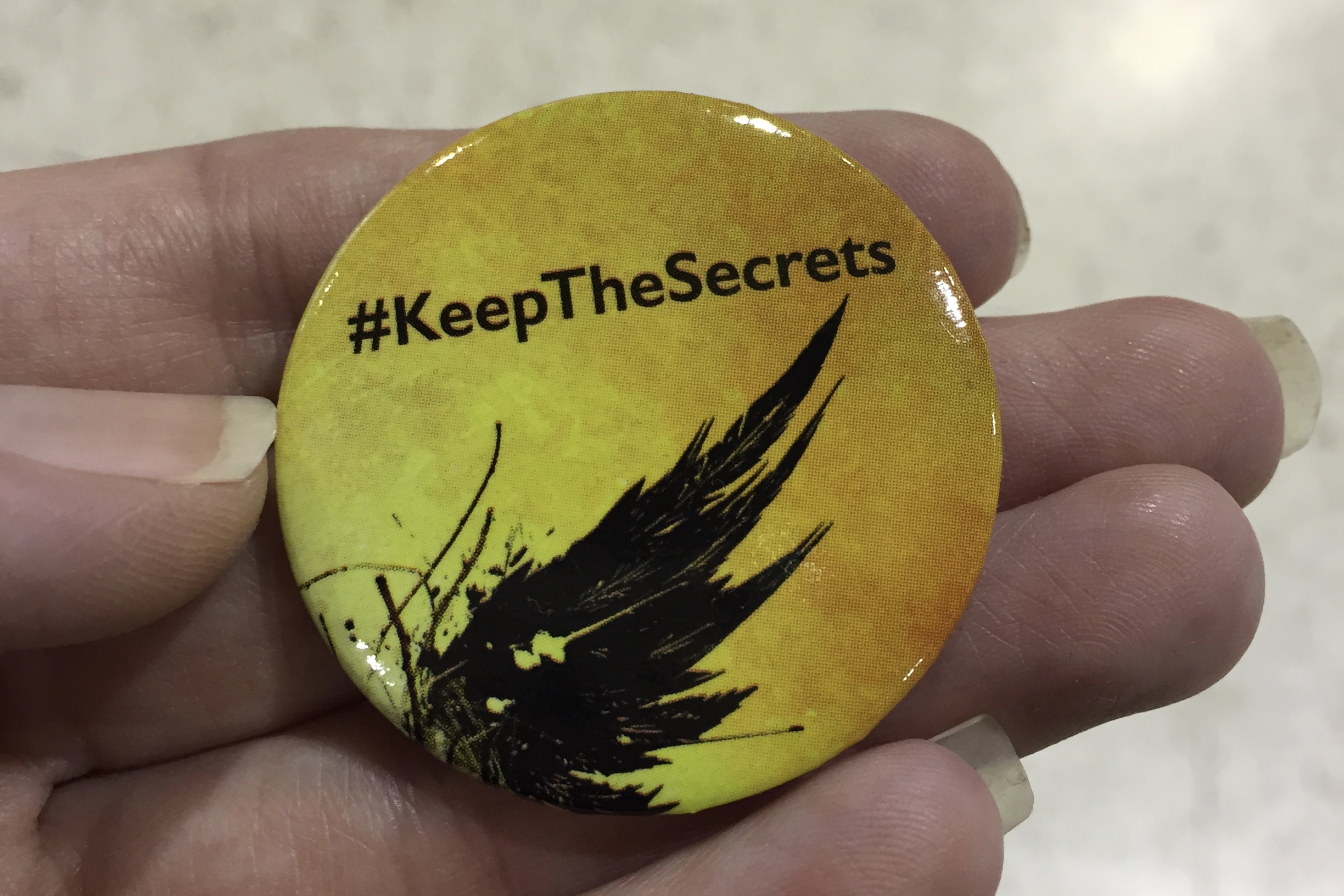
Unfortunately for them, I was handed a yellow #KeeptheSecrets badge on my way out of the Palace Theatre. And this is something I take extremely seriously, so my lips have remained firmly sealed – and this review will be no exception. No spoilers here, I’m afraid.

IMG_1351

But here’s what I can say about the eighth Harry Potter story: it’s awesome. Created by the dream team of J.K. Rowling, playwright Jack Thorne and director John Tiffany, Cursed Child is funny, sad, scary, dramatic, magical and jaw-dropping, with all the suspense and excitement of a new story, but also the comforting familiarity of stepping back into a world we thought we’d seen the last of. This means that while it stands independently as a new chapter, if you’re not up to speed on the events of the books, I’d recommend doing a bit of research before you go – if only so you can join in the universal audience reactions to certain events. (There’s something pretty special about hearing 1,400 people gasp in perfect unison.)

The production also boasts a fabulous cast, led by Jamie Parker, Paul Thornley and Noma Dumezweni, who are spot on as Harry, Ron and Hermione. The trio are just as we remember them – Hermione the high achiever, Harry the unwilling legend, and Ron… who’s just Ron, and still my favourite – but now grappling with grown-up problems and emotions. Meanwhile the children are, naturally, having adventures of their own (well it is Hogwarts, after all), and Sam Clemmett and Anthony Boyle step effortlessly into the new roles of Harry’s son Albus and Draco Malfoy’s son Scorpius, two characters living in the shadow of their fathers’ past. While some cast members may have more lines than others, though, this show is very much a team effort, with many actors doubling or even tripling up on parts (several of them instantly recognisable from the books and movies), and not one of them disappoints.

Oh right, and there’s magic. Any fears that the magic might have been a bit lame without the benefit of CGI were laid to rest within minutes, and the main question anyone was asking by the interval of Part One was “But… but how?!” Things happen on that stage that literally can’t be explained by Muggles like me – so I won’t even try.

IMG_1355

Perhaps what’s most impressive about Cursed Child is that in many ways, despite the big cast and the amazing effects, it doesn’t feel like a huge-scale production. Some scenes are actually incredibly simple, encouraging us to use our imaginations to flesh them out – and even for those of us sitting way up in the gods, there’s a certain intimacy about the play that shows director John Tiffany really understands how attached his audience are to the characters and story. At the risk of sounding cheesy, it’s almost like everyone in the theatre is part of a big family, all there to catch up with mutual friends. The show is an experience that begins the moment we step inside and receive a warm welcome (and later, welcome back) from the staff, and the theatre itself even feels a bit like Hogwarts, with its twisty stone staircases and slightly creepy sculptures. I’m actually not surprised everybody kept the secrets during the show’s previews – by the time you leave and receive your badge, you’re well and truly a member of the club.

Now that the script’s been published, no doubt spoilers will start to leak out, but my advice, if you’re planning to see the show, is to avoid them. Don’t read the script; don’t ask questions. Just wait until you can experience Cursed Child in all its spectacular brilliance… and thank me later.


Can’t see the map on iPhone? Try turning your phone to landscape and that should sort it. I don’t know why but I’m working on it… 😉

Interview: Arrows & Traps, The Gospel According to Philip

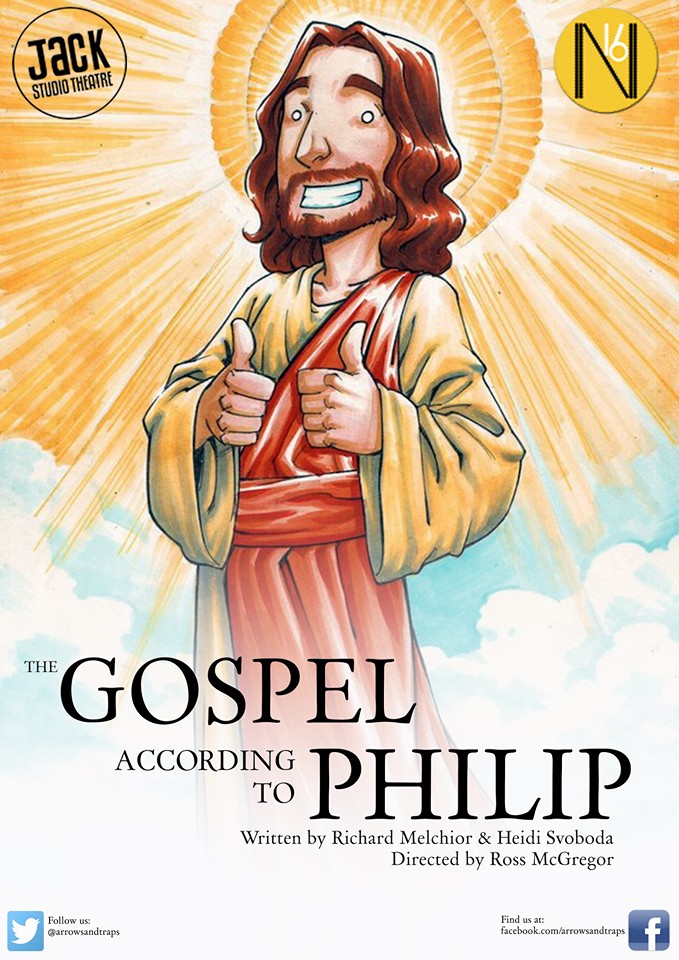
“It’s a modern Life Of Brian, but with sharper knives,” explains Ross McGregor, Director of Arrows & Traps. Following their recent critically acclaimed production of Macbeth at New Wimbledon Studio, the company are turning their attention to something very different for their next project.

“The Gospel According To Philip is the story of a young man, Philip, who decides to join the Apostles, a secret club of men, and follow a new messiah called Jesus. The story is told from his perspective as it charts Jesus’s final weeks on earth, running to his crucifixion.”

The production began with an approach from one of the writers, Richard Melchior. “I’ve known Richard for about 10 years; we worked together early in our careers doing regional tours in East Anglia. He brought this script to me just after his co-writer, Heidi Svoboda, tragically passed away, and asked me if there was any way to get this performed, as he was really proud of it. Initially I was just interested in it from a personal level, as I’ve always been a fan of Richard’s work, but when I started to actually read it, I was blown away. The satire is wonderfully drawn and subtle enough to make you think, and these iconic, almost mythical people are so recognisable but also feel completely fresh.

“You have the different character dynamics at work in terms of the apostles, and what Richard and Heidi have done, in a stroke of genius, is to transform Jesus and his disciples into a weary primary school teacher trope trying to control a group of unruly children, which gives it so much life. You have Peter as the teacher’s pet, the smart alec filled with impossible questions in Matthew, Judas as the cool kid smoking at the back of the classroom, the remedial dunce in James, the closeted gay man in Paul, and Philip as the new kid at school. It’s a fantastic re-imagining of how the Bible should have gone.

“I was so impressed with the quality of the writing and the machine-gun-like frequency of the punchlines. It’s one of the best comedies I’ve read in quite a while – but then when the ending comes, the poignancy and sense of loss is devastating. When I realised this ending reflected Richard’s loss of Heidi after she died, and that this might be the only chance of her work being performed now – I knew I had to take it on myself.”

13891873_1141616572586829_2518341558948586424_n

Offie-nominated Arrows & Traps are known for their productions of classics, particularly Shakespeare, so the new show marks quite a departure from tradition. “This isn’t an Arrows show in the expected sense – it isn’t Shakespeare, there are no extended movement pieces, we’re not subverting a classic or switching genders – but hopefully we will retain enough of what has made the last six shows so successful and bring you a recognisable Arrows-shaped piece of entertainment – which I think means that I want to take characters that you think you know, and show you their humanity and vulnerability in a new way, whilst entertaining you senseless.

“In Arrows shows we normally try to take an old story and tell it in a new way, but with this, that exact action has already been performed by the writers before we got our hands on it. They took the Bible, spun it on its head and created The Gospel According To Philip. So the Arrows spin is done without an Arrow having to lift a finger. All we have to do now is bring it to life in the most fair and honest way possible. And make sure it’s funny, of course. Has to be funny.”

Staging a piece of new writing for the first time brings with it a new kind of pressure: “I’m wary of doing this one justice, as it’s the first time the script has ever been performed, and whilst we don’t have the shadows of hundreds of other past productions looming over us like we usually do with Shakespeare, this one seems even more important to get right because I really want this little show to have a great future, and go from strength to strength in years to come, whatever shape that might take. It’s a great piece, and deserves a long life.

“On the other hand, there might be less pressure in terms of reviews and audiences, because with Shakespeare that’s always massive. On our last show, Macbeth, the vision and direction that the witches would take absolutely plagued me in the preparation stages, because they’re so iconic, everyone has their version of what they should be like… it was very hard to try to honour those views, honour the world of our play, serve the narratives that the text has, and also show something new with them. Lots of pressure. So Philip doesn’t have that. Or perhaps it does! I mean, doesn’t everyone kind of have a preconceived notion of what Jesus looks like? In the west, he’s a Brad Pitt-esque, blue-eyed, golden-haired white man. So I guess there’s always pressure.”

Arrows & Traps’ fanbase of “devoted trappers” will, as always, spot some familiar faces in the cast. “A massive part of what makes an Arrows & Traps show so special is the people in it. We are a repertory company in the sense that there’s a core base of people involved, but we always try to mix it up with new actors, so it stays fresh.

“We have Pearce Sampson playing Jesus, a very talented funny actor whom people may recognise as our Porter and Lennox from Macbeth, and bright young star Alex Stevens playing Paul – he was our Malcolm in Macbeth and our Demetrius in Titus Andronicus. The deliciously watchable Adam Elliott plays Judas; audiences at the Jack will remember him as Karenin, the husband in our Anna Karenina, and in the title role of Philip we have Will Mytum, a great actor renowned on the Off West End circuit, who previously played Vronsky in our Anna Karenina, and Chiron in Titus Andronicus. We have Elle Banstead-Salim playing Mary Magdalene, coming hot off of finishing her brilliant turn as Lady Macduff and Witch in Macbeth, and Gareth Kearns playing Matthew. Gareth has been involved in every Arrows show so far, and recently it was my honour to watch his 100th performance with us. There’s no-one I’d rather have on this project than Gareth, as he’s perfectly suited for it.

“And then lastly we have three new actors, Tom Telford, Matthew Harrison-James, and Olivia Hanrahan-Barnes, all of whom I’ve auditioned in the past and was impressed by – it was just about getting the right role at the right time, which we’ve now found. I guess that’s a lesson in perseverance for any actor out there feeling like it’s too tough in the industry right now. We do listen, and we do remember, and we always come back to you when the time is right. So really, this amalgamation of both old and new faces is perhaps the thing about the show that I’m most looking forward to, because there is literally no weak link in these guys.”

Why should audiences come and see The Gospel According to Philip? “A brilliant tagline a friend used when I told her about the show was Passion Of The Christ With Jokes. If that doesn’t make you want to buy a ticket, then you’re dead inside. Also, supporting brilliant and passionate fringe venues like the Brockley Jack and Theatre N16 is so important if we want places like this to keep offering their communities such diverse and arresting art on their doorsteps.

“The play might make you think, but it will definitely make you laugh. It’s a great night out at the theatre. And the themes that it raises are exactly the things that we should be talking about right now. The world is a scary place, and terrible machinations are threatening to pull us apart as a human race. Faith is often held up as a banner or scapegoat for cruelty and hatred, and really, for things as old as religion, we need to go back to the start and look at what happened and learn from it. There’s something terrifying about the way that all the different religions have become so ingrained in our culture, our faiths, and yet really – every single one of them started as a flawed, wobbly cult, a series of men meeting in dark rooms telling stories and writing down rules for life. I think this play has a lot to say about our modern world, about those of us who are lost, and about where we should draw our strength from.

“Don’t get me wrong, it isn’t a night of theological debate – there’s too many cock jokes in it for that. But as with the best of our satire, and I think Terry Pratchett may hold that crown for me, beneath the jokes and laughter there’s always a question, a poke in the ribs, something to argue about on the way home.”

Looking ahead, the rest of the season marks a return to more traditional fare, with the unique Arrows flavour that audiences have come to know and love. “The Broken Crown Season is epic. It’s massive. And it’s going to be the best work we’ve ever done. For me, the Broken Crown symbolises not just the fall of a king, but the breakdown and hollowness of responsibility, power and promise. It’s about ambition and the price that comes with it. It’s about kings, and gods, and leaders, but also relationships and trust. We’ve started things off with Macbeth, an obvious choice to get things rolling, now we’re tackling Jesus and the birth of Christianity, and after that we open our first true repertory double bill with Twelfth Night and Othello, performed simultaneously at Upstairs at the Gatehouse, on alternate nights over three weeks in November by the same cast. It’s going to be amazing fun, particularly on double show days where we do both texts.

“In the new year, we bring a modern horror-story vision of Frankenstein set in two different time periods, flicking in and out of a pair of narratives, and we finish with a thriller award-winning adaptation of Crime & Punishment, which has been boiled down into an action-packed, edge of your seat, 90-minute, three-hander, which I cannot wait to do, personally, as the script is electric. After that… watch this space.  The Arrows have plenty more stories to tell.”

Catch The Gospel According to Philip at Brockley Jack Studio Theatre from 30th August-3rd September, and Theatre N16 from 4th-8th September.

Review: Shakespeare Tonight at Theatro Technis

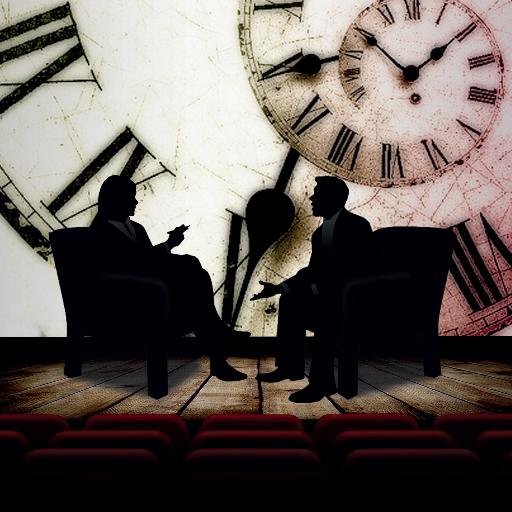
Shakespeare Tonight imagines what would happen if the Bard lived in the era of social media and TV chat shows. And indeed, the man himself is about to appear on one of these shows for the very first time. In a coup for producer Rebekah, one of the most famous men on the planet will be talking live in the studio to bubbly host Martina Fleur about his latest play, Hamlet, which has just opened to mixed reviews.

In a twist, though, Shakespeare won’t be the only guest on the show; he’ll be joined by arch rival Sir Francis Bacon, who – unlike William – is no stranger to the TV cameras. As the flamboyant, smirking Bacon makes himself at home on Martina’s sofa, and Shakespeare does his best to look cool and collected, the stage is set for a spectacular showdown between two great literary minds.

Shakespeare Tonight

There’s lots to enjoy about Shakespeare Tonight; the script, by Paul Wilson and Tim Ferguson is witty, wordy and packed with so many references it almost warrants a return visit to try and catch them all. The only downside to this is that anyone not interested in Shakespeare may get a bit lost (but then again, it’s unlikely they’d go and see a play called Shakespeare Tonight, so moving on…).

The addition of modern culture into the mix is also good fun, tweets from the audience presented with cheeky and irreverent charm by Martina’s warm up and social media guy, the Duke, played by an extremely likeable Paul Obertelli. Francesca Mepham, in contrast, is decidedly unlikeable in her brief but memorable appearance as the sneering bully Rebekah, who’s happy to exploit both host and guests to bring in the viewers and secure a second series. And Kaara Benstead impresses in an even more fleeting yet highly significant role, bringing the show to an emotional end as Shakespeare’s estranged wife, Anne Hathaway.

The main bulk of the show is carried by Priscilla Fere as Martina, Garry Voss as Bacon and Peter Revel-Walsh as Shakespeare, and while there’s clearly no shortage of talent on stage, unfortunately their scenes also expose some flaws in the production. Issues with acoustics mean that much of the script gets lost as actors turn away from the audience, while a few fluffed lines lead to awkward silences that interrupt the flow of the conversation and leave everyone – on stage and off – feeling a bit tense and anxious.

Part of the problem is a lack of context; though I’m not usually an advocate of canned laughter, the studio setting could perhaps benefit from some sound effects to remind us where we are and how the spectators in the room are reacting. (It seems unlikely, for instance, that Jeremy Kyle’s audience would remain silent when one guest is threatening another with a dagger.) It is made clear from the outset that we’re supposed to be the studio audience – but aside from a few occasions when the Duke invites us to applaud, we’re given little indication of what’s expected of us or how involved we’re supposed to get.

This show clearly has a lot of potential, and will I’m sure deliver on its early promise as its week-long run at Theatro Technis continues, and later in the month when it travels to Edinburgh. With an experienced director in David Parry and an undoubtedly talented cast, the problems encountered last night are all very fixable, and shouldn’t detract from what is still an enjoyable evening.


Can’t see the map on iPhone? Try turning your phone to landscape and that should sort it. I don’t know why but I’m working on it… 😉