Review: Abigail at The Bunker

The Bunker’s first season concludes with Fiona Doyle’s two-hander, Abigail. Although why it’s called Abigail is an intriguing question, since the two characters in the play remain nameless throughout. It’s a dark tale about a dysfunctional, abusive relationship – but in a welcome challenge to convention, here it’s the man who’s the victim, struggling to find his way back to who he was before they met.

It all starts well: after meeting in the snow outside Berlin Airport, the couple embark on a whirlwind romance. He’s quite a bit older than her, but their attraction is instant and intense. By the time their one-year anniversary rolls around, though, it’s all fallen apart. He says he wants to leave; she has other ideas. Doyle’s script hops back and forth in time, filling in the story of their relationship as their final showdown unfolds in the present.

Photo credit: Anton Belmonté for 176 Flamingo Lane

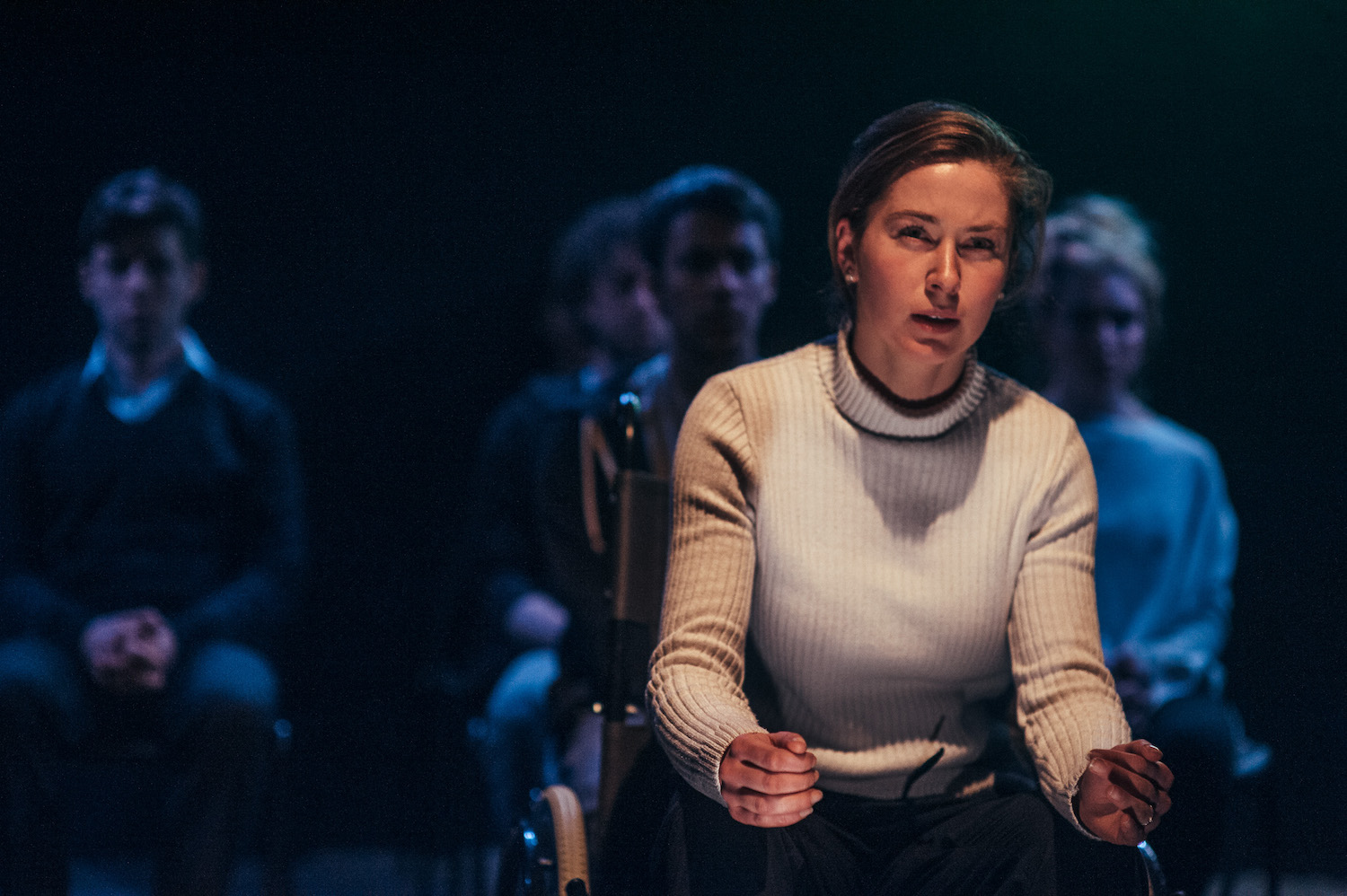
Tia Bannon and Mark Rose give compelling performances as the unhappy couple, dealing skilfully with the many changes in mood as time skips back and forth. Bannon has a bright smile that appears at inappropriate moments and which never quite reaches her eyes. And there’s an eerie, almost robotic calm about her throughout, which makes her violent outbursts all the more shocking. Rose, meanwhile, is the very image of a broken man, and handles the physical side of the role well; I’ll say no more for fear of spoilers, but suffice to say that at times his performance is uncomfortably convincing.

Max Dorey’s set, made up of boxes stacked in a huge pile, allows director Joshua McTaggart the chance to get creative with the staging; the two actors cover almost every inch of the space as they climb all over it, producing props and costumes that are concealed within the set, and which gradually end up scattered around the stage as the couple’s anniversary evening unravels.

So what’s there is good – but the problem is it feels like there’s quite a bit missing from the story. There’s nothing wrong with plot gaps in a play; having everything handed to you on a plate removes any need for interpretation or discussion afterwards. But at just 60 minutes, this play has more gaps than most – and leaves us with a lot of questions but not enough info to try and answer them.
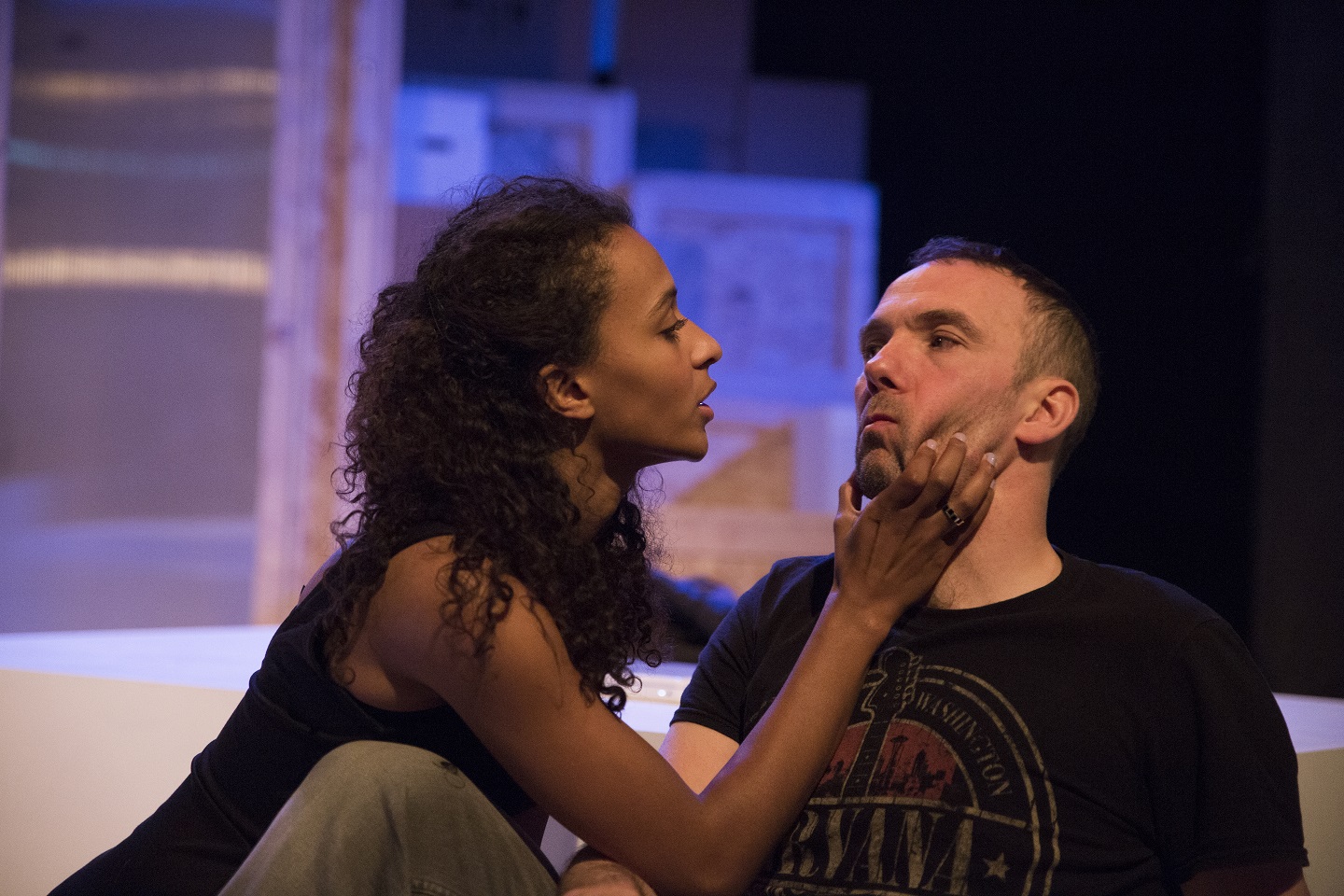
Photo credit: Anton Belmonté for 176 Flamingo Lane

There’s an attempt in the script to explore the psychology of the abuser, but without sufficient detail for us to really understand her motivations. Some conversations seem like they’re about to reveal an important clue – but then the scene changes and we’re left (quite literally) in the dark.

As for the abused, we know next to nothing about him; he keeps insisting he’s not himself in this relationship, but apart from the scene in which the couple first meet, we get very few insights into who he really is outside it; she spends a lot of time reminiscing about her early life, but he never gets that opportunity. No attempt is made to explain why he’s stayed in a relationship that he says himself was only good for the first couple of months, nor what’s prompted him to finally take action now. It’s not often we get to see a depiction of abuse that’s this way around, so it feels like we’ve missed out on a rare opportunity to hear the point of view of a male victim.

I’ll say it again: what’s there is good. This is an excellent production, with strong performances, of a play that just feels a little bit too short. With a bit of work, this could be a really powerful piece of theatre, shedding light on an issue that currently doesn’t get enough attention. As it is now, it’s an enjoyably dark drama, but it doesn’t make the lasting impression that it probably should.


Can’t see the map on iPhone? Try turning your phone to landscape and that should sort it. I don’t know why but I’m working on it… 😉

Interview: Max Gill, La Ronde

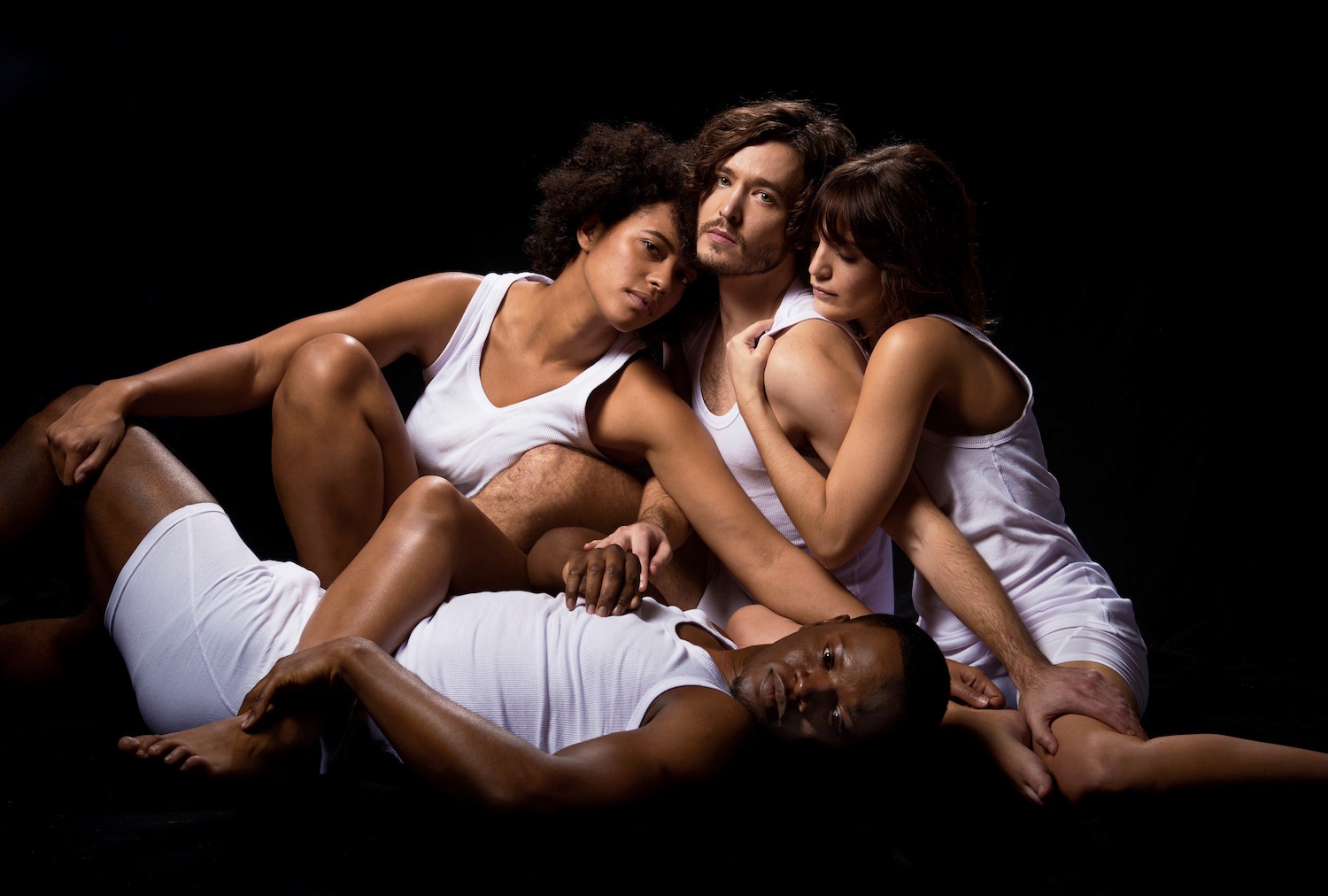
After a successful opening season, The Bunker opens its second in February with Collaborative Artists’ new production of La Ronde by Arthur Schnitzler. Adapted and directed by Max Gill, a cast of four actors – Lauren Samuels, Alex Vlahos, Leemore Marrett Jr and Amanda Wilkin – will take on the play’s ten roles, but with a twist: each night chance will decide the parts they play, ensuring that each performance is different.

“La Ronde is a helter-skelter through the mores and morals of society, via the sex lives of its inhabitants, thrown together by the blindness of fate and desire,” says Max. “What drew me to it initially was the whiff of controversy. Schnitzler’s original was banned for many years and subsequent incarnations and re-imaginings such as Max Ophüls’ film and David Hare’s The Blue Room have certainly sizzled in the public’s imagination.

“Schnitzler’s world of turn-of-the century-Vienna is complex and detailed, but there is a seductive simplicity to the play: a man and a woman meet, they have sex, and we see the aftermath. There is a grammar to the world that is levelling. This allows one’s inventiveness to run quite free in terms of the interpretation of characters and their relationship dynamics.

“Furthermore, the sex act that takes place in every scene in Schnitzler’s original is marked only with asterisks. The text is an invitation to actors and theatre-makers to interpret and imagine; this is surely why it was considered so shocking. This act of imagination makes even the most puritanical of thinkers prurient, even if just for a moment! The play enforces an experience of fantasy, which I would posit is sexuality at its core.”

img_3251

Max has taken Schnitzler’s 1897 play, set in Vienna, and adapted it for a 21st century London audience. “The play is all the more powerful for the fact it was written over 100 years ago. It presents human warmth and vulnerability, our need for another, and the insatiable beast of desire inside us all as if it were written yesterday. But the world of the original is, of course, of its time. For example, its women, with the exception of a prostitute, maid, and actress of ill-repute, do not work. It presents rigid portraits of gender, class, and sexuality that today are inevitably stale and that I didn’t feel compelled to regurgitate. Hence the desire to adapt it for the 21st century and a London audience.

“Modern London is the greatest social melting pot in the world; nowhere else has quite the same wealth of voices, cultures, and identities jostling together in bars, on the tube, and in the bedroom. To blow dust around in the past would be a shame when instead we could take Schnitzler’s ingenious structure and place it upon the beating heart of contemporary sexuality with its glorious opportunity and polyphony. In this way, I have refashioned each of the characters to suit contemporary social identities and have adapted the majority of situations. The dialogue, desires, and relations are therefore largely very different from the original.

“Integral to the play are verbatim testimonies from real life prostitutes, lovers, fetishists, people who have committed incest and so on, that we have collected over many months in London. It has been an adventure. They are a curation of sexual appetites today and I hope their voices give the play a vibrant relevance.”

Unlike the original, Max chose to make his version of La Ronde gender-neutral. “Fundamentally, I’ve stripped the text of any markers that point to a character’s gender, sexuality or age so that they can be embodied by each member of the cast, either male or female, depending on how the roulette falls,” he explains. “Whilst this in theory means the script is non-gender specific, it means that in performance an audience’s reaction to it is likely to be highly gendered. How do we digest a woman as opposed to a man visiting a female prostitute? And how might we react differently to a male stay-at-home parent philandering than to a female? How then might our appreciation of this relationship transform if both the parents are men? What inadvertent expectations or prejudices does this throw up for you? Many of the characters appear gendered in that they may be ‘passive’ or ‘active’, ‘dominant’ or ‘submissive’, ‘masculine’ or ‘feminine’; we want to explore how far these labels are attached to any physical reality at all.

When Schnitzler wrote his play, there was a general fear of the open presentation of sexuality in a public domain. We are the opposite. We talk about sex all the time because we don’t want to be Victorian about our bodies. But this means that people now often have a fear instead of their own sexual repression and an anxiety around their own sexual identities; if sexuality is a spectrum, where am I on it? Do I have a fetish? If not, why not? Should I?! How do my sexual activities define me and do I want them to? A sex worker I interviewed for the play said that ‘people don’t do things not because they don’t want them, but because they don’t want to want them’. We have a freedom of choice today but we still haven’t worked out a freedom of self with regards to our sexual choices, indeed if this were ever possible.

I hope our play delves into the kaleidoscopic nature of 21st century sexuality but also the freedoms and boundaries that lovers encounter today, be they societal or personal. I hope it goes some way to explore what lies at the heart of any relationship, amorous and/or lustful, no matter who it may be between.”

Photo credit: Ray Burmiston

Unsurprisingly, having different actors playing different roles every night throws up some huge challenges for director and cast alike: “But exciting ones,” adds Max. “We are so lucky to have such a talented cast and their dedication to the project is a testimony to their commitment as actors to keep demanding more and more of themselves.

“For one, it means that the actors have to know the whole play off by heart and it means that every night they have to be prepared to play any variation of roles, which is a very different discipline to acclimatising to one role over time mentally and physically. It means that rehearsals are a very collaborative process; everyone is always present and everyone feels a shared ownership of every beat in every scene, which provides a rare but hugely rewarding cohesion.

“Having said that, each actor is encouraged to have a very different understanding of a character and scene from the others, and so each scene is an exercise in truly engaging with the other actor; there can be no auto-pilot. After we have set down a framework for each scene, the different temperatures each actor and their interpretation brings will lead the moment. There is a ‘liveness’ to the action that conventional theatre can lose through repetition.”

Max is honoured to be opening the second season at The Bunker: “It’s a seriously exciting new theatre for my generation, and it’s been welcomed ravenously! As a space, it aims to champion and develop adventurous work by younger artists; to take risks essentially, which sadly is all too rare in theatre today. I can’t wait to see how it continues to thrive.”

La Ronde is at The Bunker from 11th February to 11th March.

Review: He(art) at Theatre N16

Andrew Maddock has already established himself as a writer to watch with his previous work, including In/Out (A Feeling) and more recently, The We Plays. In particular, he really knows how to create characters that we care about, so that when the story suddenly takes a darker turn, we’re caught totally off guard. He(art), Maddock’s latest play, follows a similar trajectory, setting up two separate but equally compelling stories before smashing them together in an explosive final scene.

Alice is looking for a painting to buy with her boyfriend Rhys. But he’s reluctant to commit – to a piece of art or anything else, including seeing a doctor about his congenital heart condition. Meanwhile Kev’s just got out of prison and is hatching a plan with his sister Sam to get the money they need for their dying Mum’s medical treatment – by stealing the very painting Alice and Rhys have their eye on…

Photo credit: Jesse Night

At first glance, there’s a lot in this story that doesn’t quite make sense. How did posh gallery curator Alice get together with “Wembley Warrior” window cleaner Rhys? Why do Kev and Sam have to steal that particular painting (and why any painting, come to that)? What happened to their dad? And what does die Maus Head Man have to do with anything?

We don’t get all the answers, but that’s sort of the whole point – Maddock gives us a sketchy snapshot of events, and how we fill in the blanks is up to us. If a few of those events are slightly random, well it just makes the overall impression more interesting – like a mouse head that triples a painting’s value. The opening scene, in which Alice tries unsuccessfully to teach Rhys about art, is actually as much for the audience as it is for him, letting us know that just because we don’t have all the info it doesn’t mean we can’t flesh out the story in our own way. The stage in director Niall Phillips’ production is a roped-off gallery space; the props are exhibits hanging from the ceiling, as is the painting at the heart of it all. This play is a piece of art in itself, to be examined, discussed and interpreted, not simply accepted at face value.

But as the title suggests, there’s more than just art here – there’s also a huge amount of heart. This manifests itself in small ways, like Rhys’ pride in the fact his are the only streak-free windows on the high street, or in Sam’s eclectic music collection and the affection for Johnny Cash that she shares with her brother. But it’s also built into the relationships of the characters; this is a story that’s absolutely driven by the heart instead of the head. On paper, Rhys and Alice’s relationship should never work. Sam and Kev’s planned heist is doomed to failure. And yet we find ourselves willing both to succeed, because both are motivated by that most fundamental of human emotions: love.

Photo credit: Jesse Night

This love comes through powerfully in the four actors’ performances. Jack Gogarty and Alex Reynolds are very natural together as Rhys and Alice, revelling in their light-hearted banter about the value (or not) of Banksy and a recent scandal in the porn industry. But their relationship is just as convincing in its more intense moments; her anxiety about his health and his longing for a normal life both feel entirely genuine. Similarly, the close sibling relationship between Kev and Sam, played beautifully by Shane Noone and Flora Dawson, feels completely authentic, precisely because it isn’t picture perfect – his concern for her welfare is frequently tinged with impatience and even violence, while her childlike emotional vulnerability and desperate desire to please him put everything at risk more than once.

In He(art), Andrew Maddock has another hit on his hands; it’s a poignant and at times very funny story of two halves – and if this time the twist in the tale isn’t entirely unexpected, that doesn’t make it any less compelling to watch. (One of the great things about theatre in the round is you can see how other audience members are reacting, and it’s safe to say I wasn’t the only one on the edge of my seat there at the end.) Most importantly, it reminds us that whether we’re talking about painting, music or even window cleaning, there’s no such thing as “just art”.


Can’t see the map on iPhone? Try turning your phone to landscape and that should sort it. I don’t know why but I’m working on it… 😉

Review: BU21 at Trafalgar Studio Two

Human beings tend to have a strange fascination with tragedy. Everyone has a “where I was on 9/11” story, for instance, even though in 99% of cases it makes absolutely no difference to anyone but us where we were when the Twin Towers were hit. And we often find ourselves morbidly gripped by all the details – whether that means slowing down to peer at the car crash on the other side of the road, or following minute-by-minute updates from the BBC on the latest terrorist attack.

I like to think this is not because we’re all awful people, but because we have no other way to process the unspeakable horror of what’s happening. There can’t be many of us who haven’t imagined at least once over the last few months and years the very real possibility of getting caught up in a major catastrophe – whether terrorist or accidental – but nobody ever really thinks it’ll happen to them, or knows how they’d react if it did.

Photo credit: David Monteith-Hodge

This is the inspiration for Stuart Slade’s excellent and thought-provoking BU21, which brings together six young Londoners affected in different ways when a fictional terrorist attack brings a plane crashing to the ground in Fulham, a few months from now. Each has their own story to tell: Ana (Roxana Lupu), horribly burnt and wheelchair-bound after the plane smashed into the park where she was sunbathing; Izzy (Isabella Laughland), who found out her mum was dead through a photo on Twitter; Alex (Alexander Forsyth), whose girlfriend and best friend were killed while in bed together; Graham (Graham O’Mara), an eyewitness who finds himself an accidental celebrity; Floss (Florence Roberts), traumatised by the sight of a man in a plane seat dying in her back garden; and Clive (Clive Keene), a young Muslim looking for answers in the wake of the crash. The fact that each of the actors is, in a way, playing an alternate version of themselves lends the play an unsettling authenticity, strengthened by the fact that the attack hasn’t yet taken place – but still could.

Dan Pick’s production is set in the soulless room where the six meet for their PTSD support group, illuminated by flickering strip lights, and furnished with a few plastic chairs and a metal trolley bearing the obligatory plate of biscuits that nobody ever eats. Yet despite a set-up that should suggest human connection, the majority of the play consists of monologues, with each character speaking into a void while the others deliberately look away.

Each account is horrifically detailed and brutally honest; there’s no glamour here, no tragic heroes, no political correctness or bold display of unity in the face of adversity – there’s just a bloody mess, and a bunch of people trying to pick up the pieces of their broken lives. The characters are not all nice people, they don’t all get a happy ending, and it’s difficult to tell how much support any of them are actually giving or getting as a result of talking things through. In the end, each of them copes in their own way, whether that means milking it or avoiding it, getting on with life or unable to move, seeking comfort or shutting people out.

Photo credit: David Monteith-Hodge

Slade doesn’t offer judgment or try and tell us who’s right or wrong – if anything, the spotlight is turned instead on our own attitudes. There’s the obvious one, of course, although I can’t imagine many people honestly believed Clive the Muslim would turn out to be a terrorist. But there are also moments that catch us off guard, like when Alex the charming but obnoxious banker suddenly breaks the fourth wall and challenges our decision to exploit his misery for our entertainment. Or every time we laugh – which happens a lot more than you’d expect – always with the uncomfortable sensation that we’re being disrespectful.

BU21 may deal with a terrorist attack, but it’s not a political play; we never really find out who the perpetrators were, and nor does it matter. Stuart Slade’s focus is on the psychology of human beings in a moment of crisis, and while we may not leave the theatre knowing how to survive a plane crash, we might just find we’ve learnt a little something about ourselves.


Can’t see the map on iPhone? Try turning your phone to landscape and that should sort it. I don’t know why but I’m working on it… 😉

Review: The Kite Runner at Wyndham’s Theatre

Khaled Hosseini’s first novel, published in 2003, is a modern classic. A story about friendship, betrayal and redemption, it’s sold millions of copies worldwide, and was made into an award-winning movie in 2007, before being adapted for the stage by Matthew Spangler two years later.

(It’s also one of my favourite novels, so I didn’t wait around until press night to see the play on its arrival at Wyndham’s Theatre just before Christmas. Consequently this review is based on one of the earliest previews, and it’s possible some aspects of the show may have changed since then.)

Photo credit: Robert Workman

The Kite Runner tells the story of Amir and Hassan – one the son of a rich businessman, the other the son of his Hazara servant – whose close friendship is shattered in one shocking moment of betrayal. More than 20 years later, after fleeing the Soviet invasion and starting a new life in America with his father, Amir receives a call that offers him a chance of redemption… but to take it he must return to Afghanistan and confront the demons of his past.

It’s a story that skilfully interweaves Amir’s personal journey with the historical and political story of his country, and Giles Croft’s production faithfully follows that same narrative. While Amir (Ben Turner, who plays both Afghan child and American adult) shares his account of events, there are frequent reminders of the home he left behind – but which, despite his efforts to move on, never left him. Tabla player Hanif Khan provides percussive accompaniment throughout, while Barney George’s set features a huge kite, on to which is projected beautiful backdrop imagery (designed by William Simpson), and which becomes a symbol of the culture and passion that united the two friends, but also the fateful day that tore them apart.

Said kite also mercifully shields our view of the traumatic pivotal moment, but Amir’s reaction to and description of it evoke all the horror I remember feeling the first time I read the novel. Because this is far from an easy story; there are a few laughs and one particularly joyful scene in Act 2 (though even this has a shadow of sadness to it), but the most powerful moments are undoubtedly those that shock us and break our hearts. Much like any tragedy – personal or national – the glimmer of hope in the play’s closing scene can’t undo the damage that’s been done.

Photo credit: Robert Workman

As both narrator and main character in a play lasting nearly three hours, Ben Turner has quite a task, but he performs it to perfection – at times you can almost see the guilt weighing on his shoulders. But while Amir is the voice and conscience of the story, its heart lies in the people around him: Hassan (Andrei Costin), who remains unfailingly loyal despite his betrayal; his wife Soraya (Lisa Zahra), who hears his story and forgives him; his father (Emilio Doorgasingh), with whom he finally develops a mutual respect; and Rahim Khan (Nicholas Khan), the family friend who offers him his chance of redemption. Through their eyes – and the excellent cast performances – we see a different Amir: a man not destroyed by guilt, but with the chance to be good again.

I know I say this every time, but seeing an adaptation of a beloved book is always a gamble. Fortunately, I have no complaints about The Kite Runner, which is as thought-provoking, powerful and emotionally scarring (I mean that in a good way… I think) as Hosseini’s novel. Yes, it’s a long evening – but it’s worth every second.


Can’t see the map on iPhone? Try turning your phone to landscape and that should sort it. I don’t know why but I’m working on it… 😉